
Solar Charge Controllers
Match PV voltage, array current, battery chemistry, and charge output before you buy. Our reviews, comparisons, and sizing guides make every limit easier to check.
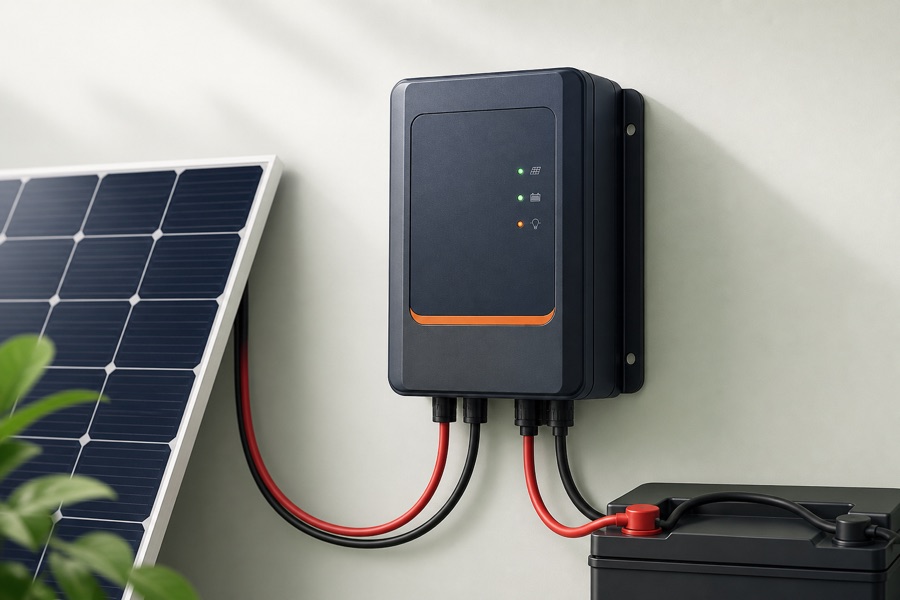
Best Solar Charge Controller Buying Guides
SEE ALL →
Solar Charge Controller Comparisons
SEE ALL →
Solar Charge Controller Guides
SEE ALL →
Solar Charge Controller Reviews
SEE ALL →
Solar Charge Controller Size Calculator
Use this quick calculator to get a rough estimate before comparing products.
Solar Charge Controller Size Calculator
What size charge controller do I need?
Frequently Asked Questions
What size solar charge controller do I need?
Estimate battery-side charging current from array watts divided by charging voltage, then add suitable design margin. Also verify cold-corrected PV open-circuit voltage, total array short-circuit current, the controller’s voltage-specific PV-watt allowance, battery and BMS charge limits, conductors, fuses, terminals, and thermal conditions against the exact manuals.
Is an MPPT controller always better than PWM?
No. PWM can be a reasonable low-cost fit for a small, voltage-matched array. MPPT is usually more useful when array voltage is substantially above battery voltage, series wiring or longer cable runs are planned, or expansion headroom matters. Electrical compatibility and documentation matter more than the acronym.
Can a solar charge controller charge LiFePO4 batteries?
Only when the controller provides a compatible preset or configurable charge profile for the exact battery. Confirm absorption voltage and duration, float behavior, equalization, temperature compensation, maximum charge current, and low-temperature protection. A lithium setting does not necessarily stop charging below freezing; that protection may need to come from the battery BMS or another sensor.
Can I oversize the solar array connected to a controller?
Some manufacturers permit controlled PV-power oversizing and output clipping, but only within every published input boundary. Never exceed the cold-corrected absolute PV voltage limit, and verify total Isc, recommended operating voltage, voltage-specific PV watts, thermal derating, and the manufacturer’s explicit oversizing rule for the exact model.
Can solar panels connect directly to a battery?
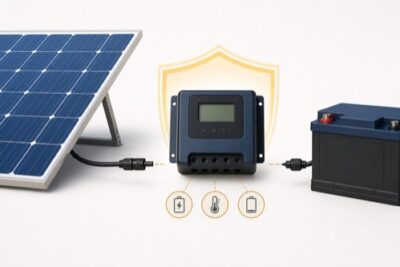
Normally no. A suitable controller regulates charge voltage and current and applies the required battery profile. Direct connection can overcharge or damage a battery unless the exact panel-and-battery system is specifically designed and documented as self-regulating. Follow the manuals and required overcurrent protection.
Should I connect the battery or solar panels first?
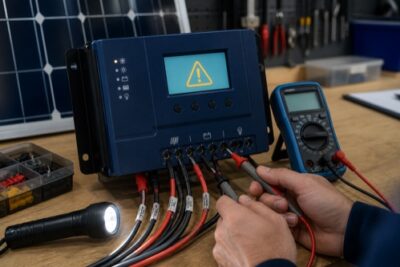
Follow the exact controller manual. Many controllers require the battery connection first so the unit can identify system voltage before PV is applied, with disconnection performed in the reverse order. That sequence is not universal, so isolate circuits safely and use the manufacturer’s documented commissioning procedure.