Rolokit 30A PWM Review: A $10 Battery Maintainer, Not a 30A Design Basis
At a Glance
KEY FEATURES
- Controller: PWM; 30A nominal rated charge output.
- System: 12V / 24V automatic; Open, AGM, gel, and other lead-acid batteries; not lithium.
- PV boundary: Not published maximum Voc; Not published maximum PV power.
- Controls: LCD, buttons, and dual USB; No app or communications port.
- Best fit: Very small lead-acid hobby systems that need a basic LCD and USB at minimum cost.
PROS
- Very low cost can suit supervised small-system projects.
- Local display and programmable load output cover basic functions.
- Automatic 12V/24V recognition simplifies initial setup.
CONS
- Key PV, load, terminal, thermal, and warranty limits are unpublished.
- The nominal 30A claim requires conservative real-world verification.
- Weak fit for unattended or high-consequence systems.
Editor's Choice
Editorial assessment based on exact-model documentation and qualitative exact-ASIN owner evidence; no first-party bench test or population-rate claim
Will the Rolokit 30A PWM Fit Your Solar Array?
Estimate required charging current and check it against the documented limits for Rolokit 30A PWM.
Solar Charge Controller Size Calculator
What size charge controller do I need?
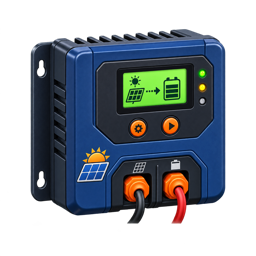
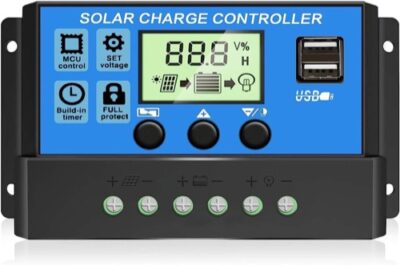
The Rolokit 30A PWM is marketed like many ultra-budget controllers: automatic 12V/24V recognition, LCD, dual USB, programmable load modes, and a nominal 30A rating. Owners use it for fountains, campers, motorhomes, and basic battery maintenance.
The most revealing owner did not argue that the controller was high quality. They described replacing similar $10 hardware on a 100W camper panel, with one prior unit lasting about four years and another failing in months. That captures the actual proposition: Rolokit may be cheap enough to replace, but missing PV voltage/current, power, terminal, enclosure, and warranty limits make it unsuitable as the foundation for an ambitious 30A system.
| Best For | Honest Value Proposition | Main Limitation | Evidence Confidence |
|---|---|---|---|
| Supervised 100W-class lead-acid maintenance where downtime is cheap | Basic charging at disposable-controller pricing | No documented safe 30A envelope | Medium for simple use; low for capacity or lifespan |
The Missing Limits Matter More Than the Low Price
The expanded exact-ASIN owner material explains why the Rolokit attracts buyers: it is inexpensive, simple to wire, and can maintain or charge batteries in modest solar projects. It also surfaces uncertainty around output claims, instructions, display behavior, load operation, heat, and longevity. Owner accounts help identify the questions to ask, but they cannot substitute for published electrical limits or predict every unit’s service life.
The nominal 30A label is not a complete design envelope. The reviewed revision does not publish maximum PV open-circuit voltage, PV input current, a battery-voltage power table, terminal conductor size, continuous load-output current, operating-temperature range, or warranty. A display that shows 30A and a terminal that accepts a small conductor do not prove the unit can continuously carry 30A in a warm enclosure.
If the controller will share a battery with another charger, confirm that their combined current and voltage targets are acceptable to the battery. Do not use the programmable load terminals for an inverter, and do not infer their current rating from the controller’s charge rating. USB output and the main charge path should also be treated as different circuits.
The Rolokit can be rational for a garden light, maintainer, learning bench, or other low-consequence system where the owner already has meters and protection hardware. The value disappears when the project requires extra troubleshooting, replacement travel, or risk to a costly battery. In that setting, a controller with traceable specifications and support is the cheaper system choice.
Replacement Economics Are the Real Buying Argument
One owner said the controller was replacing one of two cheap PWM units bought roughly four years earlier for a 100W camper panel. One had survived; another in a different application failed within months. The buyer accepted uncertainty because a $10 controller that prevents overcharge and lasts several years can be economical for that narrow job.
That logic depends on the consequence of failure. If a camper is inspected regularly and the battery has other protection, a failed maintainer may be an inconvenience. If the controller supports a remote gate, livestock ventilation, critical lighting, or an expensive bank, travel and battery damage can dwarf purchase price.
| Application | Cost of Controller Failure | Does Disposable Pricing Make Sense? |
|---|---|---|
| Decorative fountain | Lost operation; usually visible | Possibly |
| Stored camper battery | Potential undercharge/sulfation | Only with regular checks |
| Occupied motorhome charging | Energy shortfall and rewiring | Weak case |
| Remote access/gate | Travel and access failure | No |
| Valuable lithium bank | Unsupported chemistry and possible damage | No |
The purchase decision should include inspection labor, return friction, replacement rewiring, and battery consequences—not only checkout price.
Value rule — A disposable controller belongs only where the supported battery is inexpensive, the system is visible, and failure has a low consequence. Cheap hardware does not make an expensive battery disposable.
The 30A Marking Is Not Usable Without the Missing Limits
Rolokit labels the controller 30A but does not publish maximum PV Voc, array Isc, panel watts by battery voltage, terminal size, or thermal derating in the reviewed evidence. The small enclosure and low price do not prove the rating false, but they do not verify it either.
PWM topology favors voltage-matched panels. High series voltage is not converted into extra battery current as it would be by MPPT. Parallel panels add current and therefore require exactly the input-current and terminal information that is absent.
| Specification Needed | Availability | Why It Blocks Full-Scale Use |
|---|---|---|
| Maximum cold PV Voc | Missing | Series safety cannot be calculated |
| Maximum array Isc | Missing | Parallel current cannot be approved |
| Allowed PV watts | Missing | 30A cannot be translated into an official array size |
| Terminal wire/torque | Missing | Connection ampacity and heating remain unknown |
| Operating temperature | Missing | Sustained output and enclosure heat cannot be assessed |
The strongest owner system uses a single 100W panel. Other reviews mention panels and batteries without electrical values. Responsible use stays close to demonstrated small-scale maintenance until a current manual supplies the boundaries.
One-Day Failure and Four-Year Service Can Both Be True
One owner said a unit charged on the first day, failed to charge on the second, and then lost its display. Another described the mixed four-year/months history of similar cheap controllers. Several others reported normal initial operation.
Electronic batches, wiring, environmental exposure, and system voltage can differ. The evidence cannot calculate a failure rate. It can establish that early failure is plausible and that long service is also possible.
| supplied Outcome | Duration | What It Adds |
|---|---|---|
| Screen blank and no charging | Two days | Specific early-failure evidence |
| Similar controller still operating | About four years | Plausible long budget-controller service |
| Another similar controller failed | Months | Variability across units/applications |
| Several “works” reports | Initial/unstated | Basic functionality only |
| Slow charging complaint | Unstated | Could involve weak panel, PWM matching, battery state, or controller |
Evidence balance — Do not convert mostly positive stars into a reliability claim, and do not convert one two-day failure into a universal defect. The defensible conclusion is high unit-to-unit and application uncertainty.
Lead-Acid Only Narrows the Safe Use
Do not choose it for LiFePO4 because both systems may be called 12V. Lithium needs chemistry-specific voltage behavior, current control, no inappropriate equalization, and low-temperature protection. A separate BMS does not automatically make an incompatible charger suitable.
For lead-acid, verify the selected subtype, boost/absorption, float, and low-voltage load behavior. Automatic 12V/24V detection should be confirmed before the panel is energized. The exact current manual determines connection order.
LCD and USB Are Basic Convenience, Not Battery Instrumentation
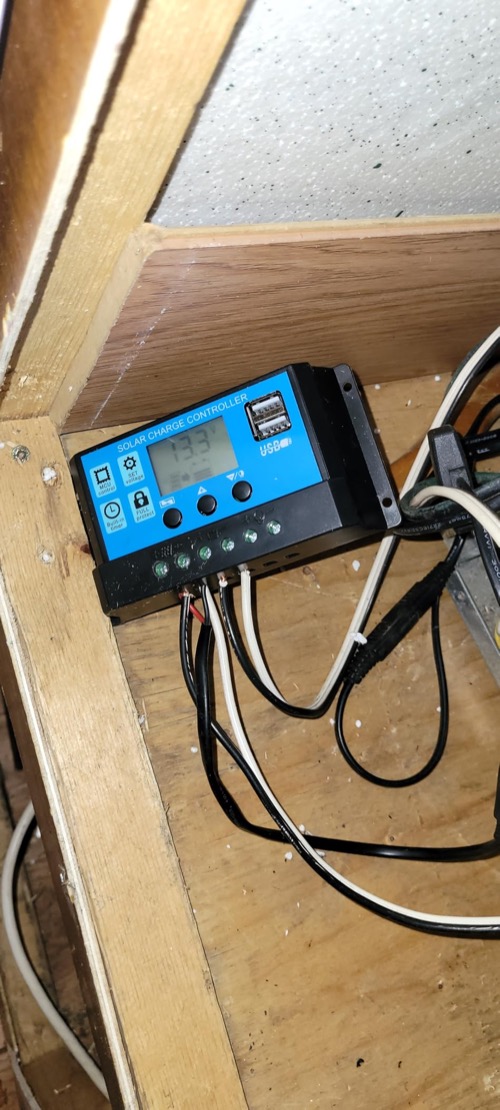
The display provides battery and charging status. Two USB outputs can power small devices. No verified USB power specification was available in the normalized evidence. Voltage on an LCD is not a reliable state-of-charge percentage under every charge/load condition.
Compare display voltage with a suitable meter at controller and battery terminals. This can reveal cable drop, calibration error, or loose connections. If the display blanks, resets, or reads implausibly, de-energize and diagnose instead of leaving the battery unattended.
The load output is programmable, but its exact continuous current is unpublished. A fountain pump is an owner use case; motor startup current can exceed running current. Inverters and large motors belong on properly protected battery circuits rather than an unknown controller output.
| Convenience Feature | Appropriate Expectation | Inappropriate Assumption |
|---|---|---|
| LCD | Basic voltage/status clue | Precision battery monitor |
| USB | Small device power after rating verification | Unlimited accessory charging |
| Load timer | Modest lighting/control | Inverter or high-surge motor feed |
| Auto voltage | Easier 12V/24V setup | No need to verify detected bank |
A 100W Panel Is a Different Risk from a 30A Array
Suppose a buyer uses one nominal 100W “12V” panel and a lead-acid camper battery. The panel’s actual Voc, Vmp, Isc, and Imp still need comparison with the controller, but the scale resembles the clearest owner evidence.
Now suppose the buyer parallels enough panels to approach 30A. Array current, cable ampacity, terminal heat, controller thermal capacity, protection, and battery acceptance all become central. The documentation needed to answer them is missing. The product should not be scaled merely because the screen says 30A.
| Project Scale | Evidence Fit | Recommendation |
|---|---|---|
| One modest panel maintaining lead-acid | Similar to owner examples | Conditional, supervised use |
| Two or more parallel panels | Input limit unresolved | Obtain documentation or choose another controller |
| Large 24V array | No published power/Voc envelope | Do not proceed from auto-detection alone |
| Lithium battery | Explicitly unsupported | Choose another product |
| Weather-exposed mounting | No IP rating | Use protected hardware/location |
Protected Mounting and Inspectability
No formal IP rating, dimensions, operating range, certifications, or warranty were published in the reviewed evidence. Mount the controller inside a dry, ventilated, noncombustible enclosure with cable entries protected from abrasion and water.
Low price is not a reason to bury it behind panels. Keep the display visible and disconnects accessible. Early failure evidence makes regular inspection part of the ownership model.
Connections should retain full conductor cross-section and reach the exact specified torque. If the cable calculation requires a conductor that does not fit, relocate the controller, shorten the run, or buy hardware with documented larger terminals.
Budget-Maintainer Checklist
- Confirm exact model/revision and lead-acid compatibility.
- Find the matching manual; do not rely on generic button diagrams.
- Keep the array near a modest demonstrated scale unless limits are verified.
- Check panel Voc/current, polarity, fuse, and disconnect requirements.
- Verify 12V/24V detection and battery subtype before solar connection.
- Compare display and battery-terminal voltage with a meter.
- Keep USB/load use modest and verify motor startup current.
- Mount dry, ventilated, visible, and away from combustibles.
- Inspect charging and terminal temperature during full sun.
- Keep a replacement plan that does not endanger the battery.
Better-Documented Alternatives
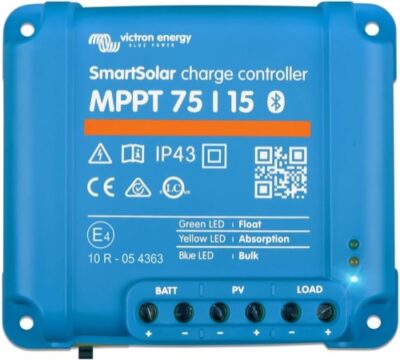
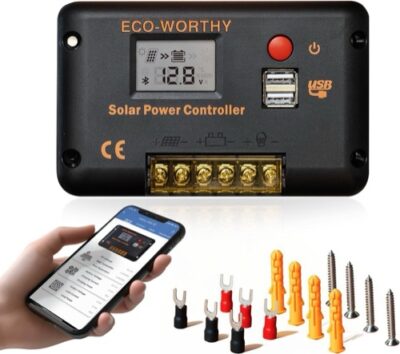
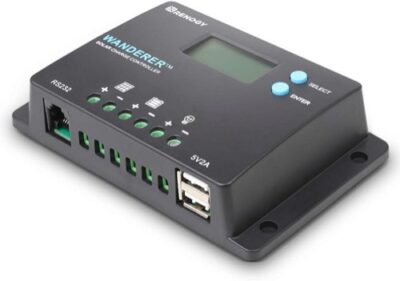
Renogy’s Wanderer 10A has a lower number but publishes 50V maximum, 130W/260W power, terminal size, and operating limits. ECO-WORTHY’s Bluetooth PWM adds app access and a published 50V ceiling, though PV Isc and power remain gaps. A small Victron provides MPPT, explicit input current, and longer warranty at a much higher initial price.
The correct alternative depends on the cost of failure. More documentation and warranty are not luxury features when the battery or travel required to service it is valuable.
Decide Whether Maintenance Is Actually the Goal
A stored camper battery may need only enough solar to offset self-discharge and small parasitic loads. In that case, a modest documented maintainer can be more appropriate than any nominal 30A controller. Measure the standing load and estimate winter solar availability; do not add panel watts to compensate for an unidentified drain.
If appliances cycle the battery daily, the project is no longer maintenance. Daily energy balance, recharge time, battery acceptance, conductor loss, and low-voltage protection then justify a properly specified controller and battery monitor. Rolokit’s value case is strongest in the first situation and weakest in the second.
A battery that repeatedly starts each morning deeply discharged is evidence that the system needs redesign, not simply a larger panel on the same undocumented controller.
For a seasonal camper, take one rested battery reading before storage and another after the first full solar day; the comparison is more informative than the controller’s percentage icon.
Pros & Cons Analysis
Based on documented specifications and owner feedback
Pros
- Very — Very low price.
- LCD — LCD and dual USB.
- Automatic — Automatic 12V/24V operation.
- Programmable — Programmable load modes.
Cons
- Check: Lead-acid only.
- Check: No published PV Voc or Isc.
- Check: No IP rating.
- Check: No communications or detailed warranty.
Bottom Line: Acceptable as a Visible Maintainer, Not a 30A Controller Recommendation
Verdict: Rolokit can keep a small supported lead-acid battery charged, and owners report both useful service and early failure. The evidence supports a cheap maintainer role, not a 30A solar-system rating.
Best reason to buy: The project resembles a single-panel camper or fountain setup, is checked regularly, and replacement is genuinely inexpensive.
Reason to pause: Missing PV, terminal, thermal, and warranty specifications combine with variable lifespan and no lithium support. Any important or scalable system deserves documented hardware.
Frequently Asked Questions
Is the Rolokit 30A PWM MPPT or PWM?
The exact model is documented as PWM. That topology does not replace checks of PV voltage, input current, output current, and battery compatibility.
What battery voltage does the Rolokit 30A PWM support?
12V / 24V automatic. Confirm detection and selection behavior in the current exact-model manual.
What is the maximum PV voltage?
Not published. Use cold-corrected array Voc rather than the panel's warm-day value.
How much solar can it handle?
Not published. The PV voltage, PV current, and battery-side charge-current limits must all be satisfied at the same time.
Does the Rolokit 30A PWM work with lithium batteries?
Open, AGM, gel, and other lead-acid batteries; not lithium. Match every charging value and low-temperature strategy to the battery documentation.
Does it include app monitoring?
No app or communications port. Verify whether any required accessory is included in the exact bundle.
Can I connect an inverter to its load terminals?
Normally no. High-current and surge loads should use a correctly fused battery-side connection unless the controller manual explicitly permits the planned load.
Who should buy the Rolokit 30A PWM?
Very small lead-acid hobby systems that need a basic LCD and USB at minimum cost.
Technical Specifications
| Brand | Rolokit |
|---|---|
| Exact model / revision / ASIN | 30A PWM (ASIN B0CSD6HGGH) |
| Controller type | PWM |
| Rated battery-side charge current | 30A nominal |
| Supported battery-system voltage | 12V / 24V automatic |
| Battery chemistry and profile support | Open, AGM, gel, and other lead-acid batteries; not lithium |
| Maximum PV open-circuit voltage (Voc) | Not published |
| Maximum PV short-circuit/input current (Isc) | Not published |
| Maximum PV power by battery voltage | Not published |
| Minimum PV/start voltage requirement | Not published for the reviewed revision |
| Load output and low-voltage disconnect | Programmable load output; exact continuous rating not published |
| Grounding topology | Not published for the reviewed revision |
| Charging stages and custom voltage control | Three-stage PWM charging |
| Temperature sensing and lithium low-temperature behavior | No external sensor or low-temperature protection documented |
| Display and local controls | LCD, buttons, and dual USB |
| App, communications, and data history | No app or communications port |
| Maximum terminal conductor size | Not published |
| Controller self-consumption | Not published for the reviewed revision |
| Published tracking/conversion efficiency | Not published |
| Cooling method and thermal derating | Not published for the reviewed revision |
| Electrical protections | Overcurrent, short-circuit, reverse-connection, and open-circuit protection; automatic recovery is claimed |
| Enclosure, ingress rating, and operating temperature | Protected dry mounting; operating range not published |
| Certifications | Not published for the reviewed revision |
| Dimensions, weight, and included accessories | Not published |
| Warranty | Not published |