
Solar Battery Comparisons
Head-to-head decisions based on current limits, surge duration, cold behavior, monitoring, dimensions, bank rules, and warranty.




Frequently Asked Questions
What should I compare between solar batteries?
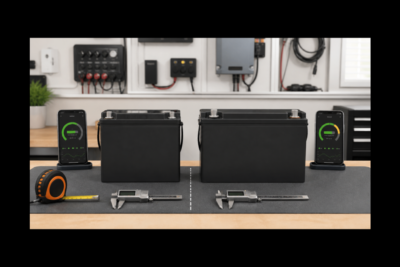
Compare nominal and usable energy, continuous charge and discharge current, surge amperage and duration, low-temperature behavior, dimensions, weight, terminals, monitoring, series/parallel rules, warranty terms, and the quality of exact-model documentation.
Are two 12V 100Ah LiFePO4 batteries equivalent?
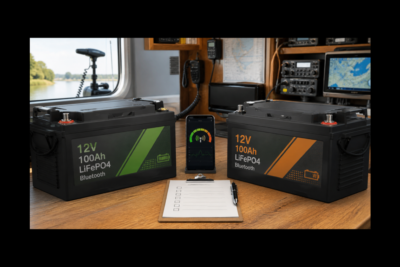
No. They may store similar nominal energy while using different BMS current limits, cold protection, cases, terminals, monitoring, bank rules, warranty structures, and internal revisions. The 100Ah label is only the starting point.
How should I compare battery surge ratings?
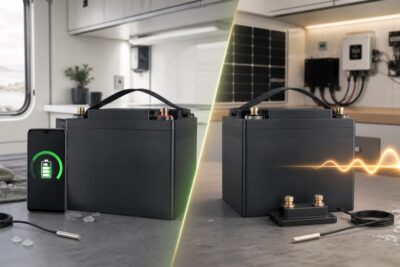
Always pair amperage with time. A 500A one-second pulse is not automatically better or worse than 300A for five seconds. Match the real load's startup curve and confirm the inverter, fuse, cable, and terminals support the same event.
Does the smaller battery always win for an RV?
No. A compact case can free valuable space, but terminals, cable bends, fuses, ventilation, and service access still need room. Weight distribution, hold-down design, temperature exposure, and current requirements can matter more than case volume.
How do I compare cold-weather protection?
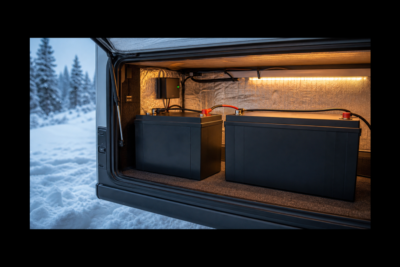
Check the charge cutoff, charge recovery, discharge cutoff, and whether heating is automatic or manual. Verify the exact model rather than borrowing features from a heated or smart sibling. Also decide how solar charging is controlled while the battery warms.
Should warranty length decide the comparison?
Warranty duration matters only with its exclusions, prorating, transfer rules, return process, and support record. Treat individual owner reports as examples of possible outcomes, not as a measured company-wide success or failure rate.