
Solar Panel Sizing & Compatibility
Work through daily energy, voltage windows, current ceilings, connectors, array wiring, weather, and safe battery charging before choosing hardware.

Frequently Asked Questions
Which solar-panel specification should I check first?
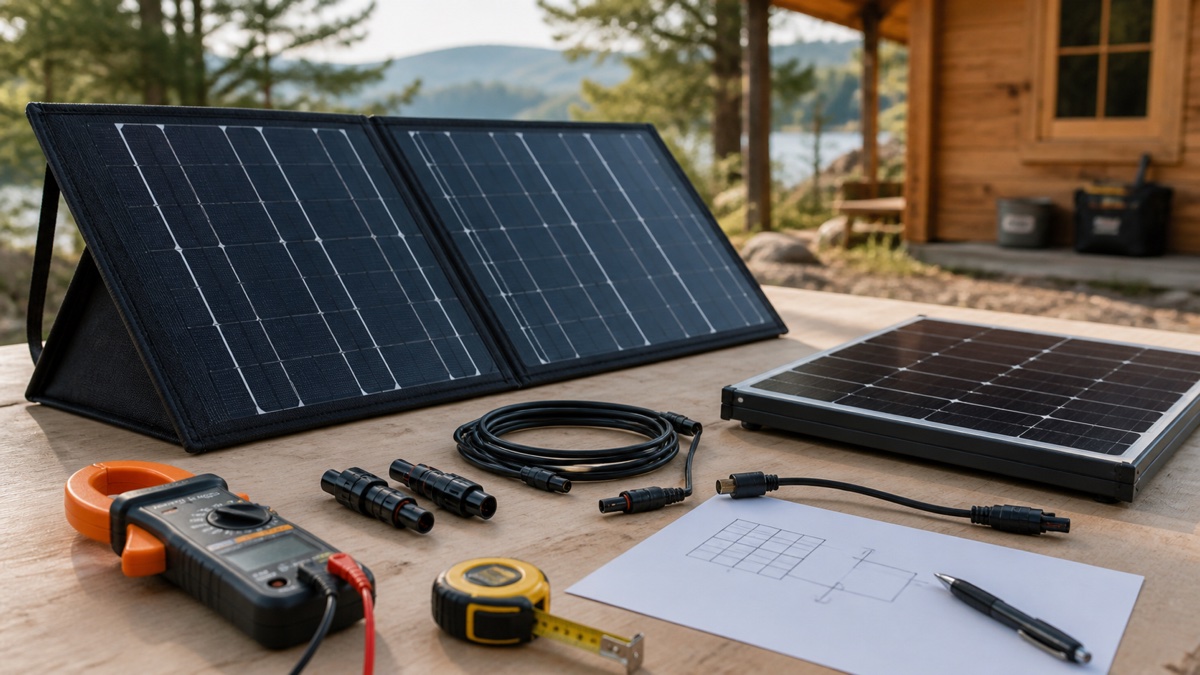
For a power station or controller, start with cold-corrected array open-circuit voltage because exceeding the absolute PV voltage ceiling can damage equipment. Then verify operating voltage, input current, allowed watts, connector, polarity, and battery-system requirements.
What is the difference between watts and watt-hours?
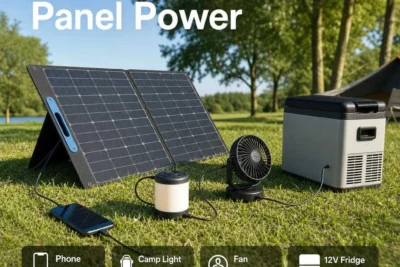
Watts describe instantaneous power; watt-hours describe energy accumulated over time. A 100W panel operating at an average 70W for four hours supplies about 280Wh before downstream losses.
Why does cold-corrected Voc matter?
Panel open-circuit voltage rises as cell temperature falls. A string that fits a controller on a warm day can exceed its ceiling in cold weather, so use the panel's temperature coefficient and the lowest design temperature or an approved manufacturer calculator.
Does an MC4 adapter guarantee compatibility?
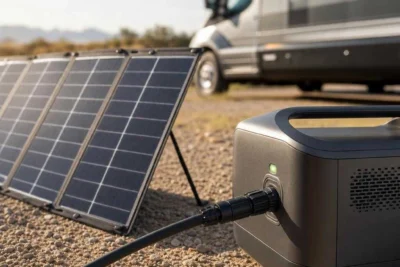
No. An adapter only changes the physical connection. Voltage range, absolute Voc, current, wattage, polarity, cable rating, and controller behavior must also match. Verify every part of the electrical path before energizing it.
When should I use a qualified installer?
Use qualified help when you cannot confidently calculate array voltage and fault current, size conductors and protection, verify grounding and disconnects, configure battery charging, or meet the requirements that apply to an RV, marine, cabin, or fixed installation.