
Solar Charge Controller Guides
Plain-English help with sizing, MPPT vs PWM, cold-corrected PV voltage, battery settings, wiring, and monitoring.

Frequently Asked Questions
What does a solar charge controller do?
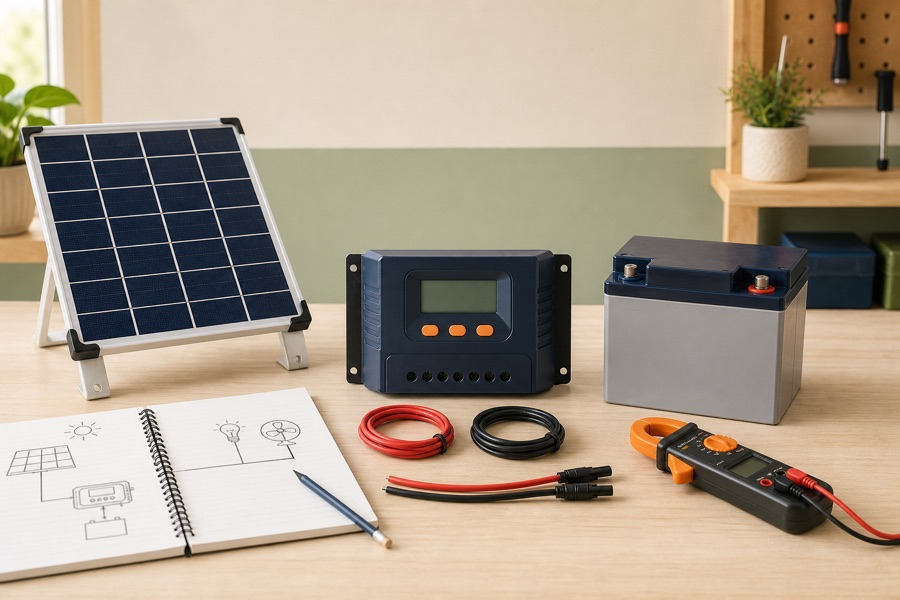
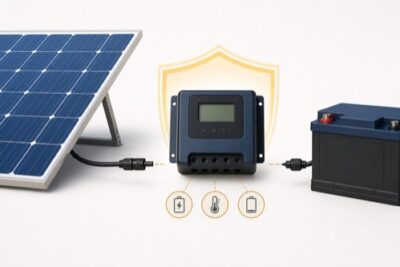
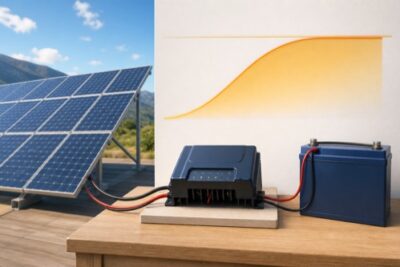
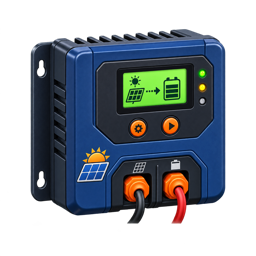
It regulates energy moving from the solar array into the battery bank. A suitable controller prevents unsafe overcharging, follows the selected battery-charging profile, and keeps panel voltage and current within the system's operating limits.
How do I size a solar charge controller?
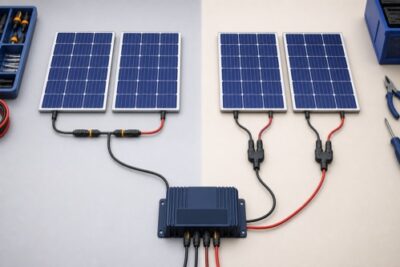
Check four numbers first: the array's cold-corrected open-circuit voltage, array short-circuit current, expected charging current, and total PV watts allowed at your battery voltage. Each must remain within the controller manufacturer's published limits. Our sizing calculator helps with the first estimate.
Why must solar-panel open-circuit voltage be corrected for cold weather?
Panel voltage rises as temperature falls. A string that stays below the controller's voltage ceiling on a mild day can exceed it during a cold morning and damage the controller. Use the panel temperature coefficient and your location's design-low temperature, then preserve the manufacturer's required margin.
What is the difference between PV input current and charge-output current?
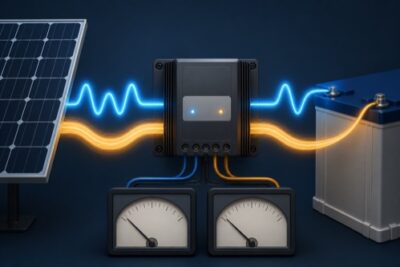
PV input current comes from the panels; charge-output current flows from the controller to the battery. An MPPT controller converts voltage as it works, so those currents are not interchangeable. Verify both limits independently rather than sizing from the output amp rating alone.
Can I use a solar charge controller with a LiFePO4 battery?
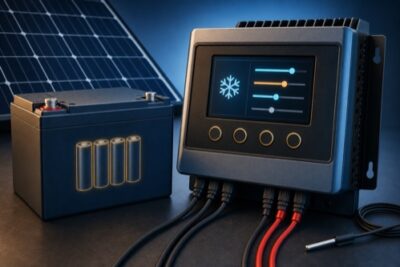
Yes, when the controller has a suitable lithium profile or adjustable voltage settings and the battery includes the required BMS protection. Match the battery maker's charging limits, disable lead-acid equalization, and address low-temperature charging before commissioning the system.
In what order should I connect a solar charge controller?
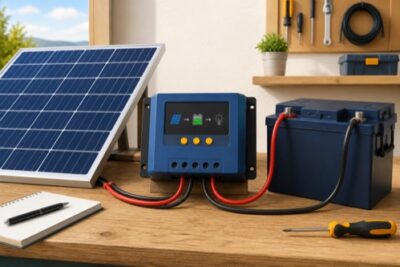
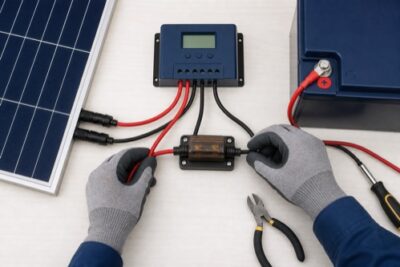
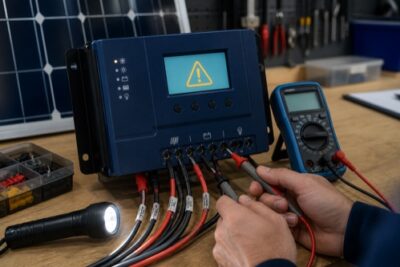
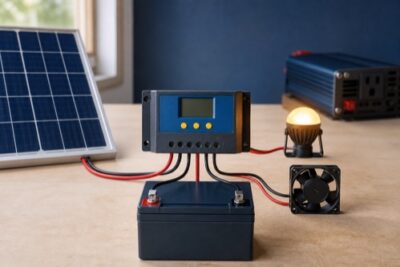
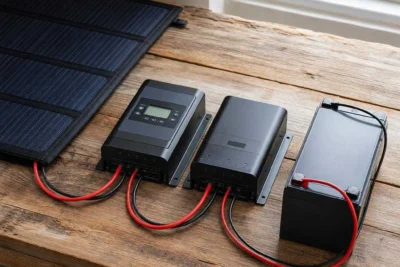
Follow the exact manual for your model. Many controllers require the battery to be connected before the panels so the unit can detect system voltage safely, but connection and disconnection order varies. Install the specified fuses or breakers and never rely on a generic sequence over the current manual.