
Choose the Right Solar Battery
Match usable energy, continuous current, surge duration, cold protection, monitoring, and bank limits before you buy.
Best Solar Battery Buying Guides
SEE ALL →
Solar Battery Comparisons
SEE ALL →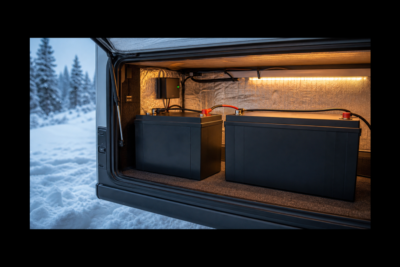
Solar Battery Guides
SEE ALL →


Latest Solar Battery Reviews
SEE ALL →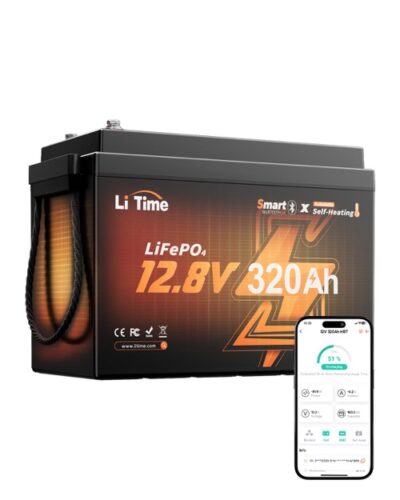
Solar Battery Bank Size Calculator
Estimate nominal battery-bank energy and amp-hours from daily use, autonomy, losses, depth of discharge, and reserve.
Solar Battery Bank Size Calculator
How much solar battery storage do I need?
Frequently Asked Questions
What type of battery is best for a solar system?
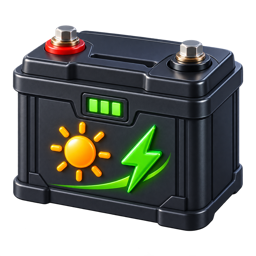
LiFePO4 is the practical default for many RV, marine, cabin, and backup systems because it offers high usable capacity, long cycle life, and no routine watering. Lead-acid can still fit a lower-cost or already-established system. The charger, temperature range, current demand, and installation rules must match the chosen chemistry.
How do I size a solar battery bank?
Add the watt-hours used by every load over the required autonomy period, divide by the usable fraction of the battery, then include conversion and wiring losses. Finally, verify that the bank and BMS can supply the inverter's continuous and startup current. Use the battery-bank calculator on this page as a first estimate.
How long will a 12V 100Ah lithium battery last?
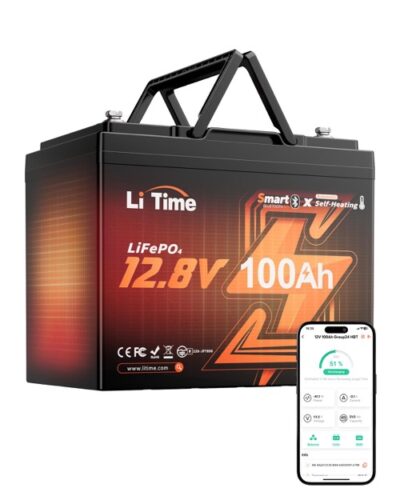
A nominal 12.8V 100Ah battery stores about 1,280Wh. A 100W DC load might run roughly 11 to 12 hours after practical losses, while an inverter load usually runs less. Actual runtime depends on load, inverter efficiency, temperature, wiring, BMS limits, and the reserve you keep.
Can solar batteries charge below freezing?
Many LiFePO4 cells must not be charged below 32°F (0°C). Some batteries block charging with the BMS, some include a heater, and basic models may provide neither. Confirm cutoff and recovery temperatures for the exact model and make the controller or enclosure provide any missing protection.
Can I connect solar batteries in series or parallel?
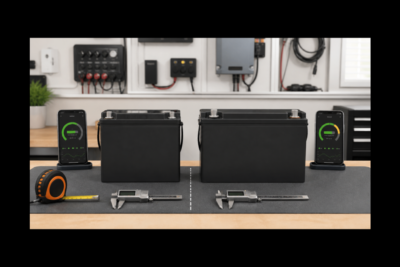
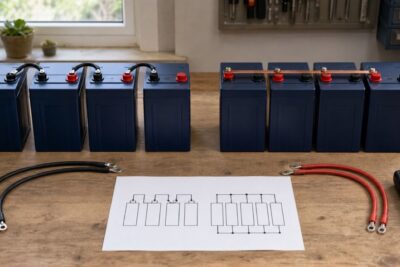
Only within the exact manufacturer's published limits and with compatible batteries at closely matched state of charge. Do not mix chemistries, capacities, ages, or unapproved revisions. Use equal-length conductors, suitable overcurrent protection, and the documented bank layout.
Do I need Bluetooth or a battery shunt?
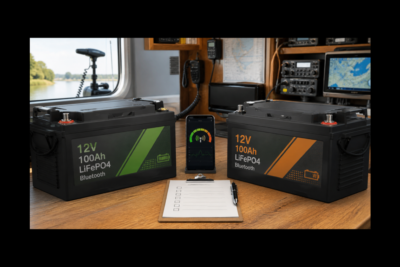
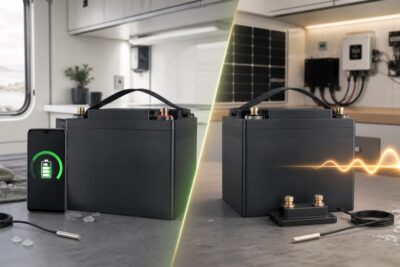
Bluetooth inside a battery is convenient for a single unit, while an external shunt can measure the net current and state of charge of an entire bank. Neither replaces correct fusing or a compatible charger. Choose the monitoring architecture before comparing installed cost.