Vatrer 12V 100Ah Self-Heating Review: Group 31 Winter Value
At a Glance
KEY FEATURES
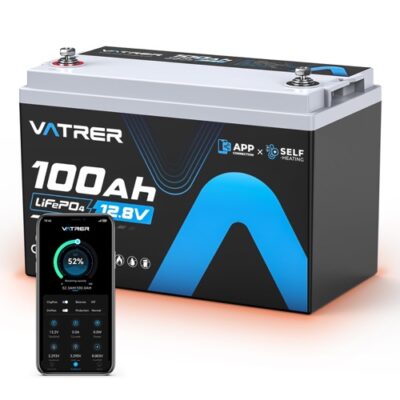
- 12.8V, 100Ah, 1,280Wh Group 31 case.
- Automatic heater starts below 0°C and stops at 5°C.
- Charging source must exceed 10A for heating.
- 100A continuous charge/discharge; no timed surge found.
- Bluetooth, IP65, and five-year limited warranty.
PROS
- Explicit heater thresholds
- Bluetooth and IP65
- 100A current limits
- Positive exact-owner application sample
CONS
- Larger Group 31 enclosure
- No timed surge specification
- 4S/parallel copy conflicts
- Captured review set is strongly positive-skewed
Group 31 Heated Value
Based on exact documentation and exact-ASIN owner evidence
How Many Vatrer 12V 100Ah Self-Heating Batteries Do You Need?
Estimate how many Vatrer 12V 100Ah Self-Heating batteries your daily energy target may require.
Solar Battery Bank Size Calculator
How much solar battery storage do I need?
Vatrer’s 100Ah heated battery competes on function rather than compactness. It is a Group 31-style unit with automatic heating, Bluetooth, and 100A continuous current. The primary sources answer the cold question well; they answer surge and large-bank configuration less cleanly.
Automatic with qualifying input.
Charge and discharge.
Do not borrow a sibling value.
The Larger Case Buys No Extra Amp-Hours
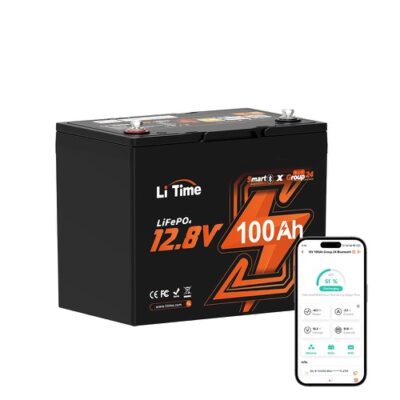
At 12.95 × 6.77 × 8.42 inches and 24.2 pounds, this is materially longer than the heated LiTime Group 24. Both store 1,280Wh nominal. The Vatrer may fit an existing Group 31 tray; it is not the logical choice when every inch is constrained.
Heating Depends on More Than Temperature
The heater starts below 32°F and stops at 41°F, but only when the charging source exceeds 10A. That makes the battery predictable on shore power and conditional on winter solar. Check actual current after wire and controller losses, especially near dawn or under snow.
Why can a sunny panel fail to start heating?
Panel voltage can be present while current remains below the heater’s threshold. Irradiance, shading, controller operation, cable loss, and concurrent loads all affect current reaching the battery.
Can the battery discharge while cold?
Yes within its documented discharge range. That does not mean it is warm enough to accept charge.
100A Continuous Is the Only Safe Published Load Boundary
Vatrer publishes 100A maximum continuous charge and discharge but no exact timed peak in the reviewed material. For inverter planning, use 100A as the ceiling and require a measured startup curve. Bluetooth can help observe steady current but may not sample a very brief peak accurately.
Surge rule: absence of a published pulse is not a zero rating, but it is also not permission to invent one. Obtain an exact-model answer before approving a surge-dependent appliance.
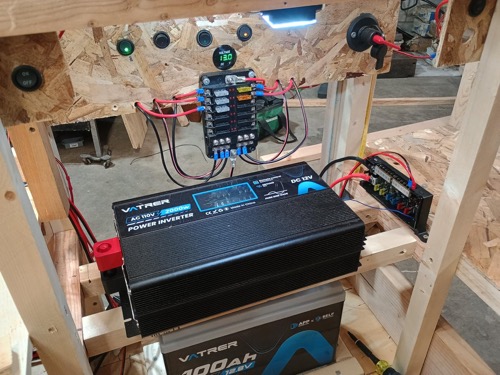
The Bank Limit Has an Editorial Asterisk
The current technical table permits four in series and ten in parallel, while other official page copy uses 4S4P. We present both rather than silently choosing the larger number. For a normal one-to-four battery bank, this may not change the project. For a ten-parallel design, written confirmation and a professional current-sharing/protection plan are essential.
| Bank size | Confidence | Action |
|---|---|---|
| Single battery | High | Follow exact current, temperature, and installation limits |
| Up to 4P / 4S | Moderate/high | Use matched units and current manual |
| 5–10P | Conflict present | Get exact-revision confirmation before purchase |
Positive Owner Evidence Needs a Confidence Discount
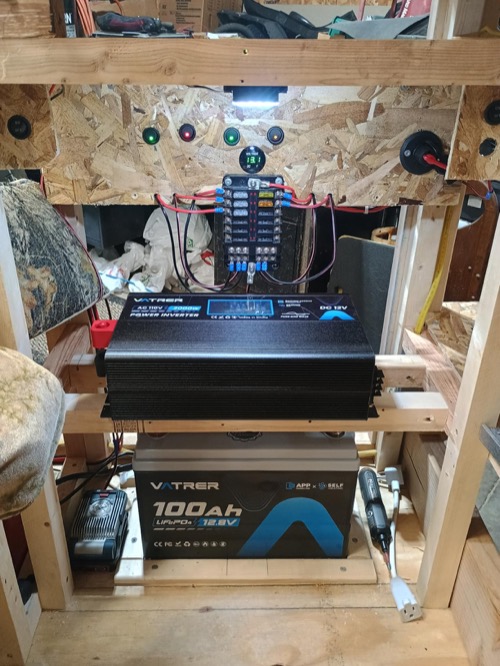
The retained 14-review sample is almost entirely positive and includes heater, app, and real-installation reports. That is useful for applications but weak for understanding failure and remedy. A positive-only capture should not be scored as if it proves superior reliability.
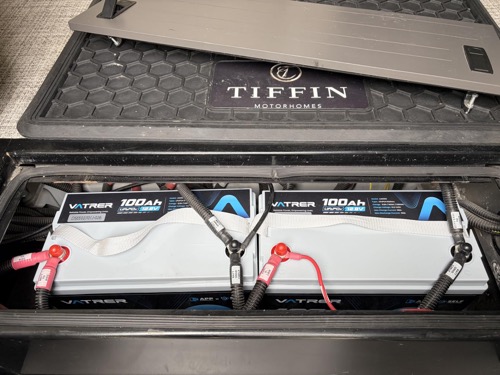
The current five-year warranty also changes remedy and shipping terms later in the period. Read the policy as a schedule, not a five-year promise of identical replacement treatment.
Vatrer 100Ah Heated: Final Recommendation
Choose Vatrer when a Group 31 tray, automatic heating, Bluetooth, and a moderate 100A load fit. Choose LiTime’s heated Group 24 when compactness and a documented one-second pulse matter more. Avoid using Vatrer’s larger bank or surge capability until the exact missing answers are resolved.
Pros & Cons Analysis
Based on documented specifications and owner feedback
Pros
- Explicit heater thresholds
- Bluetooth and IP65
- 100A current limits
- Positive exact-owner application sample
Cons
- Larger Group 31 enclosure
- No timed surge specification
- 4S/parallel copy conflicts
- Captured review set is strongly positive-skewed
Bottom Line: Solid Heated Value With Two Missing Answers
Vatrer's 100Ah heated Group 31 model offers credible heater logic, Bluetooth, IP65, and 100A continuous current. Its missing timed surge and conflicting maximum-parallel language prevent it from leading on documentation. It is best for moderate loads and modest banks after exact revision confirmation.
Frequently Asked Questions
How does Vatrer self-heating work?
Heating starts below 32°F (0°C) and stops at 41°F (5°C) when charging input exceeds 10A. Confirm winter solar or charger output at the battery, not only controller nameplate current.
Is it Group 24?
No. The exact current model is approximately 12.95 × 6.77 × 8.42 inches, a Group 31-style enclosure.
What is the surge current?
No attributable timed surge value was found for the exact current model. Design from its 100A continuous limit unless Vatrer confirms a pulse in writing.
Can ten batteries be connected in parallel?
The current technical table says up to ten parallel and four series, while other page copy says 4S4P. Treat 4P as the conservative planning value until Vatrer confirms the delivered revision and larger layout.
How strong is the review sample?
Fourteen captured exact-ASIN reports are almost entirely positive. They demonstrate applications but provide poor visibility into failure and remedy outcomes, so editorial confidence is reduced.
Technical Specifications
| Brand | Vatrer Power |
|---|---|
| Exact model | D-12V-100AH-Black-H-10-KB |
| Battery chemistry | LiFePO4 (LFP) |
| Nominal voltage | 12.8V |
| Rated capacity | 100Ah |
| Rated energy | 1,280Wh |
| Recommended depth of discharge | Up to 100% DoD; the manufacturer pairs the cycle figure with deep-cycle use but not one exact DoD condition |
| Recommended charge current | 20A |
| Maximum continuous charge current | 100A |
| Maximum continuous discharge current | 100A |
| Peak discharge current | Not published for the exact current model |
| Recommended charge voltage | 14.2–14.6V (CC/CV) |
| Low-temperature charge protection | Heating starts below 32°F (0°C) and stops at 41°F (5°C); charge input must exceed 10A |
| Self-heating | Yes; automatic |
| Charge / discharge temperature | Charge: -4–122°F (-20–50°C) with heating; discharge: -4–140°F (-20–60°C) |
| BMS protections | Overcharge, over-discharge, overcurrent, short-circuit, and temperature protection |
| Monitoring | Built-in Bluetooth with Vatrer app |
| Series / parallel configuration | Current technical table permits up to 4 in series and 10 in parallel; other page copy says 4S4P, so verify large banks |
| Terminals | M8 bolts |
| Dimensions | 12.95 × 6.77 × 8.42 in (Group 31) |
| Weight | 24.2 lb |
| Ingress rating | IP65 |
| Cycle-life specification | At least 5,000 cycles; exact test condition is not stated |
| Warranty | 5-year limited warranty; current policy changes remedy/shipping terms after year 3 |