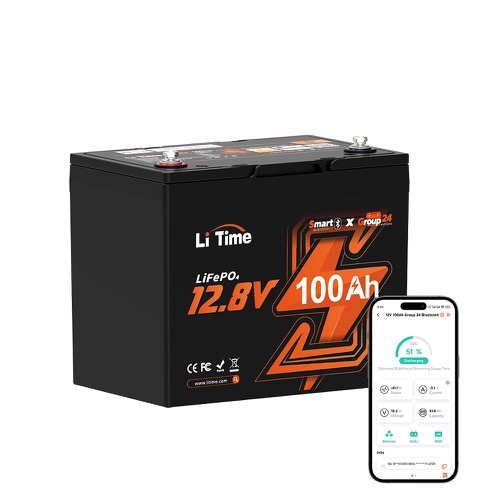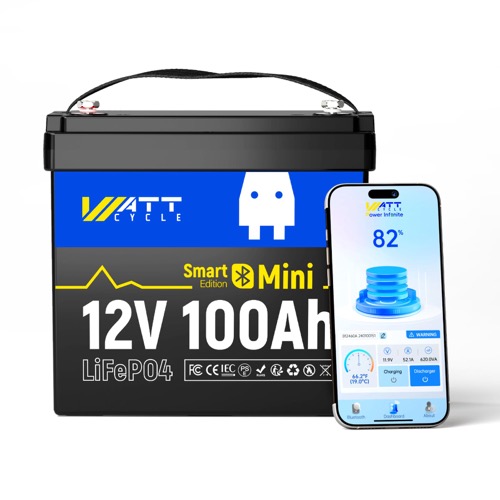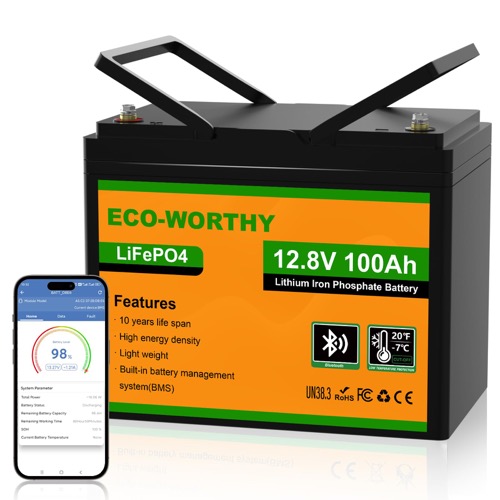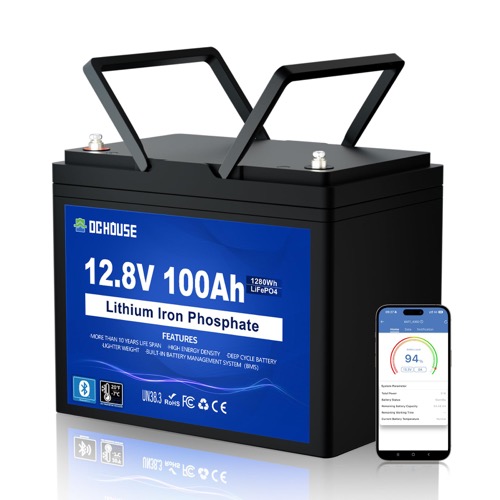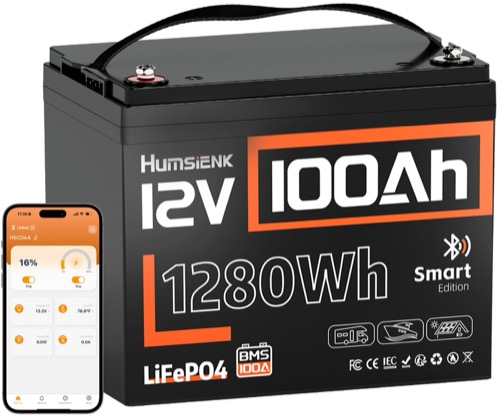
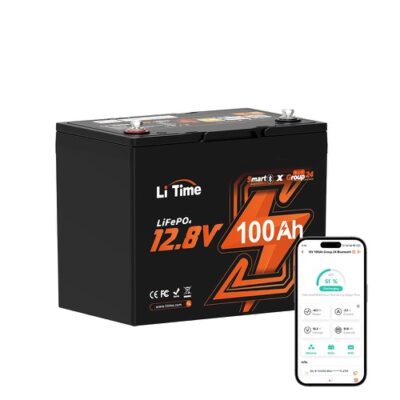
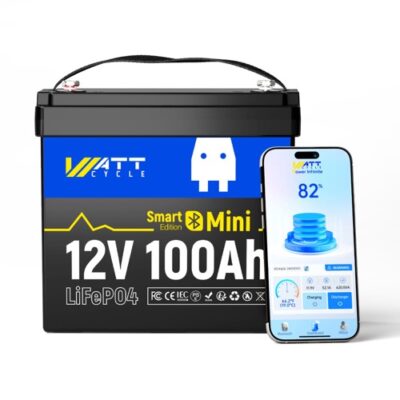
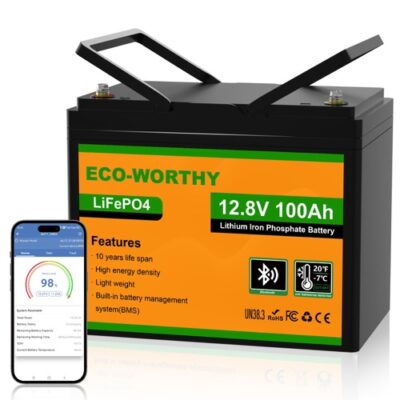
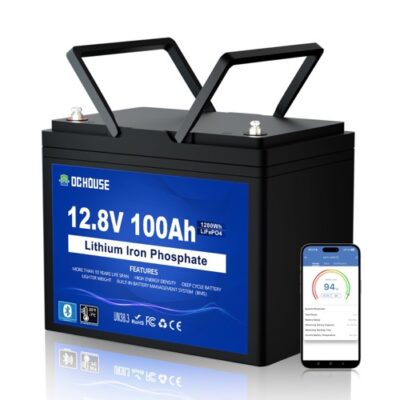
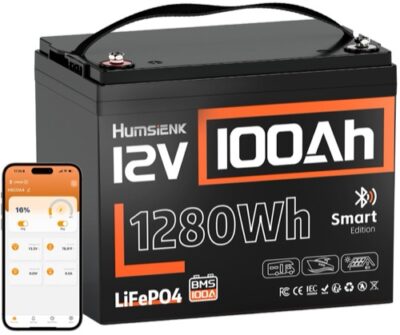
Bluetooth is useful when it answers a real ownership question: which hidden battery is carrying current, why did the BMS disconnect, and how much energy is left before an overnight load becomes risky? It is not automatically evidence of better cells, capacity, warranty, or reliability. We ranked five exact 100Ah batteries on the complete system around the app.
How We Prevented the App From Deciding the Ranking
Every candidate had to resolve to one Amazon ASIN and one manufacturer identity. We then normalized 24 specification rows in the same order and merged exact-ASIN helpful and critical owner evidence. App convenience could improve Build & Ownership, but it could not erase a missing surge duration, unclear case identity, or support pattern.
We did not convert Amazon stars into editorial scores. The review actor was intentionally asked for positive and critical evidence, so its merged rating distribution is not a random census. Owner reports expose applications and possible fault modes; manuals define published boundaries.
The Five Products Solve Three Different Problems
Documentation-first
LiTime publishes the most complete exact boundary set, making it easier to design and compare.
Space-first
WattCycle uses a Group 22NF-style base when a normal Group 24 case will not fit.
Value-first
DC HOUSE, ECO-WORTHY, and HumsiENK can reduce upfront cost while shifting more verification to the buyer.
The products in this Best article are unique to this Bluetooth roster. None is reused in the heated Best article, so each page evaluates a genuinely different buying set rather than rearranging the same five batteries.
Continuous Current Is Nearly a Tie; Surge Is Not
All five publish 100A continuous charge and discharge. At 12.8V nominal that is about 1,280W DC, before sag, inverter loss, cable drop, and temperature. Their differences appear above 100A: LiTime lists 500A for one second; WattCycle 110A for ten seconds and 150A for one; DC HOUSE 130A for ten seconds. ECO-WORTHY and HumsiENK lack an attributable timed pulse in the reviewed exact evidence.
Bluetooth Accuracy Depends on the Question
A battery app is good at answering “is current flowing?” and “which protection is active?” It is less authoritative for “did this battery independently deliver exactly 100Ah?” Some ECO-WORTHY owners report small parasitic loads not fully reflected in SOC. WattCycle and HumsiENK samples include range or pairing complaints. LiTime and DC HOUSE also have connection exceptions despite broad positive use.
| Question | Best tool | Why |
|---|---|---|
| What is happening inside one battery? | Built-in app | Cell, temperature, protection, and individual current clues |
| How much net energy did the complete bank use? | Properly placed shunt | Captures every charger and load crossing the bank bus |
| Does the battery deliver rated capacity? | Controlled attributable load test | Documents current, voltage, cutoff, temperature, and delivered energy |
None of These Five Heats Itself
Every candidate provides some form of low-temperature charge protection, but none contains a heater. LiTime gives a clear 0°C cutoff and 5°C recovery; ECO-WORTHY publishes -7°C and -2°C; DC HOUSE gives the cutoff without recovery; WattCycle similarly lacks an exact recovery value; HumsiENK’s family manual uses a broad protection band.
Cold-weather rule: a battery can power loads while refusing charge. Working lights do not prove that morning solar can safely enter cold cells.
Installation Fit: Labels Are Only the First Measurement
WattCycle is smallest. LiTime, ECO-WORTHY, and HumsiENK use Group 24 dimensions. The exact DC HOUSE case is taller and should not be assigned a Group 24 label without evidence. In every case, add lug stack, insulated cover, cable bend, restraint, fuse, disconnect, and service space.
- Confirm exact delivered model and app before permanent wiring.
- Record arrival condition and a moderate known-load baseline.
- Use a shunt if small overnight loads or multi-battery accounting matter.
- Preserve serial, order record, packaging, and support correspondence.
Final Ranking by Buyer Type
Choose LiTime for a conventional Group 24 smart system whose startup fits one second. Choose WattCycle when width is the hard constraint. Choose ECO-WORTHY when explicit cold thresholds and app data outweigh a missing surge value. Choose DC HOUSE for a documented moderate 10-second overload at value pricing, with stronger commissioning discipline. Choose HumsiENK only when the price compensates for unresolved surge, cold, and warranty details.