
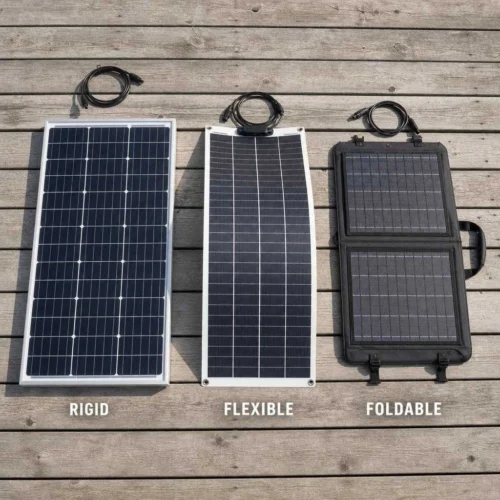
Flexible vs rigid solar panels is mainly a mounting and heat-management decision. Rigid glass modules usually win on longevity, cooling, value, and replaceability. Flexible laminates win when low weight, thin profile, or a gently curved surface makes a frame impractical.
Choose the Constraint Before the Panel
Rigid framed panel
Best when a rack can support the module and leave airflow behind it.
- Lower cost per watt
- Replaceable mechanical attachment
- Published wind/snow loads more common
Flexible laminate
Best when weight, height, or gentle curvature blocks a framed module.
- Very low profile
- Light enough for sensitive surfaces
- Adhesive or eyelet mounting options
Heat Is the Flexible Panel’s Hidden Design Problem
Bonding a laminate flat to a hot roof removes rear airflow. Higher cell temperature reduces voltage and repeatedly stresses the encapsulation and adhesive system. A light-colored, ventilated mounting layer can help only when the panel manufacturer permits it.
Installation rule: Follow the exact bend radius and adhesive guidance. “Flexible” does not mean foldable, and repeated flexing can damage cells or interconnects.
Mounting, Removal, and Roof Service
| Decision | Rigid | Flexible |
|---|---|---|
| Attachment | Brackets and frame holes | Eyelets, approved adhesive, or mounting layer |
| Cooling | Air gap is straightforward | Requires deliberate design |
| Replacement | Usually unbolt and reconnect | Adhesive removal may damage roof or panel |
| Roof inspection | Access depends on rack | Hidden surface can be difficult to inspect |
| Structural data | Wind/snow loads often published | Less consistently documented |
A Surface-Specific Checklist
- The roof maker permits the selected attachment and sealant.
- The panel’s minimum bend radius exceeds the actual curve.
- Water can drain without pooling around cables or adhesive edges.
- Cable penetrations have strain relief and service access.
- Removal is possible without sacrificing the whole roof surface.
Where a Portable Foldable Panel Fits
A foldable panel is neither a rigid roof module nor a flexible laminate. It is designed for repeated setup and storage, usually with fabric, hinges, and kickstands. Choose it when theft, shade parking, seasonal storage, or the ability to aim the panel matters more than unattended charging.
Rigid usually wins if structure and height allow.
Flexible may be the only practical fit, with thermal planning.
Use marine-suitable routing, dry connections, and manufacturer-approved mounting.
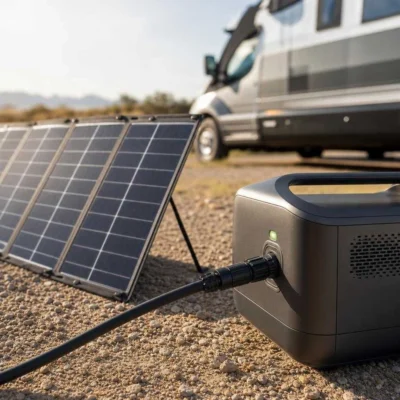
A foldable panel avoids permanent roof work and can chase sun.
Lifecycle Cost Beats Purchase Price
Include mounting hardware, labor, sealant, roof preparation, removal, replacement access, and downtime. A flexible panel can be worth its premium when it avoids a heavy rack. A cheaper laminate is poor value if removing it damages an expensive roof membrane.
The Format Decision
Default to rigid for a serviceable permanent installation. Move to flexible only when a real physical constraint justifies the thermal and replacement tradeoffs. Choose foldable when the panel travels or the vehicle should park in shade while the panel sits in sun.


Leave a Reply