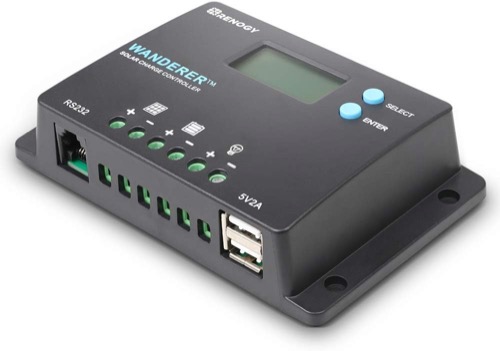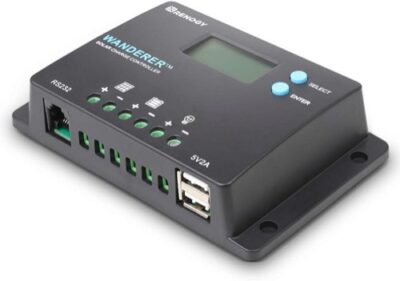
Budget solar charge controllers should reduce the purchase cost without making the battery or wiring depend on missing information. The Renogy Wanderer 10A is the one retained starting point from this page’s reviewed allocation. It is a small-system candidate, not a verified lowest-price winner or a substitute for a controller with the capacity your system needs.
Set a Compatibility Floor Before a Price Ceiling
Start with the battery and panel data, then determine the minimum documented controller requirements. That sequence prevents a low price from becoming a reason to ignore an unanswered voltage or current question. A cheap unit is not a usable bargain if its suitability cannot be established.
This does not mean every missing secondary feature disqualifies a controller. A simple interface or limited history may be acceptable on a small charging job. Missing information that prevents an input-limit or battery-fit check is a different kind of omission.
The shorter list reflects that distinction. Several low-cost candidates in the reviewed pool leave important electrical boundaries unresolved. They are not retained merely to fill five places, and their removal is not a claim that all inexpensive controllers are defective.
What Makes Wanderer 10A Worth Pricing
The Wanderer 10A offers a documented starting point for an appropriately small PWM system. The benefit is not the largest current number for the money; it is the ability to compare the proposed array and battery with published limits and decide whether this modest class of controller is suitable.
The exact model matters. The larger Wanderer Li 30A is a different controller, not simply the same feature set multiplied by three. If the small controller does not fit, do not assume that any similarly named replacement solves the problem without another compatibility check.
Read the linked product review for the operating tradeoffs, then confirm the delivered model and manual. This page does not supply a current price comparison or promise that the retained candidate is available from every seller. Price it only after deciding that its role matches the project.
Count the Items That the Checkout Price Leaves Out
A small system still needs suitable conductors, protective devices, mounting and connections. Some installations also need monitoring or other accessories. Those costs can be significant compared with the controller itself, so a bare-unit price can be a poor measure of the complete purchase.
Existing equipment can change the comparison. Reusing a compatible panel and suitable wiring may keep costs down, while forcing a new controller into an unsuitable arrangement may add adapters, relocation or replacement work. Do not assume that every part already owned is safe or appropriate to reuse.
Include the practical cost of diagnosing and replacing the unit as well. A controller in an accessible small system is different from one installed at a remote site. The cheaper hardware choice can be less attractive when a later service visit dominates the original saving.
| Cost item | Question before buying | False saving to avoid |
|---|---|---|
| Controller | Does this exact model fit the equipment? | Buying only by the faceplate amp number |
| Wiring and protection | What does the installation actually require? | Reusing unsuitable parts to meet the budget |
| Accessories | Are required functions included? | Comparing a bare unit with a complete package |
| Future service | Can the controller be inspected and replaced? | Ignoring access and repeat installation work |
Use a Small Controller for a Small, Matched Job
PWM is appropriate only where the panel and battery arrangement suit it. A panel below a controller’s absolute voltage ceiling is not automatically an efficient PWM match. Choose the architecture deliberately rather than assuming that any controller which turns on is the best use of the panel.
Do not add panels solely because a larger total wattage looks better value. Verify input voltage, current and power limits with the actual arrangement. Battery-side current and the battery’s permitted charging conditions remain part of the decision.
Use the controller sizing guide when the project’s required class is unclear. If the correct answer is a larger or different controller, adjust the equipment budget instead of treating the small candidate here as a universal low-cost solution.
Distinguish Optional Convenience From Necessary Control
A detailed app, longer history or a more elaborate display may be optional for a simple charging task. It can be sensible to spend less on those conveniences when there is still a practical way to inspect operation. Decide which information is genuinely needed rather than counting features.
Correct battery charging is not an optional convenience. Confirm chemistry support, settings and temperature requirements regardless of price. A lithium menu option does not establish how low-temperature charging is controlled, and protective battery electronics do not justify incorrect configuration.
The controller fundamentals guide explains the role of regulation. Understanding that role helps distinguish a harmless feature omission from a missing capability that affects the basic suitability of the system.
Know When a Higher Budget Is the Better Decision
Spend more when a documented requirement demands it: a different bank voltage, a larger charging job, another panel architecture, a more suitable environment or a monitoring need that the small system cannot meet. That is a reasoned equipment choice, not an automatic recommendation to buy premium hardware.
This page is research-led and does not claim hands-on testing by Solar Power Picks. The shortlist uses the available documentation and the research supporting the linked review. Owner observations can identify issues to investigate, but cannot establish that an inexpensive product will last a specified number of years.
Before ordering, compare the current complete-package price and exact seller selection. Keep the battery and array requirements unchanged while shopping. If no suitable controller fits the original budget, revise the project rather than using a lower price to erase an electrical constraint.
- Write down the minimum electrical requirements first.
- Separate optional monitoring features from necessary charging control.
- Compare total installed cost, not only the unit price.
- Leave the shortlist when the project requires a different controller class.