Solar Power Picks logo with sun, solar panel, and green energy icon

  • Home
  • Reviews
  • Best
    • Best portable power stations
    • Best Solar Panels
    • Best Solar Generators
    • Best Solar Charge Controllers
    • Best Solar Batteries
  • Guides
    • Portable Power Stations Guides
    • Solar Panels Guides
    • Solar Generators Guides
    • Solar Charge Controllers Guides
    • Solar Batteries Guides
  • Comparisons
    • Portable Power Stations Comparisons
    • Solar Panels Comparisons
    • Solar Generators Comparisons
    • Solar Charge Controllers Comparisons
    • Solar Batteries Comparisons
  • Calculator
Home / Solar Charge Controllers / Best / Best Solar Charge Controllers for LiFePO4: 5 Configurable Picks

Best Solar Charge Controllers for LiFePO4: 5 Configurable Picks

OUR PICKS

Victron SmartSolar 150/35 Review: Built for Series Voltage, Not Raw Amps

Best for High-Voltage Arrays

Victron SmartSolar 150/35 Review: Built for Series Voltage, Not Raw Amps

Check price at Amazon Jump to details
Renogy Rover Lite 60A Review: Serious Capacity Demands Serious Terminations

Best High-Current Renogy

Renogy Rover Lite 60A Review: Serious Capacity Demands Serious Terminations

Check price at Amazon Jump to details
Victron SmartSolar 100/50 Review: 50A Is Powerful, 100V Is the Catch

Best 50A Bluetooth Pick

Victron SmartSolar 100/50 Review: 50A Is Powerful, 100V Is the Catch

Check price at Amazon Jump to details
ECO-WORTHY 12A Boost MPPT Review: A Specialist, Not a Normal Controller

Best Boost Controller

ECO-WORTHY 12A Boost MPPT Review: A Specialist, Not a Normal Controller

Check price at Amazon Jump to details
Bateria Power SunRock 10A Review: Compact MPPT with a Narrow PV Window

Best Compact Portable Pick

Bateria Power SunRock 10A Review: Compact MPPT with a Narrow PV Window

Check price at Amazon Jump to details

The best solar charge controller for LiFePO4 is the one that fits the battery’s voltage, permitted charge current, BMS behavior, and temperature strategy—not the one with the most prominent lithium icon. Array Voc and Isc still matter, but lithium adds a second design layer around settings, cold charging, disconnect recovery, and balancing.

That layer is easy to miss. A controller may offer user-defined voltages yet have no local temperature input; another may support remote sensing only after an accessory is added. A specialized boost controller can charge a 48V lithium bank from a low-voltage panel but be completely wrong for an ordinary 12V battery.

These rankings use exact-model electrical documentation and captured owner evidence. Solar Power Picks did not test charging curves or cold cutoffs, so each recommendation identifies which component must supply the protection that the controller itself does not document.

LiFePO4 rule — “Lithium compatible” is a starting label. The finished system must identify exact voltage/current settings, eliminate inappropriate equalization, and name the device that blocks charging when cells are too cold.

Five Picks for Five Different Lithium Systems

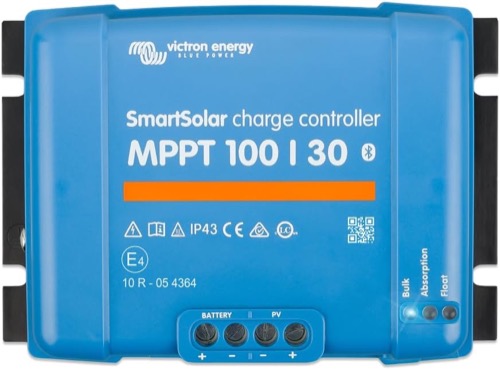
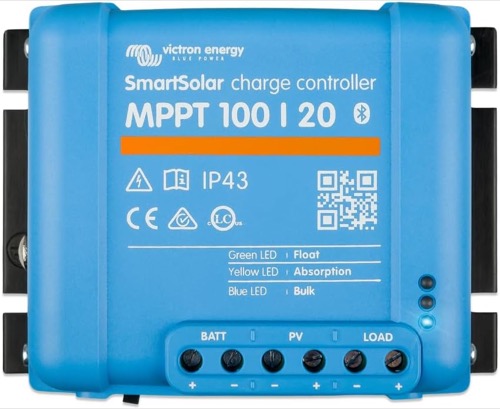
The roster intentionally spans voltage-led, current-led, boost, and portable systems. The two Victron models illustrate a trade: 150/35 favors series-string voltage and 48V banks, while 100/50 favors more output current and a larger published PV Isc allowance on 12V/24V banks.

Product LiFePO4-Specific Badge Type / Output PV Boundary Battery System Strongest Fit
Victron SmartSolar 150/35 Best for High-Voltage Strings MPPT / 35A 150V Voc / 35A Isc 12V / 24V / 36V / 48V Series-rich 24V–48V systems
Renogy Rover Lite 60A Best High-Current Multi-Voltage Pick MPPT / 60A 150V Voc; Isc not published in reviewed evidence 12V / 24V / 36V / 48V Large banks that can accept 60A
Victron SmartSolar 100/50 Best 50A Documented Input Pick MPPT / 50A 100V Voc / 60A Isc 12V / 24V 700W/1,400W current-focused arrays
ECO-WORTHY 12A Boost MPPT Best Low-to-High Voltage Specialist Boost MPPT / 12A 216W from 12V-class PV; 432W from 24V-class PV 24V / 36V / 48V / 60V / 72V Low-voltage panels charging a higher-voltage bank
Bateria Power SunRock 10A Best Compact Portable Pick MPPT described / 10A 15V–30V PV; 30V ceiling 12V One-panel portable LiFePO4 systems

The SunRock topology is described by its manufacturer as MPPT but was not independently verified in the evidence. The ECO-WORTHY is a boost design, not a conventional buck controller. These caveats materially change product fit rather than serving as footnotes.

How We Chose the Best Solar Charge Controller for LiFePO4 Systems

Battery compatibility received equal weight with array compatibility. We checked supported nominal voltage, profile/customization options, charge-current ceiling, sensor path, documented low-temperature behavior, and monitoring. A high score required more than a preset; it required enough electrical data to understand the surrounding system.

Owner evidence refined the risks. Victron users repeatedly praise app configuration but report enclosure-dependent Bluetooth range. The Renogy 60A sample includes a serious melted-terminal anecdote. An ECO-WORTHY owner described smoking PV wiring after a setup fault and higher current, while a SunRock owner discovered that undersized wire—not the controller—was limiting output.

Criterion Why LiFePO4 Buyers Should Care Weight
Exact battery voltage/current fit BMS and cell limits can disqualify an otherwise capable controller High
Cold-charge strategy Charging cold cells can cause permanent damage High
Array voltage/current documentation Lithium support cannot excuse an unsafe PV design High
Configurability and recovery Settings must survive resets and coordinate with BMS disconnects Medium
Measurement/monitoring Actual battery-terminal voltage should be verified Medium
Owner installation patterns Terminal heat, wire loss, and app access affect real operation Medium

Evidence note — No controller here receives credit for a cold cutoff unless the reviewed system documents the sensor and configured behavior. A compatible external battery/BMS strategy may still make the product suitable.

Best for High-Voltage Strings: Victron SmartSolar 150/35

The 150/35 publishes the most useful voltage-led envelope in this group: 150V maximum PV Voc, 35A maximum array Isc, and battery support spanning 12V through 48V. Its power table reaches 500W at 12V, 1,000W at 24V, 1,500W at 36V, and 2,000W at 48V. Built-in Bluetooth, VE.Direct, custom charging, IP43 protection, and a five-year warranty strengthen the design case.

Choose it when the array needs longer series strings, the PV cable run benefits from higher voltage, or a 48V battery is part of the plan. Its 35A output is the constraint: on a low-voltage bank, a 50A controller may process a larger current-focused array even with less voltage headroom.

Victron can use compatible external battery sensing and configure low-temperature behavior, but the protection must be deliberately assembled and proven. Do not infer that the controller’s own enclosure temperature is battery-cell temperature.

Best High-Current Multi-Voltage Pick: Renogy Rover Lite 60A

Renogy combines a 150V PV ceiling with 60A charge output and a four-voltage power table: 900W at 12V, 1,800W at 24V, 2,000W at 36V, and 3,200W at 48V. A local screen supports phone-free setup, while app monitoring requires compatible optional RS485 hardware.

This is the strongest capacity fit for a large LiFePO4 bank whose manufacturer permits 60A. It is also the product that demands the most respect at battery-side terminations. One owner described two melted-terminal incidents across replacement units; that single account cannot establish prevalence, but it makes conductor preparation, exact torque, strain relief, heat inspection, and service access non-negotiable.

PV Isc was not published in the reviewed evidence. Resolve it before adding parallel strings, and record every user-defined voltage/current setting so a reset cannot silently restore an incompatible profile.

Best 50A Documented Input Pick: Victron SmartSolar 100/50

The 100/50 trades away series voltage and 48V battery support to gain current. It supplies 50A on 12V/24V banks, permits 700W or 1,400W of nominal PV, and publishes a 60A array Isc ceiling. That makes it especially attractive for a larger parallel-array layout where input-current documentation matters.

The 100V ceiling is the catch. Three modules in series can exceed it after cold correction even when warm-day values look comfortable. Owners who need a long roof-to-controller run or more series panels should compare the 150/35 rather than assuming higher output current means a larger input envelope in every dimension.

Like the 150/35, it uses built-in Bluetooth and an external-sensing ecosystem rather than a numeric screen. It is the better lithium controller when 12V/24V charge current dominates and the array fits cleanly below 100V.

Best Low-to-High Voltage Specialist: ECO-WORTHY 12A Boost MPPT

The ECO-WORTHY 12A solves the inverse of a normal controller problem. It raises lower PV voltage to charge 24V, 36V, 48V, 60V, or 72V batteries. Published allowances are 216W with a 12V-class input or 432W with a 24V-class input, and the battery-side output ceiling is 12A.

This can make portable 12V/24V panels useful with a 48V RV bank, boat lift, mobility battery, or cabin system. It cannot charge an ordinary 12V bank, and it must not be fed a high-voltage string on the assumption that all MPPT controllers work in the same direction.

One owner described PV wiring becoming hot and smoking after setup trouble and increased input. Low input voltage can require substantial current for a given power; missing reviewed input-current and terminal data make a documented conductor/protection design essential. This pick is brilliant for the right voltage relationship and dangerous as a casual substitute.

Best Compact Portable Pick: Bateria Power SunRock 10A

SunRock supports 12V lead-acid and LiFePO4 selections in a small enclosure with local LCD controls. The published PV operating range is 15V–30V, with 30V as the ceiling. Owner uses include motorcycles, boats, a UTV, radio equipment, and portable battery boxes.

Its narrow voltage window is both feature and limitation: one compatible “12V-class” module can fit, while series expansion generally cannot. Maximum PV Isc and watts were not published. The sample also contains a dead-on-arrival unit, an hour-long early failure, and radio-frequency noise that one amateur-radio operator mitigated with a toroid.

Choose it only for a small, protected, meter-verified 12V system. A portable label does not make the electronics weatherproof, and no controller-managed low-temperature lithium cutoff was documented.

Select by Battery Architecture

Product Suitable Lithium Context Best For Skip If Critical Verification
Victron 150/35 24V–48V bank with series-array voltage priority High PV voltage and documented Isc More than 35A output matters External sensing/cold strategy and 150V cold Voc
Renogy 60A Large 12V–48V bank permitting high charge current Maximum output capacity Terminations cannot be inspected PV Isc, torque, heat, exact profile
Victron 100/50 12V/24V bank with parallel/current-heavy array Published 60A PV Isc and 50A output 48V bank or long string is planned 100V cold headroom
ECO-WORTHY Boost Low-voltage PV charging a 24V–72V battery Specialized voltage uplift PV voltage is above battery charge voltage Input current, conductor heat, connection order
SunRock 10A One small 12V-class panel and portable 12V battery Compact local display Expansion, app, or exposed mounting is needed 15V–30V window, missing Isc/watts

Build the LiFePO4 Charging Strategy

Start with the Battery’s Charge Envelope

Record nominal voltage, cell count, maximum charge voltage, recommended and absolute current, balance behavior, float policy, and temperature limits from the exact battery manual. “12V LiFePO4” products can still differ in preferred charge ceiling and BMS behavior.

Set the controller within those limits and cap current when the battery requires less than the hardware can deliver. A 60A controller is useful only if the bank, BMS, conductors, and connections accept it. Oversizing controller output does not force 60A at all times, but an incorrect configuration can expose a small bank to more than intended.

Name the Cold-Charge Protection Device

LiFePO4 charging normally needs restriction below a manufacturer-defined cell temperature. Some batteries include a BMS cutoff; others add internal heating; controller ecosystems may use remote sensors and configurable thresholds. The reliable design identifies one verified path and tests recovery behavior.

An enclosure-temperature sensor is not automatically a cell sensor. Neither is a lead-acid temperature-compensation probe automatically a lithium charge cutoff. Download settings after configuration and confirm which sensor value actually drives the decision.

Cold-weather check — Simulate or verify the protected state according to manufacturer procedures before winter. Do not wait for the first freeze to discover that the app displayed temperature but did not stop charging.

Understand BMS Disconnect and Recovery

A BMS may open the charge path for high voltage, low temperature, or another fault. The controller then sees an abnormal or missing battery reference while PV remains available. Some controllers provide lithium wake-up or recovery behavior; others require a documented sequence.

Do not repeatedly power-cycle or apply improvised voltage to wake equipment. Follow both manuals and ensure solar, alternator, and shore chargers do not fight the BMS or each other. A battery disconnect should not leave sensitive loads or controllers exposed to uncontrolled bus behavior.

Measure at the Battery Posts

Controller display voltage can differ from battery-post voltage because of calibration and cable drop. At high current, measure both points with appropriate equipment and compare during bulk charging. A voltage-sense network can improve regulation only when it is compatible, installed correctly, and not mistaken for the main current path.

Save screenshots or written settings with date, firmware, battery model, and sensor arrangement. That record makes troubleshooting after a reset or app update far safer than reconstructing the profile from memory.

Do Not Let Lithium Distract from the Array

Cold-correct series Voc and total parallel Isc remain hard boundaries. The 150/35’s 35A Isc, 100/50’s 60A Isc, and SunRock’s missing Isc are not interchangeable because their battery menus all include lithium. For the boost controller, verify the opposite voltage relationship and potentially high low-voltage-side current.

Preliminary LiFePO4 Sizing Examples

These examples divide array watts by a representative charging voltage to estimate output demand. They do not establish final settings or calculate cold-corrected Voc.

Hypothetical System Array Watts Series Voc at STC Battery Bank Approx. Output Demand Still Must Verify
Portable battery box 100W 22V 12V LiFePO4 100 ÷ 14.2 = 7.0A 30V ceiling, Isc, cold cutoff, wire loss
Parallel-rich cabin 700W 45V 12V LiFePO4 700 ÷ 14.2 = 49.3A Total Isc, battery current, terminal temperature
Series-rich 24V bank 1,000W 120V 24V LiFePO4 1,000 ÷ 28.4 = 35.2A Cold 150V margin, 35A clipping, BMS limit
Large 48V system 3,000W 130V 48V LiFePO4 3,000 ÷ 56.8 = 52.8A 60A controller profile, PV Isc, conductors, BMS
Boosted portable input 400W Low-voltage input 48V LiFePO4 400 ÷ 56.8 = 7.0A output Input current, boost window, wire heat, connection order

Common LiFePO4 Controller Mistakes

  • Copying charging voltages from another battery brand or cell count.
  • Assuming lithium mode disables every lead-acid behavior automatically.
  • Believing a temperature reading proves low-temperature charge cutoff.
  • Using the BMS as the normal charge-control mechanism instead of a last protection layer.
  • Ignoring PV Isc because the output current is documented.
  • Selecting 100V hardware before cold-correcting the complete series string.
  • Treating a boost MPPT like a conventional buck MPPT.
  • Failing to save settings and test behavior after reset or BMS disconnect.

Bottom Line — Best Solar Charge Controller for LiFePO4

The Victron SmartSolar 150/35 leads when high series voltage or a future 48V bank defines the system. Choose the 100/50 when a 12V/24V bank needs more output current and the array fits below 100V. Renogy’s 60A model offers the greatest multi-voltage capacity but demands meticulous terminations and confirmation of the missing PV Isc rule. ECO-WORTHY is the specialist for low-voltage PV feeding a higher-voltage battery, while SunRock is a narrow portable option.

The best solar charge controller for LiFePO4 must pass two complete audits: array Voc/Isc/watts and battery voltage/current/temperature behavior. Finish those checks with the exact manuals, identify the real cold-charge protection device, verify settings at the battery posts, and document BMS recovery before trusting any award or preset.

Best for High-Voltage Arrays

Victron SmartSolar 150/35 Review: Built for Series Voltage, Not Raw Amps

Victron SmartSolar 150/35 Review: Built for Series Voltage, Not Raw Amps

Get it now:

Check latest price

What to know

  • 150V PV ceiling
  • 12V-48V battery support
  • Built-in Bluetooth and VE.Direct
  • Five-year warranty

Best if

  • 150V PV ceiling
  • 12V-48V battery support
  • Built-in Bluetooth and VE.Direct
  • Five-year warranty

Skip if

  • No physical load terminals
  • No numeric front display
  • Bluetooth range varies by mounting
  • Premium price

The 150V input, four battery-voltage classes, complete documentation, and built-in Bluetooth justify the premium for carefully designed series strings. Best fit: High-voltage series arrays charging 12V-48V lead-acid or LiFePO4 banks.

BrandVictron Energy
Model / SKUSmartSolar MPPT 150/35 (ASIN B073ZHRG9K)
Controller typeMPPT
Rated charge current35A
Battery-system voltage12V / 24V / 48V automatic; 36V manual
Battery compatibilityLead-acid and lithium through presets or user-defined algorithm
Max PV open-circuit voltage (Voc)150V
Max PV input current (Isc)35A
Max PV power by battery voltage500W @ 12V; 1,000W @ 24V; 1,500W @ 36V; 2,000W @ 48V
Load outputNo physical load terminals; virtual load control through VE.Direct
Charging profilesAdaptive multi-stage; presets and user-defined settings
Temperature sensing / low-temp protectionInternal sensing; external sensing and configurable lithium low-temp cutoff through VE.Smart
Display / local controlsStatus LEDs; optional external display
App / communicationsBuilt-in Bluetooth with VictronConnect; VE.Direct
Maximum terminal wire size16 mm² / AWG 6
Maximum efficiency98%
Enclosure / operating temperatureIP43 electronics / IP22 terminals; -30°C to 60°C
Dimensions / weight130 × 186 × 70 mm; 1.25 kg
Warranty5 years
Best High-Current Renogy

Renogy Rover Lite 60A Review: Serious Capacity Demands Serious Terminations

Renogy Rover Lite 60A Review: Serious Capacity Demands Serious Terminations

Get it now:

Check latest price

What to know

  • 60A MPPT output
  • 150V PV ceiling
  • 12V-48V support
  • RS485 monitoring and broad battery profiles

Best if

  • 60A MPPT output
  • 150V PV ceiling
  • 12V-48V support
  • RS485 monitoring and broad battery profiles

Skip if

  • Bluetooth requires an accessory
  • IP32 indoor enclosure
  • No dedicated load terminals
  • Large 3.5kg chassis

Well-published high-power limits and RS485 monitoring make this a credible large-system controller, though it needs protected mounting and optional hardware for app access. Best fit: Large 12V-48V cabin and off-grid systems requiring 60A output and a 150V PV ceiling.

BrandRenogy
Model / SKURover Lite 60A MPPT (ASIN B0DJY4K25P)
Controller typeMPPT
Rated charge current60A
Battery-system voltage12V / 24V / 36V / 48V automatic for non-lithium batteries
Battery compatibilitySealed/AGM, gel, flooded, lithium, and user-defined
Max PV open-circuit voltage (Voc)150V
Max PV input current (Isc)Not published
Max PV power by battery voltage900W @ 12V; 1,800W @ 24V; 2,000W @ 36V; 3,200W @ 48V
Load outputNo dedicated load terminals
Charging profilesLead-acid and lithium profiles plus user-defined parameters
Temperature sensing / low-temp protectionRemote temperature sensor for lead-acid; no controller-managed lithium cold cutoff published
Display / local controlsLCD and buttons
App / communicationsRS485; optional Renogy Bluetooth module and DC Home
Maximum terminal wire sizeNot published
Maximum efficiency>99% tracking; >97% peak conversion
Enclosure / operating temperatureIP32; -35°C to 65°C
Dimensions / weight305 × 205 × 99 mm; 3.5 kg
Warranty3 years
Best 50A Bluetooth Pick

Victron SmartSolar 100/50 Review: 50A Is Powerful, 100V Is the Catch

Victron SmartSolar 100/50 Review: 50A Is Powerful, 100V Is the Catch

Get it now:

Check latest price

What to know

  • 50A MPPT output
  • Built-in Bluetooth
  • Published 60A PV Isc limit
  • Five-year warranty

Best if

  • 50A MPPT output
  • Built-in Bluetooth
  • Published 60A PV Isc limit
  • Five-year warranty

Skip if

  • 12V/24V only
  • No physical load terminals
  • No numeric front display
  • Protected mounting required

Excellent documentation, Bluetooth, and a 50A passive-cooled design make this a premium large-system choice when the 100V PV ceiling is sufficient. Best fit: Large 12V/24V LiFePO4 or lead-acid systems needing 50A charging and built-in Bluetooth.

BrandVictron Energy
Model / SKUSmartSolar MPPT 100/50 (ASIN B073ZJ43L1)
Controller typeMPPT
Rated charge current50A
Battery-system voltage12V / 24V automatic
Battery compatibilityLead-acid and lithium through presets or user-defined algorithm
Max PV open-circuit voltage (Voc)100V
Max PV input current (Isc)60A
Max PV power by battery voltage700W @ 12V; 1,400W @ 24V
Load outputNo physical load terminals; virtual load control through VE.Direct
Charging profilesAdaptive multi-stage; presets and user-defined settings
Temperature sensing / low-temp protectionInternal sensing; external sensing and configurable lithium low-temp cutoff through VE.Smart
Display / local controlsStatus LEDs; optional external display
App / communicationsBuilt-in Bluetooth with VictronConnect; VE.Direct
Maximum terminal wire size16 mm² / AWG 6
Maximum efficiency98%
Enclosure / operating temperatureIP43 electronics / IP22 terminals; -30°C to 60°C
Dimensions / weight130 × 186 × 70 mm; 1.3 kg
Warranty5 years
Best Boost Controller

ECO-WORTHY 12A Boost MPPT Review: A Specialist, Not a Normal Controller

ECO-WORTHY 12A Boost MPPT Review: A Specialist, Not a Normal Controller

Get it now:

Check latest price

What to know

  • Boosts lower PV voltage to higher battery voltage
  • Supports 24V-72V batteries
  • Compact LCD controller
  • Useful specialized applications

Best if

  • Boosts lower PV voltage to higher battery voltage
  • Supports 24V-72V batteries
  • Compact LCD controller
  • Useful specialized applications

Skip if

  • 12A output ceiling
  • Not for ordinary 12V battery charging
  • No app connection
  • Sparse terminal and enclosure specifications

Its boost architecture solves a specialized voltage-matching problem, but it is not a drop-in substitute for a conventional buck MPPT controller. Best fit: Charging 24V-72V battery banks from a lower-voltage 12V or 24V solar array.

BrandECO-WORTHY
Model / SKU12A Boost MPPT (ASIN B0B4SL5C2X)
Controller typeBoost MPPT
Rated charge current12A
Battery-system voltage24V / 36V / 48V / 60V / 72V battery output
Battery compatibilityLead-acid and lithium configurations; verify exact voltage profile
Max PV open-circuit voltage (Voc)24V nominal input; reviewed page describes 12V/24V panel compatibility
Max PV input current (Isc)Not published
Max PV power by battery voltage216W with 12V-class input; 432W with 24V-class input
Load outputNo dedicated load terminals documented
Charging profilesLocally adjustable battery-voltage parameters
Temperature sensing / low-temp protectionNo external sensor or low-temperature cutoff documented
Display / local controlsLCD and buttons
App / communicationsNo app or communications port
Maximum terminal wire sizeNot published
Maximum efficiency95% tracking and 93% peak conversion
Enclosure / operating temperatureProtected dry mounting; operating range not published
Dimensions / weightNot published
WarrantyNot published
Best Compact Portable Pick

Bateria Power SunRock 10A Review: Compact MPPT with a Narrow PV Window

Bateria Power SunRock 10A Review: Compact MPPT with a Narrow PV Window

Get it now:

Check latest price

What to know

  • Compact portable format
  • Supports common lead-acid types and LiFePO4
  • LCD status display
  • Real customer setup photos available

Best if

  • Compact portable format
  • Supports common lead-acid types and LiFePO4
  • LCD status display
  • Real customer setup photos available

Skip if

  • 12V battery systems only
  • 30V PV ceiling restricts series wiring
  • PV Isc limit not published
  • No weather rating or communications

Compact packaging and lithium support are attractive, but the narrow 15V-30V PV range and thin independent documentation limit system flexibility. Best fit: Small portable 12V solar systems needing a compact controller with broad battery selection.

BrandBateria Power
Model / SKUSunRock 10A (ASIN B0BNKGC5SM)
Controller typeMPPT as specified by the manufacturer
Rated charge current10A
Battery-system voltage12V
Battery compatibilityAGM, gel, sealed, flooded, deep-cycle lead-acid, and LiFePO4
Max PV open-circuit voltage (Voc)30V; operating PV range stated as 15V-30V
Max PV input current (Isc)Not published
Max PV power by battery voltageNot published
Load outputUSB/DC accessory output; dedicated load-terminal rating not published
Charging profilesBattery-type selection through local controls
Temperature sensing / low-temp protectionNo external sensor or low-temperature cutoff documented
Display / local controlsLCD and local buttons
App / communicationsNo app or communications port
Maximum terminal wire sizeNot published
Maximum efficiencyNot published
Enclosure / operating temperatureProtected dry mounting; operating range not published
Dimensions / weightNot published
WarrantyNot published

Product Comparison

Feature Victron SmartSolar 150/35 Review: Built for Series Voltage, Not Raw Amps Renogy Rover Lite 60A Review: Serious Capacity Demands Serious Terminations Victron SmartSolar 100/50 Review: 50A Is Powerful, 100V Is the Catch ECO-WORTHY 12A Boost MPPT Review: A Specialist, Not a Normal Controller Bateria Power SunRock 10A Review: Compact MPPT with a Narrow PV Window
Product Image
Victron SmartSolar 150/35 Review: Built for Series Voltage, Not Raw Amps
Renogy Rover Lite 60A Review: Serious Capacity Demands Serious Terminations
Victron SmartSolar 100/50 Review: 50A Is Powerful, 100V Is the Catch
ECO-WORTHY 12A Boost MPPT Review: A Specialist, Not a Normal Controller
Bateria Power SunRock 10A Review: Compact MPPT with a Narrow PV Window
Price $158.03 $249.99 N/A $43.99 $39.99
Rating
4.7 / 5
4.4 / 5
4.6 / 5
4.2 / 5
4.3 / 5
Category Solar Charge Controllers Solar Charge Controllers Solar Charge Controllers Solar Charge Controllers Solar Charge Controllers
Brand Victron Energy Renogy Victron Energy ECO-WORTHY Bateria Power
Model / SKU SmartSolar MPPT 150/35 (ASIN B073ZHRG9K) Rover Lite 60A MPPT (ASIN B0DJY4K25P) SmartSolar MPPT 100/50 (ASIN B073ZJ43L1) 12A Boost MPPT (ASIN B0B4SL5C2X) SunRock 10A (ASIN B0BNKGC5SM)
Controller type MPPT MPPT MPPT Boost MPPT MPPT as specified by the manufacturer
Rated charge current 35A 60A 50A 12A 10A
Battery-system voltage 12V / 24V / 48V automatic; 36V manual 12V / 24V / 36V / 48V automatic for non-lithium batteries 12V / 24V automatic 24V / 36V / 48V / 60V / 72V battery output 12V
Battery compatibility Lead-acid and lithium through presets or user-defined algorithm Sealed/AGM, gel, flooded, lithium, and user-defined Lead-acid and lithium through presets or user-defined algorithm Lead-acid and lithium configurations; verify exact voltage profile AGM, gel, sealed, flooded, deep-cycle lead-acid, and LiFePO4
Max PV open-circuit voltage (Voc) 150V 150V 100V 24V nominal input; reviewed page describes 12V/24V panel compatibility 30V; operating PV range stated as 15V-30V
Max PV input current (Isc) 35A Not published 60A Not published Not published
Max PV power by battery voltage 500W @ 12V; 1,000W @ 24V; 1,500W @ 36V; 2,000W @ 48V 900W @ 12V; 1,800W @ 24V; 2,000W @ 36V; 3,200W @ 48V 700W @ 12V; 1,400W @ 24V 216W with 12V-class input; 432W with 24V-class input Not published
Load output No physical load terminals; virtual load control through VE.Direct No dedicated load terminals No physical load terminals; virtual load control through VE.Direct No dedicated load terminals documented USB/DC accessory output; dedicated load-terminal rating not published
Charging profiles Adaptive multi-stage; presets and user-defined settings Lead-acid and lithium profiles plus user-defined parameters Adaptive multi-stage; presets and user-defined settings Locally adjustable battery-voltage parameters Battery-type selection through local controls
Temperature sensing / low-temp protection Internal sensing; external sensing and configurable lithium low-temp cutoff through VE.Smart Remote temperature sensor for lead-acid; no controller-managed lithium cold cutoff published Internal sensing; external sensing and configurable lithium low-temp cutoff through VE.Smart No external sensor or low-temperature cutoff documented No external sensor or low-temperature cutoff documented
Display / local controls Status LEDs; optional external display LCD and buttons Status LEDs; optional external display LCD and buttons LCD and local buttons
App / communications Built-in Bluetooth with VictronConnect; VE.Direct RS485; optional Renogy Bluetooth module and DC Home Built-in Bluetooth with VictronConnect; VE.Direct No app or communications port No app or communications port
Maximum terminal wire size 16 mm² / AWG 6 Not published 16 mm² / AWG 6 Not published Not published
Maximum efficiency 98% >99% tracking; >97% peak conversion 98% 95% tracking and 93% peak conversion Not published
Enclosure / operating temperature IP43 electronics / IP22 terminals; -30°C to 60°C IP32; -35°C to 65°C IP43 electronics / IP22 terminals; -30°C to 60°C Protected dry mounting; operating range not published Protected dry mounting; operating range not published
Dimensions / weight 130 × 186 × 70 mm; 1.25 kg 305 × 205 × 99 mm; 3.5 kg 130 × 186 × 70 mm; 1.3 kg Not published Not published
Warranty 5 years 3 years 5 years Not published Not published
Buy Now View Deal View Deal View Deal View Deal View Deal

Best LiFePO4 Solar Charge Controllers: The Bottom Line

LiFePO4 compatibility means more than a menu label. A suitable controller must match the battery maker's charge voltage and current, avoid lead-acid equalization, and work with a documented low-temperature protection strategy.

Final check: Recalculate cold Voc, PV Isc, charge current, PV watts, cable size, fusing, and battery settings against the exact current manual before ordering.

Frequently Asked Questions

What settings should a solar charge controller use for LiFePO4?

Use the exact battery manufacturer's charge voltage, recommended current, float policy, equalization prohibition, balance guidance, and temperature limits. There is no universal setting for every nominal 12V, 24V, or 48V LiFePO4 bank. Save the final controller configuration and verify actual voltage at the battery posts.

Does LiFePO4 mode prevent charging below freezing?

Not automatically. A menu label may select voltage behavior without using a battery-temperature sensor. Confirm which component measures cell or battery temperature and which one actually opens the charge path. The battery BMS, heater, or a compatible remote-sensing controller may supply protection, depending on the documented system.

Can a 60A controller charge any LiFePO4 battery faster?

No. The battery and BMS set the permitted charge current, and the array may not produce enough power to reach 60A. Conductors, terminations, fusing, voltage drop, and controller settings must also support the current. Configure a lower ceiling when the battery manufacturer requires it.

What happens when a LiFePO4 BMS disconnects during solar charging?

The controller may lose its battery reference while PV remains available. Recovery behavior varies by controller and BMS, so follow both manuals and test the approved sequence. Do not use repeated power cycling or improvised wake-up voltage. Coordinate solar with shore, alternator, and other chargers on the same bank.

When should I choose a boost MPPT controller for lithium?

Choose boost MPPT only when lower-voltage PV must charge a higher-voltage battery and the exact input/output windows support the design. The ECO-WORTHY 12A model is not a normal buck controller and does not serve an ordinary 12V battery. Low-voltage input can require high current and carefully sized wiring.

Should I choose Victron 150/35 or 100/50 for LiFePO4?

Choose the 150/35 when series-string voltage, a long PV run, or 48V battery support matters. Choose the 100/50 when a 12V/24V bank needs more charge output and the array fits below 100V; it also publishes a larger 60A PV Isc allowance. Complete the cold-temperature sensing strategy separately.

×

About Solar Power Picks

Portable Solar Power, Backup Power, and Off-Grid Gear Guides

Your trusted source for honest, in-depth product reviews and comparisons.

Quick Links

  • Best Picks
  • Reviews
  • Guides
  • Comparisons
  • Calculator
  • Privacy policy
  • Favorites

Categories

  • Portable Power Stations
  • Solar Batteries
  • Solar Charge Controllers
  • Solar Generators
  • Solar Panels

© 2026 Solar Power Picks. All Rights Reserved.

We may earn a commission when you purchase through links on our site. Learn more