
Solar Power Picks logo with sun, solar panel, and green energy icon

  • Home
  • Reviews
  • Best
    • Best portable power stations
    • Best Solar Panels
    • Best Solar Generators
    • Best Solar Charge Controllers
    • Best Solar Batteries
  • Guides
    • Portable Power Stations Guides
    • Solar Panels Guides
    • Solar Generators Guides
    • Solar Charge Controllers Guides
    • Solar Batteries Guides
  • Comparisons
    • Portable Power Stations Comparisons
    • Solar Panels Comparisons
    • Solar Generators Comparisons
    • Solar Charge Controllers Comparisons
    • Solar Batteries Comparisons
  • Calculator

Victron SmartSolar 100/30 vs Renogy Rover 40A

COMPARED PRODUCTS

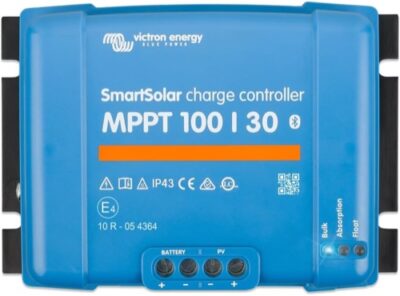
Victron SmartSolar 100/30 Review: Excellent Control for 30A Systems

Product A

Victron SmartSolar 100/30 Review: Excellent Control for 30A Systems

Check price at Amazon Jump to details
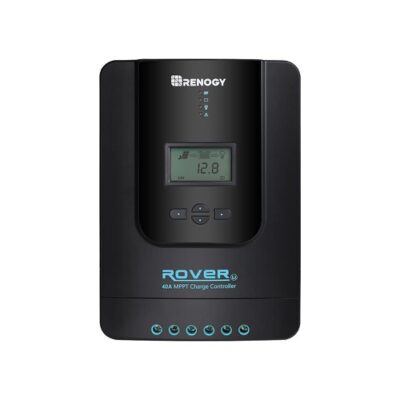
Renogy Rover 40A Review: Useful Output, LCD, and Installation Caveats

Product B

Renogy Rover 40A Review: Useful Output, LCD, and Installation Caveats

Check price at Amazon Jump to details

Victron SmartSolar 100/30 vs Renogy Rover 40A compares a 30A controller with integrated Bluetooth against a 40A controller with a numeric local display. Rover earns its extra output when the array and battery can use it. SmartSolar earns its place when 30A is enough and its configuration and monitoring workflow solves the harder ownership problem.

Both featured units are MPPT controllers for 12V/24V battery systems. Neither model in this comparison becomes a 48V charger because a different controller in the same brand family supports that voltage. The model numbers identify specific electrical limits, not a universal brand capability.

We use published model documentation and the existing exact-product review record. The design scenarios are calculations, not results from a Solar Power Picks bench test. They show which unanswered question should be resolved before choosing either controller.

Victron SmartSolar 100/30 vs Renogy Rover 40A: Which Requirement Fails?

List the requirements in order: bank voltage, cold array Voc, array current and power, battery charging acceptance, then controls and total installed cost. A unit eliminated by an electrical limit should not return to the shortlist because its app is attractive or its sale price is lower.

The shared 100V maximum PV ceiling means moving to Rover’s 40A does not buy a higher-voltage series string. Extra output amperage and extra input-voltage headroom are different upgrades. If your cold-corrected array needs more than 100V, both models require a different layout or another controller.

Within a compatible layout, ask whether the extra 10A will reach the battery. A modest array may never supply it, and a battery near full charge may not accept it. The controller should fit the actual charging task rather than simply maximize a number on the specification label.

Where each featured model can reverse the decision
Requirement Preferred candidate Concession
30A sufficient; phone setup used regularly SmartSolar 100/30 No numeric display on the enclosure
Sustained charge demand between 30A and 40A Rover 40A Wiring, battery acceptance and PV rules still govern
Phone-free local status reading Rover 40A Optional communications must be costed separately
Cold string exceeds 100V Neither Redesign the array or choose another voltage class

Model a 12V Upgrade Without Mixing Its Input Limits

Victron publishes nominal PV power of 440W at 12V and 880W at 24V for the 100/30. Rover 40A’s reviewed documentation gives 520W and 1,040W. Use the figures at the same bank voltage, and distinguish nominal conversion capacity from each maker’s permitted oversizing rules.

As an illustrative output calculation, 500W of actual available PV power at 95% conversion and 14.4V charging would support about 33A. That identifies a possible current advantage for Rover while the 100/30 would limit output. It is not approval to attach any 500W arrangement: input current, cold Voc and manufacturer power rules must separately pass.

At 28.8V, the same arithmetic gives about 16.5A. Both output ratings would cover that scenario, so the choice shifts toward controls, documentation and installation. The bank-voltage comparison is especially useful when planning a complete system, although changing an existing bank affects every connected charger and load.

500W × 0.95 ÷ 14.4V ≈ 33.0A; at 28.8V the same assumed input yields ≈16.5A. The 95% factor is an illustrative assumption, not a measured efficiency claim.

Give Panel-Side Current Its Own Approval Line

Victron specifies 35A maximum PV short-circuit current for the SmartSolar 100/30. That is distinct from its 30A battery-charge limit. The reviewed Rover evidence does not establish a comparable exact PV Isc ceiling, so obtain the manufacturer-approved current boundary when finalizing a parallel array.

Series strings add module voltage; parallel strings add current. A 100V label alone therefore says little about whether multiple parallel branches are acceptable. Keep panel Isc, battery-output current and any load-terminal current on separate lines of the design record.

Also check operating voltage across temperature. Cold weather raises module Voc, while heat can reduce the useful operating voltage. Victron’s stated startup requirement is battery voltage plus 5V, reducing to plus 1V once charging continues. Compare actual panel data with the exact Rover requirement instead of assuming shared startup behavior from the shared 100V ceiling.

Clear documentation can favor SmartSolar when an installer needs a complete, auditable string design. That is a documentation advantage, not proof that Rover lacks a capability merely because a value is absent from the reviewed record.

Walk Through a Morning Fault With and Without a Phone

Imagine reaching the controller cabinet after a night of heavy battery use. Rover’s local LCD lets you start with the displayed voltage and status. SmartSolar has status LEDs, while numeric values and detailed settings normally come through VictronConnect or supported external monitoring equipment.

Victron includes Bluetooth and a VE.Direct interface. Rover’s compatible Bluetooth monitoring generally requires the BT-2 accessory on the reviewed model. Add that hardware when comparing an app-equipped system; do not count an optional module as included merely because a bundle photograph shows it.

Local Bluetooth is not internet monitoring from another location. Either ecosystem needs the appropriate additional communications route if remote access is a requirement. Identify the complete route, required devices, power supply and connectivity before assigning either controller an unattended-monitoring advantage.

Test the workflow in the finished cabinet: view values, change an allowed setting, read an error and restore the accepted profile. Save a normal-day record. Owner reports about setup or app friction are useful prompts for these checks, but they do not establish a comparative hardware failure rate.

Inspect Battery Settings, Terminations and the Warm Cabinet

For either unit, compare the selected battery profile with the battery manufacturer’s charging instructions. Verify absorption, float, equalization behavior, accepted charge current and how other chargers interact. A LiFePO4 option is insufficient if the exact required parameters or protections are missing.

Cold-charge inhibition depends on battery-temperature information and the actual control arrangement. An internal sensor used for electronics or ambient compensation does not necessarily measure a distant battery. Establish where the temperature comes from, what stops charging and how the system resumes; check the BMS behavior as part of that plan.

Rover’s higher current can increase the demands on the battery-side conductors and terminations. Victron’s published terminal capacity and Renogy’s published conductor limits must each be checked against the selected cable. More allowed wire size does not itself approve a route; length, insulation, protection and installation conditions also matter.

Neither featured unit should be treated as an exposed waterproof installation. Leave the ventilation and service clearances required by the relevant manual. A controller in a sun-heated compartment may reduce output, and inaccessible terminals make inspection harder. Carry those practical constraints into the comparison before deciding that ten extra amps will always be available.

  • Photograph the final battery profile and record the battery model.
  • Confirm array voltage and current using the relevant manual limits.
  • Check conductor fit, torque, protection and access after mounting.
  • Test the intended local and remote diagnosis workflow.
  • Observe charging after warm operation and a documented restart.
Compare the task, not the number of screens

Choose the interface that the person maintaining the system can actually use. A local screen has value during phone-free visits; saved configuration and history have value when diagnosing an intermittent issue.

Choose Output Headroom or Included Monitoring Deliberately

Choose the SmartSolar 100/30 when the array and bank fit its envelope, 30A is sufficient, and included phone configuration plus the Victron integration path matter. Its honest tradeoff is the absence of a numeric screen on the enclosure and its lower output ceiling compared with the Rover.

Choose Rover 40A when the exact array design is approved, useful charging demand can exceed 30A, or a local LCD is central to maintenance. Include any Bluetooth accessory in the installed price and resolve the PV-input-current rule before finalizing parallel branches.

The Victron SmartSolar 100/30 vs Renogy Rover 40A tie-breaker is the limiting requirement in a real operating day. If it is charge current, Rover can win. If it is a documented configuration and monitoring workflow while 30A already covers the job, SmartSolar can win. Neither conclusion requires claiming a universal winner for every solar system.

Read the 100/30 review and Rover 40A review with Victron’s technical specifications and the Renogy manual for your revision. For a brand-family decision, use the broader ecosystem comparison.
Product A

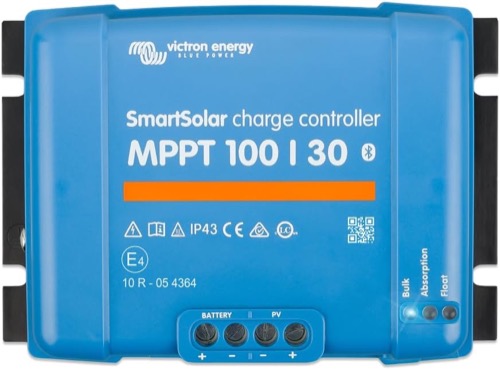
Victron SmartSolar 100/30 Review: Excellent Control for 30A Systems

Victron SmartSolar 100/30 Review: Excellent Control for 30A Systems

Get it now:

Check latest price

What to know

  • Excellent documentation
  • Bluetooth included
  • Strong owner pattern
  • Flexible charging

Best if

  • Excellent documentation
  • Bluetooth included
  • Strong owner pattern
  • Flexible charging

Skip if

  • No numeric screen
  • 30A ceiling
  • Positive-skewed sample
  • Temperature features need planning

The Victron SmartSolar 100/30 is the strongest documented all-rounder in this starter cluster when a 30A ceiling fits the system. It combines a 100V PV limit, built-in Bluetooth, configurable charging, VE.Direct connectivity, and unusually consistent owner praise for VictronConnect. It is less suitable when a local numeric display or more than 30A of charge output is required. Best fit: The Victron SmartSolar 100/30 is the strongest documented all-rounder in this starter cluster when a 30A ceiling fits the system.

BrandVictron Energy
Model / SKUSmartSolar MPPT 100/30
Controller typeMPPT
Rated charge current30A
Battery-system voltage12V / 24V automatic selection
Battery compatibilityLead-acid and lithium via eight presets or a user-defined algorithm
Max PV open-circuit voltage (Voc)100V
Max PV input current (Isc)35A
Max PV power by battery voltage440W @ 12V; 880W @ 24V; 48V not supported
Load outputNo physical load terminals; virtual load output via VE.Direct
Charging profilesAdaptive multi-stage; eight presets or user-defined
Temperature sensing / low-temp protectionInternal sensor; external sensing and configurable low-temp cutoff via VE.Smart
Display / local controlsStatus LEDs; optional MPPT Control display
App / communicationsBuilt-in Bluetooth with VictronConnect; VE.Direct port
Maximum terminal wire size16 mm² / AWG 6
Maximum efficiency98%
Enclosure / operating temperatureIP43 electronics / IP22 terminals; -30°C to 60°C
Dimensions / weight130 × 186 × 70 mm; 1.3 kg
Warranty5 years
Product B

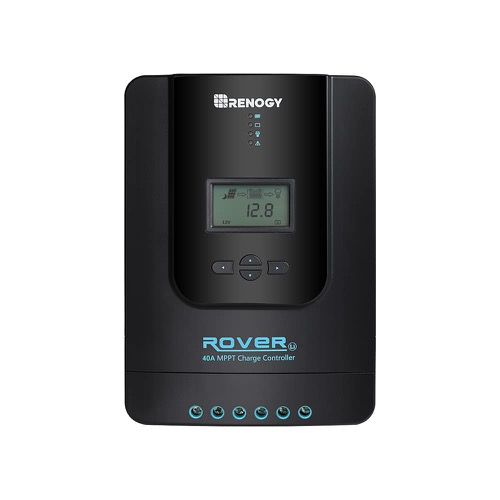
Renogy Rover 40A Review: Useful Output, LCD, and Installation Caveats

Renogy Rover 40A Review: Useful Output, LCD, and Installation Caveats

Get it now:

Check latest price

What to know

  • Useful 40A output class
  • Local LCD included
  • Published 12V/24V limits
  • Broad battery support

Best if

  • Useful 40A output class
  • Local LCD included
  • Published 12V/24V limits
  • Broad battery support

Skip if

  • Bluetooth costs extra
  • Terminal caution
  • Isc remains unpublished
  • App feedback is mixed

The Renogy Rover 40A suits 12V/24V systems that can use its higher charge output and benefit from an included LCD. Its published PV-watt limits, battery profiles, temperature sensor, and optional app connection make it versatile. Two detailed terminal complaints and the separately sold Bluetooth module keep it from being the easiest default recommendation. Best fit: The Renogy Rover 40A suits 12V/24V systems that can use its higher charge output and benefit from an included LCD.

BrandRenogy
Model / SKURover Li 40A (RNG-CTRL-RVR40)
Controller typeMPPT
Rated charge current40A
Battery-system voltage12V / 24V automatic detection for non-lithium batteries
Battery compatibilitySealed/AGM, gel, flooded, and lithium
Max PV open-circuit voltage (Voc)100V
Max PV input current (Isc)Not published for this model
Max PV power by battery voltage520W @ 12V; 1,040W @ 24V; 48V not supported
Load outputDedicated programmable load terminals; current rating not published on the product page
Charging profilesFour-stage lead-acid; two-stage lithium
Temperature sensing / low-temp protectionRemote sensor included; temperature compensation and lithium low-temp protection
Display / local controlsBuilt-in LCD and buttons
App / communicationsOptional BT-2 module; Renogy DC Home; RS485/RJ12
Maximum terminal wire size10 mm² / AWG 8
Maximum efficiency99% tracking; 98% peak conversion
Enclosure / operating temperatureIP32; -35°C to 45°C
Dimensions / weight238 × 172 × 77 mm; 2.0 kg
Warranty3 years

Product Comparison

Feature Victron SmartSolar 100/30 Review: Excellent Control for 30A Systems Renogy Rover 40A Review: Useful Output, LCD, and Installation Caveats
Product Image
Victron SmartSolar 100/30 Review: Excellent Control for 30A Systems
Renogy Rover 40A Review: Useful Output, LCD, and Installation Caveats
Price $121.13 $170.99 $150.53
Rating
4.6 / 5
4.1 / 5
Category Solar Charge Controllers Solar Charge Controllers
Brand Victron Energy Renogy
Exact model / revision / ASIN SmartSolar MPPT 100/30 (ASIN B073ZJ3L13) Rover Li 40A (RNG-CTRL-RVR40) (ASIN B01MSYGZGI)
Controller type MPPT MPPT
Rated battery-side charge current 30A 40A
Supported battery-system voltage 12V / 24V automatic selection 12V / 24V automatic detection for non-lithium batteries
Battery chemistry and profile support Lead-acid and lithium via eight presets or a user-defined algorithm Sealed/AGM, gel, flooded, and lithium
Maximum PV open-circuit voltage (Voc) 100V 100V
Maximum PV short-circuit/input current (Isc) 35A Not published for this model
Maximum PV power by battery voltage 440W @ 12V; 880W @ 24V; 48V not supported 520W @ 12V; 1,040W @ 24V; 48V not supported
Minimum PV/start voltage requirement PV voltage must exceed battery voltage by 5V to start and by 1V to continue charging Not published for the reviewed revision
Load output and low-voltage disconnect No physical load terminals; virtual load output via VE.Direct Dedicated programmable load terminals; current rating not published on the product page
Grounding topology Isolated chassis; positive or negative battery grounding permitted at one point; do not ground PV positive or negative Common negative / negative ground
Charging stages and custom voltage control Adaptive multi-stage; eight presets or user-defined Four-stage lead-acid; two-stage lithium
Temperature sensing and lithium low-temperature behavior Internal sensor; external sensing and configurable low-temp cutoff via VE.Smart Remote sensor included; temperature compensation and lithium low-temp protection
Display and local controls Status LEDs; optional MPPT Control display Built-in LCD and buttons
App, communications, and data history Built-in Bluetooth with VictronConnect; VE.Direct port Optional BT-2 module; Renogy DC Home; RS485/RJ12
Maximum terminal conductor size 16 mm² / AWG 6 10 mm² / AWG 8
Controller self-consumption 30mA at 12V; 20mA at 24V 100mA or less at 12V; 58mA or less at 24V
Published tracking/conversion efficiency 98% 99% tracking; 98% peak conversion
Cooling method and thermal derating Natural convection / passive cooling; full rated output through 40°C, then temperature-limited Passive heatsink; output derates above 65°C controller temperature and shuts down above 80°C
Electrical protections PV reverse-polarity, output short-circuit, and overtemperature protection; no internal ground-fault protection PV short-circuit, PV overvoltage, PV overcurrent, load overload/short-circuit, PV/battery reverse-polarity, and overtemperature protection
Enclosure, ingress rating, and operating temperature IP43 electronics / IP22 terminals; -30°C to 60°C IP32; -35°C to 45°C
Certifications EN/IEC 62109-1, UL 1741, and CSA C22.2 No. 107.1-16 FCC Part 15 Class B, CE, RoHS, and RCM
Dimensions, weight, and included accessories 130 × 186 × 70 mm; 1.3 kg 238 × 172 × 77 mm; 2.0 kg
Warranty 5 years 3 years
Buy Now View Deal View Deal

Choose the Requirement That Matters on a Real Charging Day

Pick Rover 40A for useful output above 30A or a required local LCD, after validating its array limits. Pick SmartSolar 100/30 when its output is sufficient and integrated Bluetooth, documentation and the Victron monitoring route matter more. Both retain a 100V PV ceiling.

Frequently Asked Questions

Does Rover 40A allow higher PV voltage than SmartSolar 100/30?

The compared units both have a 100V maximum PV Voc. The extra 10A output rating does not increase the allowed series-string voltage.

When is the Rover’s extra 10A useful?

When available solar power can support more than 30A at the charging voltage and the battery can accept it for a meaningful interval. A full battery or small array will not use the additional capacity.

Which controller includes Bluetooth in this exact pair?

SmartSolar 100/30 includes Bluetooth. The reviewed Rover 40A uses a compatible optional BT-2 route; verify the contents of any advertised bundle.

Is SmartSolar’s 35A PV Isc limit the same as its charge output?

No. The 35A figure is the maximum PV short-circuit current; its rated battery charge current is 30A. MPPT conversion means input and output currents need separate checks.

Can either featured model charge a 48V bank?

The featured SmartSolar 100/30 and Rover Li 40A are 12V/24V models. Do not transfer higher-voltage capability from another controller in either brand family.

Which is easier to inspect without a phone?

Rover provides a numeric local LCD. SmartSolar provides status LEDs, with detailed numeric information through the app or supported external equipment.

×

About Solar Power Picks

Portable Solar Power, Backup Power, and Off-Grid Gear Guides

Your trusted source for honest, in-depth product reviews and comparisons.

Quick Links

  • Best Picks
  • Reviews
  • Guides
  • Comparisons
  • Calculator
  • Privacy policy
  • Favorites

Categories

  • Portable Power Stations
  • Solar Batteries
  • Solar Battery Maintainers
  • Solar Charge Controllers
  • Solar Generators
  • Solar Panels

© 2026 Solar Power Picks. All Rights Reserved.

We may earn a commission when you purchase through links on our site. Learn more