Solar Power Picks logo with sun, solar panel, and green energy icon

  • Home
  • Reviews
  • Best
    • Best portable power stations
    • Best Solar Panels
  • Guides
    • Portable Power Stations Guides
  • Comparisons
    • Portable Power Stations Comparisons
  • Calculator
Home / Solar Panels / Best / Best 400W Solar Panels: 7 Picks to Refill a Power Station or Battery Bank in a Day

Best 400W Solar Panels: 7 Picks to Refill a Power Station or Battery Bank in a Day

OUR PICKS

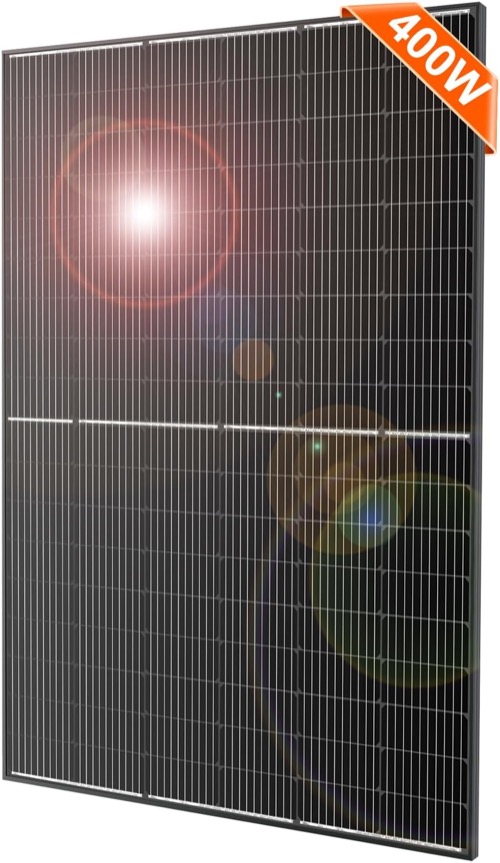
DOKIO 400W Solar Panel Review: Is This the Best-Value Way to Hit 400 Watts?

Best Value Overall

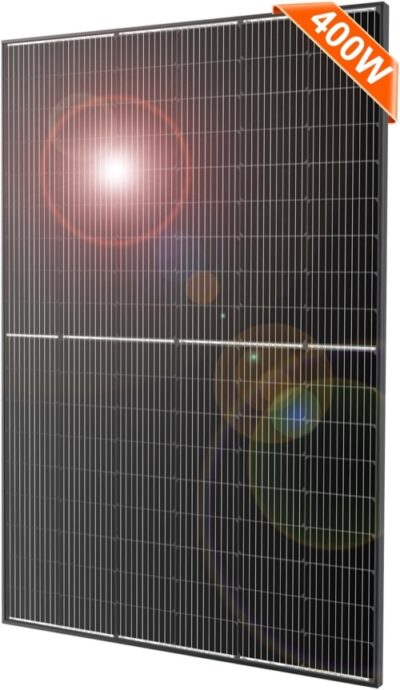
DOKIO 400W Solar Panel Review: Is This the Best-Value Way to Hit 400 Watts?

Check price at Amazon Jump to details
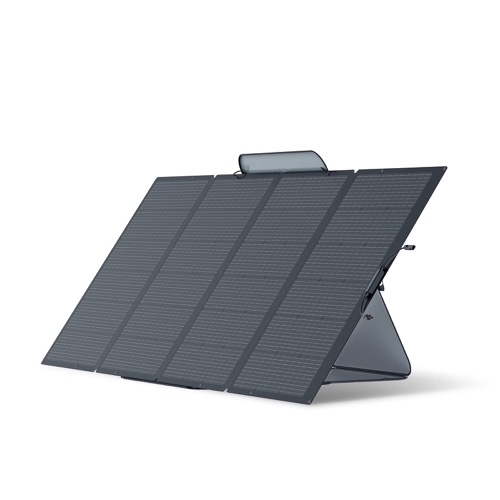
EcoFlow 400W Solar Panel Review: Is the Premium Foldable Panel Worth $599?

Best Premium Portable

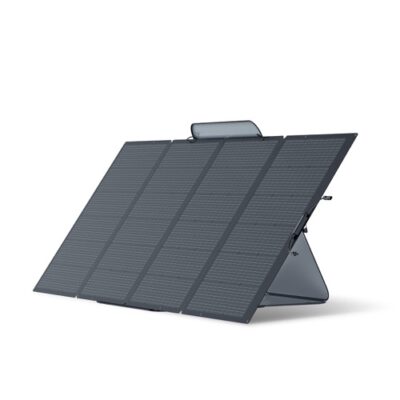
EcoFlow 400W Solar Panel Review: Is the Premium Foldable Panel Worth $599?

Check price at Amazon Jump to details
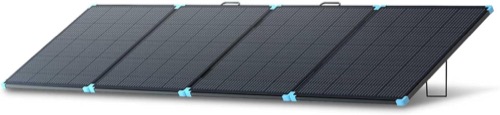
Renogy 400W Portable Solar Panel Suitcase Review: The Foldable Fiberglass Powerhouse for Off-Grid Living

Best Foldable Suitcase

Renogy 400W Portable Solar Panel Suitcase Review: The Foldable Fiberglass Powerhouse for Off-Grid Living

Check price at Amazon Jump to details
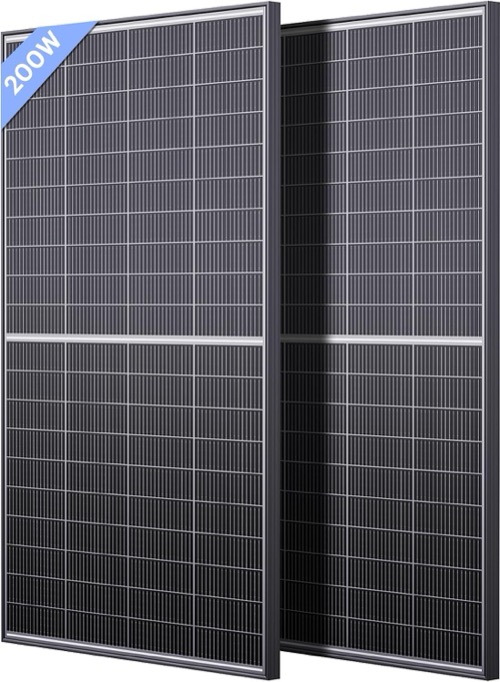
Callsun 400W Bifacial Solar Panel Review: What a Two-Sided N-Type Array Actually Delivers Off-Grid

Best Bifacial

Callsun 400W Bifacial Solar Panel Review: What a Two-Sided N-Type Array Actually Delivers Off-Grid

Check price at Amazon Jump to details
Renogy 400W Review: What a Complete 4x100W Rigid Kit Actually Delivers Off-Grid

Best Complete Kit

Renogy 400W Review: What a Complete 4x100W Rigid Kit Actually Delivers Off-Grid

Check price at Amazon Jump to details
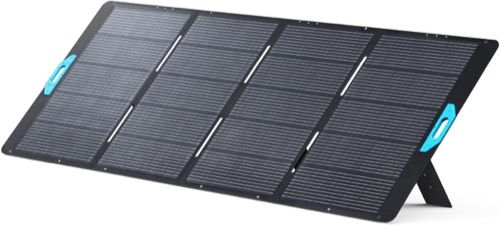
Anker SOLIX PS400 Review: The Premium 400W Foldable Panel Built for the Anker Ecosystem

Best for Anker Ecosystem

Anker SOLIX PS400 Review: The Premium 400W Foldable Panel Built for the Anker Ecosystem

Check price at Amazon Jump to details
Ayahoomane 400W Review: What You Trade Off With the Cheapest Foldable 400W Suitcase

Best Budget

Ayahoomane 400W Review: What You Trade Off With the Cheapest Foldable 400W Suitcase

Check price at Amazon Jump to details

A 400W panel is the point where solar stops being a trickle and starts being a plan. At roughly four peak sun hours, a well-set 400W array banks somewhere near 1,300 watt-hours a day — enough to bring a mid-size power station back from empty or hold an RV battery bank through a long weekend off the grid. That is why so many buyers jump straight to this class: it is the smallest panel that can actually keep pace with a real daily draw.

The catch is that “400W” describes wildly different hardware. Some of these are one rigid slab of glass you bolt down and forget; others fold into a suitcase and ride in the truck; one is a two-sided bifacial pair that harvests light off the ground behind it, and another ships as four small panels with a controller in the box. They weigh anywhere from 30 to 56 pounds, run voltages from 23V to 67V, and terminate in MC4, XT60, or Anderson plugs that do not swap freely. Pick on the watt number alone and you can still end up with a panel that overshoots your station’s input, won’t reach the sun, or is too heavy to reposition.

This guide sorts the best 400W solar panels by the three things that decide whether the number on the box turns into charge in your battery: real-world output after heat derating, the form factor that suits how you’ll mount or carry it, and connector-plus-voltage fit with the station or bank you’re feeding. We ground every figure below in owner-reported output from the full reviews, so the watts here are the ones people actually measure — not the lab peak.

Not Sure How Many Watts You Need?

Our Solar Panel Output Calculator turns a rated wattage into real watt-hours for your location’s sun hours — so you can see whether 400W actually refills your power station in a day, holds an RV battery bank, or covers your off-grid loads before you spend a cent.

Use the Solar Calculator — Jump to the Form Factor Guide

How We Chose the Best 400W Solar Panels

There is no lab behind these rankings, and we won’t pretend there is. What we did instead was read the owner-measured output for every panel — the 340W and 461.9W peaks as well as the 195W and 250W disappointments — and weigh each panel on the criteria that actually separate 400W hardware: real watts after heat derating, whether the voltage and connector fit common station inputs, weight against how you’ll move or mount it, weatherproofing for permanent versus stow-and-go use, and whether a controller ships in the box. No panel tops every column. The bifacial pair over-produces but is 48 pounds of glass; the budget suitcase nearly matches it on a clear day but rolls the quality-control dice. The lineup spans rigid slabs, foldable suitcases, a bifacial 2-pack, and a full MPPT kit precisely because the right answer changes with the job.

Criterion Why It Matters at 400W Weight
Real-world output after heat 400W is a cool-cell lab peak; monocrystalline panels shed roughly 13% once the cells bake, so measured watts range from ~275W to 420W across this group High
Voltage and station input fit These run 23V to 67V — enough to overshoot a small station’s solar input ceiling, so voltage matters as much as the connector shape High
Form factor vs weight A 30 lb suitcase you reposition and a 56 lb bolt-down kit solve different problems; weight-per-watt decides which gets used High
Weatherproofing (IP rating) Ranges from a printed “keep out of rain” warning to a sealed IP68 junction box built for years outdoors Medium
Controller included Only the Renogy kit ships a controller; every other panel needs a power station’s MPPT or one you supply for a bare battery Medium
Connector ecosystem Native MC4 flexes to almost anything with an adapter; a bundled XT60 or Anderson tip is simpler for that brand but locks you in Medium
Warranty and brand backing Spans an unstated no-name term to Callsun’s 25-year performance commitment — a real signal on a panel meant to live outside Low

Selection criteria:

  • Real-world output — measured owner watts after heat and angle losses, not the nameplate; N-type and bifacial cells (Callsun) hold the top end best
  • Voltage and input fit — panel Vmp/Voc checked against common 60V solar-input ceilings, since two-panel series designs push voltage high
  • Form factor and weight — rigid, foldable suitcase, bifacial 2-pack, or full kit, matched to whether you carry or bolt it down
  • IP rating — from IP67 surface to a sealed IP68 junction box, and honest about panels that warn against rain
  • Controller — included MPPT (Renogy kit) versus panels that rely on a station’s built-in controller or one you add
  • Connector — MC4, XT60, Anderson, or IP68 solar connectors, and what adapter your station actually needs
  • Warranty — from no stated term (DOKIO, Ayahoomane) to Renogy’s multi-year and Callsun’s 25-year coverage

Form Factor Guide: Rigid Slab vs Foldable Suitcase vs Bifacial vs Kit

At 400W the shape of the panel matters more than at any smaller size, because the weight and voltage climb with the watts. A rigid slab is the cheapest path to the wattage but a two-person lift you mount once. A foldable suitcase trades some ruggedness for the ability to fold flat and chase the sun. A bifacial pair adds free rear-side watts but only when ground-mounted over a reflective surface. And a full kit hands you a controller and brackets so a bare 12V battery bank works out of the box. Match the shape to how you’ll deploy it before you compare watt figures.

Form Factor Panels in This Lineup Weight / Portability Durability Output Notes Best For
Rigid glass slab DOKIO 400W Heaviest single panel here at ~49 lb and 5.6 ft long — bolt-down, not carry-around Tempered glass, aluminum frame, sealed junction box; built for permanent outdoor mounting ~328W in good sun with an MPPT; monocrystalline cells punish any shade The cheapest fixed 400W for a roof, ground rack, boat, or shed
Foldable suitcase EcoFlow 400W, Renogy Suitcase, Anker PS400, Ayahoomane 400W ~30 to 35 lb; folds flat with a handle so you can reposition it for the sun Fiberglass or ETFE over cells; the Renogy has no glass to crack, budget suitcases can warp 275-390W depending on cell quality and heat; angle it on the kickstands for the real gain Power-station charging on camping, RV, and blackout duty where you set up and take down
Rigid bifacial Callsun 400W (2×200W) ~48 lb for the pair; rigid glass panels meant to be mounted or set down and left Toughest here — 3.8mm tempered glass, IP68 junction box, one survived a 40mph gust impact Beats 400W in good sun (420W+) when the rear side sees reflected light; front-side only flush on a dark roof Ground-mount or tilt off-grid arrays feeding a 60V-input power station for years
Complete rigid kit Renogy 400W Kit (4×100W + 40A MPPT) ~56 lb kit across four 100W panels — the most modular to mount, the most to wire 3.2mm low-iron glass, 35mm aluminum frame, 2400 Pa wind / 5400 Pa snow rating ~328W to a 12V bank; the included MPPT charges lead-acid, AGM, gel, and LiFePO4 Permanent 12V/24V systems on RVs, vans, cabins, and boats charging a bare battery bank

Worth Knowing — Weight does not track watts across these shapes. The Renogy Suitcase packs 400W into ~30 lb and folds flat, while the DOKIO rigid slab is ~49 lb of glass for the same rating. If you’ll move the panel, weight-per-watt matters more than the nameplate; if you’ll bolt it down once, it barely matters at all.

How to Choose a 400W Solar Panel

Before you buy, run this short gauntlet. At 400W the two costly regrets are a voltage that overshoots your station’s input and a form factor that is heavier or less packable than the job needs.

What to prioritize in a 400W solar panel:

  • Real-world watts after heat, not the 400W lab peak — check the cell type and owner-measured output
  • A Vmp/Voc that lands inside your power station’s solar input range and below its ceiling
  • The form factor that matches how you’ll mount or carry 30-56 pounds of panel
  • The right connector for your station or bank — MC4, XT60, or Anderson are not interchangeable
  • Whether you need a controller in the box (bare battery bank) or a station’s MPPT will do the work

Common buyer mistakes:

  • Buying on the 400W number without checking the derated real-world figure
  • Ignoring voltage — a two-panel series design can blow past a 60V solar input limit
  • Choosing a heavy rigid slab when a foldable suitcase would cover the same daily load
  • Wiring a 400W panel straight to a 12V battery with no charge controller

Wattage & Daily Energy: What 400W Actually Buys

Start with the load you cover in a day, then size the panel to refill it. Across this lineup, 400W lands roughly 1,150 to 1,410 Wh on a four-peak-sun-hour day depending on cell type and controller — the Anker PS400 at a measured 0.72 factor sits near 1,150 Wh, while the bifacial Callsun credits its rear side for ~1,410 Wh. For translating watts into real energy, see our guide on how much power a solar panel produces. The takeaway — a single 400W panel refills a 1kWh-class station in a good day, but a 2kWh station takes most of a day or a second panel.

Real-World Math — At 4 peak sun hours and a 0.82 factor, a 400W panel banks roughly 1,312 Wh/day — enough to recharge a 1,000Wh power station with headroom, or run a camp fridge, lights, and device charging with room to spare. Drop to 0.72 for a panel that only feeds a station’s MPPT directly, and you’re closer to 1,150 Wh.

Real-World Output vs Rated Watts

The 400W rating is a Standard Test Conditions figure — 25°C cells, 1,000 W/m², perfect angle. Real output runs lower every time, and at this size heat is the loudest thief: EcoFlow’s own support told an owner the cells can reach ~140°F and lose roughly 13% efficiency once hot. Cell quality sets the ceiling. N-type bifacial (Callsun) over-produces the rating in good light, A+ mono suitcases (Renogy, Ayahoomane) land at 315-390W, and a plain foldable feeding a station directly (Anker) measures 275-300W. Always plan with the derated number, not the nameplate.

Voltage, Connectors & Power Station Compatibility

This is where 400W buyers get caught. Voltage swings widely: the EcoFlow runs 23V, the DOKIO 31V, the Ayahoomane 36V, and two-panel series designs like the Callsun (~54V) and Anker (57.6V Voc) push near the 60V ceiling many stations enforce. Confirm your station’s solar input range and its maximum voltage before buying — overshoot it and charging pauses or the input refuses the panel. Connectors add a second layer: DOKIO and EcoFlow output bare MC4, the Anker bundles an MC4-to-XT60 cable, and the Ayahoomane breaks out to Anderson, XT60, DC7909, and DC5525. For brand-specific matching, our portable panel for power station guide goes deeper.

Buying Note — Many stations let you “overpanel” — connect a 400W panel to a 300W input and the station simply takes what it can. That is fine for current, but voltage is the hard limit: a series pair near 54-57V is safe under a 60V cap, yet stringing two of those pairs in series will blow past it. Watch volts, not just watts.

Form Factor & Portability

The weight spread here is wide and it maps to the job. The Renogy Suitcase at ~30 lb folds flat and is the easiest 400W to reposition; the twin foldables from EcoFlow and Anker sit at ~35 lb; and the rigid DOKIO slab (~49 lb) and Renogy kit (~56 lb) are bolt-down hardware, not carry-around gear. Foldables prop on kickstands and chase the sun, rigid panels mount once and stay. Worth knowing — every foldable here has a weaker kickstand or stand than its panel, so plan for wind with stakes or weights.

Pro Tip — If you relocate the array or store it in a vehicle, a folding suitcase at 30-35 lb beats a rigid slab every time — even though both are “400W.” If it lives on a roof or ground rack, buy the cheapest rigid watts and skip the folding hardware you’ll never fold.

Weatherproofing (IP Ratings)

IP ratings run the full range at this size. The Callsun’s sealed IP68 junction box and the Renogy Suitcase’s IP67 panel with IP68 connectors are built to live outside for years; the Anker’s IP67 and EcoFlow’s IP68 main body handle rain and dust well — though EcoFlow is explicit that its junction box and plugs are not waterproof. At the bottom, the DOKIO carries no stated rating (tempered glass and a sealed junction box, treated as rain-ready) and the Ayahoomane is printed “keep out of rain” despite an IP67 surface. Match the rating to exposure: a sealed junction box for permanent mounts, splash resistance for stow-between-showers use.

Charge Controllers (When You Need One)

Keep this simple, and see the dedicated section below for the full breakdown. Six of these seven panels ship without a controller — they rely on a power station’s built-in MPPT, so charging an EcoFlow, Anker, Bluetti, or similar station means just the right cable. Only the Renogy 400W Kit includes a controller (a 40A MPPT Rover), which is why it is the pick for a bare 12V or 24V battery bank. For any other panel feeding a lead-acid, AGM, or LiFePO4 battery directly, you supply your own MPPT — and for LiFePO4, one with an LFP profile. Our MPPT vs PWM guide covers the difference.

What Can These 400W Solar Panels Do?

Watts stay abstract until real loads sit next to them. At 4 peak sun hours — a fair average across much of the US and Europe — here is what the 400W class delivers, and where the real-world factor moves the number.

Real-World Factor Est. Daily Output (4 PSH) Example Panels Best Suited For
0.72 (direct to station MPPT) ~1,152 Wh/day Anker SOLIX PS400 Feeding a mid-size station; multi-day fills on a big station
0.80 (foldable, heat-limited) ~1,280 Wh/day EcoFlow 400W Recharging a 1kWh station in a strong day; RV house battery
0.82 (mono + MPPT) ~1,312 Wh/day DOKIO, Renogy Suitcase, Renogy Kit, Ayahoomane 1kWh-class station daily; steady charge into a 12V/24V bank
0.88 (bifacial, well-placed) ~1,408 Wh/day Callsun 400W Bifacial Off-grid banks and mid-size stations with the biggest daily harvest

Output estimates use 4 peak sun hours and the review-specific real-world factor for each panel. Actual output varies with sun angle, weather, shading, cell temperature, cable length, and controller type.

Cloudy days cut deeper than you’d expect. A 400W panel that pushes 350W in bright sun can fall to 50-120W under heavy overcast — enough to slow a station’s drain but not fully refill it. For cloudy regions, plan a second panel or an occasional wall-outlet top-off rather than relying on one panel to keep up.

400W Deployment Guide

  • Charging a 1kWh-class power station: A single 400W panel refills it in a good day; any pick here works, so choose on form factor and connector
  • Charging a 2kWh+ power station: Expect most of a day or run two panels in parallel — owners of large stations consistently add a second
  • RV / off-grid 12V or 24V battery bank: The Renogy Kit’s included MPPT makes it plug-and-play; any bare panel needs a controller you supply
  • Ground-mount off-grid array: The bifacial Callsun rewards a reflective surface and an air gap with rear-side watts a flat panel can’t touch
  • Fixed rooftop or shed: The DOKIO rigid slab is the cheapest clean 400W, replacing four 100W panels and their extra joints

Do You Need a Charge Controller?

Most 400W panels here output 23-36V through their main connector (the series designs reach ~54-57V), which falls inside the solar input range of most EcoFlow, Anker, Bluetti, and Jackery power stations. Those stations have a built-in MPPT controller, so you do not need a separate one to charge them — just the right cable and a voltage that stays under the input ceiling. You do need a controller if you’re charging a standalone 12V or 24V lead-acid, AGM, or LiFePO4 battery directly. The Renogy 400W Kit is the only pick that includes one (a 40A MPPT Rover); the other six are bare panels.

Charging Scenario Separate Controller Needed? Why
400W panel → EcoFlow / Anker / Bluetti / Jackery power station No The station has built-in MPPT; connect the right cable and stay under the voltage cap
Renogy 400W Kit → 12V / 24V battery bank No — it’s included Ships a 40A MPPT Rover with lead-acid, AGM, gel, and LiFePO4 profiles
Bare 400W panel → standalone 12V AGM or lead-acid battery Yes — PWM or MPPT No overcharge or anti-drain protection without a controller
Bare 400W panel → LiFePO4 battery (RV, van, DIY bank) Yes — MPPT with LFP mode LiFePO4 needs a specific charge profile; the wrong one shortens battery life
Two-panel series pair (~54V) → small station Check the input ceiling The station’s MPPT handles it only if the voltage stays under the input limit

Worth Knowing — Wire a 400W panel straight to a 12V battery with no controller and it can backfeed overnight, slowly draining the bank you meant to charge — and 400W of unregulated current can overcharge it fast. Every bare-battery setup needs a controller with anti-drain protection. Power stations handle this automatically; the Renogy kit bundles it.

Best Value Overall

DOKIO 400W Solar Panel Review: Is This the Best-Value Way to Hit 400 Watts?

DOKIO 400W Solar Panel Review: Is This the Best-Value Way to Hit 400 Watts?

Get it now:

Check latest price

What to know

  • Rated 400W monocrystalline returns ~328W with an MPPT in good sun — roughly 1,312 Wh on a 4-PSH day, and pairs push past 700W
  • A cluster of low readings (120W, 75W, a 360W ceiling) trace to controller current limits, wiring, angle, and summer heat, not a bad panel
  • One 400W slab replaces four 100W panels and their branch connectors — cleaner wiring and a faster install on a fixed rack
  • The 31V nominal output suits 12V and 24V systems and most power-station solar inputs, but a 48V bank needs a boost converter
  • Tempered glass, aluminum frame, and a sealed junction box take permanent outdoor mounting; at ~49 lb it's a two-person lift

Best if

  • You want the cheapest clean route to a real 400W for a roof, ground rack, boat, or shed
  • You already run a 12V/24V system or power station and can add your own controller
  • You'll mount it in clear, unshaded sun where monocrystalline cells perform

Skip if

  • You need something light and portable to carry to a campsite — this is a ~49 lb glass slab
  • You want a 48V system charged without adding a boost converter — 31V is too low directly
  • Your only spot is shaded or tree-covered — output tanks the moment a shadow lands

If you want a real 400 watts for the least money and you have somewhere to bolt it down, the DOKIO 400W (DSP400M) takes Best Value Overall by replacing four 100W panels with one monocrystalline slab for well under name-brand pricing. Plenty of owners confirm it hits its rated 400W in good sun, and one running a pair watched output climb past 700W.

Through an MPPT controller in clear sun it returns roughly 328W — about 1,312 Wh on a 4-peak-sun-hour day — enough to put a serious dent in a mid or large power station or push steady amps into a 12V/24V bank. The 31V panel plays nicely with EcoFlow-class stations and off-grid banks, and the longer 3m MC4 leads save you an extension.

Just know it's a ~49 lb, five-and-a-half-foot sheet of glass with no controller in the box, and monocrystalline cells punish shade — so placement and a properly sized controller matter more than the sticker suggests.

Wattage400W monocrystalline (~1,312 Wh/day at 4 PSH, 0.82 factor with MPPT)
Voltage31V nominal panel (12V/24V systems); ~12.9A; not 48V without a boost converter
IP RatingNone stated — tempered glass, aluminum frame, sealed junction box (rain-ready, avoid standing water)
ConnectorMC4; 3m (9.84 ft) leads
ControllerNone — direct output; add your own MPPT/PWM or use a power station's solar input
Form Factor & WeightRigid glass slab; 49.4 lb; 44.6" × 67.8" × 1.2"; pre-drilled mounting holes, no bracket
Best Premium Portable

EcoFlow 400W Solar Panel Review: Is the Premium Foldable Panel Worth $599?

EcoFlow 400W Solar Panel Review: Is the Premium Foldable Panel Worth $599?

Get it now:

Check latest price

What to know

  • Rated 400W mono (up to 23%) delivers a real 300-375W in good sun — about 1,280 Wh/day at a 0.80 factor
  • Heat is the limiter: cells can reach ~140°F and lose roughly 13% efficiency, dropping one owner from 360W to 250-260W
  • Pairs cleanly with EcoFlow Delta 2 and Delta Pro via MC4; the station's MPPT does the tracking, no controller on the panel
  • IP68 covers only the main body — the junction box and plugs are not waterproof, with owner reports of solar plugs burning
  • The carry case doubles as a kickstand but slides and sags; owners prop it with PVC or lean it on a wall, and the cable runs short

Best if

  • You own an EcoFlow Delta 2 or Delta Pro and want a well-built panel that pairs without fuss
  • You value an IP68 main body that shrugs off rain and dust on the panel surface
  • You want real 400W-class output for backup or off-grid and don't mind paying up

Skip if

  • You just want watts on a budget — cheaper 400W foldables deliver similar good-sun output for less
  • You'd leave the connections out in a downpour — only the body is sealed, not the plugs
  • You need a light panel or a rock-steady stand — it's ~35 lb with a wobbly case-stand

The premium foldable that pairs seamlessly with an EcoFlow station, the EF-Flex-400 earns Best Premium Portable on build and fit rather than raw value. Owners call it sturdy and well made, with an IP68 main body and cells rated up to 23% — and in good sun it pulls a real 300-375W, with one south-Florida owner catching 350W flat and 375W at the right angle.

Day to day it does exactly what it's built for: an owner runs a home refrigerator all day off a Delta 2 and still has charge for the night, and another watched a Delta 2 climb from 70% to full by mid-morning. At a 0.80 real-world factor it banks around 1,280 Wh a day — enough to refill a Delta 2's 1,024 Wh in a strong day.

The catch is the price and the compromises around it: roughly $599 for a single panel, a 12-month warranty, a wobbly kickstand case, ~35 lb of heft, and cells that throttle to 250-260W once they bake in hot sun.

Wattage400W monocrystalline, up to 23% (~1,280 Wh/day at 4 PSH, 0.80 factor)
Voltage23V DC; ~17.4A
IP RatingIP68 main body only — junction box and connection points are NOT waterproof
ConnectorMC4 (no USB); included cable runs short, owners add a longer one
ControllerNone — MPPT handled by the paired EcoFlow station; add your own for a 12V battery
Form Factor & WeightFoldable EVA/fiberglass; 35.3 lb; 93.1" × 41.7" × 1" unfolded; adjustable kickstand carry case
Best Foldable Suitcase

Renogy 400W Portable Solar Panel Suitcase Review: The Foldable Fiberglass Powerhouse for Off-Grid Living

Renogy 400W Portable Solar Panel Suitcase Review: The Foldable Fiberglass Powerhouse for Off-Grid Living

Get it now:

Check latest price

What to know

  • 400W A+ mono (23%) returns a genuine 300-390W in good sun — about 1,312 Wh/day at a 0.82 factor
  • Keeps trickling through weather: over 200W in December overcast and 50-100W in the rain, thanks to parallel wiring
  • Fiberglass frame, ETFE coating, and aluminum backsheet mean no glass to break; folds to a soft case at ~30 lb
  • Two 200W sections wired in series push Voc high (owner measured ~47V) — don't string two units in series past a 60V input
  • Ships as just the panel with IP68 connectors — you supply the station adapter, and owners add heavy-gauge MC4 extensions

Best if

  • You want a foldable 400W that delivers real off-grid power without a rooftop install
  • You value a rugged fiberglass panel with no glass to crack on rough terrain
  • You'll stake it against wind and want broad compatibility with Anker, Bluetti, or EcoFlow gear

Skip if

  • You need a light, compact panel for day trips — it's big even folded and won't fit a small trunk
  • You want a grab-and-go kit with the station adapter cable already in the box
  • You need dialed-in winter tilt out of the box — the kickstands are fixed-angle

A rigid fiberglass suitcase that pulls near its rating and still rides in the truck bed, the Renogy RSP400LSC takes Best Foldable Suitcase on output and toughness both. Owners regularly report 300-plus watts into a power station, with peaks of 385W in Chicago, 390W in Arizona, and 395W on one clear day — and there's no sheet of glass to crack on a rocky campsite.

At a 0.82 factor it banks about 1,312 Wh on a 4-PSH day — one owner ran a window A/C off an Anker F2000 for roughly six hours on a 2kWh bank. The IP67 panel with a hail-resistant ETFE coating and IP68 connectors takes rain, snow, and heat, and it deploys in about a minute on its integrated kickstands.

Worth knowing: it's big even folded, it'll tip in a stiff breeze unless you stake it down, the kickstands are fixed-angle, and no station adapter cable comes in the box.

Wattage400W A+ monocrystalline, 23% (~1,312 Wh/day at 4 PSH, 0.82 factor)
Voltage~33V DC operating (up to 67.5V Voc listed); 12.1A
IP RatingIP67 panel; IP68 solar connectors; hail-resistant ETFE coating
ConnectorIP68 waterproof solar connectors (MC4-style); no station adapter cable included
ControllerNone — direct output; pair with a power station or a separate MPPT for 12V batteries
Form Factor & WeightFoldable fiberglass suitcase; 30.2 lb; folds to 27.9" × 33.7" × 3.2"; fixed-angle kickstands; 3-year warranty
Best Bifacial

Callsun 400W Bifacial Solar Panel Review: What a Two-Sided N-Type Array Actually Delivers Off-Grid

Callsun 400W Bifacial Solar Panel Review: What a Two-Sided N-Type Array Actually Delivers Off-Grid

Get it now:

Check latest price

What to know

  • 2×200W N-type 16BB bifacial (25%, up to 30% rear gain) beats 400W in good sun — ~1,408 Wh/day at a 0.88 factor
  • The rear-side bonus needs an air gap over a reflective surface (concrete, gravel, snow, pale wall) — flush on a dark roof it disappears
  • Two panels in series land near 54V, tuned to fit the common 60V power-station input cap; scaling up takes series/parallel planning
  • Heat trims the peak — one Texas owner saw ~380W at 92°F — but the low -0.3%/K coefficient keeps the loss to a slice
  • Toughest build here: 3.8mm tempered glass, IP68 junction box, one panel survived a 40mph gust into a steel tank with a paint scuff

Best if

  • You can ground-mount or tilt over a reflective surface where the rear side catches light
  • You want a 400W array that reliably beats its rating and lasts for years outdoors
  • You're charging a 60V-input power station and want voltage tuned to fit under the cap

Skip if

  • You'll bolt it flush to a dark RV roof — the bifacial bonus mostly disappears there
  • You need a light, foldable panel to carry in and out on camping trips
  • You want a plug-and-play battery kit — no controller, cables, or bracket are included

The 400W kit that reliably beats its own rating, Callsun's 2×200W N-type bifacial pair earns Best Bifacial by over-producing in good sun — owners report 420W leaning against a garage wall and 461.9W in series on a hot afternoon, with per-panel numbers past 200W. The transparent rear glass and N-type 16BB cells are doing the extra work.

Credit the bifacial rear side and it lands near 350W steady, about 1,408 Wh on a 4-PSH day at a 0.88 factor — enough to put a serious dent in most mid-size stations daily. Two panels in series sit near 54V, slotting neatly under the 60V input cap on stations like the Bluetti Elite 400, EcoFlow Delta 2, Dabbsson 2K, and Pecron units.

The catch is placement and heft: the rear-side bonus nearly vanishes flush against a dark roof, these are ~48 lb of rigid glass for the pair, and there's no controller, bracket, or battery cabling in the box.

Wattage400W total (2×200W) N-type 16BB bifacial, 25% + up to 30% rear gain (~1,408 Wh/day at 4 PSH, 0.88 factor)
Voltage27.31V Voc per panel (~54.6V in series); 23.74V Vmp; 8.43A per panel
IP RatingIP68 junction box; 3.8mm tempered glass front; corrosion-resistant aluminum frame
ConnectorSolar connector (MC4-style); no controller or battery cables in the box
ControllerNone — direct output; pair with a power station or add your own MPPT for 12V batteries
Form Factor & WeightRigid bifacial 2-pack; 23.8 lb each (~47.6 lb pair); 51.3" × 30.3" × 1.4" per panel; 25-year performance commitment
Best Complete Kit

Renogy 400W Review: What a Complete 4x100W Rigid Kit Actually Delivers Off-Grid

Renogy 400W Review: What a Complete 4x100W Rigid Kit Actually Delivers Off-Grid

Get it now:

Check latest price

What to know

  • 4×100W mono (22.5%) returns ~328W in good sun — about 1.3 kWh on a 4-PSH day; Renogy's rosier 2-2.5 kWh needs long summer sun
  • The included 40A MPPT Rover holds batteries near 13.7V and drops into boost mode — owners say it clearly beats cheap PWM units
  • Handles lead-acid, AGM, gel, and LiFePO4 on 12V or 24V banks (32V max); set the right battery profile before connecting lithium
  • No wiring diagram ships — first-timers should study series vs parallel; the 10A ANL fuse is undersized for four panels in parallel
  • Sturdy 3.2mm low-iron glass and 35mm aluminum frames rated 2400 Pa wind / 5400 Pa snow; rigid panels can arrive cracked, so test on arrival

Best if

  • You're building a permanent 12V/24V system on an RV, cabin, shed, or boat and want the controller included
  • You want an MPPT controller that clearly beats cheap PWM and supports lead-acid to LiFePO4
  • You'll inspect and test everything on arrival and don't mind sizing your own fuse and extension

Skip if

  • You want a foldable panel to carry between sites — these are heavy rigid glass modules
  • You expect a step-by-step wiring diagram in the box — you're on your own for the layout
  • You can't tolerate the small chance a glass panel arrives cracked or shorts internally

The only pick here that charges a bare battery bank out of the box, the Renogy 400W Premium Kit takes Best Complete Kit by bundling four 100W panels, a 40A MPPT Rover controller, Z-brackets, tray cable, fuses, and a Bluetooth module in one box. Owners with a screwdriver, wrench, and drill hook it up without much trouble — one shed owner had it mounted and charging in under an hour.

Through the MPPT in good sun it delivers roughly 328W, about 1.3 kWh on a 4-PSH day. Owners run a 12V fridge all day with power to spare, and one boater watched a bank climb from 60% to nearly full in about four hours. The Rover charges lead-acid, AGM, gel, and LiFePO4 on 12V or 24V banks, and the panels carry a 2400 Pa wind / 5400 Pa snow rating.

Worth knowing: there's no wiring diagram in the box, the cable set runs short, the included 10A ANL fuse is undersized for parallel wiring, and heavy glass panels occasionally arrive cracked — so inspect and test everything the day it lands.

Wattage400W total (4×100W) monocrystalline, 22.5% (~1,312 Wh/day at 4 PSH, 0.82 factor)
Voltage12V DC system (24V capable); 32V max battery voltage
IP RatingNot stated — 3.2mm tempered glass, 35mm aluminum frame, 2400 Pa wind / 5400 Pa snow (controller is indoor/protected only)
ConnectorMC4 with Y-branch connectors and tray cable; one cable set runs short, extension often needed
ControllerIncluded — 40A MPPT Rover with temperature sensor, Bluetooth, and lead-acid/AGM/gel/LiFePO4 profiles
Form Factor & WeightRigid 4-panel kit; 56.4 lb total (~14 lb per panel); 41.8" × 20.9" × 1.38" per panel; Z-brackets included
Best for Anker Ecosystem

Anker SOLIX PS400 Review: The Premium 400W Foldable Panel Built for the Anker Ecosystem

Anker SOLIX PS400 Review: The Premium 400W Foldable Panel Built for the Anker Ecosystem

Get it now:

Check latest price

What to know

  • Rated 400W mono (up to 23%) measures a real 275-300W in good sun — about 1,152 Wh/day at a 0.72 factor; one owner saw only 195W
  • Ships with two 9.8 ft MC4 cables plus an MC4-to-XT60 adapter — plug-and-play for Anker SOLIX stations, no adapter hunting
  • A single panel fills a big station slowly (an F2600 at 10% took three sunny half-days); owners run two in parallel for a fast refill
  • Genuine IP67 sealing and an ETFE-coated, polymer-backed body handle rain and dust well above fabric panels
  • Weak points are the plastic: a flimsy handle, only three kickstands for four panel sections, and stubborn snap buttons

Best if

  • You own an Anker SOLIX station and want a rugged IP67 panel that plugs in without adapters
  • You want real 300W-class output for camping or multi-day blackout backup
  • You value Anker's responsive support standing behind the purchase

Skip if

  • You're chasing pure watts per dollar — two smaller PS200 panels can match the real output for less
  • You expected the full advertised 400W rather than a real-world 275-300W
  • You need a light panel to carry far — at 35.1 lb it's a haul-and-plant, two-person-friendly setup

Built to slot straight into an Anker SOLIX station, the PS400 earns its badge on ecosystem fit and support rather than raw watts. The MC4 cable plus an included MC4-to-XT60 adapter connects cleanly to Anker stations like the C1000, C2000, F2600, and 767 PowerHouse, and owners consistently report it "just works" with the gear they already own.

In strong, clear sun it pulls a real 275-300W per panel, and one owner running two measured 550W combined. At a measured 0.72 factor that's about 1,152 Wh a day — enough to move a mid-size station a long way, and to keep a fridge alive off a station through a multi-day outage. Four locking kickstand angles and a sunlight alignment spotter help you square it to the sun.

Just know it won't hit the full 400W (plan around 275-300W, one owner saw just 195W), it's heavy at 35.1 lb, and the handle and kickstands feel cheaper than the premium IP67 panel body.

Wattage400W monocrystalline, up to 23% (~1,152 Wh/day at 4 PSH, 0.72 factor)
Voltage57.6V Voc (high-voltage DC via MC4); Vmp not published; ~6.9A
IP RatingIP67 (ETFE coating, polymer composite backing)
ConnectorMC4 with included MC4-to-XT60 adapter; 2× 9.8 ft MC4 + 1.6 ft XT60 cables (no USB)
ControllerNone — feeds a station's built-in MPPT; add your own for a 12V battery
Form Factor & WeightFoldable; 35.1 lb; 35.94" × 26.89" × 1.97" set up; adjustable kickstand (30°/40°/50°/80°) with sunlight spotter
Best Budget

Ayahoomane 400W Review: What You Trade Off With the Cheapest Foldable 400W Suitcase

Ayahoomane 400W Review: What You Trade Off With the Cheapest Foldable 400W Suitcase

Get it now:

Check latest price

What to know

  • Rated 400W mono (up to 23.5%) returns a real 315-355W in good sun — about 1,312 Wh/day at a 0.82 factor
  • QC varies unit to unit: some panels hit 340W while others stall at 250-280W in the same high-UV sun
  • MC4 plus Anderson, XT60, DC7909, and DC5525 tips fit Jackery, EcoFlow, Bluetti, Anker, and 4Patriots stations out of the box
  • Good heat behavior — held 315W at 125°F cell temperature — but output drops sharply the moment shade touches any of the four panels
  • IP67 surface with a zippered pouch to keep plugs dry, but printed "keep out of rain"; fabric legs are flimsy and the ~6.5 ft pigtail runs short

Best if

  • You want a cheap foldable way to put real 400W-class charging into a power station on trips
  • You value broad compatibility with Jackery, EcoFlow, Bluetti, Anker, or 4Patriots gear
  • You'll test the panel on arrival and buy from a listing with a clear return window

Skip if

  • You need a panel that survives sitting out through heavy rain — it's printed "keep out of rain"
  • You want rock-solid, certified quality control you can count on unit to unit
  • You want heavy-gauge leads for a big series array — the thin pigtail is single-panel duty

The cheapest way into a foldable 400W suitcase, the Ayahoomane undercuts the branded blankets by a wide margin and still pours real watts into a station — which is the whole case for Best Budget. Owners regularly report 315-355W into stations like the Anker C1000X and EcoFlow Delta 2 Max, with one measuring 340W and calling it "exactly as expected" for the light he had.

At a 0.82 factor it banks around 1,312 Wh on a 4-PSH day — one owner watched a Delta 2 Max climb from 88% to full in about an hour. The MC4 cable plus Anderson, XT60, DC7909, and DC5525 tips connect to Jackery, EcoFlow, Bluetti, Anker, and 4Patriots gear, and it held 315W even as the cells warmed to 125°F.

The catch is the no-name reality: quality control varies (some units stall at 250-280W), the fabric legs fold when you move it, the pigtail cable runs short, and it's printed "keep out of rain" — so test it the day it arrives, because the seller is your only safety net.

Wattage400W monocrystalline, up to 23.5% claimed (~1,312 Wh/day at 4 PSH, 0.82 factor)
Voltage36V DC; 11.2A
IP RatingIP67 surface (ETFE lamination); printed "keep out of rain" — splash-resistant, not rainproof
ConnectorMC4 with MC4-to-Anderson/XT60/DC7909/DC5525 adapter; 78.7 in (~6.5 ft) pigtail runs short
ControllerNone — direct output; the power station's MPPT does the work, or add your own for a 12V battery
Form Factor & WeightFoldable four-panel suitcase; 33.1 lb; folds to 38.3" × 1.6" × 24"; fabric kickstands + 8 hanging hooks

Product Comparison

Feature DOKIO 400W Solar Panel Review: Is This the Best-Value Way to Hit 400 Watts? EcoFlow 400W Solar Panel Review: Is the Premium Foldable Panel Worth $599? Renogy 400W Portable Solar Panel Suitcase Review: The Foldable Fiberglass Powerhouse for Off-Grid Living Callsun 400W Bifacial Solar Panel Review: What a Two-Sided N-Type Array Actually Delivers Off-Grid Renogy 400W Review: What a Complete 4x100W Rigid Kit Actually Delivers Off-Grid Anker SOLIX PS400 Review: The Premium 400W Foldable Panel Built for the Anker Ecosystem Ayahoomane 400W Review: What You Trade Off With the Cheapest Foldable 400W Suitcase
Product Image
DOKIO 400W Solar Panel Review: Is This the Best-Value Way to Hit 400 Watts?
EcoFlow 400W Solar Panel Review: Is the Premium Foldable Panel Worth $599?
Renogy 400W Portable Solar Panel Suitcase Review: The Foldable Fiberglass Powerhouse for Off-Grid Living
Callsun 400W Bifacial Solar Panel Review: What a Two-Sided N-Type Array Actually Delivers Off-Grid
Renogy 400W Review: What a Complete 4x100W Rigid Kit Actually Delivers Off-Grid
Anker SOLIX PS400 Review: The Premium 400W Foldable Panel Built for the Anker Ecosystem
Ayahoomane 400W Review: What You Trade Off With the Cheapest Foldable 400W Suitcase
Price $249.77 $599 $421.59 $365.99 $637.99 $599.99 $319.99
Rating
4.3 / 5
4.3 / 5
4.0 / 5
4.7 / 5
4.5 / 5
4.2 / 5
4.2 / 5
Category Solar Panels Solar Panels Solar Panels Solar Panels Solar Panels Solar Panels Solar Panels
Brand DOKIO EF ECOFLOW Renogy Callsun Renogy Anker Ayahoomane
Model / SKU DSP400M (ASIN: B0G1LNN86F) EF-Flex-400 (ASIN: B09TKKYW7G) RSP400LSC (ASIN: B0D4LMVKYD) Callsun-DB200W (ASIN: B0DC6T55ZK) 400 Watt 12 Volt Premium Kit (ASIN: B07CTKT56Y) SOLIX PS400 (A2437) (ASIN: B0BWQJ19M4) ECB-PANEL-400W (ASIN: B0D9627Y5Y)
Product type Rigid monocrystalline solar panel — for power stations and 12V/24V off-grid battery banks Portable foldable solar panel — for charging EcoFlow power stations and solar generators Portable foldable solar panel suitcase — for charging portable power stations and 12V batteries Rigid bifacial solar panel kit (2-pack) — for off-grid, RV, marine, and power-station charging Complete rigid solar kit — four 100W panels plus a 40A MPPT charge controller for 12V off-grid systems Premium foldable portable solar panel — for charging portable power stations Portable foldable solar panel — for charging portable power stations and solar generators
Solar cell type Monocrystalline silicon Monocrystalline silicon (high-transparency cells) A+ grade monocrystalline silicon N-Type monocrystalline silicon, 16BB busbar, bifacial Monocrystalline silicon (Grade A+ EL-tested cells) Monocrystalline silicon Monocrystalline silicon
Maximum power output 400 W (rated at STC; real-world output varies with sun, angle, heat, and controller) 400 W (rated); 300-375W typical real-world in good sun based on customer testing 400 W (rated); 300-390W typical real-world in good sun based on customer testing 400 W total (2× 200 W; owners report 420W+ peak from the pair with bifacial gain) 400 W total (4 × 100 W panels) 400 W (rated); 275-300W typical real-world in good sun based on customer testing 400 W (rated); 315-355W typical real-world in good sun based on customer testing
Open-circuit voltage (Voc) Not specified Not specified 67.5 V (DC) (listed maximum voltage; one owner measured ~47V Voc) 27.31 V per panel (~54.6 V two in series) Not specified 57.6 V (listed maximum voltage) Not specified
Maximum operating voltage (Vmp) 31 V (nominal, from product title) 23 V ~33 V (calculated: 400W ÷ 12.1A; owners report ~41V into a controller) 23.74 V per panel Not specified (12V nominal panels) Not specified 36 V
Output voltage 31 V nominal panel (for 12V/24V system charging) 23 V DC ~33 V DC (operating; direct panel output) 12 V nominal per panel (27.31 V DC open circuit) 12 V (DC) (system also 24V capable via the controller) High-voltage DC via MC4 (Vmp not published) 36 V DC
Maximum current (Imp) ~12.9 A (calculated: 400W ÷ 31V) 17.4 A (calculated: 400W ÷ 23V) 12.1 A (listed amperage capacity) 8.43 A per panel (calculated: 200W ÷ 23.74V) Not specified (controller rated to 40A charge output) ~6.9 A (calculated: 400W ÷ 57.6V) 11.2 A (listed amperage capacity; matches 400W ÷ 36V)
Short-circuit current (Isc) Not specified Not specified Not specified Not specified Not specified Not specified Not specified
Cell efficiency High efficiency (exact percentage not specified) Up to 23% (EcoFlow cites a 22.4% conversion rate) 23% (high-efficiency for a portable panel) 25% (plus up to 30% bifacial rear-side gain, placement dependent) 22.5% claimed (monocrystalline) Up to 23% claimed (monocrystalline) Up to 23.5% claimed (monocrystalline — not independently verified)
Charge controller included No — direct MC4 output; pair with your own MPPT/PWM controller or a power station solar input No — MPPT tracking is handled by the paired EcoFlow power station; add a separate controller for 12V batteries No — direct panel output; pair with a power station or a separate MPPT controller for 12V batteries No — direct panel output; pair with a power station or a separate MPPT controller for 12V batteries Yes — 40A MPPT Rover controller with temperature sensor and BT-1 Bluetooth module No — direct MC4 output; pair with a power station's built-in MPPT or add a separate controller for 12V batteries No — direct panel output; the power station's controller does the work, or add a separate controller for 12V batteries
Controller features N/A (no controller included; manufacturer notes MPPT helps keep charging steadier) N/A (no controller on the panel; MPPT algorithm runs in the EcoFlow station) N/A (no built-in controller; Renogy sells a Rover MPPT bundle version on its own site) N/A (no controller in the box) MPPT (99% tracking, 98% peak conversion efficiency), multi-stage charging, battery temperature compensation, in-line and ANL fuse overcurrent protection, Bluetooth monitoring via DC Home app; lead-acid / AGM / gel / LiFePO4 battery profiles N/A (no built-in controller; panel feeds a power station's MPPT) N/A (no built-in controller)
Connector type MC4 MC4 IP68 waterproof solar connectors (MC4-style; no station adapter cable included) Solar connector (MC4-style) MC4 (Y-branch connectors and tray cable / adaptor kit included) MC4 (MC4-to-XT-60 adapter cable included) MC4; MC4-to-Anderson / XT60 / DC7909 / DC5525 adapter
Cable length 3 m (9.84 ft) (MC4 leads) Not specified (owners report the included cable runs short and add a longer one) Not specified (owners add heavy-gauge MC4 extensions for placement) Not specified (most owners find leads adequate for series wiring with spacing; confirm your run) Not specified (one cable set; owners report the panel-to-controller run is short and add extensions) 2× 9.8 ft (3 m) MC4 cables + 1.6 ft (0.5 m) MC4-to-XT-60 cable 78.7 in (about 6.5 ft; owners report it runs short — MC4 extension commonly added)
Waterproof rating Waterproof (specific IP rating not stated; tempered glass, aluminum frame, sealed junction box) IP68 (main body only; junction box and connection points should NOT be immersed) IP67 (panel); IP68 solar connectors; hail-resistant ETFE coating IP68-rated junction box (tempered glass front, sealed junction box) Not specified (rigid glass panels for permanent outdoor mounting; controller is for indoor / protected install) IP67 IP67 surface (ETFE lamination; panel printed "keep out of rain" — not for long soaking or heavy rain)
Operating temperature range Not specified (owners note higher output on cold, bright days; derating in summer heat) Not specified (owners report cells reaching ~140°F in direct sun and stiff hinges near 55°F) Not specified (marketed for rain, snow, and heat; aluminum backsheet limits overheating) Upper rating 185°F (85°C) (low -0.3%/K temp coefficient; owners note some peak loss in still 90°F-plus heat) Not specified Upper rating 170.6°F (77°C) (lower limit not specified; output throttles in extreme heat) Not specified (owner tested panels to 125°F / 51.7°C still holding 315W)
Dimensions (L × W × H) 44.6" × 67.8" × 1.2" (panel face ~44.6" × 67.8", 1.2" thick) 93.1" × 41.7" × 1" (unfolded) 27.9" × 33.7" × 3.2" (folded); unfolds to roughly 4× the width across four panels 51.3" × 30.3" × 1.4" (per panel) 41.8" × 20.9" × 1.38" (per panel) 35.94" × 26.89" × 1.97" (set up) 38.3" × 1.6" × 24" (folded, per specs; four panels open to a suitcase array)
Weight 49.38 lb 35.3 lb (16 kg; several owners feel it's heavier) 30.2 lb 23.8 lb per panel (~47.6 lb for the pair) 56.4 lb (kit total; ~14 lb per panel) 35.1 lb 33.1 lb
Frame material Aluminum (one owner notes a light frame with unwelded corners) Not specified (flexible EVA layers over fiberglass; no rigid frame) Fiberglass (reinforced, with aluminum backsheet and reinforced corners) Corrosion-resistant aluminum alloy (black frame) 35mm aluminum alloy frame Not specified (advanced polymer composite backing for crack resistance) Not specified (fabric-backed foldable panel with fabric kickstand legs)
Surface / glass material Tempered glass Flexible EVA lamination over monocrystalline cells with tough fiberglass backing ETFE lamination over monocrystalline cells (no glass) 3.8mm tempered glass front with transparent bifacial backsheet 3.2mm low-iron tempered glass ETFE coating over monocrystalline cells ETFE laminated film over monocrystalline cells (heat-resistant, dustproof, scratch-resistant)
Mounting type Pre-drilled mounting holes in the frame (no bracket or tilt legs included) Adjustable kickstand carry case (the case doubles as the angle stand) Built-in rust-proof kickstands (fixed angle, not adjustable) Pre-drilled holes on the back for rail mounts (no bracket included) Z-brackets included; pre-drilled panel holes Adjustable kickstand with four set angles (30°, 40°, 50°, 80°) Built-in fabric kickstands; 8 hooks for hanging on RV or tent
Compatible devices / batteries 12V and 24V systems (parallel recommended for 12V); power stations with a solar input (e.g., EcoFlow Delta 3); AGM, lead-acid, and LiFePO4 banks with an added controller. Not 48V without a boost converter EcoFlow power stations (Delta 2, Delta Pro and similar) via MC4; 12V batteries (AGM, lead-acid, gel, LiFePO4) with an added charge controller Portable power stations / solar generators (Anker, Bluetti, EcoFlow, Jackery, Goal Zero and similar); 12V batteries (AGM, flooded, gel, LiFePO4) with an added charge controller 60V-input power stations (Bluetti Elite 400, EcoFlow Delta 2, Dabbsson 2K, Pecron and similar); 12V batteries (AGM, lead-acid, gel, LiFePO4) with an added MPPT controller 12V (and 24V) battery banks — lead-acid, AGM, gel, and LiFePO4; max battery voltage 32V Anker SOLIX / PowerHouse stations (C1000, C2000, F2600, 767 and similar) via MC4/XT-60; other stations with MC4 solar input; 12V batteries (AGM, lead-acid, gel, LiFePO4) with an added charge controller Portable power stations / solar generators (Jackery, EcoFlow, Bluetti, Anker, 4Patriots and similar); 12V batteries (AGM, lead-acid, gel, LiFePO4) with an added charge controller
Required sunlight hours 4 peak sun hours/day delivers ~1,312 Wh (estimated at 0.82 real-world factor with an MPPT controller) 4 peak sun hours/day delivers ~1,280 Wh (estimated at 0.80 real-world factor) 4 peak sun hours/day delivers ~1,312 Wh (estimated at 0.82 real-world factor) 4 peak sun hours/day delivers ~1,408 Wh (estimated at 0.88 real-world factor including bifacial gain) 4 peak sun hours/day delivers ~1,312 Wh (estimated at 0.82 MPPT factor; Renogy claims 2-2.5 kWh in stronger sun) 4 peak sun hours/day delivers ~1,152 Wh (estimated at 0.72 real-world factor) 4 peak sun hours/day delivers ~1,312 Wh (estimated at 0.82 real-world factor with a power station's MPPT)
Wind / snow load rating Not specified Not specified Not specified (owners report it tips in wind — stake or weight it down) Not specified (owner reports one panel survived a 40mph gust impact undamaged) 2400 Pa wind / 5400 Pa snow Not specified Not specified
Safety certifications Not specified Not specified Not specified Not specified Not specified Not specified Not specified (IP67 ingress rating claimed; no UL/ETL/CE stated)
Special features One 400W panel replaces four 100W units; longer 3m MC4 cable; pre-drilled holes; sealed junction box; 12V/24V flexibility Foldable design; adjustable kickstand carry case; IP68 main body; MPPT algorithm when paired with an EcoFlow station; high-transparency monocrystalline cells Foldable suitcase design; parallel wiring for partial-shade tolerance; IP68 waterproof connectors; hail-resistant ETFE coating; soft carry case; one-minute setup Bifacial dual-side generation, N-Type 16BB cells, TwinCell dual-module anti-shade design, optimized for 60V portable systems, low -0.3%/K temp coefficient MPPT technology, Bluetooth monitoring and remote parameter control, battery temperature compensation, in-line + ANL fuse protection, pre-drilled panels for easy mounting Smart sunlight alignment spotter; four adjustable kickstand angles; ETFE coating; IP67 waterproofing; stable MC4 connection Foldable four-panel suitcase design; carry handle and cable storage; zippered underside pouch to keep plugs dry; ETFE lamination; 8 hanging hooks
Included in the box 1× 400W monocrystalline solar panel with 3m MC4 leads, 1× bag (no controller, bracket, or mounting hardware) 1× 400W foldable solar panel, 1× adjustable kickstand carry case / bag 1× 400W foldable solar panel (with soft carry case; no station adapter cable) 2× 200W N-Type bifacial solar panels (no controller, cables beyond panel leads, or mounting hardware) 4× 100W 12V monocrystalline panels, 1× 40A MPPT Rover controller, Z-brackets, adaptor kit, tray cable, Bluetooth module, in-line and ANL fuses 1× 400W SOLIX PS400 solar panel, 2× 9.8 ft (3 m) MC4 solar charging cable, 1× 1.6 ft (0.5 m) MC4-to-XT-60 cable, 1× safety manual 1× 400W/36V portable solar panel with MC4 connector, 1× MC4-to-Anderson/XT60/DC5525/DC7909 adapter, 1× user manual, 8× hooks
Warranty Not specified (verify seller terms before buying) 12 months (owner-reported; one buyer noted output fell to 50% after 18 months, past coverage) 3-year material and workmanship warranty 10-year technical support + 25-year performance commitment (at least 84.5% output after 25 years) 10-year panel material and workmanship + 3-year MPPT controller warranty (per listing; manufacturer warranty field also cites a 5-year panel term — verify current coverage) Not specified (owners praise Anker's responsive support and warranty handling) Not specified (varies by seller / listing — owners report responsive customer service on returns)
Expected lifespan Not specified (rigid glass mono panels typically last many years; owners report months of trouble-free use) Not specified (one owner expects years of use; another measured 50% output at 18 months) Not specified (marketed "durable for decades"; isolated reports of coating or output degradation) 25+ years Not specified (owners report multi-year service; isolated reports of panel shorts or controller failure) Not specified (mostly positive; isolated report of output fading within a year) Not specified (most reviews positive; isolated reports of wire melting after a year and panel warping from heavy daily use)
Unit count 1 1 1 2-pack 1 kit (4 panels) 1 1
Best for Adding 400W to a mid or large power station, off-grid 12V/24V battery banks, boat and RV setups, gate openers, and shed/garden power — based on actual customer usage Keeping an EcoFlow Delta 2 or Delta Pro charged for home backup, RV, and off-grid power during outages and camping Charging portable power stations on RV trips, camping, sailboats, off-grid cabins, and home blackout backup Ground-mount or rooftop off-grid charging of 60V power stations for garages, sheds, cabins, RVs, and vans — based on actual customer usage RV and motorhome 12V systems, off-grid sheds and cabins, boats, and van builds charging lead-acid, AGM, or LiFePO4 banks Anker SOLIX power station owners charging on camping, RV, and home-backup setups; blackout and outage power Charging portable power stations on camping, RV, and off-grid trips; budget-minded buyers who want 400W foldable solar without paying branded-suitcase prices
Buy Now View Deal View Deal View Deal View Deal View Deal View Deal View Deal

Our Final Picks

For most buyers, the best 400W solar panels come down to matching the shape and voltage to the job. The DOKIO is our overall value pick — the cheapest clean route to a real ~328W if you can mount a rigid slab — while the Renogy 400W Suitcase is the foldable to grab for camping and RV trips at just 30 lb. EcoFlow and Anker owners should stay in-brand with the EcoFlow 400W and SOLIX PS400 for plug-and-play charging, the Callsun 400W Bifacial is the pick for a ground-mount off-grid array that beats its rating, the Renogy 400W Kit is the only one that charges a bare 12V bank out of the box, and the Ayahoomane 400W is the budget route to foldable 400W if you'll test it on arrival.

One practical warning before you buy — at 400W, check the voltage against your station's solar input ceiling and the connector before the watt figure. More watts means more weight and higher voltage, so the lightest, best-fitting path to your daily load is usually the right one. A panel that overshoots your input or won't reach the sun is the most common regret in this class. Browse all solar panels to compare the full range.

Frequently Asked Questions

How much energy does a 400W solar panel actually bank in a day?

Multiply 400W by your peak sun hours and a real-world factor, not the nameplate. At 4 peak sun hours and a typical 0.82 factor (mono cells into a power station's MPPT), a 400W panel banks around 1,312 Wh/day — enough to refill a 1,000Wh station with headroom. The factor moves with the panel: the Anker SOLIX PS400 measures closer to 0.72 (~1,152 Wh) feeding a station directly, while the bifacial Callsun credits its rear side at 0.88 (~1,408 Wh). Heat, angle, and cloud all pull the number down from there, so plan with the derated figure.

Can a single 400W panel refill a large power station before sundown?

For a 1kWh-class station, yes — a 400W panel in good sun makes a real dent in a few hours and tops it in a day. For a 2kWh-plus station, plan on most of a day or a second panel. One Anker owner with an F2600 at 10% needed three mornings and afternoons of sun to reach full from a single PS400, which is why owners of big-capacity stations routinely run two panels in parallel to speed the fill.

Suitcase, rigid kit, or bifacial — which 400W form factor fits my setup?

Match the shape to how you deploy it. A foldable suitcase (Renogy at ~30 lb, EcoFlow and Anker at ~35 lb) folds flat and repositions for the sun — best for camping, RV, and blackout duty. A rigid slab (DOKIO, ~49 lb) or a complete kit (Renogy 4×100W, ~56 lb) bolts down once for a roof, shed, or 12V system. A bifacial pair (Callsun) is heavy rigid glass that adds rear-side watts only when ground-mounted over a reflective surface. If you carry it, go foldable; if you bolt it down, go rigid.

Will a 400W panel overload my power station's solar input?

Current, no — most stations simply take what they can and ignore the rest, so a 400W panel on a smaller input is fine. Voltage is the hard limit. These panels range from 23V (EcoFlow) to 36V (Ayahoomane), and two-panel series designs like the Callsun (~54V) and Anker (57.6V open-circuit) sit close to the 60V cap many stations enforce. Check your station's maximum solar input voltage before buying, and never string two series pairs together or you'll blow past the ceiling and pause charging.

How much output does heat strip from a 400W panel on a hot afternoon?

Enough to notice. Monocrystalline cells lose efficiency as they warm, and at 400W the effect is loud — EcoFlow's support told an owner the cells can reach about 140°F and shed roughly 13% efficiency once hot, dropping one panel from 360W to 250-260W at a festival. A Callsun owner in 92°F Texas heat saw about 380W instead of a full 400. N-type and bifacial cells with a low temperature coefficient hold the top end best; plain foldables fade most. Morning and late-afternoon output often beats a still, hot midday.

Is one 400W panel better than two 200W panels?

It depends on the job. One 400W panel means fewer connectors, fewer joints to fail, and a faster setup — the DOKIO's whole pitch is replacing four 100W panels with one slab. But two smaller panels are lighter to carry individually, handle partial shade better when wired in parallel, and give you placement flexibility. Some Anker and EcoFlow owners even prefer two 200W panels plus a Y-cable for a similar real-world total at a lower price. For a fixed mount, go big and single; for portability and shade tolerance, split it.

Which connector do these 400W panels use, and will it reach my station?

Most output MC4, the universal solar connector — the DOKIO and EcoFlow are bare MC4, the Renogy Suitcase and Callsun use MC4-style IP68 solar connectors, and a cheap adapter bridges MC4 to almost any station. The Anker SOLIX PS400 bundles an MC4-to-XT60 cable for Anker stations, and the Ayahoomane breaks out to Anderson, XT60, DC7909, and DC5525. Reach is the catch: several of these ship short or no station cable, so owners routinely add a heavy-gauge MC4 extension to place the panel in sun while the station sits in shade.

Do 400W panels for a battery bank need their own charge controller?

If you're charging a power station, no — its built-in MPPT does the work, so you just need the right cable and a voltage under the input cap. If you're wiring a 400W panel straight to a bare 12V or 24V lead-acid, AGM, or LiFePO4 battery, yes — you need a charge controller, and an MPPT with an LFP profile for lithium. Six of these seven panels ship without one; only the Renogy 400W Kit includes a 40A MPPT Rover, which is exactly why it's the pick for a standalone battery bank.

×

About Solar Power Picks

Portable Solar Power, Backup Power, and Off-Grid Gear Guides

Your trusted source for honest, in-depth product reviews and comparisons.

Quick Links

  • Best Picks
  • Reviews
  • Guides
  • Comparisons
  • Calculator
  • Privacy policy
  • Favorites

Categories

  • Portable Power Stations
  • Solar Panels

© 2026 Solar Power Picks. All Rights Reserved.

We may earn a commission when you purchase through links on our site. Learn more