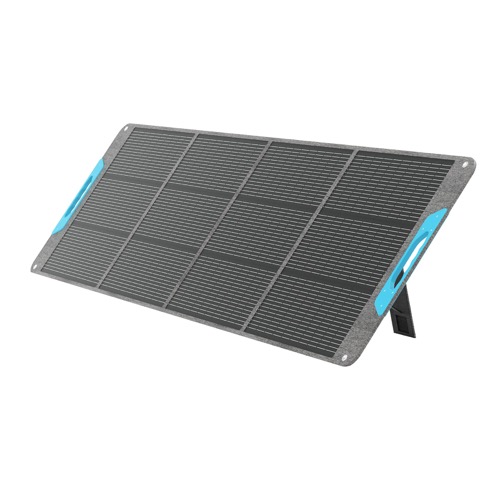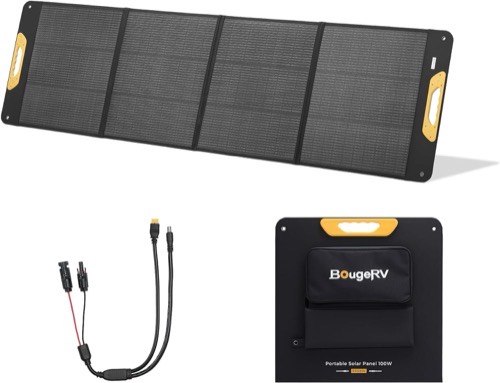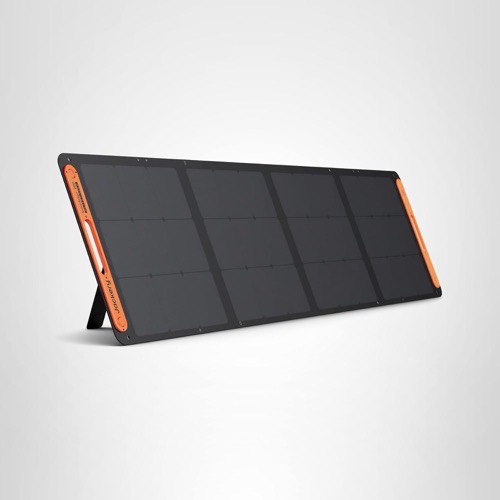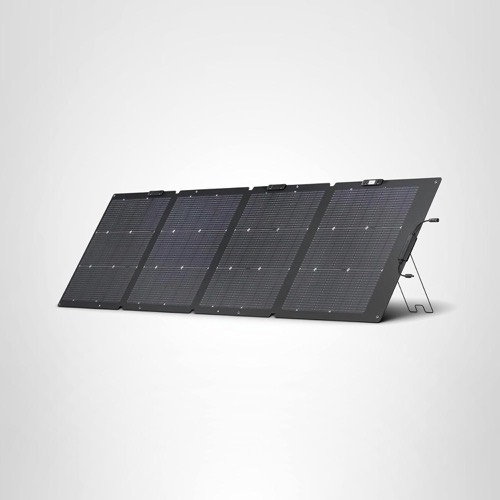
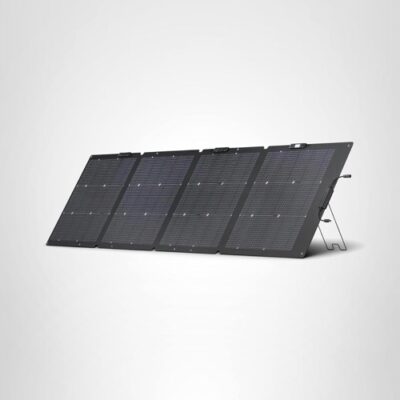
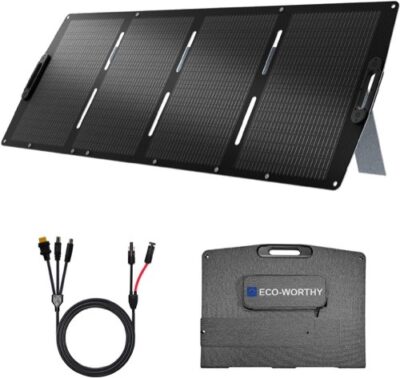
Most buyers assume the best 200w portable solar panels are simply whichever ones cram the most watts in for the least money — and that once you hit the 200-watt number, the panels are basically interchangeable. Both ideas are wrong. The rated 200W stamped on the box and the power that actually reaches your station are two different numbers, and the gap between them depends heavily on cell type, heat, and the angle you set the panel at.
Here’s the thing — the real problem isn’t choosing 200W over 100W. It’s that two panels both labeled “200W” can deliver wildly different real output. An N-Type panel and a cheap standard-mono ETFE panel both print 200W on the spec sheet, yet one quietly hands you more Wh/day in the same sun. Connector mismatch is the other silent failure: a great panel that ships with the wrong plug for your EcoFlow, Jackery, or Bluetti charges nothing until you buy an adapter.
This guide compares eight 200W-class portable panels on what actually matters at this tier — real-world Wh/day, cell technology, connector compatibility, and weight. The picks below span N-Type, IBC, bifacial, and standard-mono ETFE designs, range from 13.8 lb to 22 lb, and cover every major power-station connector. The right 200w portable solar panel depends on your station’s input limit, your brand, and how much real output you need per day.
Not Sure 200W Is the Right Tier?
Our Solar Panel Output Calculator estimates how much energy a 200W panel actually produces per day for your location’s sun hours — and whether that’s enough to recover your power station overnight, run a 12V RV fridge, or whether you need a second panel.
Use the Solar Calculator — Jump to the 200W Reality Check
How We Chose the Best 200W Portable Solar Panels
We don’t run a solar lab, so nothing here claims hands-on measurement. Instead, we leaned on manufacturer specs, owner feedback, and the physics of how cells behave in real sun to rank these on the criteria that actually decide a 200W panel: real-world Wh/day (not the nameplate), cell technology — N-Type, TOPCon, and IBC versus standard mono and ETFE — power-station and RV connector compatibility, and weight-per-watt. Worth knowing, at this wattage tier the panels are heavy enough that you set them down once and leave them, so durability and angle stability matter more than packability. In real use, the difference between two “200W” panels comes down to how well they hold output when it’s hot and the sun is low.
| Criterion | Why It Matters at 200W | Weight |
|---|---|---|
| Real-world output vs rated watts | Two “200W” panels can deliver very different Wh/day — cell type and heat decide it | High |
| Cell technology (N-Type / IBC vs standard mono) | N-Type and IBC hold output better in heat and low angle, where 200W panels live | High |
| Power station and RV connector compatibility | EcoFlow, Jackery, Bluetti each use different plugs — wrong connector means no charging | High |
| Solar input voltage match | A 200W panel can exceed a small station’s input ceiling — voltage and watt limits matter | Medium |
| Weight and foldability | 13.8 to 22 lb across this lineup — heavy panels need to justify the bulk | Medium |
| Weatherproofing (IP rating) | 200W panels stay deployed for hours; IP65 minimum, IP68 for left-out setups | Medium |
| Warranty and brand support | A panel left out all day for years needs a warranty that backs it | Low |
Selection criteria:
- Real-world output — Wh/day delivered at 4 PSH, not the nameplate 200W
- Cell technology — N-Type, IBC, or bifacial preferred over standard mono ETFE for heat and low-angle output
- Connector compatibility — native or included cables for EcoFlow (XT60), Jackery (DC8020/DC7909), Bluetti, plus MC4 for controllers
- Solar input match — output voltage within the station’s solar input range; watt limit not exceeded
- Weight and foldability — manageable for the intended setup (vehicle, RV, base camp)
- Weatherproofing — IP65 minimum; IP68 for panels left out all day
- Kit completeness — adapters, cables, and kickstand quality in the box
- Warranty — multi-year coverage; Jackery’s coverage is strongest here
200W Reality Check: Rated Watts vs Real Output
This is the section that separates the best 200w portable solar panels from the ones that just print “200W” on the box. Rated wattage is measured at lab conditions — 25°C, a perfect 1,000 W/m² of sun, and a dead-on angle. Real camp and RV conditions are never that clean. Heat alone can shave 10-15% off output, and a low morning or evening sun angle takes more on top of that. In practice, what you actually collect per day depends most on cell type.
| Panel | Cell Type | Real-World Factor | Est. Output (Wh/day, 4 PSH) | Why the Difference |
|---|---|---|---|---|
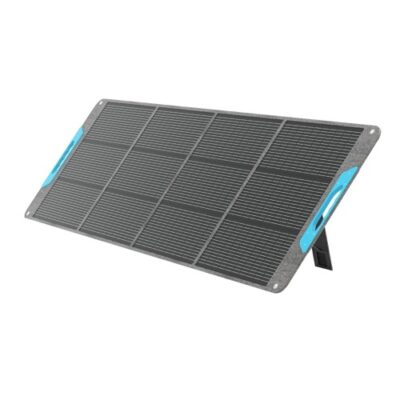
| Renogy 200W | N-Type monocrystalline | 0.82 | ~656 Wh/day | N-Type holds output in heat and at low angle |
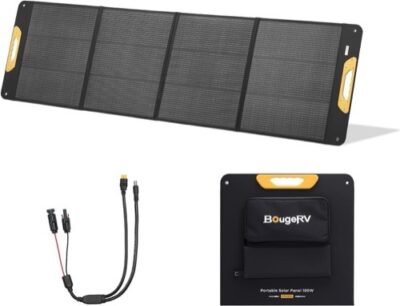
| BougeRV 200W | N-Type monocrystalline | 0.82 | ~656 Wh/day | N-Type cells lose less to heat on hot afternoons |
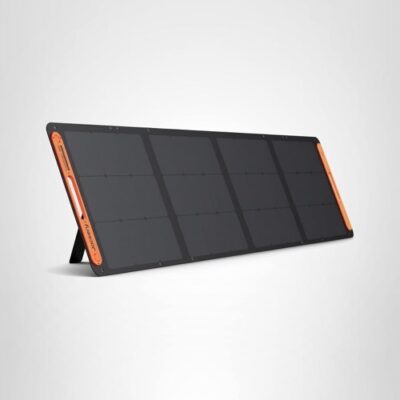
| Jackery SolarSaga 200W | IBC bifacial mono | 0.82 | ~656 Wh/day | IBC layout plus rear-side pickup keeps output steady |
| EF ECOFLOW 220W | N-Type bifacial ETFE | 0.82 | ~722 Wh/day | Extra 20W rating plus rear-side gain over reflective ground |
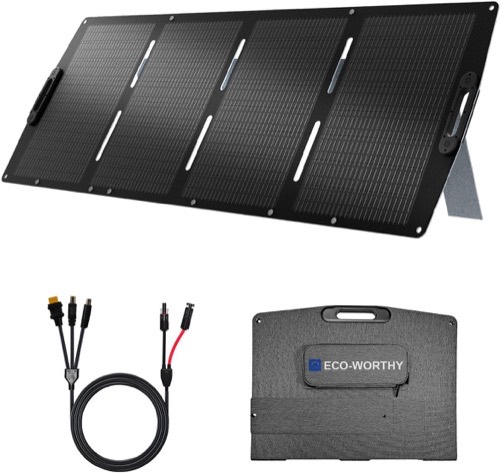
| ECO-WORTHY 200W | Standard mono ETFE | 0.78 | ~624 Wh/day | Standard mono drops faster when hot |
| EBL 200W | Standard mono ETFE | 0.78 | ~624 Wh/day | Standard mono gives up more output at low angle |
| 200W 24% ETFE (Amazon) | Standard mono ETFE | 0.78 | ~624 Wh/day | Decent efficiency, but heat losses are higher than N-Type |
| HQST N-Type 16BB 200W | N-Type 16BB bifacial mono | 0.82 | ~656 Wh/day | N-Type with 16 busbars and rear-side gain holds output |
Real-World Math — A 200W N-Type panel at 4 peak sun hours and a 0.82 factor delivers roughly 656 Wh/day. A standard-mono ETFE 200W panel at a 0.78 factor lands closer to 624 Wh/day in the same sun — and the gap widens on a hot 95°F afternoon, where N-Type cells lose less output to heat. Across a 5-day trip, that’s an extra 160 Wh — most of a phone-plus-laptop day.
Worth Knowing — Bifacial panels like the EcoFlow 220W and HQST 200W pick up reflected light off the rear — pavement, sand, snow, or a light tarp can add a few percent. The catch is that the bonus only shows up when the back of the panel faces something bright; flat on dark grass, it’s mostly the front cells doing the work.
How to Choose a 200W Portable Solar Panel
What to prioritize in a 200W portable panel:
- Real-world Wh/day output, not just the rated 200W number
- N-Type, IBC, or bifacial cells for better heat and low-angle output
- The right connector for your power station — XT60, DC8020, or an included adapter
- Output voltage within your station’s solar input range
- IP65 minimum; IP68 if the panel stays out all day
- A stable kickstand or mounting that holds the panel angled into the sun
Common buyer mistakes at 200W:
- Assuming all 200W panels deliver the same Wh/day — cell type decides it
- Buying a 200W panel that exceeds a small station’s solar input ceiling
- Ignoring the connector — Jackery DC8020 and EcoFlow XT60 are not interchangeable
- Paying brand-premium prices when a cheaper N-Type panel delivers the same output
- Wiring a 200W panel straight to a bare 12V battery with no charge controller
Real-World Output vs Rated Watts
The “200W” label is a lab number, not a field number. What you actually collect comes down to peak sun hours — the number of hours your spot gets full-strength sun — multiplied by a real-world factor that accounts for heat, angle, and conversion losses. The math is simple: rated watts × peak sun hours × factor.
In practice, a 200W N-Type panel at 4 PSH and a 0.82 factor delivers about 656 Wh/day, while a standard-mono ETFE 200W panel at 0.78 lands near 624 Wh/day. Tie that to a real load: ~656 Wh recovers most of a 1kWh power station in a single good day, with the last slice arriving on day two. Our guide on how much power a solar panel produces walks through the same math step by step.
The takeaway is short — always size from Wh/day delivered, never from the nameplate watt number.
Cell Technology: N-Type / TOPCon / IBC vs ETFE / Mono
Cell type matters more at 200W than most buyers expect. N-Type and IBC cells hold their output better in heat and at low sun angle — exactly the conditions a deployed panel faces through a long afternoon. That’s why two panels with identical 200W labels can drift apart by 30+ Wh/day once it’s hot.
Here’s how the lineup maps out. N-Type: Renogy, BougeRV, the EcoFlow 220W, and HQST. IBC bifacial: the Jackery SolarSaga 200W. Standard mono ETFE: ECO-WORTHY, EBL, and the 24% ETFE Amazon pick. Worth knowing, the EcoFlow 220W and HQST add rear-side gain from their bifacial design when the back faces something bright.
Long-Term Ownership — N-Type cells degrade more slowly than older PERC mono — roughly 0.4% a year versus 0.5-0.6%. Over a panel’s life that’s a meaningful output difference, but the real weak points on a 200W portable are the folding hinges, the cable, and the connector. Store it dry and don’t crease the cable at the junction box, and the cells will outlast the rest of the panel.
Power Station & RV Compatibility: Will It Actually Plug In?
This is the section that saves buyers the most headaches at this wattage. Connector matters as much as wattage here — a panel that can’t plug into your station charges nothing. Each major brand uses its own input:
- EcoFlow: XT60 / XT60i input
- Jackery: DC8020 (newer) or DC7909 (older)
- Bluetti: T500 or aviation connector by model
- Anker SOLIX: XT60
- Bare controller / RV: MC4
| Power Station / Target | Native Match in This Lineup | Needs Adapter |
|---|---|---|
| EcoFlow (XT60) | Renogy, BougeRV, EcoFlow 220W, ECO-WORTHY, 24% ETFE Amazon | Jackery, EBL, HQST |
| Jackery (DC8020/DC7909) | Jackery SolarSaga, BougeRV (DC7909), ECO-WORTHY (adapter included) | Renogy, EcoFlow 220W, EBL, HQST, 24% ETFE Amazon |
| Bluetti (T500/aviation) | EBL (aviation/DC out of the box) | All others (T500 adapter) |
| Bare controller / RV (MC4) | Renogy, BougeRV, EcoFlow 220W, ECO-WORTHY, 24% ETFE Amazon, HQST | Jackery, EBL |
A 200W panel outputs roughly 18-23V Vmp, which fits the 11-60V input of most stations — but a small station may cap solar input watts, often somewhere between 100W and 220W. Confirm both the voltage range and the watt ceiling before you buy. If you’re weighing two brand ecosystems, our EcoFlow vs Jackery solar panel comparison and the portable solar panel for a power station guide both cover the connector trade-offs in detail.
Buying Note — The EBL 200W ships with the widest connector set in this lineup (Anderson, aviation/DC, XT60, plus USB), so it plugs into more stations out of the box than the others. The Jackery SolarSaga uses DC8020 — native for Jackery stations, but you’ll need an adapter for EcoFlow or Bluetti. Match the connector to your station first, then compare output.
Weight & Foldability
The weight spread here runs from 13.8 lb on the BougeRV up to 22 lb on the ECO-WORTHY. At 200W, none of these are backpacking-friendly — they’re vehicle, RV, and base-camp panels you carry from the trunk to the campsite and back.
Lighter isn’t automatically better, either. A heavier panel with a sturdy kickstand often holds its angle in wind better than a flimsy light one, and a panel that folds flat tucks into a trunk or RV bay more easily. Foldability matters for storage, not for carrying distance.
The takeaway: pick the lightest panel that still delivers the output and connector you need — don’t pay a weight penalty for watts you won’t use.
Weatherproofing: What the IP Rating Means at 200W
Since a 200W panel sits out for hours, the IP rating tells you how it handles weather while it’s working:
- IP65: rain and spray from any direction — fine for a panel under an awning or stowed between showers
- IP68: dust-tight and submersion-rated — the Jackery SolarSaga 200W and EcoFlow 220W carry this, best for panels left out all day in unsettled weather
To be fair, the panel’s IP rating may not cover a bundled charge controller or junction box, so check the cable end too — that’s often the first part to let water in.
Charge Controller: Only If You’re Charging a Bare 12V Battery
Most 200W buyers pair with a power station that has built-in MPPT, so no separate controller is needed — just the right cable. Plug in and charge.
You do need a controller if you wire the panel straight to a standalone 12V lead-acid, AGM, or LiFePO4 battery in an RV or off-grid setup. MPPT is worth it at 200W; PWM leaves real output on the table at this wattage, as our MPPT vs PWM charge controller guide breaks down. For LiFePO4, confirm the controller has an LFP charge profile.
One line to remember — power station means no extra controller; bare battery means an MPPT controller is required.
What Can a 200W Panel Actually Run?
Watts and watt-hours stay abstract until you put real devices next to them. Here’s what a 200W portable panel covers per day at 4 peak sun hours — and where you’ll want a second panel.
| Daily Need | Approx. Daily Draw | Covered by One 200W Panel (4 PSH)? | Reality Check |
|---|---|---|---|
| Phones, laptop, lights, small power station top-off | ~150-300 Wh/day | Yes — comfortably | One 200W panel recovers a 500Wh station in well under a day |
| Recover a 1kWh power station from empty | ~1,000 Wh | Most of it in one good day | ~656 Wh/day from an N-Type panel; budget two solid sun days for a full refill |
| 12V RV fridge (compressor) plus phones and lights | ~400-600 Wh/day | Yes, on clear days | Tight on cloudy days; a second 200W panel adds a safety margin |
| RV essentials: fridge, water pump, lights, fans, devices | ~800-1,200 Wh/day | Borderline to no | Pair two 200W panels or step up to a 400W array for full coverage |
Cloudy days hit 200W panels harder than the rated number suggests. Full overcast can drop a 200W panel to 30-60W of real output — enough to slow your station’s drain but not enough to recover a 1kWh station in a day. For trips with more than two likely cloudy days, plan a second panel or a wall-outlet top-off before you leave.
When 200W Is the Right Tier
Is 200W the Right Tier for You?
- Under 100W: Phone and small-device charging, slow top-off of a compact power station — step up to 200W if you run anything bigger
- 100W: Single panel for a 300-500Wh station; the lighter, cheaper choice if you don’t need fast recovery. See our 100W vs 200W portable solar panel comparison if you’re on the fence
- 200W (this guide): The sweet spot for charging a 500Wh-1kWh power station in a day, plus 12V RV fridge support — enough output without an unwieldy array
- 220W bifacial: A small step up from 200W with rear-side gain — worth it if your panel will sit near reflective ground
- 400W+ (paired panels): Full RV essentials or fast 1kWh+ recovery; usually two 200W panels in parallel or a dedicated 400W array
Will It Work With Your Power Station or RV?
A 200W portable panel outputs roughly 18-23V DC through its main connector — within the 11-60V solar input range of most EcoFlow, Jackery, and Bluetti stations, which handle charge control with their built-in MPPT. You don’t need a separate controller to charge a power station. On the flip side, you do need one to charge a bare 12V battery in an RV, van, or off-grid setup — and at 200W, that controller should be MPPT, not PWM.
| Charging Scenario | Separate Controller Needed? | Why |
|---|---|---|
| 200W panel → EcoFlow / Jackery / Bluetti power station | No | The station’s built-in MPPT handles it — just match the connector and stay under its watt ceiling |
| 200W panel → standalone 12V AGM or lead-acid battery (RV/van) | Yes — MPPT | No overcharge or reverse-current protection without one; PWM wastes output at 200W |
| 200W panel → LiFePO4 battery bank (van, RV, DIY) | Yes — MPPT with LFP mode | LiFePO4 needs a specific charge profile; the wrong one shortens battery life |
| Two 200W panels in parallel → power station | No (station MPPT) — check watt ceiling | Parallel keeps voltage the same and adds current; confirm the station’s max solar input watts |
| 200W panel via USB output → phone / tablet | No | USB output is already regulated; plug the cable directly |
Buying Note — Before wiring two 200W panels together, check your station’s solar input ceiling. A station capped at 220W solar input won’t use the full output of two 200W panels in parallel — you’d be carrying weight you can’t harvest. When in doubt, one well-matched 200W panel beats two that overshoot the input limit.