Solar Power Picks logo with sun, solar panel, and green energy icon

  • Home
  • Reviews
  • Best
    • Best portable power stations
    • Best Solar Panels
    • Best Solar Generators
  • Guides
    • Portable Power Stations Guides
    • Solar Panels Guides
    • Solar Generators Guides
  • Comparisons
    • Portable Power Stations Comparisons
    • Solar Panels Comparisons
    • Solar Generators Comparisons
  • Calculator
Home / Solar Generators / Best / The Best Solar Generators for Camping, Tested for the Trail

The Best Solar Generators for Camping, Tested for the Trail

OUR PICKS

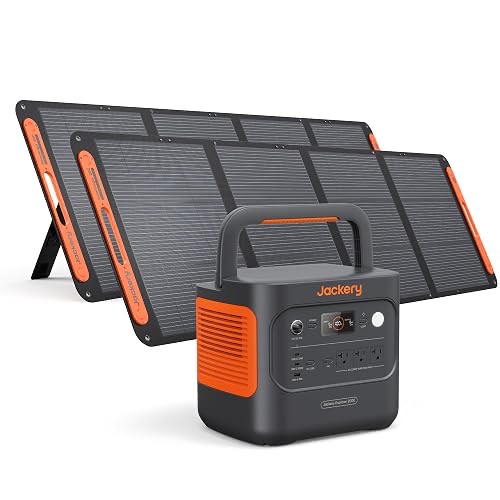
Jackery Solar Generator 1000 v2 Review: A 1070Wh Kit That Charges in an Hour and Comes With Its Own Panel

Best Overall for Camping

Jackery Solar Generator 1000 v2 Review: A 1070Wh Kit That Charges in an Hour and Comes With Its Own Panel

Check price at Amazon Jump to details
EcoFlow Delta 3 Classic Review: A 1024Wh Kit That Charges in Under an Hour and Backs Up in 10 Milliseconds

Best Fast-Charging

EcoFlow Delta 3 Classic Review: A 1024Wh Kit That Charges in Under an Hour and Backs Up in 10 Milliseconds

Check price at Amazon Jump to details
Anker SOLIX C300 Review: A Pocket-Sized 288Wh Kit With Its Own 60W Panel

Best Ultraportable

Anker SOLIX C300 Review: A Pocket-Sized 288Wh Kit With Its Own 60W Panel

Check price at Amazon Jump to details
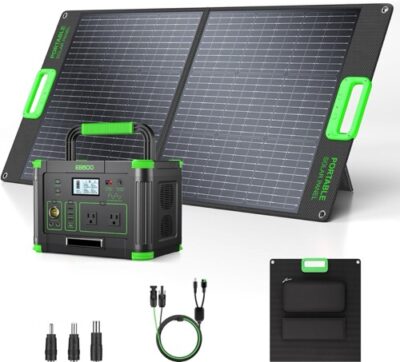
GRECELL 500W Solar Generator Review: A Budget 519Wh Kit With Its Own 100W Panel

Best Value

GRECELL 500W Solar Generator Review: A Budget 519Wh Kit With Its Own 100W Panel

Check price at Amazon Jump to details
Jackery Solar Generator 300 Review: A 7.5-Pound 292Wh Kit for Fans, Phones, and Weekend Camping

Best Budget

Jackery Solar Generator 300 Review: A 7.5-Pound 292Wh Kit for Fans, Phones, and Weekend Camping

Check price at Amazon Jump to details
Marbero 296Wh Solar Generator Review: A Cheap, 5-Pound Camping Kit That Knows Its Limits

Best Ultra-Cheap

Marbero 296Wh Solar Generator Review: A Cheap, 5-Pound Camping Kit That Knows Its Limits

Check price at Amazon Jump to details

A solar generator turns a campsite into a place you can charge a phone, run a fan, keep a fridge cold, and power a CPAP — silently, with no gas can and no fumes. But “solar generator for camping” covers everything from a 5.7-pound lunchbox you toss in a backpack to a 24-pound 1kWh box that runs a fridge for three days. The right pick depends on how you camp: a one-night tent trip, a car-camping weekend with a cooler, or a base camp you park at for a week each ask for a different balance of weight, capacity, and real solar recharge.

The six kits below are chosen and ordered for the trail, not the garage. Each ships as a panel-and-station kit, so you get a working off-grid setup out of the box, and each maps to a concrete camping job — a do-everything car-camping unit, a fast-charging weekender, an ultraportable tent kit, and three budget picks for device duty. Prices run from $170 for the MARBERO 296Wh to $699 for the Jackery Explorer 1000 v2, and for most campers the answer sits in the 300-1000Wh range.

Start with the quick picks and comparison table above to see the lineup at a glance. Then use this guide to translate spec sheets into real camp runtime — and if you already know your trip style, skip to “Match the Kit to Your Trip” near the bottom.

How We Chose These Camping Solar Generators

We don’t rank camping kits by headline watt-hours. The numbers that decide whether a power station earns a spot in a packed trunk are weight, whether the panel actually refills it off-grid, how long it runs real camp loads, and how quietly and durably it survives being hauled outdoors. Here’s what drives each pick, in the order that matters for camping.

Criterion Why It Matters for Camping Weight
Weight & portability Every pound counts when you’re carrying it from car to campsite or packing a full trunk; one-handed carry and a small footprint decide what you’ll actually bring High
Real off-grid solar recharge Off the grid, the bundled panel’s real-world wattage — not its rating — sets whether you refill over a sunny day or run flat by night two High
Runtime for camp loads Usable Wh against the actual draw of lights, a fan, a fridge, phones, and a CPAP decides how many nights you get High
Quiet, tent-friendly operation Near-silent running and a soft light bar make a unit usable inside or beside a tent overnight Medium
Durability & weather resistance Camping gear gets knocked, packed tight, and rained on; rugged shells and IP-rated panels survive the abuse Medium
Ports & recharge options Enough USB-C PD, a 12V socket for coolers, and car-charging for travel days keep everyone’s gear alive between campgrounds Medium

A couple of those deserve a note on how we read them. On solar recharge, we’re honest that a bundled panel nets roughly half its rating in real conditions and needs realigning through the day — Explorer 1000 v2 owners see 100-135W from its 200W panel only when they keep it aimed at the sun. On runtime, we treat rated capacity as a best case: at about 85% inverter efficiency, a 1024Wh unit like the EcoFlow Delta 3 Classic delivers around 870Wh through the outlets. And we insist each pick fits a real trip, which is why the shortlist spans a 5.7-pound device charger and a 24-pound fridge-runner.

Worth knowing: A gas generator is louder, needs fuel, and can never run inside a tent because of carbon monoxide. A solar generator has no engine and no exhaust, so it’s the only kind you can safely charge and run at your sleeping spot.

How to Pick a Camping Solar Generator

Sizing for a Weekend

Start from nights, not headline specs. Add up each device’s watts times the hours you’ll run it, pad about 15% for inverter losses, and add a reserve so you’re not cycling to empty in the cold. For a two-night trip running lights, a fan, phones, and a CPAP, 288-519Wh covers it — the Anker SOLIX C300 ran a camper’s CPAP all night with charge to spare. Add a 12V fridge and you’re into 1kWh territory, where the Jackery Explorer 1000 v2 kept a portable fridge cold across three days.

What Campers Actually Run

Camp loads are smaller than people fear. LED string lights and lanterns draw a few watts; a tent fan pulls 5-20W; phones and a smartwatch sip a few percent of any of these kits overnight. The demanding ones are a 12V or compact fridge (40-60W when the compressor runs) and a CPAP (roughly 30-60W, more with a heated humidifier — one GRECELL owner found a budget unit couldn’t sustain heated tubing, so size up if you use it). A quick coffee maker, kettle, or air-mattress inflator spikes to a few hundred watts for a minute; that’s a job for the 1kWh units, not the 300W ones.

Real-world math: A 12V camp fridge that averages 30W over a day uses about 720Wh in 24 hours. A 1kWh kit runs it a bit over a day on the battery alone — and indefinitely if solar offsets the daytime draw.

Solar vs Driving to Recharge

Off-grid, you have two ways to refill: the sun and your vehicle. Solar is silent and free but slow and fussy — expect about half the panel’s rating and plan to realign it toward the sun every 15 to 30 minutes for the best input. Charging from the 12V socket while you drive between sites is weather-proof and reliable, but DC car charging is often capped near 10A, so it’s a trickle. The best multi-day plan combines both: a full wall charge before you leave home, solar through the day at camp, and a car top-up on travel days.

Weight-to-Capacity

The number that decides what you’ll actually pack is watt-hours per pound. The Jackery Explorer 300 delivers 292Wh at just 7.5 pounds; the MARBERO 296Wh is even lighter at 5.73 pounds for the station. Step up to a 1kWh unit and you’re carrying 23-24 pounds — fine for car camping, too much for a backpack. Match the class to how far you carry it: grab-and-go for tent trips, a heavier fridge-runner for a site you drive right up to.

Ports for the Whole Campsite

A camping kit powers a group, so port count matters. Look for at least one strong USB-C PD port (100W on the Jackery and EcoFlow units, 140W two-way on the Anker C300) to charge laptops and top the station itself, a 12V car socket for coolers and tire pumps, and enough USB-A for older gear. The GRECELL and MARBERO lean into this with 10 and 8 ports respectively — GRECELL even adds a wireless charging pad — so nobody’s swapping cables around the picnic table.

Match the Kit to Your Trip

The best camping solar generator depends on how you camp. Three broad styles cover most trips, and each points to a different pick.

  • Backpack and minimalist tent camping — weight is everything, and you’re mostly charging phones, lights, and maybe a CPAP. The 5.73-lb MARBERO 296Wh and 7.5-lb Jackery Explorer 300 are the easiest to carry; the 288Wh Anker C300 is the refined pick if you want a quiet 25dB unit with a tent light bar and app control.
  • Car camping and weekend trips — you drive to the site, so you can afford more capacity and a real panel. The GRECELL 500W (519Wh, 100W panel, 10 ports) is the value sweet spot for device-and-cooler weekends, while the 1kWh EcoFlow Delta 3 Classic adds a fast 45-minute wall charge and the muscle to run a small appliance between charges.
  • Base camp and multi-day off-grid — you’re parked for days and want a fridge to stay cold. The Jackery Explorer 1000 v2 is the pick: 1070Wh, a fridge-friendly 1500W inverter, a 200W panel for daytime solar offset, and dual DC inputs so you can add a second panel for faster refills.

Buying note: The lightest kit is rarely the one that runs a fridge, and the fridge-runner is rarely the one you’ll carry far. Pick for your most common trip, then let solar or a car top-up stretch it on the rare long haul.

Related Picks and Guides

Camping is one job among several. If your needs are a little different, these tighter shortlists and tools will steer you better than a single ranking.

  • Best portable solar generator — the lightest grab-and-go kits for phones, laptops, and CPAP, ranked purely on weight and packability.
  • Best budget solar generator — the most camp performance per dollar without dropping to throwaway chemistry.
  • Solar generator size calculator — estimate the right watt-hour class from your camp devices, trip length, and whether you’ll recharge with solar.

Still deciding on size? List every device you’ll run at camp, multiply each one’s watts by the hours you need it, add roughly 15 percent for inverter losses, and add a reserve so you’re not cycling the battery to empty overnight. That total, in watt-hours, is your capacity floor. Then confirm your single biggest load — a coffee maker, an inflator, a fridge startup — fits under the station’s continuous output, and if solar is your recharge plan, that the panel can offset your daytime draw. Pick the smallest kit that clears both, and you’ll carry less without running flat.

Best Overall for Camping

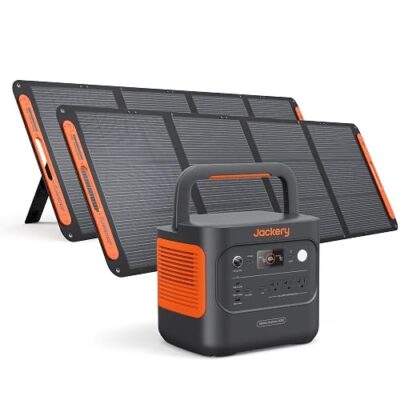
Jackery Solar Generator 1000 v2 Review: A 1070Wh Kit That Charges in an Hour and Comes With Its Own Panel

Jackery Solar Generator 1000 v2 Review: A 1070Wh Kit That Charges in an Hour and Comes With Its Own Panel

Get it now:

Check latest price

What to know

  • Runs a 12V camp fridge for one to three days, and indefinitely if the 200W panel offsets the daytime draw.
  • The bundled 200W panel realistically nets 100-135W in good sun — and only if you realign it toward the sun every 15 to 30 minutes.
  • Two DC solar inputs let you add a second panel at base camp for a faster daytime refill.
  • 30dB quiet overnight charge mode and a one-hour emergency wall charge before you leave home; defaults to 1.7 hours to protect the battery.

Best if

  • You car camp and want to keep a fridge cold for a long weekend
  • You want one kit that handles camping and home outages
  • You'll add a second panel for real off-grid solar recharge

Skip if

  • You backpack or need to carry it far from the car
  • You only charge phones, lights, and a CPAP
  • You expect the 200W panel to refill it in an hour
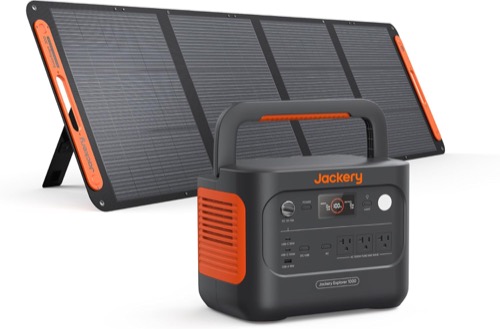
This is the kit that turns a campsite into a place you can run a fridge. At 1070Wh and 1500W it clears the loads a car-camping family actually piles on — a 12V fridge for days, a coffee maker in the morning, phones and a couple of fans — while weighing 23.8 lbs and folding 18% smaller than the original so it still fits a crowded trunk. One owner ran a portable fridge for three straight days, through sun and pouring rain, and got home with every port still working. It's the do-everything pick for anyone who drives to their site.
  • Capacity: 1070Wh LiFePO4 (4,000 cycles to 70%)
  • Output: 1500W continuous / 3000W surge
  • Solar input: 200W panel included (dual DC inputs)
  • Weight: 23.8 lbs; 100W USB-C PD; 3x AC outlets
  • Price: $699
Best Fast-Charging

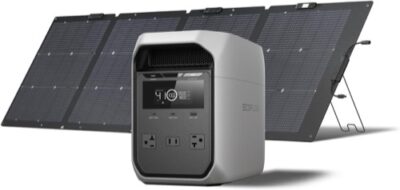
EcoFlow Delta 3 Classic Review: A 1024Wh Kit That Charges in Under an Hour and Backs Up in 10 Milliseconds

EcoFlow Delta 3 Classic Review: A 1024Wh Kit That Charges in Under an Hour and Backs Up in 10 Milliseconds

Get it now:

Check latest price

What to know

  • 0-80% wall charge in 45 minutes makes last-minute departures painless.
  • App lets you dial the AC charge rate down to cut fan noise, and alerts you the moment grid power drops at home.
  • Accepts up to 500W of solar via XT60, so a second panel dramatically speeds off-grid refills — the 220W kit panel alone nets closer to half its rating in real sun.
  • X-Boost pushes select high-draw camp gear (kettles, heated blankets) beyond the 1800W rating.

Best if

  • You recharge from the wall between trips and want it fast
  • You want app control and remote monitoring at camp
  • You want the strongest inverter in a carry-friendly 1kWh box

Skip if

  • You mostly rely on the bundled panel for off-grid refills
  • You'd rather never open an app to run a power station
  • You need something a few pounds lighter for tent trips
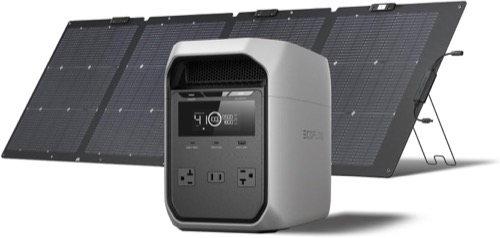
Same 1kWh class as our Best Overall, but this is the pick for campers who top up between trips and hate waiting. X-Stream charging takes it from 0-80% in 45 minutes off a wall outlet, so you can leave it plugged in the night before and drive off full; the EcoFlow app then lets you cap the charge rate to silence the fans in a quiet campground or apartment. At camp it brings an 1800W inverter — the strongest here — plus solar input up to 500W if you add panels, and remote monitoring you can check from across the site.
  • Capacity: 1024Wh LiFePO4 (10+ year rated life)
  • Output: 1800W continuous / 3600W surge (X-Boost)
  • Solar input: 220W bifacial panel included; up to 500W max
  • Charging: 0-80% wall in 45 min; 100W USB-C; app control
  • Price: $699
Best Ultraportable

Anker SOLIX C300 Review: A Pocket-Sized 288Wh Kit With Its Own 60W Panel

Anker SOLIX C300 Review: A Pocket-Sized 288Wh Kit With Its Own 60W Panel

Get it now:

Check latest price

What to know

  • 25dB operation and a diffused light bar make it genuinely tent-friendly overnight.
  • 140W two-way USB-C recharges the unit fast from a wall or car and powers a laptop.
  • 0-80% wall charge in about 50 minutes; the 60W panel is a daytime top-up, not a fast refill.
  • Carry strap is sold separately, and it isn't compatible with Anker's larger PS-series panels.

Best if

  • You tent camp and want the quietest, most refined small kit
  • You lean on USB-C devices and a CPAP overnight
  • App control and a good tent light bar matter to you

Skip if

  • You need to run a 12V fridge or a coffee maker
  • You want the cheapest way to charge phones (see the MARBERO)
  • You need multi-day capacity from big solar intake
The C300 is the one you actually grab for a tent trip. At 288Wh and roughly the size of a lunchbox it won't run a fridge, but it charges phones, a tablet, a laptop, and a CPAP through the night — one camper ran a CPAP overnight and woke to charge to spare. What sets it apart is camp polish: 25dB near-silent running you can sleep beside, a soft-diffused light bar that lights a tent without glaring, and Anker's app that connected to the unit from 100 feet across a campsite. It's 15% smaller than similar designs and easy to carry one-handed.
  • Capacity: 288Wh LiFePO4 (3,000 cycles)
  • Output: 300W continuous / 600W peak
  • Solar input: 60W panel included
  • Ports: 8 total, incl. 2x 140W USB-C; 25dB operation
  • Price: $330
Best Value

GRECELL 500W Solar Generator Review: A Budget 519Wh Kit With Its Own 100W Panel

GRECELL 500W Solar Generator Review: A Budget 519Wh Kit With Its Own 100W Panel

Get it now:

Check latest price

What to know

  • Real 100W bundled panel (23.5% efficiency) recharges faster than the small kit panels above.
  • Ten ports plus a wireless charging pad — unusual convenience for a group campsite at this price.
  • Li-ion (not LiFePO4): lighter and cheaper, but fewer cycles, so it's a few-times-a-year camper.
  • 500W continuous handles a CPAP and small devices, but heated CPAP tubing can outrun a budget unit — size up if you use it.

Best if

  • You want the most Wh per dollar for weekend car camping
  • You value a real 100W panel and lots of ports for a group
  • You mainly charge phones, fans, and headlamps off-grid

Skip if

  • You camp often and need LFP longevity from weekly cycling
  • You depend on it for critical CPAP runtime with heated tubing
  • You need more than 500W of continuous output
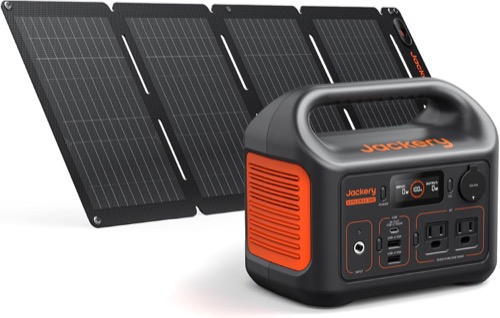
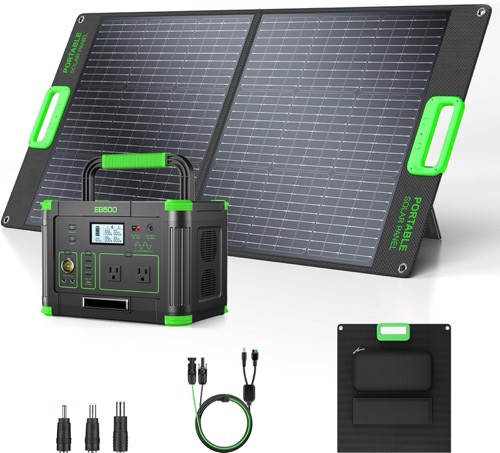
For a car-camping weekend of device-and-cooler duty on a budget, the GRECELL packs the most usable capacity per dollar in the sub-$300 tier — 519Wh and a genuine 100W panel for about $290. Campers report five days of dry camping keeping phones, fans, and headlamps going, and the 100W panel refills it faster than the 40-60W kit panels on the lighter units here. Ten ports plus a built-in wireless charging pad mean the whole campsite can charge at once. The trade-off is chemistry: this is a Li-ion pack best suited to occasional weekend use.
  • Capacity: 519Wh Li-ion (with BMS protections)
  • Output: 500W continuous / 1000W peak
  • Solar input: 100W panel included (23.5% efficiency)
  • Ports: 10 total, incl. 60W USB-C PD and wireless pad
  • Price: $290
Best Budget

Jackery Solar Generator 300 Review: A 7.5-Pound 292Wh Kit for Fans, Phones, and Weekend Camping

Jackery Solar Generator 300 Review: A 7.5-Pound 292Wh Kit for Fans, Phones, and Weekend Camping

Get it now:

Check latest price

What to know

  • 7.5 lbs — light enough to pack for a hike or hand a kid their own power for camp.
  • LiFePO4 at this price: 4,000+ cycles and a 10-year-plus service life, unusual under $300.
  • 100W USB-C PD output is strong for a 292Wh unit — it tops a laptop and recharges the station fast.
  • The 40W panel reaches 80% in about 7.5 hours; a 100W panel does it in ~2.8 hours if you upgrade.

Best if

  • You want reliable LFP camp power for the lowest price
  • Weight and packability are your top priorities
  • You mainly run a fan, lights, phones, and a laptop

Skip if

  • You need to run a fridge or anything over 300W
  • You want fast solar recharge from the bundled 40W panel
  • You want app control or a big-capacity fridge-runner
The cheapest way onto Jackery's LiFePO4 ladder, and the lightest LFP kit here at 7.5 lbs — the size of a lunchbox and easy to pack for van life, festivals, or minimalist tent camping. Owners run a USB fan at night, charge phones and a laptop, and get two to three days before it needs a refill; one ran a string of 100 camp lights for three hours. A 100W USB-C PD port punches above the price. Treat the bundled 40W panel as maintenance, not primary recharge, and upgrade to a 100W panel if you camp off-grid for longer.
  • Capacity: 292Wh LiFePO4 (4,000+ cycles)
  • Output: 300W continuous / 600W peak
  • Solar input: 40W panel included; 100W USB-C PD output
  • Weight: 7.5 lbs; 6 device ports incl. 12V car socket
  • Price: $279
Best Ultra-Cheap

Marbero 296Wh Solar Generator Review: A Cheap, 5-Pound Camping Kit That Knows Its Limits

Marbero 296Wh Solar Generator Review: A Cheap, 5-Pound Camping Kit That Knows Its Limits

Get it now:

Check latest price

What to know

  • 5.73-lb station plus a 3.08-lb IP65 panel — the lightest, most packable kit here.
  • Built-in LED flashlight with SOS mode and eight ports for a whole family's small devices.
  • Recharges in about 7 hours from the wall or the 60W panel, or from the car on travel days.
  • Li-ion rated to hold 90% capacity after 1,000 cycles — fine for a few trips a year, not daily cycling.

Best if

  • You want the cheapest full kit for phones, fans, and lights
  • Ultralight weight and a packable panel are the priority
  • You want a backup that doubles for power outages at home

Skip if

  • You need to run a fridge, kettle, or anything over 300W
  • You camp often and want LFP longevity
  • You depend on it for all-night CPAP runtime
When you just need to keep phones, a fan, and lights alive at camp for the least money, the MARBERO is the pick — a full kit with a 60W panel for about $170. At 5.73 lbs for the station and 3.08 lbs for the panel, the whole set fits in a laptop bag or backpack, and a built-in LED flashlight with an SOS mode adds a safety net for nighttime camp. One camper ran a tower fan, phone, laptop, and a lamp for 7.5 hours on a single charge, then refilled it from the panel in a summer day. It's Li-ion, so treat it as an occasional-use weekend kit rather than a daily workhorse.
  • Capacity: 296Wh Li-ion (90% capacity after 1,000 cycles)
  • Output: 300W continuous / 600W surge (pure sine wave)
  • Solar input: 60W IP65 panel included (23% efficiency)
  • Weight: 5.73 lbs station; 8 ports; LED flashlight with SOS
  • Price: $170

Product Comparison

Feature Jackery Solar Generator 1000 v2 Review: A 1070Wh Kit That Charges in an Hour and Comes With Its Own Panel EcoFlow Delta 3 Classic Review: A 1024Wh Kit That Charges in Under an Hour and Backs Up in 10 Milliseconds Anker SOLIX C300 Review: A Pocket-Sized 288Wh Kit With Its Own 60W Panel GRECELL 500W Solar Generator Review: A Budget 519Wh Kit With Its Own 100W Panel Jackery Solar Generator 300 Review: A 7.5-Pound 292Wh Kit for Fans, Phones, and Weekend Camping Marbero 296Wh Solar Generator Review: A Cheap, 5-Pound Camping Kit That Knows Its Limits
Product Image
Jackery Solar Generator 1000 v2 Review: A 1070Wh Kit That Charges in an Hour and Comes With Its Own Panel
EcoFlow Delta 3 Classic Review: A 1024Wh Kit That Charges in Under an Hour and Backs Up in 10 Milliseconds
Anker SOLIX C300 Review: A Pocket-Sized 288Wh Kit With Its Own 60W Panel
GRECELL 500W Solar Generator Review: A Budget 519Wh Kit With Its Own 100W Panel
Jackery Solar Generator 300 Review: A 7.5-Pound 292Wh Kit for Fans, Phones, and Weekend Camping
Marbero 296Wh Solar Generator Review: A Cheap, 5-Pound Camping Kit That Knows Its Limits
Price $699 $699 $329.98 $289.98 $279 $169.99
Rating
4.5 / 5
4.6 / 5
4.6 / 5
4.4 / 5
4.3 / 5
4.2 / 5
Category Solar Generators Solar Generators Solar Generators Solar Generators Solar Generators Solar Generators
Brand Jackery EcoFlow (EF ECOFLOW) Anker GRECELL Jackery MARBERO
Model / SKU Solar Generator 1000 v2 + 200W Panel Kit (Explorer 1000 v2; ASIN: B0D2L1G66J) DELTA 3 Classic + 220W Bifacial Solar Panel Kit (ASIN: B0FRMQPZF6) SOLIX C300 + 60W Solar Panel Kit (ASIN: B0DBLJRRPW) 500W Portable Power Station + 100W Solar Panel Kit (ASIN: B0GYP8PS1L) Solar Generator 300 + 40W Panel Kit (Explorer 300; ASIN: B0G429L5B4) 296Wh Solar Generator + 60W Panel Kit (station M188SL60; ASIN: B0FG7MTQTH)
Product type Solar generator kit — portable power station + 200W solar panel Solar generator kit — portable power station + 220W bifacial solar panel Solar generator kit — compact portable power station + 60W solar panel Solar generator kit — portable power station + 100W solar panel Solar generator kit — portable power station + 40W solar panel Budget solar generator kit — portable power station + 60W folding solar panel
Battery capacity 1070 Wh 1024 Wh 288 Wh 519.48 Wh 292 Wh 296 Wh
Battery chemistry LiFePO4 (LFP) (rated 4,000+ cycles to 70%+ capacity) LiFePO4 (LFP) (EV-grade CTC cells, smart BMS; rated 10+ years of daily use) LiFePO4 (LFP) (rated 3,000 cycles; smart temperature control, impact resistant) Lithium-ion (listing states "lithium battery" with a smart BMS; no LiFePO4 claim) LiFePO4 (LFP) (rated 4,000+ cycles to 70% capacity) Lithium-ion (Li-ion) (~90% capacity after 1,000 cycles; not LiFePO4)
Continuous AC output 1500 W (pure sine wave) 1800 W (pure sine wave) 300 W (pure sine wave) 500 W (pure sine wave) 300 W (pure sine wave) 300 W (pure sine wave; rated continuous — capacity limits sustained high draw)
Surge / peak output 3000 W 3600 W 600 W 1000 W 600 W 600 W
Solar input 200 W (bundled SolarSaga panel; two solar input ports, expandable toward ~400W) 220 W bundled panel (station accepts up to 500W via XT60, 11-60V DC, 15A max; series wiring needed to approach 500W) 60 W (bundled foldable panel; owners cite IP68 water resistance) Up to 100 W (bundled monocrystalline panel; ~18V, up to 23.5% cell efficiency) 40 W (bundled Air panel; ~80% in ~7.5 hr good sun) 60 W (bundled IP65 folding panel; up to 23% cell efficiency claimed; real input runs lower)
Wall (AC) recharge ~1 hour 0-100% with Emergency Super Charging (app) (1.7 hr default; owner measured ~50 min from 22%) 0-80% in ~45 min with X-Stream (owner reached near-full in ~1 hr at ~900W; rate configurable to ~1400W, or ~500W quiet mode) 80% in about 50 minutes (full charge shortly after) Not specified by listing Included AC adapter (fastest path; recharge time not specified by brand) ~7 hours from the 19V DC adapter
Alternator / car recharge 3 hours with a 600W alternator charger (12V car cable sold separately) N/A N/A N/A N/A N/A
Solar recharge ~80% in 6 hours from the 200W panel (real input often ~100W with sun tracking) ~5.8 hours from the 220W panel (owner saw 190-200W in partial shade; a desert owner pulled ~half, taking 7-10 hr) Most of the pack over a good sunny day (owners measured ~40W in full sun; ~5-15W heavily overcast) Roughly a full sunny day from the 100W panel (real input often ~60-70W; 100W input cap) ~80% in ~7.5 hr from the 40W panel (~2.8 hr with a 100W panel, sold separately) ~7.5 hours in strong sun (owner-measured) (longer in weak or cloudy conditions)
AC outlets 3 (pure sine wave) 3 (2× 120V 3-prong 15A/20A, 1× 120V 2-prong; pure sine wave) 3 (pure sine wave; 300W total) 2 (pure sine wave, 500W) 2 (pure sine wave) 2 (110V pure sine wave; one 2-prong, one 3-prong)
USB-C ports 2 (100W PD max) 2 (1× 100W PD, 1× 30W — run at full rating simultaneously) 3 (2× 140W two-way fast charge, 1× 15W) 1 (60W PD max) 1 (100W PD) 1 (PD 18W)
USB-A ports 1 1 (18W) 1 (12W) 3 (QC3.0, 18W each) 2 3 (2x QC3.0 18W, 1x QC3.0 15W)
12V DC ports 1 (car port) N/A 1 (car socket, 120W) N/A 1 (120W car port) 2 (for car coolers, LED strips)
App control Yes — Jackery App (1-hour emergency charge, 30 dB quiet mode, energy mode) Yes — EcoFlow app (WiFi + Bluetooth; firmware, per-port monitoring, remote on/off, charge-rate control, outage alerts; free, no subscription) Yes — Anker app over Wi-Fi or Bluetooth (shows battery temp, watts in/out; controls the light) N/A N/A N/A
Expandable Yes — second solar input port; add a panel toward ~400W input No add-on battery on the Classic (X-Boost extends load handling to 2600W; solar chainable in series toward 500W) N/A N/A N/A N/A
Charge-through (pass-through) Yes — power devices while recharging N/A N/A N/A N/A N/A
Display High-definition color screen (charge level, load, input watts) Bright built-in LED display (charge, load, input/output watts; brightness adjustable in the app) N/A Built-in information window (charge level and load) N/A LCD status screen (owners note it is dim and hard to read in bright daylight)
Weight 23.8 lb (10.8 kg) (station only; foldable ergonomic handle) Not specified (built-in carrying handles; durable case) Not specified (owners note it is lighter than a similar-capacity Bluetti) Not specified by listing (owners describe it as light and easy to carry one-handed) 7.5 lb (integrated handle; ~17% lighter than class average) N/A
Dimensions Not specified (owners note the v2 is ~18% smaller than the prior model) N/A N/A N/A N/A N/A
Lifespan 10+ years (70%+ capacity after 4,000 cycles) 10+ years (LiFePO4 cells rated for 10+ years of daily use) N/A N/A 11+ years (70% capacity after 4,000 cycles) N/A
Warranty 5 years of coverage 5 years total (3-year standard + 2 years with product registration) 5 years Not specified by listing Manufacturer warranty (per Jackery; register to confirm term) 12 months (plus Amazon-message customer service)
What's in the box 1× Explorer 1000 v2 station, 1× 200W solar panel, 1× AC charging cable, 1× user manual 1× DELTA 3 Classic station, 1× 220W bifacial solar panel with carrying bag, 1× XT60 solar adapter cable, 1× AC charging cable, user manual (station and panel ship separately) 1× SOLIX C300 station, 1× 60W solar panel, XT-60 to DC7909 charging cable, solar-to-XT60 charging cable, extension cable, AC charging cable, safety manual, warranty info (station and panel ship separately) 1× 500W / 519.48Wh power station, 1× 100W monocrystalline solar panel, adapters and connectors, charging cables, user manual 1× Explorer 300 station, 1× 40W Air solar panel, 1× AC adapter, 1× car charger cable, 1× user guide 1x M188SL60 power station, 1x 60W solar panel, 1x power adapter, 1x cigarette-lighter adapter, 1x user manual
Best for Camping, RV and off-grid living, ham radio, and outage backup — quiet, fast-charging power with a solar panel already included — based on actual customer usage Camping, travel, drive-in and group outings, off-grid top-ups, and home UPS / outage backup — quiet, fast-charging power with a solar panel already included — based on actual customer usage Travel, remote work, camping, and emergency backup for phones, laptops, and small devices — quiet, light power with a solar panel already included — based on actual customer usage Camping, travel, RV trips, and small-device emergency backup — phones, laptops, fans, a CPAP, and a mini-fridge — based on actual customer usage Vanlife, tent camping, travel, CPAP, and blackout backup — quiet, light, budget power for phones, fans, lights, and small electronics — based on actual customer usage Cheap, light backup for phones, laptops, small fans, lights, CPAP-class low-draw gear, and short-run small appliances while camping, in an RV, or during outages — based on actual customer usage
Buy Now View Deal View Deal View Deal View Deal View Deal View Deal

Which Camping Solar Generator Is Right for You?

The best solar generator for camping is the one that matches your trip, not the biggest battery you can lift into the trunk. For most campers the sweet spot is a 1kWh kit that can actually refill from the sun over a weekend: the Jackery Explorer 1000 v2 (1070Wh, 1500W, 23.8 lbs, $699) is our Best Overall for Camping because it runs a 12V fridge for days and still fits a crowded car, while the EcoFlow Delta 3 Classic (1024Wh, 1800W, $699) is the pick if you top up between trips and want a 45-minute wall charge before you leave the driveway.

Travel lighter and the answer changes. For backpack-adjacent and tent camping, the 288Wh Anker SOLIX C300 ($330) is our Best Ultraportable — 25dB quiet, a soft tent light bar, and 140W USB-C. For weekend device duty on a budget, the 519Wh GRECELL 500W ($290) is the Best Value with a real 100W panel, the 7.5-lb Jackery Explorer 300 ($279) is our Best Budget LiFePO4 pick for van life and festivals, and the 5.73-lb MARBERO 296Wh ($170) is the Best Ultra-Cheap kit for phones, fans, and lights.

Not sure yet? Start from what you run at camp and how many days you're off the grid, then match a kit to your trip below — a tent-and-cooler weekend and a base-camp week ask for very different watt-hours.

---

Frequently Asked Questions

What size solar generator do I need for camping?

It depends on what you run and for how long. For a weekend of phones, lights, a fan, and a CPAP, a 288-519Wh kit like the Anker SOLIX C300 or GRECELL 500W is plenty — the C300 runs a CPAP overnight and still has charge for morning coffee's worth of devices. Add a 12V camp fridge and you want a 1kWh unit: the Jackery Explorer 1000 v2 (1070Wh) kept an owner's portable fridge cold across a three-day trip while also charging phones. The rule of thumb: list each device's watts, multiply by the hours you need it, add about 15% for inverter losses, then size up so you're not running the battery flat every night. For a multi-day base camp, plan on solar recharge, not just a big battery.

Can a solar generator really recharge from its panel while camping?

Yes, but slower than the box implies, and only if you tend the panel. A bundled 200W panel like the Explorer 1000 v2's realistically nets 100-135W once you account for sun angle and heat, so a full 1kWh refill takes most of a sunny day — and you have to realign the panel toward the sun every 15 to 30 minutes for those numbers. The smaller 40W and 60W kit panels on the Jackery 300, Anker C300, and MARBERO are top-up chargers: they keep a small battery alive over a few sunny days rather than refilling it in an hour. For real off-grid recharge, point the panel at the noon sun, keep it unshaded, and consider a larger panel than the kit includes if solar is your only power source.

Are solar generators safe to use inside a tent?

The power station is — it has no engine, no fuel, and no exhaust, so unlike a gas generator there's no carbon-monoxide risk, which is exactly why campers use them in and around tents. They run quietly too: the Anker SOLIX C300 emits about 25dB, quiet enough to sleep beside, and most units only spin a fan during high-rate wall charging, which you'd do before the trip. Keep the panel outside in the sun and run a cable into the tent. As with any lithium battery, avoid charging it in extreme heat, don't cover it while it's working hard, and give it airflow. Store LiFePO4 units in a protective bag if you're worried about knocks in a packed trunk.

Solar or driving — what's the best way to recharge at camp?

Both have a place. Solar is silent, free, and unlimited on a clear day, but it's slow and needs attention: expect roughly half a panel's rated wattage in real conditions and plan on most of a day for a big refill. Charging from your vehicle's 12V socket while you drive between sites is faster and weather-proof — several campers top these kits up on the road to the next campground — but it only works when the engine's running and DC car charging is often capped around 10A, so it's a trickle, not a fast charge. The best plan for a multi-day trip combines them: solar during the day at camp, a top-up from the car on travel days, and a full wall charge before you leave home.

Can a solar generator run a camping fridge?

A 12V or compact AC camp fridge, yes — a full-size home refrigerator, only briefly. A portable fridge typically draws 40-60W when the compressor runs and far less on average, so a 1kWh unit like the Jackery Explorer 1000 v2 or EcoFlow Delta 3 Classic can run one for one to three days, especially topped up by solar during daylight. Sub-500Wh kits like the Anker C300 or Jackery 300 can run a small 12V cooler for a night or focus on devices, but they'll drain quickly under a fridge. If keeping food cold for a long trip is the priority, buy a 1kWh kit and pair it with real solar so the panel offsets the fridge's daytime draw.

LiFePO4 or Li-ion for a camping power station?

For anything you'll use regularly, LiFePO4 (LFP) is the better camping chemistry: it survives thousands more charge cycles, tolerates heat better in a hot trunk, and holds capacity for a decade-plus. Our Jackery Explorer 1000 v2 and Explorer 300 use LFP rated for about 4,000 cycles, and the Anker C300 for 3,000. Li-ion packs like the GRECELL 500W and MARBERO 296Wh are lighter and cheaper, which is why they win on value, but they're rated for fewer cycles and suit occasional weekend use rather than daily cycling. If you camp a few times a year and want the lowest price, Li-ion is fine; if you camp often or want the kit to double as home backup, pay up for LFP.

×

About Solar Power Picks

Portable Solar Power, Backup Power, and Off-Grid Gear Guides

Your trusted source for honest, in-depth product reviews and comparisons.

Quick Links

  • Best Picks
  • Reviews
  • Guides
  • Comparisons
  • Calculator
  • Privacy policy
  • Favorites

Categories

  • Portable Power Stations
  • Solar Generators
  • Solar Panels

© 2026 Solar Power Picks. All Rights Reserved.

We may earn a commission when you purchase through links on our site. Learn more