Jackery Explorer 2000 v2 + 2×200W Solar Generator Review
At a Glance
KEY FEATURES
- Battery: 2,042Wh LFP with 2,200W continuous output
- Matched array: Two 200W panels fill the 400W solar receiver
- Station weight: 39.5 lb, light for the 2kWh class
- Panel system: Two IP68 bifacial folding modules
- Best fit: Camping and 120V home essentials with real panel space
PROS
- Two panels match the station's full solar ceiling.
- 39.5 lb station is unusually manageable for 2kWh.
- 2,200W output supports broad scheduled appliance use.
- Fast AC plus solar creates a resilient recovery mix.
CONS
- Two large panels require storage and deployment space.
- No capacity expansion or native 240V output.
- Panel stands, cables and weather create field variability.
- Support outcomes in the supplied evidence are sharply mixed.
Best Matched Portable Array
Based on exact manufacturer limits and 88 usable manually supplied plus 95 identity-filtered Amazon variant records; sibling-model narratives excluded from conclusions.
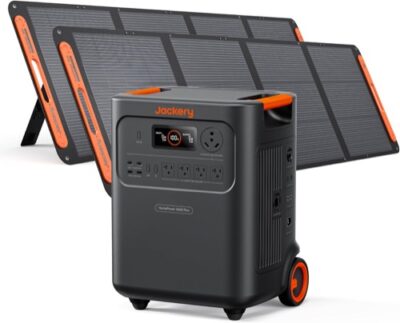
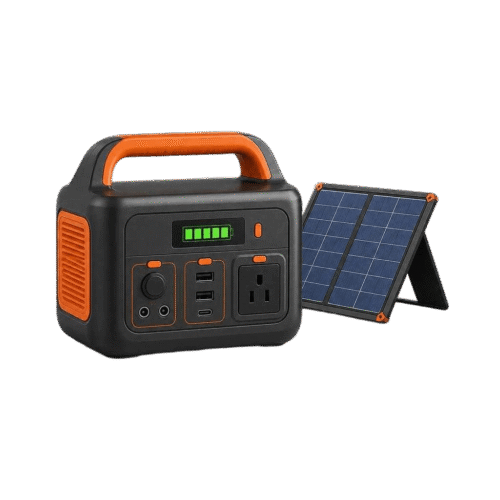
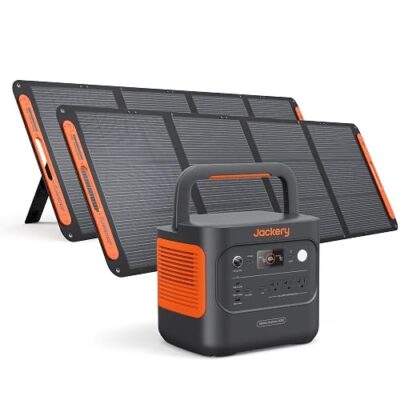
The Jackery Explorer 2000 v2 with two SolarSaga 200W panels is the most proportionate solar pairing in this five-product batch. The station accepts up to 400W of solar and the bundle supplies a nominal 400W array. That does not guarantee 400W at the screen, but it avoids the token-panel problem found in many large-station bundles.
The owner evidence is extensive, yet it needs identity discipline. The exact Amazon variant produced 95 review records and 11 customer images; the supplied manual set yielded 88 usable records after fragments were removed. Any narrative clearly describing a sibling Explorer model was excluded from product-specific conclusions. The retained themes cover two-panel charging, camping, refrigeration, home backup, portability, panel stands and cables, price, early faults, and sharply different support experiences.
Pack the Two Panels Before You Judge Portability
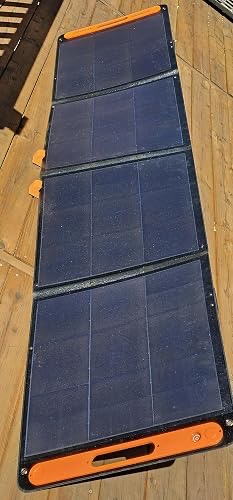
The 39.5-pound station is notably light for a 2kWh class unit. The complete solar generator is not a single 39.5-pound object. Each SolarSaga 200 panel weighs about 14.3 pounds, and two panels require separate storage, protection, stands, and cable handling. The system is still portable, but its travel footprint is distributed across three large pieces.
Why Two 200W Panels Are Electrically Sensible Here
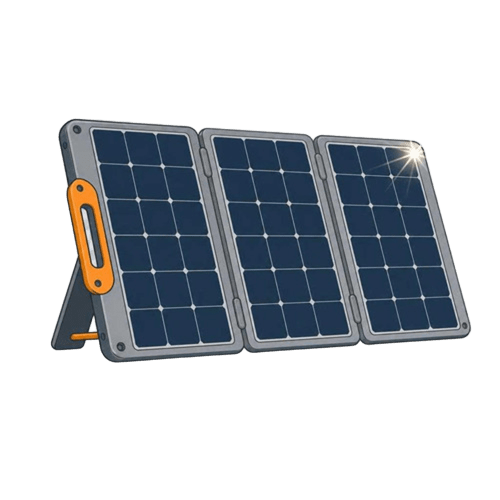
Jackery rates the Explorer 2000 v2 for up to 400W of solar across two inputs. Each SolarSaga 200 has a 200W nameplate, roughly 18V operating voltage, and a bifacial design. The matched nameplates mean the bundle can approach the receiver’s wattage ceiling in favorable conditions without buying more panel than the station can use.
Electrical compatibility still needs the documented cable topology. Do not join panels through an arbitrary parallel adapter or extend the run simply because connectors fit. Use the exact supplied or approved path, keep connector surfaces clean, and verify that each input behaves consistently by testing one panel at a time before the combined trial.
| Acceptance step | What to record | What it isolates |
|---|---|---|
| Panel A alone | Stabilized watts, sun, angle, battery state | Panel A, cable, and input-path behavior |
| Panel B alone | Same conditions and connection sequence | Panel B difference versus environmental variation |
| Both panels | Total accepted watts and each input status | Combined topology and receiver ceiling |
| Loaded charging | Solar input minus simultaneous output | Actual net recovery rather than display peak |
Build a Daily Harvest Ledger From Net Watt-Hours
Ideal arithmetic divides 2,042Wh by 400W and produces just over five nameplate hours. Actual empty-to-full recovery is longer because field output rarely holds nameplate continuously, charging has losses, and taper reduces late-stage acceptance. Owner accounts report useful two-panel charging, including one description of fast charging near the combined 400W nameplate, while others found the panels disappointing. Both outcomes can exist under different sun, angle, temperature, setup, and hardware conditions.
Log energy rather than taking one photo of peak watts. Record morning percentage, panel start and stop times, weather transitions, output loads, and evening percentage. A camping refrigerator that consumes throughout the day can turn impressive input into modest net gain.
Energy accepted from both panels − energy used while charging = battery recovery.
Use at least three different days before setting a dependable solar expectation. One perfect noon and one cloudy afternoon are both incomplete evidence.
Sequence Appliances Instead of Chasing 2,200W
The inverter can support many home and campsite loads, but the 2,042Wh battery rewards scheduling. Refrigeration, communications, lights, and medical or safety loads should receive a protected reserve. Coffee makers, microwaves, hair dryers, and cooking devices may fit the output rating but spend energy quickly. Run high-draw tasks sequentially rather than stacking them.
The Quiet Ownership Test Has Three Parts
Gas-free operation is one reason owners value this class of system, but “quiet” should be divided into inverter noise, cooling-fan behavior, and the work of deploying solar. The station can be unobtrusive under light loads and more audible during fast AC charging or heavy output. Panel deployment is silent electrically but requires physical setup and wind management.
Test the station where it will sleep, work, or back up communications. Listen during idle, a normal load, a difficult load, and fast charging. If it will sit inside a small RV, leave ventilation clearance and confirm that nighttime fans and display light are acceptable.
Inspect Both Stands, Hinges, and Cable Paths
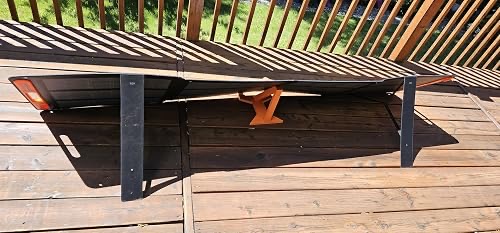
Two panels double the opportunities for a stand, hinge, cell surface, connector, or cable problem. Customer photos show real deployment on ground and near vehicles, which is far less controlled than product photography. Inspect both modules immediately and compare them side by side under the same conditions.
- Open each panel fully and inspect cell laminates under angled light.
- Confirm both stands hold the chosen angle without twisting.
- Check connector strain relief and keep connections off wet ground.
- Mark panel A and B so later performance comparisons are repeatable.
- Store panels only after surfaces and fabric are clean and dry.
Use Fast AC Charging as a Weather Escape Route
Jackery publishes a rapid AC recharge path, while the two-panel array provides quiet field recovery. Those routes solve different problems. AC is useful when the grid or a compatible generator returns briefly. Solar is useful for reducing daily deficit without fuel or noise. A resilient plan uses both rather than forcing the panels to erase several cloudy days.
Vehicle charging may also help during travel, but its power should be measured and its cable path verified. Do not assume a cigarette-lighter outlet can restore 2kWh during a short drive. Build the recovery calendar from actual accepted watts and journey time.
Support Quality Starts With an Evidence Packet
The owner sample contains both enthusiastic service stories and severe complaints about faults or remedy delays. Those conflicts cannot be converted into a probability. They can improve the buyer’s process. Photograph serial labels, cartons, both panels, cables, and initial readings before discarding packaging.
When a problem appears, reproduce it with one known load or one panel, note firmware and state of charge, and capture a continuous video. Keep order details and written case numbers together. This helps distinguish fulfillment, configuration, panel, station, and support-channel problems.
Who Should Buy This Explorer 2000 v2 Package?
This exact bundle fits buyers who want a balanced 120V home-backup or vehicle-camping system, can store and deploy two panels, and value a comparatively light station. It is persuasive when refrigeration, electronics, communications, and scheduled kitchen loads make up the mission.
Skip or reconfigure it when 240V is required, panel deployment space is scarce, one person cannot manage three pieces, or daily loads regularly exceed what 400W can replace. Also compare bundle pricing with the station and preferred panels bought separately; a matched array is useful only when it is the array you would have chosen.
Bottom Line: The Array Matches the Receiver, but the Field Still Decides
The Explorer 2000 v2 provides a strong mix of 2,042Wh capacity, 2,200W output, LFP longevity, fast AC recovery, UPS support, and low station weight for the class. Two SolarSaga 200 panels use the station’s full published 400W solar ceiling, making this a more coherent package than a large battery paired with one token panel.
The tradeoff is physical: two broad panels, two stands, two cable paths, and variable weather. Buy it when that deployment routine fits. Test each panel separately, log net daily harvest, sequence high-draw appliances, and retain a documented support packet. On paper the system is balanced; disciplined setup determines whether that balance survives outside the product page.
Pros & Cons Analysis
Based on documented specifications and owner feedback
Pros
- Solar sizing is coherent — Unlike token-panel bundles, two 200W modules equal the station's full 400W published solar ceiling.
- Station portability is excellent for the class — A 39.5-pound chassis is easier to load and reposition than many 2kWh competitors.
- Useful appliance headroom — The 2,200W inverter supports refrigeration, electronics and scheduled kitchen tasks after startup checks.
- Recovery paths complement each other — Fast AC handles short grid windows while solar provides quiet field energy.
- Large exact evidence base — Identity-filtered owner material supports detailed camping, backup, panel and service acceptance checks.
Cons
- System portability is three-piece — The station is light, but two 14.3-pound panels, stands and cables expand the packing and handling burden.
- Solar remains environmental — Matched nameplates cannot guarantee 400W; angle, shade, heat, cloud, taper and active loads govern net harvest.
- Fixed capacity limits growth — A buyer who outgrows 2,042Wh needs another or replacement station rather than an expansion pack.
- No 240V or RV high-current outlet — The platform remains a conventional 120V system despite its 2,200W rating.
- Remedy evidence conflicts — Both strong service and severe complaint narratives make serial photos, early cycling and reproducible logs valuable.
The Most Balanced Array in This Batch
The Explorer 2000 v2 + 2×200W package is a coherent 120V camping and backup kit because its panel nameplate matches the receiver. Its main cost is physical deployment: two large modules, variable weather and no future battery expansion.
Frequently Asked Questions
Do the two 200W panels match the station's solar input?
Yes on nameplate wattage: the station accepts up to 400W and the bundle supplies two 200W panels.
Will the panels always produce 400W?
No. Field output depends on sun, angle, temperature, shade, panel condition, cable path, battery state and active loads.
How fast can solar recharge the station?
Jackery gives about six hours under favorable two-panel assumptions. Real days may take longer.
Can the battery capacity be expanded?
No. The Explorer 2000 v2 does not have an expansion-battery port.
How portable is the complete kit?
The station is 39.5 lb, but the full system includes two roughly 14.3-pound panels plus cables and substantial deployment area.
What should be inspected on arrival?
Check both panels, stands, hinges, cells, connectors, station ports and every cable; test each panel alone before the combined array.
Technical Specifications
| Brand | Jackery |
|---|---|
| Kit model / SKU / ASIN | Explorer 2000 v2 + 2 × SolarSaga 200W bundle (ASIN B0DG8NXM21; US) |
| Power-station model | Jackery Explorer 2000 v2 |
| Included solar-panel model and quantity | 2 × Jackery SolarSaga 200W bifacial portable panels |
| Battery capacity | 2,042Wh |
| Battery chemistry | LiFePO4 (LFP) |
| Cycle-life rating | 4,000 cycles to at least 70% capacity |
| Expandable capacity | No expansion-battery port |
| Continuous AC output | 2,200W |
| Surge / peak output | 4,400W |
| AC voltage, frequency, and waveform | 120V, 60Hz, pure sine wave |
| AC outlets and high-current / RV / 240V outputs | 3 × 120V AC; no high-current RV or 240V output |
| USB and DC outputs | 2 × USB-C up to 100W, USB-A and regulated 12V car-socket output |
| Maximum station solar input | 400W combined |
| PV input voltage/current range and connector | Two DC8020 solar inputs; follow the current manual's voltage/current and one-panel-per-input topology |
| Included panel rated power | 400W total (2 × 200W) |
| Panel Voc / Vmp / Isc / Imp | Each panel: Voc 22V / Vmp 18V / Isc 12.5A / Imp 11.5A (published tolerances apply) |
| Panel construction and cell type | Foldable bifacial monocrystalline portable panels |
| Panel weather rating | IP68 panels |
| Panel dimensions and weight, folded / deployed | Each panel about 24.2 × 21.3 × 1.6 in folded and 92.1 × 21.3 × 1.0 in deployed; 14.33 lb |
| Solar recharge estimate with included panel | About 6 hours under Jackery's stated favorable two-panel conditions; weather and active loads extend recovery |
| Maximum AC input and AC recharge time | Fast AC charging; about 1.75 hours to full under specified conditions |
| Car, alternator, and other charging methods | 12V vehicle charging through the documented car cable path |
| UPS / EPS support and transfer time | UPS support with under 20ms transfer; test the exact protected load |
| App and connectivity | Jackery app over Wi-Fi and Bluetooth |
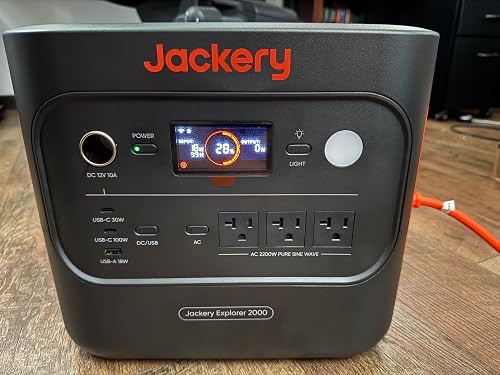
| Station dimensions, weight, operating limits, and weather rating | About 13.2 × 10.4 × 11.5 in; 39.5 lb; station has no published outdoor IP rating |
| Station and panel warranties | Station 3 years plus 2 years with eligible registration; panels 3 years under current direct-store terms |
| Included in the box | Explorer 2000 v2, AC cable, car cable and documentation; 2 × SolarSaga 200W panels and documented solar connection leads |