EcoFlow Delta 3 Classic Review: A 1024Wh Kit That Charges in Under an Hour and Backs Up in 10 Milliseconds
At a Glance
KEY FEATURES
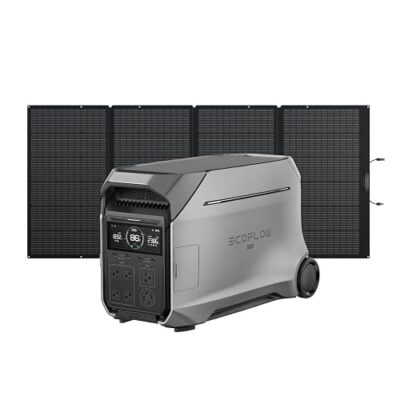
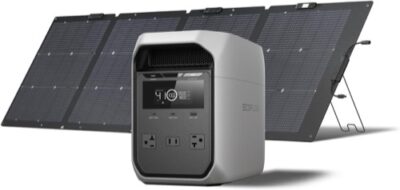
- Exact kit: EcoFlow DELTA 3 Classic EF-DL3-C with NextGen 220W bifacial portable panel.
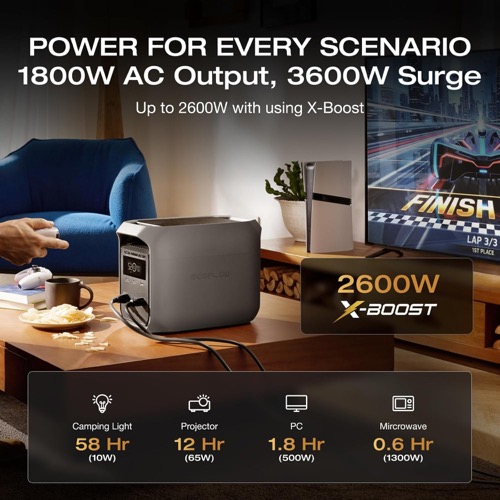
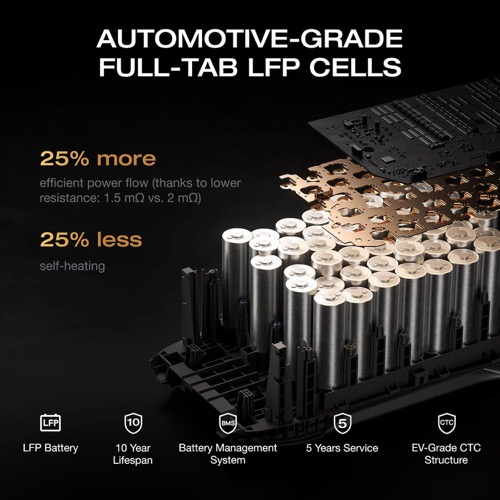
- Power: 1,024Wh LFP battery, 1,800W continuous AC, and 3,600W surge.
- Solar: 220W front-side panel included; station accepts up to 500W.
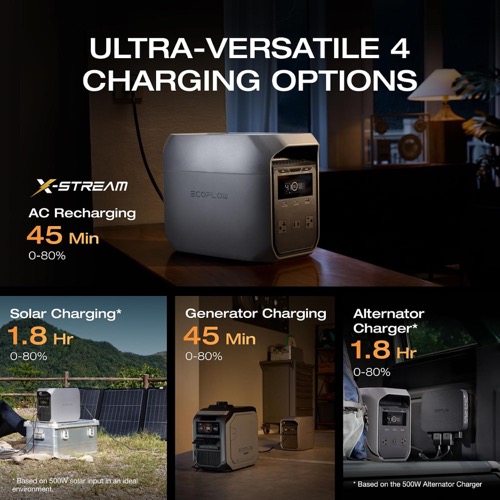
- Fast reset: Up to 1,400W AC input with a published roughly 60-minute full-charge mode.
- Best fit: Travel, refrigeration, electronics, and short-outage duty where app control and quick AC recovery matter.
PROS
- 1,800W inverter covers many household and travel loads.
- Roughly one-hour wall charging can reset the battery between outage windows.
- 220W bifacial panel is portable and useful for daytime offset.
- App controls provide meaningful charge-rate, reserve, and mode adjustment.
CONS
- Included 220W panel uses less than half of the station's 500W solar ceiling.
- No expansion-battery port if 1,024Wh later proves too small.
- Fast charging and heavy loads can make fan noise noticeable.
- UPS and restoration behavior still require an exact-load commissioning test.
Best balanced fast-recovery kit
Exact-model documentation plus 72 usable qualitative owner records, including detailed station-and-panel use. Ratings distinguish fast AC recovery from conditional field solar output; no first-party test or failure-rate claim.
Fast-recovery station
1,024Wh LFP storage, 1,800W AC output, and roughly one-hour wall charging make short outages easy to reset.
Moderate solar bundle
The included 220W bifacial panel is practical for travel and daytime offset, but it uses less than half of the station’s 500W solar ceiling.
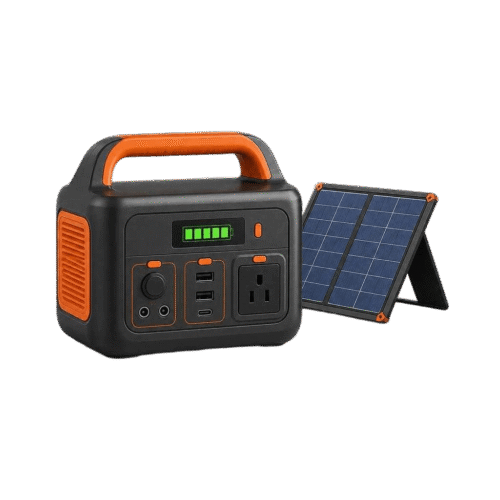
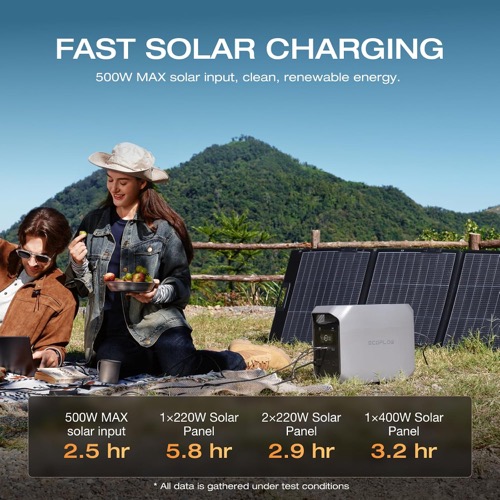
The EcoFlow DELTA 3 Classic with the NextGen 220W bifacial panel is a coherent medium-size kit, but it still has two distinct operating personalities. Plugged into the wall, the station emphasizes speed: up to 1,400W AC input and a published 60-minute full-charge mode. Away from the grid, its exact 220W panel produces a much slower energy cycle. The station can accept 500W of solar, so the included panel is portable and useful rather than maximum-rate.
Seventy-two usable owner records provide unusually rich context for this exact bundle family, including one detailed account that evaluates station and panel together. The record supports fast AC charging, capable appliance use, app visibility, travel and backup roles, and real solar charging. It also describes panel yield below nameplate in ordinary conditions, software-setting conflicts, fan behavior, and questions about UPS recovery and the absence of capacity expansion. These are commissioning themes, not reliability percentages.
Three Operating Modes Reveal the DELTA 3 Classic’s Real Character
First is fast reset: use a suitable wall circuit to recover quickly between outages, trips, or work sessions. Second is quiet continuity: cap the AC charge rate, preserve reserve, and use the station for a router, computer, refrigerator, medical device, or other measured essential load. Third is solar day: deploy the 220W panel and accept that energy arrives according to sun conditions rather than a wall-clock promise.
The same hardware can excel in one mode and disappoint in another. A buyer delighted by 60-minute wall charging may still find a 5.8-hour idealized solar estimate optimistic in haze or partial shade. A user who wants a silent bedroom backup may need to reduce charge speed or relocate the station when fans run. Decide which mode matters most, then configure and test that mode instead of treating every headline as simultaneous.
Build a Load Ladder Before You Use X-Boost
The 1,800W pure-sine inverter covers many ordinary 120V appliances, while the 3,600W surge figure helps with short startup events. X-Boost can allow selected resistive loads to operate above the normal continuous rating by managing output behavior, but it does not transform the station into a larger inverter for every motor or electronic appliance. Verify the exact device, preferably at standard output first.
Arrange loads in a ladder. Level one is continuous essentials: networking, lights, computers, refrigeration, and medical equipment. Level two is scheduled convenience: coffee, microwave use, charging, or a short tool session. Level three is difficult startup: pumps, compressors, or devices with heating and motors together. Prove each level separately and keep the energy ledger distinct from the inverter test.
| Load ladder | Test | Decision |
|---|---|---|
| Always on | Average watts across a representative duty cycle | Reserve enough watt-hours to reach the next recharge window |
| Scheduled high draw | Energy used per task, not only running watts | Run during AC or strong solar input when possible |
| Motor/compressor | Repeated startup with other loads disconnected | Reject the mission if overload or unstable behavior appears |
| Sensitive electronics | Utility-loss and restoration event on the final setup | Use a dedicated UPS if interruption consequences are unacceptable |
A 1,024Wh Battery Is a One-Day Budget, Not a Generic Runtime
Runtime planning begins with watt-hours. Apply a conservative usable factor to 1,024Wh, then divide by measured average load. A cycling refrigerator, gaming computer, CPAP with humidifier, and home network can all have different patterns even when their instantaneous readings briefly look similar. Log the full cycle that matters.
The station’s estimated time remaining is useful for situational awareness, but it cannot predict the next compressor start or a family member adding a kettle. Set a reserve for the most important load and define which optional devices will be removed first. Because the DELTA 3 Classic has no expansion-battery port, the energy budget must fit the base battery or be replenished during use.
DELTA 3 Classic planning rule
Planning hours ≈ 1,024Wh × conservative usable factor ÷ measured average watts.
The NextGen 220W Bifacial Panel Needs Two-Sided Thinking
The panel has a 220W front-side and a separate rear-side nameplate contribution, but bifacial gain is conditional. The front needs direct sun; the rear needs bright reflected light and physical clearance. Laying the back close to dark grass or blocking it with the support surface can reduce the rear contribution. The owner record includes outputs below nameplate in ordinary field conditions, which is normal evidence of environment and setup—not proof that every panel underperforms.
Use watt-hours harvested over a solar window rather than the best one-minute peak. Record time, weather, orientation, panel temperature, shade, battery state, and active load. A nearly full battery can taper input, while a hot panel can make less power than its cool laboratory rating. Inspect the carry case, stand geometry, cable strain, and connector seating before each trip.
- Front side: direct, shade-free exposure and repeated angle adjustment.
- Rear side: clearance plus a bright reflective surface where practical.
- Electrical path: correct XT60/XT60i cable, polarity, and dry connectors.
- Receiver state: enough battery headroom to accept the available input.
- Daily result: watt-hours harvested versus watt-hours consumed.
Why 220W Is Useful Yet Not the Station’s Full Solar Design
The station accepts up to 500W, while this exact bundle includes a single 220W panel. That makes the kit convenient for travel, small daily loads, and gradual recharge. It does not exploit the receiver’s maximum rate. If the goal is to refill 1,024Wh within one strong solar day while powering loads, compare a larger compatible array and calculate cold-corrected voltage and current against the exact input window.
Do not simply add a second arbitrary panel. Series and parallel wiring change voltage and current differently. Match electrical characteristics, connectors, and polarity, and use EcoFlow’s current documentation. The portable 220W module can remain the travel panel while a different approved array handles home recovery; the best configuration depends on whether portability or daily energy balance matters more.
UPS Use Requires a Restoration Drill, Not Just a Transfer Number
EcoFlow documents an under-10ms transfer function, which can be suitable for many devices. It is not a universal zero-interruption guarantee. A dedicated online UPS may still be required for equipment whose manufacturer specifies 0ms transfer, voltage regulation, controlled shutdown, or other UPS-specific functions. Test the actual load on the actual station.
Complete a four-stage drill: start with utility present; remove utility and observe the load; let the battery approach its configured lower limit; restore utility and confirm charging and AC output behave as required. Repeat after important firmware changes. Owner reports about app modes and recovery behavior make this more important, not less. Save screenshots of reserve, charge rate, timeout, and output settings so an unexpected change can be traced.
Fast Charging, Fan Noise, and App Control Form One Trade-off
The fast AC mode is one of the strongest reasons to buy the DELTA 3 Classic. It is also the mode most likely to demand a healthy branch circuit and active cooling. If the station sits beside a bed, desk, or television, test the fan profile at the charge rate you intend to use. A slower setting may be the better everyday choice, while full speed remains available during a short recovery window.
App control adds genuine value because input rate, reserve, timeouts, and operating modes influence the ownership experience. It also means configuration discipline matters. Record a known-good setup before firmware changes. Verify that local controls still cover the essential functions you need when Wi-Fi is unavailable. A power system should not become unusable because a phone is flat or an account cannot connect.
No Expansion Port Makes the Initial Capacity Choice Final
The DELTA 3 Classic’s simplified design is attractive for buyers who want a self-contained 1kWh station. It is a limitation for anyone who expects to add several kilowatt-hours later. If your measured essentials already consume most of the battery overnight, compare the total cost of a larger station now rather than assuming an add-on battery will solve the problem later.
The lack of expansion can also be a virtue. There are no extra-battery cables to store, no tethered modules to move, and no future compatibility question. The 26.7-pound station remains portable enough for vehicle use. The correct decision depends on whether you value a compact complete unit or a platform that grows.
Who Gets the Best Result From This 220W Bundle?
This kit fits a buyer who wants a versatile 1kWh station for refrigeration, electronics, travel, work, or short home outages; expects to use fast wall charging; and views one 220W bifacial panel as a useful portable source. It is especially good when loads are measured, solar is a supplement, and the app’s operating controls are welcome.
It is less convincing for a solar-only cabin that must refill daily, a buyer who expects expansion, or sensitive equipment that needs dedicated online-UPS behavior. In those cases, compare a larger compatible array, an expandable EcoFlow platform, or purpose-built power protection. The station is capable; the purchase succeeds when its operating mode is chosen deliberately.
Car and Alternator Charging Need Their Own Bottleneck Map
A vehicle source can bridge cloudy travel days, but “car charging” covers very different systems. A factory accessory outlet is normally a low-power route limited by the vehicle socket, fuse, cable, and station input. An optional alternator charger is a higher-power installed system whose behavior depends on vehicle electrical surplus, alternator strategy, protection, software, cable routing, and exact EcoFlow compatibility. Do not treat the two methods as interchangeable.
For the accessory path, use the approved cable and verify whether the outlet remains energized with the ignition off. Prevent a small vehicle battery from being drained at camp. For an installed alternator charger, follow the current vehicle- and charger-specific instructions, protect conductors at the source, and seek qualified installation when the charging-current, hybrid-vehicle, warranty, or routing requirements are unclear. Record displayed input after the engine and station have stabilized.
Panel Construction and Station Placement Need Separate Weather Rules
The panel’s weather rating does not make the DELTA 3 Classic station weatherproof. Keep the station protected, dry, and ventilated while routing the solar lead outside. Avoid leaving connectors on wet ground or pinching the cable through a door. The panel can face weather within its documented limits, but wind loading, falling branches, vehicle movement, and theft remain physical risks beyond an IP number.
At home, leave enough rear clearance to reach AC, solar, and communication ports without dragging the 26.7-pound station. In a vehicle, secure it against braking and preserve airflow. A fast-charging station placed inside a sealed compartment can create a thermal and acoustic problem even though the panel is performing well outside.
Storage state also belongs in the operating plan. Follow EcoFlow’s current guidance for charge level, inspection interval, and temperature when the kit will sit unused. Before storm season or a long trip, wake the system, confirm the app can still see it, inspect the panel and cables, and run a measured load rather than assuming the last successful session is permanent evidence. Record the date so maintenance becomes a schedule rather than a memory.
Bottom Line: A Balanced Station With a Deliberately Portable Array
The DELTA 3 Classic is the center of the value: strong 1,800W output, fast wall recovery, a useful app, and enough energy for a measured set of appliances and electronics. The 220W bifacial panel is a legitimate charging source, but it is a portability choice rather than the maximum solar configuration.
Buy the exact bundle when you want one panel that travels easily and you can recharge from the wall when the weather is poor. If solar must restore the battery every day, design closer to the 500W input ceiling. The honest verdict is favorable because the station and panel fit many real missions—provided the buyer does not confuse fast AC charging with fast solar recovery.
Pros & Cons Analysis
Based on documented specifications and owner feedback
Pros
- Strong medium-size output — The 1,800W continuous rating supports refrigeration, computers, cooking tasks, and many travel appliances after startup verification.
- Exceptional grid recovery — A short utility window can restore far more energy than the included panel can collect in the same period.
- Portable solar is credible — The 220W module offers meaningful daily harvest without turning the kit into a large multi-panel installation.
- Bifacial design rewards good setup — Front sun plus bright rear-side exposure can add energy when the panel is elevated and oriented carefully.
- Configuration is unusually flexible — App controls let owners trade speed, reserve, noise, and standby behavior for the mission at hand.
Cons
- Solar and AC speeds are different products — The wall can recover the station in about an hour; the included panel requires many peak-sun hours and favorable conditions.
- Capacity cannot grow — Owners who outgrow 1,024Wh need a different or second station rather than a simple expansion battery.
- Bifacial marketing needs context — Rear-side gain depends on clearance and reflection; it should not be added blindly to the front nameplate.
- Software affects outcomes — Reserve, charge rate, timeouts, firmware, and output state should be documented before unattended use.
- EPS is not an online UPS — Sensitive loads may require zero-transfer, conditioning, or managed shutdown features the station is not designed to replace.
A Fast-Reset 1kWh Station With a Portable, Not Maximum, Solar Array
The DELTA 3 Classic is a strong medium-size station for short outages, travel, and mixed appliances. Its 220W bifacial panel is useful and portable, but buyers who need daily solar autonomy should exploit more of the 500W input ceiling.
Frequently Asked Questions
How long does the 220W panel take to recharge the DELTA 3 Classic?
The exact table uses an idealized estimate of about 5.8 hours, but real time depends on sun, angle, shade, temperature, cable loss, battery state, rear-side exposure, and concurrent loads.
Can I add more solar than the included panel?
The station accepts more solar than the bundle includes. Any array must remain inside the exact voltage, current, connector, and polarity limits; calculate series/parallel behavior rather than adding panels by wattage alone.
Can the DELTA 3 Classic run a refrigerator?
Often, but verify the refrigerator's measured duty-cycle energy and compressor startup on the exact station. Runtime varies widely by appliance, ambient temperature, door use, and reserve.
Is the DELTA 3 Classic expandable?
No expansion-battery port is published for this exact Classic model. Choose the base 1,024Wh capacity only if it fits the measured energy mission.
Is its UPS function safe for a computer?
EcoFlow documents a fast transfer, but the computer or other device determines the acceptable interruption. Test the final setup and use a dedicated online UPS where zero transfer or power conditioning is required.
Does the bifacial panel always make more than 220W?
No. Bifacial contribution depends on rear-side light, clearance, surface reflectivity, sun, temperature, and receiver state. Treat 220W as a rating, not a guaranteed field output.
Technical Specifications
| Brand | EcoFlow |
|---|---|
| Kit model / SKU / ASIN | DELTA 3 Classic + NextGen 220W bifacial bundle (ASIN B0FRMQPZF6; US) |
| Power-station model | EcoFlow DELTA 3 Classic, model EF-DL3-C |
| Included solar-panel model and quantity | 1 × EcoFlow NextGen 220W bifacial panel, model EF-Fold-G220-04 |
| Battery capacity | 1,024Wh |
| Battery chemistry | LiFePO4 (LFP) |
| Cycle-life rating | Not published on the exact US DELTA 3 Classic specifications page |
| Expandable capacity | No expansion-battery port |
| Continuous AC output | 1,800W |
| Surge / peak output | 3,600W; X-Boost supports selected resistive loads up to 2,600W |
| AC voltage, frequency, and waveform | 120V, 60Hz, pure sine wave |
| AC outlets and high-current / RV / 240V outputs | 6 × 120V AC; no high-current RV or 240V output |
| USB and DC outputs | 1 × USB-A 18W, 1 × USB-C 100W, 1 × USB-C 30W; no 12V DC output |
| Maximum station solar input | 500W |
| PV input voltage/current range and connector | 11–60V DC, 15A maximum; XT60/XT60i input |
| Included panel rated power | 220W front / 175W rear-side nameplate |
| Panel Voc / Vmp / Isc / Imp | Voc 21.5V / Vmp 18.4V / Isc 12.4A front, 9.9A rear / Imp 11.9A front, 9.5A rear |
| Panel construction and cell type | Foldable N-type TOPCon monocrystalline bifacial panel; 25% published cell efficiency |
| Panel weather rating | IP68 panel |
| Panel dimensions and weight, folded / deployed | Folded 24.2 × 23.2 × 1.3 in; deployed 24.2 × 84.8 × 1.0 in; 15.4 lb |
| Solar recharge estimate with included panel | About 5.8 hours under the manufacturer's stated ideal conditions |
| Maximum AC input and AC recharge time | 1,400W; about 45 minutes to 80% and 60 minutes to full in Fast mode |
| Car, alternator, and other charging methods | 12V/24V vehicle charging through XT60; compatible optional EcoFlow alternator charger |
| UPS / EPS support and transfer time | UPS supported; under 10ms transfer |
| App and connectivity | EcoFlow app over Wi-Fi 6 and Bluetooth 5.3 |
| Station dimensions, weight, operating limits, and weather rating | 15.7 × 7.9 × 11.1 in; 26.7 lb; charge 32–113°F, discharge 14–113°F; IP20 plus potting protection |
| Station and panel warranties | Station 3 years plus 2 years with app registration; panel 12 months |
| Included in the box | DELTA 3 Classic, AC cable, manual; NextGen 220W bifacial panel, carry case, XT60i solar cable, guides |