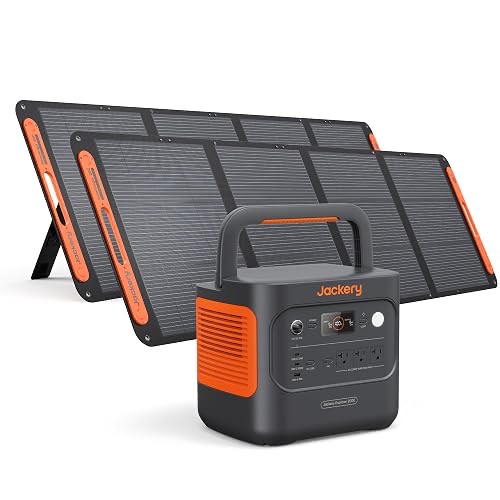
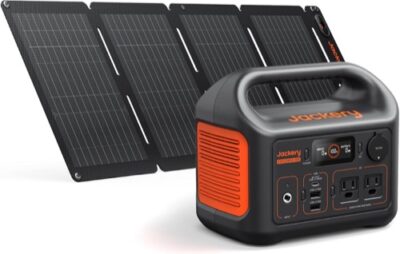
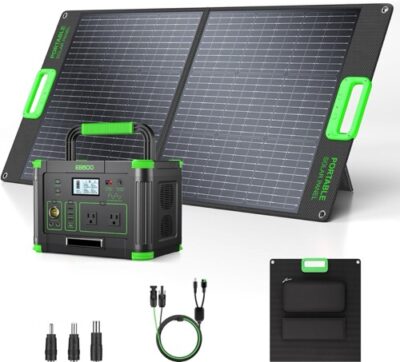
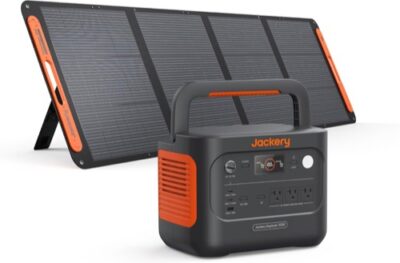
A camping kit succeeds only when it closes a daily energy loop: overnight loads consume energy, daylight and driving restore it, and enough reserve remains for a weak-weather day. These five systems range from a 288Wh tent kit to a matched 2,042Wh two-panel base-camp package. More capacity helps only when the extra station and panel bulk still fit the trip.
Camp rule: write the overnight watt-hour budget before choosing a battery, then prove that the available charging routes can replace that energy.
Build the Overnight Ledger Before the Packing List
| Load | Useful measurement | Variable that changes the answer |
|---|---|---|
| Phones, cameras, lights | Device battery Wh plus charging loss | Group size and photo/video use |
| CPAP | Measured Wh through a representative night | Humidifier, hose heat, pressure, and AC versus DC |
| 12V cooler | Warm-day Wh over 24 hours | Ambient heat, setpoint, insulation, and openings |
| Fans and cooking | Average watts × scheduled minutes or hours | Speed, heat setting, and simultaneous loads |
Add a reserve rather than spending every calculated watt-hour. A cold night, hot cooler compartment, extra camera batteries, or shaded morning can erase a plan built on average conditions.
Assign Each Kit a Specific Camp Role
Turn Daylight Into a Recovery Schedule
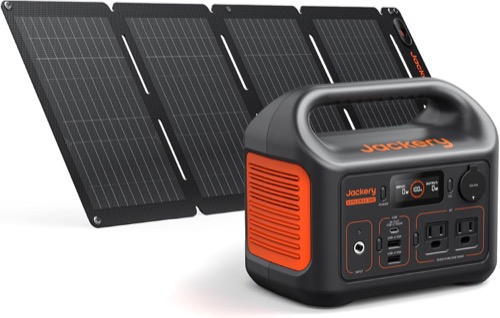
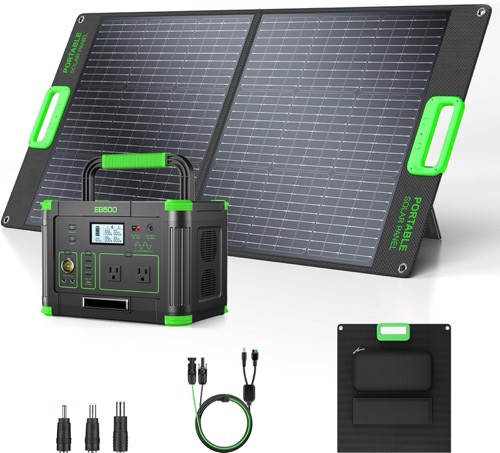
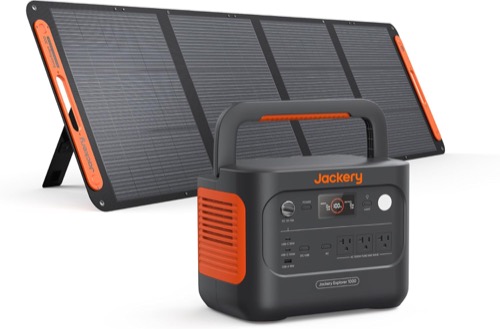
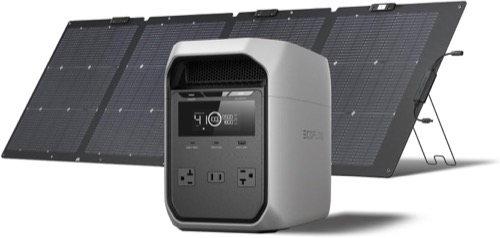
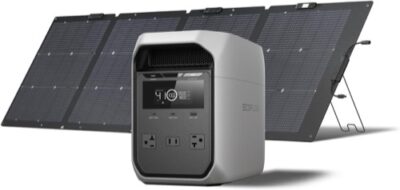
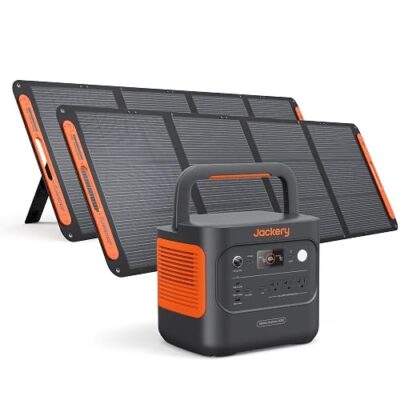
The included panel is not a guaranteed charger rating. Jackery’s 40W compact module suits a light energy budget. GRECELL’s 100W panel is a more credible partner for its 519Wh battery. The two 1kWh choices include 200W or 220W arrays. Jackery’s 2kWh bundle supplies two 200W panels, matching the station’s full published 400W solar ceiling on nameplate power.
Distinguish Panel Weather Rating From System Weather Safety
A panel’s IP rating does not transfer to its connectors, adapter junctions, extension leads, or station. Keep the power station dry and ventilated, route cables away from water and foot traffic, and secure panel stands before wind increases. Do not leave a folding module deployed simply because the product page shows outdoor use.
Choose Between Tent, Car, and Base-Camp Priorities
The largest kit is not automatically the safest choice. If two big panels cannot be deployed away from shade, vehicles, children, and wind, their theoretical charging advantage may disappear.
Protect Medical, Navigation, and Communication Loads First
Separate protected loads from comfort loads. Give CPAP, communication, lighting, and navigation batteries a reserved energy allowance. Test the exact medical-device configuration at home, including humidification and any DC adapter. A consumer power station should not replace dedicated protection when interruption carries unacceptable health or safety consequences.
Complete a Before-Departure Systems Drill
- Charge fully and verify every output used by the trip.
- Test each panel and cable independently before combining an array.
- Run the actual cooler, CPAP, or cooking schedule for one representative cycle.
- Pack manuals, adapter labels, weather protection, and a fallback charging route.
- Record the reserve percentage that triggers load reduction or departure.
Know When More Capacity Becomes Counterproductive
A 2kWh station can simplify a group trip but adds lifting, storage, and panel-management work. A 288Wh kit can be equally counterproductive if it forces daily driving. The useful threshold is the smallest system that covers the protected ledger and replaces the planned daily use with reserve.
Test that threshold against the actual trip length. For a two-night stay, calculate the first overnight draw, the next day’s conservative recovery, and the second overnight reserve as three separate stages. If the battery reaches the planned departure morning only under perfect sun, the system is undersized or the comfort-load budget is too generous. If the larger kit cannot be transported or deployed safely, reduce loads before adding capacity.
Separate Food, Comfort, and Convenience Energy
Refrigeration and medically necessary sleep equipment belong in the protected ledger. Heated blankets, electric cooking, coffee makers, and entertainment belong in a separate discretionary budget because short high-watt sessions can consume more energy than a day of phones and lights. Label which loads stop first when harvest falls behind. That rule prevents a cloudy afternoon from becoming an overnight safety problem.
Plan Around the Weakest Solar Day
Choose Jackery 300 v2 for a narrow tent mission, GRECELL for budget car camping, Jackery 1000 v2 for balanced weekends, EcoFlow for faster mixed-route recovery, and Jackery 2000 v2 for a multi-day base camp with enough array space.