EcoFlow DELTA Pro Review: Big 3600Wh Backup Power Without Gas Generator Noise
At a Glance
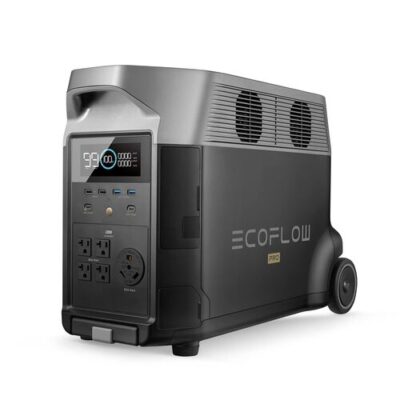
KEY FEATURES
- EcoFlow DELTA Pro: large portable power station / solar generator, best for home backup, RVs, outages, mobile work, and emergency power.
- Battery: 3600Wh, LiFePO4 / LFP chemistry, cycle life not specified in supplied product data.
- AC output: 3600W continuous, 7200W starting wattage listed; pure sine wave not specified in supplied product data.
- Ports: 5 AC outlets, 2 USB-C up to 100W, 4 USB-A total, 1 car power output, 2 DC outlets, 1 Anderson port.
- Recharge: AC in about 2.7 hours from 1800W wall outlets, about 1.8 hours from 240V / 3000W charging, solar in about 2.8 hours with 4 × 400W panels in ideal conditions.
- Smart features: EcoFlow app via Wi-Fi and Bluetooth, smart controls, charge / discharge settings, firmware updates, pass-through / EPS-style backup behavior mentioned by owners.
- Build: 99 lb, 25" L × 11.2" W × 16.4" H, 120V / 3600Wh color, wheeled design with pull handle.
- Best for: refrigerators, freezers, oxygen concentrators, routers, lights, coffee makers, RV boondocking, vendor markets, emergency backup, and off-grid work setups.
PROS
- 3,600Wh LFP and 3,600W output remain substantial.
- Mature expansion, solar, vehicle, EV, and home-integration ecosystem.
- Broad 11–150V solar window up to 1,600W.
- Existing accessories can create strong ownership value.
CONS
- No native 120V/240V output from one original unit.
- Single solar input is less flexible than DELTA Pro 3.
- About 99 lb and older noise/UPS behavior.
- New buyers must compare discounted total-system cost, not base price.
Editor's Choice
Based on exact documentation and qualitative exact-ASIN owner evidence; no hands-on test or population-rate claim
⚡ Can the EcoFlow DELTA Pro Run It?
Choose a common device and see the estimated runtime, whether the inverter can handle it, and how long the power station may take to recharge.
Picture this: the power goes out, the fridge is warming up, your router is dead, and someone in the house needs an oxygen concentrator running. A gas generator can help, but it’s loud, has to stay outside, and can’t safely run while you sleep.
That’s where the DELTA Pro makes sense. From what owners report, it’s less about powering every circuit in the house and more about keeping the important stuff alive — fridge, freezer, Wi-Fi, lights, coffee, medical gear, and a few comfort items.
The original EcoFlow DELTA Pro now needs an ownership review, not a launch review. It remains a substantial 3,600Wh LFP station with 3,600W continuous and 7,200W surge output, a broad charging ecosystem, expansion, wheels, app control, and a 1,600W solar input. But the DELTA Pro 3 adds native 120/240V, 4,096Wh, 4,000W, two solar lanes, a faster UPS specification, and newer noise and integration targets. Those are not cosmetic changes.
The supplied file includes a small amount of adjacent DELTA-family material. Exact-model conclusions use only original DELTA Pro evidence. Owner themes include mobility, solar, runtime, UPS and high-load use, support, app behavior, and noise. Successful long-term systems can make keeping the platform rational; charging, software, battery, or support complaints identify checks. No qualitative set supports a population failure rate.
| Decision factor | Original DELTA Pro | DELTA Pro 3 generation |
|---|---|---|
| Base energy/output | 3,600Wh / 3,600W | 4,096Wh / 4,000W |
| Voltage topology | 120V unit; ecosystem pairing for split phase | Native 120V/240V from one unit |
| Solar architecture | One 11–150V, 15A, 1,600W input | Separate high- and low-voltage MPPT lanes |
| Ownership value | Strong when accessories already exist | Stronger for a new integrated split-phase design |
Existing ecosystem investment can outweigh a specification gap. Smart Extra Batteries, panels, EV/DC charging accessories, a Double Voltage Hub, or home integration are sunk hardware with real replacement cost. Inventory model numbers and compatibility before upgrading. Conversely, a new buyer should compare complete installed systems, not a clearance-priced base unit against a full Pro 3 package.
The original 1,600W solar input has a broad 11–150V window but a 15A limit. That encourages higher-voltage series strings after a cold-Voc calculation, yet it is still one MPPT lane. East/west arrays or vehicle-plus-rooftop designs may be easier on newer dual-input hardware. Never exceed the exact manual’s voltage boundary.
For home backup, the original unit’s EPS transfer behavior, output restoration, neutral-ground behavior, compatible hub, and circuit design must be tested. Never backfeed through an improvised cord. A newer generation does not remove these responsibilities; it may simplify the topology.
Evidence-led verdict: existing DELTA Pro owners with a working accessory ecosystem may gain more from measurement and selective expansion than replacement. New buyers should choose it only when the discount compensates for 120V-first architecture, one solar input, weight, and older continuity behavior.
Original DELTA Pro: Keep, Discount-Buy, or Move to Pro 3?
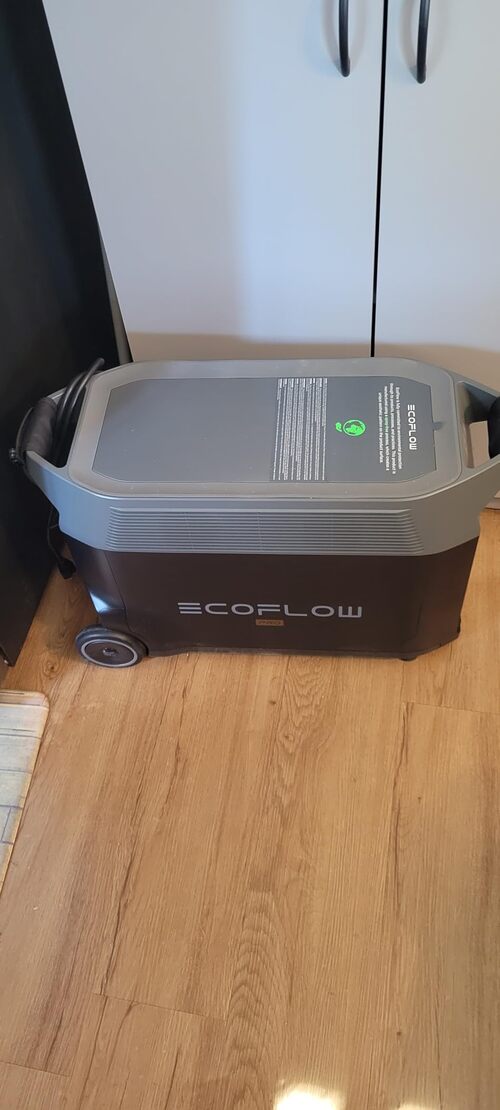
If you want quiet, high-capacity backup for outages, RV use, or mobile work, the DELTA Pro does what most buyers expect. It has a big 3600Wh battery, a strong 3600W inverter, fast wall charging, and enough outlets to run several practical loads at once. For this EcoFlow DELTA Pro review, the big takeaway is simple: it’s excellent when you treat it like a serious backup station, not a magic whole-house generator. Just know going in: it’s heavy, the app can be frustrating, and big RV air conditioners still need careful testing.
Buyer Heads-Up — This is a 99 lb power station. The wheels help, but you should still plan its “home base” before an outage instead of moving it room to room all day.
Ninety-Nine Pounds and a First-Generation Mobility Compromise
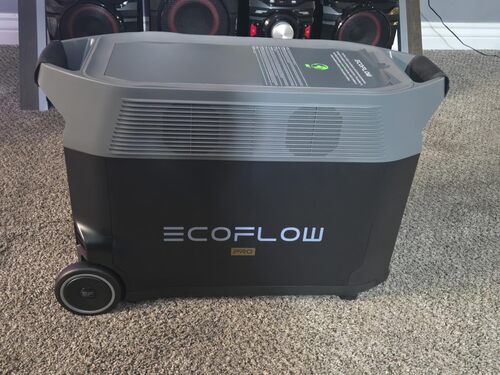
The first thing you notice is the solid heft. At 99 lb, this isn’t a power station you casually lift into a tent or carry across a field in one hand. Whole-home circuit planning starts with our essential-circuit home backup guide. That said, the built-in wheels and pull handle make it much easier to move around a garage, RV, shed office, or kitchen than the weight number suggests.
The body feels built for work rather than decoration. Owners use it at vendor markets, in vans, during storms, in sheds, and as a backup for home appliances. In practice, it’s closer to rolling luggage than a camp battery — fine on floors and pavement, less fun on stairs, gravel, or soft ground.
Port placement is practical, with five AC outlets and a mix of USB, DC, car output, and Anderson-style connectivity. The catch is that accessories can make the ecosystem feel less simple. Some buyers expected alternator charging or third-party solar to be plug-and-play, then found out they needed extra adapters.
A 3,600W 120V Platform With Clear Generational Limits
The DELTA Pro has a 3600Wh LiFePO4 battery. In plain English, that’s enough stored energy to run a refrigerator through many short outages, keep routers and lights going for a long time, or support medical devices for hours when the grid goes down.
In real use, buyers are using it for much more than phone charging. Customers mention refrigerators, chest freezers, oxygen concentrators, security cameras, VOIP phones, laptops, coffee makers, induction cooking, air fryers, power tools, and RV equipment. That said, heat-making appliances burn through stored energy quickly.
| Device | Typical Power Draw | Estimated Runtime | Realistic with Margin |
|---|---|---|---|
| Smartphone charging | 10–15Wh per charge | About 200–290 charges | About 180–240 charges |
| Laptop | 50–80Wh per charge | About 34–55 charges | About 28–45 charges |
| Wi-Fi router | 10–20W | About 138–275 hours | About 110–220 hours |
| CPAP machine, no humidifier | 30–60W | About 46–92 hours | About 38–75 hours |
| Oxygen concentrator | 300–500W | About 5.5–9 hours | About 5–8 hours |
| Mini fridge | 40–80W cycling | About 34–69 hours | About 28–55 hours |
| Full-size refrigerator | 100–200W cycling + surge | About 14–28 hours | About 11–22 hours |
| Chest freezer | 80–150W cycling | About 18–34 hours | About 14–28 hours |
| Coffee maker or Keurig | 1000–1500W while heating | About 1.8–2.7 hours total heating time | Best used in short bursts |
Real-World Math — At 0.85 AC efficiency, the listed 3600Wh battery delivers roughly 3060Wh through the AC outlets. Subtract a 10% reserve, and you’re working with about 2754Wh of practical AC runtime.
Worth knowing, these numbers are estimates. A fridge that cycles gently in a cool kitchen may last far longer than one fighting summer heat. At the same time, a CPAP with a humidifier or heated tube can draw much more than a basic setup.
Schedule 3,600Wh Instead of Chasing Peak Watts
In practice, customers report running refrigerators, freezers, heat presses, microwaves, coffee makers, washers, power tools, lights, routers, and medical equipment. On the flip side, one travel-trailer owner had repeated shutdowns with an RV air conditioner setup, so heavy compressor loads still deserve a real test before a trip.
| Device | Typical Draw | This Unit? |
|---|---|---|
| Phone / tablet | 10–25W | Easy |
| Laptop | 50–100W | Easy |
| LED lights | 5–15W each | Easy |
| Wi-Fi router | 10–20W | Easy |
| Mini fridge | 40–80W cycling | Easy |
| CPAP, no humidifier | 30–60W | Easy |
| Full-size fridge | 100–200W cycling, 600W surge | Easy |
| Chest freezer | 80–150W cycling | Easy |
| Microwave, 700W class | Around 1100W draw | Easy |
| Electric kettle, 1500W | 1500W | Briefly only |
| Window AC, 5000 BTU | 500W run, 1100W surge | Borderline |
| RV air conditioner | 1200–2500W run, high surge | With caveats |
Worth Knowing — Continuous output is the real ceiling. The 7200W starting rating is for short bursts — helpful for compressors, not a free pass to run every high-draw appliance at once.
Here’s what matters: the DELTA Pro can take a lot, but load stacking still counts. A fridge, router, lights, and laptop are easy. A microwave, air fryer, kettle, and AC unit at the same time is where you start asking for trouble.
One 1,600W Solar Lane and Multiple Ecosystem Inputs
Charging speed is one of the DELTA Pro’s best everyday advantages. EcoFlow lists about 2.7 hours from an 1800W wall outlet, about 1.8 hours from a 240V / 3000W source, and about 2.8 hours from four 400W solar panels in ideal sun.
That said, the charging story gets more complicated once you add real outlets, breakers, extra batteries, solar adapters, and app settings. Some owners love the fast recharge. Others mention confusing documentation, unclear charge behavior, and support headaches when something doesn’t work as expected.
| Charging Mode | Time from 0% to 100% | Noise Level |
|---|---|---|
| Slow AC / reduced input | About 6–8 hours, depending on setting | Quiet |
| Standard AC wall outlet | About 2.7 hours | Moderate |
| Fast AC, 240V / 3000W | About 1.8 hours | Louder fan noise likely |
| 1600W solar full setup | About 2.8–4 hours strong sun | Silent |
Grid Recovery — Original DELTA Pro
For outage prep, fast AC charging is a real advantage. You can top it off before a storm, recharge between rolling blackouts, or use a generator for a few hours to refill the battery.
The catch is breaker limits. In practice, high AC input can trip a circuit if the setting is too aggressive or the setup includes extra battery behavior that the app doesn’t explain clearly.
Single-MPPT Solar — Original DELTA Pro
Solar can work very well with this unit, especially if you have strong sun and enough panel wattage. A buyer using 800W of panels reported seeing a peak close to 700W in clear midday Texas sun, which is a realistic reminder that real solar rarely equals the label on the panel. Panel pairing across brands is compared in our Pecron and EcoFlow solar input analysis.
Adapter Check — If you’re bringing your own solar panels or alternator charger, check connectors before checkout. Some owners found they needed extra adapters that were not obvious upfront.
At the same time, some users complain about limited solar input, confusing connector behavior, or the unit reading input in ways that didn’t match expectations. A high solar input matters most if you plan to use the power station off-grid for more than a single day.
Legacy Connections That May Still Fit the Mission
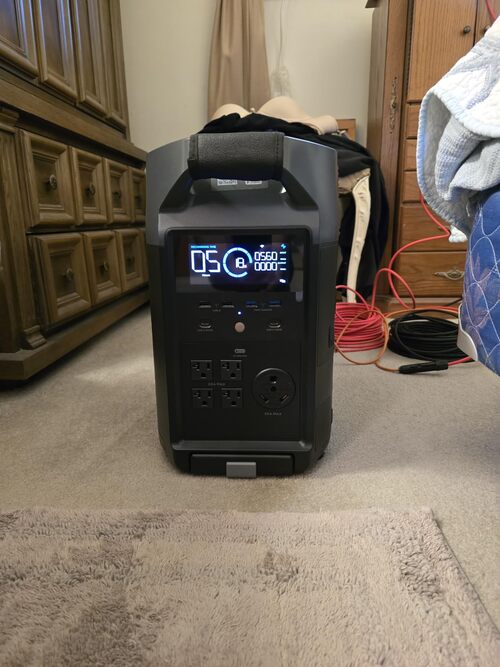
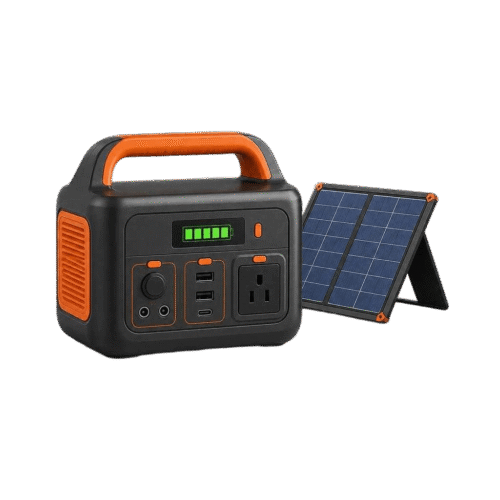
The DELTA Pro gives you five 120V AC outlets, two 100W USB-C ports, two standard USB-A ports, two USB-A fast-charge ports, two DC outputs, one car power output, and one Anderson port. That’s a strong mix for home backup and RV use because you can run AC appliances while still charging phones, tablets, laptops, and DC gear.
In practice, the AC side matters most for outages. Owners are plugging in refrigerators, freezers, routers, computers, lamps, coffee makers, and kitchen devices. The USB-C ports are also useful because 100W is laptop-tier charging, not just phone charging.
Fan and Standby Behavior Versus Newer Hardware
The DELTA Pro is quiet under lighter loads compared with any gas generator. Customers like that they can run it indoors during outages without exhaust fumes, fuel storage, or the constant engine noise that makes a generator annoying at night.
That said, it still has cooling fans. Under fast charging or heavy AC loads, expect a stronger whoosh and warm air from the vents. For bedrooms, medical backup, home offices, and RVs, feedback generally suggests the sound is manageable, but you won’t want the vents blocked or the unit buried in a closet.
Mature App Features With Long-Term Ownership Questions
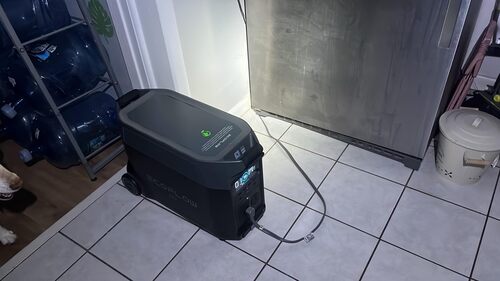
The display and app are helpful when they’re behaving. You get live input, output, battery level, charge status, and estimated time remaining, which makes load management much easier than guessing how fast the battery is draining.
Honestly, the app is one of the more divided parts of the ownership experience. Many buyers like Bluetooth and Wi-Fi monitoring. Others complain about confusing menus, firmware-update surprises, marketing notifications, poor documentation, and missing features like better output logs.
In practice, most buyers will find the controls easy enough. The bigger learning curve is not the screen. It’s deciding how to wire the unit, which outlets to use, when to charge, and how to avoid wasting battery through unnecessary inverter time.
LFP and Existing-Accessory Value
The DELTA Pro uses LiFePO4 battery chemistry. That’s the right choice for a large backup power station because LFP cells are generally preferred for frequent cycling, thermal stability, and long-term emergency readiness.
To be fair, LiFePO4 also adds weight. That helps explain why this unit weighs 99 lb, even with wheels. If you want long backup runtime and a chemistry suited for repeated use, the weight is part of the deal.
Long-Term Ownership — The supplied product data does not list a cycle-life number. Still, LiFePO4 chemistry is usually the better fit for people who plan to cycle a power station often rather than store it untouched for years.
Warranty is listed as 5 years, which sounds reassuring on paper. On the flip side, customer support feedback is mixed. Some buyers praise EcoFlow support, while others describe slow replies, unclear warranty handling, return frustration, and technician responses that didn’t match the details they provided.
Best Practice — For storage, leave the unit around 50–80% charge and top it off every 3–6 months. LiFePO4 is forgiving, but storing any battery full or empty for long stretches is still a bad habit.
Original DELTA Pro Ownership Decision
| Use Case | Fit | Why |
|---|---|---|
| Weekend car camping | Solid fit | Huge capacity, but heavier than most campers need |
| RV boondocking | Strong fit | Good capacity, high AC output, and solar support |
| Home blackouts under 8 hours | Strong fit | Easily covers fridge, router, lights, phones, and small appliances |
| Multi-day off-grid cabin | Solid fit | Works well with solar and careful load planning |
| CPAP overnight backup | Strong fit | Plenty of capacity, especially without humidifier-heavy settings |
| Oxygen concentrator backup | Strong fit | Owners use it for this, but test your exact machine |
| Refrigerator backup | Strong fit | Good inverter headroom and capacity for cycling loads |
| Jobsite power tools | Solid fit | Strong output, though 99 lb limits mobility |
| Quiet bedroom UPS | With caveats | Quiet and indoor-safe, but EPS behavior is not a dedicated UPS replacement |
| Hurricane / multi-day outage | Strong fit | Best when paired with solar, extra batteries, or generator charging |
| Tailgating / outdoor events | Solid fit | Great power, but heavy to transport |
| Backpacking / lightweight EDC | Skip | Far too large and heavy |
You’ll probably be happy if you want:
- A quiet indoor alternative to a gas generator for outages
- A large LiFePO4 power station for fridges, freezers, routers, lights, and medical devices
- A high-output unit for RVs, vendor markets, cabins, or mobile work
- Fast wall charging before storms or between power cuts
- Expansion options for a bigger backup setup later
You might want to skip it if you need:
- A lightweight camping battery you can carry by hand
- A simple, app-free setup with no adapters or ecosystem questions
- Guaranteed support for every large RV air conditioner
- A true whole-house backup system from one box
- Solar or alternator charging without checking connector requirements first
Pros & Cons Analysis
Based on documented specifications and owner feedback
Pros
- The core platform remains capable — 3.6kWh storage and 3.6kW output cover meaningful home, RV, workshop, and outage loads.
- Ecosystem maturity has value — Expansion batteries, charging accessories, hubs, panels, and app workflows may already be owned and commissioned.
- Solar voltage range is useful — A valid higher-voltage array can deliver substantial input through the single MPPT.
- LFP supports continued ownership — A healthy battery with documented cycles and successful acceptance tests need not be replaced for a newer headline.
- Used or discounted value can be attractive — A complete verified package may undercut a new-generation system for buyers who only need 120V roles.
Cons
- Generational topology is materially different — Native one-unit 240V and dual solar can simplify installations that are awkward on the original platform.
- Single-input solar limits mixed arrays — Different orientations or source types cannot be managed as independently as on the Pro 3.
- Physical and acoustic compromises remain — Weight, wheel route, fan profile, ventilation, and standby behavior should be compared directly.
- Legacy ecosystem can become lock-in — Sunk accessories should not justify expansion when the required future topology is fundamentally different.
- Adjacent-model evidence must be filtered — DELTA 2, DELTA 3, Ultra, and Pro 3 reports cannot establish original DELTA Pro behavior.
Our Final Take
The clearest takeaway from this EcoFlow DELTA Pro review is that the unit itself is powerful, practical, and genuinely useful for the right buyer. It shines as a quiet backup for outages, RV power, medical-device support, refrigerators, freezers, mobile work, and storm prep. The trade-offs are just as real: it's heavy, the app can feel clunky, and support experiences are not consistent.
If you want a serious 3600Wh portable power station and you're willing to plan your loads, the EcoFlow DELTA Pro portable power station is easy to recommend. If you want something light, cheap, or completely plug-and-play with every solar and vehicle accessory, this is probably more system than you need.
Frequently Asked Questions
How long will the EcoFlow DELTA Pro run a refrigerator?
For many full-size refrigerators, the DELTA Pro can often run through a typical overnight outage, especially because fridges cycle on and off instead of drawing full power constantly. Customers report using it for refrigerators and freezers successfully, but runtime depends on fridge size, room temperature, compressor cycling, and what else is plugged in.
Can the EcoFlow DELTA Pro run an oxygen concentrator?
Yes, several owners bought it specifically for oxygen concentrators and reported useful backup time during outages. One buyer saw nearly 11 hours available on a concentrator with the main unit only, while another reported around 7 to 9 hours depending on the machine. Always test your exact equipment before relying on it in an emergency.
Can the EcoFlow DELTA Pro run a microwave, coffee maker, or air fryer?
Yes, the 3600W AC output is strong enough for many kitchen appliances, including coffee makers, microwaves, induction cooktops, and air fryers. The catch is runtime. High-draw heat appliances drain the battery quickly, so they are better used briefly rather than continuously.
Will the EcoFlow DELTA Pro run an RV air conditioner?
It may run some RV AC setups, especially smaller or soft-start-equipped units, but customer feedback is mixed for large 15,000 BTU air conditioners. One owner reported repeated shutdowns even with an RV plug setup, so test your exact air conditioner before depending on it for boondocking.
How fast does the EcoFlow DELTA Pro recharge from the wall?
EcoFlow lists about 2.7 hours from an 1800W wall outlet and about 1.8 hours from a 240V / 3000W source. In real use, charging speed depends on your outlet, breaker, settings, and whether extra batteries are connected.
How much solar input can the EcoFlow DELTA Pro use?
The supplied product data says it can recharge in about 2.8 hours with 4 × 400W solar panels, which points to a 1600W class solar setup in ideal sun. Owners like the solar option, but some report adapter confusion, lower-than-expected input, and the need to manage clouds, shade, and panel angle.
Does the EcoFlow DELTA Pro work as a UPS or pass-through backup?
Owners do use it in pass-through style for refrigerators, networking gear, computers, cameras, and other backup loads. That said, one long-term owner reported momentary power cuts and app limitations, so it is better described as useful backup power than a perfect replacement for a dedicated UPS.
Is the EcoFlow DELTA Pro quiet enough to use indoors?
Yes, compared with a gas generator it is much quieter and safe to use indoors because there are no exhaust fumes. Customers describe the fans as quiet under lighter loads, though fan noise can increase during fast charging or heavy AC output.
Is the EcoFlow DELTA Pro easy to move?
It has wheels and a pull handle, which help a lot, but the unit still weighs 99 lb. Most buyers are comfortable rolling it around a house, garage, RV, or jobsite, but it is not a light grab-and-go camping battery.
Does the EcoFlow DELTA Pro need special adapters for solar or alternator charging?
It can work well with solar and charging accessories, but some owners mention needing extra adapters, especially for alternator charging or third-party setups. Check connector requirements before buying panels or vehicle-charging accessories.
What are the biggest complaints about the EcoFlow DELTA Pro?
The most common complaints are the heavy 99 lb weight, confusing documentation, app quirks, adapter surprises, mixed support experiences, and occasional reliability concerns with complex RV or UPS-style setups. The core power station earns a lot of praise, but the ecosystem is not always as simple as buyers expect.
Technical Specifications
| Brand | EF ECOFLOW |
|---|---|
| Model / SKU | EFD500 (ASIN: B0C1Z4GLKS) |
| Battery capacity | 3600 Wh |
| Battery chemistry | LiFePO4 (LFP) |
| Cycle-life rating | Not published for this exact model in the current source set |
| Expandable capacity | Yes — expandable from 3.6 kWh up to 25 kWh with DELTA Pro Extra Batteries or Smart Generators |
| Continuous AC output | 3600 W continuous |
| Surge / peak output | 7200 W starting wattage (listed in product details) |
| AC voltage, frequency, and waveform | 120V AC, pure sine wave; frequency not published for this exact model |
| AC outlets | 5 × 120V AC outlets |
| High-current, RV, or 240V output | High-current or 240V output requires the applicable EcoFlow accessory or system configuration |
| USB-C outputs | 2 × USB-C (100W) |
| USB-A outputs | 2 × USB-A, 2 × USB-A Fast Charge |
| 12V / DC outputs | 1 × car power output |
| Maximum solar input | 1600 W (implied by 4 × 400W solar panel recharge specification; connector details not specified) |
| Solar input range and connector | Not published for this exact model in the current source set; exact PV voltage/current window and connector are unavailable |
| Maximum AC input | 3000 W (240V charging); 1800 W from standard wall-outlet specification |
| AC recharge time | About 1.8 hours from 240V / 3000W, or about 2.7 hours from 1800W wall outlet |
| Solar recharge estimate | Planning estimate: about 2.8 hours with 4 × 400W solar panels (ideal conditions) |
| UPS / EPS support and transfer time | Yes — pass-through / EPS-style backup behavior documented (switchover time not specified) |
| App / connectivity | Yes — EcoFlow app via Wi-Fi and Bluetooth |
| Operating temperature / weather rating | Not published for this exact model in the current source set |
| Dimensions | Not published for this exact model in the current source set |
| Weight | 99 lb |
| Warranty | 5-year manufacturer warranty |