A Pecron vs EcoFlow decision usually starts with one simple question: do you want the most hardware for the money, or do you want the more developed backup ecosystem? See high-watt portable power station picks for similar output classes.
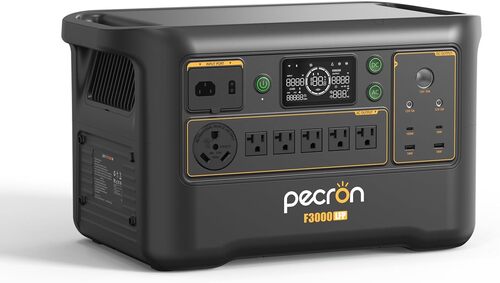
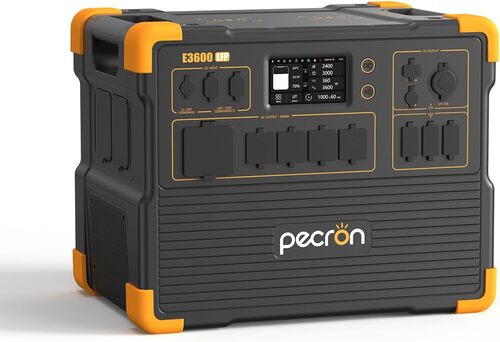
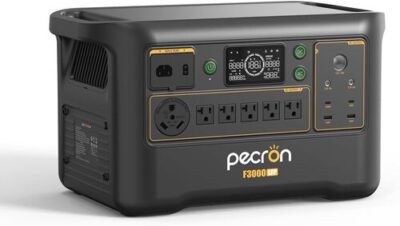
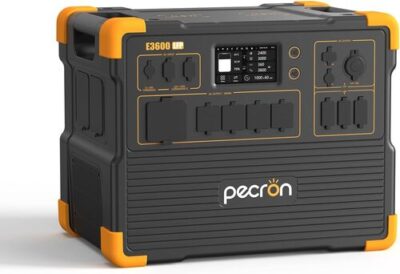
Pecron’s big power stations are hard to ignore if you’re shopping by watts, watt-hours, and solar input. Our Pecron F3000LFP value review breaks down specs versus price. The F3000LFP and E3600LFP both give you 3072Wh batteries and 3600W output, with the E3600LFP adding even more solar input and expansion flexibility. See our Pecron E3600LFP off-grid review for expansion limits.
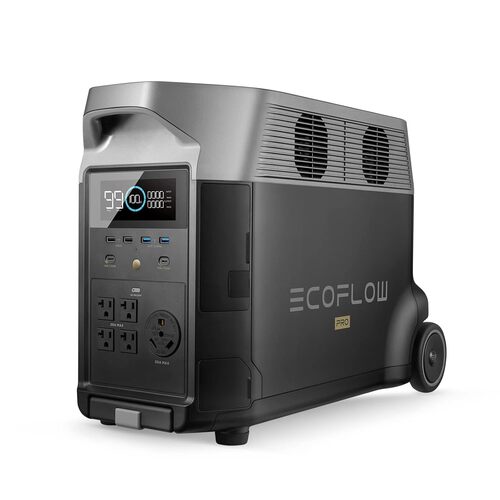
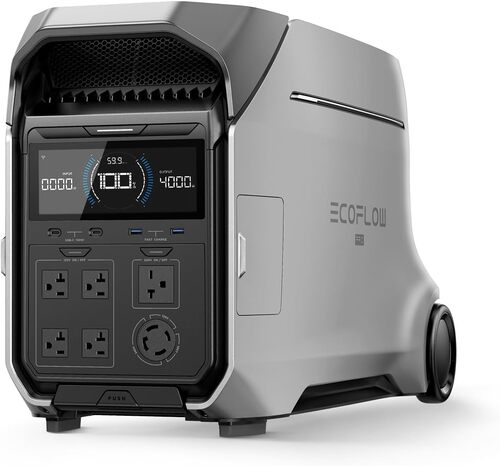
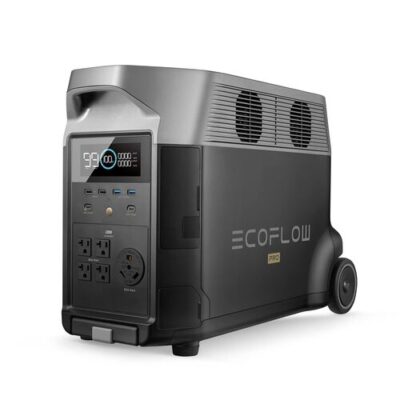
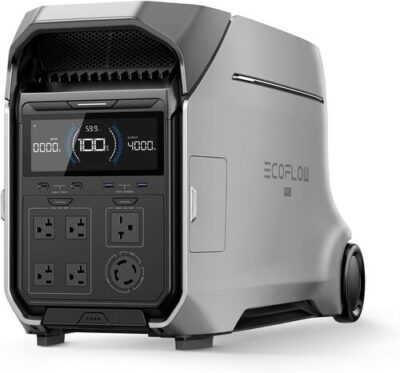
EcoFlow feels different. The DELTA Pro and DELTA Pro 3 cost more in many situations, but they bring a wider accessory system, stronger brand recognition, wheels, app controls, expansion options, and — for some buyers — peace of mind. Read our EcoFlow DELTA Pro 3 ecosystem review for accessory depth.
Pecron vs EcoFlow: Fast Recommendation
| Buyer Type | Best Pick | Why It Makes Sense |
|---|---|---|
| Best value-focused Pecron option | Pecron F3000LFP | Big 3072Wh battery, 3600W output, and strong 1600W solar input in the lightest body here |
| Best Pecron RV option | Pecron E3600LFP | TT30-R RV outlet, 3600W output, 2400W solar input, and very fast listed AC recharge |
| Best EcoFlow deal option | EcoFlow DELTA Pro | Larger 3600Wh capacity, wheels, mature app ecosystem, and strong expansion support |
| Best premium backup option | EcoFlow DELTA Pro 3 | 4096Wh, 4000W output, 120V/240V support, 2600W solar input, and highest expansion ceiling |
| Skip this class if | You need easy grab-and-go power | These are heavy stations, not casual campsite batteries |
Fast take: Pecron is the better value play for buyers who want serious 120V backup power without paying premium-brand pricing. EcoFlow is the stronger pick if you’re building toward home backup, higher-voltage flexibility, or a larger expandable system. Neither brand replaces a professionally installed whole-home battery by itself.
Which Brand Fits Each Job?
| Use Case | Winner | Why |
|---|---|---|
| Car camping | Pecron F3000LFP | Still heavy, but 63.3 lb is the lowest weight in this group |
| RV dry camping | Pecron E3600LFP | TT30-R outlet and 3600W output fit RV use well |
| Home outage backup | EcoFlow DELTA Pro 3 | Highest capacity, strongest output, and 120V/240V support |
| Fridge or freezer backup | EcoFlow DELTA Pro 3 | 4096Wh gives the most estimated runtime |
| Starlink and router backup | EcoFlow DELTA Pro | Good capacity, wheels, app monitoring, and indoor backup fit |
| Solar-heavy off-grid use | EcoFlow DELTA Pro 3 | 2600W solar input is the highest listed ceiling |
| Best Pecron value | Pecron F3000LFP | Strong capacity and output without the heavier E3600LFP body |
| Long-term expansion | EcoFlow DELTA Pro 3 | Listed expansion ceiling reaches up to 48kWh |
What the Specs Don’t Tell You
A big number on the box can hide some real-world friction. Pecron gives you impressive output and solar numbers, but owner feedback points to app frustrations, fan noise under load, and some reliability concerns on problem units.
EcoFlow has a more mature ecosystem, but it can also feel more complicated. Choosing between EcoFlow’s largest units? Read Delta Pro versus Delta Pro 3 analysis. App login, firmware updates, extra adapters, transfer-switch behavior, and accessory costs all matter once you move beyond simple extension-cord backup.
In plain English: Pecron is the sharper value bet, while EcoFlow is the better system bet. That’s the core tradeoff in this comparison.
Pecron vs EcoFlow Runtime Reality
The battery number tells you storage size, not guaranteed appliance runtime. A 3072Wh station will not deliver the full 3072Wh through AC outlets because the inverter uses energy during conversion.
For the estimates below, I used a practical AC estimate with inverter losses and a small reserve. These are planning numbers, not measured results.
| Device | Typical Power Draw | Pecron F3000LFP | Pecron E3600LFP | EcoFlow DELTA Pro | EcoFlow DELTA Pro 3 |
|---|---|---|---|---|---|
| Phone charging | 15–20Wh per charge | ~115–120 charges | ~115–120 charges | ~135–140 charges | ~150–155 charges |
| Laptop | 60–100Wh per charge | ~25–35 charges | ~25–35 charges | ~30–38 charges | ~35–42 charges |
| LED lights | 20W | ~117 hours | ~117 hours | ~138 hours | ~155 hours |
| CPAP, no humidifier | 40–60W | ~39–58 hours | ~39–58 hours | ~46–69 hours | ~52–77 hours |
| Wi-Fi router | 10–20W | ~117–235 hours | ~117–235 hours | ~138–275 hours | ~155–310 hours |
| Electric cooler | 40–80W average | ~29–58 hours | ~29–58 hours | ~34–69 hours | ~39–77 hours |
| Full-size refrigerator | 100–200W average + surge | ~12–23 hours | ~12–23 hours | ~14–28 hours | ~15–31 hours |
| Space heater | 1500W | Not ideal / ~1.5 hours | Not ideal / ~1.5 hours | Not ideal / ~1.8 hours | Not ideal / ~2 hours |
A fridge may last longer or shorter than the table suggests because compressors cycle. A space heater is the opposite — it pulls hard the whole time, so it drains even a large battery quickly.
Appliance Headroom: Watts, Surge, and Real Loads
Output is where these four stations separate themselves from smaller camping units. All of them can run much more than phones, laptops, lights, and camera batteries.
The Pecron F3000LFP, Pecron E3600LFP, and EcoFlow DELTA Pro all sit at 3600W continuous output. That is enough for many fridges, freezers, microwaves, coffee makers, power tools, sump pumps, and RV loads. However, Pecron’s supplied surge data is less clear, especially on the F3000LFP.
The EcoFlow DELTA Pro 3 has the strongest output package here. It lists 4000W continuous output, a 6000W starting / X-Boost claim, and 120V/240V support. That doesn’t mean it can run every home circuit forever, but it does widen the list of practical backup uses.
For most buyers, the big rule is simple: capacity tells you how long, output tells you whether it starts. A fridge surge, pump startup, or RV air conditioner can matter more than the running wattage on the label.
Output edge: EcoFlow DELTA Pro 3 wins for the most capable backup setup. Pecron E3600LFP is the better value-oriented RV option.
Recharge Strategy: Wall Power, Solar, and Vehicle Top-Ups
A big battery is only useful if you can refill it in a realistic way. That matters during storm prep, RV travel, generator pairing, and off-grid solar use.
Wall charging
The Pecron E3600LFP has the strongest listed wall-charging number, with up to 3200W AC input and a claimed full charge in about 1.3 hours. That is extremely fast for a 3072Wh power station.
The Pecron F3000LFP lists about 2 hours from AC. EcoFlow’s DELTA Pro ranges from about 1.8 to 2.7 hours, depending on the input source. The DELTA Pro 3 generally sits around 2 to 3 hours, depending on settings and outlet limits.
Solar charging
Solar flips the conversation. The DELTA Pro 3 leads with 2600W dual solar input, while the Pecron E3600LFP is close behind at 2400W. The Pecron F3000LFP and DELTA Pro both land around 1600W.
Panel matching still matters. Check voltage limits, connector type, series wiring, cold-weather voltage rise, and adapter needs before buying panels.
Car charging
Standard 12V car charging is slow for batteries this large. It’s useful for topping up while driving, not for quickly refilling a 3kWh or 4kWh station. For faster vehicle charging, expect extra accessories or brand-specific hardware.
Charging edge: Pecron E3600LFP wins wall-charge speed. EcoFlow DELTA Pro 3 wins solar ceiling.
Moving These Power Stations Around
None of these models are casual grab-and-go batteries. Even the lightest one belongs in the “think before carrying” category.
- Under 10 lb: easy grab-and-go power
- 10–30 lb: realistic for car camping and room-to-room use
- 30–50 lb: movable, but not fun to carry far
- 50+ lb: better treated as semi-portable backup power
- 100+ lb: wheels matter more than handles
The Pecron F3000LFP is the easiest to manage here at 63.3 lb. That is still heavy, but it’s more realistic for vehicle-based camping than the others.
The Pecron E3600LFP reaches 79 lb, so it’s better parked in an RV, garage, workshop, or backup corner. The EcoFlow DELTA Pro weighs 99 lb, but its wheels and pull handle help on smooth floors.
The EcoFlow DELTA Pro 3 is a different story at 115 lb. Wheels are not a bonus at that weight — they’re part of the product’s basic usability.
Portability edge: Pecron F3000LFP. It’s the least painful option in a very heavy group.
Cycle Life and Battery Chemistry
All four models use LiFePO4 / LFP chemistry, which is the right direction for long-term backup power. LFP batteries are heavier than many older lithium-ion designs, but they usually handle frequent cycling better.
| Battery Type | Best For | Main Tradeoff |
|---|---|---|
| LiFePO4 / LFP | Frequent cycling, home backup, RV use, long-term storage | More weight per Wh |
| NMC / lithium-ion | Lightweight portable designs and occasional use | Shorter cycle life in many models |
The Pecron models do not include clear cycle-life numbers in the supplied data. EcoFlow’s supplied DELTA Pro data also lacks a specific cycle-life figure. The DELTA Pro 3 is the clearest here, with an around 4000 cycles to 80% capacity claim.
That does not automatically make the other three poor long-term buys. It just means EcoFlow gives buyers clearer longevity information on the DELTA Pro 3.
Battery clarity edge: EcoFlow DELTA Pro 3.
Controls, Ports, RV Features, and Daily Use
Ports can matter more than capacity once the power goes out. Nobody wants to dig through adapters during a storm.
Pecron’s port story is practical. The F3000LFP gives you six AC outlets, USB-C, USB-A, DC outputs, and app support. The E3600LFP adds a TT30-R RV outlet, which is one of its biggest advantages over many competitors.
EcoFlow leans more into ecosystem control. The DELTA Pro has app support, wheels, expansion gear, multiple AC outlets, and a wide accessory path. The DELTA Pro 3 adds more advanced backup features, including 120V/240V output and app-level settings that matter for RVs, transfer switches, and generator-paired setups.
However, both brands have app complaints. Pecron owners mention pairing and setting issues. EcoFlow owners mention login, firmware, geo-locking, and setup friction. So, don’t buy either brand assuming the app will be invisible.
For CPAP or bedroom use, fan noise matters. For RV use, plug type matters. For laptops, 100W USB-C is more useful than another low-power USB-A port.
Daily-use edge: EcoFlow for system depth. Pecron E3600LFP for RV plug convenience.
Deal Math and Long-Term Value
Pecron is usually the brand that makes shoppers pause and say, “That’s a lot of power for the money.” EcoFlow is usually the brand that makes more sense once you care about expansion, accessories, app features, and backup-system planning.
Because prices change constantly, use live sale pricing before publishing exact $/Wh claims. The formula is simple:
Current price ÷ battery Wh = price per Wh
| Value Factor | Pecron F3000LFP | Pecron E3600LFP | EcoFlow DELTA Pro | EcoFlow DELTA Pro 3 |
|---|---|---|---|---|
| Lower upfront cost | Usually strong | Usually strong | Deal-dependent | Usually premium |
| Best hardware-per-dollar | Very strong | Strong | Good when discounted | Weaker unless you need premium features |
| Best warranty clarity | 2+3 year listed | Not specified in supplied data | 5 years listed | 5 years listed |
| Best expansion path | Good | Up to 18.43kWh | Up to 25kWh | Up to 48kWh |
| Best RV value | Good | Strongest | Good | Strong but expensive |
| Best home-backup value | Decent | Good | Good if discounted | Strong if you’ll use 120V/240V and expansion |
$/Wh is useful, but it misses the bigger picture. A lower-cost battery is not always better if you need better support, clearer warranty terms, 240V output, or a larger accessory system. For sizing before you buy, use our what size portable power station do I need guide.
For wider brand comparisons, see our Anker vs EcoFlow guide.