Solar Power Picks logo with sun, solar panel, and green energy icon

  • Home
  • Reviews
  • Best
    • Best portable power stations
  • Guides
    • Portable Power Stations Guides
  • Comparisons
    • Portable Power Stations Comparisons
  • Calculator

Best 3000W Portable Power Station for RVs, Outages, and Heavy Loads

OUR PICKS

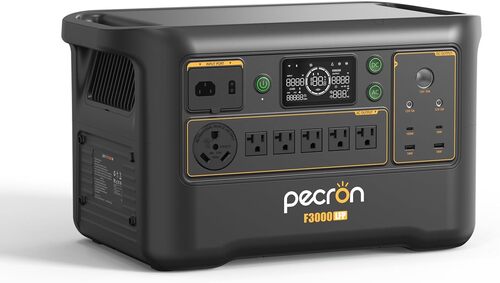
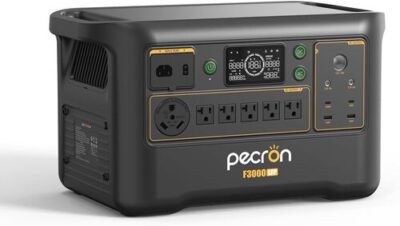
Pecron F3000LFP Review: Big 3kWh Backup Power Without the Premium Price

Best Value 3000W-Class Pick

Pecron F3000LFP Review: Big 3kWh Backup Power Without the Premium Price

Check price at Amazon Jump to details
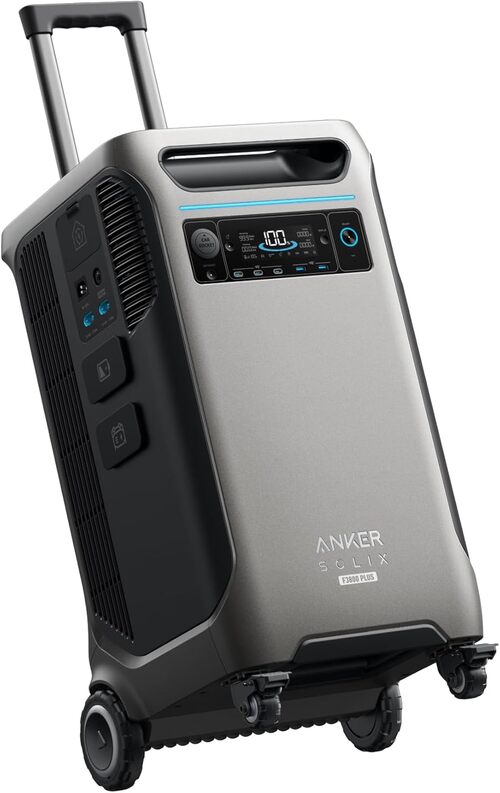
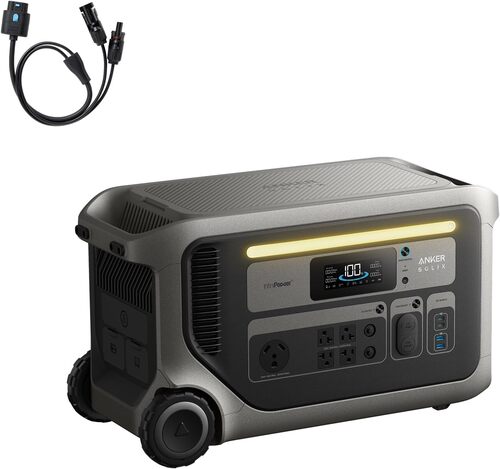
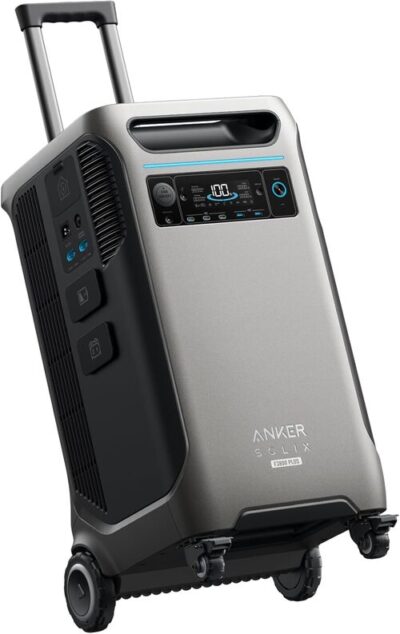
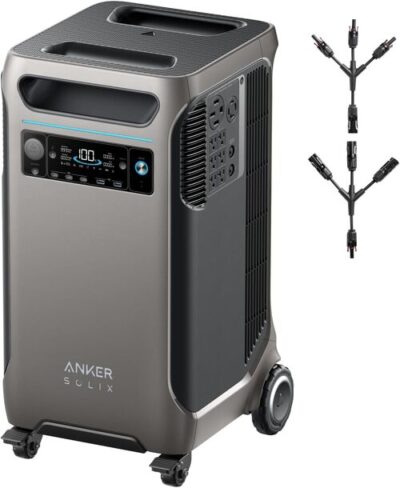
Anker SOLIX F3000 Review: Big Backup Power That Still Moves

Best Big Portable Pick

Anker SOLIX F3000 Review: Big Backup Power That Still Moves

Check price at Amazon Jump to details
Pecron E3600LFP Review: Big Battery Backup for RVs, Outages, and Off-Grid Power

Best High-Capacity Pick

Pecron E3600LFP Review: Big Battery Backup for RVs, Outages, and Off-Grid Power

Check price at Amazon Jump to details
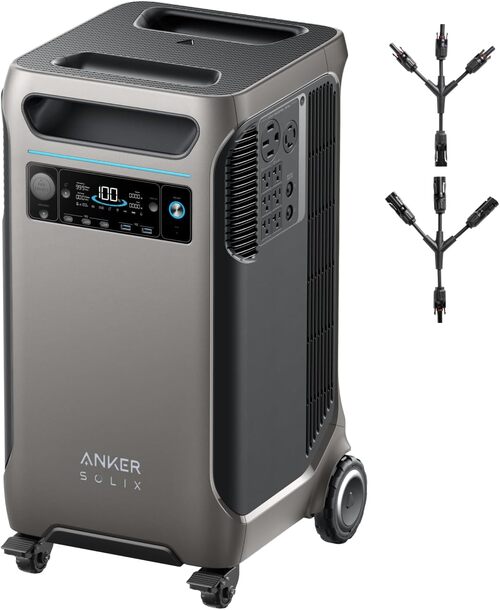
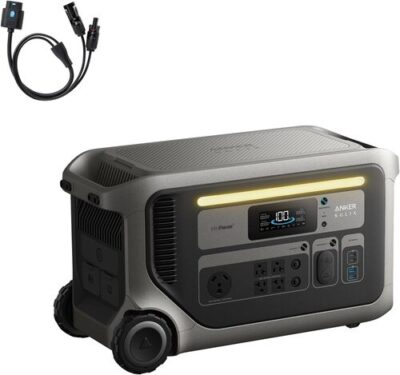
Anker SOLIX F3800 Review: Big 240V Backup Power Without the Generator Noise

Best 240V Upgrade

Anker SOLIX F3800 Review: Big 240V Backup Power Without the Generator Noise

Check price at Amazon Jump to details

The best 3000W portable power station is not just the one that can show a big watt number on the box — it’s the one that can actually run your appliance without tripping, overheating, or draining itself in one hour. For outage-focused buyers, also see our home backup power station shortlist.

This category is where portable power stations stop being “camping batteries” and start acting more like quiet generator alternatives. If you don’t need full 3000W output, our 2000W high-output power station guide covers a lighter tier. You’re probably shopping for a microwave, RV setup, sump pump, fridge, power tool, trailer, or short home-backup job — not just phones and laptops.

That said, 3000W is only half the story. In practice, you also need enough battery capacity, the right ports, a realistic recharge plan, and a weight you can live with.

⚠️ 3000W Reality Check: Watts tell you what the station can run at once. Watt-hours tell you how long it can keep running. A 3600W inverter with a 3072Wh battery is powerful — but heavy appliances still drain it fast.

The 3000W Shortlist

ProductBadgeWhy It Fits This 3000W Article
Pecron F3000LFPBest Value 3000W-Class Pick3600W output, 3072Wh battery, strong solar input, lower-cost value angle
Anker SOLIX F3000Best Big Portable Pick3600W output, rolling design, serious RV and outage use
Jackery HomePower 3000Best Home Backup Pick3600W output, 7200W surge, TT-30 RV port, LiFePO4 battery
Pecron E3600LFPBest High-Capacity Pick3600W output, expandable capacity, TT30-R RV outlet, fast AC charging
Anker SOLIX F3800Best 240V Upgrade6000W output, 120V / 240V support, larger backup ecosystem

Compare the Best 3000W Portable Power Stations

ProductCapacityAC OutputSurge / Starting PowerRV / 240V SupportSolar InputWeight
Pecron F3000LFP3072Wh3600WNot clearly listed above 3600WNo TT-30 listed1600W63.3 lb
Anker SOLIX F30003072Wh3600WNot specified30A Anderson noted; no built-in 240V single-unit output2400W91.5 lb
Jackery HomePower 30003072Wh3600W7200WTT-30 RV port400W listed setup59.5 lb
Pecron E3600LFP3072Wh3600WNot specifiedTT30-R RV outlet2400W79 lb
Anker SOLIX F38003840Wh6000W10200W120V / 240V, NEMA 14-50, L14-302400W132.3 lb

🔌 240V Warning: If you need well pumps, some EV charging, large split-phase loads, or transfer-switch planning, don’t assume every 3000W-class unit can do it. Most are strong 120V stations. The Anker SOLIX F3800 is the real 240V upgrade here.

Why These Five Made the Cut

For this article, the filter was simple: does the unit make sense for someone specifically shopping around 3000W of usable inverter power?

That means smaller 1000Wh and 2000Wh units were left out, even if they’re better for general camping. For a detailed look at one budget 3kWh option, read our Pecron F3000LFP long-term review. The focus here is high-output AC power, RV usefulness, fridge and sump-pump backup, recharge speed, solar ceiling, battery chemistry, and whether the unit still feels practical once it weighs 60-130 lb.

What mattered most here:

  • 3000W-class output — enough for real appliances, not just electronics
  • Battery capacity near or above 3kWh — because high output without storage is frustrating
  • Surge clarity — important for compressors, pumps, and RV gear
  • RV / backup ports — TT-30, Anderson, 240V, or high-power AC options
  • Solar ceiling — 3kWh batteries need more than tiny panels
  • Weight realism — this category is moveable, not lightweight
  • Value — especially price compared with output and capacity

How to Pick the Right 3000W-Class Power Station

Start With the Appliance, Not the Battery

A 3000W power station makes sense when you have something specific in mind: a microwave, sump pump, RV air conditioner, circular saw, fridge, coffee maker, or 30A RV setup.

Here’s the catch: a device can be “under 3000W” and still be a bad fit if it runs too long. A microwave for 8 minutes is fine. A space heater for two hours is brutal on any battery.

Best rule: use 3000W for short, heavy loads — not long heating loads.

Check Continuous Output Before Surge

Continuous output is the wattage the unit can actually hold. Surge is only a short startup burst for motors, compressors, and pumps.

For example, Jackery HomePower 3000 lists 3600W continuous and 7200W surge, which is useful for startup-heavy appliances. Comparing value brands at this tier? See Pecron compared to EcoFlow. Pecron F3000LFP lists 3600W running and starting wattage, so it’s safer to treat 3600W as the real ceiling unless your own appliance test proves otherwise.

Decide If You Need RV or 240V Output

RV buyers should care about ports as much as watts. A TT-30 outlet can make setup cleaner than using adapters, which is why the Jackery HomePower 3000 and Pecron E3600LFP are strong RV-friendly picks.

At the same time, 240V is a different category. If you need split-phase power, the Anker SOLIX F3800 is the better fit than a normal 3kWh 120V station.

Plan the Recharge Before You Plan the Outage

A 3kWh battery is useful only if you can refill it. Wall charging is easiest before a storm, while solar matters more for RVs, cabins, and multi-day outages.

That said, small solar panels are too slow for this class. A 200W panel can help maintain light use, but 800W-2400W is where solar starts to feel serious.

✅ Best Practice: For a 3000W-class station, plan your charging path before buying panels. Check solar voltage limits, connector type, max wattage, and whether the brand expects proprietary panels.

3000W Load Cheat Sheet

LoadUsually Works?What to Watch
MicrowaveYesShort bursts are fine; long cooking drains fast
Full-size fridgeYesCompressor surge matters
Sump pumpUsuallyStartup surge can be high
Coffee makerYesHigh draw, short use
RV lights + fridge + StarlinkYesBattery capacity matters more than output
RV air conditionerSometimesStartup surge and runtime are the issue
Space heaterTechnically yesUsually a bad battery use case
Well pumpOnly on the right systemOften needs 240V support
EV chargingLimited / special caseUsually needs 240V and careful amp control
Power toolsUsuallySurge and tool type matter

Best Value in This Class

The Pecron F3000LFP looks like the best value play if you want the most 3000W-class hardware for the money. It gives you a 3072Wh LiFePO4 battery, 3600W output, 1600W solar input, and strong basic specs.

On the flip side, Jackery and Anker feel more polished for buyers who want stronger brand ecosystems. The Anker SOLIX F3800 is not the cheapest choice, but it changes the conversation if you need 240V support.

Value checklist:

  • ✅ 3000W+ continuous output
  • ✅ Around 3kWh or more of capacity
  • ✅ LiFePO4 battery chemistry when listed
  • ✅ Realistic solar input for the battery size
  • ⚠️ Surge rating clearly stated
  • ⚠️ App and firmware dependability
  • ❌ Paying for 240V if you only need 120V appliances
  • ❌ Buying a 130 lb unit if you need frequent lifting
Best Value 3000W-Class Pick

Pecron F3000LFP Review: Big 3kWh Backup Power Without the Premium Price

Pecron F3000LFP Review: Big 3kWh Backup Power Without the Premium Price

Get it now:

Check latest price

What to know

  • 3072Wh LiFePO4 battery gives real outage and RV backup runtime
  • 3600W pure-sine output handles fridges, pumps, microwaves, and tools
  • 1600W solar input works well for RV roofs and off-grid panels
  • About 2-hour AC recharge when using fast wall charging
  • 63.3 lb body is movable, but not casual-carry portable

Best if

  • You want a value-focused 3kWh unit for RVs, fridges, and blackout prep
  • You’re building a solar-supported setup with up to 1600W input
  • You like having six AC outlets and USB-C laptop charging

Skip if

  • You prefer a lighter station you can carry around camp by hand
  • You need built-in fast car charging without buying another accessory
  • You can’t tolerate app pairing quirks or 2.4GHz Wi-Fi setup

The Pecron F3000LFP earns the best value 3000W-class pick because it gives you 3kWh storage, 3600W output, and strong solar support without the premium-brand price. It’s built for RV owners, outage prep, sump pump backup, and small off-grid setups where a basic 1kWh unit won’t cut it.

Here’s the mix that works: the Pecron F3000LFP pairs a 3072Wh LiFePO4 battery with 1600W solar input and fast AC charging. Worth knowing, the front-facing ports and pure-sine output make it easier to use as a backup hub.


The catch: Pecron’s app can be fussy, and at 63.3 lb, you’ll probably want a cart.

Capacity3072Wh (expandable with EP3000-48V battery; cable sold separately)
AC Output3600W continuous, 3600W listed starting wattage (pure sine)
Solar Input1600W max via XT60-to-MC4 cable
Weight63.3 lb (28.7 kg)
BatteryLiFePO4 (cycle life not specified)
Best Big Portable Pick

Anker SOLIX F3000 Review: Big Backup Power That Still Moves

Anker SOLIX F3000 Review: Big Backup Power That Still Moves

Get it now:

Check latest price

What to know

  • 3072Wh capacity fits fridges, RV gear, TVs, and trailer loads
  • 3600W output gives more headroom than smaller 2000W stations
  • Up to 2400W solar input for serious RV or off-grid charging
  • Wheels and suitcase handle help with garage-to-RV movement
  • App adds charge-rate control, monitoring, and power-saving modes

Best if

  • You need a rollable 120V backup unit for RVs, trailers, and outages
  • You value high solar input for storm prep or off-grid charging
  • You’re powering fridges, lights, TVs, and occasional high-draw appliances

Skip if

  • You need built-in 240V split-phase power from one station
  • You want a simple solar setup with no voltage-limit homework
  • You’d rather avoid cloud-connected app controls and firmware updates

The Anker SOLIX F3000 is the big portable pick because it brings serious 3600W-class backup power while still rolling around like movable gear. It’s designed for RV pads, garages, work trailers, hurricane prep, and fridge backup where output headroom matters as much as capacity.

Here’s why that matters: Anker SOLIX F3000 gives you 3072Wh of storage, up to 2400W solar input, app control, and wheels that make the 91.5 lb body far less annoying. One thing buyers like is using it as a quieter buffer with solar or a fuel generator.


Just know it’s still heavy, and single-unit 240V split-phase output is not part of the deal.

Capacity3072Wh (expandable up to 24kWh)
AC Output3600W continuous, surge not specified
Solar Input2400W max via Anker dual solar inputs (connector not specified)
Weight91.49 lb (41.5 kg) — wheels + pull handle
BatteryChemistry not specified (cycle life not specified)
Best High-Capacity Pick

Pecron E3600LFP Review: Big Battery Backup for RVs, Outages, and Off-Grid Power

Pecron E3600LFP Review: Big Battery Backup for RVs, Outages, and Off-Grid Power

Get it now:

Check latest price

What to know

  • 3072Wh base capacity expands up to 18.43kWh with extra batteries
  • 3600W pure-sine output supports RV, fridge, tool, and backup loads
  • 3200W AC charging can refill the unit quickly from grid power
  • TT30-R outlet is useful for RV and van power setups
  • Touchscreen controls reduce dependence on the mixed app experience

Best if

  • You want expandable backup capacity for RVs, cabins, or longer outages
  • You’re powering Starlink, fridges, lights, tools, and RV loads
  • You value fast wall charging and a built-in touchscreen

Skip if

  • You’d rather buy a simpler fixed-capacity station with fewer add-ons
  • You need a silent bedside battery for overnight use
  • You can’t risk inverter faults or mixed support experiences

The Pecron E3600LFP takes the high-capacity pick because it goes beyond a simple 3kWh box with serious expansion potential. It’s aimed at RV owners, off-grid cabins, home-office backup, Starlink users, and anyone planning for longer outages instead of one short blackout.

Pecron E3600LFP stands out because the base 3072Wh battery can expand up to 18.43kWh, while 3600W pure-sine output and 3200W AC charging make it feel more like a compact backup system. At the same time, the touchscreen helps when you don’t want to depend fully on the app.


One thing: reliability feedback is more mixed than the spec sheet, so test your exact loads early.

Capacity3072Wh (expandable to 18.43kWh)
AC Output3600W continuous, surge not specified (pure sine)
Solar Input2400W max via included Pecron solar cables (connector not fully specified)
Weight79 lb (35.8 kg)
BatteryLiFePO4 (cycle life not specified)
Best 240V Upgrade

Anker SOLIX F3800 Review: Big 240V Backup Power Without the Generator Noise

Anker SOLIX F3800 Review: Big 240V Backup Power Without the Generator Noise

Get it now:

Check latest price

What to know

  • 3840Wh LiFePO4 base battery supports bigger home-backup loads
  • 6000W output with 120V/240V support beats typical 3kWh stations
  • 10200W surge helps with pumps, compressors, and heavy startup loads
  • 2400W solar input can work well with careful panel matching
  • 132 lb body rolls on wheels but needs help for lifting

Best if

  • You need single-unit 120V/240V output for RVs, pumps, or backup panels
  • You’re planning an expandable home-backup system over time
  • You value high inverter output more than low purchase cost

Skip if

  • You only need fridge, Wi-Fi, and lights during short outages
  • You want easy one-person lifting into a truck or van
  • You need simple AC pass-through behavior for every 240V use case

The Anker SOLIX F3800 is the 240V upgrade because it handles bigger home and RV loads that most portable stations can’t touch. It’s built for homeowners, RV users, shops, cabins, and outage-prep buyers who need more than standard 120V outlets.

Worth knowing: the Anker SOLIX F3800 has a 3840Wh LiFePO4 battery, 6000W continuous output, 10200W starting wattage, 120V/240V support, and expansion up to serious backup capacity. That combination makes it better suited to well pumps, RV shore-style power, freezers, sump pumps, and transfer-switch setups than smaller 3kWh units.


To be fair, the F3800 is expensive, 132 lb, and AC charging can limit 240V output behavior.

Capacity3840Wh (expandable to 26.9kWh with battery packs)
AC Output6000W continuous, 10200W surge / starting wattage
Solar Input2400W max via Anker solar inputs (11–60V input range reported)
Weight132.28 lb (60.0 kg) — wheels + telescoping handle
BatteryLiFePO4 (cycle life not specified; marketed for 10-year lifespan)

Product Comparison

Feature Pecron F3000LFP Review: Big 3kWh Backup Power Without the Premium Price Anker SOLIX F3000 Review: Big Backup Power That Still Moves Pecron E3600LFP Review: Big Battery Backup for RVs, Outages, and Off-Grid Power Anker SOLIX F3800 Review: Big 240V Backup Power Without the Generator Noise
Product Image
Pecron F3000LFP Review: Big 3kWh Backup Power Without the Premium Price
Anker SOLIX F3000 Review: Big Backup Power That Still Moves
Pecron E3600LFP Review: Big Battery Backup for RVs, Outages, and Off-Grid Power
Anker SOLIX F3800 Review: Big 240V Backup Power Without the Generator Noise
Price $799 $1699 $1399 $1049 $999 $2599 $1799
Rating
4.7 / 5
4.6 / 5
4.5 / 5
4.1 / 5
Category Portable Power Stations Portable Power Stations Portable Power Stations Portable Power Stations
Brand Pecron Anker SOLIX pecron Anker
Model / SKU F3000LFP (ASIN: B0F6YCRKTJ) Anker SOLIX F3000 / A1782 (ASIN: B0F8BC2LFS) EU-E3600LFP (ASIN: B0D83QYRDS) Anker SOLIX F3800 / A1790 (ASIN: B0C5C9HMQ2)
Battery capacity 3072 Wh 3,072 Wh 3072 Wh 3840 Wh
Battery chemistry LiFePO4 (LFP) Not specified in the provided listing LiFePO4 (LFP) LiFePO4 (LFP)
Cycle life Not specified in the provided listing Not specified Not specified in the provided listing Not specified (marketed for a 10-year lifespan)
Expandable battery Yes — supports EP3000-48V expansion battery (special cascade cable sold separately) Yes — expandable up to 24kWh (exact expansion-battery count not specified) Yes — expandable up to 18.43 kWh with four EP3800-48V extra batteries Yes — supports up to 6 battery packs for 26.9 kWh; two F3800 units with 12 battery packs are marketed for larger backup setups
AC output 3600 W continuous (pure sine wave) 3,600 W continuous (waveform not specified in the provided listing) 3600 W continuous (pure sine wave, 100V-120V) 6000 W continuous (120V/240V output; pure-sine quality mentioned by owners)
Surge output Not specified above 3600 W (listing shows 3600 W starting wattage) Not specified Not specified (calculator default: 7200 W estimated peak) 10200 W peak / starting wattage
AC outlets 6 × AC outlets Not specified (11 total outlets/outputs listed) 4 × 120V AC outlets + 1 × TT30-R RV outlet 6 × 120V outlets plus NEMA 14-50 and L14-30 high-power outputs (from customer-reported use and product bullets)
USB-C ports 2 × USB-C (up to 100W PD) Not specified 2 × USB-C (100W max each) Not specified (USB-C fast-charging ports mentioned by owners)
USB-A ports 2 × USB-A (18W listed) Not specified 4 × USB-A Not specified
12V car socket 1 × car port Yes — customer reviews mention a 12V car port 1 × cigar port Not specified
DC outputs 2 × DC 5525 outputs N/A 1 × DC5525 output, 1 × XT60-F output N/A
Max solar input 1600 W (25-120V input, XT60 to MC4 cable included) 2,400 W (dual solar input; customer review cites 1,600W high PV + 800W low PV) 2400 W (listed example: 8 × 300W solar panels, MPPT behavior mentioned by owners) 2400 W (MPPT; 11-60V input range and 25A limits reported by owners)
Max AC input 1800 W (fast AC charging) 3,600 W (120V generator/pass-through charging claim); up to 6,000W combined generator + solar 3200 W (fast AC charge mode) 1800 W (customer-reported AC charging rate)
AC recharge time About 2 hours (0-100% claimed) Not specified (high-power charging claim suggests roughly around 1 hour in ideal fast-charge conditions, before taper/losses) ~1.3 hours at 3200W / ~2 hours at 1800W About 2-3 hours at high AC charge rate when warm; slower when charge rate is limited or battery is cold
Solar recharge time About 2-3 hours with maximum solar in ideal sun; about 4-5 hours with 800W in strong sun ~1.5-2 hours with 2,400W solar in strong sun (ideal estimate; panel setup and sun conditions matter) ~1.5 hours with 8 × 300W panels under ideal conditions As fast as a few hours with a high-output solar setup in strong sun; much longer with 400W portable panels or poor panel matching
UPS / EPS support Yes — 8-20ms switchover claimed Pass-through charging supported (UPS/EPS switchover time not specified) Yes — UPS support listed (owner feedback is mixed) Limited — some 120V UPS-style use reported, but 240V / high-power pass-through behavior has important limitations
App support Yes — app control and monitoring (Bluetooth / 2.4GHz Wi-Fi setup can be tricky) Yes — Anker app (customer feedback mentions Wi-Fi/Bluetooth setup and app controls) Yes — Pecron app (mixed pairing feedback) Yes — Anker app with Wi-Fi + Bluetooth
Built-in light Not specified Not specified Not specified Yes — front light mentioned by owners
Dimensions 19.3 × 11.6 × 11.1 in N/A 17.5 × 12.1 × 13.8 in N/A
Weight 63.3 lb 91.49 lb 79 lb 132.28 lb
Best for RV boondocking, camper backup, home outages, refrigerator backup, sump pump backup, Starlink, office backup, solar-supported off-grid use RV camping, van life, refrigerator backup, enclosed work trailers, festival camping, and outage essentials RV backup, refrigerator backup, storm outages, off-grid cabins, Starlink setups, home office backup, and expandable home power Home outage essentials, RV power, refrigerator backup, well pumps, sump pumps, off-grid shops, cabins, power tools, and short-term high-wattage backup
Buy Now View Deal View Deal View Deal View Deal

Bottom Line

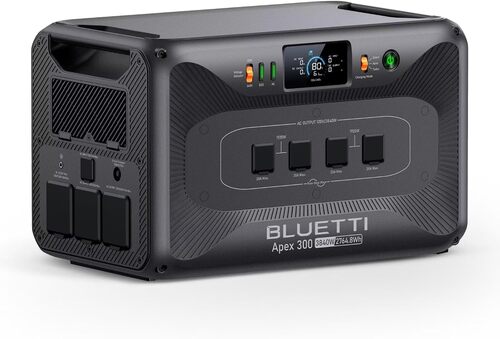
If you want the best 3000W portable power station for value, start with the Pecron F3000LFP. If you want easier RV and home-backup convenience, look at Jackery HomePower 3000. If you want the biggest upgrade path with 240V support, the Anker SOLIX F3800 is the serious pick.

The main thing is to buy for the load, not the label. A 3000W-class station makes sense when you need high-output appliances, RV support, sump pump backup, or short heavy AC use. If you only need phones, laptops, lights, and a router, this class is probably too heavy and too expensive.

Frequently Asked Questions

What is the best 3000W portable power station?

The Pecron F3000LFP is the best value pick if you want a 3000W-class portable power station with strong specs for the money. It has a 3072Wh LiFePO4 battery, 3600W continuous AC output, and up to 1600W solar input. That said, Jackery HomePower 3000 is better if you want a simpler RV and home-backup option with TT-30 support, while Anker SOLIX F3800 is the stronger choice if you need 240V output.

Can a 3000W portable power station run a refrigerator?

Yes, a 3000W portable power station can usually run a refrigerator. The key issue is startup surge, not normal running wattage. Most fridges run far below 3000W after the compressor starts, but some can spike briefly at startup. A 3kWh battery can provide useful fridge backup, although runtime depends on fridge size, room temperature, door openings, and inverter efficiency.

Can a 3000W portable power station run an RV air conditioner?

Sometimes. A 3000W-class unit may run some RV air conditioners, especially with a soft-start kit, but runtime can be short. RV AC units have high startup surge and steady running draw, so you need both inverter headroom and enough battery capacity. For serious RV AC use, look closely at surge rating, TT-30 support, battery size, and whether you can recharge with solar or a generator.

Is 3000W enough for home backup?

Yes for selected home essentials, but not for the whole house. A 3000W-class power station can support loads like a fridge, router, lights, phones, fans, sump pump, or small kitchen appliance in short bursts. It usually won’t replace a standby generator or full home battery system. If you need 240V loads, transfer-switch use, or larger circuits, the Anker SOLIX F3800 is a better match than standard 120V-only units.

How much battery capacity should a 3000W power station have?

For this class, around 3000Wh is the practical starting point. A 3000W inverter paired with a tiny battery would run heavy loads for only a short time. Most picks here use about 3072Wh, while the Anker SOLIX F3800 steps up to 3840Wh. After inverter losses and reserve, expect less usable AC energy than the printed Wh number.

Is a 3000W portable power station too heavy?

It depends on how you’ll use it. Around 60 lb is still moveable for many people, especially with two hands or a cart. Once you reach 90-130 lb, the unit becomes semi-stationary backup gear. For RV bays, garages, trailers, and home backup, that can be fine. For frequent solo lifting into a vehicle, weight should be one of your first filters.

How much solar do I need for a 3000W portable power station?

For a 3kWh-class battery, 800W or more is a better starting point if you want meaningful daily charging. A 200W panel can help, but it won’t refill a large battery quickly. The Pecron F3000LFP supports up to 1600W solar input, while Anker SOLIX F3000, Pecron E3600LFP, and Anker SOLIX F3800 list up to 2400W. Always check voltage limits and connectors before buying panels.

×

About Solar Power Picks

Portable Solar Power, Backup Power, and Off-Grid Gear Guides

Your trusted source for honest, in-depth product reviews and comparisons.

Quick Links

  • Best Picks
  • Reviews
  • Guides
  • Comparisons
  • Calculator
  • Privacy policy
  • Favorites

Categories

  • Portable Power Stations

© 2026 Solar Power Picks. All Rights Reserved.

We may earn a commission when you purchase through links on our site. Learn more