Solar Power Picks logo with sun, solar panel, and green energy icon

  • Home
  • Reviews
  • Best
    • Best portable power stations
    • Best Solar Panels
    • Best Solar Generators
    • Best Solar Charge Controllers
    • Best Solar Batteries
  • Guides
    • Portable Power Stations Guides
    • Solar Panels Guides
    • Solar Generators Guides
    • Solar Charge Controllers Guides
    • Solar Batteries Guides
  • Comparisons
    • Portable Power Stations Comparisons
    • Solar Panels Comparisons
    • Solar Generators Comparisons
    • Solar Charge Controllers Comparisons
    • Solar Batteries Comparisons
  • Calculator
Home / Portable Power Stations / Best / Best 2000W Portable Power Station: High-Output Picks That Make Sense

Best 2000W Portable Power Station: High-Output Picks That Make Sense

OUR PICKS

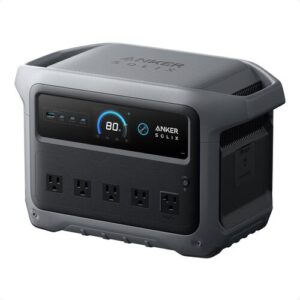
Anker SOLIX C1000 Gen 2 Review: Fast-Charging Backup Power That Actually Feels Useful

Best Exact 2000W Compact

Anker SOLIX C1000 Gen 2 Review: Fast-Charging Backup Power That Actually Feels Useful

Check price at Amazon Jump to details
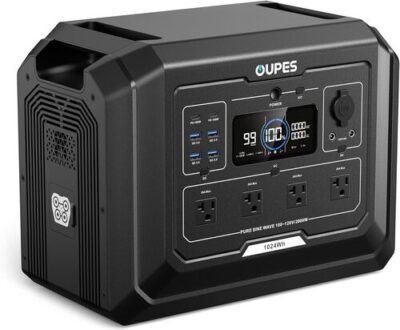
OUPES Mega 1 Review: Fast 1kWh Backup Power With Real Trade-Offs

Best Exact 2000W Value

OUPES Mega 1 Review: Fast 1kWh Backup Power With Real Trade-Offs

Check price at Amazon Jump to details
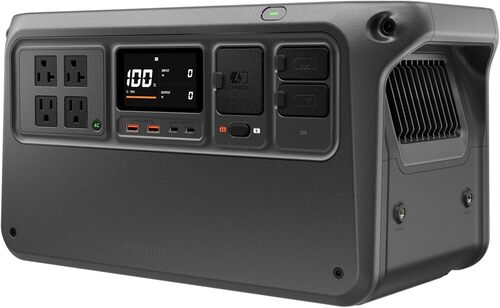
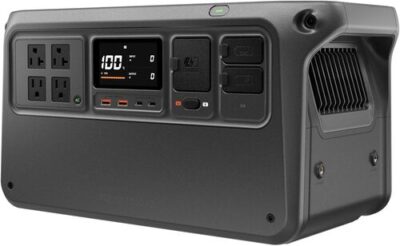
DJI Power 1000 V2 Review: Fast, Quiet Backup Power for Campers, Drone Pilots, and Short Outages

Best Extra Output Headroom

DJI Power 1000 V2 Review: Fast, Quiet Backup Power for Campers, Drone Pilots, and Short Outages

Check price at Amazon Jump to details
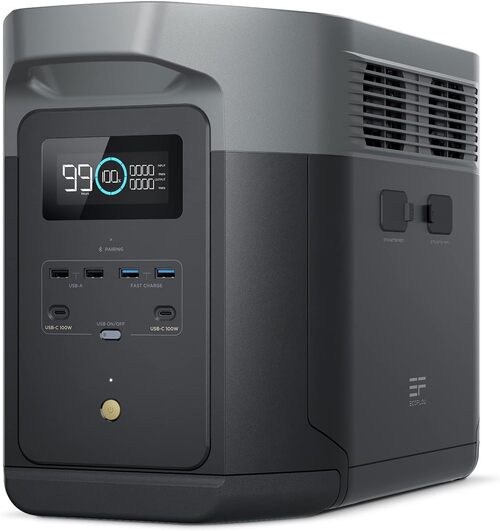
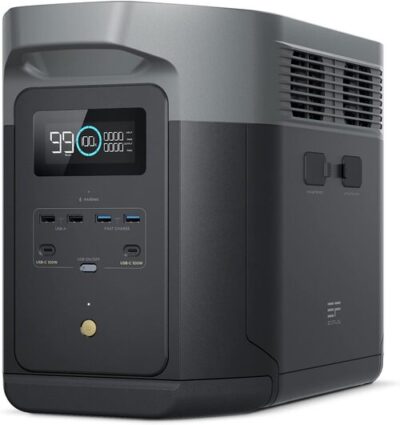
EcoFlow Delta 2 Max Review: Fast-Charging Backup for Blackouts, RVs, and Camping

Best Capacity Balance

EcoFlow Delta 2 Max Review: Fast-Charging Backup for Blackouts, RVs, and Camping

Check price at Amazon Jump to details
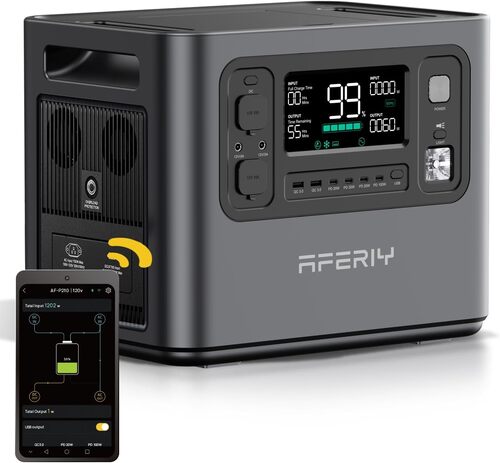
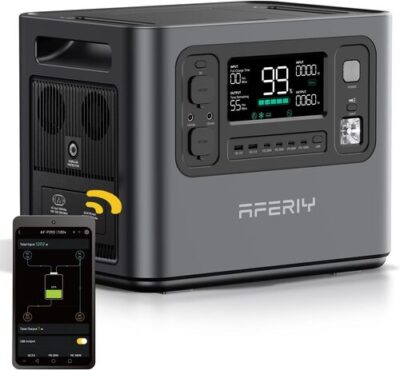
AFERIY P210 Review: A Quiet 2048Wh Backup Station for RVs, Outages, and Off-Grid Weekends

Best 2kWh Budget Option

AFERIY P210 Review: A Quiet 2048Wh Backup Station for RVs, Outages, and Off-Grid Weekends

Check price at Amazon Jump to details

The best 2000W portable power station is defined by continuous AC output, not a 2,000Wh battery. This shortlist centers on 2,000W and nearby 2,400–2,600W models so buyers can compare appliance capability without confusing power with stored energy.

Output answers “can it run?” Capacity answers “for how long?” A useful high-output station must pass both questions.

Define the Output Class Before Comparing Batteries

Load type Why 2,000W matters What still needs proof
Microwave or coffee maker Common draws fit with headroom Actual input watts, not cooking rating
Refrigerator or pump Running load is usually modest Startup event and other active loads
Power tool Higher output supports broader tools Motor surge and duty cycle
Resistance heater It may run Stored energy drains rapidly

A Startup Event Is a System Test

Published peak or lifting modes do not guarantee every motor starts. Test the hardest load by itself, repeat the start several times, and then add background loads. Voltage behavior, protection logic, temperature, and battery state can all matter.

MeasureCapture running draw and startup behavior.
SequenceStart the hardest load before convenience loads.
ObserveWatch overload, voltage, fan, and recovery behavior.
RecordKeep the successful order near the station.

One or Two Kilowatt-Hours Changes the Experience

Several picks pair high output with roughly 1kWh, while others provide about 2kWh. The smaller group is easier to move and recharge; the larger group sustains refrigeration, tools, or mixed loads longer. Neither is universally better.

Energy reality: a 2,000W load can consume a 1,024Wh battery in well under an hour after losses. High output is valuable for short tasks and startup events, not proof of long runtime.

Charging Speed Must Match the Work Cycle

A jobsite or outage plan may require recharging between load windows. Compare maximum AC and solar input, but also confirm whether fast modes need an app and whether heavy charging activates fan noise. For solar, verify the electrical window and required adapters.

Use a Load Order Instead of Chasing Peak Watts

  1. Reserve energy for the priority load.
  2. Start motors before adding chargers or kitchen devices.
  3. Run high-draw heating tasks briefly and separately.
  4. Disable unused AC or DC outputs if idle use matters.
  5. Recharge before reserve falls below the outage or trip threshold.

Read running watts versus starting watts before buying. The correct 2,000W-class pick is the one whose inverter, battery, and recharge cycle all match the load order.

Leave Thermal and Outlet Headroom

Continuous ratings are ceilings, not ideal all-day targets. Heavy output produces heat and fan activity, and several plugs can create cable-management problems. Keep vents clear, use correctly rated cords, and avoid daisy-chained power strips that hide the actual load.

If a station will operate near its ceiling, verify the manual’s temperature limits and observe derating. A product that starts the load once in a cool room may behave differently after sustained use in a hot vehicle or garage.

Choose Energy Based on Duty Cycle

Use pattern 1kWh class 2kWh class
Brief microwave or tool use Often sufficient More reserve
Refrigerator plus electronics Shorter outage window More practical overnight plan
Repeated high-draw cycles Frequent recharge Better duration, still finite
Frequent movement Usually easier Weight tradeoff

High-output buyers should decide whether the job is a short burst or sustained work. That single distinction often selects the capacity tier more reliably than brand or peak watts.

Final sizing check: total the normal simultaneous load, then model the hardest startup separately. Leave inverter and energy reserve instead of designing to the published ceiling. A station that operates below its limit usually gives a clearer thermal, fan-noise, and overload margin.
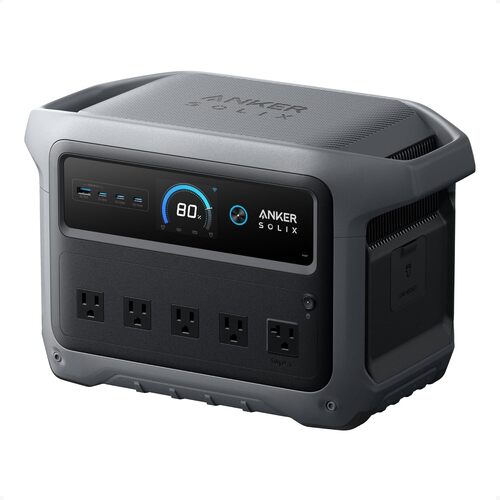
Best Exact 2000W Compact

Anker SOLIX C1000 Gen 2 Review: Fast-Charging Backup Power That Actually Feels Useful

Anker SOLIX C1000 Gen 2 Review: Fast-Charging Backup Power That Actually Feels Useful

Get it now:

Check latest price

What to know

  • Energy: 1,024 Wh
  • AC boundary: 2,000 W continuous
  • Solar: 600 W (60V max, MPPT behavior implied by solar charging use)
  • Handling: 24.9 lb

Best if

  • This article's priority is a 1,024Wh station with exactly 2,000W continuous output in a 24.9-pound chassis.
  • 2,000W output in a light 24.9 lb, 1kWh-class station.
  • The exact load and recovery plan fit 1,024 Wh and 2,000 W continuous.

Skip if

  • Fixed 1,024Wh capacity with no compatible expansion battery path.
  • You need a different capacity, voltage, outlet, or movement class.
  • The purchase depends on an unverified adapter, surge claim, or best-case solar day.

1,024 Wh and 2,000 W continuous define the boundary for Anker SOLIX C1000 Gen 2 / A1763; the reason it appears here is a 1,024Wh station with exactly 2,000W continuous output in a 24.9-pound chassis.

Its documented snapshot pairs 1,024 Wh with 2,000 W continuous and 600 W (60V max, MPPT behavior implied by solar charging use) maximum solar input. Treat those as design limits, not measured promises. Confirm connectors, input windows, recharge modes, and accessory requirements in the current manual, then test the intended load during the return window.

BrandAnker
Model / SKUAnker SOLIX C1000 Gen 2 / A1763 (ASIN: B0FN7MSY4L)
Battery capacity1,024 Wh
Battery chemistryLiFePO4 (LFP)
Cycle-life rating4,000 cycles to at least 80% capacity
Expandable capacityNo
Continuous AC output2,000 W continuous
Surge / peak output3,000 W peak
AC voltage, frequency, and waveformpure sine wave; frequency not published for this exact model
AC outletsNot published for this exact model in the current source set
High-current, RV, or 240V outputNo dedicated RV, 30A, 240V, or other high-current AC outlet published for this exact model
USB-C outputs2 × USB-C
USB-A outputsNot published for this exact model in the current source set
12V / DC outputs1 × 12V/10A car port
Maximum solar input600 W (60V max, MPPT behavior implied by solar charging use)
Solar input range and connectorNot published for this exact model in the current source set; exact PV voltage/current window and connector are unavailable
Maximum AC input1,600 W (HyperFlash fast charging enabled in the Anker app)
AC recharge time49 minutes (fast mode)
Solar recharge estimatePlanning estimate: about 1.8 hours with up to 600W solar (ideal conditions)
UPS / EPS support and transfer timeYes — under 10 ms switchover
App / connectivityYes — Anker app with Wi-Fi and Bluetooth
Operating temperature / weather ratingNot published for this exact model in the current source set
DimensionsNot published for this exact model in the current source set
Weight24.9 lb
WarrantyNot published for this exact model in the current source set
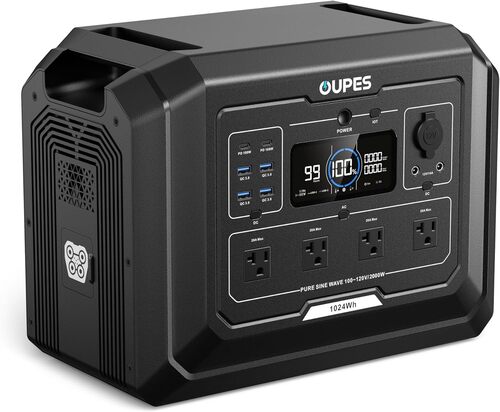
Best Exact 2000W Value

OUPES Mega 1 Review: Fast 1kWh Backup Power With Real Trade-Offs

OUPES Mega 1 Review: Fast 1kWh Backup Power With Real Trade-Offs

Get it now:

Check latest price

What to know

  • Energy: 1024 Wh
  • AC boundary: 2000 W continuous (pure sine wave)
  • Solar: 800 W
  • Handling: 27.8 lb

Best if

  • This article's priority is a 1,024Wh expandable station with 2,000W continuous and 4,500W published peak output.
  • Strong ports, solar, and expansion feature set for the price class.
  • The exact load and recovery plan fit 1024 Wh and 2000 W continuous (pure sine wave).

Skip if

  • Arrival condition and every charging/output path need prompt testing.
  • You need a different capacity, voltage, outlet, or movement class.
  • The purchase depends on an unverified adapter, surge claim, or best-case solar day.

Choose OUPES Mega 1 / S1 when the priority is a 1,024Wh expandable station with 2,000W continuous and 4,500W published peak output.

Its documented snapshot pairs 1024 Wh with 2000 W continuous (pure sine wave) and 800 W maximum solar input. Treat those as design limits, not measured promises. Confirm connectors, input windows, recharge modes, and accessory requirements in the current manual, then test the intended load during the return window.

BrandOUPES
Model / SKUMega 1 / S1 (ASIN: B0DG8JQNS4)
Battery capacity1024 Wh
Battery chemistryLiFePO4 (LFP)
Cycle-life rating3500+ cycles
Expandable capacityYes — supports up to 2 B2 expansion batteries, up to 5120Wh total
Continuous AC output2000 W continuous (pure sine wave)
Surge / peak output4500 W peak
AC voltage, frequency, and waveform120V AC, pure sine wave; frequency not published for this exact model
AC outlets4 × 120V AC outlets
High-current, RV, or 240V outputNo dedicated RV, 30A, 240V, or other high-current AC outlet published for this exact model
USB-C outputsCount not specified
USB-A outputsNot published for this exact model in the current source set
12V / DC outputsYes (12V car charging cable included; output details not fully specified)
Maximum solar input800 W
Solar input range and connectorMC4-to-Anderson cable included; exact PV voltage/current window not published for this exact model
Maximum AC input1400 W
AC recharge time0-80% in 36 minutes; roughly 45-90 minutes reported depending on mode
Solar recharge estimatePlanning estimate: ~1.5-2 hours with 800W ideal input; ~5-7 hours with 200W panels in good sun (real sun varies)
UPS / EPS support and transfer timeYes — less than 20ms switchover
App / connectivityYes — Bluetooth app control (Wi-Fi / Bluetooth feedback is mixed)
Operating temperature / weather ratingNot published for this exact model in the current source set
Dimensions15.1 x 9.1 x 11.6 inches
Weight27.8 lb
WarrantyNot published for this exact model in the current source set
Best Extra Output Headroom

DJI Power 1000 V2 Review: Fast, Quiet Backup Power for Campers, Drone Pilots, and Short Outages

DJI Power 1000 V2 Review: Fast, Quiet Backup Power for Campers, Drone Pilots, and Short Outages

Get it now:

Check latest price

What to know

  • Energy: 1024 Wh
  • AC boundary: 2600 W continuous
  • Solar: Up to 800 W documented (requires optional DJI solar adapter hardware; not included out of box)
  • Handling: 31.2 lb (14.14 kg)

Best if

  • This article's priority is a 1,024Wh station whose 2,600W inverter creates more room for demanding startup events.
  • SDC ecosystem adds drone, vehicle, solar, and expansion options.
  • The exact load and recovery plan fit 1024 Wh and 2600 W continuous.

Skip if

  • UPS recovery, firmware, and output auto-off need exact-load testing.
  • You need a different capacity, voltage, outlet, or movement class.
  • The purchase depends on an unverified adapter, surge claim, or best-case solar day.

DJI DYM1000V2L earns the Best Extra Output Headroom position because it gives this shortlist a 1,024Wh station whose 2,600W inverter creates more room for demanding startup events.

Its documented snapshot pairs 1024 Wh with 2600 W continuous and Up to 800 W documented (requires optional DJI solar adapter hardware; not included out of box) maximum solar input. Treat those as design limits, not measured promises. Confirm connectors, input windows, recharge modes, and accessory requirements in the current manual, then test the intended load during the return window.

BrandDJI
Model / SKUDYM1000V2L (ASIN: B0FD9Z5F3S)
Battery capacity1024 Wh
Battery chemistryLiFePO4 (LFP)
Cycle-life ratingNot published for this exact model in the current source set
Expandable capacityYes
Continuous AC output2600 W continuous
Surge / peak output2600 W listed starting wattage (separate peak surge not specified)
AC voltage, frequency, and waveform110V AC, pure sine wave; frequency not published for this exact model
AC outlets4 × 110V AC outlets
High-current, RV, or 240V outputNo dedicated RV, 30A, 240V, or other high-current AC outlet published for this exact model
USB-C outputs2 × USB-C (140W each, 280W total)
USB-A outputsNot published for this exact model in the current source set
12V / DC outputsNot included (adapter required for 12V-style output)
Maximum solar inputUp to 800 W documented (requires optional DJI solar adapter hardware; not included out of box)
Solar input range and connectorNot published for this exact model in the current source set; exact PV voltage/current window and connector are unavailable
Maximum AC input~1600 W
AC recharge time0-80% in 37 minutes (full charge commonly reported around 1-1.2 hours in fast mode)
Solar recharge estimateDepends on array size, PV compatibility, sun, temperature, and charge limits; no exact-model time is published
UPS / EPS support and transfer timeYes
App / connectivityYes
Operating temperature / weather ratingNot published for this exact model in the current source set
Dimensions19.2 x 8.85 x 9.05 in
Weight31.2 lb (14.14 kg)
Warranty5-year manufacturer warranty
Best Capacity Balance

EcoFlow Delta 2 Max Review: Fast-Charging Backup for Blackouts, RVs, and Camping

EcoFlow Delta 2 Max Review: Fast-Charging Backup for Blackouts, RVs, and Camping

Get it now:

Check latest price

What to know

  • Energy: 2048 Wh
  • AC boundary: 2400 W continuous
  • Solar: 1000 W (dual 500 W inputs; XT60i / MC4 adapter setup may be needed)
  • Handling: 23 kg / about 50.7 lb

Best if

  • This article's priority is a 2,048Wh station with 2,400W output that gives high-draw appliances a more useful energy reserve.
  • Expandable to 6,144Wh with two compatible extra batteries.
  • The exact load and recovery plan fit 2048 Wh and 2400 W continuous.

Skip if

  • Expansion adds runtime but also cost, cables, and stationary bulk.
  • You need a different capacity, voltage, outlet, or movement class.
  • The purchase depends on an unverified adapter, surge claim, or best-case solar day.

For buyers using best 2000w portable power station as the decision, EF ECOFLOW DELTA2 Max / EFD350 fills a distinct role: a 2,048Wh station with 2,400W output that gives high-draw appliances a more useful energy reserve.

Its documented snapshot pairs 2048 Wh with 2400 W continuous and 1000 W (dual 500 W inputs; XT60i / MC4 adapter setup may be needed) maximum solar input. Treat those as design limits, not measured promises. Confirm connectors, input windows, recharge modes, and accessory requirements in the current manual, then test the intended load during the return window.

BrandEF ECOFLOW
Model / SKUDELTA2 Max / EFD350 (ASIN: B0C4DW17PD)
Battery capacity2048 Wh
Battery chemistryLiFePO4 (LFP)
Cycle-life rating3000 cycles to 80% capacity
Expandable capacityYes — supports up to 2 expansion batteries (up to 6144 Wh total)
Continuous AC output2400 W continuous
Surge / peak output4800 W starting wattage (3400 W via X-Boost for some high-wattage appliances)
AC voltage, frequency, and waveform120V AC, pure sine wave; frequency not published for this exact model
AC outlets6 × 120V AC outlets
High-current, RV, or 240V outputNo dedicated RV, 30A, 240V, or other high-current AC outlet published for this exact model
USB-C outputs2 × USB-C
USB-A outputs4 × USB-A
12V / DC outputs1 × 12V car port
Maximum solar input1000 W (dual 500 W inputs; XT60i / MC4 adapter setup may be needed)
Solar input range and connectorMC4 connector
Maximum AC input1800 W (fast AC charging, adjustable in app)
AC recharge timeAbout 1-1.5 hours (fast mode; varies by input setting and starting charge)
Solar recharge estimatePlanning estimate: about 2.5-3.5 hours with full 1000 W solar in ideal sun (real-world conditions vary)
UPS / EPS support and transfer timeYes — EPS-style pass-through support
App / connectivityYes — EcoFlow app (Wi-Fi / Bluetooth control and monitoring)
Operating temperature / weather ratingNot published for this exact model in the current source set
DimensionsNot published for this exact model in the current source set
Weight23 kg / about 50.7 lb
Warranty5-year manufacturer warranty
Best 2kWh Budget Option

AFERIY P210 Review: A Quiet 2048Wh Backup Station for RVs, Outages, and Off-Grid Weekends

AFERIY P210 Review: A Quiet 2048Wh Backup Station for RVs, Outages, and Off-Grid Weekends

Get it now:

Check latest price

What to know

  • Energy: 2048 Wh
  • AC boundary: 2400 W continuous (pure sine wave)
  • Solar: About 500 W
  • Handling: 54 lb

Best if

  • This article's priority is a 2,048Wh, 2,400W station that emphasizes capacity and outlet count over premium polish.
  • 2,048Wh LFP battery and 2,400W pure-sine output at a value price.
  • The exact load and recovery plan fit 2048 Wh and 2400 W continuous (pure sine wave).

Skip if

  • 500W solar ceiling is modest for a 2,048Wh battery.
  • You need a different capacity, voltage, outlet, or movement class.
  • The purchase depends on an unverified adapter, surge claim, or best-case solar day.

The case for AFERIY P210 starts with fit rather than brand. It provides a 2,048Wh, 2,400W station that emphasizes capacity and outlet count over premium polish.

Its documented snapshot pairs 2048 Wh with 2400 W continuous (pure sine wave) and About 500 W maximum solar input. Treat those as design limits, not measured promises. Confirm connectors, input windows, recharge modes, and accessory requirements in the current manual, then test the intended load during the return window.

BrandAFERIY
Model / SKUP210 (ASIN: B0DRYQSXWV)
Battery capacity2048 Wh
Battery chemistryLiFePO4 (LFP)
Cycle-life rating3500+ cycles
Expandable capacityNo
Continuous AC output2400 W continuous (pure sine wave)
Surge / peak output4800 W peak
AC voltage, frequency, and waveform120V AC, pure sine wave; frequency not published for this exact model
AC outlets6 × 120V AC outlets
High-current, RV, or 240V outputNo dedicated RV, 30A, 240V, or other high-current AC outlet published for this exact model
USB-C outputs4 × USB-C (includes 100W and 20W outputs)
USB-A outputs2 × USB-A
12V / DC outputs1 × 12V car outlet; 2 × DC5521 ports, 1 × 12V/25A XT60 output
Maximum solar inputAbout 500 W
Solar input range and connectorNot published for this exact model in the current source set; exact PV voltage/current window and connector are unavailable
Maximum AC input1100 W
AC recharge timeAbout 2 hours (high AC charge setting)
Solar recharge estimatePlanning estimate: about 4-6 hours with maximum solar in strong sun (real time depends on panels, voltage, and weather)
UPS / EPS support and transfer timeYes — less than 10ms manufacturer-rated switchover
App / connectivityYes
Operating temperature / weather ratingNot published for this exact model in the current source set
Dimensions15.43" × 10.98" × 12.72"
Weight54 lb
WarrantyNot published for this exact model in the current source set

Product Comparison

Feature Anker SOLIX C1000 Gen 2 Review: Fast-Charging Backup Power That Actually Feels Useful OUPES Mega 1 Review: Fast 1kWh Backup Power With Real Trade-Offs DJI Power 1000 V2 Review: Fast, Quiet Backup Power for Campers, Drone Pilots, and Short Outages EcoFlow Delta 2 Max Review: Fast-Charging Backup for Blackouts, RVs, and Camping AFERIY P210 Review: A Quiet 2048Wh Backup Station for RVs, Outages, and Off-Grid Weekends
Product Image
Anker SOLIX C1000 Gen 2 Review: Fast-Charging Backup Power That Actually Feels Useful
OUPES Mega 1 Review: Fast 1kWh Backup Power With Real Trade-Offs
DJI Power 1000 V2 Review: Fast, Quiet Backup Power for Campers, Drone Pilots, and Short Outages
EcoFlow Delta 2 Max Review: Fast-Charging Backup for Blackouts, RVs, and Camping
AFERIY P210 Review: A Quiet 2048Wh Backup Station for RVs, Outages, and Off-Grid Weekends
Price $799 $449.99 $549 $449 $429 $1399.99 $899 $669
Rating
4.7 / 5
4.6 / 5
4.4 / 5
4.3 / 5
4.5 / 5
Category Portable Power Stations Portable Power Stations Portable Power Stations Portable Power Stations Portable Power Stations
Brand Anker OUPES DJI EF ECOFLOW AFERIY
Model / SKU Anker SOLIX C1000 Gen 2 / A1763 (ASIN: B0FN7MSY4L) Mega 1 / S1 (ASIN: B0DG8JQNS4) DYM1000V2L (ASIN: B0FD9Z5F3S) DELTA2 Max / EFD350 (ASIN: B0C4DW17PD) P210 (ASIN: B0DRYQSXWV)
Battery capacity 1,024 Wh 1024 Wh 1024 Wh 2048 Wh 2048 Wh
Battery chemistry LiFePO4 (LFP) LiFePO4 (LFP) LiFePO4 (LFP) LiFePO4 (LFP) LiFePO4 (LFP)
Cycle-life rating 4,000 cycles to at least 80% capacity 3500+ cycles Not published for this exact model in the current source set 3000 cycles to 80% capacity 3500+ cycles
Expandable capacity No Yes — supports up to 2 B2 expansion batteries, up to 5120Wh total Yes Yes — supports up to 2 expansion batteries (up to 6144 Wh total) No
Continuous AC output 2,000 W continuous 2000 W continuous (pure sine wave) 2600 W continuous 2400 W continuous 2400 W continuous (pure sine wave)
Surge / peak output 3,000 W peak 4500 W peak 2600 W listed starting wattage (separate peak surge not specified) 4800 W starting wattage (3400 W via X-Boost for some high-wattage appliances) 4800 W peak
AC voltage, frequency, and waveform pure sine wave; frequency not published for this exact model 120V AC, pure sine wave; frequency not published for this exact model 110V AC, pure sine wave; frequency not published for this exact model 120V AC, pure sine wave; frequency not published for this exact model 120V AC, pure sine wave; frequency not published for this exact model
AC outlets Not published for this exact model in the current source set 4 × 120V AC outlets 4 × 110V AC outlets 6 × 120V AC outlets 6 × 120V AC outlets
High-current, RV, or 240V output No dedicated RV, 30A, 240V, or other high-current AC outlet published for this exact model No dedicated RV, 30A, 240V, or other high-current AC outlet published for this exact model No dedicated RV, 30A, 240V, or other high-current AC outlet published for this exact model No dedicated RV, 30A, 240V, or other high-current AC outlet published for this exact model No dedicated RV, 30A, 240V, or other high-current AC outlet published for this exact model
USB-C outputs 2 × USB-C Count not specified 2 × USB-C (140W each, 280W total) 2 × USB-C 4 × USB-C (includes 100W and 20W outputs)
USB-A outputs Not published for this exact model in the current source set Not published for this exact model in the current source set Not published for this exact model in the current source set 4 × USB-A 2 × USB-A
12V / DC outputs 1 × 12V/10A car port Yes (12V car charging cable included; output details not fully specified) Not included (adapter required for 12V-style output) 1 × 12V car port 1 × 12V car outlet; 2 × DC5521 ports, 1 × 12V/25A XT60 output
Maximum solar input 600 W (60V max, MPPT behavior implied by solar charging use) 800 W Up to 800 W documented (requires optional DJI solar adapter hardware; not included out of box) 1000 W (dual 500 W inputs; XT60i / MC4 adapter setup may be needed) About 500 W
Solar input range and connector Not published for this exact model in the current source set; exact PV voltage/current window and connector are unavailable MC4-to-Anderson cable included; exact PV voltage/current window not published for this exact model Not published for this exact model in the current source set; exact PV voltage/current window and connector are unavailable MC4 connector Not published for this exact model in the current source set; exact PV voltage/current window and connector are unavailable
Maximum AC input 1,600 W (HyperFlash fast charging enabled in the Anker app) 1400 W ~1600 W 1800 W (fast AC charging, adjustable in app) 1100 W
AC recharge time 49 minutes (fast mode) 0-80% in 36 minutes; roughly 45-90 minutes reported depending on mode 0-80% in 37 minutes (full charge commonly reported around 1-1.2 hours in fast mode) About 1-1.5 hours (fast mode; varies by input setting and starting charge) About 2 hours (high AC charge setting)
Solar recharge estimate Planning estimate: about 1.8 hours with up to 600W solar (ideal conditions) Planning estimate: ~1.5-2 hours with 800W ideal input; ~5-7 hours with 200W panels in good sun (real sun varies) Depends on array size, PV compatibility, sun, temperature, and charge limits; no exact-model time is published Planning estimate: about 2.5-3.5 hours with full 1000 W solar in ideal sun (real-world conditions vary) Planning estimate: about 4-6 hours with maximum solar in strong sun (real time depends on panels, voltage, and weather)
UPS / EPS support and transfer time Yes — under 10 ms switchover Yes — less than 20ms switchover Yes Yes — EPS-style pass-through support Yes — less than 10ms manufacturer-rated switchover
App / connectivity Yes — Anker app with Wi-Fi and Bluetooth Yes — Bluetooth app control (Wi-Fi / Bluetooth feedback is mixed) Yes Yes — EcoFlow app (Wi-Fi / Bluetooth control and monitoring) Yes
Operating temperature / weather rating Not published for this exact model in the current source set Not published for this exact model in the current source set Not published for this exact model in the current source set Not published for this exact model in the current source set Not published for this exact model in the current source set
Dimensions Not published for this exact model in the current source set 15.1 x 9.1 x 11.6 inches 19.2 x 8.85 x 9.05 in Not published for this exact model in the current source set 15.43" × 10.98" × 12.72"
Weight 24.9 lb 27.8 lb 31.2 lb (14.14 kg) 23 kg / about 50.7 lb 54 lb
Warranty Not published for this exact model in the current source set Not published for this exact model in the current source set 5-year manufacturer warranty 5-year manufacturer warranty Not published for this exact model in the current source set
Buy Now View Deal View Deal View Deal View Deal View Deal

The 2000W Decision

C1000 Gen 2 is the compact exact-2,000W pick, OUPES the value exact-2,000W option, DJI adds inverter headroom, DELTA 2 Max adds energy, and AFERIY offers a lower-cost 2kWh route.

Verify startup behavior and remember that inverter watts do not determine runtime.

Frequently Asked Questions

Does 2000W mean 2000Wh?

No. Watts measure output rate; watt-hours measure stored energy.

Can a 2000W station run a microwave?

Often, but verify the microwave's input draw and leave headroom.

Can it start a refrigerator compressor?

Possibly. Published peak output helps, but the exact startup event must be tested.

Why choose a 2kWh battery with 2400W output?

It provides roughly twice the duration of a 1kWh battery at the same average load.

Will a heater drain it quickly?

Yes. Resistance heat can consume 1,500W continuously and exhaust stored energy fast.

What should I test first?

Test the hardest motor start, simultaneous load, overload recovery, and intended charging source.

×

About Solar Power Picks

Portable Solar Power, Backup Power, and Off-Grid Gear Guides

Your trusted source for honest, in-depth product reviews and comparisons.

Quick Links

  • Best Picks
  • Reviews
  • Guides
  • Comparisons
  • Calculator
  • Privacy policy
  • Favorites

Categories

  • Portable Power Stations
  • Solar Batteries
  • Solar Charge Controllers
  • Solar Generators
  • Solar Panels

© 2026 Solar Power Picks. All Rights Reserved.

We may earn a commission when you purchase through links on our site. Learn more