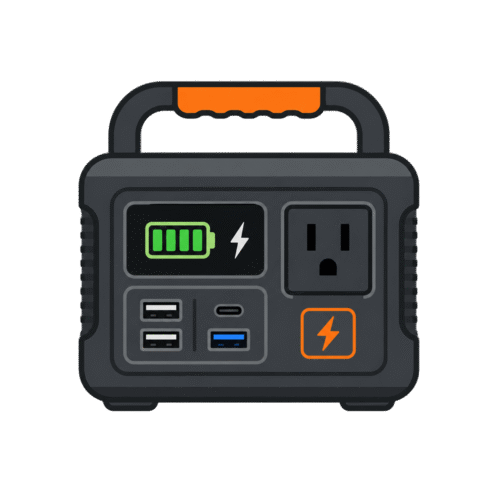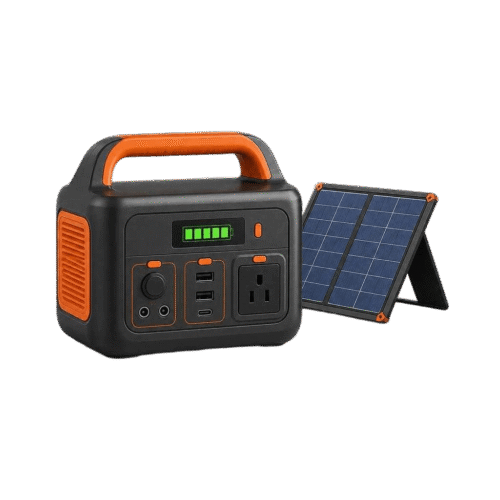
EcoFlow River 3 Plus review: Quiet UPS-style power for routers, CPAP, camping, and short outages
At a Glance
KEY FEATURES
- Battery: 286Wh, LiFePO4, rated for 3,000 cycles to 80% capacity
- AC output: 600W continuous, up to 1200W with X-Boost; waveform not specified in supplied product data
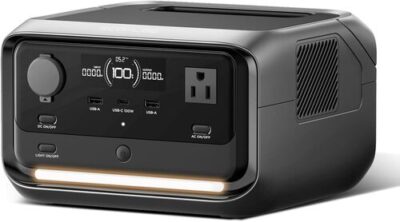
- Ports: 3 AC outlets, 1 USB-C up to 100W, 2 USB-A, 1 12V car socket, no listed DC barrel ports
- Recharge: AC 0-100% in about 1 hour, solar input up to 220W, car charging supported through 12V outlet
- Smart features: Bluetooth and Wi-Fi app control, charge limits, timed charging, UPS-style switchover under 10 ms, pass-through use
- Best for: Wi-Fi router backup, CPAP backup, camping, overlanding, small fridge support, phones, laptops, lights, fans, and short home outages
PROS
- Compact 10.4 lb body fits desks, shelves, vehicles, and bedside backup roles.
- Under-10ms UPS specification suits tested network and computer continuity loads.
- Fast AC charging, 220W solar input, and useful app control.
- Optional batteries can raise storage to 572Wh or 858Wh.
CONS
- 286Wh is a small energy budget even though the inverter is rated at 600W.
- UPS recovery, firmware, and deep-discharge behavior need an exact-load drill.
- Expansion does not increase the core 600W output boundary.
- No DC5521 barrel outputs for accessories that expect them.
Editor's Choice
Based on exact documentation and qualitative exact-ASIN owner evidence; no hands-on test or population-rate claim
⚡ Can the EcoFlow River 3 Plus Run It?
Choose a common device and see the estimated runtime, whether the inverter can handle it, and how long the power station may take to recharge.
This EcoFlow River 3 Plus review breaks down what this 286Wh LiFePO4 power station actually does well — and where its small battery starts to feel small. We featured it in our budget router-backup shortlist.
Picture this: the lights flicker, your modem drops, your security cameras reboot, and your laptop is halfway through a work call. You don’t need a gas generator roaring outside for that kind of problem. You need a small battery that quietly keeps the essentials alive.
The River 3 Plus isn’t trying to power your whole house. Shoppers deciding between the two compact models should read our River 3 versus River 3 Plus comparison. In practice, it works best as a quiet backup for Wi-Fi gear, a CPAP, a small fridge, phones, laptops, lights, and weekend camping gear — and that’s exactly where owners seem happiest.
Continuity load
Router, modem, NAS, cameras, laptop, CPAP, lights, or a compact DC appliance with measured draw.
Energy load
Kettle, heater, coffee maker, microwave, full-size refrigerator, or another device that consumes the 286Wh budget quickly.
The EcoFlow RIVER 3 Plus is easiest to understand as a continuity appliance rather than a miniature whole-home battery. Its 286Wh LFP pack, 600W pure-sine output, under-10ms UPS specification, 100W USB-C port, 220W solar input, and optional bottom-mounted extra batteries suit network equipment, computers, security systems, CPAP machines, phones, and compact camping loads. The specification is less persuasive for heating appliances or long refrigerator duty, even if X-Boost lets some resistive devices operate.
The large owner set gives that specialization real texture. Many accounts describe routers, NAS devices, cameras, desktops, monitors, medical devices, camping, and short utility interruptions. Positive themes include size, light-load quietness, fast wall charging, and app visibility. Cautions include firmware behavior, recovery after a deep discharge, pass-through overload, odors or isolated hardware faults, fan/clicking sounds, and the absence of familiar DC5521 barrel outputs. The material does not support a failure percentage; it supports a more complete commissioning checklist.
Runtime ≈ 286Wh × conservative usable factor ÷ measured average watts. Keep a reserve for conversion loss, cold conditions, battery aging, and safe shutdown.
A 15W network stack and a 150W appliance are not ten versions of the same task: one is an all-night continuity candidate, while the other can consume the battery in a short session.
For UPS duty, test more than the transfer event. Start with the battery charged and the intended load connected. Remove utility power, observe the load, let the battery approach its configured lower limit, restore utility input, and confirm both charging and AC output recover. Repeat after firmware updates. A station that transfers quickly but leaves AC output disabled after a deep shutdown is not ready for unattended networking.
Expansion deserves a sober calculation. An EB300 or EB600 can take total capacity to 572Wh or 858Wh, but the 600W inverter remains the central output boundary. If expansion is required on day one, compare the combined price and footprint with a larger standalone station. The modular route is strongest when the base unit must remain small most of the time and extra runtime is only occasionally attached.
Solar can recharge the station quickly relative to its battery, but the manual’s 11–55V, 13A, 220W input window governs. Confirm cold-corrected panel voltage, current, connector, and polarity. A 100W panel is useful for low-draw camping; it may not catch up while a larger continuous load is running. Track daily watt-hours rather than one sunny peak.
Port selection also changes the energy result. A compatible laptop on the 100W USB-C port avoids turning on the AC inverter, while a router powered through its wall adapter keeps the inverter active for a very small load. Compare safe native-DC and AC paths with the same equipment, then choose the one that preserves the required voltage and protection with lower overhead. Never improvise a DC cable from plug size alone: center polarity, voltage regulation, current capacity, and device approval all matter. For a CPAP, use only a manufacturer-approved power route and complete the overnight trial with the same humidifier and heated-hose settings planned for the outage.
RIVER 3 Plus: A Small-Load Continuity Specialist
If you want a compact UPS-style power station for routers, modems, NAS boxes, security cameras, CPAP machines, and light camping gear, the River 3 Plus works well. It’s quiet under small loads, charges fast from the wall, and gives you useful app controls like charge limits and timed charging. That said, this EcoFlow River 3 Plus review is not a whole-home backup story. The 286Wh battery is practical, not huge, and buyers expecting it to run kettles, coffee makers, full-size refrigerators, or AC units for long will be disappointed.
Buyer Heads-Up — Treat the 600W continuous output as the real ceiling. Our surge rating versus continuous output guide explains why X-Boost numbers can mislead. The 1200W X-Boost claim can help with short bursts, but it doesn’t turn a 286Wh battery into a large appliance backup system.
Ten Pounds, One Handle, and a Desktop Footprint
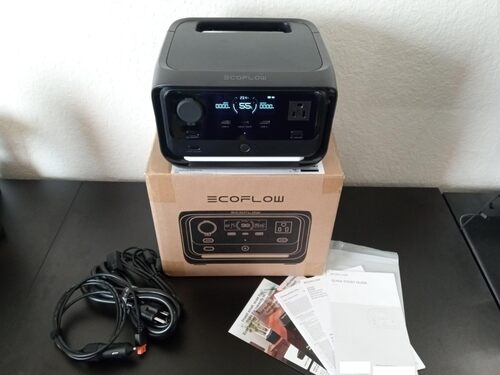
EcoFlow kept the River 3 Plus compact, boxy, and easy to place. At about 9.2 x 9.1 x 5.8 inches, it fits nicely under a desk, beside a router shelf, in a car footwell, or on a small camp table. You still feel its solid heft when you pick it up, but at about 10.4 lb, it’s much easier to move than a Delta-class unit.
In practice, customers like the clean display, simple controls, and built-in light. The light sounds minor until you’re trying to plug in a cooler at night or check the battery level during an outage. Sub-$300 alternatives are compared in our sub-$300 router-backup alternatives list. That said, one owner did report odd light behavior, so it’s worth testing every feature during the return window.
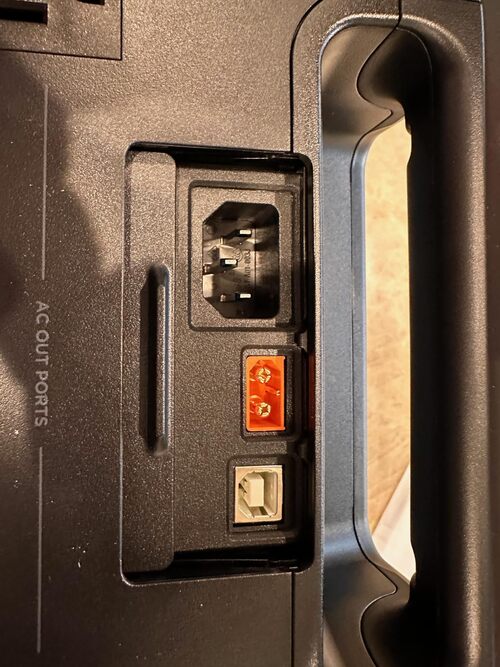
Port placement is mostly practical, with AC outlets, USB ports, and DC output covering the common stuff. On the flip side, astronomy users and anyone with 5.5 x 2.1 mm DC barrel gear should pay attention: this model does not list those barrel ports, and at least one buyer found that frustrating compared with older EcoFlow units.
A 286Wh Budget for Devices That Sip Power
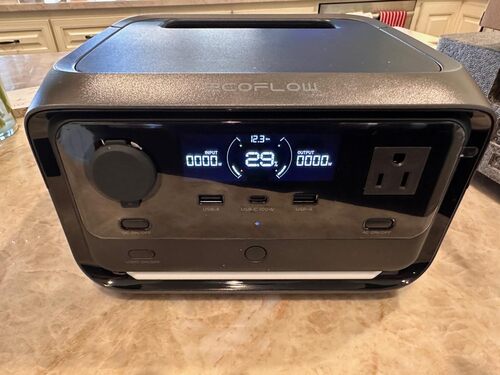
The EcoFlow River 3 Plus portable power station has a 286Wh battery. That’s enough to keep small electronics running for hours, but it’s not the kind of capacity you buy for all-night space heating, long refrigerator backup, or high-draw kitchen appliances.
Here’s the thing: small loads are where this unit punches above its weight. Customers running Wi-Fi routers, security systems, CPAP machines, car fridges, laptops, fans, phones, and lights tend to sound happy. One networking user reported roughly 7 to 9 hours depending on charge-limit settings, while CPAP users mention much better results when humidifier and tube heat are kept low.
For realistic math, assume about 219Wh of usable AC energy after inverter losses and a 10% battery reserve. For DC and USB loads, you may get closer to 237Wh usable because you’re skipping the AC inverter.
Real-World Math — At 0.85 AC efficiency, the listed 286Wh battery delivers roughly 243Wh through the AC outlets. Subtract a 10% reserve, and you’re working with about 219Wh usable for AC loads.
Worth knowing, the battery expands with EcoFlow’s EB300 or EB600 add-on batteries. That’s a big deal if you like the small base unit but want longer runtime later. The catch is cost — once you add expansion, you’re closer to larger power-station pricing.
The 600W Boundary and the X-Boost Asterisk
The River 3 Plus has a 600W AC inverter and a 1200W X-Boost claim. In real use, that’s plenty for routers, laptops, phones, lights, CPAP machines, small fans, many car-fridge setups, and light electronics. It can also handle some brief higher loads, but the battery capacity will disappear quickly.
That said, the output rating can confuse buyers. Some customers expected “1200W” to mean it would behave like a bigger unit, then found it wasn’t right for coffee makers, air mattresses, large appliances, or high-draw household gear. To be fair, that’s partly a sizing issue, not just a product flaw.
Worth Knowing — Continuous output is the real ceiling. The 1200W X-Boost rating only helps in specific short-burst situations — it won’t run a 1500W kettle like a larger inverter would.
In practice, the sweet spot is under 150W if you want meaningful runtime. Owners using it around that range — routers, TVs, fans, CPAP, laptops, security gear, small fridges — tend to get the best experience. Push it near the inverter limit, and the small battery becomes the bottleneck.
Four Ways Back to Full, Each With a Different Use
Charging speed is one of the River 3 Plus’s best traits. EcoFlow lists a 0-100% AC recharge time of about 1 hour, and owners often mention fast wall charging as a major reason they like it. Honestly, for a small outage battery, that matters more than people think.
In practice, fast recharge means you can top it off between storms, between festival days, or during generator time at a campsite. The catch is pass-through behavior. A few buyers using it as a UPS say heavier loads during recharge can cause overloads or AC shutoff, so you should test your exact setup before trusting it for unattended backup.
Solar input tops out at 220W. That’s strong for a 286Wh station, and customers using 100W, 120W, and 200W panels report useful results. At the same time, a single 100W panel may not keep up if you’re trying to run a fridge, fans, lights, phones, and tool batteries all day.
Adapter Check — If you bring your own solar panel, confirm connector type, voltage range, and wattage before buying. Owners do use third-party panels, but the right cable matters.
AC Charging — EcoFlow River 3 Plus review: Quiet UPS-style power for routers, CPAP, camping, and short outages
AC charging is quick for the category. Worth knowing, EcoFlow also gives you app control over charging behavior, so you can avoid always hammering the battery at maximum speed. For daily UPS use, owners often set charge limits around 80% or 90% to reduce long-term battery stress.
Solar Charging — EcoFlow River 3 Plus review: Quiet UPS-style power for routers, CPAP, camping, and short outages
Solar works best when you size the panel realistically. A 45W panel can top off the unit slowly, but it won’t support heavy off-grid use. A 200W-class panel is a better match if you’re camping with a fridge or cooler.
Car Charging — EcoFlow River 3 Plus review: Quiet UPS-style power for routers, CPAP, camping, and short outages
Car charging is useful for road trips, overlanding, and cooler duty. The catch is speed. A 12V outlet usually lands around 80-100W, so it’s more of a steady refill than a fast recharge.
UPS Outlets, USB-C, and the Missing DC Barrel Ports
The port lineup is strong for a small station: three AC outlets, two USB-A ports, one high-speed USB-C port, a 12V car socket, solar input, and an expansion battery connection. You also get UPS-supported AC outlets, which is why so many buyers use it for routers, modems, desktops, TVs, cameras, and NAS gear.
In real use, the 100W USB-C port is one of the most useful parts of the EcoFlow 286Wh LiFePO4 power station. It’s laptop-tier power, not just phone charging. On the flip side, buyers with astronomy equipment or older DC accessories may miss the 5.5 x 2.1 mm barrel ports found on some older models.
Adapter Check — If your gear uses DC barrel plugs, check before buying. The lack of built-in 5.5 x 2.1 mm outputs is a real issue for some specialty setups.
Bedroom-Quiet Is a Load Condition
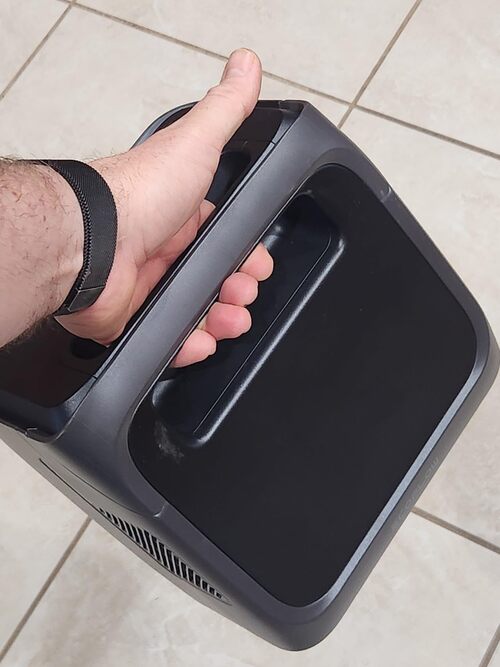
The River 3 Plus is quiet under light loads. Customers using it in bedrooms, home offices, entertainment centers, and network closets often describe it as silent or close to silent once charged. That makes it a better fit for indoor electronics backup than a noisy traditional UPS with a tired fan.
That said, not every unit sounds or smells the same. Some owners mention a low hum, fan cycling while charging, DC clicking, or a strong plastic or burning odor. The odor complaints are the biggest concern here, especially because several people describe it as strong enough to return the unit.
For indoor use, test it before hiding it behind furniture. Run an AC charge, power your normal load, smell for odd odors, listen for fan cycling, and confirm the AC outlets stay on after power is restored.
Configure the Small Station Before Leaving It Unattended
The display gives you the basics you actually need: battery level, input watts, output watts, and estimated runtime. In practice, that makes the River 3 Plus easy to use even if this is your first portable power station. You plug in your gear, check the draw, and quickly understand how long it may last.
The app adds real value. Owners like setting charge limits, timed charging windows, output behavior, and UPS-related preferences. On the flip side, app login requirements, location permissions, firmware bugs, and phone-specific pairing issues show up in customer feedback.
Display Shows — EcoFlow River 3 Plus review: Quiet UPS-style power for routers, CPAP, camping, and short outages
- Battery percentage
- Input watts, live
- Output watts, live
- Time-to-empty / time-to-full
- Warning icons (limited)
- Charging mode indicator (limited)
- Battery temperature in Fahrenheit (limited through app-style monitoring)
App Lets You — EcoFlow River 3 Plus review: Quiet UPS-style power for routers, CPAP, camping, and short outages
- Toggle AC / DC output remotely
- Adjust charging behavior
- Set charge / discharge limits
- Update firmware
- Monitor power remotely
- Pair without connection drama (mostly yes, some complaints)
- Schedule charging times
- Restore port settings after restart (yes, according to owner feedback)
Best Practice — For UPS-style router backup, check the app settings so AC outlets restore after a full battery drain and recharge. Owners note that this behavior may need to be enabled.
For beginners, the EcoFlow app is helpful rather than intimidating. To be fair, people who want a totally app-free product may dislike account setup and remote features. If you’re using it as a serious UPS, do a dry run before relying on it.
LFP Cycle Life Does Not Replace a Recovery Drill
The River 3 Plus uses a LiFePO4 battery rated for 3,000 cycles to 80% capacity. That’s a good match for daily UPS-style use, frequent camping, and regular top-offs. LiFePO4 is also generally preferred for long cycle life and thermal stability, though it tends to weigh more than older lithium-ion chemistry.
In practice, the chemistry is one of the reasons this model makes sense as a router UPS or desk-side backup. You can set charge limits, keep it plugged in, and reduce battery stress over time. That said, the strong odor complaints deserve real attention. If your unit smells like burning plastic, adhesive, or chemicals during charging, don’t ignore it.
Warranty coverage is listed as 5 years. Some buyers report helpful EcoFlow support and replacement units, while others describe frustrating warranty access. The safest move is simple: test charging, UPS switchover, app pairing, ports, solar input, and pass-through behavior during the return period.
Long-Term Ownership — A 3,000-cycle rating to 80% capacity means this battery is built for frequent use. Even weekly cycling should take years before normal wear becomes obvious.
Best Practice — For storage, leave the unit around 50-80% charge and top it off every 3-6 months. LiFePO4 is durable, but storing any battery full or empty for long stretches is still a bad habit.
The UPS feature is a major selling point, and many customers say it works well for flickers and short outages. The catch is edge cases: firmware updates, solar charging behavior, full battery depletion, and pass-through overload have caused problems for some users. Worth knowing, your own setup matters more than the product page.
The RIVER 3 Plus Load Hierarchy
The River 3 Plus is best when you match it to small, important loads. It’s not a “run everything” battery, and honestly, that’s fine. Different tool, different job.
You’ll probably be happy if you want:
- A compact LiFePO4 power station you can leave plugged in as a small UPS
- A quiet battery for router, modem, NAS, TV, cameras, or home-office backup
- A camping battery for phones, laptops, lights, CPAP, fans, and small coolers
- Fast AC recharge before storms, travel days, or campsite use
- Expandable runtime without buying a large unit right away
You might want to skip it if you need:
- Long full-size refrigerator backup without extra battery capacity
- Reliable support for kettles, coffee makers, microwaves, hair dryers, or heaters
- Built-in DC 5.5 x 2.1 mm barrel ports for astronomy gear
- A UPS you never need to test or configure
- A completely app-free experience with no login or firmware concerns
Pro Tip — Before using it as a UPS, unplug wall power and watch your actual gear stay on. Then let the battery drain partway, restore AC power, and confirm the outlets come back the way you expect.
Pros & Cons Analysis
Based on documented specifications and owner feedback
Pros
- Designed for continuity-sized loads — The capacity, transfer specification, footprint, and port layout align well with routers, modems, NAS devices, cameras, laptops, CPAP machines, and communications.
- Actually portable — At roughly 10.4 pounds with a top handle, the station can move between a desk, bedroom, vehicle, and campsite without a cart.
- Fast recovery relative to capacity — About one-hour AC charging and up to 220W solar make the small battery easier to replenish between interruptions.
- Configuration is unusually flexible — App controls, USB-B communication, and optional bottom-mounted batteries give a small platform several operating modes.
- LFP supports regular cycling — The published 3,000-cycle rating to 80% is appropriate for frequent backup and portable use when storage limits are respected.
Cons
- Inverter power can disguise limited energy — A 600W device may run, but 286Wh means the session can be brief after losses and reserve.
- Backup reliability requires more than transfer speed — Firmware, lower charge limits, overload behavior, and recovery after depletion should be tested with the real load.
- X-Boost is not universal compatibility — Voltage-reduction modes can be inappropriate for regulated electronics or motor loads even when a resistive appliance appears to operate.
- Expansion has an economic crossover — A base station plus EB600 may cost and occupy enough space that a larger independent unit becomes the cleaner choice.
- Owner fault accounts justify early testing — Odor, port, button, firmware, and charging reports make arrival inspection and supervised first cycles important.
Our Verdict
This EcoFlow River 3 Plus review comes down to sizing. If you mostly want quiet backup for small electronics, Wi-Fi, a CPAP, a car fridge, lights, or a laptop, it’s a genuinely useful little power station. It charges quickly, runs quietly under light loads, and gives you better control than a basic old-school UPS.
You should skip it if your plan involves high-draw appliances or long refrigerator backup without expansion. But if you want a compact EcoFlow River 3 Plus portable power station for practical everyday outages, camping, and desk-side UPS duty, it’s a strong pick — just test your unit early, especially for odor, app behavior, and pass-through reliability.
Frequently Asked Questions
How long will the EcoFlow River 3 Plus run a Wi-Fi router?
For a typical 10-30W router or modem setup, many owners report several hours of backup. A 30W networking setup should realistically land around 7 hours with a sensible battery reserve, while lighter setups may run longer.
Can the EcoFlow River 3 Plus run a CPAP overnight?
Yes, for many CPAP users, especially with the humidifier and heated tube off or set low. One owner reported using a Respironics DreamStation with modest overnight battery drain, but higher pressure, humidifier heat, and AC inverter use can reduce runtime.
Will it run a full-size refrigerator?
It may run some refrigerators briefly if the startup surge stays within limits, but this is not the ideal size for fridge backup. The 286Wh battery is better matched to mini fridges, 12V coolers, routers, laptops, CPAP machines, lights, and phones.
Can it run a microwave, kettle, coffee maker, or hair dryer?
Not realistically. The River 3 Plus is rated for 600W continuous output with a 1200W X-Boost claim, but high-draw heating appliances can drain the battery in minutes or trip the inverter.
How fast does the EcoFlow River 3 Plus recharge from the wall?
EcoFlow lists a 0-100% AC recharge time of about 1 hour. Owners generally like the fast charging, though charging behavior and fan activity may vary depending on mode, temperature, and connected loads.
How well does solar charging work?
The River 3 Plus accepts up to 220W of solar input. Customers using 100W to 200W panels report useful charging in strong sun, but a single 100W panel may not keep up with a fridge, phones, lights, and other loads all day.
Does the UPS feature work reliably?
For routers, modems, NAS systems, PCs, TVs, and security cameras, many owners say the fast switchover works well during short outages and flickers. A few users report issues during firmware updates, solar charging, or recovery after a full battery drain, so test your own setup before relying on it unattended.
Is the EcoFlow River 3 Plus quiet enough for a bedroom or office?
Under light loads, customers often describe it as silent or nearly silent. Some owners mention a low hum, fan cycling, or clicking sounds, especially while charging or using DC outputs, but most small-load UPS users find the sound manageable.
Does it have LiFePO4 battery chemistry?
Yes. The River 3 Plus uses a LiFePO4 battery rated for 3,000 cycles to 80% capacity, which makes it better suited to regular UPS-style use than older lithium-ion units with shorter cycle ratings.
Can I use third-party solar panels?
Yes, owners report using third-party panels such as Renogy panels. You still need to match the input limits and connector requirements, and a proper adapter cable may be needed depending on the panel.
Are there any common problems to watch for?
Yes. Reported issues include strong plastic or burning odors, app or firmware bugs, USB port problems, AC button failure, pass-through overload behavior, and lack of DC 5.5 x 2.1 mm barrel ports.
Technical Specifications
| Brand | EF ECOFLOW |
|---|---|
| Model / SKU | RIVER 3 Plus / EF-RV-H02-1 (ASIN: B0DCCB657J) |
| Battery capacity | 286 Wh |
| Battery chemistry | LiFePO4 (LFP) |
| Cycle-life rating | 3,000 cycles to 80% capacity |
| Expandable capacity | Yes — supports EB300 or EB600 extra batteries, up to 858Wh total |
| Continuous AC output | 600 W continuous |
| Surge / peak output | 1200 W with X-Boost |
| AC voltage, frequency, and waveform | 110V AC, waveform not published; frequency not published for this exact model |
| AC outlets | 3 × 110V AC outlets (UPS-supported) |
| High-current, RV, or 240V output | No dedicated RV, 30A, 240V, or other high-current AC outlet published for this exact model |
| USB-C outputs | 1 × USB-C |
| USB-A outputs | 2 × USB-A |
| 12V / DC outputs | 1 × 12V car port |
| Maximum solar input | 220 W |
| Solar input range and connector | Not published for this exact model in the current source set; exact PV voltage/current window and connector are unavailable |
| Maximum AC input | Not published for this exact model in the current source set; the prior value was an editorial estimate, not an exact-model rating |
| AC recharge time | About 1 hour |
| Solar recharge estimate | As little as 1.5 hours with up to 220W solar input |
| UPS / EPS support and transfer time | Yes — under 10 ms switchover |
| App / connectivity | Yes — EcoFlow app via Bluetooth and Wi-Fi |
| Operating temperature / weather rating | Not published for this exact model in the current source set |
| Dimensions | Approximately 9.2 × 9.1 × 5.8 in |
| Weight | 10.4 lb |
| Warranty | 5-year manufacturer warranty |