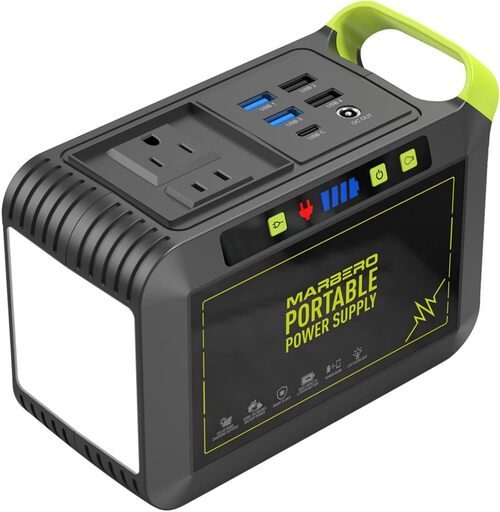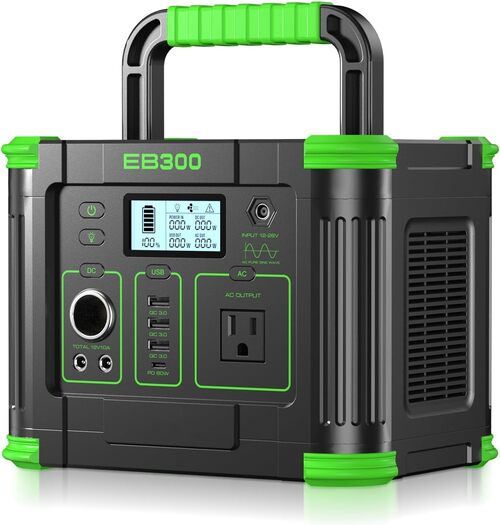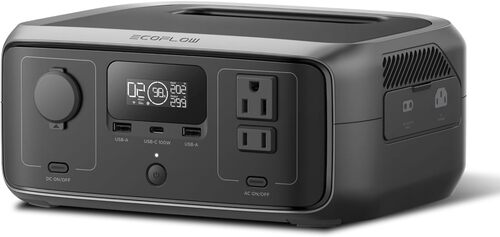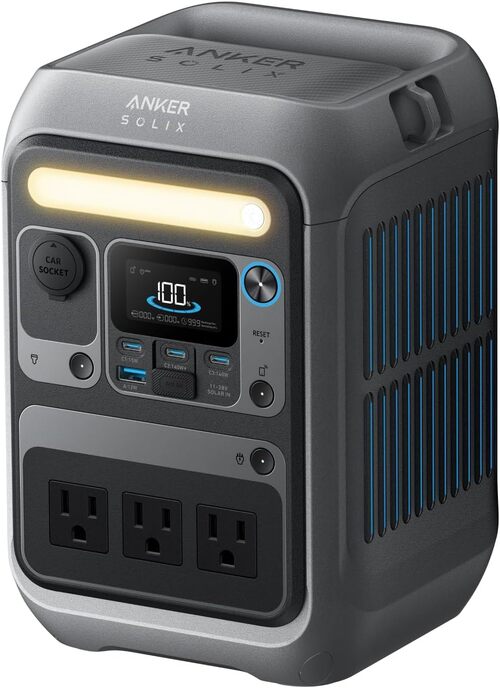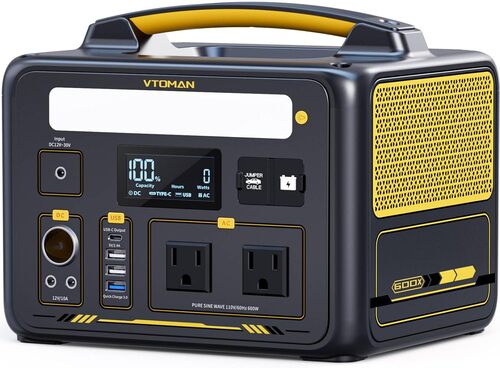
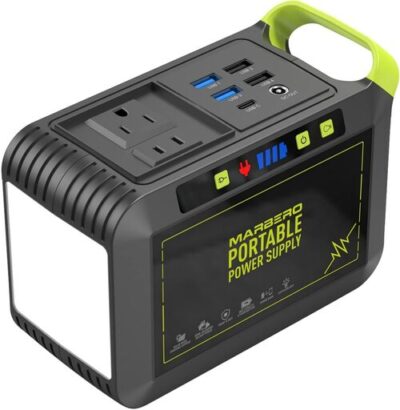
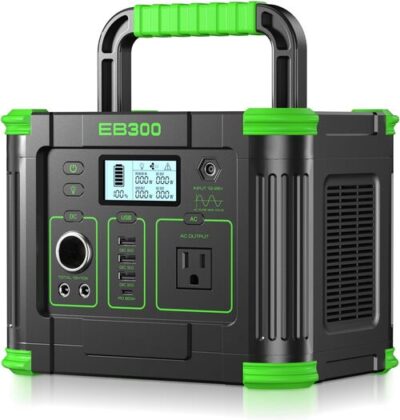
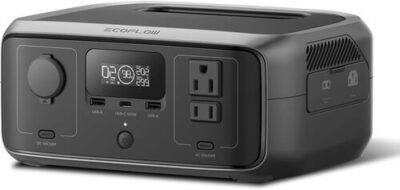
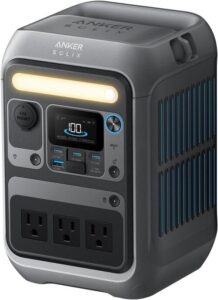
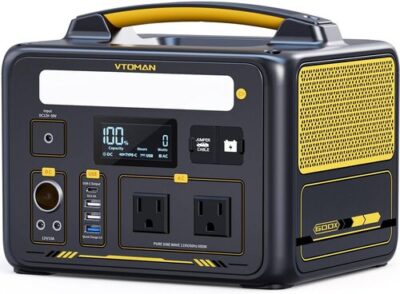
The best cheap portable power stations are small-load tools, not discounted home-backup systems. A low price can make sense for phones, lights, routers, camera batteries, fans, and selected laptops when the inverter and battery boundaries are explicit.
This list stays in the 88–299Wh class. Buyers needing refrigerators, pumps, or sustained cooking loads should use the broader budget-by-capacity guide instead.
Accept the Capability Ceiling
| Device | Cheap-station fit | Main check |
|---|---|---|
| Phone, tablet, camera | Strong | USB port wattage |
| Router or LED lights | Usually strong | Required hours and DC option |
| Laptop | Model dependent | USB-C PD or AC adapter draw |
| CPAP | Measure carefully | Humidifier, overnight reserve, DC cable |
| Heater or kettle | Poor | Usually exceeds output or drains energy immediately |
Low Price Does Not Remove the Watt Limit
Check continuous output before looking at the number of AC outlets. Two receptacles on an 80W inverter do not provide 80W each; they share the same ceiling. Peak ratings describe short events and should not be treated as continuous power.
Small-battery math: an 88Wh battery cannot deliver 88W for a full hour through AC after conversion loss and reserve. Use watt-hours for runtime and watts for device eligibility.
Five Bargain Red Flags
- Battery chemistry or cycle life is not clearly identified.
- Solar compatibility is described only by panel wattage.
- Peak output is displayed more prominently than continuous output.
- Warranty and return-freight responsibility are unclear.
- The listing merges several variants with different ports or limits.
LiFePO4 Is Valuable, but Not the Only Boundary
LFP usually improves cycle-life value, yet a good chemistry label cannot compensate for too little output, poor charging, or missing ports. MARBERO and GRECELL occupy the simplest end; newer compact LFP products add app control, faster charging, or expansion at a higher entry price.
A Cheap Solar Bundle Still Needs Electrical Checks
Compact stations often accept only 60–110W solar and may use different connectors. Confirm input voltage, current, connector, and polarity. A small panel can be useful for electronics over several sunny days, but it is not a reliable substitute for a larger battery during poor weather.
Buy or Skip in Ten Minutes
A cheap station is successful when it replaces a pile of small chargers and keeps a defined set of essentials running. It fails when the buyer expects a miniature version of a 1kWh all-rounder.
Measure the Essential Kit Before Shopping
Put every essential device on a meter or use a trustworthy power specification. Add its hours, charging frequency, and whether it can use DC or USB instead of AC. Efficient direct charging can stretch a small battery by avoiding inverter loss.
Then add a reserve for cold weather, battery aging, and an extra communication cycle. If the total already exceeds the small-station class, stop shopping cheap models and move up. A larger correct tool costs less than a small tool plus an emergency replacement.
Protect the Return Window
- Confirm the delivered model matches the listing.
- Charge fully and test every port.
- Run the longest intended load cycle.
- Verify wall and solar charging with included cables.
- Contact support immediately if a limit or accessory differs.
Low-cost products can be useful, but uncertainty should not survive the return period. Keep packaging and order evidence until the station passes.
Cheap-buy rule: keep a written maximum AC load and minimum reserve with the station. Small products work best when every user understands that two outlets still share one inverter and that high-draw heat is outside the mission.