GRECELL EB300 Review: Compact Backup Power for Camping, CPAP, and Small Outages
At a Glance
KEY FEATURES
- Battery: 288Wh lithium battery; exact chemistry and cycle life are not specified.
- AC output: 330W continuous, 600W surge, 110V pure sine wave.
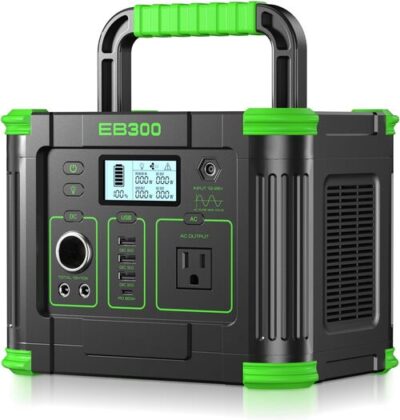
- Ports: 1 AC outlet, 2 USB-C ports including 60W PD, 2 USB-A QC ports, 1 car port, 2 DC 5521 outputs, wireless charging pad, and built-in LED light.
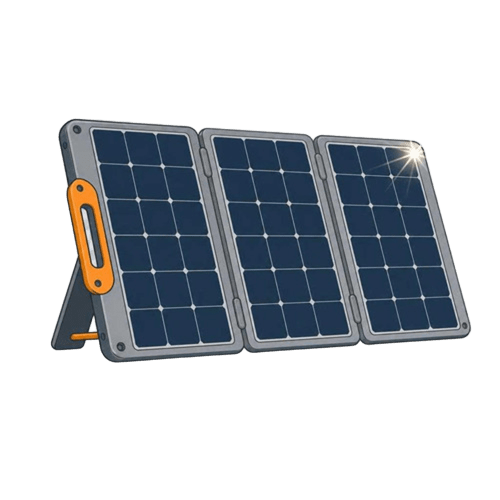
- Recharge: AC wall adapter, solar panel via MPPT with MC4-to-7909 cable, and 12V car charging. Solar panel not included.
- Smart features: no app; display shows battery percentage, power in, and power out. Pass-through/UPS behavior is not clearly specified.
- Best for: phones, laptops, tablets, lights, small fans, Wi-Fi router backup, CPAP with efficient settings, camping gear, vendor booths, drone batteries, and emergency essentials.
PROS
- Light 7.3 lb format is easy to store, carry, and move around a campsite or apartment.
- 288.6Wh is useful for phones, laptops, routers, lights, and tested CPAP setups.
- 60W USB-C and multiple DC/USB outputs can avoid AC inverter loss.
- Simple local controls work without an account or firmware workflow.
CONS
- 330W continuous output excludes almost all heating and cooking appliances.
- Older non-LFP chemistry and unpublished cycle rating weaken daily-cycling value.
- Slow wall and solar recovery compared with newer compact stations.
- Marketplace evidence may pool other GRECELL models, so exact T300 identity must be checked.
Editor's Choice
Based on exact documentation and qualitative exact-ASIN owner evidence; no hands-on test or population-rate claim
⚡ Can the GRECELL EB300 Run It?
Choose a common device and see the estimated runtime, whether the inverter can handle it, and how long the power station may take to recharge.
Picture this: the power flickers out, your phone is low, the router is dead, and you still need a fan or CPAP machine to get through the night. You don’t want a gas generator rumbling outside. You just want a small battery box that works.
The GRECELL EB300 isn’t trying to run your whole house. In practice, it’s better viewed as a quiet backup for small electronics, camping gear, routers, lights, fans, air mattresses, and CPAP setups with efficient settings.
GRECELL has sold T300, T300S, and larger stations through related marketplace listings. This review is restricted to the older 288.6Wh T300/EB300 with 330W continuous output. Do not import a T300S specification or a larger-model owner result into this decision.
The GRECELL EB300/T300 succeeds when the buyer respects its boundary. Official GRECELL comparison material identifies the discontinued T300 as a 288.6Wh, 330W continuous / 600W surge station. That makes it useful for phones, laptops, routers, lights, cameras, low-watt fans, CPAP equipment after an exact-device test, vendor electronics, and car camping. It makes the station unsuitable for kettles, coffee makers, microwaves, hair dryers, space heaters, or most full-size cooking loads.
The supplied marketplace material contains useful low-load experiences, but it also appears to pool adjacent GRECELL capacities in places. Any record that explicitly describes a 1,000W or 2,000W station is not evidence about this 330W unit. The defensible themes are therefore limited to T300-consistent use: portability, small-load runtime, charging behavior, port usefulness, display behavior, fan noise, and support interactions. This stricter identity filter is more valuable than publishing a bigger anecdote count.
| Load plan | Primary limit | Best connection | Verification |
|---|---|---|---|
| Router + modem | Overnight watt-hours | Native DC if safely compatible; otherwise AC adapter | Measure a full evening and confirm no automatic shutdown |
| CPAP | Humidifier/heat and voltage | Approved DC cable where available | Complete an overnight home trial with reserve |
| Laptop work | Charger wattage | 60W USB-C for compatible models | Confirm the laptop does not repeatedly connect/disconnect |
| Mini fridge | Compressor surge and capacity | AC | Repeated cold and warm starts; usually a marginal mission |
CPAP buyers should ignore generic “nights of use” promises. Record the machine model, pressure range, humidifier setting, heated hose, and whether AC or DC is used. Complete a full overnight test at home and preserve enough charge for the wake-up routine. Medical backup should also include an alternative plan because a consumer power station is not a clinical UPS.
Charging is intentionally modest. The T300’s solar path is around the 60W class and requires a compatible voltage range, polarity, and connector. A nominal 100W panel does not force 100W into the battery. Strong sun, panel angle, cell temperature, cable loss, and controller limits all matter. For a weekend, the better strategy is often to reduce daily consumption before buying more panel.
The EB300’s absence of an app can be a benefit for emergency storage: there is no account or firmware layer between the owner and basic power. It also means fewer logs and fewer configurable limits. Photograph the display at full charge, test each output, and top the battery according to the exact manual’s storage schedule. Early testing matters because owner accounts include both successful replacement support and isolated charger, port, or unit faults.
Bottom line: the T300 is a light, affordable electronics station. It is a poor purchase whenever “portable power station” is being used as shorthand for refrigerator, kitchen, or heating-appliance backup.
The EB300/T300 Only Works Inside a Strict 330W Box
If you want a lightweight battery for camping, vendor booths, short outages, or keeping small essentials alive, the GRECELL EB300 portable power station makes a lot of sense. It’s easy to carry, has a useful mix of ports, and the pure-sine AC outlet is a real advantage for laptops, routers, and CPAP machines. That said, this GRECELL EB300 review comes with one big caution: don’t buy it expecting refrigerator-for-a-day backup or coffee-maker power. It’s a compact 288Wh unit, not a kitchen-appliance station.
Seven Pounds Makes This a Grab-and-Go Battery
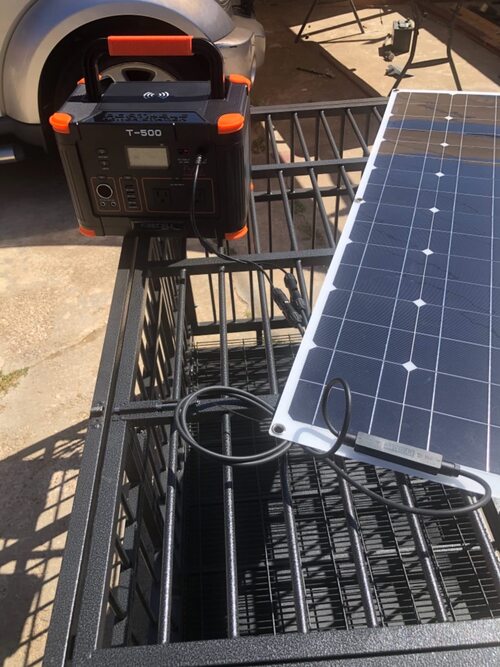
The boxy shape is small enough for a trunk, under-bed storage, or a camp shelf, and the fixed top handle makes it simple to move. At the same time, it’s still a power station, not a pocket battery. If you only need to recharge phones, a smaller USB power bank will be easier to pack.
Buyers generally describe the build as sturdy, with a clear screen and simple buttons. Worth knowing, a few owners mention crooked ports, non-working accessories, or faulty lights, so checking every output when it arrives is a smart move.
Buyer Heads-Up — Test the AC outlet, USB-C ports, USB-A ports, car socket, wireless charging pad, LED light, wall charger, car charger, and solar input cable during the return window. Small power stations are much easier to deal with before they become emergency gear.
What 288Wh Means for Small Essential Loads
The GRECELL EB300 has a 288Wh battery. In plain English, that’s enough for lots of phone charges, a few laptop top-offs, a router for part of a day, or a CPAP machine for a night if your settings are efficient.
Here’s the thing: AC output wastes more energy than USB or DC output because the inverter has to turn battery power into household-style 110V power. In real use, your best runtimes usually come from USB-C, USB-A, DC barrel, or 12V output when your device supports it.
| Device | Typical Power Draw | Estimated Runtime | Realistic with Margin |
|---|---|---|---|
| Smartphone charging | 10-15Wh per charge | 17-21 charges | 14-17 charges |
| Tablet charging | 25-35Wh per charge | 6-8 charges | 5-6 charges |
| Laptop charging | 50-80Wh per charge | 2-4 charges | 2-3 charges |
| Wi-Fi router | 10-20W | 9-19 hours | 8-13 hours |
| CPAP, no humidifier | 10-35W | 5-19 hours | 5-14 hours |
| CPAP, humidifier on | 50-90W | 2-4 hours | 2-3 hours |
| Small fan | 10-30W | 6-19 hours | 5-14 hours |
| LED lamp | 5-10W | 19-38 hours | 15-28 hours |
| Mini fridge | 40-80W cycling | 2-5 hours | 2-4 hours |
| Drone battery charging | 60-100W | 2-3 hours of charger time | Depends on battery size |
| Electric blanket | 50-80W | 2-4 hours | 2-3 hours |
| Coffee maker or kettle | 700-1500W | Not practical | Trips inverter |
Real-World Math — At 0.83 AC efficiency, the listed 288Wh battery delivers roughly 239Wh through the AC outlet. Subtract a 20% reserve, and you’re working with about 191Wh of practical AC energy.
Several owners say it holds charge well in storage, which is exactly what you want from emergency gear. In practice, it can sit for weeks or months and still be ready for a storm, camping trip, or quick job away from an outlet.
The catch is the battery gauge. Some buyers say the percentage display feels uneven, especially once it gets below the middle of the pack. To be fair, that’s common in small power stations, but it matters more if you’re using it for CPAP or medical-adjacent gear.
The 330W Boundary: Electronics In, Heating Loads Out
In practice, it shines with devices that sip power rather than gulp it. Phones, tablets, laptops, lights, fans, routers, air mattress pumps, camera gear, and drone chargers are its comfort zone.
| Device | Typical Draw | This Unit? |
|---|---|---|
| Phone / tablet | 10-25W | Easy |
| Laptop | 50-100W | Easy |
| LED lights | 5-15W each | Easy |
| Wi-Fi router | 10-20W | Easy |
| Small fan | 10-30W | Easy |
| Air mattress pump | Short surge load | Easy |
| CPAP, no humidifier | 10-35W typical | Easy |
| CPAP, humidifier on | 50-90W or higher | Borderline |
| Mini fridge | 40-80W cycling | Borderline |
| Full-size refrigerator | 100-200W cycling, high surge | Borderline to trips inverter |
| Drone battery charger | 60-100W | Easy |
| Coffee maker | 700-1200W | Trips inverter |
| Microwave | 900-1500W draw | Trips inverter |
| Electric kettle | 1500W | Trips inverter |
| Hair dryer | 1500-1875W | Trips inverter |
| Window AC | 500W+ running, high surge | Trips inverter |
| Corded saw or grinder | Variable, often high surge | Borderline to trips inverter |
Worth Knowing — Continuous output is the real ceiling. The 600W surge rating only lasts briefly — long enough for small startup spikes, not long enough to run a 1,500W kettle.
Customers who treat the EB300 like a small backup battery tend to be happy. On the flip side, buyers expecting it to behave like a large solar generator usually run into the limits quickly.
CPAP use deserves a special note. Owners report very different results depending on the machine, hose heat, humidifier, and whether they use AC or DC power. If CPAP runtime is the reason you’re buying it, test your exact machine at home before taking it camping.
A 60W-Class Solar Input Rewards Modest Expectations
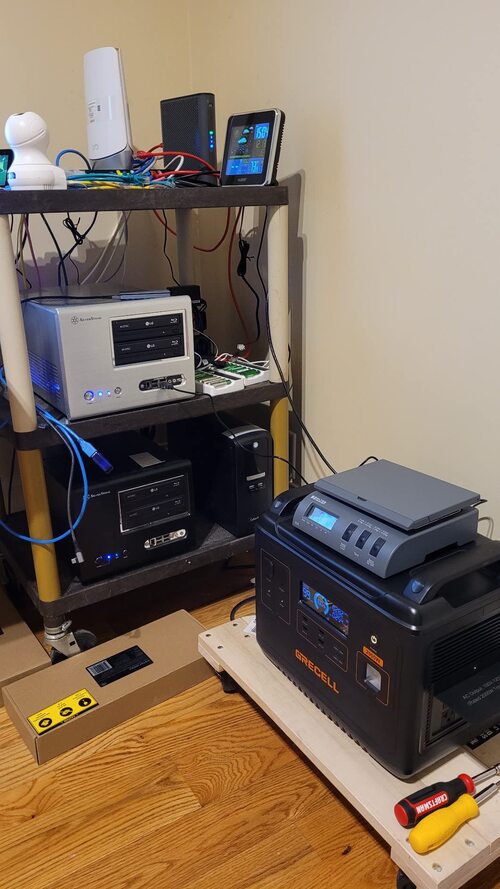
That said, wall charging is not especially fast compared with newer LiFePO4 stations. Many owners describe it as a multi-hour process, and a few mention slower charging over time or charger issues.
| Charging Mode | Time, 0% to 100% | Noise Level |
|---|---|---|
| Wall adapter | About 5-6 hours typical | Quiet to moderate |
| Wall adapter from 50% | About 2.5-3.5 hours typical | Quiet to moderate |
| Car charging | About 4-6 hours | Silent, aside from vehicle |
| 60W solar panel | About 6-8 hours strong sun | Silent |
| 100W solar panel | About 4-6 hours strong sun | Silent |
| 120W solar panel | About 3.5-5 hours strong sun | Silent |
| Cloudy solar | Highly variable | Silent |
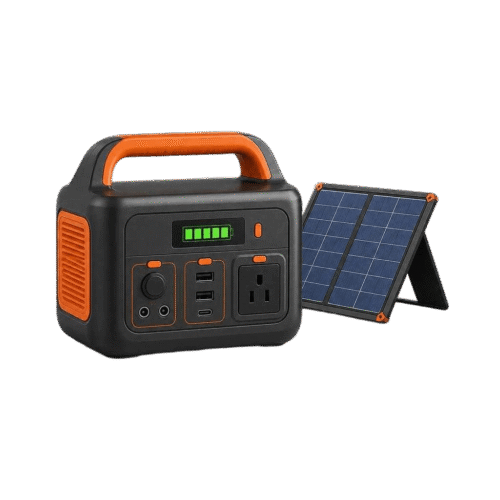
Adapter Check — The EB300 includes an MC4-to-7909 cable, which is helpful if you already own standard MC4 solar panels. Still, confirm panel voltage compatibility before plugging in a random panel.
Solar charging is a useful backup plan, not magic. In real use, shade, clouds, panel angle, and heat can cut output hard. A 100W panel rarely feeds a steady 100W all afternoon.
Car charging is helpful on road trips, especially if you’re using the unit for phones, lights, and small camp gear. At the same time, it’s still better as a top-off method than your main charging plan.
One AC Outlet, Strong USB Coverage, and Useful 12V
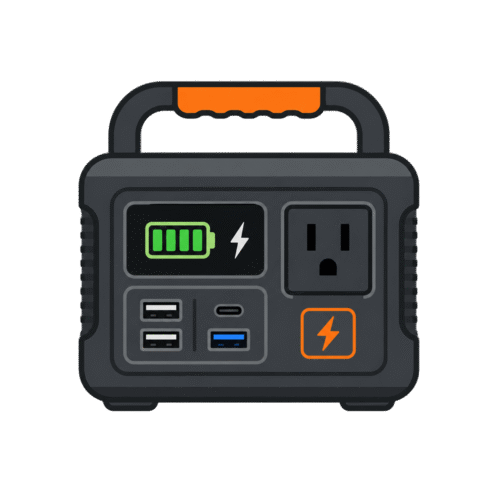
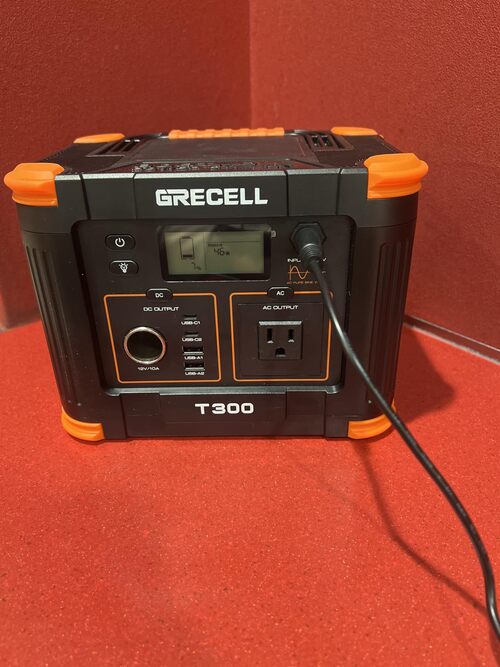
The EB300 gives you one AC outlet, one 60W USB-C PD port, one 18W USB-C PD port, two USB-A QC 18W ports, one 12V car socket, two DC 5521 outputs, a wireless charging pad, and an LED light. For a 7.3 lb unit, that’s a useful spread.
In practice, the 60W USB-C port is one of the most useful ports because it can charge many phones, tablets, and smaller laptops without firing up the AC inverter. That saves energy and keeps the setup simpler.
The one real gripe is the single AC outlet. You can plug in a small power strip, and several owners do exactly that, but you still need to stay under the 330W limit. A power strip adds outlets, not more power.
Light Loads Are the EB300's Quiet Comfort Zone
The EB300 is quiet under light loads. Owners using it for phones, fans, lights, routers, and laptops often describe the sound as barely noticeable, more like a soft fan hum than a generator.
At the same time, the fans can kick on during charging or heavier AC use. That’s normal, and the product has dual cooling fans for safety. For a bedroom or tent, the sound should be manageable for most people, but very sensitive sleepers may notice it when the inverter or charger is working.
Heat does not show up as a major complaint in owner feedback. To be fair, you should still keep the vents clear and avoid leaving it baking in a hot car while charging or discharging.
No App, Fewer Settings, More Need for Direct Observation
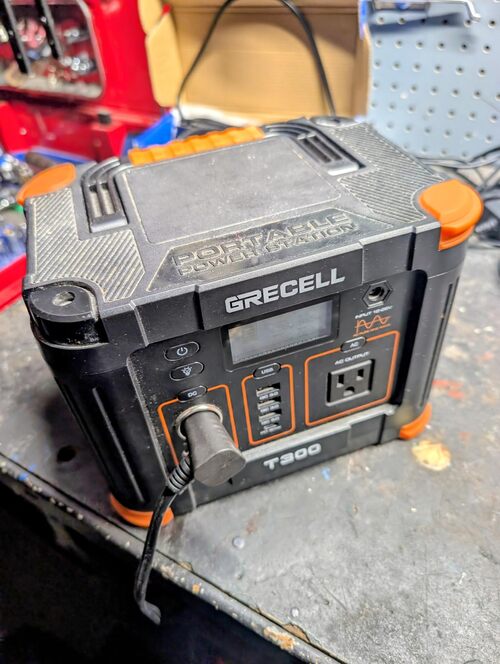
The EB300 skips app control, which may actually be a plus for buyers who want simple emergency gear. You turn on the output sections, plug in your device, and watch the display for battery percentage, input watts, and output watts.
The screen is one of the features owners like most because it shows more than a vague battery bar. That said, one buyer complained the LCD was hard to see in the dark, and a few others felt the percentage estimate wasn’t always trustworthy.
For beginners, the EB300 feels easy to use. In practice, the separate output buttons help avoid wasting energy on AC or DC sections you’re not using.
The Exact T300 Identity Matters More Than the Brand Family
The EB300 uses a lithium battery, but GRECELL does not clearly state LiFePO4 chemistry for this model in the provided specs. That matters because LiFePO4 usually has a much longer cycle life, while older lithium-ion designs are often lighter and cheaper per Wh.
The listing mentions an upgraded battery management system with overload, overcharge, and short-circuit protection. Owners also appreciate that it automatically stops charging when full, and many say it holds charge well while stored.
Long-Term Ownership — Because the cycle life is not specified, treat this like a compact lithium-ion station rather than a long-cycle LiFePO4 unit. If you plan to cycle a power station daily, chemistry matters more than the sale price.
Customer support gets better comments than the average budget power station brand. Several buyers say GRECELL helped with replacements when a charger, AC output, or unit arrived defective.
Still, quality-control issues do appear. Worth knowing, reported problems include a non-working LED light, faulty wireless charging, bad AC charger, AC output failure, USB-C issues, and a unit that stopped working. None of that means every unit is risky, but it does mean early testing is important.
Best Practice — For storage, leave the unit around 50-80% charge when possible and top it off every few months. Avoid storing any lithium battery completely full or completely empty for long stretches.
EB300 Mission Board: Small Power Done Deliberately
| Use Case | Fit | Why |
|---|---|---|
| Weekend car camping | Strong fit | Light, compact, and enough for phones, lights, fans, pumps, and small electronics |
| Tent camping with CPAP | Solid fit | Works best with humidifier and heat reduced or off |
| RV side-trip / van life | Solid fit | Handy secondary battery for small devices, not a main house battery |
| Home blackout under 8 hours | Strong fit | Good for router, phones, lamps, fan, and small comforts |
| Multi-day outage | With caveats | Needs solar or repeated charging and careful load choices |
| Mini fridge backup | Borderline | Can help briefly, but 288Wh is small for refrigeration |
| Full-size refrigerator backup | Borderline to skip | Surge and capacity are both limiting factors |
| Vendor booth / farmers market | Strong fit | Good for tablets, payment devices, lights, and low-watt display gear |
| Jobsite lights and small tools | Solid fit | Great for lights and charging; not for high-surge tools |
| Quiet bedroom backup | Solid fit | Quiet under light loads, but not a confirmed UPS |
| Apartment emergency kit | Strong fit | Small enough to store and simple to recharge from the wall |
| Backpacking | Skip | Too heavy and bulky compared with USB power banks |
Good Reasons to Keep the EB300 Small
- A compact power station for camping, tailgating, and short outages
- A small backup for phones, laptops, routers, lamps, fans, and tablets
- A pure-sine AC outlet for sensitive electronics
- A CPAP backup battery for careful, tested setups
- A budget-friendly alternative to bigger-name 300W-class stations
Hard Stops for the T300 Platform
- Coffee maker, microwave, kettle, hair dryer, or space heater power
- Full refrigerator backup for long outages
- Confirmed LiFePO4 cycle life
- App control, firmware updates, or smart charge limits
- True computer-grade UPS behavior
- Fast AC charging like newer premium models
Pros & Cons Analysis
Based on documented specifications and owner feedback
Pros
- Portability is real — At about 7.3 pounds, the T300 is easy to move between a closet, car, tent, vendor table, or room during an outage.
- The low-load port mix is practical — USB-C, USB-A, 12V, DC, and one pure-sine AC outlet cover many electronics without pretending to be a high-output appliance station.
- Direct-current use can stretch the battery — Compatible USB-C and 12V devices avoid the overhead of keeping the AC inverter active.
- Simple operation reduces dependencies — Core use does not require Wi-Fi, Bluetooth, an account, or a phone app.
- Owner missions match the hardware — Camping, communications, lighting, CPAP trials, office electronics, and event-vendor use are credible roles for the capacity.
Cons
- The inverter ceiling is absolute — A 600W surge label does not make a 700–1,500W heating appliance compatible for continuous operation.
- Identity contamination is a research risk — Reviews and images for larger GRECELL units can appear alongside the T300, so only exact-model evidence should guide limits.
- Chemistry is less attractive for heavy cycling — The older T300 is not documented as the newer LFP T300S and lacks the same clear long-cycle proposition.
- Recharge speed is dated — Multi-hour wall charging and roughly 60W solar acceptance demand advance planning during multi-day outages.
- Diagnostics are basic — Without app logs, owners should preserve display photographs, charger readings, and a written baseline if capacity or ports change.
Our Verdict
For this GRECELL EB300 review, the bottom line is pretty simple: this is a genuinely useful small power station when you keep your expectations realistic. It punches above its weight for phones, laptops, lights, fans, routers, CPAP use with efficient settings, camping gear, and emergency basics. The pure-sine inverter and broad port mix make it more flexible than a normal USB power bank.
That said, the EB300 is not the right tool for big appliances, long refrigerator backup, or heavy heating loads. If you want a light, affordable, easy-to-store battery for small essentials, the GRECELL EB300 portable power station is a solid pick. If your plan involves coffee makers, microwaves, or multi-day blackout power, step up to a much larger unit.
Frequently Asked Questions
How long will the GRECELL EB300 run a CPAP machine?
Runtime depends heavily on the CPAP model and whether you use heat or humidification. Some owners report a full night or more with efficient settings, while high-draw humidified setups can drain the battery much faster. For best results, use a DC adapter if available and turn off heated hose and humidifier features.
Can the GRECELL EB300 run a mini fridge?
It can run some small mini fridges for short periods, especially if the fridge has a modest startup surge. That said, the 288Wh battery is limited, so it is better for a few hours of backup than overnight refrigeration.
Can it run a coffee maker, kettle, microwave, or hair dryer?
No, not in a practical way. Those appliances usually draw 700W to 1800W, which is far above the EB300's 330W continuous AC output. Heating appliances are the main thing to avoid with this size of power station.
Does the GRECELL EB300 include a solar panel?
No. The power station includes charging cables, including an MC4-to-7909 solar adapter cable, but the solar panel itself is sold separately. Several buyers expected a panel because of the solar generator wording, so this is worth checking before purchase.
How long does it take to recharge from a wall outlet?
Customer feedback suggests wall charging usually takes several hours rather than one or two. Some owners report around 5 to 6 hours for a deep recharge, while a few mention slower charging behavior over time or defective chargers.
Is the AC outlet pure sine wave?
Yes. The listing specifies a 110V pure sine wave AC outlet, which is better for laptops, CPAP machines, routers, and other sensitive electronics than a modified-sine inverter.
Is the GRECELL EB300 good for power outages?
Yes, for small essentials. Owners use it for phones, tablets, routers, lamps, small fans, CPAP machines, and laptop charging. It is not meant for whole-home backup, kitchen appliances, HVAC, or long refrigerator runtime.
Does it work as a UPS?
UPS support is not clearly listed for this model. Some owners use it for routers or pellet stove backup, but buyers who need true computer-grade UPS behavior should choose a model with a stated UPS or EPS switchover spec.
How portable is the GRECELL EB300?
Very portable for a power station. At 7.3 lb, it is light enough for camping, car trips, vendor booths, tailgating, and moving around the house. It is still much larger than a pocket power bank.
What devices should I avoid using with it?
Avoid high-watt heating and motor loads such as kettles, coffee makers, microwaves, hair dryers, large space heaters, full-size power tools with big startup surges, and window AC units. The EB300 is best for electronics and light-duty backup.
What are the most common complaints?
The main complaints are that no solar panel is included, charging can feel slow, the battery percentage can be uneven, and a small number of units or accessories arrive defective. Customer support stories are generally positive when replacements are needed.
Technical Specifications
| Brand | GRECELL |
|---|---|
| Model / SKU | EB300 / T300 (ASIN: B0B286D2V7) |
| Battery capacity | 288 Wh |
| Battery chemistry | Lithium battery (exact chemistry not specified) |
| Cycle-life rating | Not published for this exact model in the current source set |
| Expandable capacity | No |
| Continuous AC output | 330 W continuous (pure sine wave) |
| Surge / peak output | 600 W peak |
| AC voltage, frequency, and waveform | 110V AC, pure sine wave; frequency not published for this exact model |
| AC outlets | 1 × 110V AC outlet |
| High-current, RV, or 240V output | No dedicated RV, 30A, 240V, or other high-current AC outlet published for this exact model |
| USB-C outputs | 2 × USB-C (1 × 60W PD, 1 × 18W PD) |
| USB-A outputs | 2 × USB-A (QC 3.0, 18W) |
| 12V / DC outputs | 1 × 12V car port |
| Maximum solar input | 60W maximum |
| Solar input range and connector | 12–26V DC, 4A maximum; MC4-to-7909 cable included |
| Maximum AC input | 60W maximum |
| AC recharge time | Not published for this exact model in the current source set |
| Solar recharge estimate | Depends on array size, PV compatibility, sun, temperature, and charge limits; no exact-model time is published |
| UPS / EPS support and transfer time | Not published for this exact model in the current source set |
| App / connectivity | No app |
| Operating temperature / weather rating | Not published for this exact model in the current source set |
| Dimensions | 9.61" × 6.72" × 6.97" |
| Weight | 7.3 lb |
| Warranty | Not published for this exact model in the current source set |