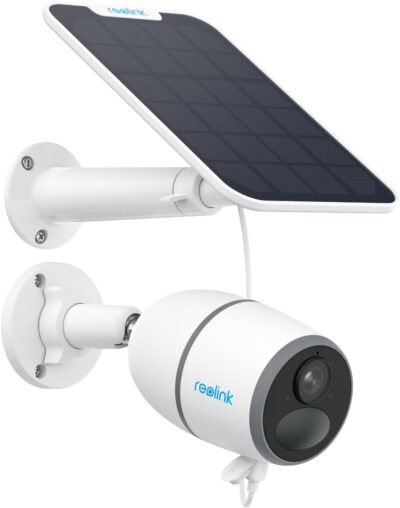
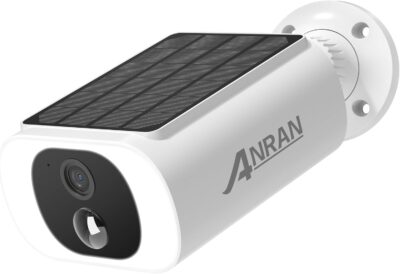
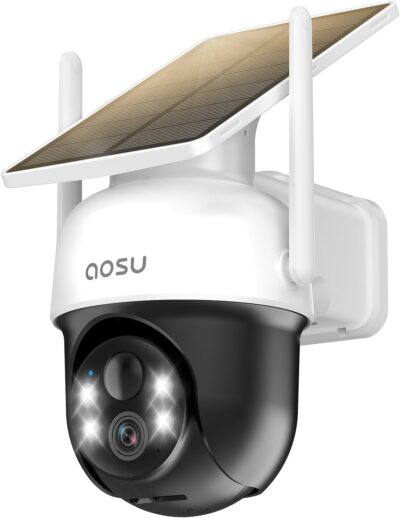
Reolink Argus Eco Solar Kit Review: A Local Record Is Not a Remote Alert
At a Glance
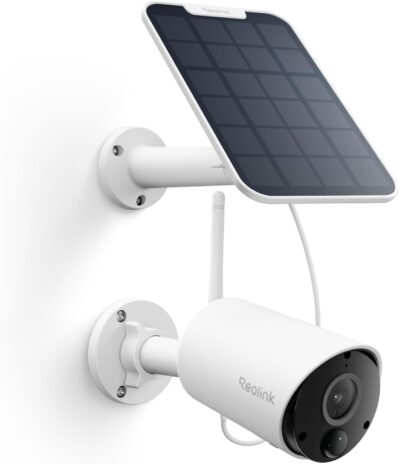
KEY FEATURES
- Fixed view
- Wi-Fi
- Separate panel in selected kit
- Camera-local memory card; check supported capacity for shipped revision
PROS
- On-camera storage can preserve events through a network interruption
- Fixed framing suits a stable approach
- Solar kit avoids making an outlet the first requirement
CONS
- Remote response still needs communications
- Historical specifications conflict with the captured offer
- Physical access remains part of ownership
Amazon customer rating
9,385 Amazon ratings
The strongest reason to consider the Reolink Argus Eco is not that it can replace every camera around a house. It is the possibility of keeping an event record at one fixed outdoor viewpoint without routing a permanent power supply there. For a gate, side entrance or small work area, that can be a useful, contained job.
The offer examined here is B07R5YH7YN, captured as a 5MP Argus Eco with a 3W solar panel. Older owner accounts discuss lower-resolution versions. Their experiences can reveal practical questions, but old capacity limits, network specifications and service offers should not be attached to the current kit without checking the hardware.
Think about the morning after a connection problem
Suppose your home internet service stops overnight.
Use Argus Eco for a defined viewpoint with workable wireless coverage rather than asking a fixed camera to inspect several directions.
- In the morning, you notice that something has moved beside the gate.
- Two questions now matter: did the camera retain an event, and could it have warned you while you were away?
- Those are not equivalent capabilities.
Reolink's battery-camera support guidance distinguishes recording on a memory card from reaching the camera remotely.
It does eliminate the internet-dependent route by which you expect remote viewing and push alerts.
First-time activation also requires a connection; this is not a promise of an entirely network-free setup.
That distinction changes the buying decision.
A person who can inspect saved activity later may find local recording valuable during an outage.
A person who must respond immediately from another city still needs dependable communications.
Solar charging addresses an energy source, not the missing connection between the property and the owner.
Separate three meanings of “still working”
The camera has energy
A charged battery means the camera has power available.
- It does not prove that the memory card is recording, that the intended area is in frame, or that the app can reach the unit.
- The panel is a charging accessory, not an independent confirmation that all of those functions are healthy.
An event exists on the card
A local clip can preserve something useful even when it was not delivered as an alert.
- However, an event-oriented record is not a continuous account of the night.
- If your question concerns a period with no saved trigger, the absence of a clip is not proof that nothing happened.
Somebody can retrieve the evidence
Reolink distinguishes a functioning local Wi-Fi network without internet from a camera disconnected from Wi-Fi entirely.
- Local playback can remain available in the former situation, whereas access is more restricted in the latter.
- Decide how you will recover an important recording rather than treating the existence of a card slot as the end of the workflow.
A fixed direction makes placement consequential
The Eco uses a fixed view, so it is best considered around a specific approach or activity area.
Match the delivered hardware to its documentation. Older 1080p instructions and later listings do not form one combined specification.
- A camera aimed at the gate should be judged by what it can show at the gate, not by how much unrelated garden appears at the edges.
- If a second entrance is outside the useful view, repositioning or another camera may be necessary.
This can be a straightforward arrangement when the desired scene rarely changes.
There is no need to decide which direction a motorized camera should face after somebody has manually moved it.
The trade-off is that a changed layout, new obstruction or different priority requires physical attention to the mounting position rather than an app-based pan command.
Keep nearby surfaces and foliage in mind when evaluating the nighttime image.
Instead of assuming that a clear daytime scene guarantees a useful dark-scene clip, check the actual area in both conditions.
We have not tested recognition distance, and neither a resolution label nor an owner's attractive sample establishes that a face farther from your mounting point will be identifiable.
The owner evidence favors a modest, specific job
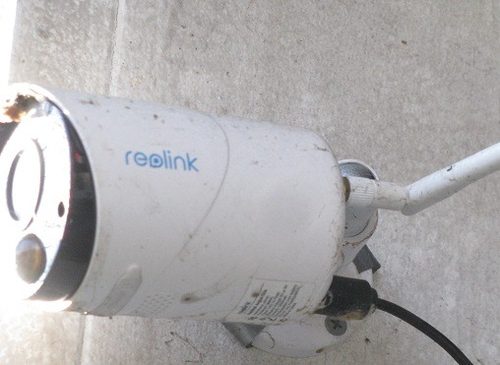
One supplied account starts with a familiar constraint: no power outlet where the owner wanted the camera.
- They describe configuring it indoors, moving it outside and retrieving clips from a card.
- Their favorable solar experience covers a summer period, and the owner explicitly leaves winter performance unresolved.
- That qualification is important; the report should not become an all-season charging promise.
Another account values local storage when the connection is unavailable. Its useful contribution is the distinction between recording and access, which current support guidance also explains. The account's old price, card limit and suggested retention duration are not reliable specifications for today's captured 5MP offer.
Some other entries mix references to different cameras, unsupported network details or features not securely attributed to this unit.
They are not a basis for declaring broad compatibility or improved detection.
A large historical review pool is only helpful when the claim being used can be tied to the relevant model and circumstances.
Put storage and access into the installation budget
The captured packing list identifies the camera, panel, cable and mounting items, not a memory card.
Confirm card support for the shipped revision instead of borrowing a limit from another Argus Eco generation.
- Plan to verify and obtain suitable recording storage rather than assuming it is hidden in the kit.
- The current listing and older support material also differ on maximum capacity, so the exact model's instructions should settle the card choice.
Before considering the installation finished, answer these practical questions:
- Can you find a recent event and save a copy outside the camera?
- Can you reach the unit safely for charging or maintenance if solar input proves inadequate?
- Have you checked the actual camera connection at the mounting point, not only the signal indicator on a phone nearby?
- Does somebody know what to check when alerts stop, rather than assuming the camera is merely seeing no activity?
These are proposed acceptance checks, not steps we have performed on a review sample. They matter because a low-cost installation loses much of its value if retrieving one important event becomes an improvised troubleshooting project.
Where this kit earns a place
The Argus Eco is a reasonable candidate for a stable viewpoint where event clips are useful and permanent power would be awkward. Local recording provides a different kind of value from a cloud-only workflow, particularly when an owner understands that a retained clip and a delivered notification are separate outcomes.
It is a less convincing choice if the real requirement is instant remote response despite poor connectivity, continuous surveillance, or changing views across several entrances.
- Those needs should shape the system choice before a solar bundle makes installation look easy.
- Confirm the selected 5MP hardware and storage requirements, then judge the kit against one well-defined recording task rather than a collection of older reviews describing several generations.
Pros & Cons Analysis
Based on documented specifications and owner feedback
Pros
- A communications failure need not erase the chance to investigate later — For an owner who can act retrospectively, retaining an event on a configured memory card has practical value even when the internet route is unavailable.
- One unchanging approach can justify a simpler viewing arrangement — A side gate or narrow access route may need a consistently chosen viewpoint more than a camera that can look elsewhere.
- A contained camera-and-panel purchase can address an otherwise inconvenient location — The captured offer includes both pieces of the solar arrangement, which is useful when the intended position lacks a convenient outlet.
Cons
- Evidence saved at the property may arrive too late for an urgent response — Local storage is a meaningful fallback for later investigation but cannot supply an absent remote connection.
- Old capacity and feature claims can lead to the wrong accessories — The supplied accounts and historical documentation describe earlier Eco versions, while the captured offer is labeled 5MP and advertises different storage information.
- A convenient solar mount can still be an inconvenient service location — Solar support does not make the camera immune to charging shortfalls, dirty surfaces or storage maintenance.
Argus Eco makes a case for the uncomplicated secondary view
A fixed scene, workable wireless coverage and reachable equipment are the reasons to consider Argus Eco. It is a candidate for a defined supplementary responsibility, not a camera to choose because several generations share the same name.
Check the shipped revision before comparing specifications. Older 1080p documentation and later offers should not be combined into one invented configuration. Match storage support and the intended recording arrangement to the unit you will receive.
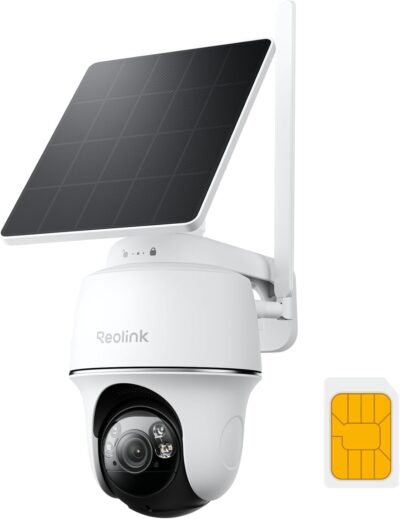
If repositioning the view remotely would genuinely improve the task, compare Argus PT. Otherwise, concentrate on framing the fixed scene well.
Frequently Asked Questions
Will an old Argus Eco manual match a later Amazon offer?
Not necessarily. The family spans different hardware descriptions. Match the delivered model before relying on resolution, storage or accessory limits.
Does Argus Eco move its view from the app?
This is a fixed-view camera. Changing the scene requires appropriate physical positioning rather than treating it as an Argus PT.
Can Argus Eco local recording replace remote access?
They serve different purposes. A local recording route does not itself let a remote phone reach a camera when the required communication path is unavailable.
What should be checked after the Eco reconnects?
Check the camera status and the saved events separately. A restored live view is not proof that the desired earlier footage was retained.
Is a customer's memory-card size the Eco's official limit?
No. An installed card describes that customer's setup. Confirm the supported capacity for the exact hardware revision.
What makes a suitable Eco monitoring scene?
A defined view with adequate detail at the important location, usable wireless communication and practical access for panel and camera maintenance.
Technical Specifications
| Model family | Reolink Argus Eco |
|---|---|
| Amazon offer | B07R5YH7YN |
| Selected camera count | 1 |
| Connectivity class | Wi-Fi |
| Camera arrangement | Fixed view |
| Solar arrangement | Separate panel in selected kit |
| Local recording | Camera-local memory card; check supported capacity for shipped revision |
| Offer-specific requirements | Hardware boundary: Do not combine older 1080p documentation with a later offer |
| Advertised video resolution | 2K 5MP |
| Advertised weather rating | IP65 |
| Night vision type | LED |
| Motion / alert method | Motion Only |
| Mounting method | Ceiling Mount & Wall Mount |
| Audio support | Not established for this selected offer |
| Advertised viewing angle | 110 degrees |
| Video format | MPEG-4 |
| Operating environment | Indoor, Outdoor |
| Compatible device class | Smartphone |