ECO-WORTHY 200W Solar Kit Review: Good Panels, Basic Controller
At a Glance
KEY FEATURES
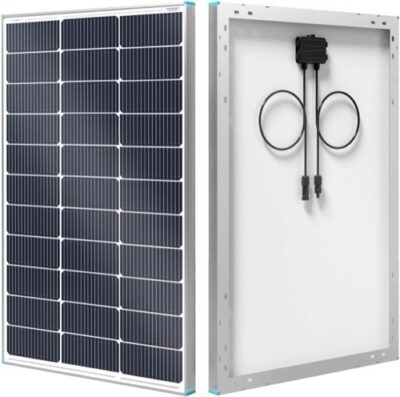
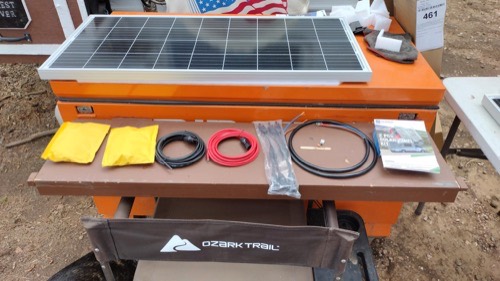
- Two rigid 100W monocrystalline panels provide a 200W nameplate array.
- Current Amazon offer includes a 30A PWM charge controller.
- Z brackets, branch connectors, and panel-to-controller cable are bundled.
- Battery-side protection, battery cable, battery, and inverter are separate design items.
- Best for a small shed, camper, or maintained 12V battery system.
PROS
- Two framed panels in one bundle
- Major generation-side accessories included
- Relevant camper and shed owner accounts
CONS
- Controller revision must be checked
- Battery and AC equipment are separate
- Owner controller and hardware complaints
Capable Starter Kit
Based on exact documentation, retained exact-ASIN evidence, and the expanded qualitative Amazon owner-text review; no hands-on test claimed
The ECO-WORTHY 200W solar panel kit bundles two 100W rigid panels with a PWM controller and installation accessories. It can be a practical starting point for an RV or shed battery system, but it does not include the battery, an AC inverter or a complete electrical design. Its value depends on which included parts your installation can actually use.
This review covers the retained Amazon offer B09RZZHHHM, associated with model L02M100N-LCWMZ-2. We use supplied customer accounts and product documentation, not hands-on testing. Similar names have covered different controller and cable bundles, so match the actual offer and delivered labels.
What “200W kit” includes—and what it leaves to you
| Part of the purchase | Check before installation |
|---|---|
| Two 100W framed panels | Confirm both labels, dimensions and electrical values; inspect glass and frame corners. |
| PWM charge controller | The retained Amazon offer specifies 30A. Verify its exact revision, PV limits and supported battery settings. |
| Brackets, branch connectors and solar cabling | Inventory the delivered hardware. Check cable gauge, length, terminals and mounting suitability. |
| Separate system components | Budget the battery, battery-side conductors, suitable protection and disconnects, plus an inverter if AC power is required. |
There is a real documentation mismatch to resolve: ECO-WORTHY’s older L02M100N-LCWMZ-2 product documentation describes a 20A controller and 5m 12AWG extension pair. Do not transfer that inventory—or its warranty wording—to a different 30A package without confirmation.
The supplied controller determines the upgrade decision
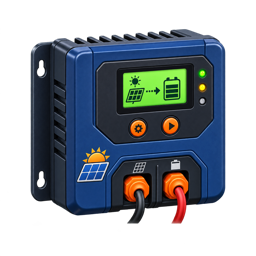
PWM charging operates differently from MPPT, so panel nameplate watts are not the same as power delivered into the battery. The MPPT-versus-PWM explanation is useful when deciding whether to keep the supplied controller or buy a different bundle from the start.
For a modest battery-maintenance job, the supplied controller may be adequate if its documented settings and limits match the system. Check that before paying for upgrades.
If you already need MPPT, monitoring or a larger array, compare a suitable controller plus panels against the kit price. Replacing a new bundled component may erase the saving.
A 30A label is not permission to add panels indefinitely. Input voltage, permissible PV current or power, battery charging limits and wiring capacity remain separate constraints. Use ECO-WORTHY’s manual library to match the delivered controller; confirm battery voltage and charge settings against the battery maker’s instructions.
Customer installations reveal the hidden work
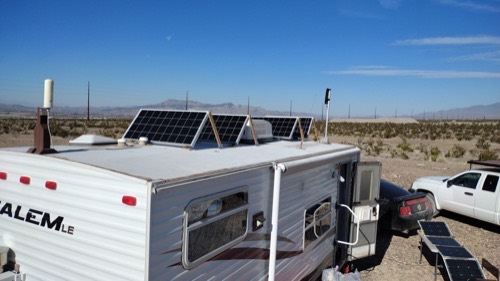
A camper owner bought the kit mainly to support a ventilation fan and water pump. They liked the panels but found routing the cables and locating components more work than making the panel connections. A shed owner was satisfied overall but reported bracket and hardware frustrations, then found the 200W array slow to replenish a large battery bank at that location.
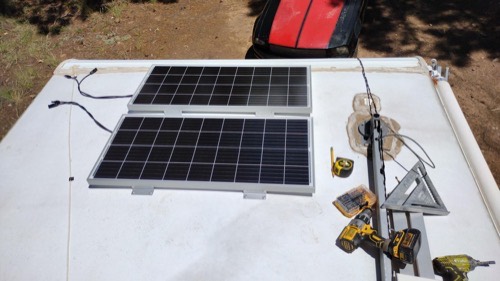
Those accounts do not show that every installation needs the same extra parts. They show why “plug-and-play” is too broad a description for a kit connected to a separately chosen battery. If you want a different bundle, compare the exact parts in our Renogy-versus-ECO-WORTHY comparison rather than relying on a fixed brand price gap.
Daily recovery is more useful than a guessed output percentage
One supplied owner reports about 140W from the panel pair through PWM in full sun; another reports around 120W on a New Jersey winter day at an imperfect angle. These are accounts of different installations, not enough evidence to assign “normal” output or promise that one kit will run a refrigerator all day.
Record daily charging energy and daily consumption in your own system. If consumption exceeds recovery, a larger battery delays the shortfall but does not cure it. Our solar-production guide explains why a peak watt reading cannot settle a daily energy budget.
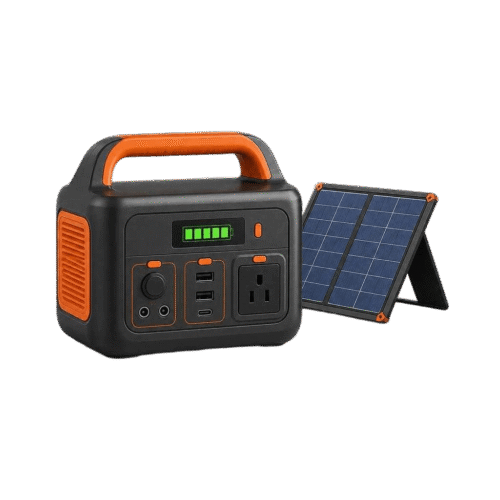
Owners also use the panels without the bundled PWM controller to charge portable stations. That route requires a compatible station solar input and the correct adapter; do not feed a controller’s battery or load terminals into a station by assumption. Check the power-station input requirements before choosing the wiring path.
Controller complaints warrant checks, not a failure-rate claim
The supplied feedback includes working installations, failed controllers and different support outcomes. One owner describes an overheating unit and a delayed replacement; another reports a prompt replacement. A more serious account alleges overcharging after a battery rupture, but the retained account does not establish the technical cause. It should not be described as a proven model-wide defect or dismissed as a quantified rarity.
- Identify all components before energizing. Match labels and manuals; verify polarity rather than trusting color alone.
- Have the installation checked. Confirm battery profile, ventilation, conductor sizing, protection and the manufacturer’s connection sequence. Get qualified help where the design is unfamiliar.
- Observe the initial charge. Keep records of settings and charging behavior. Stop and seek support if there is abnormal heat, smell, damage or charging behavior.
- Resolve problems before permanent mounting. Preserve the invoice, packaging and photographs while the seller’s return options remain available.
Buy the usable components, not the word “complete”
This kit makes sense when the panel pair, supplied controller and hardware fit a deliberately modest battery-charging project. It is a weaker purchase if you would immediately discard the controller, need fast recovery of a large bank, or expect an AC outlet without buying the rest of the system.
Compare the total installed price of the exact package with panels and a correctly matched controller bought separately. The useful saving is the cost of parts you can keep—not an assumed discount against another brand or an upgrade you will have to make twice.
Pros & Cons Analysis
Based on documented specifications and owner feedback
Pros
- Panel pair and supporting hardware — the retained offer gathers major generation-side components in one purchase.
- A relevant camper use case — one owner bought it for a fan and water pump and was satisfied with the panels.
- Conventional rigid format — framed panels can suit a planned roof or shed mounting arrangement.
- Successful support outcomes exist — supplied accounts include replacement controllers, although response times differ.
Cons
- Bundle revisions matter — older manufacturer documentation lists a different controller and cable specification.
- Not a finished battery system — battery-side wiring, protection, storage and any AC equipment need separate design and budgeting.
- Controller complaints — owners describe failed or overheating units; the sample cannot establish a failure rate.
- Hardware and routing work — mounting and cable-length issues appear in installation accounts.
- Limited recovery capacity — a satisfied shed owner still found the array slow to replenish a large bank at that site.
Value depends on how much of the kit you can keep
Consider this panel-and-PWM bundle for a modest battery system when its controller, cable set and brackets match the installation. If you already need MPPT or more recovery capacity, price that complete system first. A battery, suitable protection and any AC inverter remain separate purchases.
Frequently Asked Questions
What is included with the ECO-WORTHY 200W kit?
The current exact Amazon offer centers on two 100W rigid panels, a 30A PWM controller, mounting brackets, branch connectors, and solar cabling. Verify current box contents before purchase because ECO-WORTHY has sold several similar 200W bundles.
Does the kit include a battery or inverter?
No. A battery, inverter, properly sized battery-side conductors, overcurrent protection, disconnects, and any required monitoring are separate system components.
Can a PWM controller use all 200W?
Not necessarily. PWM operation pulls panel voltage toward battery charging voltage, so usable power depends on battery voltage and conditions. The panels' nameplate watts and the controller's delivered battery watts are different numbers.
Should I trust wire colors and labels?
Identify polarity electrically before energizing the system. One exact-ASIN owner reported contradictory labels on supplied connectors; that is an anecdote, not proof every kit is affected, but verification is a low-cost safety step.
How much output did owners report?
Reports vary from roughly 110W for one aimed 200W setup to successful daily battery recovery in sheds and campers. Conditions and instrumentation differ, so the sample does not define typical output.
Technical Specifications
| Brand | ECO-WORTHY |
|---|---|
| Model / SKU | L02M100N-LCWMZ-2 (ASIN B09RZZHHHM) |
| Panel format | Two rigid framed panels |
| Rated output (Pmax) | 200W total (2 × 100W) |
| Cell technology | Monocrystalline |
| Module efficiency | — |
| Voltage at maximum power (Vmp) | 17.9V per panel (original model documentation; verify delivered label) |
| Current at maximum power (Imp) | 5.59A per panel (original model documentation) |
| Open-circuit voltage (Voc) | 22.41V per panel (original model documentation) |
| Short-circuit current (Isc) | 6.2A per panel (original model documentation) |
| Power tolerance | ±3% |
| Maximum system voltage | — |
| Maximum series fuse | — |
| Output connector | Solar connectors with parallel branches |
| Output cable | 5m 12AWG extension pair documented for original model bundle |
| Deployed dimensions | Approximately 39.3 × 26.2 × 1.37 in per panel |
| Folded dimensions | — |
| Weight | 31.6 lb current offer shipping/item value |
| Surface and frame | Tempered glass and anodized aluminum frame |
| Positioning / mounting | Pre-drilled frame holes and Z brackets |
| Environmental protection | Junction box IP65 on original exact-model page |
| Wind / snow load | 2400Pa wind / 5400Pa snow on original exact-model page |
| Operating temperature | -40°C to 80°C |
| Included accessories | Two panels, PWM controller, brackets, parallel connectors, solar cable; current offer contents must be checked |
| Product warranty | Historical model page lists 5-year workmanship and 25-year declining output terms; confirm current seller and component coverage before purchase |