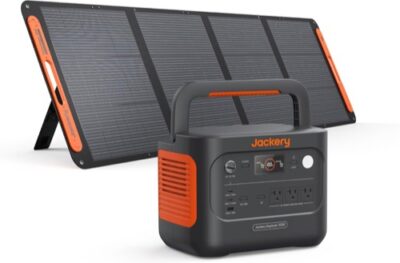
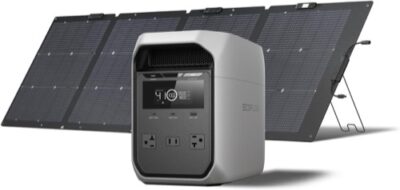
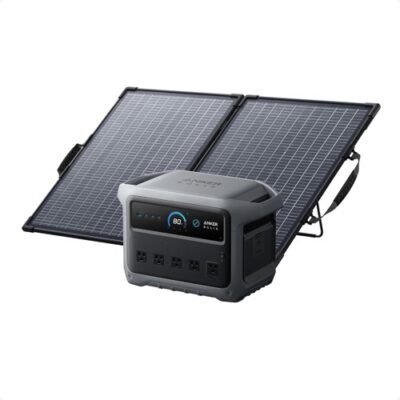
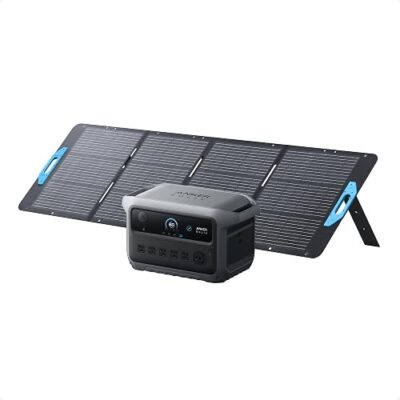
An RV solar generator must survive a repeating loop: charge while driving or connected to shore power, run 12V and AC loads at camp, harvest solar in a constrained site, and pack everything before departure. The five picks here range from portable 1kWh systems to an expandable 120/240V platform. Outlet shape matters, but daily watt-hours and charging access decide whether the rig actually works.
Measure the RV Day as Watt-Hours
| Load group | Measure this | Do not assume this |
|---|---|---|
| Refrigerator or cooler | Wh over a warm representative day | Compressor nameplate is continuous use |
| Pump, fans, controls | Average watts × duty hours | Standby and overnight use are zero |
| Laptops and devices | Battery Wh plus conversion loss | Charger maximum equals every charge session |
| Cooking and coffee | Measured watts and minutes per event | High output makes energy consumption irrelevant |
Compare the total with usable station energy, then reserve margin for shade, heat, and an extra night. A 1kWh battery can support a disciplined weekend but still empties quickly under repeated cooking or climate loads.
Choose the Outlet Topology Before the Brand
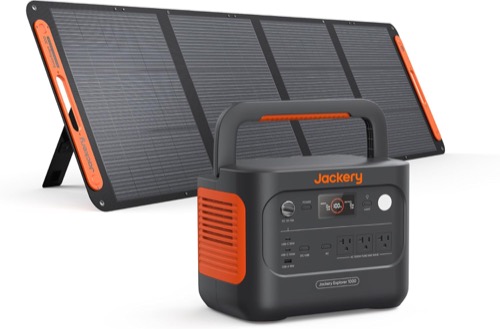
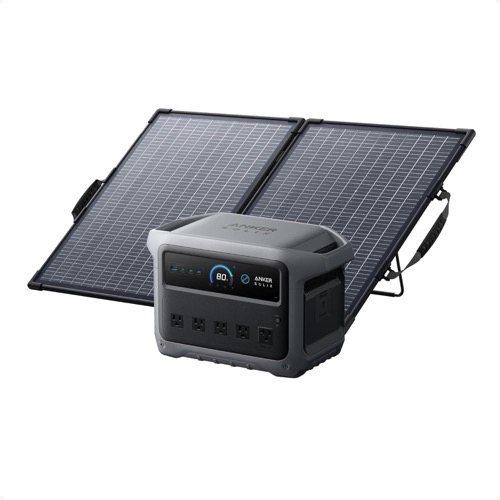
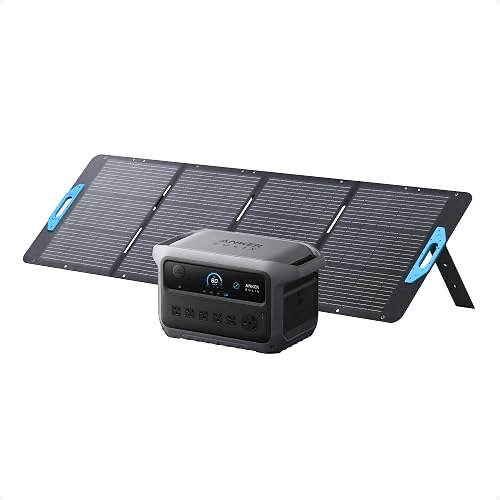
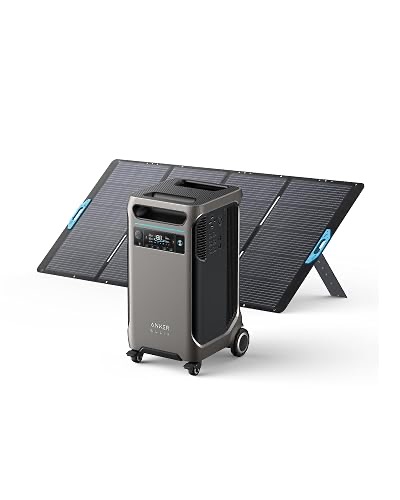
The Anker C2000 Gen 2 includes a direct TT-30R, making it the simplest high-current RV fit in this group when its 120V limits match the rig. F3800 adds broader RV and 120/240V possibilities, but its weight and system complexity demand planned installation and handling. The three 1kWh kits are cord-connected portable layers rather than replacements for a full RV electrical system.
Outlet warning: a 30A or 50A-shaped receptacle does not create unlimited energy. Check voltage, continuous output, adapter rules, neutral/ground requirements, and the rig’s simultaneous loads.
Compare Starter Array With Receiver Headroom
The gap is future potential, not day-one charging speed. Added modules must fit the exact voltage, current, connector, and cold-weather Voc boundaries. A larger receiver is useful only when there is roof or ground space for a compatible array.
Match Movement Class to the Rig
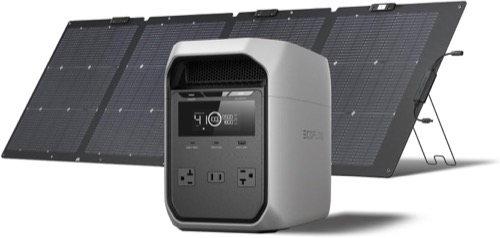
Jackery 1000 v2, DELTA 3 Classic, and C1000 are realistic move-in/move-out systems. C2000 is still comparatively portable for 2kWh but benefits from a fixed vehicle bay or short transfer. F3800 belongs on wheels or in a planned location; expansion batteries make the system more capable and less portable at the same time.
Build a Three-Route Charging Plan
- Shore route: verify circuit rating, charger setting, and ventilation.
- Driving route: distinguish an accessory socket from an installed alternator charger.
- Solar route: calculate conservative daily harvest from the deployable array.
- Fallback rule: define the state of charge that triggers driving, shore power, or load reduction.
Pick the Kit by RV Mission
Commission One Complete Drive–Camp Cycle
Test the real refrigerator, pump, fans, devices, and scheduled high-watt loads. Drive using the approved charge path, deploy the panel, and measure net energy recovered after daytime loads. Check cable temperature, fan behavior, outlet stability, and the shutdown margin. Record the result as a rig-specific baseline rather than a universal runtime claim.
Keep Expansion From Becoming Unplanned Payload
Extra batteries and panels add autonomy but consume cargo capacity, tie-down space, setup time, and budget. Model the complete expanded system before buying the first box. If a permanent battery bank, inverter/charger, and roof array better match the rig, a portable kit may be the wrong architecture.
Test the Driving Charge Path at Idle and at Cruise
A factory accessory socket and a dedicated alternator charger are different systems. Verify the approved cable, outlet fuse, current limit, ignition behavior, and station setting before depending on vehicle recovery. Observe both a short idle test and a normal drive, then confirm that net charging remains positive after the rig’s other electrical loads. Stop if connectors, cable, or outlet become abnormally warm.
Close the RV Energy Loop
Choose Jackery for a balanced weekend package, EcoFlow for a solar-forward 1kWh routine, C1000 for compact high output, C2000 for direct TT-30R use, or F3800 for a larger engineered platform.