Anker SOLIX F3800 + PS400 Solar Generator Review
At a Glance
KEY FEATURES
- Port platform: 6,000W 120/240V with NEMA 14-50 and L14-30R
- Storage: 3,840Wh LFP, expandable to 26,880Wh
- Solar boundary: 2,400W receiver with one 400W PS400
- Movement: About 132 lb with wheels and extendable handles
- Best fit: RV, selected-circuit or EV-reserve plans with staged array growth
PROS
- High-current 120/240V outlets support unusual missions.
- Storage can expand with as many as six battery packs.
- Two 1,200W MPPT inputs support a serious future array.
- Wheels and app control improve a large system's usability.
CONS
- One PS400 uses just one-sixth of the solar ceiling.
- About 132 lb limits vehicle and stair portability.
- Integration accessories can materially increase total cost.
- Firmware, delivery and support outcomes require documentation.
Best High-Current Port Platform
Based on exact manufacturer limits and 93 usable exact-bundle owner records; no first-party testing performed.
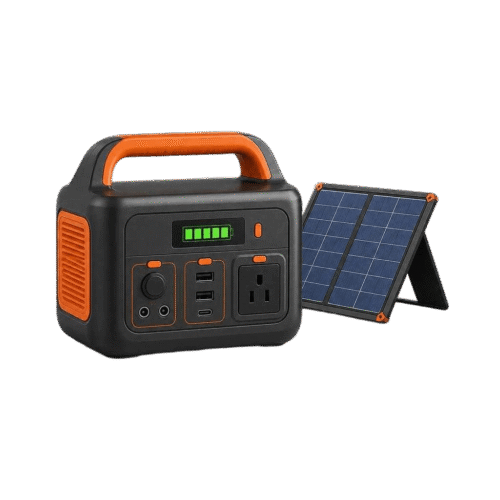
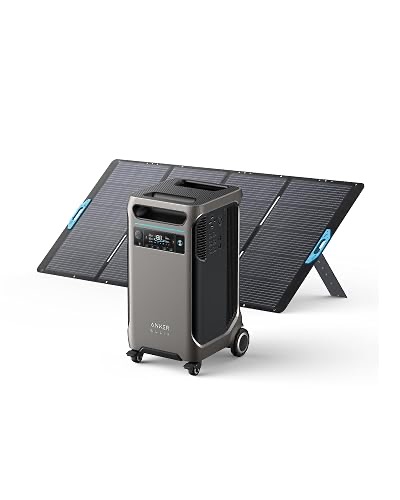
The Anker SOLIX F3800 and one PS400 panel should be evaluated as a port-rich 240V power platform bundled with one-sixth of its maximum solar array. The F3800 can support home, RV, EV, radio, and professional-power missions that smaller stations cannot approach. Its included 400W panel is electrically compatible and useful, but it does not turn a 3,840Wh battery into a fast-recovering solar system.
Ninety-three usable owner accounts provide a broad operational record: 240V and RV use, window air conditioners, radio equipment, app monitoring, wheels, solar yield, charging noise, damaged deliveries, accessory confusion, and varied support outcomes. These observations shape the inspection plan. They are not a reliability percentage, and manufacturer documentation remains authoritative for every electrical limit.
Assign Every Outlet a Mission Before Buying the F3800
The headline advantage is not merely 6,000W. It is the combination of ordinary 120V receptacles, a NEMA 14-50, an L14-30R, and native 120/240V output in one chassis. That creates credible paths for an RV, selected home circuits, certain 240V loads, or an EV charging task. It also creates more opportunities to assume the wrong cable or connection method.
Write a port map with one approved purpose per outlet family. Record voltage, maximum current, load startup, energy per day, and the listed adapter or inlet. A NEMA connector describes geometry and service type; it does not waive circuit protection, transfer requirements, neutral/ground review, or local code. Fixed home integration and any improvised-looking adapter plan belong with a qualified electrician.
| Outlet family | Plausible mission | Pre-use gate |
|---|---|---|
| NEMA 5-20 | Direct 120V essentials and tools | Combined continuous load and motor-start test |
| L14-30R | Approved 120/240V inlet or equipment | Exact wiring, neutral, grounding, and transfer review |
| NEMA 14-50 | Compatible RV or EV charging path | Device current setting, cable rating, and energy budget |
| USB/DC | Communications and low-voltage loads | Use native outputs where they reduce inverter overhead |
One PS400 Cannot Refill a 3.84kWh Battery Quickly
The PS400 is rated at 400W, with a 48V operating point and 57.6V open-circuit voltage. The F3800 can accept up to 2,400W across two MPPT inputs. One panel therefore uses roughly one-sixth of the station’s published PV wattage ceiling. Ideal division gives 9.6 nameplate hours from empty before losses, taper, temperature, angle, clouds, shade, and active loads.
Several supplied accounts describe useful daytime solar, including powering a window air conditioner, while others report output below nameplate or setup friction. Both are plausible because solar input changes with conditions and deployment. The correct acceptance test is repeatable: inspect the panel, aim it in clear sun, remove shade, connect with the approved path, allow input to stabilize, and record watts, weather, angle, and battery state.
Net daily gain = solar energy accepted − energy consumed while charging.
A 400W panel can show attractive input and still leave the battery lower each evening when an air conditioner or other large load runs for hours.
Expansion Economics Begin With the Array, Not the Battery Pack
Anker supports up to six BP3800 expansion batteries with one F3800. That can turn 3.84kWh into a much larger reserve, but every added kilowatt-hour increases the recovery burden. If solar remains at 400W, adding storage may extend the first outage while making the return to full proportionally longer. Storage and generation should be budgeted together.
The same discipline applies to adding panels. Anker documents the input windows and explains how multiple PS400 panels can be assigned to the two XT-60 inputs. Do not copy a diagram without checking the current firmware requirement, cold-corrected open-circuit voltage, connector path, series/parallel topology, and current ceiling. Price cables and safe outdoor routing along with the panels.
Choose One Routing Plan for Home, RV, or EV Duty
A single F3800 can serve several missions, but it should not be expected to perform all of them simultaneously without an energy plan. An RV connection may be simple and direct. Selected home circuits need listed transfer equipment. EV charging can consume the entire stored battery quickly and may be best treated as emergency range rather than routine charging. Every mission competes for the same 3,840Wh.
Owner accounts confirm that the ports are more than decorative: users report RV, air-conditioning, radio, appliance, and backup applications. Those accounts do not replace the compatibility check for your equipment. Measure the load, configure the receiving device’s current limit, and conduct a short supervised trial before declaring the setup ready.
Strong fit when the coach connection and load management are verified; solar recovery still depends on array size.
Capable platform with approved transfer hardware and qualified installation.
Useful for limited emergency range, but a large continuous load can drain 3.84kWh rapidly.
Attractive port capacity; test noise, grounding, and RF behavior in the final layout.
Create a Movement Zone for a 132-Pound Machine
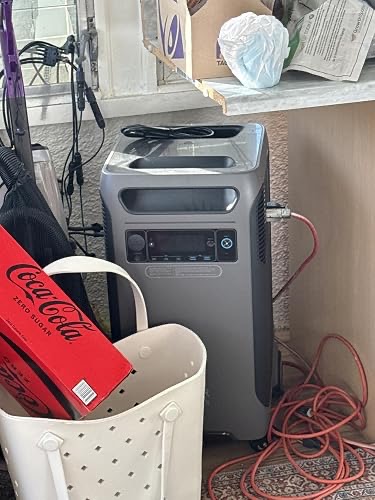
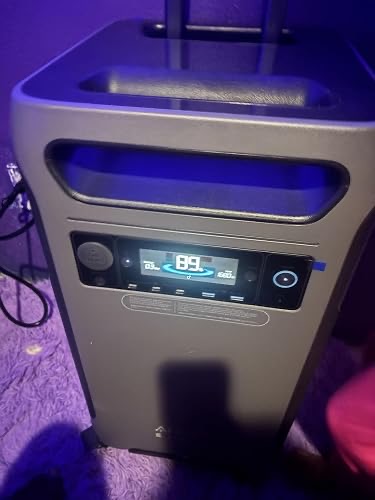
The F3800’s industrial wheels and handles are necessary, not optional luxuries. At roughly 132 pounds, it should have a defined parking zone with ventilation, outlet access, short load cables, and a clear rolling path. A person who can roll it across a garage may still be unable to lift it into a vehicle or pull it over a threshold safely.
Owner photos show the machine in real homes and workspaces, where cable clutter and tight corners can become part of the risk. Mark a no-storage perimeter, keep connectors protected, and prevent children, pets, or rolling objects from stressing cables. If vehicle travel is planned, specify ramps, tie-down points, and load-floor capacity before the first trip.
Run a Firmware and Solar Acceptance Test Together
Some F3800 solar limits and behaviors are firmware-dependent, so record the delivered firmware before changing it. Update only with stable power and follow Anker’s instructions. After any update affecting charging, repeat the solar test on both inputs separately. A display that shows input is not enough; compare the two channels under the same panel and conditions to isolate a cable, panel, or receiver issue.
- Photograph labels and firmware. Preserve the delivered state.
- Test PS400 on MPPT 1. Record steady watts and weather.
- Move the same panel to MPPT 2. Keep angle and cable route unchanged.
- Verify AC and high-current outlets. Use benign loads before expensive appliances.
- Simulate the mission. Conduct a supervised RV, home-inlet, or equipment test.
Delivery and Accessory Expectations Need Their Own Risk Register
The evidence set includes praise for support and also accounts of damaged shipment, slow remedy, or accessory confusion. A buyer should separate three questions: did every box arrive, does each component match the ordered variant, and does the system perform after correct setup? Mixing them together makes troubleshooting harder.
Inventory the F3800, PS400, AC cable, solar cable/connector components, documentation, and any separately purchased integration hardware. Photograph panel cells and connector ends. Test within the seller’s return period. Preserve written case numbers, tracking records, and video of repeatable faults. That documentation is useful whether the remedy is simple or contested.
Who Should Choose the F3800 Plus One PS400?
This exact pairing suits buyers who want the F3800 platform first: native 240V, strong output, RV/EV connectors, expandability, and an app-managed ecosystem. The panel is a useful starter and emergency asset when the system also has wall charging or when a larger array is planned.
It is a weak value when the advertising image creates the impression of a complete off-grid system. Buyers focused on solar autonomy should price three to six compatible panels, cabling, deployment area, and weather storage before checkout. Buyers needing only ordinary 120V essentials can avoid substantial weight and cost with a smaller station.
Bottom Line: Buy the Port Platform Only With a Generation Plan
The F3800 earns its place through outlet architecture and expansion flexibility. It can serve missions that a generic 2kWh box cannot. One PS400 does not exploit that platform’s solar capacity, and it cannot rapidly replace the energy that 6,000W-capable loads can consume.
Choose the bundle when the panel is intentionally stage one. Assign each port a mission, map movement, commission both MPPT inputs, and budget generation alongside storage. When those steps are completed, the kit is a strong foundation. Without them, it is an expensive battery with a promotional-size solar attachment.
Pros & Cons Analysis
Based on documented specifications and owner feedback
Pros
- Port architecture is exceptional — NEMA 14-50, L14-30R and ordinary AC outlets can serve RV, home, EV-reserve and equipment roles after compatibility review.
- Expansion has real scale — Six optional BP3800 packs can extend a validated critical-load system far beyond the base 3.84kWh.
- Solar receiver is generous — Two independent MPPT inputs allow staged troubleshooting and a future array up to 2,400W.
- Large-system mobility is considered — Wheels and handles make one-level relocation more practical than lifting a conventional 132-pound box.
- Owner scenarios are broad — Exact records cover RV, air-conditioning, radio, backup and appliance use that translate into acceptance tests.
Cons
- Included solar is only stage one — The PS400 cannot rapidly replace energy consumed by 6,000W-class loads or a deeply cycled base battery.
- Storage expansion can create a recovery trap — Every added battery lengthens recovery unless solar, AC or another verified source grows too.
- Port variety raises integration risk — Connector shape does not replace current settings, cable ratings, transfer equipment, neutral/grounding and code checks.
- Handling remains industrial — Ramps, tie-downs, thresholds and floor loading matter despite the wheels.
- Ownership evidence conflicts — Delivery damage, app or firmware friction and varied remedies make early commissioning and written records important.
Buy the Port Platform With an Array Plan
The F3800 earns a recommendation for buyers who need its 120/240V port architecture and expansion path. One PS400 is only a starter; price the eventual generation, integration hardware and handling plan before treating the bundle as a complete system.
Frequently Asked Questions
Can one PS400 recharge the F3800 in one day?
Not reliably from empty. Ideal nameplate math already exceeds 9.6 hours, before ordinary field losses and active loads.
Does the F3800 provide 240V output?
Yes, through documented high-current outlets, but the receiving equipment and transfer path must be compatible and safely installed.
Can it connect directly to a 30A RV inlet?
It has NEMA 14-50 and L14-30R rather than a dedicated TT-30R. Use only a documented, correctly rated connection for the exact RV service.
How much can the battery expand?
The base 3,840Wh can expand to 26,880Wh with six compatible BP3800 packs.
Can I add more PS400 panels?
Yes within Anker's current MPPT voltage, current, wattage, connector and firmware requirements.
What should be commissioned first?
Test each MPPT input with the same panel, verify outlets with benign loads, then simulate the intended RV, home or equipment mission under supervision.
Technical Specifications
| Brand | Anker SOLIX |
|---|---|
| Kit model / SKU / ASIN | F3800 + PS400 bundle (ASIN B0CRB3MQT5; US) |
| Power-station model | Anker SOLIX F3800, model A1790 |
| Included solar-panel model and quantity | 1 × Anker SOLIX PS400 400W portable panel |
| Battery capacity | 3,840Wh |
| Battery chemistry | LiFePO4 (LFP) |
| Cycle-life rating | 3,000 cycles to at least 80% capacity |
| Expandable capacity | Up to 26,880Wh with six BP3800 expansion batteries |
| Continuous AC output | 6,000W |
| Surge / peak output | 9,000W |
| AC voltage, frequency, and waveform | 120/240V, 60Hz, pure sine wave |
| AC outlets and high-current / RV / 240V outputs | 6 × 120V AC plus NEMA 14-50 and L14-30R; no dedicated TT-30R |
| USB and DC outputs | USB-A, high-power USB-C and 12V car-socket outputs |
| Maximum station solar input | 2,400W total |
| PV input voltage/current range and connector | Two XT60 inputs; each supports 11–32V / 10A or 32–60V / 25A, up to 1,200W |
| Included panel rated power | 400W |
| Panel Voc / Vmp / Isc / Imp | Voc 57.6V / Vmp 48V / Isc 9.17A / Imp 8.33A |
| Panel construction and cell type | Foldable monocrystalline portable panel with adjustable solar-angle guide |
| Panel weather rating | IP67 panel |
| Panel dimensions and weight, folded / deployed | About 35.9 × 25.9 × 1.9 in folded and 100 × 35.9 × 1.2 in deployed; 35.1 lb |
| Solar recharge estimate with included panel | Idealized minimum exceeds 9.6 nameplate hours; plan longer for field loss and active loads |
| Maximum AC input and AC recharge time | Up to 1,800W AC input; roughly 0–80% in about 1.5 hours under specified conditions |
| Car, alternator, and other charging methods | Vehicle charging and compatible Anker ecosystem charging accessories; verify the exact cable and firmware |
| UPS / EPS support and transfer time | Pass-through/backup use supported; exact protected-load transfer behavior must be commissioned |
| App and connectivity | Anker app over Wi-Fi and Bluetooth |
| Station dimensions, weight, operating limits, and weather rating | About 27.6 × 15.3 × 15.6 in; about 132 lb; station has no published outdoor IP rating |
| Station and panel warranties | Station 5 years; PS400 24 months under current direct-store terms |
| Included in the box | F3800, AC cable, solar charging cable and documentation; PS400 panel, extension leads and MC4-to-XT60 charging path |