Solar Power Picks logo with sun, solar panel, and green energy icon

  • Home
  • Reviews
  • Best
    • Best portable power stations
    • Best Solar Panels
    • Best Solar Generators
  • Guides
    • Portable Power Stations Guides
    • Solar Panels Guides
    • Solar Generators Guides
  • Comparisons
    • Portable Power Stations Comparisons
    • Solar Panels Comparisons
    • Solar Generators Comparisons
  • Calculator
Home / Solar Generators / Best / Best Whole-House Solar Generator

Best Whole-House Solar Generator

OUR PICKS

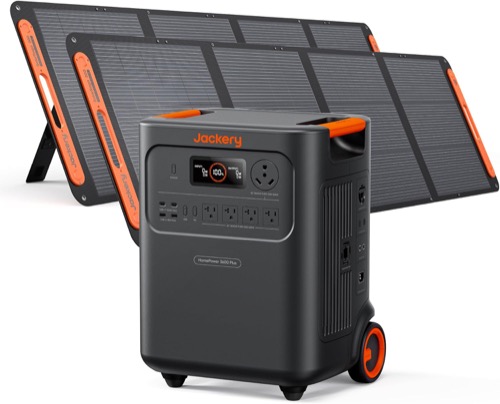
Jackery HomePower 3600 Plus Review: A 3600Wh Home-Backup Kit That Nails Your Essentials — Not Your Whole House

Best Whole-House Kit

Jackery HomePower 3600 Plus Review: A 3600Wh Home-Backup Kit That Nails Your Essentials — Not Your Whole House

Check price at Amazon Jump to details
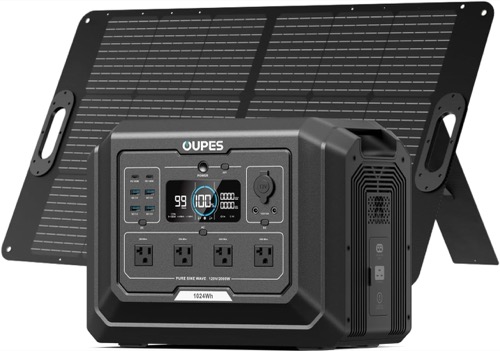
OUPES 2000W Solar Generator Review: A 1024Wh Station That Charges in 36 Minutes and Grows to 5120Wh

Best Expandable Value

OUPES 2000W Solar Generator Review: A 1024Wh Station That Charges in 36 Minutes and Grows to 5120Wh

Check price at Amazon Jump to details
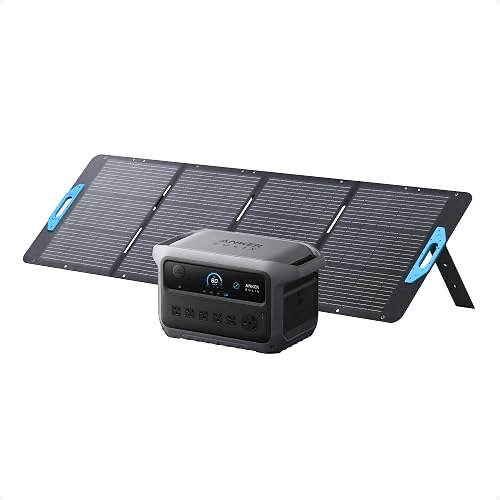
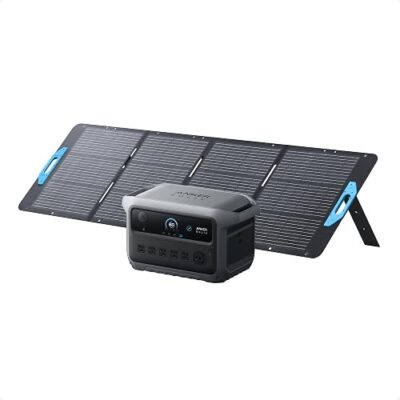
Anker SOLIX C1000 Gen2 Review: A 1024Wh Kit That Wall-Charges in 49 Minutes and Ships With Its Own Panel

Best Modular Starter

Anker SOLIX C1000 Gen2 Review: A 1024Wh Kit That Wall-Charges in 49 Minutes and Ships With Its Own Panel

Check price at Amazon Jump to details
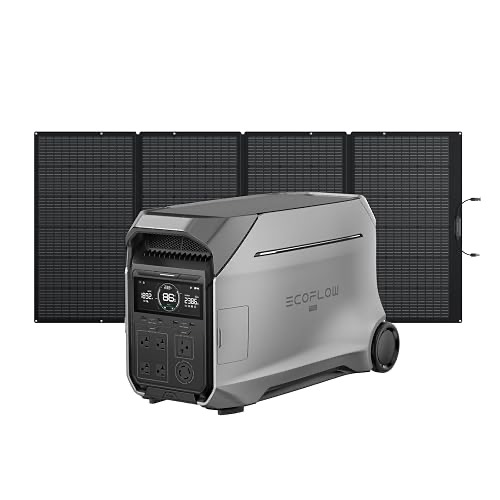
EcoFlow Delta 3 Classic Review: A 1024Wh Kit That Charges in Under an Hour and Backs Up in 10 Milliseconds

Best for Essential Circuits

EcoFlow Delta 3 Classic Review: A 1024Wh Kit That Charges in Under an Hour and Backs Up in 10 Milliseconds

Check price at Amazon Jump to details

What a Whole-House Solar Generator Can Actually Back Up

Let’s set expectations before you spend a dollar. A portable solar generator will not run your entire house the way a wired, gas-fed standby generator does — nothing you can wheel across a garage backs up every circuit at full load for days. What a good one does, silently and without fuel, is keep the loads that actually matter alive when the grid drops: a refrigerator and freezer, lights, wifi and phones, a CPAP, and the blower on a gas furnace. That’s essentials backup, and for most homes it’s the honest definition of “whole-house” that a single unit can deliver — measured in hours to a couple of days, not indefinitely.

True whole-house — several circuits at once, 240V appliances like a well pump or dryer, and multi-day off-grid runtime — is a different class of hardware. It takes high total capacity, the ability to expand that capacity with add-on batteries, 240V output, and a transfer switch so the station can feed your home’s existing circuits safely. Only one pick below clears that bar on its own: the Jackery HomePower 3600 Plus. The other three are 1kWh-class units that we’ve included honestly — two of them are essentials or starter systems, not whole-home solutions, and we say so plainly in each write-up.

Use the quick picks and comparison table above to see the four kits at a glance, then read on to translate spec sheets into what they can and can’t carry in a real outage. If it turns out you only need essentials — and many buyers do — we’ll point you to a tighter shortlist built for exactly that job.

How We Chose These Whole-House Solar Generators

Whole-house backup rewards a different set of criteria than camping or grab-and-go power. A big headline battery means little if the inverter can’t carry your loads, the system can’t grow, or it has no way to reach your home’s circuits. Here’s what we weighted, in the order that decides whether a kit is genuinely whole-house or just a large power station.

Criterion Why It Matters Weight
Total & expandable capacity Whole-house runtime needs kWh, not Wh — and the option to add batteries for multi-day outages High
Continuous output & surge Continuous watts decide how many circuits run at once; surge starts compressors, pumps, and motors High
120V vs 240V output Dryers, ranges, central AC, and deep well pumps need 240V that most portable units can’t supply High
Transfer-switch / panel integration Feeding your existing circuits safely — not extension cords — is what makes backup truly whole-house High
Solar recharge to sustain off-grid Panel wattage and the station’s solar input ceiling decide whether you can refill faster than you drain High
Battery chemistry & cycle life LiFePO4 survives thousands of cycles for years of storm-season use without meaningful capacity loss Medium
Wall & hybrid recharge speed Fast AC or generator-assisted charging matters for storm prep and bridging cloudy days off-grid Medium

Two of those deserve a note on how we read them. On expandable capacity, we treat the base battery as a starting point: the Jackery HomePower 3600 Plus grows from 3584Wh to 21kWh per unit, and the OUPES 2000W from 1024Wh to 5120Wh — that headroom is what turns an essentials box into a multi-day system. On 240V and transfer switches, we’re blunt: three of these four kits are 120V-only, so they physically cannot power a 240V dryer or well pump no matter how big the battery is. That single spec is often the line between “whole-house” and “essentials,” which is why it carries so much weight here.

Worth knowing: Continuous output is the real ceiling for whole-house use. A 4500W or 7200W surge only lasts a fraction of a second to start a motor — the number that decides how many circuits you can run at the same time is the continuous watt rating.

What “Whole-House” Really Means for a Solar Generator

Essentials Backup vs True Whole-Home

These are two different jobs. Essentials backup keeps a short list alive — fridge, freezer, lights, wifi, a CPAP, a furnace blower — usually plugged directly into the power station or run through a couple of extension cords. Any of our 1kWh picks handles that. True whole-home means the station feeds your electrical panel through a transfer switch and can carry most of the circuits you’d normally use, including large 240V appliances. That’s a job for the HomePower 3600 Plus, not a 1024Wh unit — and even it carries the circuits you choose, sized to their draw, rather than the whole panel at full tilt.

The Capacity Math for a Day — and Multiple Days

Think in watt-hours per day. A refrigerator draws roughly 1000-1500Wh over 24 hours, a furnace blower 500-1000Wh, and lights, wifi, and device charging add a few hundred more. Add it up and a day of essentials lands around 2000-4000Wh — which a 3584Wh HomePower 3600 Plus covers for a day or two on a single charge. One owner reported running two refrigerators, a modem, router, and security cameras through a 7-hour outage while using only 18 percent of the battery. Push toward a fuller home with heavy or 240V loads and you’ll cross 10,000Wh a day, which is exactly why expandability to 21kWh — and solar to refill it — matters for anything beyond a single night.

120V vs 240V and Transfer Switches

Standard outlets are 120V, and that runs fridges, electronics, lights, and most small appliances. But electric dryers, ranges, central air, and many deep well pumps are 240V split-phase loads, and a 120V-only station cannot supply them at all. Only the Jackery HomePower 3600 Plus here outputs dual 120V/240V, which is what lets it reach those circuits through a manual transfer switch. A transfer switch (or panel interlock) is also what makes whole-house backup safe and legal — it isolates your home from the grid so you’re not back-feeding utility lines. Have that work done by a licensed electrician; the generator is plug-and-play, but the panel connection is not a DIY afternoon.

Expandable Battery Systems

Fixed capacity is the ceiling on how long you last, so the ability to bolt on more battery is what separates a whole-house system from a large portable. The OUPES 2000W starts at 1024Wh and grows to 5120Wh by adding B2 batteries — a sensible way to buy essentials now and build toward whole-home later. The HomePower 3600 Plus scales all the way to 21kWh per unit, enough that Jackery rates a stacked system to carry a three-person household for over two weeks. The EcoFlow Delta 3 Classic and Anker SOLIX C1000 Gen 2 are the fixed-capacity picks — excellent essentials units, but you don’t grow them into whole-house coverage.

Solar to Sustain an Off-Grid Home

Capacity determines how long you last on a charge; solar determines whether you ever have to stop. For a multi-day or off-grid outage, the panel wattage and the station’s solar input ceiling decide whether you refill faster than you drain. Be realistic here: the HomePower 3600 Plus ships with two 200W panels (400W total), and owners in winter sun reported closer to 100W per panel — enough to offset drain, not to refill 3.6kWh in an afternoon. The OUPES accepts up to 800W of solar despite its token 100W kit panel, and the Anker C1000 Gen 2 refills fully in about 1.8 hours with 600W of panels. If solar is your sustainability plan, budget for far more panel than any kit includes.

Real-world math: Two 200W panels in strong sun net well under 400W once you account for angle, heat, and cloud. To sustain a fridge plus essentials off-grid, plan on several hundred watts of solar minimum — and for a heated or 240V home, closer to a full rooftop-scale array.

Do You Actually Need Whole-House, or Just Essentials?

Here’s the question that saves most buyers money. If your real goal is keeping a fridge, freezer, lights, wifi, and a CPAP running through a storm outage that lasts a few hours to a night, you do not need a $2,000 whole-house system — a 1kWh-class unit does that job at a fraction of the cost and weight. Whole-house hardware earns its price only when you need 240V appliances, several circuits at once, or genuine multi-day off-grid runtime.

Be honest about scope before you upsize. The Anker SOLIX C1000 Gen 2 and EcoFlow Delta 3 Classic are superb essentials backups — fast to recharge, quiet, and UPS-capable for a router or PC — but neither is a whole-house solution on its own, and we wouldn’t sell them as one. If that description fits your outage plan, you’ll get a tighter, better-matched shortlist in our guide to the best solar generators for home backup, which ranks the right kits for fridge-and-essentials duty rather than the whole panel.

Buying note: The most common whole-house mistake is overbuying. Size to the circuits and hours you actually need to carry, confirm your biggest single load fits under the continuous output rating, and only pay for 240V and 21kWh of expansion if your plan truly calls for them.

Related Guides

Whole-house sizing is where the money is won or lost, so start from your loads rather than a headline battery number. Use our solar generator size calculator to turn your device list, outage length, and recharge plan into a target capacity, then confirm the result against the picks above.

  • What size solar generator do I need? — a step-by-step walkthrough of the watt-hour math, surge headroom, and solar sizing for backup.
  • Best solar generator for home backup — the right shortlist if essentials backup, not the whole panel, is what you actually need.

The short version for whole-house: list the circuits and appliances you must keep running, multiply each device’s watts by the hours you need it, add roughly 15 percent for inverter losses, and add a reserve so you’re not cycling to empty. That total is your capacity floor. Confirm your heaviest single load — and any 240V appliance — fits the station’s output, then make sure your solar plan can keep pace with a full day’s draw. Buy the smallest expandable system that clears all three, and grow it as your needs do.

Best Whole-House Kit

Jackery HomePower 3600 Plus Review: A 3600Wh Home-Backup Kit That Nails Your Essentials — Not Your Whole House

Jackery HomePower 3600 Plus Review: A 3600Wh Home-Backup Kit That Nails Your Essentials — Not Your Whole House

Get it now:

Check latest price

What to know

  • Dual voltage: 120V and 240V (in parallel) — the only pick here that can reach a 240V dryer, range, or deep well pump.
  • Designed to pair with a manual transfer switch (MTS) so it feeds your home's existing circuits; have that connection done by a licensed electrician.
  • Expandable to 21kWh per unit — Jackery rates a stacked system to carry a three-person household for over two weeks.
  • Four charging paths including a 2-hour hybrid AC+DC full charge; the two bundled 200W panels alone realistically net ~100W each in weak sun, so plan far more solar for off-grid sustain.
  • 6,000-cycle ceramic-membrane LiFePO4 cells rated from -4°F operation up to high heat, with a 10-year lifespan.

Best if

  • You want true whole-house backup, including 240V circuits
  • You plan to wire it through a transfer switch to your panel
  • You may expand toward multi-day, off-grid capacity

Skip if

  • You only need to keep a fridge and a few essentials alive
  • You need something one person can lift and carry
  • Your budget tops out well under $2,000
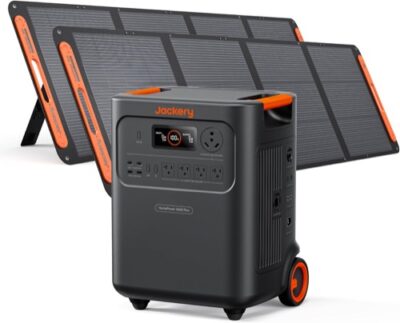
This is the one pick here that earns the phrase "whole-house" on its own. With 3584Wh of capacity, 3600W continuous (7200W in parallel), and dual 120V/240V output, it can carry real home circuits — a well pump, a furnace, a dryer — rather than just the appliances you plug in. Paired with a manual transfer switch it becomes plug-and-play home backup, and it expands to 21kWh per unit for genuine multi-day, off-grid runtime. At 77 lbs it rolls on wheels with a telescoping handle, because you're not carrying this one anywhere.
  • Capacity: 3584Wh LiFePO4, expandable to 21kWh per unit (6,000 cycles)
  • Output: 3600W continuous / 7200W surge; dual 120V & 240V
  • Solar input: two 200W panels included (400W total)
  • Recharge: 0-100% in ~2 hrs hybrid AC+DC; transfer-switch ready
  • Weight: ~77 lbs, wheeled with telescoping handle · Price: $2,149
Best Expandable Value

OUPES 2000W Solar Generator Review: A 1024Wh Station That Charges in 36 Minutes and Grows to 5120Wh

OUPES 2000W Solar Generator Review: A 1024Wh Station That Charges in 36 Minutes and Grows to 5120Wh

Get it now:

Check latest price

What to know

  • Expandable from 1024Wh to 5120Wh with B2 batteries — the value path from essentials toward whole-home capacity.
  • 120V-only: it runs fridges, electronics, and small appliances, but cannot power 240V dryers, ranges, or deep well pumps.
  • The bundled 100W panel is undersized for the battery; the unit accepts up to 800W of solar, so add panels for real off-grid sustain.
  • 13 ports including 4x AC and 2x 100W USB-C cover a full outage load-out.
  • 36-minute 0-80% AC charge — or 26 minutes with simultaneous AC + solar.

Best if

  • You want to start on essentials and expand toward whole-home
  • You value the most output-per-dollar and a big 4500W surge
  • Fast wall recharge before a storm matters to you

Skip if

  • You need 240V or true whole-house coverage out of the box
  • You want to rely on the included 100W panel alone
  • You want a top-tier brand app and support record
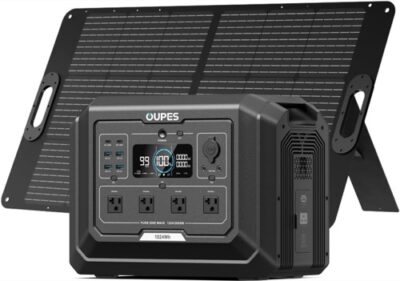
If you want to start on essentials and grow toward whole-home without spending four figures up front, this is the smart entry. The 1024Wh base is modest, but it expands to 5120Wh by adding B2 batteries — so you buy for a fridge and lights now and build toward multi-day coverage later. A 2000W inverter with a big 4500W surge clears compressor and power-tool startups that trip weaker units, a sub-20ms UPS protects a PC or medical device, and a 36-minute 0-80% wall charge is the fastest here for storm prep. It stays honestly portable at 27.8 lbs.
  • Capacity: 1024Wh LiFePO4, expandable to 5120Wh (3,500+ cycles)
  • Output: 2000W continuous / 4500W surge; 120V only
  • Solar input: 100W panel included; up to 800W max input
  • Recharge: 36-min 0-80% AC; <20ms UPS · Weight: 27.8 lbs
  • Ports: 13 total, incl. 4x AC and 2x 100W USB-C · Price: $559
Best Modular Starter

Anker SOLIX C1000 Gen2 Review: A 1024Wh Kit That Wall-Charges in 49 Minutes and Ships With Its Own Panel

Anker SOLIX C1000 Gen2 Review: A 1024Wh Kit That Wall-Charges in 49 Minutes and Ships With Its Own Panel

Get it now:

Check latest price

What to know

  • As configured, a single 1024Wh unit backs up essentials — it is not a whole-house solution by itself.
  • 120V-only, so it can't power 240V appliances no matter the load.
  • 49-minute full recharge at 1600W (HyperFlash) is the fastest wall charge in this lineup.
  • 1.8-hour full solar recharge with 600W (60V max) of panels — plug in more panel for real off-grid use than the 100W kit unit.
  • UPS-capable for a work-from-home desk; the PS100 bifacial panel is IP68-rated and just 7 lbs with its stand.

Best if

  • You want a fast-charging, well-built first unit for essentials
  • You value the quickest wall and solar recharge of this group
  • You like Anker's app and ecosystem polish

Skip if

  • You need to carry 240V or whole-house circuits
  • You want a single box that can scale to multi-day whole-home
  • You need a big surge for demanding compressor startups
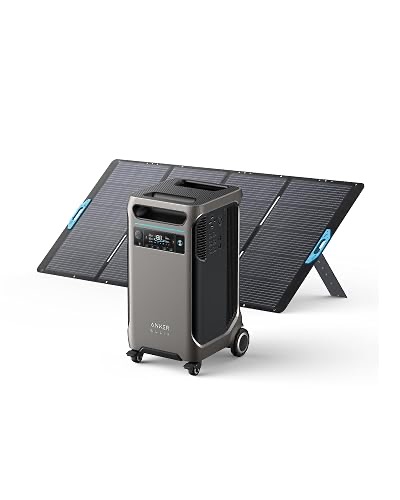
Think of this as the low-risk first unit for a home-backup plan, not a whole-house system on its own. As a single 1024Wh, 2000W station it's an essentials backup — a fridge, lights, wifi, a router, a CPAP — with the fastest recharge of this group: a full 49-minute wall charge via HyperFlash, or a full solar top-up in about 1.8 hours with 600W of panels. The compact, 10-port design and IP68 bifacial panel make it an easy, well-built starting point in Anker's ecosystem, with polished app control to match.
  • Capacity: 1024Wh LiFePO4; 120V only
  • Output: 2000W continuous / 3000W peak, 10 ports
  • Solar input: 100W bifacial panel included; up to 600W (60V max)
  • Recharge: 49-min full AC (HyperFlash); 1.8-hr full solar at 600W
  • Panel: PS100 bifacial, IP68, ~7 lbs · Price: $670
Best for Essential Circuits

EcoFlow Delta 3 Classic Review: A 1024Wh Kit That Charges in Under an Hour and Backs Up in 10 Milliseconds

EcoFlow Delta 3 Classic Review: A 1024Wh Kit That Charges in Under an Hour and Backs Up in 10 Milliseconds

Get it now:

Check latest price

What to know

  • Sub-10ms UPS switchover makes it the pick of this pair for desktops, servers, and CPAP.
  • 120V-only and fixed-capacity — an excellent essential-circuit backup, not a whole-house solution.
  • X-Boost pushes select high-draw devices (kettles, heaters, dryers) toward 2600W beyond the 1800W rating.
  • Wi-Fi and Bluetooth app sends an outage alert and lets you cap charge speed to cut fan noise; owners report full AC recharge in about an hour.
  • The 220W bifacial panel is efficient, but owners in strong sun often see closer to half its rating.

Best if

  • You want to protect a fridge, router, and PC with fast UPS
  • You value deep app control and remote outage monitoring
  • You want an 1800W inverter in a compact 1kWh footprint

Skip if

  • You need to back up 240V or whole-house loads
  • You need expandable capacity for multi-day outages
  • You'd rather never open an app to run a power station
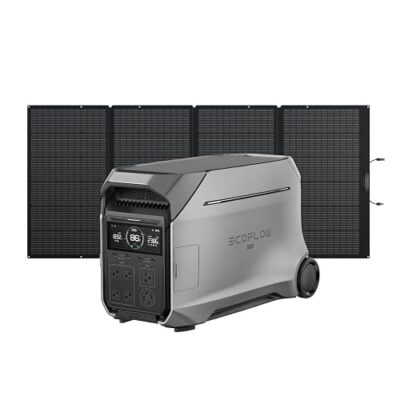
This is the pick for protecting a circuit of essentials — a fridge, router, and PC — rather than backing up the whole house. Its standout is a sub-10ms UPS that keeps sensitive electronics running through a blink, plus the deepest app control here for capping charge speed, scheduling, and remote monitoring during an outage. The 1024Wh, 1800W package (2600W via X-Boost) runs a fridge all day and recharges fast, and the efficient 220W bifacial panel adds off-grid flexibility. Just be clear on scope: it's fixed-capacity essentials backup, not a whole-home system.
  • Capacity: 1024Wh LiFePO4 (10+ year rated life); 120V only
  • Output: 1800W continuous / 3600W surge (2600W X-Boost)
  • Solar input: 220W bifacial panel included (up to 25% efficient)
  • UPS: <10ms switchover; 0-80% wall charge in 45 min
  • Warranty: 5 years (3 + 2 with registration) · Price: $699

Product Comparison

Feature Jackery HomePower 3600 Plus Review: A 3600Wh Home-Backup Kit That Nails Your Essentials — Not Your Whole House OUPES 2000W Solar Generator Review: A 1024Wh Station That Charges in 36 Minutes and Grows to 5120Wh Anker SOLIX C1000 Gen2 Review: A 1024Wh Kit That Wall-Charges in 49 Minutes and Ships With Its Own Panel EcoFlow Delta 3 Classic Review: A 1024Wh Kit That Charges in Under an Hour and Backs Up in 10 Milliseconds
Product Image
Jackery HomePower 3600 Plus Review: A 3600Wh Home-Backup Kit That Nails Your Essentials — Not Your Whole House
OUPES 2000W Solar Generator Review: A 1024Wh Station That Charges in 36 Minutes and Grows to 5120Wh
Anker SOLIX C1000 Gen2 Review: A 1024Wh Kit That Wall-Charges in 49 Minutes and Ships With Its Own Panel
EcoFlow Delta 3 Classic Review: A 1024Wh Kit That Charges in Under an Hour and Backs Up in 10 Milliseconds
Price $2149 $559 $669.99 $699
Rating
4.5 / 5
4.2 / 5
4.2 / 5
4.6 / 5
Category Solar Generators Solar Generators Solar Generators Solar Generators
Brand Jackery OUPES Anker EcoFlow (EF ECOFLOW)
Model / SKU HomePower 3600 Plus + 2x 200W Solar Panel Kit (ASIN: B0FMXCPWBN) Mega 1 2000W Solar Generator + 100W Panel Kit (ASIN: B0FS71NRSZ) SOLIX C1000 Gen2 + 100W Bifacial Panel Kit (C1000 Gen 2; ASIN: B0GYDL6PHP) DELTA 3 Classic + 220W Bifacial Solar Panel Kit (ASIN: B0FRMQPZF6)
Product type Solar generator kit — home-backup power station + two 200W solar panels Solar generator kit — portable power station + 100W solar panel Solar generator kit — portable power station + 100W bifacial solar panel Solar generator kit — portable power station + 220W bifacial solar panel
Battery capacity 3584 Wh (expandable to 21kWh per unit, up to 43kWh across multiple units) 1024 Wh (expandable to 5120Wh with two B2 extra batteries) 1,024 Wh 1024 Wh
Battery chemistry LiFePO4 (LFP) (high-temp ceramic-membrane cells; rated 6,000 cycles, 10-year lifespan) LiFePO4 (LFP) (rated 3,500+ cycles; strong thermal stability) LiFePO4 (LFP) (long-life lithium iron phosphate) LiFePO4 (LFP) (EV-grade CTC cells, smart BMS; rated 10+ years of daily use)
Continuous AC output 3600 W (pure sine wave) 2000 W (pure sine wave) N/A 1800 W (pure sine wave)
Peak / parallel output 7200 W (achieved with two units in parallel) N/A N/A N/A
Voltage 120V (single unit); 120V & 240V available in a parallel configuration N/A N/A N/A
Solar input 400 W (two bundled 200W panels; owners often add larger panels for faster charging) N/A N/A 220 W bundled panel (station accepts up to 500W via XT60, 11-60V DC, 15A max; series wiring needed to approach 500W)
Hybrid (AC+DC) recharge ~2 hours 0-100% N/A N/A N/A
Wall (AC) recharge ~2.5 hours (owner measured 30-100% in ~3-4 hours) 0-80% in 36 minutes (owner measured ~45 min to full) 0-100% in 49 minutes at 1,600 W (HyperFlash UltraFast mode, enabled in the Anker app) 0-80% in ~45 min with X-Stream (owner reached near-full in ~1 hr at ~900W; rate configurable to ~1400W, or ~500W quiet mode)
Solar recharge ~4 hours in ideal sun (real input often ~100W per panel in weak sun; 10+ hr to fill) N/A N/A ~5.8 hours from the 220W panel (owner saw 190-200W in partial shade; a desert owner pulled ~half, taking 7-10 hr)
Gas-generator recharge ~2.5 hours (owners call this the best path for long outages) N/A N/A N/A
240V / dual-voltage support Yes, in a parallel configuration (two units); single unit is 120V N/A N/A N/A
Transfer switch Compatible with Jackery Manual Transfer Switch (MTS) (sold separately; confirm model compatibility) N/A N/A N/A
Ports AC outlets, USB-C, USB-A, and DC outputs (exact port counts not specified in listing) N/A N/A N/A
App control Yes — Jackery App via Bluetooth and Wi-Fi (monitor charge, load, and input; no low-solar alert) Yes — Bluetooth/Wi-Fi app (remote monitoring and control) Yes — Anker app (enables the 49-minute HyperFlash charging mode) Yes — EcoFlow app (WiFi + Bluetooth; firmware, per-port monitoring, remote on/off, charge-rate control, outage alerts; free, no subscription)
Expandable Yes — to 21kWh per unit with add-on batteries; up to 43kWh with multiple units Yes — 1024Wh to 5120Wh with two B2 extra batteries Solar-expandable to 600 W of input (add compatible panels toward the 1.8-hour recharge) No add-on battery on the Classic (X-Boost extends load handling to 2600W; solar chainable in series toward 500W)
Charge-through (pass-through) Yes — usable as a UPS while charging (confirm switchover spec for sensitive gear) N/A N/A N/A
Operating temperature Down to -4°F (ceramic cells tested to 302°F for thermal-runaway resistance) N/A N/A N/A
Weight ~77 lb (station) (luggage-style with wheels and telescopic handle; lightest 3.6kWh LFP class) 27.8 lb (compact "Mega 1" build) N/A Not specified (built-in carrying handles; durable case)
Dimensions Not specified (billed as ~34% smaller and ~29% lighter than comparable models) N/A N/A N/A
Lifespan 10-year lifespan (6,000 charge cycles) N/A N/A 10+ years (LiFePO4 cells rated for 10+ years of daily use)
Warranty Not specified (confirm current coverage with Jackery at purchase) Manufacturer warranty (owners report refunds/replacements handled by support, sometimes after back-and-forth) Warranty card included in the box (coverage term not stated in the source listing) 5 years total (3-year standard + 2 years with product registration)
What's in the box 1× HomePower 3600 Plus station, 2× 200W solar panels, charging cables, user manual (transfer switch and expansion batteries sold separately) 1x Mega 1 2000W power station, 1x 100W solar panel (panel may ship separately; B2 expansion batteries and extra panels sold separately) Package 1: Anker SOLIX C1000 Gen 2 station, AC charging cable, quick start guide, safety & warranty card. Package 2: PS100 bifacial solar panel, 2× 8.2 ft (2.5 m) solar charging cables, 1× 1.6 ft (0.5 m) XT60i solar charging cable, quick start guide, safety card (the two packages ship separately) 1× DELTA 3 Classic station, 1× 220W bifacial solar panel with carrying bag, 1× XT60 solar adapter cable, 1× AC charging cable, user manual (station and panel ship separately)
Best for Whole-home essentials backup — fridges, freezers, heat, internet, and security gear — with an expansion path toward larger capacity, based on actual customer usage Camping, road trips, picnics, apartment and home outage backup — a fast-charging, expandable station with a panel already included — based on actual customer usage Camping, RV trips, work-from-home outage insurance, UPS-style backup, and fast USB-C travel charging — a station with a solar panel already included — based on actual customer usage Camping, travel, drive-in and group outings, off-grid top-ups, and home UPS / outage backup — quiet, fast-charging power with a solar panel already included — based on actual customer usage
Buy Now View Deal View Deal View Deal View Deal

Which Whole-House Solar Generator Fits Your Home?

Only one pick here earns the phrase "whole-house" on its own. The Jackery HomePower 3600 Plus (3584Wh, 3600W, dual 120V/240V, $2,149) is the kit to buy if you want to carry real circuits — a well pump, a furnace, a dryer — and grow toward multi-day, off-grid capacity by expanding to 21kWh per unit. Paired with a manual transfer switch, it's the closest a portable system comes to a wired standby generator.

The other three are honest about their limits. The expandable OUPES 2000W ($559) is our Best Expandable Value — a 2000W inverter with a 4500W surge that grows from 1024Wh to 5120Wh, ideal if you want to start on essentials and build toward whole-home over time. The Anker SOLIX C1000 Gen 2 ($670) is the Best Modular Starter thanks to a 49-minute recharge and the fastest solar top-up of the group, while the EcoFlow Delta 3 Classic ($699) is Best for Essential Circuits, protecting a fridge, router, and PC with a sub-10ms UPS.

Be honest with yourself about scope. If you need to keep a fridge, lights, wifi, and a CPAP alive for a night or two, a 1kWh unit does the job and the two smaller picks are enough. If you mean the whole panel — 240V loads, several circuits, days off the grid — only the HomePower 3600 Plus (or an expandable OUPES stack) belongs on your list. Not sure yet? Start with the sizing calculator below, then match the kit to the loads you actually need to carry.

---

Frequently Asked Questions

Can a solar generator really power a whole house?

Not the way a wired standby generator does — with one honest exception. A single portable unit powers the loads you plug into it or route through a transfer switch, not every circuit at once. What it does well is keep essentials alive silently: a fridge and freezer, lights, wifi, phones, a CPAP, and a furnace blower for hours to days. True whole-house coverage — including 240V appliances and several circuits — needs a high-capacity, expandable system. Among our picks, only the Jackery HomePower 3600 Plus qualifies: 3584Wh, 3600W continuous, dual 120V/240V, and expandable to 21kWh per unit. Paired with a manual transfer switch it can carry real house circuits, but even then you size it to the loads you choose, not the entire panel.

What size solar generator do I need to run a whole house?

Work from loads, not the square footage of the house. Add up the watt-hours each device draws over a day: a fridge might use 1000-1500Wh, a furnace blower 500-1000Wh, plus lights, wifi, and device charging. Essentials for one day land around 2000-4000Wh; a fuller home with a well pump or space heating over multiple days climbs past 10,000Wh. That's why a 3584Wh Jackery HomePower 3600 Plus, expandable to 21kWh, is the whole-house pick, while a 1024Wh unit like the EcoFlow Delta 3 Classic covers a single circuit of essentials. Then check the biggest single load fits under the continuous output rating, and 240V loads need a 240V-capable unit. Use our sizing calculator to turn your device list into a target capacity.

Do I need a transfer switch for a whole-house solar generator?

If you want to power your home's existing circuits — rather than running extension cords to each appliance — then yes. A manual transfer switch (MTS) or interlock lets you safely feed selected circuits from the power station without back-feeding the grid, which is both a code and safety requirement. The Jackery HomePower 3600 Plus is designed to pair with an MTS for plug-and-play home backup, so its 240V output can reach a furnace, well pump, or dryer circuit. The three 1kWh-class picks here are single-voltage (120V) units meant to be plugged into directly, appliance by appliance, so they don't require a transfer switch — but they also can't carry a 240V panel. Have any transfer-switch or panel work done by a licensed electrician.

What is the difference between 120V and 240V backup?

Standard household outlets are 120V, and most portable power stations — including the OUPES 2000W, Anker SOLIX C1000 Gen 2, and EcoFlow Delta 3 Classic — output only 120V. That runs fridges, lights, electronics, and most small appliances. But large appliances such as electric dryers, ranges, central AC, and many deep well pumps need 240V, which a 120V unit simply cannot supply. The Jackery HomePower 3600 Plus is the only pick here with dual 120V/240V output, which is what lets it back up split-phase 240V circuits through a transfer switch. If your outage plan includes a well pump or electric heat, 240V capability is the spec that decides whether a generator is truly whole-house or just essentials.

How long can a solar generator power a house during an outage?

It depends on capacity and how much of the house you keep running. Running only essentials — a fridge, lights, wifi, and a CPAP drawing perhaps 150-250W on average — a 3584Wh Jackery HomePower 3600 Plus lasts roughly a day to two per charge, and one owner reported using just 18 percent to run two refrigerators, a modem, and a security system through a 7-hour outage. A 1024Wh unit like the OUPES 2000W covers those same essentials for closer to 8-12 hours. The multiplier is solar: with enough panel wattage recharging by day, an expandable system can sustain essentials indefinitely off-grid. Add heavier or 240V loads and runtime drops fast, which is why capacity, expandability, and solar input all matter together.

Should I buy a whole-house solar generator or just an essentials backup?

Most people need less than they think. If your goal is keeping a fridge, freezer, lights, wifi, and a medical device alive through a storm outage, an essentials backup — a 1kWh-class unit like the EcoFlow Delta 3 Classic or Anker SOLIX C1000 Gen 2 — does the job for a fraction of the cost and weight. Step up to a true whole-house system only when you need 240V appliances, several circuits at once, or multi-day off-grid runtime; that's where the Jackery HomePower 3600 Plus or an expandable OUPES 2000W stack earns its price. If you're leaning toward essentials, our home backup guide ranks the right kits for that job.

×

About Solar Power Picks

Portable Solar Power, Backup Power, and Off-Grid Gear Guides

Your trusted source for honest, in-depth product reviews and comparisons.

Quick Links

  • Best Picks
  • Reviews
  • Guides
  • Comparisons
  • Calculator
  • Privacy policy
  • Favorites

Categories

  • Portable Power Stations
  • Solar Generators
  • Solar Panels

© 2026 Solar Power Picks. All Rights Reserved.

We may earn a commission when you purchase through links on our site. Learn more