Solar Power Picks logo with sun, solar panel, and green energy icon

  • Home
  • Reviews
  • Best
    • Best portable power stations
    • Best Solar Panels
    • Best Solar Generators
    • Best Solar Charge Controllers
    • Best Solar Batteries
  • Guides
    • Portable Power Stations Guides
    • Solar Panels Guides
    • Solar Generators Guides
    • Solar Charge Controllers Guides
    • Solar Batteries Guides
  • Comparisons
    • Portable Power Stations Comparisons
    • Solar Panels Comparisons
    • Solar Generators Comparisons
    • Solar Charge Controllers Comparisons
    • Solar Batteries Comparisons
  • Calculator
Home / Solar Generators / Best / Best Solar Generators, Ranked and Explained

Best Solar Generators, Ranked and Explained

OUR PICKS

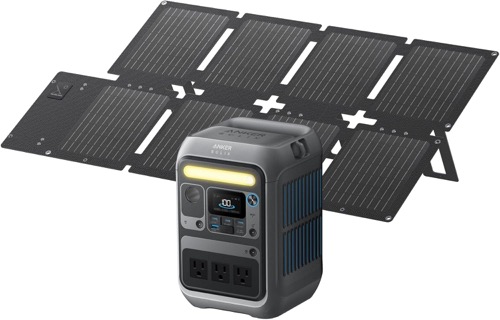
Anker SOLIX C300 Review: A Pocket-Sized 288Wh Kit With Its Own 60W Panel

Best Small Kit

Anker SOLIX C300 Review: A Pocket-Sized 288Wh Kit With Its Own 60W Panel

Check price at Amazon Jump to details
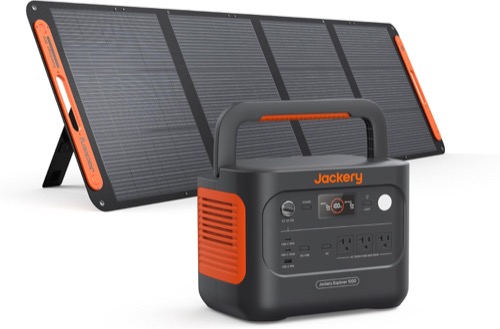
Jackery Solar Generator 1000 v2 Review: A 1070Wh Kit That Charges in an Hour and Comes With Its Own Panel

Best 1kWh Portable Kit

Jackery Solar Generator 1000 v2 Review: A 1070Wh Kit That Charges in an Hour and Comes With Its Own Panel

Check price at Amazon Jump to details
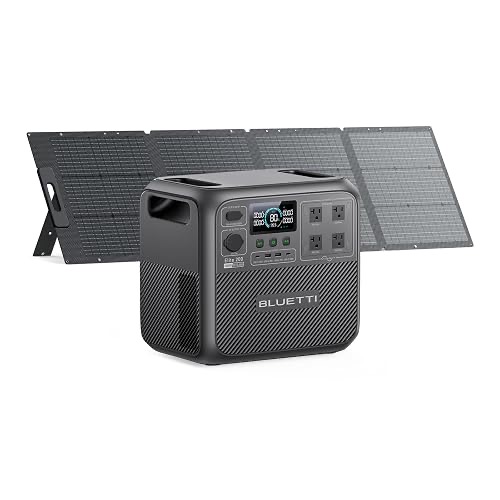
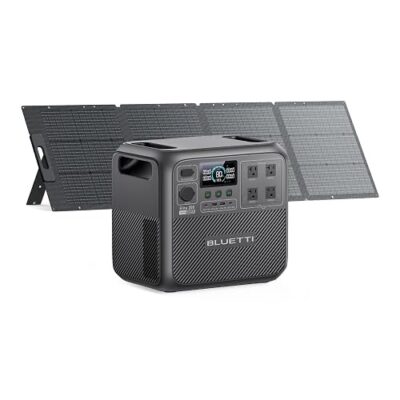
BLUETTI Elite 200 V2 + 200W Solar Generator Review

Best Compact 2kWh Kit

BLUETTI Elite 200 V2 + 200W Solar Generator Review

Check price at Amazon Jump to details
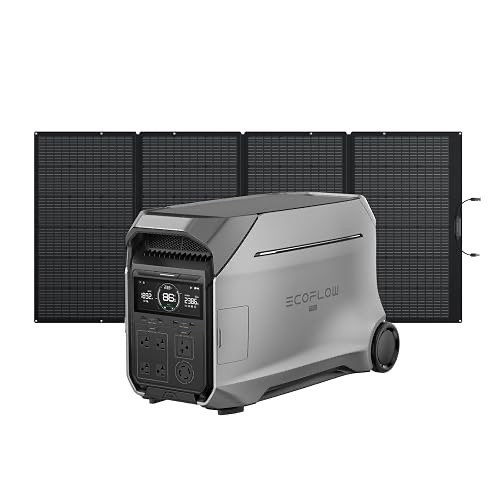
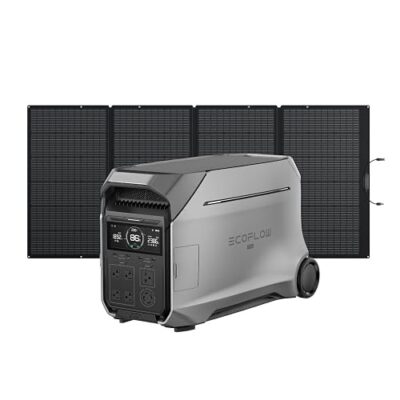
EcoFlow DELTA Pro 3 + 400W Solar Generator Review

Best 4kWh 120/240V Kit

EcoFlow DELTA Pro 3 + 400W Solar Generator Review

Check price at Amazon Jump to details
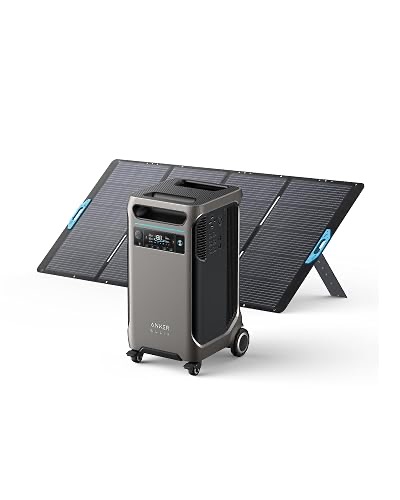
Anker SOLIX F3800 + PS400 Solar Generator Review

Best High-Output Platform

Anker SOLIX F3800 + PS400 Solar Generator Review

Check price at Amazon Jump to details

There is no single best solar generator size. The useful market runs from a 288Wh personal-power kit to multi-kilowatt-hour 120/240V platforms, and each step changes the loads, carry burden, solar footprint, and installation questions. These five exact bundles form a capacity ladder so you can stop at the first rung that passes every requirement.

Personal electronicsBegin with Anker C300.
Weekend and 1kWh useMove to Jackery 1000 v2.
Fixed 2kWh reserveConsider BLUETTI Elite 200 V2.
120/240V backupEvaluate EcoFlow DELTA Pro 3 or Anker F3800.

Climb the Capacity Ladder One Requirement at a Time

Rung Exact kit Typical role
288Wh / 300W Anker C300 + 60W Travel electronics and selected low-power devices
1,070Wh / 1,500W Jackery 1000 v2 + 200W Weekend trips and controlled appliance use
2,073.6Wh / 2,600W BLUETTI Elite 200 V2 + 200W Longer fixed 120V reserve
4,096Wh / 4,000W EcoFlow DELTA Pro 3 + 400W Native 120/240V home or RV planning
3,840Wh / 6,000W Anker F3800 + 400W High-output 120/240V and expandable systems

Do not move up a rung merely because the next inverter number is larger. Advance only when load compatibility, energy duration, recovery, voltage, or expansion requirements cannot be met below it.

Pass the Load Gate Before Estimating Runtime

List simultaneous running watts and the largest startup event. C300 is a 300W station; its energy capacity is irrelevant when a load exceeds that boundary. The larger platforms can start more appliances, yet a 4,000W load can still consume a 4kWh battery in roughly an hour before losses. Output answers “can it run?” while watt-hours answer “for how long?”

Find the Included-Array Bottleneck

Jackery 1000 v2 includes 200W against a 400W receiver. C300’s 60W panel is close to its small 100W solar ceiling. Elite 200 V2 includes 200W against a 1,000W receiver. DELTA Pro 3 and F3800 each include one 400W panel despite much larger storage and receiver potential. A bundle can be electrically valid while still under-paneled for daily off-grid recovery.

ReceiverExact voltage, current, connector, and wattage ceiling.
Starter arrayWhat is actually included in this ASIN.
Seasonal harvestSun, shade, angle, heat, and cable loss.
Energy deficitDaily load Wh that must be replaced.

Separate Portable Power From Home-System Capability

C300 and Jackery 1000 v2 are straightforward portable systems. Elite 200 V2 is a heavier fixed-capacity 120V station despite remaining movable. DELTA Pro 3 and F3800 enter 120/240V platform territory where outlets, transfer equipment, expansion, placement, and qualified installation may matter more than the carry handle.

Compare the Two Large Platforms by Architecture

Choose DELTA Pro 3 when4,096Wh storage, 4,000W output, native 120/240V capability, and its EcoFlow integration path fit the project.
Choose F3800 when6,000W output, RV/EV-oriented ports, substantial expansion, and its Anker ecosystem justify the larger platform.

Neither one-panel bundle should be interpreted as a complete off-grid home array. Price the solar expansion, cables, batteries, and transfer hardware required by the intended use.

Keep Product Evidence in the Correct Lane

Manufacturer documentation establishes exact limits and compatibility. Owner reports reveal setup patterns, recurring complaints, and service scenarios, but a selected review sample cannot calculate population failure rates. This site has not lab-tested these kits. Treat every conclusion as an evidence-based buying decision that still requires acceptance testing of the delivered unit.

Run a Five-Gate Final-Fit Scorecard

  1. Load: running and startup demand fit with reserve.
  2. Energy: usable Wh cover the planned duration.
  3. Recovery: the actual array and other chargers close the energy loop.
  4. System: voltage, outlets, connectors, transfer behavior, and expansion match.
  5. Ownership: weight, storage, warranty, support, and return testing are acceptable.

Use the Return Window as a Commissioning Window

Inspect serials, panels, stands, cables, and ports; update firmware where appropriate; then test the actual load and each charging route. Simulate the conditions that matter—overnight cycling, vehicle charging, panel deployment, or loss and restoration. Keep packaging until the system completes its intended job.

Price the Ownership Path Beyond the Starter Bundle

Add the components required by the intended role: compatible panels, extension leads, adapters, expansion batteries, transfer hardware, mounts, weather protection, and qualified labor. Also price the storage space and movement equipment needed for the complete system. A cheaper station can become the expensive choice when it immediately requires a second array, another battery, or replacement cables to complete the job.

Keep day-one and future costs in separate columns. The day-one total should complete the stated mission without relying on an accessory that may never be purchased. The future column can include expansion batteries, higher-power arrays, transfer equipment, and mobility aids, together with the compatibility evidence needed for each addition. This prevents an attractive starter price from hiding the real cost of reaching the intended system class.

Stop at the Smallest Correct Rung

Choose C300 for a small carried kit, Jackery 1000 v2 for balanced 1kWh use, Elite 200 V2 for compact fixed 2kWh reserve, DELTA Pro 3 for a 4kWh 120/240V platform, or F3800 for the highest output and expansion range.
Overall verdictThe best solar generator is the lowest rung that passes load, energy, recovery, voltage, movement, and ownership checks with reserve.
Best Small Kit

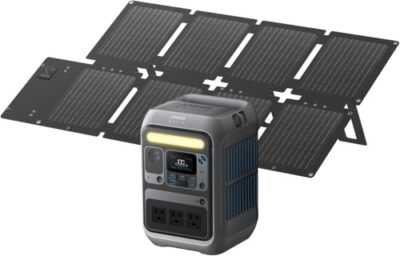
Anker SOLIX C300 Review: A Pocket-Sized 288Wh Kit With Its Own 60W Panel

Anker SOLIX C300 Review: A Pocket-Sized 288Wh Kit With Its Own 60W Panel

Get it now:

Check latest price

What to know

  • Station: Anker SOLIX C300 AC, model A1722; 288Wh LiFePO4 (LFP)
  • AC boundary: 300W continuous; 600W surge/peak
  • Included array: 1 × Anker SOLIX PS60 Compact 60W panel, model A2438; 60W
  • Solar ceiling: 100W; 11–28V DC, 8.2A maximum; XT60 input through the bundled MC4 adapter path
  • Recovery: 330W maximum; about 50 minutes to 80% and 68 minutes to full

Best if

  • Your priority is a system that covers travel electronics and low-watt loads without a 1kWh-class carry burden.
  • Nine-pound station is genuinely easy to move and pack.
  • The exact bundle and its documented limits match the planned job.

Skip if

  • 300W AC boundary excludes many kitchen and comfort devices.
  • You need a different voltage, outlet, movement, expansion, or recovery class than Anker SOLIX C300 AC (A1722) provides.
  • The plan depends on an unverified adapter, neighboring-model specification, or best-case solar day.

Anker SOLIX C300 AC (A1722) is the Best Small Kit on this page because it covers travel electronics and low-watt loads without a 1kWh-class carry burden.

Its 288Wh battery, 300W continuous output, and 60W included array are separate gates. Verify the exact load and daily recovery plan rather than treating one headline number as the verdict.

BrandAnker
Kit model / SKU / ASINSOLIX C300 AC + PS60 Compact bundle (ASIN B0DBLJRRPW; US)
Power-station modelAnker SOLIX C300 AC, model A1722
Included solar-panel model and quantity1 × Anker SOLIX PS60 Compact 60W panel, model A2438
Battery capacity288Wh
Battery chemistryLiFePO4 (LFP)
Cycle-life rating3,000 cycles; retained-capacity threshold is not published on the exact bundle page
Expandable capacityNo expansion-battery port
Continuous AC output300W
Surge / peak output600W
AC voltage, frequency, and waveform120V, 60Hz, pure sine wave
AC outlets and high-current / RV / 240V outputs3 × 120V AC; no high-current RV or 240V output
USB and DC outputs3 × USB-C (2 × 140W two-way, 1 × 15W), 1 × USB-A 12W, 1 × 12V/10A car socket
Maximum station solar input100W
PV input voltage/current range and connector11–28V DC, 8.2A maximum; XT60 input through the bundled MC4 adapter path
Included panel rated power60W
Panel Voc / Vmp / Isc / ImpPublished operating point: 16V / 3.75A; Voc and Isc are not published for the exact PS60 Compact
Panel construction and cell typeFoldable monocrystalline panel with integrated stand
Panel weather ratingIP68 panel
Panel dimensions and weight, folded / deployedFolded 9.1 × 10.5 × 2.5 in; deployed 21.7 × 40.7 × 0.7 in; 4.0 lb
Solar recharge estimate with included panelAbout 5.5 hours to full under the manufacturer's stated solar conditions
Maximum AC input and AC recharge time330W maximum; about 50 minutes to 80% and 68 minutes to full
Car, alternator, and other charging methodsUp to 140W USB-C input; up to 100W vehicle input; car cable included
UPS / EPS support and transfer timePass-through charging supported; no transfer-time rating is published for the exact C300 AC bundle
App and connectivityAnker app over Wi-Fi and Bluetooth
Station dimensions, weight, operating limits, and weather rating6.5 × 6.3 × 9.4 in; 9.0 lb; charge 32–104°F, discharge -4–104°F; station has no published IP rating
Station and panel warrantiesStation 5 years; confirm the current US PS60 Compact term at purchase
Included in the boxC300 AC, AC cable, car cable, safety documents; PS60 Compact, MC4-to-XT60 cable, two extension leads, warranty information
Best 1kWh Portable Kit

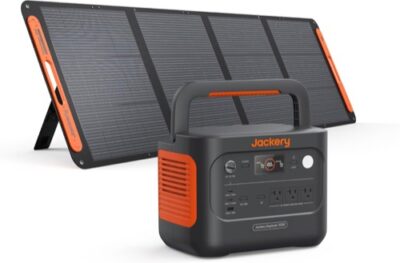
Jackery Solar Generator 1000 v2 Review: A 1070Wh Kit That Charges in an Hour and Comes With Its Own Panel

Jackery Solar Generator 1000 v2 Review: A 1070Wh Kit That Charges in an Hour and Comes With Its Own Panel

Get it now:

Check latest price

What to know

  • Station: Jackery Explorer 1000 v2; 1,070Wh LiFePO4 (LFP)
  • AC boundary: 1,500W continuous; 3,000W surge/peak
  • Included array: 1 × Jackery SolarSaga 200W bifacial portable panel; 200W
  • Solar ceiling: 400W across two DC inputs; 12–16V DC / 8A or 16–60V DC / 10.5A per input; 21A total maximum; DC8020
  • Recovery: Emergency mode about 1 hour; standard mode about 1.58 hours

Best if

  • Your priority is a system that offers a balanced 1,070Wh station and 200W included panel.
  • 1,500W output suits many travel and household appliances.
  • The exact bundle and its documented limits match the planned job.

Skip if

  • Panel condition, stand, connectors, and separate shipment need early inspection.
  • You need a different voltage, outlet, movement, expansion, or recovery class than Jackery Explorer 1000 v2 provides.
  • The plan depends on an unverified adapter, neighboring-model specification, or best-case solar day.

Jackery Explorer 1000 v2 is the Best 1kWh Portable Kit on this page because it offers a balanced 1,070Wh station and 200W included panel.

Its 1,070Wh battery, 1,500W continuous output, and 200W included array are separate gates. Verify the exact load and daily recovery plan rather than treating one headline number as the verdict.

BrandJackery
Kit model / SKU / ASINSolar Generator 1000 v2 + SolarSaga 200W bundle (ASIN B0D2L1G66J; US)
Power-station modelJackery Explorer 1000 v2
Included solar-panel model and quantity1 × Jackery SolarSaga 200W bifacial portable panel
Battery capacity1,070Wh
Battery chemistryLiFePO4 (LFP)
Cycle-life rating4,000 cycles to at least 70% capacity
Expandable capacityNo expansion-battery port
Continuous AC output1,500W
Surge / peak output3,000W
AC voltage, frequency, and waveform120V, 60Hz, pure sine wave
AC outlets and high-current / RV / 240V outputs3 × 120V AC; no high-current RV or 240V output
USB and DC outputs1 × USB-C 100W, 1 × USB-C 30W, 1 × USB-A 18W, 1 × 12V/10A car socket
Maximum station solar input400W across two DC inputs
PV input voltage/current range and connector12–16V DC / 8A or 16–60V DC / 10.5A per input; 21A total maximum; DC8020
Included panel rated power200W
Panel Voc / Vmp / Isc / ImpVoc 22V / Vmp 18V / Isc 12.5A / Imp 11.5A
Panel construction and cell typeFoldable bifacial monocrystalline panel
Panel weather ratingIP68 panel
Panel dimensions and weight, folded / deployedFolded 23.62 × 23.50 × 1.57 in; deployed 89.76 × 23.50 × 0.98 in; 14.33 lb
Solar recharge estimate with included panelAbout 6 hours to 80% in the manufacturer's stated ideal conditions; roughly 7.5 hours to full
Maximum AC input and AC recharge timeEmergency mode about 1 hour; standard mode about 1.58 hours
Car, alternator, and other charging methods12V vehicle charge about 12 hours; optional 600W Jackery alternator charger supported
UPS / EPS support and transfer timeUPS supported; under 20ms transfer
App and connectivityJackery app over Wi-Fi and Bluetooth
Station dimensions, weight, operating limits, and weather rating12.87 × 8.82 × 9.72 in; 23.8 lb; charge 32–113°F, discharge 14–113°F; station has no published IP rating
Station and panel warrantiesStation and panel each 3 years plus 2 years with registration
Included in the boxExplorer 1000 v2, SolarSaga 200W panel, AC cable, solar charging lead, documentation
Best Compact 2kWh Kit

BLUETTI Elite 200 V2 + 200W Solar Generator Review

BLUETTI Elite 200 V2 + 200W Solar Generator Review

Get it now:

Check latest price

What to know

  • Station: BLUETTI Elite 200 V2; 2,073.6Wh LiFePO4 (LFP)
  • AC boundary: 2,600W continuous; 3,900W Power Lifting for selected resistive loads surge/peak
  • Included array: 1 × BLUETTI PV200D 200W portable panel; 200W
  • Solar ceiling: 1,000W; 12–60V DC / 20A maximum; MC4-to-aviation solar path
  • Recovery: Up to 2,400W AC input; 0–80% in about 50 minutes and full in about 70 minutes under specified Turbo conditions

Best if

  • Your priority is a system that combines 2,073.6Wh, 2,600W output, and strong cycle-life documentation.
  • 1,000W PV ceiling permits a much larger array.
  • The exact bundle and its documented limits match the planned job.

Skip if

  • Sixteen exact owner records limit outcome confidence.
  • You need a different voltage, outlet, movement, expansion, or recovery class than BLUETTI Elite 200 V2 provides.
  • The plan depends on an unverified adapter, neighboring-model specification, or best-case solar day.

BLUETTI Elite 200 V2 is the Best Compact 2kWh Kit on this page because it combines 2,073.6Wh, 2,600W output, and strong cycle-life documentation.

Its 2,073.6Wh battery, 2,600W continuous output, and 200W included array are separate gates. Verify the exact load and daily recovery plan rather than treating one headline number as the verdict.

BrandBLUETTI
Kit model / SKU / ASINElite 200 V2 + PV200D bundle (ASIN B0DL5HVR29; US)
Power-station modelBLUETTI Elite 200 V2
Included solar-panel model and quantity1 × BLUETTI PV200D 200W portable panel
Battery capacity2,073.6Wh
Battery chemistryLiFePO4 (LFP)
Cycle-life rating6,000+ cycles to at least 80% capacity
Expandable capacityNo expansion-battery port
Continuous AC output2,600W
Surge / peak output3,900W Power Lifting for selected resistive loads
AC voltage, frequency, and waveform120V, 60Hz, pure sine wave
AC outlets and high-current / RV / 240V outputs4 × 120V AC; no high-current RV or 240V output
USB and DC outputsUSB-C, USB-A, 12V car socket and DC5521 outputs
Maximum station solar input1,000W
PV input voltage/current range and connector12–60V DC / 20A maximum; MC4-to-aviation solar path
Included panel rated power200W
Panel Voc / Vmp / Isc / ImpVoc 24.6V / Vmp 20.4V / Isc 10.8A / Imp 9.7A
Panel construction and cell typeFoldable ETFE monocrystalline panel
Panel weather ratingIP67 panel
Panel dimensions and weight, folded / deployedAbout 23 × 23.9 × 1.7 in folded and 23.9 × 82.8 in deployed; 17.15 lb
Solar recharge estimate with included panelIdealized minimum exceeds 10 nameplate hours; field recovery normally takes longer
Maximum AC input and AC recharge timeUp to 2,400W AC input; 0–80% in about 50 minutes and full in about 70 minutes under specified Turbo conditions
Car, alternator, and other charging methodsVehicle charging and compatible optional BLUETTI alternator charger
UPS / EPS support and transfer timeUPS support with about 15ms transfer
App and connectivityBLUETTI app over Wi-Fi and Bluetooth
Station dimensions, weight, operating limits, and weather ratingAbout 13.8 × 9.8 × 12.7 in; 53.4 lb; station has no published outdoor IP rating
Station and panel warrantiesStation 5 years; PV200D 12 months
Included in the boxElite 200 V2, AC cable, grounding screw, solar cable and documentation; PV200D panel and attached lead
Best 4kWh 120/240V Kit

EcoFlow DELTA Pro 3 + 400W Solar Generator Review

EcoFlow DELTA Pro 3 + 400W Solar Generator Review

Get it now:

Check latest price

What to know

  • Station: EcoFlow DELTA Pro 3; 4,096Wh LiFePO4 (LFP)
  • AC boundary: 4,000W continuous; 8,000W surge/peak
  • Included array: 1 × EcoFlow 400W Portable Solar Panel; 400W
  • Solar ceiling: 2,600W total; High port 30–150V / 15A; low port 11–60V / 20A; XT60i paths
  • Recovery: Up to 1,800W from a standard 120V outlet; roughly 80% in about 50 minutes under specified conditions

Best if

  • Your priority is a system that moves into serious home and RV circuit territory with 4,096Wh storage.
  • App visibility and wheels improve day-to-day ownership.
  • The exact bundle and its documented limits match the planned job.

Skip if

  • One 400W panel uses only about 15% of the PV ceiling.
  • You need a different voltage, outlet, movement, expansion, or recovery class than EcoFlow DELTA Pro 3 provides.
  • The plan depends on an unverified adapter, neighboring-model specification, or best-case solar day.

EcoFlow DELTA Pro 3 is the Best 4kWh 120/240V Kit on this page because it moves into serious home and RV circuit territory with 4,096Wh storage.

Its 4,096Wh battery, 4,000W continuous output, and 400W included array are separate gates. Verify the exact load and daily recovery plan rather than treating one headline number as the verdict.

BrandEcoFlow
Kit model / SKU / ASINDELTA Pro 3 + 400W panel bundle (ASIN B0D145TFFY; US)
Power-station modelEcoFlow DELTA Pro 3
Included solar-panel model and quantity1 × EcoFlow 400W Portable Solar Panel
Battery capacity4,096Wh
Battery chemistryLiFePO4 (LFP)
Cycle-life rating4,000 cycles to at least 80% capacity
Expandable capacityUp to 12,288Wh with compatible DELTA Pro 3 extra batteries
Continuous AC output4,000W
Surge / peak output8,000W
AC voltage, frequency, and waveform120/240V, 60Hz, pure sine wave
AC outlets and high-current / RV / 240V outputsStandard 120V AC plus TT-30R and L14-30R 120/240V outputs; use only with an approved circuit path
USB and DC outputsUSB-A, high-power USB-C, regulated 12V car/DC5521 and Anderson DC outputs
Maximum station solar input2,600W total
PV input voltage/current range and connectorHigh port 30–150V / 15A; low port 11–60V / 20A; XT60i paths
Included panel rated power400W
Panel Voc / Vmp / Isc / ImpVoc 48V / Vmp 41V / Isc 11A / Imp 9.8A
Panel construction and cell typeFoldable monocrystalline portable panel; up to 23% published conversion efficiency
Panel weather ratingIP68 panel
Panel dimensions and weight, folded / deployedAbout 42.0 × 24.4 × 1.0 in folded and 93.1 × 42.2 × 1.0 in deployed; about 35.3 lb
Solar recharge estimate with included panelEcoFlow publishes up to about 13 hours from empty under its bundle test assumptions
Maximum AC input and AC recharge timeUp to 1,800W from a standard 120V outlet; roughly 80% in about 50 minutes under specified conditions
Car, alternator, and other charging methods12V/24V vehicle charging; compatible optional EcoFlow alternator charger and other documented ecosystem inputs
UPS / EPS support and transfer timeUPS support with about 10ms transfer; commission the exact protected load
App and connectivityEcoFlow app over Wi-Fi and Bluetooth
Station dimensions, weight, operating limits, and weather ratingAbout 27.2 × 13.4 × 16.1 in; 113.5 lb; indoor station with no published weatherproof enclosure rating
Station and panel warrantiesStation 5 years; panel 12 months on the current US direct-store terms
Included in the boxDELTA Pro 3, AC charging cable, car cable, DC5521 cable, handle cover and documentation; 400W panel, case and solar cable path
Best High-Output Platform

Anker SOLIX F3800 + PS400 Solar Generator Review

Anker SOLIX F3800 + PS400 Solar Generator Review

Get it now:

Check latest price

What to know

  • Station: Anker SOLIX F3800, model A1790; 3,840Wh LiFePO4 (LFP)
  • AC boundary: 6,000W continuous; 9,000W surge/peak
  • Included array: 1 × Anker SOLIX PS400 400W portable panel; 400W
  • Solar ceiling: 2,400W total; Two XT60 inputs; each supports 11–32V / 10A or 32–60V / 25A, up to 1,200W
  • Recovery: Up to 1,800W AC input; roughly 0–80% in about 1.5 hours under specified conditions

Best if

  • Your priority is a system that provides 6,000W output, 120/240V capability, and broad expansion options.
  • High-current 120/240V outlets support unusual missions.
  • The exact bundle and its documented limits match the planned job.

Skip if

  • About 132 lb limits vehicle and stair portability.
  • You need a different voltage, outlet, movement, expansion, or recovery class than Anker SOLIX F3800 (A1790) provides.
  • The plan depends on an unverified adapter, neighboring-model specification, or best-case solar day.

Anker SOLIX F3800 (A1790) is the Best High-Output Platform on this page because it provides 6,000W output, 120/240V capability, and broad expansion options.

Its 3,840Wh battery, 6,000W continuous output, and 400W included array are separate gates. Verify the exact load and daily recovery plan rather than treating one headline number as the verdict.

BrandAnker SOLIX
Kit model / SKU / ASINF3800 + PS400 bundle (ASIN B0CRB3MQT5; US)
Power-station modelAnker SOLIX F3800, model A1790
Included solar-panel model and quantity1 × Anker SOLIX PS400 400W portable panel
Battery capacity3,840Wh
Battery chemistryLiFePO4 (LFP)
Cycle-life rating3,000 cycles to at least 80% capacity
Expandable capacityUp to 26,880Wh with six BP3800 expansion batteries
Continuous AC output6,000W
Surge / peak output9,000W
AC voltage, frequency, and waveform120/240V, 60Hz, pure sine wave
AC outlets and high-current / RV / 240V outputs6 × 120V AC plus NEMA 14-50 and L14-30R; no dedicated TT-30R
USB and DC outputsUSB-A, high-power USB-C and 12V car-socket outputs
Maximum station solar input2,400W total
PV input voltage/current range and connectorTwo XT60 inputs; each supports 11–32V / 10A or 32–60V / 25A, up to 1,200W
Included panel rated power400W
Panel Voc / Vmp / Isc / ImpVoc 57.6V / Vmp 48V / Isc 9.17A / Imp 8.33A
Panel construction and cell typeFoldable monocrystalline portable panel with adjustable solar-angle guide
Panel weather ratingIP67 panel
Panel dimensions and weight, folded / deployedAbout 35.9 × 25.9 × 1.9 in folded and 100 × 35.9 × 1.2 in deployed; 35.1 lb
Solar recharge estimate with included panelIdealized minimum exceeds 9.6 nameplate hours; plan longer for field loss and active loads
Maximum AC input and AC recharge timeUp to 1,800W AC input; roughly 0–80% in about 1.5 hours under specified conditions
Car, alternator, and other charging methodsVehicle charging and compatible Anker ecosystem charging accessories; verify the exact cable and firmware
UPS / EPS support and transfer timePass-through/backup use supported; exact protected-load transfer behavior must be commissioned
App and connectivityAnker app over Wi-Fi and Bluetooth
Station dimensions, weight, operating limits, and weather ratingAbout 27.6 × 15.3 × 15.6 in; about 132 lb; station has no published outdoor IP rating
Station and panel warrantiesStation 5 years; PS400 24 months under current direct-store terms
Included in the boxF3800, AC cable, solar charging cable and documentation; PS400 panel, extension leads and MC4-to-XT60 charging path

Product Comparison

Feature Anker SOLIX C300 Review: A Pocket-Sized 288Wh Kit With Its Own 60W Panel Jackery Solar Generator 1000 v2 Review: A 1070Wh Kit That Charges in an Hour and Comes With Its Own Panel BLUETTI Elite 200 V2 + 200W Solar Generator Review EcoFlow DELTA Pro 3 + 400W Solar Generator Review Anker SOLIX F3800 + PS400 Solar Generator Review
Product Image
Anker SOLIX C300 Review: A Pocket-Sized 288Wh Kit With Its Own 60W Panel
Jackery Solar Generator 1000 v2 Review: A 1070Wh Kit That Charges in an Hour and Comes With Its Own Panel
BLUETTI Elite 200 V2 + 200W Solar Generator Review
EcoFlow DELTA Pro 3 + 400W Solar Generator Review
Anker SOLIX F3800 + PS400 Solar Generator Review
Price $329.98 $699 $1199 $3099 $2699.99
Rating
4.2 / 5
4.1 / 5
4.6 / 5
4.4 / 5
4.5 / 5
Category Solar Generators Solar Generators Solar Generators Solar Generators Solar Generators
Brand Anker Jackery BLUETTI EcoFlow Anker SOLIX
Kit model / SKU / ASIN SOLIX C300 AC + PS60 Compact bundle (ASIN B0DBLJRRPW; US) Solar Generator 1000 v2 + SolarSaga 200W bundle (ASIN B0D2L1G66J; US) Elite 200 V2 + PV200D bundle (ASIN B0DL5HVR29; US) DELTA Pro 3 + 400W panel bundle (ASIN B0D145TFFY; US) F3800 + PS400 bundle (ASIN B0CRB3MQT5; US)
Power-station model Anker SOLIX C300 AC, model A1722 Jackery Explorer 1000 v2 BLUETTI Elite 200 V2 EcoFlow DELTA Pro 3 Anker SOLIX F3800, model A1790
Included solar-panel model and quantity 1 × Anker SOLIX PS60 Compact 60W panel, model A2438 1 × Jackery SolarSaga 200W bifacial portable panel 1 × BLUETTI PV200D 200W portable panel 1 × EcoFlow 400W Portable Solar Panel 1 × Anker SOLIX PS400 400W portable panel
Battery capacity 288Wh 1,070Wh 2,073.6Wh 4,096Wh 3,840Wh
Battery chemistry LiFePO4 (LFP) LiFePO4 (LFP) LiFePO4 (LFP) LiFePO4 (LFP) LiFePO4 (LFP)
Cycle-life rating 3,000 cycles; retained-capacity threshold is not published on the exact bundle page 4,000 cycles to at least 70% capacity 6,000+ cycles to at least 80% capacity 4,000 cycles to at least 80% capacity 3,000 cycles to at least 80% capacity
Expandable capacity No expansion-battery port No expansion-battery port No expansion-battery port Up to 12,288Wh with compatible DELTA Pro 3 extra batteries Up to 26,880Wh with six BP3800 expansion batteries
Continuous AC output 300W 1,500W 2,600W 4,000W 6,000W
Surge / peak output 600W 3,000W 3,900W Power Lifting for selected resistive loads 8,000W 9,000W
AC voltage, frequency, and waveform 120V, 60Hz, pure sine wave 120V, 60Hz, pure sine wave 120V, 60Hz, pure sine wave 120/240V, 60Hz, pure sine wave 120/240V, 60Hz, pure sine wave
AC outlets and high-current / RV / 240V outputs 3 × 120V AC; no high-current RV or 240V output 3 × 120V AC; no high-current RV or 240V output 4 × 120V AC; no high-current RV or 240V output Standard 120V AC plus TT-30R and L14-30R 120/240V outputs; use only with an approved circuit path 6 × 120V AC plus NEMA 14-50 and L14-30R; no dedicated TT-30R
USB and DC outputs 3 × USB-C (2 × 140W two-way, 1 × 15W), 1 × USB-A 12W, 1 × 12V/10A car socket 1 × USB-C 100W, 1 × USB-C 30W, 1 × USB-A 18W, 1 × 12V/10A car socket USB-C, USB-A, 12V car socket and DC5521 outputs USB-A, high-power USB-C, regulated 12V car/DC5521 and Anderson DC outputs USB-A, high-power USB-C and 12V car-socket outputs
Maximum station solar input 100W 400W across two DC inputs 1,000W 2,600W total 2,400W total
PV input voltage/current range and connector 11–28V DC, 8.2A maximum; XT60 input through the bundled MC4 adapter path 12–16V DC / 8A or 16–60V DC / 10.5A per input; 21A total maximum; DC8020 12–60V DC / 20A maximum; MC4-to-aviation solar path High port 30–150V / 15A; low port 11–60V / 20A; XT60i paths Two XT60 inputs; each supports 11–32V / 10A or 32–60V / 25A, up to 1,200W
Included panel rated power 60W 200W 200W 400W 400W
Panel Voc / Vmp / Isc / Imp Published operating point: 16V / 3.75A; Voc and Isc are not published for the exact PS60 Compact Voc 22V / Vmp 18V / Isc 12.5A / Imp 11.5A Voc 24.6V / Vmp 20.4V / Isc 10.8A / Imp 9.7A Voc 48V / Vmp 41V / Isc 11A / Imp 9.8A Voc 57.6V / Vmp 48V / Isc 9.17A / Imp 8.33A
Panel construction and cell type Foldable monocrystalline panel with integrated stand Foldable bifacial monocrystalline panel Foldable ETFE monocrystalline panel Foldable monocrystalline portable panel; up to 23% published conversion efficiency Foldable monocrystalline portable panel with adjustable solar-angle guide
Panel weather rating IP68 panel IP68 panel IP67 panel IP68 panel IP67 panel
Panel dimensions and weight, folded / deployed Folded 9.1 × 10.5 × 2.5 in; deployed 21.7 × 40.7 × 0.7 in; 4.0 lb Folded 23.62 × 23.50 × 1.57 in; deployed 89.76 × 23.50 × 0.98 in; 14.33 lb About 23 × 23.9 × 1.7 in folded and 23.9 × 82.8 in deployed; 17.15 lb About 42.0 × 24.4 × 1.0 in folded and 93.1 × 42.2 × 1.0 in deployed; about 35.3 lb About 35.9 × 25.9 × 1.9 in folded and 100 × 35.9 × 1.2 in deployed; 35.1 lb
Solar recharge estimate with included panel About 5.5 hours to full under the manufacturer's stated solar conditions About 6 hours to 80% in the manufacturer's stated ideal conditions; roughly 7.5 hours to full Idealized minimum exceeds 10 nameplate hours; field recovery normally takes longer EcoFlow publishes up to about 13 hours from empty under its bundle test assumptions Idealized minimum exceeds 9.6 nameplate hours; plan longer for field loss and active loads
Maximum AC input and AC recharge time 330W maximum; about 50 minutes to 80% and 68 minutes to full Emergency mode about 1 hour; standard mode about 1.58 hours Up to 2,400W AC input; 0–80% in about 50 minutes and full in about 70 minutes under specified Turbo conditions Up to 1,800W from a standard 120V outlet; roughly 80% in about 50 minutes under specified conditions Up to 1,800W AC input; roughly 0–80% in about 1.5 hours under specified conditions
Car, alternator, and other charging methods Up to 140W USB-C input; up to 100W vehicle input; car cable included 12V vehicle charge about 12 hours; optional 600W Jackery alternator charger supported Vehicle charging and compatible optional BLUETTI alternator charger 12V/24V vehicle charging; compatible optional EcoFlow alternator charger and other documented ecosystem inputs Vehicle charging and compatible Anker ecosystem charging accessories; verify the exact cable and firmware
UPS / EPS support and transfer time Pass-through charging supported; no transfer-time rating is published for the exact C300 AC bundle UPS supported; under 20ms transfer UPS support with about 15ms transfer UPS support with about 10ms transfer; commission the exact protected load Pass-through/backup use supported; exact protected-load transfer behavior must be commissioned
App and connectivity Anker app over Wi-Fi and Bluetooth Jackery app over Wi-Fi and Bluetooth BLUETTI app over Wi-Fi and Bluetooth EcoFlow app over Wi-Fi and Bluetooth Anker app over Wi-Fi and Bluetooth
Station dimensions, weight, operating limits, and weather rating 6.5 × 6.3 × 9.4 in; 9.0 lb; charge 32–104°F, discharge -4–104°F; station has no published IP rating 12.87 × 8.82 × 9.72 in; 23.8 lb; charge 32–113°F, discharge 14–113°F; station has no published IP rating About 13.8 × 9.8 × 12.7 in; 53.4 lb; station has no published outdoor IP rating About 27.2 × 13.4 × 16.1 in; 113.5 lb; indoor station with no published weatherproof enclosure rating About 27.6 × 15.3 × 15.6 in; about 132 lb; station has no published outdoor IP rating
Station and panel warranties Station 5 years; confirm the current US PS60 Compact term at purchase Station and panel each 3 years plus 2 years with registration Station 5 years; PV200D 12 months Station 5 years; panel 12 months on the current US direct-store terms Station 5 years; PS400 24 months under current direct-store terms
Included in the box C300 AC, AC cable, car cable, safety documents; PS60 Compact, MC4-to-XT60 cable, two extension leads, warranty information Explorer 1000 v2, SolarSaga 200W panel, AC cable, solar charging lead, documentation Elite 200 V2, AC cable, grounding screw, solar cable and documentation; PV200D panel and attached lead DELTA Pro 3, AC charging cable, car cable, DC5521 cable, handle cover and documentation; 400W panel, case and solar cable path F3800, AC cable, solar charging cable and documentation; PS400 panel, extension leads and MC4-to-XT60 charging path
Buy Now View Deal View Deal View Deal View Deal View Deal

Start With the Job, Then Choose the Box

Best small kit: Anker C300. Best 1kWh portable kit: Jackery 1000 v2. Best compact 2kWh kit: BLUETTI Elite 200 V2. Best 4kWh 120/240V kit: EcoFlow DELTA Pro 3. Best high-output platform: Anker F3800.

Stop at the lowest capacity rung that passes load, energy, recovery, voltage, movement, and ownership checks with reserve.

Frequently Asked Questions

What is the best solar generator overall?

There is no universal winner. Jackery 1000 v2 is the balanced portable 1kWh kit, while Anker C1000 offers more inverter output and HomePower addresses larger backup. Choose by job.

How do I compare a small kit with a large home system?

Use the same gates—load, energy, recovery, movement, and ownership—but do not rank unlike jobs on size alone. The correct system is the smallest one that passes every gate.

Does the included panel use the station's full solar capacity?

Often not. Several kits include only a fraction of maximum station PV input. That creates upgrade potential, provided any added array fits all electrical limits.

Which small kit has the better charging system?

Anker C300 emphasizes fast AC, vehicle, solar, and 140W USB-C charging. Jackery 300 v2 emphasizes a light panel and long published LFP cycle life.

Which 1kWh kit is better, Jackery 1000 v2 or Anker C1000 Gen 2?

Jackery includes a 200W panel and slightly larger battery; Anker offers 2,000W output, more AC outlets, faster AC charging, and a higher future solar ceiling. Choose by load and recovery.

When should I move to a home-backup platform?

Move up when the plan needs several critical circuits, multiple days, battery expansion, high-current output, or engineered integration—not simply because a larger number looks safer.

×

About Solar Power Picks

Portable Solar Power, Backup Power, and Off-Grid Gear Guides

Your trusted source for honest, in-depth product reviews and comparisons.

Quick Links

  • Best Picks
  • Reviews
  • Guides
  • Comparisons
  • Calculator
  • Privacy policy
  • Favorites

Categories

  • Off-Grid Solar
  • Portable Power Stations
  • Solar Batteries
  • Solar Battery Maintainers
  • Solar Charge Controllers
  • Solar Generators

© 2026 Solar Power Picks. All Rights Reserved.

We may earn a commission when you purchase through links on our site. Learn more