Solar Power Picks logo with sun, solar panel, and green energy icon

  • Home
  • Reviews
  • Best
    • Best portable power stations
    • Best Solar Panels
    • Best Solar Generators
    • Best Solar Charge Controllers
    • Best Solar Batteries
  • Guides
    • Portable Power Stations Guides
    • Solar Panels Guides
    • Solar Generators Guides
    • Solar Charge Controllers Guides
    • Solar Batteries Guides
  • Comparisons
    • Portable Power Stations Comparisons
    • Solar Panels Comparisons
    • Solar Generators Comparisons
    • Solar Charge Controllers Comparisons
    • Solar Batteries Comparisons
  • Calculator
Home / Solar Generators / Best / Best Solar Generator for RV

Best Solar Generator for RV

OUR PICKS

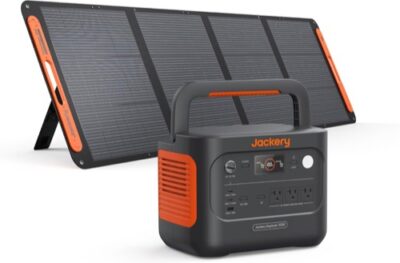
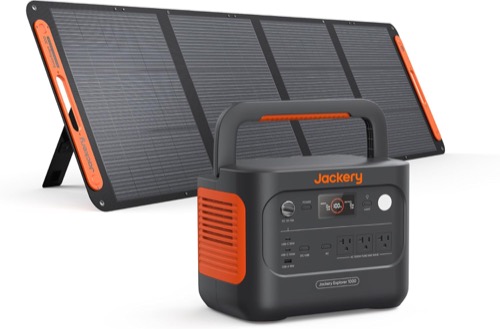
Jackery Solar Generator 1000 v2 Review: A 1070Wh Kit That Charges in an Hour and Comes With Its Own Panel

Best Weekend Trailer Kit

Jackery Solar Generator 1000 v2 Review: A 1070Wh Kit That Charges in an Hour and Comes With Its Own Panel

Check price at Amazon Jump to details
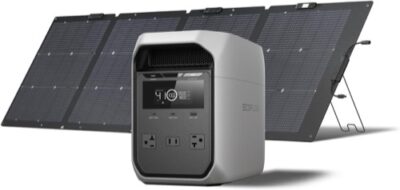
EcoFlow Delta 3 Classic Review: A 1024Wh Kit That Charges in Under an Hour and Backs Up in 10 Milliseconds

Best Solar-Forward Small Rig

EcoFlow Delta 3 Classic Review: A 1024Wh Kit That Charges in Under an Hour and Backs Up in 10 Milliseconds

Check price at Amazon Jump to details
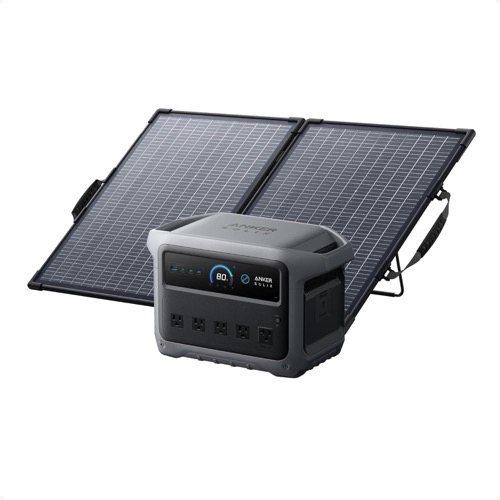
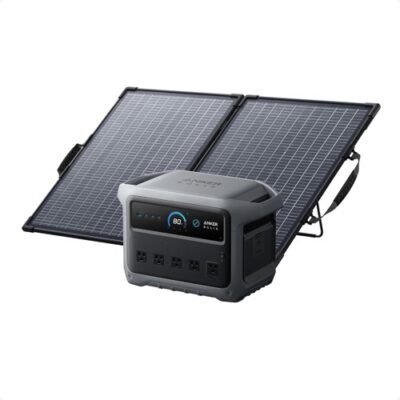
Anker SOLIX C1000 Gen2 Review: A 1024Wh Kit That Wall-Charges in 49 Minutes and Ships With Its Own Panel

Best Compact High-Output Van Kit

Anker SOLIX C1000 Gen2 Review: A 1024Wh Kit That Wall-Charges in 49 Minutes and Ships With Its Own Panel

Check price at Amazon Jump to details
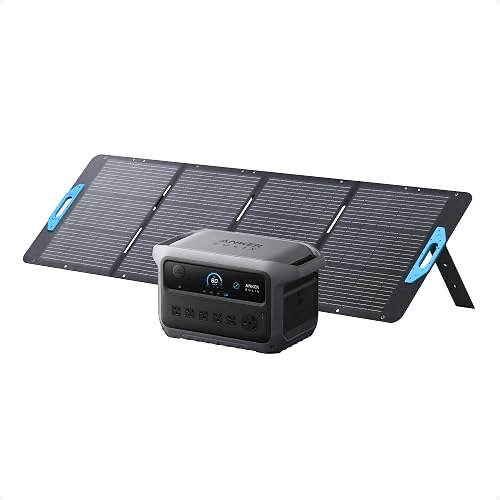
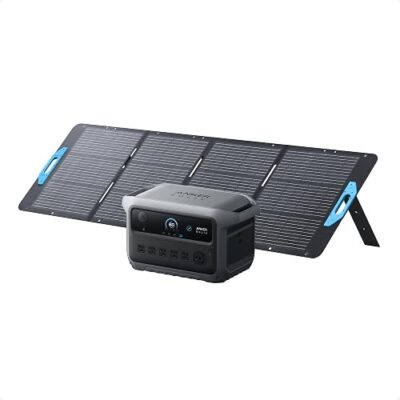
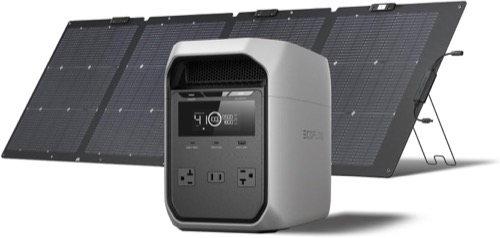
Anker SOLIX C2000 Gen 2 + PS200 Solar Generator Review

Best Direct TT-30R Kit

Anker SOLIX C2000 Gen 2 + PS200 Solar Generator Review

Check price at Amazon Jump to details
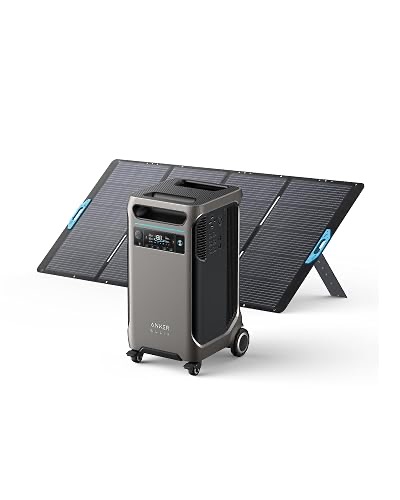
Anker SOLIX F3800 + PS400 Solar Generator Review

Best 120/240V RV Platform

Anker SOLIX F3800 + PS400 Solar Generator Review

Check price at Amazon Jump to details

An RV solar generator must survive a repeating loop: charge while driving or connected to shore power, run 12V and AC loads at camp, harvest solar in a constrained site, and pack everything before departure. The five picks here range from portable 1kWh systems to an expandable 120/240V platform. Outlet shape matters, but daily watt-hours and charging access decide whether the rig actually works.

DriveUse the approved vehicle or alternator path.
CampRun measured AC, USB, and 12V loads.
HarvestDeploy the included array inside exact PV limits.
ShoreReset the system through documented AC charging.

Measure the RV Day as Watt-Hours

Load group Measure this Do not assume this
Refrigerator or cooler Wh over a warm representative day Compressor nameplate is continuous use
Pump, fans, controls Average watts × duty hours Standby and overnight use are zero
Laptops and devices Battery Wh plus conversion loss Charger maximum equals every charge session
Cooking and coffee Measured watts and minutes per event High output makes energy consumption irrelevant

Compare the total with usable station energy, then reserve margin for shade, heat, and an extra night. A 1kWh battery can support a disciplined weekend but still empties quickly under repeated cooking or climate loads.

Choose the Outlet Topology Before the Brand

The Anker C2000 Gen 2 includes a direct TT-30R, making it the simplest high-current RV fit in this group when its 120V limits match the rig. F3800 adds broader RV and 120/240V possibilities, but its weight and system complexity demand planned installation and handling. The three 1kWh kits are cord-connected portable layers rather than replacements for a full RV electrical system.

Outlet warning: a 30A or 50A-shaped receptacle does not create unlimited energy. Check voltage, continuous output, adapter rules, neutral/ground requirements, and the rig’s simultaneous loads.

Compare Starter Array With Receiver Headroom

Jackery 1000 v2200W included against a 400W station ceiling.
DELTA 3 Classic220W included against a 500W ceiling.
Anker C1000100W included against a 600W ceiling.
Anker C2000200W included against an 800W ceiling.
Anker F3800400W included against a 2,400W ceiling.

The gap is future potential, not day-one charging speed. Added modules must fit the exact voltage, current, connector, and cold-weather Voc boundaries. A larger receiver is useful only when there is roof or ground space for a compatible array.

Match Movement Class to the Rig

Jackery 1000 v2, DELTA 3 Classic, and C1000 are realistic move-in/move-out systems. C2000 is still comparatively portable for 2kWh but benefits from a fixed vehicle bay or short transfer. F3800 belongs on wheels or in a planned location; expansion batteries make the system more capable and less portable at the same time.

Build a Three-Route Charging Plan

  1. Shore route: verify circuit rating, charger setting, and ventilation.
  2. Driving route: distinguish an accessory socket from an installed alternator charger.
  3. Solar route: calculate conservative daily harvest from the deployable array.
  4. Fallback rule: define the state of charge that triggers driving, shore power, or load reduction.

Pick the Kit by RV Mission

Weekend trailerJackery 1000 v2 balances 12V output, 1,070Wh, and a 200W panel.
Solar-forward small rigDELTA 3 Classic starts with 220W and rapid shore recovery.
High-output vanC1000 gives 2,000W in a compact station, subject to outlet fit.
Direct TT-30R useC2000 is the focused 2kWh option.
Larger 120/240V projectF3800 offers the platform, with the largest handling and design burden.

Commission One Complete Drive–Camp Cycle

Test the real refrigerator, pump, fans, devices, and scheduled high-watt loads. Drive using the approved charge path, deploy the panel, and measure net energy recovered after daytime loads. Check cable temperature, fan behavior, outlet stability, and the shutdown margin. Record the result as a rig-specific baseline rather than a universal runtime claim.

Keep Expansion From Becoming Unplanned Payload

Extra batteries and panels add autonomy but consume cargo capacity, tie-down space, setup time, and budget. Model the complete expanded system before buying the first box. If a permanent battery bank, inverter/charger, and roof array better match the rig, a portable kit may be the wrong architecture.

Test the Driving Charge Path at Idle and at Cruise

A factory accessory socket and a dedicated alternator charger are different systems. Verify the approved cable, outlet fuse, current limit, ignition behavior, and station setting before depending on vehicle recovery. Observe both a short idle test and a normal drive, then confirm that net charging remains positive after the rig’s other electrical loads. Stop if connectors, cable, or outlet become abnormally warm.

Close the RV Energy Loop

Choose Jackery for a balanced weekend package, EcoFlow for a solar-forward 1kWh routine, C1000 for compact high output, C2000 for direct TT-30R use, or F3800 for a larger engineered platform.
RV verdictThe right kit restores the measured daily energy through routes the rig can actually use—without exceeding its movement, voltage, or outlet limits.
Best Weekend Trailer Kit

Jackery Solar Generator 1000 v2 Review: A 1070Wh Kit That Charges in an Hour and Comes With Its Own Panel

Jackery Solar Generator 1000 v2 Review: A 1070Wh Kit That Charges in an Hour and Comes With Its Own Panel

Get it now:

Check latest price

What to know

  • Station: Jackery Explorer 1000 v2; 1,070Wh LiFePO4 (LFP)
  • AC boundary: 1,500W continuous; 3,000W surge/peak
  • Included array: 1 × Jackery SolarSaga 200W bifacial portable panel; 200W
  • Solar ceiling: 400W across two DC inputs; 12–16V DC / 8A or 16–60V DC / 10.5A per input; 21A total maximum; DC8020
  • Recovery: Emergency mode about 1 hour; standard mode about 1.58 hours

Best if

  • Your priority is a system that balances useful 1kWh storage, 12V output, and a 200W included panel.
  • 1,070Wh LFP platform balances capacity with 23.8-pound portability.
  • The exact bundle and its documented limits match the planned job.

Skip if

  • Field panel output varies substantially with setup and weather.
  • You need a different voltage, outlet, movement, expansion, or recovery class than Jackery Explorer 1000 v2 provides.
  • The plan depends on an unverified adapter, neighboring-model specification, or best-case solar day.

Jackery Explorer 1000 v2 is the Best Weekend Trailer Kit on this page because it balances useful 1kWh storage, 12V output, and a 200W included panel.

Its 1,070Wh battery, 1,500W continuous output, and 200W included array are separate gates. Verify the exact load and daily recovery plan rather than treating one headline number as the verdict.

BrandJackery
Kit model / SKU / ASINSolar Generator 1000 v2 + SolarSaga 200W bundle (ASIN B0D2L1G66J; US)
Power-station modelJackery Explorer 1000 v2
Included solar-panel model and quantity1 × Jackery SolarSaga 200W bifacial portable panel
Battery capacity1,070Wh
Battery chemistryLiFePO4 (LFP)
Cycle-life rating4,000 cycles to at least 70% capacity
Expandable capacityNo expansion-battery port
Continuous AC output1,500W
Surge / peak output3,000W
AC voltage, frequency, and waveform120V, 60Hz, pure sine wave
AC outlets and high-current / RV / 240V outputs3 × 120V AC; no high-current RV or 240V output
USB and DC outputs1 × USB-C 100W, 1 × USB-C 30W, 1 × USB-A 18W, 1 × 12V/10A car socket
Maximum station solar input400W across two DC inputs
PV input voltage/current range and connector12–16V DC / 8A or 16–60V DC / 10.5A per input; 21A total maximum; DC8020
Included panel rated power200W
Panel Voc / Vmp / Isc / ImpVoc 22V / Vmp 18V / Isc 12.5A / Imp 11.5A
Panel construction and cell typeFoldable bifacial monocrystalline panel
Panel weather ratingIP68 panel
Panel dimensions and weight, folded / deployedFolded 23.62 × 23.50 × 1.57 in; deployed 89.76 × 23.50 × 0.98 in; 14.33 lb
Solar recharge estimate with included panelAbout 6 hours to 80% in the manufacturer's stated ideal conditions; roughly 7.5 hours to full
Maximum AC input and AC recharge timeEmergency mode about 1 hour; standard mode about 1.58 hours
Car, alternator, and other charging methods12V vehicle charge about 12 hours; optional 600W Jackery alternator charger supported
UPS / EPS support and transfer timeUPS supported; under 20ms transfer
App and connectivityJackery app over Wi-Fi and Bluetooth
Station dimensions, weight, operating limits, and weather rating12.87 × 8.82 × 9.72 in; 23.8 lb; charge 32–113°F, discharge 14–113°F; station has no published IP rating
Station and panel warrantiesStation and panel each 3 years plus 2 years with registration
Included in the boxExplorer 1000 v2, SolarSaga 200W panel, AC cable, solar charging lead, documentation
Best Solar-Forward Small Rig

EcoFlow Delta 3 Classic Review: A 1024Wh Kit That Charges in Under an Hour and Backs Up in 10 Milliseconds

EcoFlow Delta 3 Classic Review: A 1024Wh Kit That Charges in Under an Hour and Backs Up in 10 Milliseconds

Get it now:

Check latest price

What to know

  • Station: EcoFlow DELTA 3 Classic, model EF-DL3-C; 1,024Wh LiFePO4 (LFP)
  • AC boundary: 1,800W continuous; 3,600W; X-Boost supports selected resistive loads up to 2,600W surge/peak
  • Included array: 1 × EcoFlow NextGen 220W bifacial panel, model EF-Fold-G220-04; 220W front / 175W rear-side nameplate
  • Solar ceiling: 500W; 11–60V DC, 15A maximum; XT60/XT60i input
  • Recovery: 1,400W; about 45 minutes to 80% and 60 minutes to full in Fast mode

Best if

  • Your priority is a system that starts with a 220W panel and rapid shore-power recovery.
  • Roughly one-hour wall charging can reset the battery between outage windows.
  • The exact bundle and its documented limits match the planned job.

Skip if

  • Fast charging and heavy loads can make fan noise noticeable.
  • You need a different voltage, outlet, movement, expansion, or recovery class than EcoFlow DELTA 3 Classic (EF-DL3-C) provides.
  • The plan depends on an unverified adapter, neighboring-model specification, or best-case solar day.

EcoFlow DELTA 3 Classic (EF-DL3-C) is the Best Solar-Forward Small Rig on this page because it starts with a 220W panel and rapid shore-power recovery.

Its 1,024Wh battery, 1,800W continuous output, and 220W front / 175W rear-side nameplate included array are separate gates. Verify the exact load and daily recovery plan rather than treating one headline number as the verdict.

BrandEcoFlow
Kit model / SKU / ASINDELTA 3 Classic + NextGen 220W bifacial bundle (ASIN B0FRMQPZF6; US)
Power-station modelEcoFlow DELTA 3 Classic, model EF-DL3-C
Included solar-panel model and quantity1 × EcoFlow NextGen 220W bifacial panel, model EF-Fold-G220-04
Battery capacity1,024Wh
Battery chemistryLiFePO4 (LFP)
Cycle-life ratingNot published on the exact US DELTA 3 Classic specifications page
Expandable capacityNo expansion-battery port
Continuous AC output1,800W
Surge / peak output3,600W; X-Boost supports selected resistive loads up to 2,600W
AC voltage, frequency, and waveform120V, 60Hz, pure sine wave
AC outlets and high-current / RV / 240V outputs6 × 120V AC; no high-current RV or 240V output
USB and DC outputs1 × USB-A 18W, 1 × USB-C 100W, 1 × USB-C 30W; no 12V DC output
Maximum station solar input500W
PV input voltage/current range and connector11–60V DC, 15A maximum; XT60/XT60i input
Included panel rated power220W front / 175W rear-side nameplate
Panel Voc / Vmp / Isc / ImpVoc 21.5V / Vmp 18.4V / Isc 12.4A front, 9.9A rear / Imp 11.9A front, 9.5A rear
Panel construction and cell typeFoldable N-type TOPCon monocrystalline bifacial panel; 25% published cell efficiency
Panel weather ratingIP68 panel
Panel dimensions and weight, folded / deployedFolded 24.2 × 23.2 × 1.3 in; deployed 24.2 × 84.8 × 1.0 in; 15.4 lb
Solar recharge estimate with included panelAbout 5.8 hours under the manufacturer's stated ideal conditions
Maximum AC input and AC recharge time1,400W; about 45 minutes to 80% and 60 minutes to full in Fast mode
Car, alternator, and other charging methods12V/24V vehicle charging through XT60; compatible optional EcoFlow alternator charger
UPS / EPS support and transfer timeUPS supported; under 10ms transfer
App and connectivityEcoFlow app over Wi-Fi 6 and Bluetooth 5.3
Station dimensions, weight, operating limits, and weather rating15.7 × 7.9 × 11.1 in; 26.7 lb; charge 32–113°F, discharge 14–113°F; IP20 plus potting protection
Station and panel warrantiesStation 3 years plus 2 years with app registration; panel 12 months
Included in the boxDELTA 3 Classic, AC cable, manual; NextGen 220W bifacial panel, carry case, XT60i solar cable, guides
Best Compact High-Output Van Kit

Anker SOLIX C1000 Gen2 Review: A 1024Wh Kit That Wall-Charges in 49 Minutes and Ships With Its Own Panel

Anker SOLIX C1000 Gen2 Review: A 1024Wh Kit That Wall-Charges in 49 Minutes and Ships With Its Own Panel

Get it now:

Check latest price

What to know

  • Station: Anker SOLIX C1000 Gen 2; 1,024Wh LiFePO4 (LFP)
  • AC boundary: 2,000W continuous; 3,000W surge/peak
  • Included array: 1 × Anker SOLIX PS100 Compact 100W bifacial portable panel; 100W
  • Solar ceiling: 600W; 11–28V DC / 8.2A; 28–60V DC / 14.5A; XT60i
  • Recovery: 1,600W; 0–100% in 49 minutes with HyperFlash enabled in the Anker app

Best if

  • Your priority is a system that provides 2,000W output in a station under 25 pounds.
  • PS100 Compact is light, small, and one owner observed about 94W.
  • The exact bundle and its documented limits match the planned job.

Skip if

  • A supplied account reports a missing bundle component, so delivery must be audited.
  • You need a different voltage, outlet, movement, expansion, or recovery class than Anker SOLIX C1000 Gen 2 provides.
  • The plan depends on an unverified adapter, neighboring-model specification, or best-case solar day.

Anker SOLIX C1000 Gen 2 is the Best Compact High-Output Van Kit on this page because it provides 2,000W output in a station under 25 pounds.

Its 1,024Wh battery, 2,000W continuous output, and 100W included array are separate gates. Verify the exact load and daily recovery plan rather than treating one headline number as the verdict.

BrandAnker
Kit model / SKU / ASINSOLIX C1000 Gen 2 + PS100 Compact bundle (ASIN B0GYDL6PHP; US)
Power-station modelAnker SOLIX C1000 Gen 2
Included solar-panel model and quantity1 × Anker SOLIX PS100 Compact 100W bifacial portable panel
Battery capacity1,024Wh
Battery chemistryLiFePO4 (LFP)
Cycle-life rating4,000 cycles to at least 80% capacity
Expandable capacityNo expansion-battery port published for C1000 Gen 2
Continuous AC output2,000W
Surge / peak output3,000W
AC voltage, frequency, and waveform120V, 60Hz, pure sine wave
AC outlets and high-current / RV / 240V outputs5 × 120V AC; no 30A RV or 240V output
USB and DC outputs3 × USB-C (2 × 100W, 1 × 15W), 1 × USB-A, 1 × 12V car socket
Maximum station solar input600W
PV input voltage/current range and connector11–28V DC / 8.2A; 28–60V DC / 14.5A; XT60i
Included panel rated power100W
Panel Voc / Vmp / Isc / ImpPublished operating point: 16.8V / 5.95A; Voc and Isc are not published for the exact PS100 Compact
Panel construction and cell typeFoldable bifacial monocrystalline panel with integrated stand
Panel weather ratingIP68 panel
Panel dimensions and weight, folded / deployedFolded 14.0 × 10.9 × 2.6 in; deployed 46.5 × 28.0 × 0.9 in; 7.7 lb
Solar recharge estimate with included panelCalculated about 12–14 peak-sun hours from empty with 100W; Anker's 1.8-hour figure requires a 600W array
Maximum AC input and AC recharge time1,600W; 0–100% in 49 minutes with HyperFlash enabled in the Anker app
Car, alternator, and other charging methods12V vehicle charging through the included car cable
UPS / EPS support and transfer timeUPS supported; under 10ms transfer
App and connectivityAnker app over Wi-Fi and Bluetooth
Station dimensions, weight, operating limits, and weather rating15.1 × 8.2 × 9.6 in; 24.9 lb; charge 32–104°F, discharge -4–104°F; station has no published IP rating
Station and panel warrantiesStation 5 years; panel term is not published on the exact US bundle page
Included in the boxC1000 Gen 2, AC cable, car cable, guides; PS100 Compact, two MC4 extensions, MC4-to-XT60i and XT60-to-DC7909 cables
Best Direct TT-30R Kit

Anker SOLIX C2000 Gen 2 + PS200 Solar Generator Review

Anker SOLIX C2000 Gen 2 + PS200 Solar Generator Review

Get it now:

Check latest price

What to know

  • Station: Anker SOLIX C2000 Gen 2, model A1783; 2,048Wh LiFePO4 (LFP)
  • AC boundary: 2,400W continuous; 4,000W surge/peak
  • Included array: 1 × Anker SOLIX PS200 200W portable panel, model A2436; 200W
  • Solar ceiling: 800W; 11–60V DC / 17A maximum through the documented solar connector path
  • Recovery: Up to 1,800W AC input; fast-charge mode under current Anker app control

Best if

  • Your priority is a system that combines a direct RV outlet, 2,048Wh storage, and comparatively portable weight.
  • Fast AC and app control support mixed-source travel.
  • The exact bundle and its documented limits match the planned job.

Skip if

  • One PS200 uses only one quarter of the solar ceiling.
  • You need a different voltage, outlet, movement, expansion, or recovery class than Anker SOLIX C2000 Gen 2 (A1783) provides.
  • The plan depends on an unverified adapter, neighboring-model specification, or best-case solar day.

Anker SOLIX C2000 Gen 2 (A1783) is the Best Direct TT-30R Kit on this page because it combines a direct RV outlet, 2,048Wh storage, and comparatively portable weight.

Its 2,048Wh battery, 2,400W continuous output, and 200W included array are separate gates. Verify the exact load and daily recovery plan rather than treating one headline number as the verdict.

BrandAnker SOLIX
Kit model / SKU / ASINC2000 Gen 2 + PS200 bundle (ASIN B0FVFKMMG6; US)
Power-station modelAnker SOLIX C2000 Gen 2, model A1783
Included solar-panel model and quantity1 × Anker SOLIX PS200 200W portable panel, model A2436
Battery capacity2,048Wh
Battery chemistryLiFePO4 (LFP)
Cycle-life rating4,000 cycles to at least 80% capacity
Expandable capacityUp to 4,096Wh with one compatible expansion battery
Continuous AC output2,400W
Surge / peak output4,000W
AC voltage, frequency, and waveform120V, 60Hz, pure sine wave
AC outlets and high-current / RV / 240V outputs5 × 120V AC plus TT-30R 30A RV output; no 240V output
USB and DC outputsHigh-power USB-C, USB-A and regulated 12V car-socket outputs
Maximum station solar input800W
PV input voltage/current range and connector11–60V DC / 17A maximum through the documented solar connector path
Included panel rated power200W
Panel Voc / Vmp / Isc / ImpVoc 57.6V / Vmp 48V / Isc 4.35A / Imp 4.16A
Panel construction and cell typeFoldable monocrystalline portable panel with adjustable stand
Panel weather ratingIP67 panel
Panel dimensions and weight, folded / deployedAbout 23.9 × 21.9 × 2.0 in folded and 84.1 × 23.9 × 1.2 in deployed; about 20.3 lb
Solar recharge estimate with included panelIdealized minimum exceeds 10 nameplate hours; real empty-to-full charging normally takes longer
Maximum AC input and AC recharge timeUp to 1,800W AC input; fast-charge mode under current Anker app control
Car, alternator, and other charging methodsVehicle charging plus compatible optional alternator charging
UPS / EPS support and transfer timeUPS support with under 10ms transfer; test the exact protected load
App and connectivityAnker app over Wi-Fi and Bluetooth
Station dimensions, weight, operating limits, and weather ratingAbout 18.1 × 9.8 × 10.1 in; 41.7 lb; station has no published outdoor IP rating
Station and panel warrantiesStation 5 years; PS200 24 months under current direct-store terms
Included in the boxC2000 Gen 2, AC cable, car cable and documentation; PS200, extension leads and MC4-to-XT60 charging path
Best 120/240V RV Platform

Anker SOLIX F3800 + PS400 Solar Generator Review

Anker SOLIX F3800 + PS400 Solar Generator Review

Get it now:

Check latest price

What to know

  • Station: Anker SOLIX F3800, model A1790; 3,840Wh LiFePO4 (LFP)
  • AC boundary: 6,000W continuous; 9,000W surge/peak
  • Included array: 1 × Anker SOLIX PS400 400W portable panel; 400W
  • Solar ceiling: 2,400W total; Two XT60 inputs; each supports 11–32V / 10A or 32–60V / 25A, up to 1,200W
  • Recovery: Up to 1,800W AC input; roughly 0–80% in about 1.5 hours under specified conditions

Best if

  • Your priority is a system that adds high-current RV outputs, 6,000W output, and substantial expansion potential.
  • High-current 120/240V outlets support unusual missions.
  • The exact bundle and its documented limits match the planned job.

Skip if

  • About 132 lb limits vehicle and stair portability.
  • You need a different voltage, outlet, movement, expansion, or recovery class than Anker SOLIX F3800 (A1790) provides.
  • The plan depends on an unverified adapter, neighboring-model specification, or best-case solar day.

Anker SOLIX F3800 (A1790) is the Best 120/240V RV Platform on this page because it adds high-current RV outputs, 6,000W output, and substantial expansion potential.

Its 3,840Wh battery, 6,000W continuous output, and 400W included array are separate gates. Verify the exact load and daily recovery plan rather than treating one headline number as the verdict.

BrandAnker SOLIX
Kit model / SKU / ASINF3800 + PS400 bundle (ASIN B0CRB3MQT5; US)
Power-station modelAnker SOLIX F3800, model A1790
Included solar-panel model and quantity1 × Anker SOLIX PS400 400W portable panel
Battery capacity3,840Wh
Battery chemistryLiFePO4 (LFP)
Cycle-life rating3,000 cycles to at least 80% capacity
Expandable capacityUp to 26,880Wh with six BP3800 expansion batteries
Continuous AC output6,000W
Surge / peak output9,000W
AC voltage, frequency, and waveform120/240V, 60Hz, pure sine wave
AC outlets and high-current / RV / 240V outputs6 × 120V AC plus NEMA 14-50 and L14-30R; no dedicated TT-30R
USB and DC outputsUSB-A, high-power USB-C and 12V car-socket outputs
Maximum station solar input2,400W total
PV input voltage/current range and connectorTwo XT60 inputs; each supports 11–32V / 10A or 32–60V / 25A, up to 1,200W
Included panel rated power400W
Panel Voc / Vmp / Isc / ImpVoc 57.6V / Vmp 48V / Isc 9.17A / Imp 8.33A
Panel construction and cell typeFoldable monocrystalline portable panel with adjustable solar-angle guide
Panel weather ratingIP67 panel
Panel dimensions and weight, folded / deployedAbout 35.9 × 25.9 × 1.9 in folded and 100 × 35.9 × 1.2 in deployed; 35.1 lb
Solar recharge estimate with included panelIdealized minimum exceeds 9.6 nameplate hours; plan longer for field loss and active loads
Maximum AC input and AC recharge timeUp to 1,800W AC input; roughly 0–80% in about 1.5 hours under specified conditions
Car, alternator, and other charging methodsVehicle charging and compatible Anker ecosystem charging accessories; verify the exact cable and firmware
UPS / EPS support and transfer timePass-through/backup use supported; exact protected-load transfer behavior must be commissioned
App and connectivityAnker app over Wi-Fi and Bluetooth
Station dimensions, weight, operating limits, and weather ratingAbout 27.6 × 15.3 × 15.6 in; about 132 lb; station has no published outdoor IP rating
Station and panel warrantiesStation 5 years; PS400 24 months under current direct-store terms
Included in the boxF3800, AC cable, solar charging cable and documentation; PS400 panel, extension leads and MC4-to-XT60 charging path

Product Comparison

Feature Jackery Solar Generator 1000 v2 Review: A 1070Wh Kit That Charges in an Hour and Comes With Its Own Panel EcoFlow Delta 3 Classic Review: A 1024Wh Kit That Charges in Under an Hour and Backs Up in 10 Milliseconds Anker SOLIX C1000 Gen2 Review: A 1024Wh Kit That Wall-Charges in 49 Minutes and Ships With Its Own Panel Anker SOLIX C2000 Gen 2 + PS200 Solar Generator Review Anker SOLIX F3800 + PS400 Solar Generator Review
Product Image
Jackery Solar Generator 1000 v2 Review: A 1070Wh Kit That Charges in an Hour and Comes With Its Own Panel
EcoFlow Delta 3 Classic Review: A 1024Wh Kit That Charges in Under an Hour and Backs Up in 10 Milliseconds
Anker SOLIX C1000 Gen2 Review: A 1024Wh Kit That Wall-Charges in 49 Minutes and Ships With Its Own Panel
Anker SOLIX C2000 Gen 2 + PS200 Solar Generator Review
Anker SOLIX F3800 + PS400 Solar Generator Review
Price $699 $699 $669.99 N/A $2699.99
Rating
4.1 / 5
4.3 / 5
3.8 / 5
4.4 / 5
4.5 / 5
Category Solar Generators Solar Generators Solar Generators Solar Generators Solar Generators
Brand Jackery EcoFlow Anker Anker SOLIX Anker SOLIX
Kit model / SKU / ASIN Solar Generator 1000 v2 + SolarSaga 200W bundle (ASIN B0D2L1G66J; US) DELTA 3 Classic + NextGen 220W bifacial bundle (ASIN B0FRMQPZF6; US) SOLIX C1000 Gen 2 + PS100 Compact bundle (ASIN B0GYDL6PHP; US) C2000 Gen 2 + PS200 bundle (ASIN B0FVFKMMG6; US) F3800 + PS400 bundle (ASIN B0CRB3MQT5; US)
Power-station model Jackery Explorer 1000 v2 EcoFlow DELTA 3 Classic, model EF-DL3-C Anker SOLIX C1000 Gen 2 Anker SOLIX C2000 Gen 2, model A1783 Anker SOLIX F3800, model A1790
Included solar-panel model and quantity 1 × Jackery SolarSaga 200W bifacial portable panel 1 × EcoFlow NextGen 220W bifacial panel, model EF-Fold-G220-04 1 × Anker SOLIX PS100 Compact 100W bifacial portable panel 1 × Anker SOLIX PS200 200W portable panel, model A2436 1 × Anker SOLIX PS400 400W portable panel
Battery capacity 1,070Wh 1,024Wh 1,024Wh 2,048Wh 3,840Wh
Battery chemistry LiFePO4 (LFP) LiFePO4 (LFP) LiFePO4 (LFP) LiFePO4 (LFP) LiFePO4 (LFP)
Cycle-life rating 4,000 cycles to at least 70% capacity Not published on the exact US DELTA 3 Classic specifications page 4,000 cycles to at least 80% capacity 4,000 cycles to at least 80% capacity 3,000 cycles to at least 80% capacity
Expandable capacity No expansion-battery port No expansion-battery port No expansion-battery port published for C1000 Gen 2 Up to 4,096Wh with one compatible expansion battery Up to 26,880Wh with six BP3800 expansion batteries
Continuous AC output 1,500W 1,800W 2,000W 2,400W 6,000W
Surge / peak output 3,000W 3,600W; X-Boost supports selected resistive loads up to 2,600W 3,000W 4,000W 9,000W
AC voltage, frequency, and waveform 120V, 60Hz, pure sine wave 120V, 60Hz, pure sine wave 120V, 60Hz, pure sine wave 120V, 60Hz, pure sine wave 120/240V, 60Hz, pure sine wave
AC outlets and high-current / RV / 240V outputs 3 × 120V AC; no high-current RV or 240V output 6 × 120V AC; no high-current RV or 240V output 5 × 120V AC; no 30A RV or 240V output 5 × 120V AC plus TT-30R 30A RV output; no 240V output 6 × 120V AC plus NEMA 14-50 and L14-30R; no dedicated TT-30R
USB and DC outputs 1 × USB-C 100W, 1 × USB-C 30W, 1 × USB-A 18W, 1 × 12V/10A car socket 1 × USB-A 18W, 1 × USB-C 100W, 1 × USB-C 30W; no 12V DC output 3 × USB-C (2 × 100W, 1 × 15W), 1 × USB-A, 1 × 12V car socket High-power USB-C, USB-A and regulated 12V car-socket outputs USB-A, high-power USB-C and 12V car-socket outputs
Maximum station solar input 400W across two DC inputs 500W 600W 800W 2,400W total
PV input voltage/current range and connector 12–16V DC / 8A or 16–60V DC / 10.5A per input; 21A total maximum; DC8020 11–60V DC, 15A maximum; XT60/XT60i input 11–28V DC / 8.2A; 28–60V DC / 14.5A; XT60i 11–60V DC / 17A maximum through the documented solar connector path Two XT60 inputs; each supports 11–32V / 10A or 32–60V / 25A, up to 1,200W
Included panel rated power 200W 220W front / 175W rear-side nameplate 100W 200W 400W
Panel Voc / Vmp / Isc / Imp Voc 22V / Vmp 18V / Isc 12.5A / Imp 11.5A Voc 21.5V / Vmp 18.4V / Isc 12.4A front, 9.9A rear / Imp 11.9A front, 9.5A rear Published operating point: 16.8V / 5.95A; Voc and Isc are not published for the exact PS100 Compact Voc 57.6V / Vmp 48V / Isc 4.35A / Imp 4.16A Voc 57.6V / Vmp 48V / Isc 9.17A / Imp 8.33A
Panel construction and cell type Foldable bifacial monocrystalline panel Foldable N-type TOPCon monocrystalline bifacial panel; 25% published cell efficiency Foldable bifacial monocrystalline panel with integrated stand Foldable monocrystalline portable panel with adjustable stand Foldable monocrystalline portable panel with adjustable solar-angle guide
Panel weather rating IP68 panel IP68 panel IP68 panel IP67 panel IP67 panel
Panel dimensions and weight, folded / deployed Folded 23.62 × 23.50 × 1.57 in; deployed 89.76 × 23.50 × 0.98 in; 14.33 lb Folded 24.2 × 23.2 × 1.3 in; deployed 24.2 × 84.8 × 1.0 in; 15.4 lb Folded 14.0 × 10.9 × 2.6 in; deployed 46.5 × 28.0 × 0.9 in; 7.7 lb About 23.9 × 21.9 × 2.0 in folded and 84.1 × 23.9 × 1.2 in deployed; about 20.3 lb About 35.9 × 25.9 × 1.9 in folded and 100 × 35.9 × 1.2 in deployed; 35.1 lb
Solar recharge estimate with included panel About 6 hours to 80% in the manufacturer's stated ideal conditions; roughly 7.5 hours to full About 5.8 hours under the manufacturer's stated ideal conditions Calculated about 12–14 peak-sun hours from empty with 100W; Anker's 1.8-hour figure requires a 600W array Idealized minimum exceeds 10 nameplate hours; real empty-to-full charging normally takes longer Idealized minimum exceeds 9.6 nameplate hours; plan longer for field loss and active loads
Maximum AC input and AC recharge time Emergency mode about 1 hour; standard mode about 1.58 hours 1,400W; about 45 minutes to 80% and 60 minutes to full in Fast mode 1,600W; 0–100% in 49 minutes with HyperFlash enabled in the Anker app Up to 1,800W AC input; fast-charge mode under current Anker app control Up to 1,800W AC input; roughly 0–80% in about 1.5 hours under specified conditions
Car, alternator, and other charging methods 12V vehicle charge about 12 hours; optional 600W Jackery alternator charger supported 12V/24V vehicle charging through XT60; compatible optional EcoFlow alternator charger 12V vehicle charging through the included car cable Vehicle charging plus compatible optional alternator charging Vehicle charging and compatible Anker ecosystem charging accessories; verify the exact cable and firmware
UPS / EPS support and transfer time UPS supported; under 20ms transfer UPS supported; under 10ms transfer UPS supported; under 10ms transfer UPS support with under 10ms transfer; test the exact protected load Pass-through/backup use supported; exact protected-load transfer behavior must be commissioned
App and connectivity Jackery app over Wi-Fi and Bluetooth EcoFlow app over Wi-Fi 6 and Bluetooth 5.3 Anker app over Wi-Fi and Bluetooth Anker app over Wi-Fi and Bluetooth Anker app over Wi-Fi and Bluetooth
Station dimensions, weight, operating limits, and weather rating 12.87 × 8.82 × 9.72 in; 23.8 lb; charge 32–113°F, discharge 14–113°F; station has no published IP rating 15.7 × 7.9 × 11.1 in; 26.7 lb; charge 32–113°F, discharge 14–113°F; IP20 plus potting protection 15.1 × 8.2 × 9.6 in; 24.9 lb; charge 32–104°F, discharge -4–104°F; station has no published IP rating About 18.1 × 9.8 × 10.1 in; 41.7 lb; station has no published outdoor IP rating About 27.6 × 15.3 × 15.6 in; about 132 lb; station has no published outdoor IP rating
Station and panel warranties Station and panel each 3 years plus 2 years with registration Station 3 years plus 2 years with app registration; panel 12 months Station 5 years; panel term is not published on the exact US bundle page Station 5 years; PS200 24 months under current direct-store terms Station 5 years; PS400 24 months under current direct-store terms
Included in the box Explorer 1000 v2, SolarSaga 200W panel, AC cable, solar charging lead, documentation DELTA 3 Classic, AC cable, manual; NextGen 220W bifacial panel, carry case, XT60i solar cable, guides C1000 Gen 2, AC cable, car cable, guides; PS100 Compact, two MC4 extensions, MC4-to-XT60i and XT60-to-DC7909 cables C2000 Gen 2, AC cable, car cable and documentation; PS200, extension leads and MC4-to-XT60 charging path F3800, AC cable, solar charging cable and documentation; PS400 panel, extension leads and MC4-to-XT60 charging path
Buy Now View Deal View Deal View Deal View Deal View Deal

The Right RV Kit Depends on Your Daily Loop

Best weekend trailer kit: Jackery 1000 v2. Best solar-forward small rig: EcoFlow DELTA 3 Classic. Best compact high-output van kit: Anker C1000 Gen 2. Best direct TT-30R kit: Anker C2000 Gen 2. Best larger 120/240V platform: Anker F3800.

Outlet shape is one gate. Daily watt-hours, vehicle charging, deployable solar, safe cabling, and payload decide whether the RV loop closes.

Frequently Asked Questions

What size solar generator is useful for an RV?

It depends on measured daily Wh, the largest simultaneous load, 12V requirements, charging opportunities, and reserve. Small rigs may fit 519Wh; mixed weekend loads often fit the 1kWh class better.

Do these kits have a 30A RV outlet?

No. None of the five exact kits has a native TT-30 outlet. An adapter cannot increase inverter current, voltage capability, or battery capacity.

Which pick has the most future solar input?

OUPES Mega 1 publishes an 800W ceiling, followed by EcoFlow DELTA 3 Classic at 500W and Jackery 1000 v2 at 400W. The included arrays are smaller.

Can I charge from the alternator while driving?

Some models support vehicle input or optional alternator chargers, but rates and required hardware differ. Use only the exact approved cable or charger and confirm vehicle compatibility.

Why does 12V output matter in an RV?

Direct 12V can avoid inverter losses for compatible loads and may be required for a cooler or accessory. Confirm socket current, fuse protection, connector, and appliance requirements.

How should a station be stored in an RV?

Secure it against movement, preserve ventilation clearance, avoid heat and moisture, keep cables away from mechanisms, and follow the exact operating and storage limits.

×

About Solar Power Picks

Portable Solar Power, Backup Power, and Off-Grid Gear Guides

Your trusted source for honest, in-depth product reviews and comparisons.

Quick Links

  • Best Picks
  • Reviews
  • Guides
  • Comparisons
  • Calculator
  • Privacy policy
  • Favorites

Categories

  • Portable Power Stations
  • Solar Batteries
  • Solar Charge Controllers
  • Solar Generators
  • Solar Panels

© 2026 Solar Power Picks. All Rights Reserved.

We may earn a commission when you purchase through links on our site. Learn more