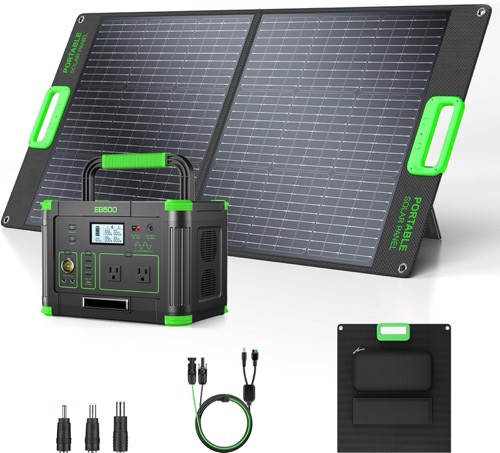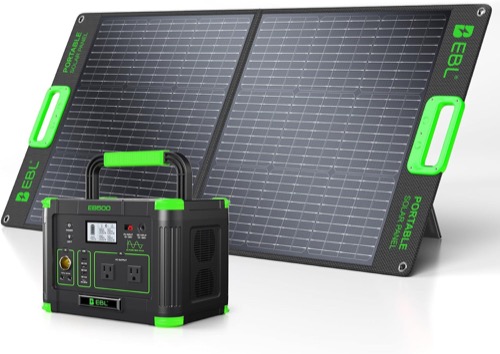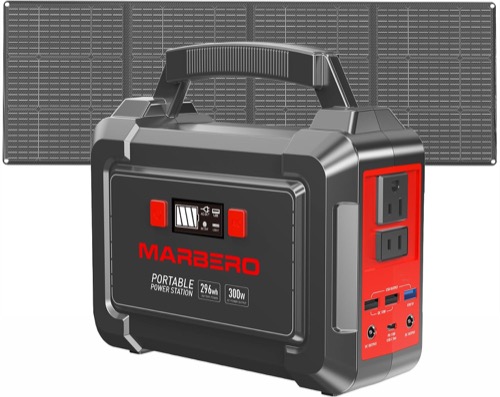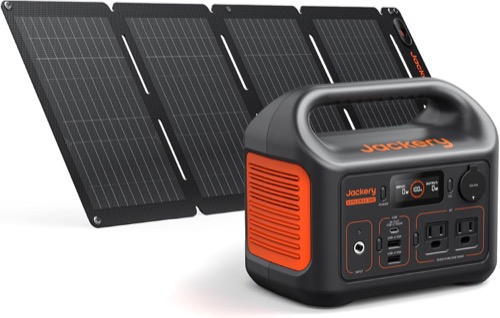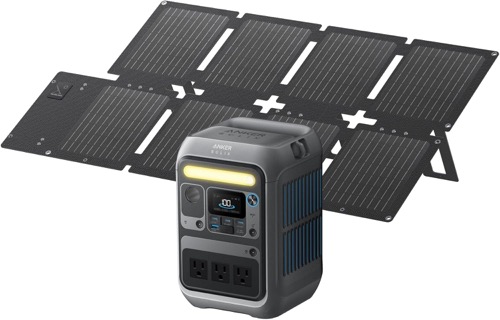
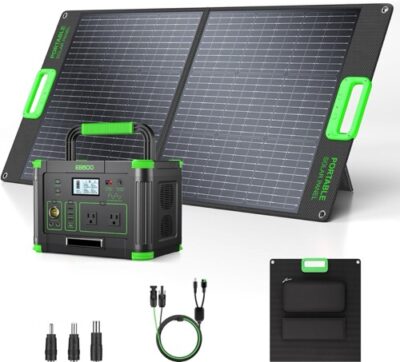
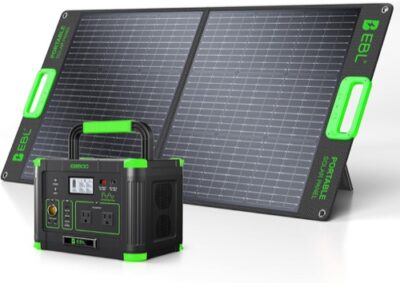
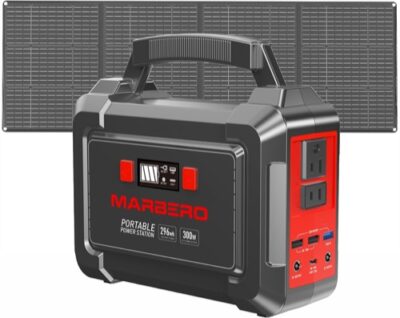
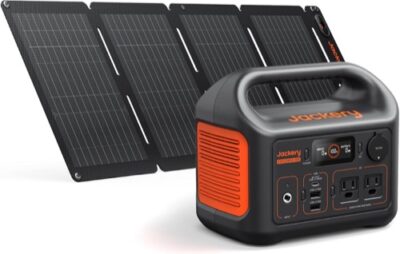
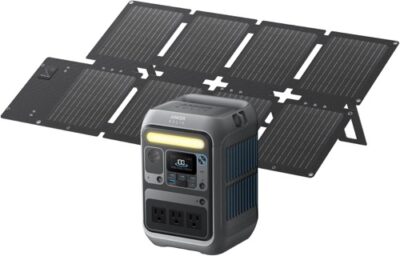
A low price does not make a solar generator a bargain. The useful question is whether the exact kit can complete a small, defined job without forcing an immediate panel, cable, or battery upgrade. These five picks stay in the light-duty end of the market, but they make different compromises: the MARBERO minimizes purchase price, GRECELL and EBL emphasize watt-hours per dollar, while Jackery and Anker spend more of the budget on LFP longevity and faster charging.
Budget rule: size the largest load first, then the energy needed, and only then compare prices. A cheap 300W station is not value if the appliance needs 500W to start.
Set a Hard Spending Ceiling and a Hard Load Ceiling
Write down the highest simultaneous AC load before opening a sale page. The MARBERO M188, Jackery Explorer 300 v2, and Anker SOLIX C300 AC are 300W stations. The GRECELL T-500 and EBL MP500 move the boundary to 500W. That difference decides whether a compact cooler, CPAP, router, fan, or laptop setup can run together; it does not turn either class into heater, kettle, microwave, or full-kitchen power.
Compare the Delivered Kit, Not the Station Alone
The included panel changes the economics. GRECELL and EBL bundle 100W panels with their roughly 519Wh stations. Anker and MARBERO include 60W panels; Jackery includes a 40W panel. A smaller panel can still be useful for a phone-heavy campsite or maintaining charge, but it is a slow recovery path for a depleted battery.
| Kit class | What you receive | The compromise to price in |
|---|---|---|
| Lowest-cost | MARBERO: 296Wh, 300W, 60W panel | Li-ion chemistry, limited published input detail, and slow wall or solar recovery |
| Capacity value | GRECELL or EBL: about 519Wh, 500W, 100W panel | NCM battery, modest 105W input, and no expansion path |
| Long-life compact | Jackery or Anker: 288Wh LFP, 300W, 40–60W panel | Less stored energy per dollar, but faster charging and longer published cycle life |
Do not calculate refill time as battery watt-hours divided by the panel nameplate and call it finished. Panel temperature, angle, clouds, wiring loss, and the station’s charge curve reduce delivery. The exact GRECELL and EBL documentation gives a six-to-nine-hour solar range; Jackery’s 40W bundle is closer to an all-day refill under its stated ideal conditions.
Decide Whether Capacity or Battery Longevity Wins
The two 519Wh value kits use NCM lithium-ion and do not publish an exact cycle-life figure for these bundles. The 288Wh Jackery and Anker stations use LiFePO4: Jackery publishes 4,000 cycles to at least 70% capacity, while Anker publishes 3,000 cycles for the C300 bundle without a retained-capacity threshold on that page. MARBERO publishes 1,000 cycles to about 90% for its Li-ion pack.
Run a Delivered-Cost Audit Before Checkout
- Confirm the bundle identity. The station, exact panel model, cable set, and seller should match the reviewed revision.
- List missing charging hardware. A car cable, adapter, extension lead, or larger panel can erase a small headline saving.
- Price the return risk. Budget brands have shorter warranty channels; keep packaging until every port and charging route is tested.
- Calculate one sunny-day recovery. If the included panel cannot replace your daily use, include the larger array in the real cost.
- Check the next class up. If a 1kWh kit removes two immediate upgrades, spending more once can be cheaper.
Know What Each Budget Pick Is Really For
Use the Return Window as a Commissioning Period
Charge the station fully, update firmware if applicable, and test the exact device combination you plan to run. Verify startup behavior, USB-C negotiation, 12V output, fan noise, display accuracy, car charging, panel cables, and every included adapter. Then discharge the system through a representative evening and recharge it by the slowest route you expect to depend on.
This is not laboratory testing; it is acceptance testing of your purchased unit. Record the results and keep them with the manual. If the kit misses its intended load, arrives incomplete, or needs an upgrade that defeats the budget, return it while the process is still simple.
Upgrade Instead of Stretching a Small Kit
Move beyond this page when the plan includes a full-size refrigerator through a long outage, several nights without reliable recharge, any load above 500W, or a future battery expansion. The right upgrade is not merely a larger battery. It should also have the inverter, solar-input window, connectors, charging speed, outlets, and warranty needed for the complete system.