Solar Power Picks logo with sun, solar panel, and green energy icon

  • Home
  • Reviews
  • Best
    • Best portable power stations
    • Best Solar Panels
    • Best Solar Generators
    • Best Solar Charge Controllers
    • Best Solar Batteries
  • Guides
    • Portable Power Stations Guides
    • Solar Panels Guides
    • Solar Generators Guides
    • Solar Charge Controllers Guides
    • Solar Batteries Guides
  • Comparisons
    • Portable Power Stations Comparisons
    • Solar Panels Comparisons
    • Solar Generators Comparisons
    • Solar Charge Controllers Comparisons
    • Solar Batteries Comparisons
  • Calculator
Home / Solar Generators / Best / Best Solar Generator for Home Backup 2026

Best Solar Generator for Home Backup 2026

OUR PICKS

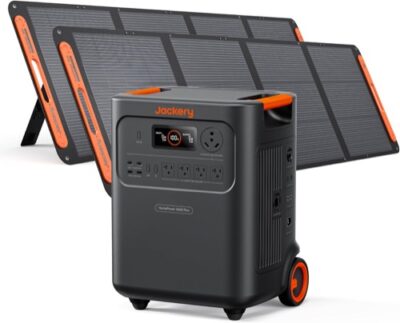
Jackery HomePower 3600 Plus Review: A 3600Wh Home-Backup Kit That Nails Your Essentials — Not Your Whole House

Best Expandable Home Platform

Jackery HomePower 3600 Plus Review: A 3600Wh Home-Backup Kit That Nails Your Essentials — Not Your Whole House

Check price at Amazon Jump to details
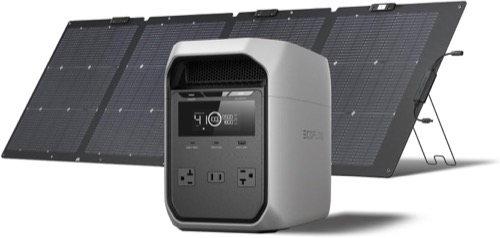
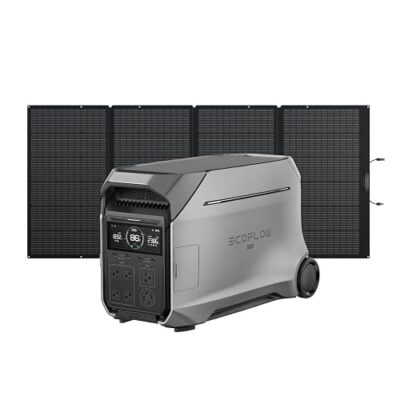
EcoFlow DELTA Pro 3 + 400W Solar Generator Review

Best Native 120/240V Platform

EcoFlow DELTA Pro 3 + 400W Solar Generator Review

Check price at Amazon Jump to details
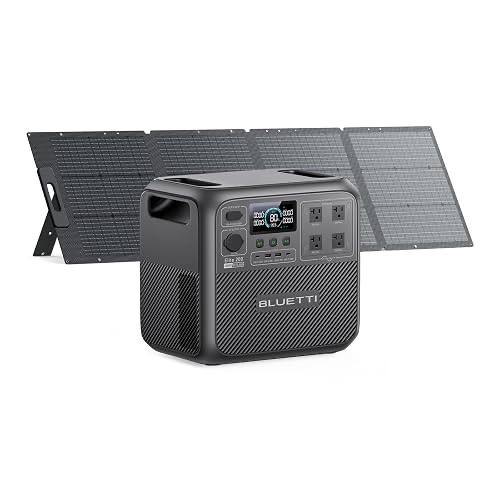
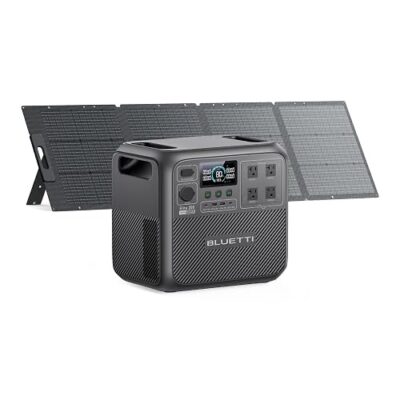
BLUETTI Elite 200 V2 + 200W Solar Generator Review

Best Compact 2kWh Essentials Kit

BLUETTI Elite 200 V2 + 200W Solar Generator Review

Check price at Amazon Jump to details
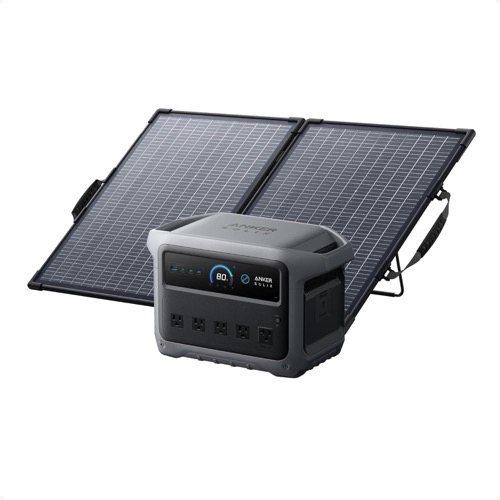
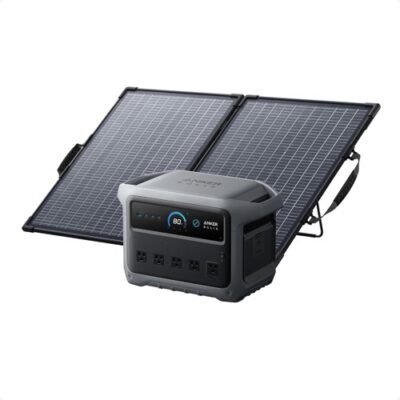
Anker SOLIX C1000 Gen2 Review: A 1024Wh Kit That Wall-Charges in 49 Minutes and Ships With Its Own Panel

Best Compact 1kWh Backup

Anker SOLIX C1000 Gen2 Review: A 1024Wh Kit That Wall-Charges in 49 Minutes and Ships With Its Own Panel

Check price at Amazon Jump to details
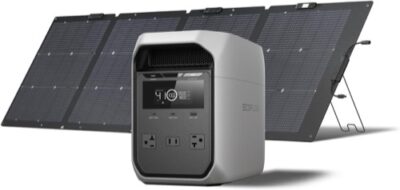
EcoFlow Delta 3 Classic Review: A 1024Wh Kit That Charges in Under an Hour and Backs Up in 10 Milliseconds

Best Solar-Forward 1kWh Layer

EcoFlow Delta 3 Classic Review: A 1024Wh Kit That Charges in Under an Hour and Backs Up in 10 Milliseconds

Check price at Amazon Jump to details

Home backup is a load-management design, not a promise to run everything. These five kits form three practical layers: compact 1kWh essentials, fixed 2kWh reserve, and larger platforms that can support broader circuit plans. Start with the loads and outage duration; voltage, transfer equipment, recovery, and installation determine whether the battery can serve them safely.

Load gateRunning and startup watts must fit.
Energy gateUsable Wh must cover the planned hours.
Voltage gate120V and 240V circuits require the correct topology.
Recovery gateThe next charging route must exist before reserve is spent.

Write the Critical-Load Stack in Priority Order

Begin with refrigeration, communications, medical devices, lighting, and a small office. Record measured running energy and motor startup behavior. Add pumps, cooking, heating, or cooling only after the protected layer has sufficient margin. A station can have enough inverter output to start a load while lacking the watt-hours to sustain it through the outage.

Backup layer Best candidates Design role
Compact 1kWh Anker C1000 Gen 2; EcoFlow DELTA 3 Classic Short, controlled 120V essentials plan
Fixed 2kWh BLUETTI Elite 200 V2 Longer 120V essentials without expansion complexity
Larger platform Jackery HomePower 3600 Plus; EcoFlow DELTA Pro 3 Broader circuit planning, expansion or 120/240V capability as documented

Model the First Twelve Outage Hours

0–1 hourConfirm outage scope and disconnect discretionary loads.
1–4 hoursMeasure actual protected-load consumption.
4–8 hoursRecalculate the energy runway and choose a charging path.
8–12 hoursReduce loads before the protected reserve is reached.

Fixed 1kWh and 2kWh batteries demand earlier load decisions. HomePower and DELTA Pro 3 begin with more storage, but large loads can erase that advantage rapidly. Expansion is valuable only when batteries, charging hardware, placement, and budget are part of the initial plan.

Separate Transfer Time From Backup Suitability

Documented EPS or UPS transfer can help selected electronics, but the published millisecond figure does not guarantee every computer, medical device, motor, or network appliance will ride through. Verify bypass and charging limits, test loss and restoration with the exact load, and use dedicated protection when interruption consequences are unacceptable.

Design the Recovery Array Around the Energy Deficit

The bundled panels are starters, not complete recovery designs. DELTA 3 Classic includes 220W. C1000 includes 100W against a larger station ceiling. Elite 200 V2 includes 200W against a 1,000W receiver. HomePower includes 400W total. DELTA Pro 3 includes 400W while its storage is 4,096Wh. A large battery paired with a token array may extend an outage without achieving daily recovery.

Daily recovery target: protected-load Wh used since the last charge + charging losses + desired reserve restoration. Compare that target with conservative seasonal harvest, not panel nameplate alone.

Keep 120V Essentials and 240V Circuits Separate

DELTA Pro 3 is the native 120/240V platform in this set. HomePower uses its documented multi-station and integration path for broader home service. C1000, DELTA 3 Classic, and Elite 200 V2 are 120V systems in the reviewed configurations. Never backfeed a receptacle or improvise fixed wiring. Use listed transfer equipment and qualified electrical help where circuits or premise wiring are involved.

Choose the Platform You Can Actually Commission

C1000 Gen 2Compact high-output essentials with rapid recovery.
DELTA 3 ClassicA 1kWh solar-forward layer with a larger starter panel.
Elite 200 V2Fixed 2kWh reserve with strong cycle-life documentation.
DELTA Pro 3Native 120/240V capability, large storage, and a starter 400W array.
HomePower 3600 PlusAn expandable home platform with a documented integration ecosystem.

Run a Return-Window Acceptance Test

  1. Photograph serial numbers, bundle contents, and connector condition.
  2. Test every intended output and charging path separately.
  3. Run representative loads long enough to observe cycling and heat.
  4. Simulate power loss and restoration for protected electronics.
  5. Record firmware, settings, cable routing, reserve rules, and shutdown order.

Write Down the Seasonal Recovery Assumption

A summer array estimate should not silently become a winter-outage promise. Record the month, location, usable solar window, expected weather loss, panel orientation, and energy consumed while charging. Then define the non-solar route used when actual harvest misses the target. The larger platforms offer more charging options, but those options help only when fuel, grid access, compatible hardware, and operating procedures are available.

Convert that assumption into an operating trigger. For example, if the battery reaches a defined reserve before the array has replaced the morning load, disconnect discretionary circuits and move to the fallback charger. Write the trigger beside the protected-load list so the household does not improvise under pressure. This makes a smaller, disciplined system more dependable than a larger battery whose users never agreed on reserve behavior.

Make the Backup Plan Fail Gracefully

Choose a reserve threshold that changes household behavior, keep a non-electric fallback for critical needs, and rehearse who disconnects optional loads. Select C1000 or DELTA 3 for short essentials, Elite 200 for a fixed 2kWh layer, DELTA Pro 3 for native 120/240V capability, or HomePower when its expansion and integration path are genuinely and carefully funded.
Home-backup verdictThe strongest system is the one whose load order, voltage path, recovery plan, and reserve rules are documented before the outage.
Best Expandable Home Platform

Jackery HomePower 3600 Plus Review: A 3600Wh Home-Backup Kit That Nails Your Essentials — Not Your Whole House

Jackery HomePower 3600 Plus Review: A 3600Wh Home-Backup Kit That Nails Your Essentials — Not Your Whole House

Get it now:

Check latest price

What to know

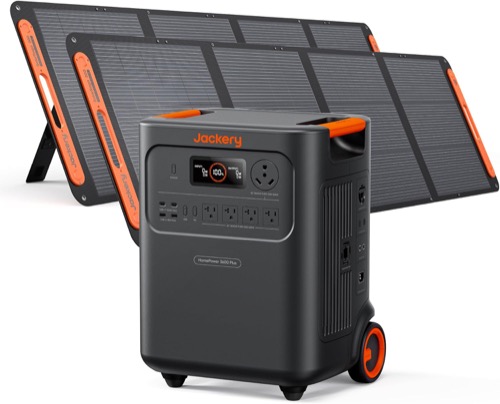
  • Station: Jackery HomePower 3600 Plus, model JHP-3600A; 3,584Wh LiFePO4 (LFP)
  • AC boundary: 3,600W continuous; 7,200W surge from one station; two-station hardware is required for 240V surge/peak
  • Included array: 2 × Jackery SolarSaga 200W bifacial portable panels; 400W total (2 × 200W)
  • Solar ceiling: 1,000W across two DC inputs; 16–60V DC / 12A per port, 24A total; dual DC8020 inputs
  • Recovery: 1,720W ±50W; about 2.5 hours to full

Best if

  • Your priority is a system that starts with 3,584Wh and a documented path toward a larger integrated system.
  • 3,584Wh LFP capacity supports a substantial essentials plan.
  • The exact bundle and its documented limits match the planned job.

Skip if

  • Whole-house and 240V expectations require a separate circuit and transfer audit.
  • You need a different voltage, outlet, movement, expansion, or recovery class than Jackery HomePower 3600 Plus (JHP-3600A) provides.
  • The plan depends on an unverified adapter, neighboring-model specification, or best-case solar day.

Jackery HomePower 3600 Plus (JHP-3600A) is the Best Expandable Home Platform on this page because it starts with 3,584Wh and a documented path toward a larger integrated system.

Its 3,584Wh battery, 3,600W continuous output, and 400W total (2 × 200W) included array are separate gates. Verify the exact load and daily recovery plan rather than treating one headline number as the verdict.

BrandJackery
Kit model / SKU / ASINHomePower 3600 Plus + 2 × SolarSaga 200W bundle (ASIN B0FMXCPWBN; US)
Power-station modelJackery HomePower 3600 Plus, model JHP-3600A
Included solar-panel model and quantity2 × Jackery SolarSaga 200W bifacial portable panels
Battery capacity3,584Wh
Battery chemistryLiFePO4 (LFP)
Cycle-life rating6,000 cycles to at least 70% capacity
Expandable capacityUp to 21.5kWh per station with five Battery Pack 3600 units
Continuous AC output3,600W
Surge / peak output7,200W surge from one station; two-station hardware is required for 240V
AC voltage, frequency, and waveform120V, 60Hz, pure sine wave
AC outlets and high-current / RV / 240V outputs5 × 120V AC including one 30A outlet; no native 240V from one station
USB and DC outputs2 × USB-C 100W, 2 × USB-A 18W, 1 × 12V/10A car socket
Maximum station solar input1,000W across two DC inputs
PV input voltage/current range and connector16–60V DC / 12A per port, 24A total; dual DC8020 inputs
Included panel rated power400W total (2 × 200W)
Panel Voc / Vmp / Isc / ImpPer panel: Voc 22V / Vmp 18V / Isc 12.5A / Imp 11.5A
Panel construction and cell typeTwo foldable bifacial monocrystalline panels
Panel weather ratingIP68 panels
Panel dimensions and weight, folded / deployedEach panel: folded 23.62 × 23.50 × 1.57 in; deployed 89.76 × 23.50 × 0.98 in; 14.33 lb
Solar recharge estimate with included panelCalculated about 10–12 peak-sun hours with the included 400W array; Jackery's 6-hour figure uses two 500W panels
Maximum AC input and AC recharge time1,720W ±50W; about 2.5 hours to full
Car, alternator, and other charging methods12–16V vehicle input up to 8A; generator and optional car-fast-charger paths supported
UPS / EPS support and transfer timeUPS supported; 20ms transfer
App and connectivityJackery app over Wi-Fi and Bluetooth
Station dimensions, weight, operating limits, and weather rating15.2 × 12.2 × 19.3 in; about 77.2 lb; charge/discharge -4–113°F; no published station IP rating
Station and panel warrantiesStation and panels each 3 years plus 2 years with registration
Included in the boxHomePower 3600 Plus, AC cable, 2 × SolarSaga 200W panels, solar charging leads, documentation; transfer switch and batteries sold separately
Best Native 120/240V Platform

EcoFlow DELTA Pro 3 + 400W Solar Generator Review

EcoFlow DELTA Pro 3 + 400W Solar Generator Review

Get it now:

Check latest price

What to know

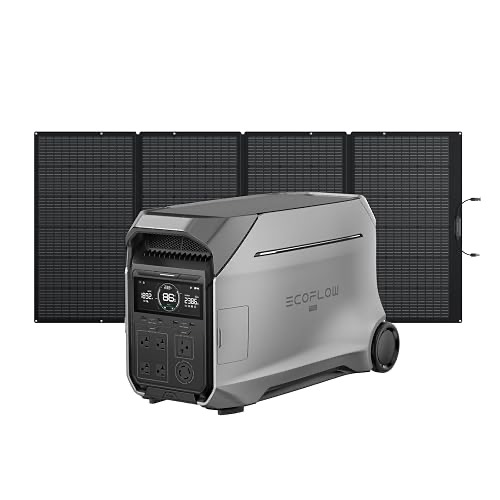
  • Station: EcoFlow DELTA Pro 3; 4,096Wh LiFePO4 (LFP)
  • AC boundary: 4,000W continuous; 8,000W surge/peak
  • Included array: 1 × EcoFlow 400W Portable Solar Panel; 400W
  • Solar ceiling: 2,600W total; High port 30–150V / 15A; low port 11–60V / 20A; XT60i paths
  • Recovery: Up to 1,800W from a standard 120V outlet; roughly 80% in about 50 minutes under specified conditions

Best if

  • Your priority is a system that combines 4,096Wh, 4,000W output, and native 120/240V capability.
  • 4,096Wh storage and expansion suit measured backup plans.
  • The exact bundle and its documented limits match the planned job.

Skip if

  • Fixed wiring and transfer equipment require qualified review.
  • You need a different voltage, outlet, movement, expansion, or recovery class than EcoFlow DELTA Pro 3 provides.
  • The plan depends on an unverified adapter, neighboring-model specification, or best-case solar day.

EcoFlow DELTA Pro 3 is the Best Native 120/240V Platform on this page because it combines 4,096Wh, 4,000W output, and native 120/240V capability.

Its 4,096Wh battery, 4,000W continuous output, and 400W included array are separate gates. Verify the exact load and daily recovery plan rather than treating one headline number as the verdict.

BrandEcoFlow
Kit model / SKU / ASINDELTA Pro 3 + 400W panel bundle (ASIN B0D145TFFY; US)
Power-station modelEcoFlow DELTA Pro 3
Included solar-panel model and quantity1 × EcoFlow 400W Portable Solar Panel
Battery capacity4,096Wh
Battery chemistryLiFePO4 (LFP)
Cycle-life rating4,000 cycles to at least 80% capacity
Expandable capacityUp to 12,288Wh with compatible DELTA Pro 3 extra batteries
Continuous AC output4,000W
Surge / peak output8,000W
AC voltage, frequency, and waveform120/240V, 60Hz, pure sine wave
AC outlets and high-current / RV / 240V outputsStandard 120V AC plus TT-30R and L14-30R 120/240V outputs; use only with an approved circuit path
USB and DC outputsUSB-A, high-power USB-C, regulated 12V car/DC5521 and Anderson DC outputs
Maximum station solar input2,600W total
PV input voltage/current range and connectorHigh port 30–150V / 15A; low port 11–60V / 20A; XT60i paths
Included panel rated power400W
Panel Voc / Vmp / Isc / ImpVoc 48V / Vmp 41V / Isc 11A / Imp 9.8A
Panel construction and cell typeFoldable monocrystalline portable panel; up to 23% published conversion efficiency
Panel weather ratingIP68 panel
Panel dimensions and weight, folded / deployedAbout 42.0 × 24.4 × 1.0 in folded and 93.1 × 42.2 × 1.0 in deployed; about 35.3 lb
Solar recharge estimate with included panelEcoFlow publishes up to about 13 hours from empty under its bundle test assumptions
Maximum AC input and AC recharge timeUp to 1,800W from a standard 120V outlet; roughly 80% in about 50 minutes under specified conditions
Car, alternator, and other charging methods12V/24V vehicle charging; compatible optional EcoFlow alternator charger and other documented ecosystem inputs
UPS / EPS support and transfer timeUPS support with about 10ms transfer; commission the exact protected load
App and connectivityEcoFlow app over Wi-Fi and Bluetooth
Station dimensions, weight, operating limits, and weather ratingAbout 27.2 × 13.4 × 16.1 in; 113.5 lb; indoor station with no published weatherproof enclosure rating
Station and panel warrantiesStation 5 years; panel 12 months on the current US direct-store terms
Included in the boxDELTA Pro 3, AC charging cable, car cable, DC5521 cable, handle cover and documentation; 400W panel, case and solar cable path
Best Compact 2kWh Essentials Kit

BLUETTI Elite 200 V2 + 200W Solar Generator Review

BLUETTI Elite 200 V2 + 200W Solar Generator Review

Get it now:

Check latest price

What to know

  • Station: BLUETTI Elite 200 V2; 2,073.6Wh LiFePO4 (LFP)
  • AC boundary: 2,600W continuous; 3,900W Power Lifting for selected resistive loads surge/peak
  • Included array: 1 × BLUETTI PV200D 200W portable panel; 200W
  • Solar ceiling: 1,000W; 12–60V DC / 20A maximum; MC4-to-aviation solar path
  • Recovery: Up to 2,400W AC input; 0–80% in about 50 minutes and full in about 70 minutes under specified Turbo conditions

Best if

  • Your priority is a system that delivers 2,073.6Wh and 2,600W in a fixed-capacity 120V station.
  • 1,000W PV ceiling permits a much larger array.
  • The exact bundle and its documented limits match the planned job.

Skip if

  • Sixteen exact owner records limit outcome confidence.
  • You need a different voltage, outlet, movement, expansion, or recovery class than BLUETTI Elite 200 V2 provides.
  • The plan depends on an unverified adapter, neighboring-model specification, or best-case solar day.

BLUETTI Elite 200 V2 is the Best Compact 2kWh Essentials Kit on this page because it delivers 2,073.6Wh and 2,600W in a fixed-capacity 120V station.

Its 2,073.6Wh battery, 2,600W continuous output, and 200W included array are separate gates. Verify the exact load and daily recovery plan rather than treating one headline number as the verdict.

BrandBLUETTI
Kit model / SKU / ASINElite 200 V2 + PV200D bundle (ASIN B0DL5HVR29; US)
Power-station modelBLUETTI Elite 200 V2
Included solar-panel model and quantity1 × BLUETTI PV200D 200W portable panel
Battery capacity2,073.6Wh
Battery chemistryLiFePO4 (LFP)
Cycle-life rating6,000+ cycles to at least 80% capacity
Expandable capacityNo expansion-battery port
Continuous AC output2,600W
Surge / peak output3,900W Power Lifting for selected resistive loads
AC voltage, frequency, and waveform120V, 60Hz, pure sine wave
AC outlets and high-current / RV / 240V outputs4 × 120V AC; no high-current RV or 240V output
USB and DC outputsUSB-C, USB-A, 12V car socket and DC5521 outputs
Maximum station solar input1,000W
PV input voltage/current range and connector12–60V DC / 20A maximum; MC4-to-aviation solar path
Included panel rated power200W
Panel Voc / Vmp / Isc / ImpVoc 24.6V / Vmp 20.4V / Isc 10.8A / Imp 9.7A
Panel construction and cell typeFoldable ETFE monocrystalline panel
Panel weather ratingIP67 panel
Panel dimensions and weight, folded / deployedAbout 23 × 23.9 × 1.7 in folded and 23.9 × 82.8 in deployed; 17.15 lb
Solar recharge estimate with included panelIdealized minimum exceeds 10 nameplate hours; field recovery normally takes longer
Maximum AC input and AC recharge timeUp to 2,400W AC input; 0–80% in about 50 minutes and full in about 70 minutes under specified Turbo conditions
Car, alternator, and other charging methodsVehicle charging and compatible optional BLUETTI alternator charger
UPS / EPS support and transfer timeUPS support with about 15ms transfer
App and connectivityBLUETTI app over Wi-Fi and Bluetooth
Station dimensions, weight, operating limits, and weather ratingAbout 13.8 × 9.8 × 12.7 in; 53.4 lb; station has no published outdoor IP rating
Station and panel warrantiesStation 5 years; PV200D 12 months
Included in the boxElite 200 V2, AC cable, grounding screw, solar cable and documentation; PV200D panel and attached lead
Best Compact 1kWh Backup

Anker SOLIX C1000 Gen2 Review: A 1024Wh Kit That Wall-Charges in 49 Minutes and Ships With Its Own Panel

Anker SOLIX C1000 Gen2 Review: A 1024Wh Kit That Wall-Charges in 49 Minutes and Ships With Its Own Panel

Get it now:

Check latest price

What to know

  • Station: Anker SOLIX C1000 Gen 2; 1,024Wh LiFePO4 (LFP)
  • AC boundary: 2,000W continuous; 3,000W surge/peak
  • Included array: 1 × Anker SOLIX PS100 Compact 100W bifacial portable panel; 100W
  • Solar ceiling: 600W; 11–28V DC / 8.2A; 28–60V DC / 14.5A; XT60i
  • Recovery: 1,600W; 0–100% in 49 minutes with HyperFlash enabled in the Anker app

Best if

  • Your priority is a system that adds rapid AC recovery and documented transfer behavior to an essentials plan.
  • Wi-Fi/Bluetooth app and rich USB-C outputs improve daily use.
  • The exact bundle and its documented limits match the planned job.

Skip if

  • 100W panel is only one-sixth of the station's 600W solar ceiling.
  • You need a different voltage, outlet, movement, expansion, or recovery class than Anker SOLIX C1000 Gen 2 provides.
  • The plan depends on an unverified adapter, neighboring-model specification, or best-case solar day.

Anker SOLIX C1000 Gen 2 is the Best Compact 1kWh Backup on this page because it adds rapid AC recovery and documented transfer behavior to an essentials plan.

Its 1,024Wh battery, 2,000W continuous output, and 100W included array are separate gates. Verify the exact load and daily recovery plan rather than treating one headline number as the verdict.

BrandAnker
Kit model / SKU / ASINSOLIX C1000 Gen 2 + PS100 Compact bundle (ASIN B0GYDL6PHP; US)
Power-station modelAnker SOLIX C1000 Gen 2
Included solar-panel model and quantity1 × Anker SOLIX PS100 Compact 100W bifacial portable panel
Battery capacity1,024Wh
Battery chemistryLiFePO4 (LFP)
Cycle-life rating4,000 cycles to at least 80% capacity
Expandable capacityNo expansion-battery port published for C1000 Gen 2
Continuous AC output2,000W
Surge / peak output3,000W
AC voltage, frequency, and waveform120V, 60Hz, pure sine wave
AC outlets and high-current / RV / 240V outputs5 × 120V AC; no 30A RV or 240V output
USB and DC outputs3 × USB-C (2 × 100W, 1 × 15W), 1 × USB-A, 1 × 12V car socket
Maximum station solar input600W
PV input voltage/current range and connector11–28V DC / 8.2A; 28–60V DC / 14.5A; XT60i
Included panel rated power100W
Panel Voc / Vmp / Isc / ImpPublished operating point: 16.8V / 5.95A; Voc and Isc are not published for the exact PS100 Compact
Panel construction and cell typeFoldable bifacial monocrystalline panel with integrated stand
Panel weather ratingIP68 panel
Panel dimensions and weight, folded / deployedFolded 14.0 × 10.9 × 2.6 in; deployed 46.5 × 28.0 × 0.9 in; 7.7 lb
Solar recharge estimate with included panelCalculated about 12–14 peak-sun hours from empty with 100W; Anker's 1.8-hour figure requires a 600W array
Maximum AC input and AC recharge time1,600W; 0–100% in 49 minutes with HyperFlash enabled in the Anker app
Car, alternator, and other charging methods12V vehicle charging through the included car cable
UPS / EPS support and transfer timeUPS supported; under 10ms transfer
App and connectivityAnker app over Wi-Fi and Bluetooth
Station dimensions, weight, operating limits, and weather rating15.1 × 8.2 × 9.6 in; 24.9 lb; charge 32–104°F, discharge -4–104°F; station has no published IP rating
Station and panel warrantiesStation 5 years; panel term is not published on the exact US bundle page
Included in the boxC1000 Gen 2, AC cable, car cable, guides; PS100 Compact, two MC4 extensions, MC4-to-XT60i and XT60-to-DC7909 cables
Best Solar-Forward 1kWh Layer

EcoFlow Delta 3 Classic Review: A 1024Wh Kit That Charges in Under an Hour and Backs Up in 10 Milliseconds

EcoFlow Delta 3 Classic Review: A 1024Wh Kit That Charges in Under an Hour and Backs Up in 10 Milliseconds

Get it now:

Check latest price

What to know

  • Station: EcoFlow DELTA 3 Classic, model EF-DL3-C; 1,024Wh LiFePO4 (LFP)
  • AC boundary: 1,800W continuous; 3,600W; X-Boost supports selected resistive loads up to 2,600W surge/peak
  • Included array: 1 × EcoFlow NextGen 220W bifacial panel, model EF-Fold-G220-04; 220W front / 175W rear-side nameplate
  • Solar ceiling: 500W; 11–60V DC, 15A maximum; XT60/XT60i input
  • Recovery: 1,400W; about 45 minutes to 80% and 60 minutes to full in Fast mode

Best if

  • Your priority is a system that includes a 220W panel and six AC outlets for a disciplined short outage.
  • 1,800W inverter covers many household and travel loads.
  • The exact bundle and its documented limits match the planned job.

Skip if

  • No expansion-battery port if 1,024Wh later proves too small.
  • You need a different voltage, outlet, movement, expansion, or recovery class than EcoFlow DELTA 3 Classic (EF-DL3-C) provides.
  • The plan depends on an unverified adapter, neighboring-model specification, or best-case solar day.

EcoFlow DELTA 3 Classic (EF-DL3-C) is the Best Solar-Forward 1kWh Layer on this page because it includes a 220W panel and six AC outlets for a disciplined short outage.

Its 1,024Wh battery, 1,800W continuous output, and 220W front / 175W rear-side nameplate included array are separate gates. Verify the exact load and daily recovery plan rather than treating one headline number as the verdict.

BrandEcoFlow
Kit model / SKU / ASINDELTA 3 Classic + NextGen 220W bifacial bundle (ASIN B0FRMQPZF6; US)
Power-station modelEcoFlow DELTA 3 Classic, model EF-DL3-C
Included solar-panel model and quantity1 × EcoFlow NextGen 220W bifacial panel, model EF-Fold-G220-04
Battery capacity1,024Wh
Battery chemistryLiFePO4 (LFP)
Cycle-life ratingNot published on the exact US DELTA 3 Classic specifications page
Expandable capacityNo expansion-battery port
Continuous AC output1,800W
Surge / peak output3,600W; X-Boost supports selected resistive loads up to 2,600W
AC voltage, frequency, and waveform120V, 60Hz, pure sine wave
AC outlets and high-current / RV / 240V outputs6 × 120V AC; no high-current RV or 240V output
USB and DC outputs1 × USB-A 18W, 1 × USB-C 100W, 1 × USB-C 30W; no 12V DC output
Maximum station solar input500W
PV input voltage/current range and connector11–60V DC, 15A maximum; XT60/XT60i input
Included panel rated power220W front / 175W rear-side nameplate
Panel Voc / Vmp / Isc / ImpVoc 21.5V / Vmp 18.4V / Isc 12.4A front, 9.9A rear / Imp 11.9A front, 9.5A rear
Panel construction and cell typeFoldable N-type TOPCon monocrystalline bifacial panel; 25% published cell efficiency
Panel weather ratingIP68 panel
Panel dimensions and weight, folded / deployedFolded 24.2 × 23.2 × 1.3 in; deployed 24.2 × 84.8 × 1.0 in; 15.4 lb
Solar recharge estimate with included panelAbout 5.8 hours under the manufacturer's stated ideal conditions
Maximum AC input and AC recharge time1,400W; about 45 minutes to 80% and 60 minutes to full in Fast mode
Car, alternator, and other charging methods12V/24V vehicle charging through XT60; compatible optional EcoFlow alternator charger
UPS / EPS support and transfer timeUPS supported; under 10ms transfer
App and connectivityEcoFlow app over Wi-Fi 6 and Bluetooth 5.3
Station dimensions, weight, operating limits, and weather rating15.7 × 7.9 × 11.1 in; 26.7 lb; charge 32–113°F, discharge 14–113°F; IP20 plus potting protection
Station and panel warrantiesStation 3 years plus 2 years with app registration; panel 12 months
Included in the boxDELTA 3 Classic, AC cable, manual; NextGen 220W bifacial panel, carry case, XT60i solar cable, guides

Product Comparison

Feature Jackery HomePower 3600 Plus Review: A 3600Wh Home-Backup Kit That Nails Your Essentials — Not Your Whole House EcoFlow DELTA Pro 3 + 400W Solar Generator Review BLUETTI Elite 200 V2 + 200W Solar Generator Review Anker SOLIX C1000 Gen2 Review: A 1024Wh Kit That Wall-Charges in 49 Minutes and Ships With Its Own Panel EcoFlow Delta 3 Classic Review: A 1024Wh Kit That Charges in Under an Hour and Backs Up in 10 Milliseconds
Product Image
Jackery HomePower 3600 Plus Review: A 3600Wh Home-Backup Kit That Nails Your Essentials — Not Your Whole House
EcoFlow DELTA Pro 3 + 400W Solar Generator Review
BLUETTI Elite 200 V2 + 200W Solar Generator Review
Anker SOLIX C1000 Gen2 Review: A 1024Wh Kit That Wall-Charges in 49 Minutes and Ships With Its Own Panel
EcoFlow Delta 3 Classic Review: A 1024Wh Kit That Charges in Under an Hour and Backs Up in 10 Milliseconds
Price $2149 $3099 $1199 $669.99 $699
Rating
4.0 / 5
4.4 / 5
4.6 / 5
3.8 / 5
4.3 / 5
Category Solar Generators Solar Generators Solar Generators Solar Generators Solar Generators
Brand Jackery EcoFlow BLUETTI Anker EcoFlow
Kit model / SKU / ASIN HomePower 3600 Plus + 2 × SolarSaga 200W bundle (ASIN B0FMXCPWBN; US) DELTA Pro 3 + 400W panel bundle (ASIN B0D145TFFY; US) Elite 200 V2 + PV200D bundle (ASIN B0DL5HVR29; US) SOLIX C1000 Gen 2 + PS100 Compact bundle (ASIN B0GYDL6PHP; US) DELTA 3 Classic + NextGen 220W bifacial bundle (ASIN B0FRMQPZF6; US)
Power-station model Jackery HomePower 3600 Plus, model JHP-3600A EcoFlow DELTA Pro 3 BLUETTI Elite 200 V2 Anker SOLIX C1000 Gen 2 EcoFlow DELTA 3 Classic, model EF-DL3-C
Included solar-panel model and quantity 2 × Jackery SolarSaga 200W bifacial portable panels 1 × EcoFlow 400W Portable Solar Panel 1 × BLUETTI PV200D 200W portable panel 1 × Anker SOLIX PS100 Compact 100W bifacial portable panel 1 × EcoFlow NextGen 220W bifacial panel, model EF-Fold-G220-04
Battery capacity 3,584Wh 4,096Wh 2,073.6Wh 1,024Wh 1,024Wh
Battery chemistry LiFePO4 (LFP) LiFePO4 (LFP) LiFePO4 (LFP) LiFePO4 (LFP) LiFePO4 (LFP)
Cycle-life rating 6,000 cycles to at least 70% capacity 4,000 cycles to at least 80% capacity 6,000+ cycles to at least 80% capacity 4,000 cycles to at least 80% capacity Not published on the exact US DELTA 3 Classic specifications page
Expandable capacity Up to 21.5kWh per station with five Battery Pack 3600 units Up to 12,288Wh with compatible DELTA Pro 3 extra batteries No expansion-battery port No expansion-battery port published for C1000 Gen 2 No expansion-battery port
Continuous AC output 3,600W 4,000W 2,600W 2,000W 1,800W
Surge / peak output 7,200W surge from one station; two-station hardware is required for 240V 8,000W 3,900W Power Lifting for selected resistive loads 3,000W 3,600W; X-Boost supports selected resistive loads up to 2,600W
AC voltage, frequency, and waveform 120V, 60Hz, pure sine wave 120/240V, 60Hz, pure sine wave 120V, 60Hz, pure sine wave 120V, 60Hz, pure sine wave 120V, 60Hz, pure sine wave
AC outlets and high-current / RV / 240V outputs 5 × 120V AC including one 30A outlet; no native 240V from one station Standard 120V AC plus TT-30R and L14-30R 120/240V outputs; use only with an approved circuit path 4 × 120V AC; no high-current RV or 240V output 5 × 120V AC; no 30A RV or 240V output 6 × 120V AC; no high-current RV or 240V output
USB and DC outputs 2 × USB-C 100W, 2 × USB-A 18W, 1 × 12V/10A car socket USB-A, high-power USB-C, regulated 12V car/DC5521 and Anderson DC outputs USB-C, USB-A, 12V car socket and DC5521 outputs 3 × USB-C (2 × 100W, 1 × 15W), 1 × USB-A, 1 × 12V car socket 1 × USB-A 18W, 1 × USB-C 100W, 1 × USB-C 30W; no 12V DC output
Maximum station solar input 1,000W across two DC inputs 2,600W total 1,000W 600W 500W
PV input voltage/current range and connector 16–60V DC / 12A per port, 24A total; dual DC8020 inputs High port 30–150V / 15A; low port 11–60V / 20A; XT60i paths 12–60V DC / 20A maximum; MC4-to-aviation solar path 11–28V DC / 8.2A; 28–60V DC / 14.5A; XT60i 11–60V DC, 15A maximum; XT60/XT60i input
Included panel rated power 400W total (2 × 200W) 400W 200W 100W 220W front / 175W rear-side nameplate
Panel Voc / Vmp / Isc / Imp Per panel: Voc 22V / Vmp 18V / Isc 12.5A / Imp 11.5A Voc 48V / Vmp 41V / Isc 11A / Imp 9.8A Voc 24.6V / Vmp 20.4V / Isc 10.8A / Imp 9.7A Published operating point: 16.8V / 5.95A; Voc and Isc are not published for the exact PS100 Compact Voc 21.5V / Vmp 18.4V / Isc 12.4A front, 9.9A rear / Imp 11.9A front, 9.5A rear
Panel construction and cell type Two foldable bifacial monocrystalline panels Foldable monocrystalline portable panel; up to 23% published conversion efficiency Foldable ETFE monocrystalline panel Foldable bifacial monocrystalline panel with integrated stand Foldable N-type TOPCon monocrystalline bifacial panel; 25% published cell efficiency
Panel weather rating IP68 panels IP68 panel IP67 panel IP68 panel IP68 panel
Panel dimensions and weight, folded / deployed Each panel: folded 23.62 × 23.50 × 1.57 in; deployed 89.76 × 23.50 × 0.98 in; 14.33 lb About 42.0 × 24.4 × 1.0 in folded and 93.1 × 42.2 × 1.0 in deployed; about 35.3 lb About 23 × 23.9 × 1.7 in folded and 23.9 × 82.8 in deployed; 17.15 lb Folded 14.0 × 10.9 × 2.6 in; deployed 46.5 × 28.0 × 0.9 in; 7.7 lb Folded 24.2 × 23.2 × 1.3 in; deployed 24.2 × 84.8 × 1.0 in; 15.4 lb
Solar recharge estimate with included panel Calculated about 10–12 peak-sun hours with the included 400W array; Jackery's 6-hour figure uses two 500W panels EcoFlow publishes up to about 13 hours from empty under its bundle test assumptions Idealized minimum exceeds 10 nameplate hours; field recovery normally takes longer Calculated about 12–14 peak-sun hours from empty with 100W; Anker's 1.8-hour figure requires a 600W array About 5.8 hours under the manufacturer's stated ideal conditions
Maximum AC input and AC recharge time 1,720W ±50W; about 2.5 hours to full Up to 1,800W from a standard 120V outlet; roughly 80% in about 50 minutes under specified conditions Up to 2,400W AC input; 0–80% in about 50 minutes and full in about 70 minutes under specified Turbo conditions 1,600W; 0–100% in 49 minutes with HyperFlash enabled in the Anker app 1,400W; about 45 minutes to 80% and 60 minutes to full in Fast mode
Car, alternator, and other charging methods 12–16V vehicle input up to 8A; generator and optional car-fast-charger paths supported 12V/24V vehicle charging; compatible optional EcoFlow alternator charger and other documented ecosystem inputs Vehicle charging and compatible optional BLUETTI alternator charger 12V vehicle charging through the included car cable 12V/24V vehicle charging through XT60; compatible optional EcoFlow alternator charger
UPS / EPS support and transfer time UPS supported; 20ms transfer UPS support with about 10ms transfer; commission the exact protected load UPS support with about 15ms transfer UPS supported; under 10ms transfer UPS supported; under 10ms transfer
App and connectivity Jackery app over Wi-Fi and Bluetooth EcoFlow app over Wi-Fi and Bluetooth BLUETTI app over Wi-Fi and Bluetooth Anker app over Wi-Fi and Bluetooth EcoFlow app over Wi-Fi 6 and Bluetooth 5.3
Station dimensions, weight, operating limits, and weather rating 15.2 × 12.2 × 19.3 in; about 77.2 lb; charge/discharge -4–113°F; no published station IP rating About 27.2 × 13.4 × 16.1 in; 113.5 lb; indoor station with no published weatherproof enclosure rating About 13.8 × 9.8 × 12.7 in; 53.4 lb; station has no published outdoor IP rating 15.1 × 8.2 × 9.6 in; 24.9 lb; charge 32–104°F, discharge -4–104°F; station has no published IP rating 15.7 × 7.9 × 11.1 in; 26.7 lb; charge 32–113°F, discharge 14–113°F; IP20 plus potting protection
Station and panel warranties Station and panels each 3 years plus 2 years with registration Station 5 years; panel 12 months on the current US direct-store terms Station 5 years; PV200D 12 months Station 5 years; panel term is not published on the exact US bundle page Station 3 years plus 2 years with app registration; panel 12 months
Included in the box HomePower 3600 Plus, AC cable, 2 × SolarSaga 200W panels, solar charging leads, documentation; transfer switch and batteries sold separately DELTA Pro 3, AC charging cable, car cable, DC5521 cable, handle cover and documentation; 400W panel, case and solar cable path Elite 200 V2, AC cable, grounding screw, solar cable and documentation; PV200D panel and attached lead C1000 Gen 2, AC cable, car cable, guides; PS100 Compact, two MC4 extensions, MC4-to-XT60i and XT60-to-DC7909 cables DELTA 3 Classic, AC cable, manual; NextGen 220W bifacial panel, carry case, XT60i solar cable, guides
Buy Now View Deal View Deal View Deal View Deal View Deal

Build the Backup Around Essential Circuits

Best expandable home platform: Jackery HomePower 3600 Plus. Best native 120/240V platform: EcoFlow DELTA Pro 3. Best compact 2kWh layer: BLUETTI Elite 200 V2. Best compact 1kWh backup: Anker C1000 Gen 2. Best solar-forward 1kWh layer: EcoFlow DELTA 3 Classic.

Choose only after the critical-load order, voltage path, recovery plan, transfer behavior, and reserve rules are documented.

Frequently Asked Questions

Can one solar generator back up an entire house?

Usually not. One HomePower 3600 Plus is a 120V system; broader 120/240V integration requires a documented multi-unit topology and approved external hardware. The smaller picks are essential-load systems.

How do I size a home-backup solar generator?

List critical loads, verify running and startup watts, calculate daily Wh, select autonomy and reserve, then design charging that can replace energy while loads remain active.

Does a published UPS transfer time guarantee my device will stay on?

No. Transfer time is one input. Test the exact approved connection and device, including loss and restoration. Critical medical equipment needs a manufacturer-approved backup design.

How much solar is enough for home backup?

Enough conservative daily harvest to cover critical-load consumption and refill reserve within the planned weather window. Use the exact PV voltage, current, connector, and cold-Voc limits.

Can I connect a power station to my electrical panel myself?

Fixed-wiring integration requires listed equipment, correct transfer and neutral/ground design, applicable permits, and qualified installation. Never backfeed a receptacle.

Why include 519Wh kits on a home-backup page?

They are budget essential-load layers for communications, lighting, CPAP, laptops, and selected cooling loads. They are not presented as whole-home replacements.

×

About Solar Power Picks

Portable Solar Power, Backup Power, and Off-Grid Gear Guides

Your trusted source for honest, in-depth product reviews and comparisons.

Quick Links

  • Best Picks
  • Reviews
  • Guides
  • Comparisons
  • Calculator
  • Privacy policy
  • Favorites

Categories

  • Portable Power Stations
  • Solar Batteries
  • Solar Charge Controllers
  • Solar Generators
  • Solar Panels

© 2026 Solar Power Picks. All Rights Reserved.

We may earn a commission when you purchase through links on our site. Learn more