Solar Power Picks logo with sun, solar panel, and green energy icon

  • Home
  • Reviews
  • Best
    • Best portable power stations
    • Best Solar Panels
    • Best Solar Generators
  • Guides
    • Portable Power Stations Guides
    • Solar Panels Guides
    • Solar Generators Guides
  • Comparisons
    • Portable Power Stations Comparisons
    • Solar Panels Comparisons
    • Solar Generators Comparisons
  • Calculator
Home / Solar Generators / Best / Best Portable Solar Generators, Ranked for Grab-and-Go Power

Best Portable Solar Generators, Ranked for Grab-and-Go Power

OUR PICKS

Anker SOLIX C300 Review: A Pocket-Sized 288Wh Kit With Its Own 60W Panel

Best Overall Portable

Anker SOLIX C300 Review: A Pocket-Sized 288Wh Kit With Its Own 60W Panel

Check price at Amazon Jump to details
Jackery Solar Generator 300 Review: A 7.5-Pound 292Wh Kit for Fans, Phones, and Weekend Camping

Best Budget Portable

Jackery Solar Generator 300 Review: A 7.5-Pound 292Wh Kit for Fans, Phones, and Weekend Camping

Check price at Amazon Jump to details
GRECELL 500W Solar Generator Review: A Budget 519Wh Kit With Its Own 100W Panel

Best Capacity-to-Weight

GRECELL 500W Solar Generator Review: A Budget 519Wh Kit With Its Own 100W Panel

Check price at Amazon Jump to details
Marbero 296Wh Solar Generator Review: A Cheap, 5-Pound Camping Kit That Knows Its Limits

Best Ultra-Light Cheap

Marbero 296Wh Solar Generator Review: A Cheap, 5-Pound Camping Kit That Knows Its Limits

Check price at Amazon Jump to details
EBL 500W Solar Generator Review: A Light 519Wh Kit Built for CPAPs, Coolers, and Quiet Backup

Best 500W Value

EBL 500W Solar Generator Review: A Light 519Wh Kit Built for CPAPs, Coolers, and Quiet Backup

Check price at Amazon Jump to details
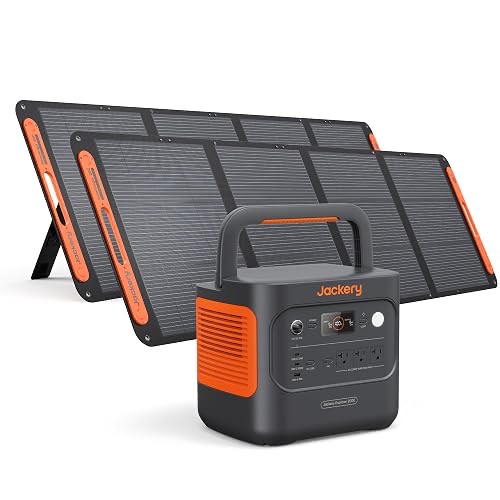
Jackery Solar Generator 1000 v2 Review: A 1070Wh Kit That Charges in an Hour and Comes With Its Own Panel

Best for Max Portable Power

Jackery Solar Generator 1000 v2 Review: A 1070Wh Kit That Charges in an Hour and Comes With Its Own Panel

Check price at Amazon Jump to details

Portability is the whole point of these kits — and it’s the one thing spec sheets bury. A “portable” power station can mean a 5.73-pound lunchbox you toss in a day pack or a 23.8-pound unit you carry with two hands and set down for the weekend. Both refill from the sun, both run your phones and a CPAP, but the way you’ll actually live with them could not be more different. The right pick is the lightest kit that still carries the capacity your trip needs, with a panel and charging setup that keeps it topped off wherever you’re going.

The six kits below are chosen for grab-and-go duty, not garage backup. They span $170 for the ultralight MARBERO 296Wh to $699 for the Jackery Explorer 1000 v2, and 5.73 to 23.8 pounds — every one a true one- or two-hand carry with a top handle, never a wheeled box. Each ships as a station-and-panel kit, so you get a working solar setup out of the door rather than a battery you have to source panels for later.

Start with the quick picks and comparison table above to see the lineup at a glance. Then use this guide to turn watt-hours and pounds into a real answer for your own bag — and if you already know your use case, jump to the section near the bottom that matches how you carry.

How We Chose These Portable Solar Generators

We don’t rank portable kits on headline watt-hours. For grab-and-go power, weight and carry come first, then how much capacity you get per pound, then whether you can actually refill it on the move. Here’s what drives each pick, in the order that matters for portability.

Criterion Why It Matters Weight
Weight & one-hand carry A portable you dread lifting stays home — top-handle balance and pounds decide whether it travels High
Capacity-to-weight ratio Watt-hours per pound is the real portable metric: how much runtime you carry for each pound in the bag High
Recharge flexibility on the move Wall, car, USB-C, and a foldable panel — the more paths, the fewer times you’re stranded off-grid High
Ports for travel gear Strong USB-C PD, USB-A, AC, and a 12V socket cover phones, laptops, cameras, and coolers at once Medium
Durability & chemistry Impact-resistant shells, IP-rated panels, and LiFePO4 vs Li-ion cycle life for repeat travel use Medium
Quiet operation & extras Fan and inverter noise, a light bar or flashlight, and app control that earn their place in a tent Medium

A couple of those deserve a note. On capacity-to-weight, we read watt-hours per pound rather than raw Wh: the 519Wh GRECELL 500W earns its badge by carrying the most watt-hours in the guide while staying a one-hand lift, and the 5.73-lb MARBERO 296Wh wins on sheer packability. On recharge flexibility, we care more about fast wall and USB-C top-ups than the bundled panel, because a 40W or 60W kit panel is a maintainer, not a fast charger — the Anker SOLIX C300 refills over 140W two-way USB-C precisely so you’re not tethered to daylight.

Worth knowing: The panel that ships in a portable kit is usually the smallest part of the package. A 40W or 60W panel trickles power in over most of a day — treat solar as maintenance and lean on wall, car, or USB-C charging when you need a fast refill.

How to Choose a Portable Solar Generator

How Portable Is Portable? Weight Tiers

“Portable” spans a wide range, so sort by pounds first. Roughly, there are three tiers. Backpack-light (under 8 lbs): the 5.73-lb MARBERO 296Wh and 7.5-lb Jackery Explorer 300 disappear into a day pack and hand off to a kid without complaint. One-hand carry (roughly 9 to 14 lbs): the Anker SOLIX C300 and 519Wh EBL 500W (14.1 lbs) still lift with one hand by a molded or folding handle, but you feel them by the end of a long walk. Two-hand weekend haul (around 24 lbs): the Jackery Explorer 1000 v2 is the practical ceiling — owners call it a genuine one-handed lift, but it’s a set-it-down-at-camp unit, not a trail companion.

Capacity vs Weight: The Trade-Off

Every watt-hour costs pounds, and chemistry changes the exchange rate. LiFePO4 kits like the Jackery pair are heavier per watt-hour but last 4,000+ cycles; Li-ion kits like the MARBERO, GRECELL, and EBL squeeze more capacity into fewer pounds and dollars, which is exactly why they win the ultralight and value slots. The GRECELL 500W is the clearest example of the trade run well: 519Wh — the most in this guide — in a package you can still carry one-handed, at $290. Decide your capacity floor from your loads, then buy the lightest kit that clears it rather than the most watt-hours you can afford.

What You Can Realistically Run

Continuous watts set what runs at all; watt-hours set how long. The 300W-class kits here — Anker C300, Jackery 300, MARBERO 296Wh — handle phones, laptops, cameras, fans, lights, and a CPAP through the night, but not a full-size fridge or anything with a heating element. Owners back that up: a Jackery 300 ran a CPAP overnight with 20% left, and a MARBERO drove a tower fan, laptop, and lamp for about 7.5 hours. Move to the 500W EBL to add a small cooler, or to the 1500W Jackery Explorer 1000 v2 to briefly run a microwave, coffee maker, or window AC. Check your single biggest device against the continuous rating first — surge figures only last a fraction of a second.

Real-world math: At roughly 85% AC efficiency, a 288Wh station like the Anker C300 delivers about 245Wh through the outlets. That’s a phone charged many times over and a CPAP through the night — but it’s why a portable won’t carry a fridge for long.

Solar and USB-C Recharge on the Move

Off-grid, two things refill a portable: the bundled panel and everything else. Be honest about the panel. The Jackery 300’s 40W panel reaches 80% in about 7.5 hours, while a 100W upgrade does it in roughly 2.8 hours; the GRECELL and EBL kits ship a real 100W panel that refills their 519Wh batteries in about 6 to 9 sunny hours. The faster lever is usually the wall or a USB-C port: the Anker C300 hits 80% in about 50 minutes from an outlet and takes 140W two-way over USB-C, and the Jackery Explorer 1000 v2 can reach full in one hour with emergency mode on. For grab-and-go, a kit that also charges from a car socket or a laptop brick keeps you moving when the sun doesn’t cooperate.

Ports

A travel kit earns its keep by charging everything at once. Look for a strong USB-C PD port — 100W on the Jackery 300 and Explorer 1000 v2, a standout 140W two-way pair on the Anker C300 — plus USB-A for older gear, a couple of pure sine wave AC outlets, and a 12V car socket for a cooler. The GRECELL and EBL 500W kits pile on convenience with 10 ports each and a built-in wireless charging pad, while the MARBERO and EBL add an LED flashlight with an SOS mode for emergencies. Count the ports you’ll use simultaneously — a family campsite fills them faster than you’d think.

Match Portability to Your Use

The right weight tier depends entirely on how far you carry it and for how long. Match the trip to the kit.

  • Day trips and backpacking: Go as light as your loads allow. The 5.73-lb MARBERO 296Wh or 7.5-lb Jackery Explorer 300 slip into a pack and cover phones, a camera, a drone, and a fan without weighing you down.
  • Weekend camping and van life: Step up to the Anker SOLIX C300 for its 25dB silence, light bar, and 140W USB-C, or to a 519Wh GRECELL or EBL 500W kit for two or three days of device charging and a small cooler between recharges.
  • Emergency go-bag: Favor the lightest kit that covers your must-run essentials — a CPAP, router, phones, and lights. A 300Wh LiFePO4 unit like the C300 or Jackery 300 grabs and goes; step to the Jackery Explorer 1000 v2 if you need to briefly run a microwave or window AC during an outage.

Buying note: The best portable for a backpack is rarely the best one for a weekend base camp. Start from how you carry — pack, one hand, or two — and the right watt-hour class usually picks itself.

Related Picks and Guides

Portability is one lens on the solar generator lineup. If price or camping is really your priority, these focused shortlists rank a tighter set of picks with the trade-offs that matter for that job.

  • Best budget solar generator — the most performance per dollar, including the ultralight and Li-ion value kits featured here.
  • Best solar generator for camping — lightweight kits and runtime math for tents, car camping, and weekend trips.
  • Solar generator size calculator — estimate the watt-hour class you need from your devices, trip length, and recharge plan before you commit to a weight tier.

The short version for a portable: list every device you’ll carry, multiply each one’s watts by the hours you need it, add roughly 15 percent for inverter losses, and that total in watt-hours is your capacity floor. Then pick the lightest kit that clears it and still fits your single biggest load under its continuous rating. Carry only the watt-hours you’ll actually use — the pounds you save are the whole reason you bought portable.

Best Overall Portable

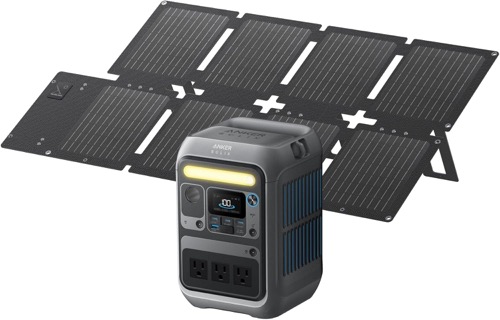
Anker SOLIX C300 Review: A Pocket-Sized 288Wh Kit With Its Own 60W Panel

Anker SOLIX C300 Review: A Pocket-Sized 288Wh Kit With Its Own 60W Panel

Get it now:

Check latest price

What to know

  • 140W two-way USB-C recharges the unit fast from a wall brick, car, or laptop charger — the key to grab-and-go refills.
  • 0-80% in about 50 minutes from a wall outlet; the bundled 60W panel is a top-up, not a fast charger.
  • 25dB operation and a diffused light bar make it genuinely tent- and bedroom-friendly.
  • Not compatible with Anker's larger PS-series panels — stick to the bundled 60W or a compatible one.

Best if

  • You want the most refined small, quiet, carry-anywhere kit
  • You live on USB-C devices and want fast two-way charging
  • App control and a good light bar matter in a tent

Skip if

  • You need to run a full-size fridge or anything over 300W
  • You want the lightest or cheapest entry point (see below)
  • You need big solar intake for multi-day off-grid use
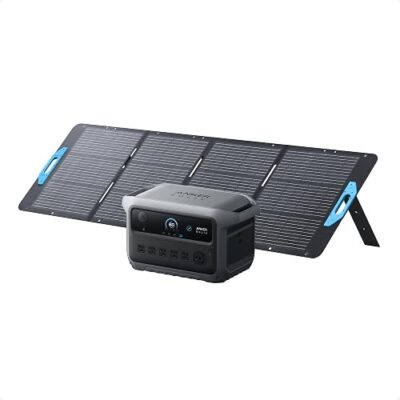
This is the one you actually grab on the way out the door. At 288Wh it's a true one-hand carry with a molded grip and optional strap, yet it feels a step above every other small kit here — 25dB near-silent operation, a soft-diffused light bar for tents, and Anker's best-in-class app that connects over Bluetooth from across a campsite. The standout for portability is charging speed both ways: 140W two-way USB-C means it refills almost as fast as it powers your laptop, so you're rarely tied to daylight.
  • Capacity: 288Wh LiFePO4 (3,000 cycles)
  • Output: 300W continuous / 600W surge
  • Solar input: 60W panel included; 140W two-way USB-C
  • Ports: 8 total, incl. 2x 140W USB-C; 25dB operation; 5-year warranty
  • Price: $330
Best Budget Portable

Jackery Solar Generator 300 Review: A 7.5-Pound 292Wh Kit for Fans, Phones, and Weekend Camping

Jackery Solar Generator 300 Review: A 7.5-Pound 292Wh Kit for Fans, Phones, and Weekend Camping

Get it now:

Check latest price

What to know

  • 7.5 lbs — the lightest kit here and 17% under the class average, easy to carry on a hike.
  • LiFePO4 chemistry at this price: 4,000+ cycles and an 11-year-plus service life.
  • 100W USB-C PD output is unusually strong for a 292Wh unit.
  • The 40W panel reaches 80% in about 7.5 hours; a 100W panel does it in ~2.8 hours if you upgrade.

Best if

  • Weight and packability are your top priorities
  • You want reliable LFP longevity for the lowest price
  • You mainly charge phones, laptops, and a CPAP

Skip if

  • You need to run anything over 300W
  • You want fast solar recharge from the bundled panel
  • You want app control or two-way USB-C refills
The lightest kit in this guide at just 7.5 lbs, and the cheapest way onto Jackery's LiFePO4 ladder. It's a lunchbox-sized power source for van life, festivals, and blackout basics — fans, lights, a CPAP, phones, and a laptop — with an integrated handle that makes it effortless to pack or hand to a kid for their own gear. The 100W USB-C PD port punches well above the price, and the LFP battery means it's built to outlast a decade of trips rather than a couple of seasons.
  • Capacity: 292Wh LiFePO4 (4,000+ cycles to 70%)
  • Output: 300W continuous / 600W peak
  • Solar input: 40W panel included; 100W USB-C PD output
  • Weight: 7.5 lbs; 6 ports incl. 2x AC and 120W car port
  • Price: $279
Best Capacity-to-Weight

GRECELL 500W Solar Generator Review: A Budget 519Wh Kit With Its Own 100W Panel

GRECELL 500W Solar Generator Review: A Budget 519Wh Kit With Its Own 100W Panel

Get it now:

Check latest price

What to know

  • 519Wh — the most watt-hours here — in a chassis you can still carry one-handed.
  • Li-ion (not LiFePO4): lighter and cheaper per watt-hour, but fewer cycles, so best for occasional trips.
  • Real 100W bundled panel (23.5% efficiency) refills it in roughly 6 to 9 hours of good sun.
  • Ten ports plus a built-in wireless charging pad — unusual convenience at this price.

Best if

  • You want the most watt-hours per pound you can carry
  • You value a wireless pad and lots of ports for a family site
  • You want a real 100W panel included at a budget price

Skip if

  • You'll cycle the battery weekly and need LFP longevity
  • You depend on it for guaranteed all-night CPAP runtime
  • You need more than 500W of continuous output
This is the kit that carries the most runtime per pound. At 519Wh it packs the highest capacity in this portable lineup, yet it stays a genuine one-hand lift and slots into a camper cupboard — buyers routinely take it dry camping for five days on a single charge. It leans into convenience harder than the pricier LFP units, adding a built-in wireless charging pad and a generous 10-port layout, plus a real 100W panel that actually refills the bigger battery. The trade-off is chemistry: this is Li-ion, so it's a weekender rather than a daily-cycle workhorse.
  • Capacity: 519.48Wh Li-ion (with smart BMS protections)
  • Output: 500W continuous / 1000W peak
  • Solar input: 100W panel included (23.5% efficiency)
  • Ports: 10 total, incl. 60W USB-C PD and a wireless pad
  • Price: $290
Best Ultra-Light Cheap

Marbero 296Wh Solar Generator Review: A Cheap, 5-Pound Camping Kit That Knows Its Limits

Marbero 296Wh Solar Generator Review: A Cheap, 5-Pound Camping Kit That Knows Its Limits

Get it now:

Check latest price

What to know

  • 5.73-lb station plus a 3.08-lb folding panel — the most packable set in this guide.
  • Li-ion pack rated to hold 90% capacity after 1,000 cycles; 19V DC adapter charges it in about 7 hours.
  • 8 ports (USB-C PD 18W, 3x USB-A, 2x 12V DC, 2x AC) plus an LED flashlight with SOS mode.
  • IP65 60W panel handles light rain and dust; owners report it fully refilling the battery in ~7.5 summer hours.

Best if

  • You want the lightest, cheapest grab-and-go set
  • You're building an emergency or backpacking kit on a budget
  • You mainly run phones, a laptop, fans, and small DC gear

Skip if

  • You need LiFePO4 longevity for daily cycling
  • You want fast USB-C PD (it caps at 18W)
  • You need to power a full-size fridge, heater, or AC
When the priority is the lightest, cheapest kit that still runs real gear, this is it. The power station weighs just 5.73 lbs and the folded 60W panel adds only 3.08 lbs, so the whole set fits in a laptop bag and rides in a backpack. It's the go-bag pick: with over 1,700 reviews behind it, buyers prep it for hurricanes and lean on it for phones, a laptop, a small fan, and a mini fridge under 300W. It won't touch a full-size fridge or AC, but for $170 it covers the essentials without weighing you down.
  • Capacity: 296Wh Li-ion (90% capacity after 1,000 cycles)
  • Output: 300W continuous / 600W surge (pure sine wave)
  • Solar input: 60W IP65 panel included (up to 23% efficiency)
  • Weight: 5.73 lbs station / 3.08 lbs panel; LED SOS flashlight
  • Price: $170
Best 500W Value

EBL 500W Solar Generator Review: A Light 519Wh Kit Built for CPAPs, Coolers, and Quiet Backup

EBL 500W Solar Generator Review: A Light 519Wh Kit Built for CPAPs, Coolers, and Quiet Backup

Get it now:

Check latest price

What to know

  • 519Wh recharges from the 100W panel in about 6 to 9 hours of sun.
  • 10 ports: 2x pure sine wave AC, 3x USB-A QC3.0, 60W USB-C PD, 2x 12V DC, a car port, and a wireless pad.
  • Bifold 100W panel folds to briefcase size with kickstands and mounting grommets.
  • 14.1 lbs with a solid handle plus an LED flashlight with strobe and SOS for outages.

Best if

  • You want a balanced 500W kit with a real, easy-setup panel
  • You run a CPAP, cooler, and devices over a weekend
  • You value lots of ports and a foldable briefcase panel

Skip if

  • You need the lightest possible backpack kit
  • You need LFP chemistry for frequent daily cycling
  • You want to run loads above 500W continuous
A well-rounded 519Wh kit that pairs a real 100W bifold panel with a station light enough to carry easily at 14.1 lbs. It's the weekend workhorse of the mid tier: pure sine wave AC, 10 ports, and enough capacity to run a CPAP through the night with charge to spare, as camping buyers report. The panel is the highlight for portability — a briefcase-style bifold with built-in kickstands, a zippered accessory pouch, and grommets to hang it on a tent or RV — so setting up solar is genuinely quick in the field.
  • Capacity: 519.48Wh Li-ion
  • Output: 500W continuous / 1000W peak (pure sine wave)
  • Solar input: 100W bifold panel included (up to 23.5% efficiency)
  • Weight: 14.1 lbs; 10 ports incl. 60W USB-C PD and wireless pad
  • Price: $390
Best for Max Portable Power

Jackery Solar Generator 1000 v2 Review: A 1070Wh Kit That Charges in an Hour and Comes With Its Own Panel

Jackery Solar Generator 1000 v2 Review: A 1070Wh Kit That Charges in an Hour and Comes With Its Own Panel

Get it now:

Check latest price

What to know

  • One-hour full wall charge, but only with emergency mode enabled in the app — it defaults to 1.7 hours to protect the battery.
  • 23.8 lbs with a folding handle: a true one-handed carry, but a set-down-at-camp unit, not a trail companion.
  • The bundled 200W panel realistically nets 100-135W in good sun; plan on most of a day for a full solar refill.
  • Two DC solar inputs let you add a second panel to double solar intake for longer trips.

Best if

  • You want the most capacity and watts you can still carry
  • You occasionally run a microwave, coffee maker, or window AC
  • Fast one-hour wall recharge before a trip matters

Skip if

  • You need a backpack-light kit under 10 lbs
  • You only charge phones, a laptop, and a CPAP
  • You want the cheapest or lightest entry point
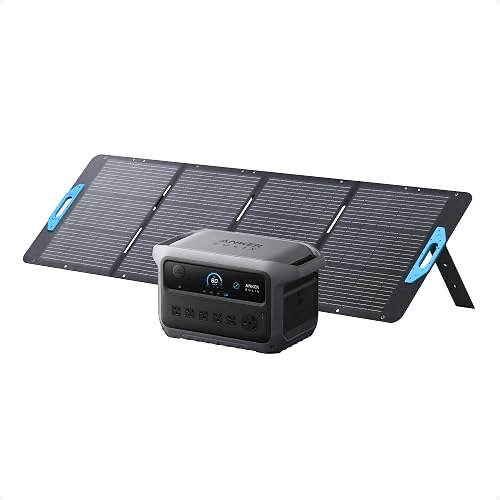
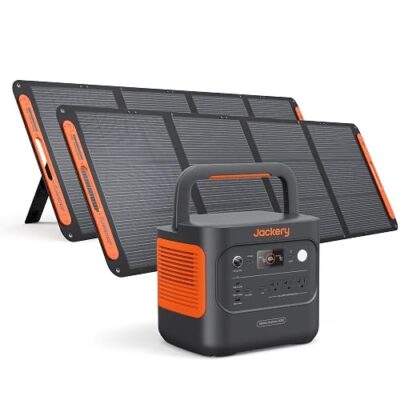
When you need portable that still runs a microwave, this is the ceiling. At 1070Wh and 1500W it clears the loads a small kit can't — a coffee maker, a window AC for a stretch, a pellet stove, a fridge — yet it weighs only 23.8 lbs and folds 18% smaller than the original, so it stays a genuine one-handed lift with its foldable handle. The one-hour wall charge means you can top it off fast before you leave, and the 200W panel keeps it fed at camp. It's the heaviest pick here, but it's the most power you can still carry.
  • Capacity: 1070Wh LiFePO4 (4,000 cycles to 70%)
  • Output: 1500W continuous / 3000W surge
  • Solar input: 200W panel included (dual DC inputs)
  • Weight: 23.8 lbs; foldable handle; 100W USB-C output
  • Price: $699

Product Comparison

Feature Anker SOLIX C300 Review: A Pocket-Sized 288Wh Kit With Its Own 60W Panel Jackery Solar Generator 300 Review: A 7.5-Pound 292Wh Kit for Fans, Phones, and Weekend Camping GRECELL 500W Solar Generator Review: A Budget 519Wh Kit With Its Own 100W Panel Marbero 296Wh Solar Generator Review: A Cheap, 5-Pound Camping Kit That Knows Its Limits EBL 500W Solar Generator Review: A Light 519Wh Kit Built for CPAPs, Coolers, and Quiet Backup Jackery Solar Generator 1000 v2 Review: A 1070Wh Kit That Charges in an Hour and Comes With Its Own Panel
Product Image
Anker SOLIX C300 Review: A Pocket-Sized 288Wh Kit With Its Own 60W Panel
Jackery Solar Generator 300 Review: A 7.5-Pound 292Wh Kit for Fans, Phones, and Weekend Camping
GRECELL 500W Solar Generator Review: A Budget 519Wh Kit With Its Own 100W Panel
Marbero 296Wh Solar Generator Review: A Cheap, 5-Pound Camping Kit That Knows Its Limits
EBL 500W Solar Generator Review: A Light 519Wh Kit Built for CPAPs, Coolers, and Quiet Backup
Jackery Solar Generator 1000 v2 Review: A 1070Wh Kit That Charges in an Hour and Comes With Its Own Panel
Price $329.98 $279 $289.98 $169.99 $389.99 $699
Rating
4.6 / 5
4.3 / 5
4.4 / 5
4.2 / 5
4.8 / 5
4.5 / 5
Category Solar Generators Solar Generators Solar Generators Solar Generators Solar Generators Solar Generators
Brand Anker Jackery GRECELL MARBERO EBL Jackery
Model / SKU SOLIX C300 + 60W Solar Panel Kit (ASIN: B0DBLJRRPW) Solar Generator 300 + 40W Panel Kit (Explorer 300; ASIN: B0G429L5B4) 500W Portable Power Station + 100W Solar Panel Kit (ASIN: B0GYP8PS1L) 296Wh Solar Generator + 60W Panel Kit (station M188SL60; ASIN: B0FG7MTQTH) 500W Portable Power Station + 100W Solar Panel Kit (ASIN: B0GG9GX8CN) Solar Generator 1000 v2 + 200W Panel Kit (Explorer 1000 v2; ASIN: B0D2L1G66J)
Product type Solar generator kit — compact portable power station + 60W solar panel Solar generator kit — portable power station + 40W solar panel Solar generator kit — portable power station + 100W solar panel Budget solar generator kit — portable power station + 60W folding solar panel Solar generator kit — portable power station + 100W solar panel Solar generator kit — portable power station + 200W solar panel
Battery capacity 288 Wh 292 Wh 519.48 Wh 296 Wh 519.48 Wh (140,400 mAh) 1070 Wh
Battery chemistry LiFePO4 (LFP) (rated 3,000 cycles; smart temperature control, impact resistant) LiFePO4 (LFP) (rated 4,000+ cycles to 70% capacity) Lithium-ion (listing states "lithium battery" with a smart BMS; no LiFePO4 claim) Lithium-ion (Li-ion) (~90% capacity after 1,000 cycles; not LiFePO4) Lithium-ion (Li-ion) LiFePO4 (LFP) (rated 4,000+ cycles to 70%+ capacity)
Continuous AC output 300 W (pure sine wave) 300 W (pure sine wave) 500 W (pure sine wave) 300 W (pure sine wave; rated continuous — capacity limits sustained high draw) 500 W (pure sine wave) 1500 W (pure sine wave)
Surge / peak output 600 W 600 W 1000 W 600 W 1000 W 3000 W
Solar input 60 W (bundled foldable panel; owners cite IP68 water resistance) 40 W (bundled Air panel; ~80% in ~7.5 hr good sun) Up to 100 W (bundled monocrystalline panel; ~18V, up to 23.5% cell efficiency) 60 W (bundled IP65 folding panel; up to 23% cell efficiency claimed; real input runs lower) 100 W max (20V; bundled monocrystalline panel, up to 23.5% cell efficiency) 200 W (bundled SolarSaga panel; two solar input ports, expandable toward ~400W)
Wall (AC) recharge 80% in about 50 minutes (full charge shortly after) Included AC adapter (fastest path; recharge time not specified by brand) Not specified by listing ~7 hours from the 19V DC adapter A few hours with the included AC adapter ~1 hour 0-100% with Emergency Super Charging (app) (1.7 hr default; owner measured ~50 min from 22%)
Car / USB-C recharge 12V car socket, or PD 3.1 USB-C input (car cable included in box per Anker; a couple of owners reported theirs missing) N/A N/A N/A N/A N/A
Solar recharge Most of the pack over a good sunny day (owners measured ~40W in full sun; ~5-15W heavily overcast) ~80% in ~7.5 hr from the 40W panel (~2.8 hr with a 100W panel, sold separately) Roughly a full sunny day from the 100W panel (real input often ~60-70W; 100W input cap) ~7.5 hours in strong sun (owner-measured) (longer in weak or cloudy conditions) ~6-9 hours full charge in good sun (real input varies with angle and cloud cover) ~80% in 6 hours from the 200W panel (real input often ~100W with sun tracking)
AC outlets 3 (pure sine wave; 300W total) 2 (pure sine wave) 2 (pure sine wave, 500W) 2 (110V pure sine wave; one 2-prong, one 3-prong) 2 (120V, 500W total, pure sine wave) 3 (pure sine wave)
USB-C ports 3 (2× 140W two-way fast charge, 1× 15W) 1 (100W PD) 1 (60W PD max) 1 (PD 18W) 1 (PD, 20V/3A, 60W max) 2 (100W PD max)
USB-A ports 1 (12W) 2 3 (QC3.0, 18W each) 3 (2x QC3.0 18W, 1x QC3.0 15W) 3 (QC3.0, 18W max each) 1
12V DC ports 1 (car socket, 120W) 1 (120W car port) N/A 2 (for car coolers, LED strips) N/A 1 (car port)
Total ports 8 (plus a sliding cover over the solar / AC input) N/A 10 N/A N/A N/A
App control Yes — Anker app over Wi-Fi or Bluetooth (shows battery temp, watts in/out; controls the light) N/A N/A N/A No Yes — Jackery App (1-hour emergency charge, 30 dB quiet mode, energy mode)
Charge-through (passthrough) Yes — power devices while recharging N/A N/A N/A N/A N/A
Built-in light Yes — soft, diffused front light bar (app- and button-controlled) N/A N/A Yes — LED flashlight with SOS mode LED flashlight (steady, strobe, SOS modes) N/A
Noise level 25 dB (from about 3.3 ft) N/A N/A N/A N/A N/A
Portability Compact and light (~15% smaller than similar designs; molded grip; strap mounts, strap sold separately) N/A N/A N/A N/A N/A
Panel compatibility NOT compatible with SOLIX PS30, PS200, PS400, or other 5V/3A USB-C panels N/A N/A N/A N/A N/A
Weight Not specified (owners note it is lighter than a similar-capacity Bluetti) 7.5 lb (integrated handle; ~17% lighter than class average) Not specified by listing (owners describe it as light and easy to carry one-handed) N/A 14.1 lb (station; solid carry handle) 23.8 lb (10.8 kg) (station only; foldable ergonomic handle)
Warranty 5 years Manufacturer warranty (per Jackery; register to confirm term) Not specified by listing 12 months (plus Amazon-message customer service) N/A 5 years of coverage
What's in the box 1× SOLIX C300 station, 1× 60W solar panel, XT-60 to DC7909 charging cable, solar-to-XT60 charging cable, extension cable, AC charging cable, safety manual, warranty info (station and panel ship separately) 1× Explorer 300 station, 1× 40W Air solar panel, 1× AC adapter, 1× car charger cable, 1× user guide 1× 500W / 519.48Wh power station, 1× 100W monocrystalline solar panel, adapters and connectors, charging cables, user manual 1x M188SL60 power station, 1x 60W solar panel, 1x power adapter, 1x cigarette-lighter adapter, 1x user manual 1× EBL 500W power station, 1× 100W folding solar panel with adapter cables, charging accessories, user manual 1× Explorer 1000 v2 station, 1× 200W solar panel, 1× AC charging cable, 1× user manual
Best for Travel, remote work, camping, and emergency backup for phones, laptops, and small devices — quiet, light power with a solar panel already included — based on actual customer usage Vanlife, tent camping, travel, CPAP, and blackout backup — quiet, light, budget power for phones, fans, lights, and small electronics — based on actual customer usage Camping, travel, RV trips, and small-device emergency backup — phones, laptops, fans, a CPAP, and a mini-fridge — based on actual customer usage Cheap, light backup for phones, laptops, small fans, lights, CPAP-class low-draw gear, and short-run small appliances while camping, in an RV, or during outages — based on actual customer usage Camping, road trips, fishing, CPAP backup, and short home outages — light, quiet, fumeless sub-500W power with a solar panel already included — based on actual customer usage Camping, RV and off-grid living, ham radio, and outage backup — quiet, fast-charging power with a solar panel already included — based on actual customer usage
Buy Now View Deal View Deal View Deal View Deal View Deal View Deal

Which Portable Solar Generator Is Right for You?

The best portable solar generator is the lightest kit that still carries the capacity your trip actually needs — not the biggest battery you can lift. For most people the sweet spot is a sub-10-lb, 300Wh-class kit: the Anker SOLIX C300 (288Wh, 300W, $330) is our Best Overall Portable for its one-hand carry, 25dB silence, and 140W two-way USB-C, while the 7.5-lb Jackery Explorer 300 (292Wh, $279) is the Best Budget Portable and the lightest LiFePO4 kit here.

Go lighter or larger from there. For the cheapest, most packable go-bag option, the 5.73-lb MARBERO 296Wh ($170) is our Best Ultra-Light Cheap pick. Want more watt-hours without leaving the one-hand-carry class? The 519Wh GRECELL 500W ($290) is the Best Capacity-to-Weight play and the 519Wh EBL 500W ($390) is the Best 500W Value with a real 100W panel. And when you need portable that still runs a microwave, the 23.8-lb Jackery Explorer 1000 v2 (1070Wh, 1500W, $699) is the Best for Max Portable Power.

Not sure yet? Start from what you carry and how far — a day pack, a weekend campsite, or an emergency go-bag — then pick the smallest kit that clears your loads. The use-case section below matches each weight tier to a real trip.

---

Frequently Asked Questions

What is a portable solar generator?

A portable solar generator is a battery power station light enough to carry by hand, paired with a foldable solar panel to refill it off the grid. There's no engine, fuel, or fumes — a lithium battery stores the energy, an inverter turns it into standard AC for your outlets, and the panel tops the battery back up in the sun. Every pick in this guide ships as a station-and-panel kit: the Anker SOLIX C300 with a 60W panel, the Jackery Explorer 300 with a 40W panel, and the Jackery Explorer 1000 v2 with a 200W panel. The defining trait is grab-and-go weight, which runs from the 5.73-lb MARBERO 296Wh up to the 23.8-lb Jackery Explorer 1000 v2 — all of them a one- or two-hand carry rather than a wheeled unit.

How much does a portable solar generator weigh?

It depends on capacity, but the portable class tops out where you can no longer comfortably carry it one-handed. In this guide the MARBERO 296Wh is the lightest at 5.73 lbs, the Jackery Explorer 300 is 7.5 lbs, the EBL 500W is 14.1 lbs, and the Jackery Explorer 1000 v2 is 23.8 lbs. As a rule, roughly every 300Wh of LiFePO4 capacity adds a few pounds, so a true backpack-friendly kit stays around 300Wh, a weekend kit lands near 500Wh and 12 to 14 lbs, and a 1kWh unit like the Explorer 1000 v2 is the practical ceiling for one-handed carry. Above that, stations start shipping with wheels instead of a top handle.

What can a portable solar generator actually run?

A 300W-class unit — the Anker C300, Jackery 300, or MARBERO 296Wh — comfortably runs phones, laptops, cameras, fans, lights, and a CPAP overnight, but not a full-size fridge or anything with a heating element. Owners routinely report a CPAP running all night off a 292Wh Jackery 300 with 20% left in the morning, and a tower fan plus a laptop and lamp draining a 296Wh MARBERO in about 7.5 hours. Step up to a 500W unit like the EBL 500W to add a small cooler or car fridge, or to the 1500W Jackery Explorer 1000 v2 to briefly run a microwave, coffee maker, or window AC. Match the station's continuous watts to your single biggest device, then size watt-hours to how long you need it.

How fast do portable solar generators recharge?

Recharge speed comes down to the bundled panel and the station's charging inputs. The small kit panels here are top-ups, not fast chargers: the Jackery Explorer 300's 40W panel reaches 80% in about 7.5 hours, while its optional 100W panel does it in roughly 2.8 hours. The GRECELL and EBL kits ship a real 100W panel that refills their 519Wh batteries in about 6 to 9 hours of good sun. The bigger lever is fast wall or USB-C charging: the Anker C300 hits 80% from a wall outlet in about 50 minutes and recharges over its 140W two-way USB-C, and the Jackery Explorer 1000 v2 can reach full in one hour with emergency mode enabled. For grab-and-go, wall and USB-C top-ups usually matter more than solar.

LiFePO4 or Li-ion for a portable solar generator?

For anything you'll cycle often, LiFePO4 (LFP) is worth the extra weight and cost. The Anker SOLIX C300 (3,000 cycles) and both Jackery kits (4,000+ cycles to 70%) use LFP, which lasts thousands more charges and tolerates heat better — the Jackery units are rated past a decade of regular use. Li-ion units like the MARBERO 296Wh, GRECELL 500W, and EBL 500W are lighter and cheaper for the same watt-hours, which is exactly why they win on portability and price, but they age faster under heavy cycling. Buy LFP if this is a daily-driver or long-term emergency battery; buy Li-ion if you want the lightest or cheapest kit for occasional trips.

Is a portable solar generator good for emergencies?

Yes — a portable kit is one of the easiest ways to keep phones, a router, medical devices, and lights alive during an outage, with the bonus that you can grab it and go. Buyers regularly prep these for hurricanes and multi-day blackouts: a MARBERO 296Wh charged two phones and a laptop through Hurricane Helene, and a Jackery Explorer 1000 v2 kept a pellet stove and Wi-Fi running through a storm. The trade-off versus a heavy home-backup unit is capacity — a portable won't run a full house — so size it to essentials and keep the panel handy to refill during the day. For a dedicated go-bag, favor the lightest kit that still covers your must-run devices.

×

About Solar Power Picks

Portable Solar Power, Backup Power, and Off-Grid Gear Guides

Your trusted source for honest, in-depth product reviews and comparisons.

Quick Links

  • Best Picks
  • Reviews
  • Guides
  • Comparisons
  • Calculator
  • Privacy policy
  • Favorites

Categories

  • Portable Power Stations
  • Solar Generators
  • Solar Panels

© 2026 Solar Power Picks. All Rights Reserved.

We may earn a commission when you purchase through links on our site. Learn more