Renogy Rover Lite 60A Review: Serious Capacity Demands Serious Terminations
At a Glance
KEY FEATURES
- Controller: MPPT; 60A rated charge output.
- System: 12V / 24V / 36V / 48V automatic for non-lithium batteries; Sealed/AGM, gel, flooded, lithium, and user-defined.
- PV boundary: 150V maximum Voc; 900W @ 12V; 1,800W @ 24V; 2,000W @ 36V; 3,200W @ 48V maximum PV power.
- Controls: LCD and buttons; RS485; optional Renogy Bluetooth module and DC Home.
- Best fit: Large 12V-48V cabin and off-grid systems requiring 60A output and a 150V PV ceiling.
PROS
- 60A output and 150V PV headroom suit larger arrays.
- Local controls reduce dependence on optional communications.
- Heavy construction and cooling fit fixed installations.
CONS
- High current demands professional-quality cables, lugs, fusing, and airflow.
- The 20A load output is not an inverter connection.
- Large enclosure and mixed support reports warrant early commissioning.
Editor's Choice
Editorial assessment based on exact-model documentation and qualitative exact-ASIN owner evidence; no first-party bench test or population-rate claim
Will the Renogy Rover Lite 60A Fit Your Solar Array?
Estimate required charging current and check it against the documented limits for Renogy Rover Lite 60A.
Solar Charge Controller Size Calculator
What size charge controller do I need?
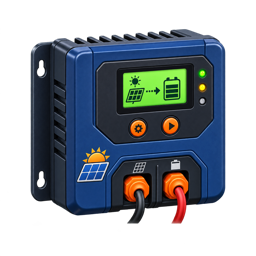
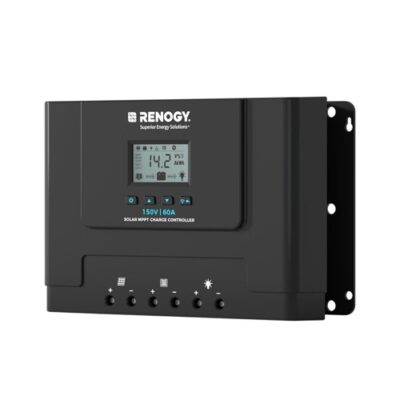
The Renogy Rover Lite 60A is built for arrays and battery banks beyond the usual weekend-camping controller. It combines 60A charge output, a 150V PV ceiling, support for 12V through 48V batteries, an LCD, user-defined profiles, RS485 communications, and a published three-year warranty.
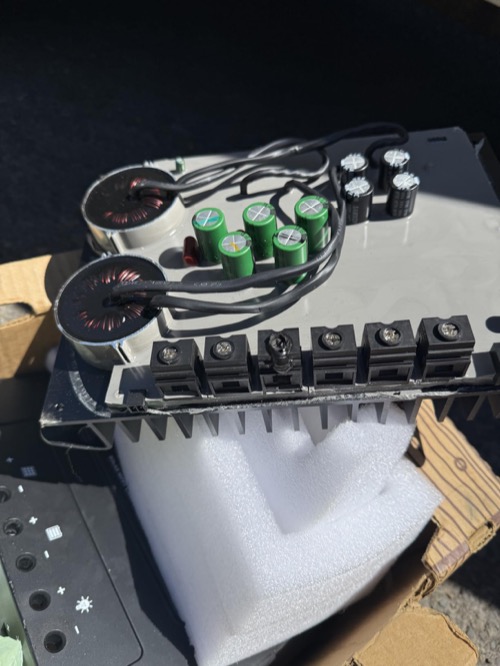
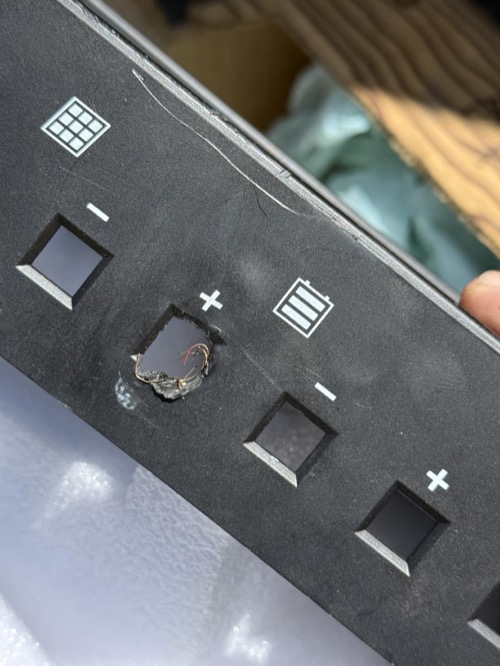
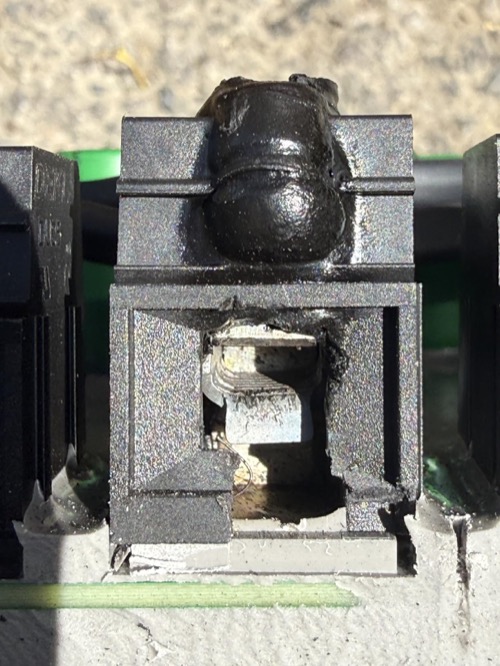
Its physical and electrical scale are both advantages and obligations. The controller weighs 3.5kg, requires protected IP32 mounting, and can move enough current for a poor battery termination to become dangerous. One owner reported stripped clamping hardware and melted plastic on two units. Most other owners described solid construction and successful operation, but that failure account makes cable preparation and inspection central to this review.
| Best For | Strongest Attribute | Main Limitation | Evidence Confidence |
|---|---|---|---|
| Large RV, cabin, boat, or off-grid banks needing up to 60A | 150V input with a four-voltage power table | Size, accessory-dependent monitoring, and a serious terminal anecdote | High for published limits; medium for ownership reliability |
A 60A Controller Turns Terminations Into System Components
The expanded exact-ASIN owner evidence supports the Rover Lite 60A as a substantial controller for larger RV, marine, cabin, and workshop systems. It also makes the central buying condition clearer: a 60A model is not merely a 30A controller with more headroom. Battery cables, lugs, fuses, disconnects, mounting structure, heat clearance, and the battery bank’s accepted charge current all become part of the product decision.
Owners repeatedly describe solid construction, a useful local display, straightforward basic setup, and room for array growth. Critical accounts mention voltage detection, error recovery, load-terminal expectations, size, and warranty or support friction. Use those themes to define an acceptance test. They do not predict reliability across all units, and they do not override the exact manual.
| 60A design gate | Evidence required | Pass condition |
|---|---|---|
| Battery acceptance | Maker’s continuous charge limit and BMS behavior | The bank safely accepts the configured current |
| Battery cabling | Length, conductor ampacity, lug fit, fuse, and voltage drop | No strand trimming, improvised adapters, or excess heating |
| PV string | Cold Voc, operating voltage, array current, and power | Every value stays inside the exact 150V model envelope |
| Load circuit | Continuous current and startup surge | Modest DC load only; inverter remains battery-side |
Commission the unit before closing the electrical compartment. Confirm detected system voltage, battery profile, local readings, and optional communications after a full power cycle. Apply a sustained charge while checking terminal and enclosure temperature. Exercise the load output only with a known modest DC load; an E04 or unstable circuit is a reason to stop and verify the route, not to keep resetting around an overload.
This model is strongest when the buyer genuinely needs 60A and has space for the enclosure and cable bends. If the array rarely supports that output or the battery bank cannot accept it, a smaller controller can reduce cost and installation burden without reducing usable harvest.
A Four-Voltage Controller, but Not One Universal Array
Renogy publishes 60A maximum charge output and 150V maximum PV open-circuit voltage. Nominal PV allowance changes with the bank: 900W at 12V, 1,800W at 24V, 2,000W at 36V, and 3,200W at 48V. Non-lithium system voltage is described as automatic; lithium configuration still requires deliberate profile and voltage checks.
The 36V row is notably close to the 24V allowance rather than halfway toward the 48V value. Use the exact current manual instead of extrapolating watts from amperage. The reviewed evidence did not publish maximum array Isc, so a parallel-string plan still needs confirmation from Renogy.
| Bank Voltage | Published PV Power | Approximate Role | Separate Checks Still Required |
|---|---|---|---|
| 12V | 900W | High-current low-voltage RV or cabin bank | Battery accepts 60A; short, heavy battery conductors |
| 24V | 1,800W | Larger mobile or small stationary system | Array Isc, protection, cold Voc, thermal environment |
| 36V | 2,000W | Specialized battery configuration | Exact detection/profile procedure and inverter compatibility |
| 48V | 3,200W | Larger stationary or high-power off-grid bank | Charge-current limit, BMS behavior, PV operating window |
Cold-corrected string Voc must stay below 150V with the manufacturer’s required margin. A panel string at 135V on a warm day can rise materially in freezing weather. Parallel strings add short-circuit current even when voltage stays the same. The 60A nameplate is battery-side output, not permission for 60A PV Isc.
Array rule — Pass four independent checks: winter Voc, total array Isc, voltage-specific PV watts, and battery-side charge current. Passing three does not compensate for failing the fourth.
Expansion Headroom Is Useful Only When Planned
Several owners bought the 60A model specifically for growth. One used a roughly 450W panel and valued having room to add more. A boat owner chose more current than initially required. Another enthusiastic review argued for intentionally buying larger hardware as the solar system grows.
Oversizing the controller can reduce the cost of a later replacement, but it cannot make every future array compatible. A 150V ceiling still limits series length; input current and power tables constrain parallel growth; and a 12V bank may demand much heavier copper at 60A than a move to 24V or 48V.
| Expansion Plan | What 60A Headroom Helps | What It Does Not Solve |
|---|---|---|
| Add panels to an existing 12V bank | More charge-current capacity up to the 900W table | High battery-side current, cable drop, battery acceptance |
| Reconfigure to 24V or 48V later | Same controller supports higher bank classes | Inverter, loads, BMS, protection, and profile must also change |
| Raise series-string voltage | 150V ceiling offers flexibility | Cold Voc can still exceed the limit |
| Add parallel strings | Potentially more power | Maximum PV Isc remains unresolved in reviewed evidence |
| Add phone monitoring | RS485 supports an optional module | Accessory price, compatibility, and app behavior |
The most responsible expansion strategy is a written future-state design. Buying the largest number available without that design can leave the real bottleneck in conductors, battery current, roof area, or the PV-current rule.
The Terminal Failure Report Cannot Be Buried
This is one person’s two-unit account, not proof that every Rover Lite shares a defect. It is serious because a loose high-current connection can create resistance heating and fire risk. The response is not to downgrade all other evidence; it is to make termination inspection mandatory.
Before energizing, verify that the full conductor fits without strand removal, the clamping part moves normally, and the connection reaches the manual-specified torque. Pull-test each conductor after tightening. During initial full-sun operation, inspect for unexpected temperature rise, odor, discoloration, or voltage drop using safe methods.
Immediate stop condition — A terminal that spins, strips, fails to clamp, heats, discolors, or damages insulation is not serviceable. De-energize safely and replace the affected hardware; do not rely on retightening a compromised high-current connection.
The Other Owner Reports Are Mostly Positive—but Varied
One travel-trailer owner described a straightforward installation with 4 AWG welding cable, an initial configuration issue, and a later correction from gel to flooded mode after a battery disconnect reset the controller. The owner also reported an E04 load error and light flicker under a particular converter arrangement.
That report appears to describe a physical load circuit rated at 20A, while the normalized exact-model material reviewed for this article does not document dedicated load terminals. Renogy families and marketplace revisions can differ. Buyers must inspect the exact terminal layout and manual rather than transferring one review’s wiring to another unit.
Other owners reported roughly a year of operation on a 450W panel, six reliable Renogy controllers across systems, and successful Bluetooth-module integration. A boat owner praised the heavy metal build and self-cooling but incorrectly inferred that the temperature sensor protects lithium from overheating; Renogy documents the remote sensor for lead-acid compensation, not as a controller-managed lithium cold cutoff.
| Owner Observation | Useful Signal | Necessary Qualification |
|---|---|---|
| Built-in screen enabled phone-free setup | Local commissioning is a real strength | Verify settings after resets or power interruptions |
| BT-2 placed multiple systems in one app | Ecosystem consolidation can be convenient | Bluetooth module costs extra |
| Heavy chassis felt robust | Physical construction inspires confidence | Weight complicates vertical/mobile mounting |
| Boat installation operated in heat/humidity | A plausible use case under protection | IP32 is not exposed-marine protection |
| Two melted-terminal incidents | Connection integrity is a critical risk | Single review cannot establish frequency |
Battery Profiles and Temperature Sensing
The controller supports sealed/AGM, gel, flooded, lithium, and user-defined profiles. A remote temperature sensor is intended for lead-acid temperature compensation. No controller-managed lithium low-temperature cutoff was published in the reviewed evidence.
For LiFePO4, select values from the exact battery manual: maximum voltage, permitted current, float policy, reactivation behavior, and charging temperature. If the battery can freeze, identify the BMS or external control that actually blocks charging. For lead-acid, mount the sensor correctly and confirm the adjusted charging voltage.
One owner found the controller set to gel after a reset and changed it back to flooded. Whether that was default behavior or installation-specific, it supports a simple practice: record the complete parameter set and recheck it after firmware changes, resets, battery disconnects, or major rewiring.
| Configuration Record | Why Keep It |
|---|---|
| Battery chemistry and nominal voltage | Prevents an unnoticed default mismatch |
| Absorption/boost, float, and equalization values | Allows comparison with the battery manual |
| Charge-current ceiling | Protects a bank that accepts less than 60A |
| Temperature-sensor status | Confirms lead-acid compensation is actually available |
| Bluetooth/firmware version | Helps reproduce settings after service |
Screen First, Bluetooth Optional
The large LCD and buttons allow normal use without a phone. That was an explicit reason one owner chose the controller. RS485 provides a path to the optional Renogy Bluetooth module and DC Home app; another reviewer liked seeing energy from multiple Renogy chargers in one interface.
The accessory distinction affects value. If local readings are enough, the Rover Lite avoids an app dependency. If logging or remote cabinet access is required, include the correct module in the budget and verify exact port compatibility. Bluetooth remains local communication, not automatic internet monitoring.
IP32 and 3.5kg Shape the Installation
At 305 × 205 × 99 mm and about 3.5kg, the 60A unit needs a solid mounting surface and cable support. One travel-trailer reviewer specifically warned that it was roughly twice the size of an earlier controller and heavy for vertical mounting.
IP32 means protected indoor installation. A cabin equipment room, ventilated RV compartment, or dry boat electrical space can fit; direct spray, rain, condensation, and corrosive battery vapor do not. Renogy publishes -35°C to 65°C operation, but output and lifespan still depend on ventilation and thermal conditions.
High-Current Commissioning Checklist
- Confirm exact model, revision, seller, and warranty registration path.
- Calculate cold-corrected PV Voc and obtain the missing input-current rule.
- Use the correct PV-power row for the bank voltage.
- Verify battery/BMS charge-current and temperature limits.
- Size conductors, fuses, breakers, and disconnects for fault and operating current.
- Inspect clamping hardware before inserting cable; use full conductor cross-section.
- Torque and pull-test every high-current connection.
- Support heavy cables so vibration does not load the terminals.
- Save battery parameters and recheck them after reset or disconnection.
- Monitor connection temperature during initial high-output operation.
Rover Lite 60A Versus AMPINVT and Premium Controllers
The AMPINVT 60A offers similar headline voltage/current capacity at a lower price and includes front history, but its supplied owner evidence contains louder fan, display, warranty, and support concerns. Renogy supplies clearer dimensions, IP rating, three-year warranty, and a more established accessory ecosystem.
Victron’s higher-current 150V families emphasize complete PV-current documentation, built-in Bluetooth on SmartSolar variants, and a five-year warranty. They can cost more and may require choosing a model beyond the 35A unit commonly compared in this cluster.
Pros & Cons Analysis
Based on documented specifications and owner feedback
Pros
- 60A — 60A MPPT output.
- 150V — 150V PV ceiling.
- 12V-48V — 12V-48V support.
- RS485 — RS485 monitoring and broad battery profiles.
Cons
- Check: Bluetooth requires an accessory.
- Check: IP32 indoor enclosure.
- Check: No dedicated load terminals.
- Check: Large 3.5kg chassis.
Bottom Line: A Credible 60A Controller That Rewards Careful Installation
Verdict: The Renogy Rover Lite 60A is a capable choice for large 12V–48V systems when its 150V ceiling, voltage-specific wattage, size, and protected mounting all fit. The local screen, RS485 path, user-defined charging, and three-year warranty strengthen its case.
Best reason to buy: You need documented high-power capacity and want the controller to remain usable without a phone.
Reason to pause: The two-unit terminal failure account raises the stakes of inspection and commissioning. Any clamping irregularity, undocumented PV-current dependency, or unsuitable mounting location should stop the installation.
Frequently Asked Questions
Is the Renogy Rover Lite 60A MPPT MPPT or PWM?
The exact model is documented as MPPT. That topology does not replace checks of PV voltage, input current, output current, and battery compatibility.
What battery voltage does the Renogy Rover Lite 60A MPPT support?
12V / 24V / 36V / 48V automatic for non-lithium batteries. Confirm detection and selection behavior in the current exact-model manual.
What is the maximum PV voltage?
150V. Use cold-corrected array Voc rather than the panel's warm-day value.
How much solar can it handle?
900W @ 12V; 1,800W @ 24V; 2,000W @ 36V; 3,200W @ 48V. The PV voltage, PV current, and battery-side charge-current limits must all be satisfied at the same time.
Does the Renogy Rover Lite 60A MPPT work with lithium batteries?
Sealed/AGM, gel, flooded, lithium, and user-defined. Match every charging value and low-temperature strategy to the battery documentation.
Does it include app monitoring?
RS485; optional Renogy Bluetooth module and DC Home. Verify whether any required accessory is included in the exact bundle.
Can I connect an inverter to its load terminals?
Normally no. High-current and surge loads should use a correctly fused battery-side connection unless the controller manual explicitly permits the planned load.
Who should buy the Renogy Rover Lite 60A MPPT?
Large 12V-48V cabin and off-grid systems requiring 60A output and a 150V PV ceiling.
Technical Specifications
| Brand | Renogy |
|---|---|
| Exact model / revision / ASIN | Rover Lite 60A MPPT (ASIN B0DJY4K25P) |
| Controller type | MPPT |
| Rated battery-side charge current | 60A |
| Supported battery-system voltage | 12V / 24V / 36V / 48V automatic for non-lithium batteries |
| Battery chemistry and profile support | Sealed/AGM, gel, flooded, lithium, and user-defined |
| Maximum PV open-circuit voltage (Voc) | 150V |
| Maximum PV short-circuit/input current (Isc) | Not published |
| Maximum PV power by battery voltage | 900W @ 12V; 1,800W @ 24V; 2,000W @ 36V; 3,200W @ 48V |
| Minimum PV/start voltage requirement | Not published for the reviewed revision |
| Load output and low-voltage disconnect | No dedicated load terminals |
| Grounding topology | Common negative |
| Charging stages and custom voltage control | Lead-acid and lithium profiles plus user-defined parameters |
| Temperature sensing and lithium low-temperature behavior | Remote temperature sensor for lead-acid; no controller-managed lithium cold cutoff published |
| Display and local controls | LCD and buttons |
| App, communications, and data history | RS485; optional Renogy Bluetooth module and DC Home |
| Maximum terminal conductor size | Not published |
| Controller self-consumption | Less than 15mA at 12V, 11mA at 24V, 8mA at 36V, and 7mA at 48V |
| Published tracking/conversion efficiency | >99% tracking; >97% peak conversion |
| Cooling method and thermal derating | External metal heatsink and internal potting; manufacturer claims full-load operation through 65°C |
| Electrical protections | Overtemperature and lithium low-temperature charging protection; a complete protection list is not published for the reviewed revision |
| Enclosure, ingress rating, and operating temperature | IP32; -35°C to 65°C |
| Certifications | FCC Part 15 Class B, CE, and RoHS |
| Dimensions, weight, and included accessories | 305 × 205 × 99 mm; 3.5 kg |
| Warranty | 3 years |