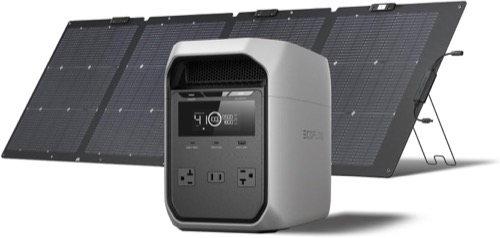
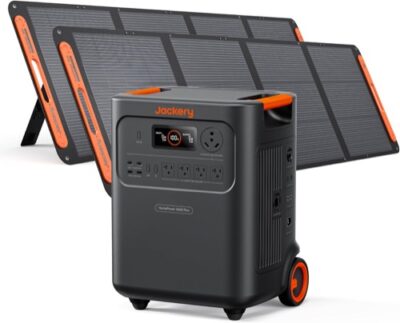
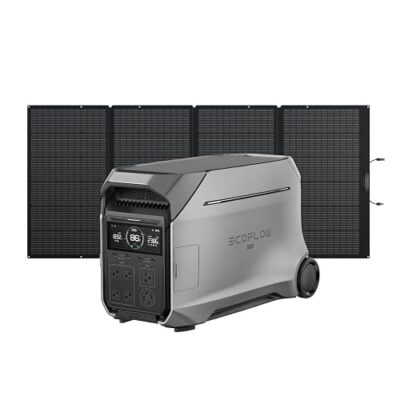
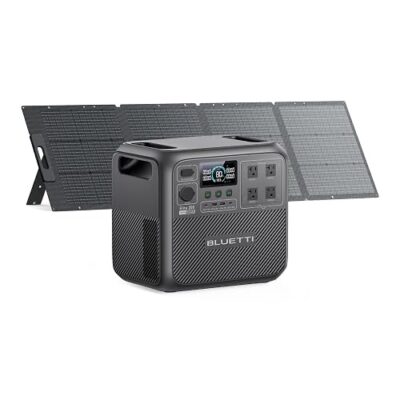
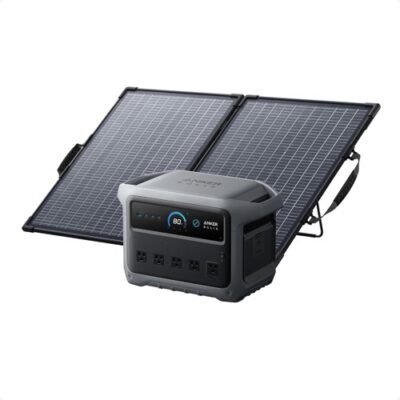
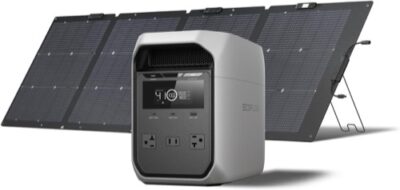
When the grid goes down, a solar generator does one thing a gas generator can’t: it runs silently indoors, with no fumes, no fuel to store, and no cord snaking out a window at 2 a.m. That makes it the natural fit for home backup — keeping a fridge cold, a CPAP running, a furnace blower turning, and phones and routers alive until the power returns. But “home backup” covers a wide range, from a single circuit of essentials in an apartment to a whole panel with 240V loads, and the kit that suits one is overkill or underpowered for the other.
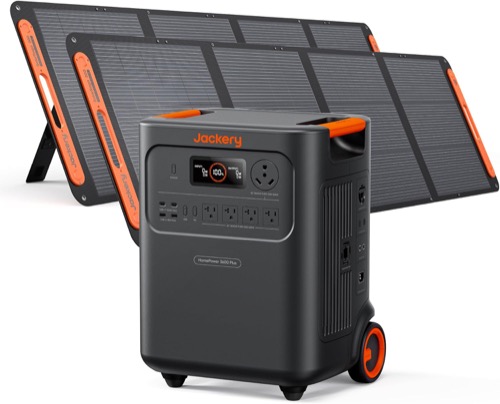
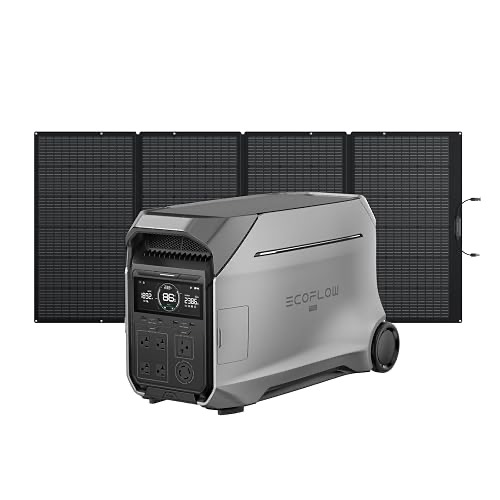
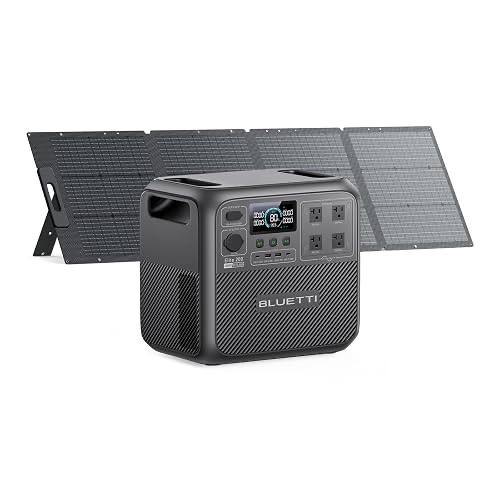
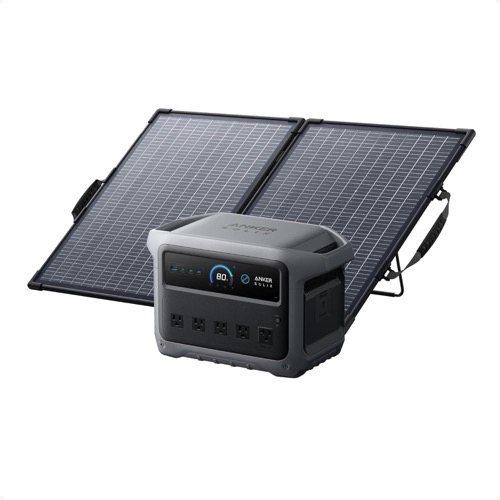
The five picks below are chosen and ordered for that job specifically. We weighted them for the things that decide a backup buy — usable capacity for outage length, inverter output and surge for the appliances you actually run, UPS switchover for gear that can’t blink, expandability for when your needs grow, and recharge speed for topping back up between outages. Every one ships as a panel-and-station kit, so you have a working solar setup out of the box rather than a battery you have to source panels for later. Prices run from $559 for the OUPES 2000W to $2,149 for the whole-house Jackery HomePower 3600 Plus.
Start with the quick picks and comparison table above for the lineup at a glance. Then use this guide to translate a spec sheet into real backup runtime for your own home — and if you know a 240V panel or a well pump is involved, skip to the related whole-house guide near the bottom.
How We Chose These Home-Backup Solar Generators
We don’t rank backup units by headline watt-hours. For home backup the order of importance shifts: an outage is about keeping specific appliances alive for a specific stretch, so we weight capacity, the ability to start and run those loads, seamless switchover, and how fast you can refill. Here’s what drives each pick, in the order that matters for a blackout.
| Criterion | Why It Matters for Backup | Weight |
|---|---|---|
| Usable capacity for outage length | Watt-hours decide how many hours or days your essentials stay powered before a recharge | High |
| Continuous output & surge | Continuous watts set what runs at all; surge decides whether a fridge or pump compressor even starts | High |
| UPS / pass-through switchover | A fast, seamless flip to battery protects PCs, servers, and medical gear that can’t tolerate a blink | High |
| Expandability | Add-on batteries let a backup unit grow from a day of essentials to multi-day coverage without a new inverter | High |
| Recharge speed | Fast wall, solar, or generator charging refills the battery between outages and during storm prep | Medium |
| 120V vs 240V support | Whole-house and well-pump backup needs true 240V; most homes only need 120V circuits | Medium |
| Battery chemistry & warranty | LiFePO4 survives thousands of cycles and long standby storage, backed by a multi-year warranty | Medium |
Two of those deserve a note on how we read them. On surge, a backup unit lives or dies by compressor startups: the OUPES 2000W pairs a 2000W continuous inverter with a 4500W surge, which is why it clears fridge and freezer starts that a 1500W-class unit can trip on. On switchover, we treat UPS as a real feature, not a marketing line: the EcoFlow Delta 3 Classic flips to battery in under 10ms and the OUPES in under 20ms, both fast enough that a desktop or CPAP never notices the grid dropped.
Worth knowing: Continuous output is the real ceiling for backup. A surge rating lasts a fraction of a second to start a motor — the wattage that keeps a device running afterward is the number that has to fit under the inverter’s continuous spec.
How to Size a Solar Generator for Home Backup
List Your Essentials and Their Watt-Hours
Backup sizing starts with a load list, not a battery. Write down every device you must keep alive during an outage and multiply each one’s watts by the hours you’ll run it. A refrigerator averages roughly 100-150W but only cycles part of each hour, so it lands near 1-1.5kWh per day. Add a CPAP (30-60W overnight), a furnace blower (300-600W while running), a router and modem (10-30W), LED lights, and phone charging. Total those watt-hours, add about 15% for inverter losses, and keep a reserve so you’re not draining the battery to zero — that sum is your capacity floor. For most homes it lands right around a 1024Wh kit like the OUPES 2000W or the Jackery Explorer 1000 v2 (1070Wh).
Running a Fridge, CPAP, or Furnace Fan
The three loads people ask about most behave very differently. A CPAP is the easiest — even a 1kWh unit runs one for several nights, and a UPS-capable model keeps it going through a grid drop without waking you. A refrigerator is about surge as much as capacity: the compressor spikes hard for a split second at startup, so headroom like the OUPES 2000W’s 4500W surge matters more than raw watt-hours here. A furnace blower pulls 300-600W while running, which fits a 1800-2000W inverter easily, but you’re only powering the fan and controls — not the heat — and feeding it usually means wiring a transfer switch. Electric furnaces and heat strips draw far too much for any portable unit.
Real-world math: At roughly 85% AC efficiency, a 1024Wh station delivers about 870Wh through the outlets before reserve. A cycling fridge that averages 100W will run on that for most of a day — printed capacity and usable backup runtime are never the same number.
UPS vs Manual Switchover
There are two ways a solar generator takes over when the grid fails. With manual operation you plug appliances into the unit when the power goes out — fine for a fridge, lights, or phone charger that don’t mind a gap. With UPS pass-through, the station runs your gear off wall power while keeping its battery topped, then flips to battery the instant the grid drops. That seamless switch is what protects a desktop, home server, or some medical devices from a blink. If none of your loads care about a momentary interruption, you can skip UPS and save money; if any of them do, make it a requirement — the EcoFlow Delta 3 Classic and OUPES 2000W both deliver it.
Expandable Systems for Longer Outages
The smartest backup buy is often the one you can grow. An expandable unit lets you start with a day of essentials and add battery capacity later, without buying a second inverter. The OUPES 2000W climbs from 1024Wh to 5120Wh with B2 add-on batteries, the Anker SOLIX C1000 Gen 2 accepts a compatible expansion battery to roughly double its capacity, and the Jackery HomePower 3600 Plus scales to 21kWh per unit for genuine multi-day coverage. If you’re unsure whether one day of runtime is enough, buying an expandable base now beats replacing the whole unit when your worst outage turns out to be longer than you planned.
120V vs 240V Reality
Here’s the honest limit most buyers miss. Nearly every portable solar generator outputs 120V, which covers the vast majority of home circuits — fridge, lights, outlets, most furnace blowers, a CPAP. What they don’t cover is 240V loads: a well pump, an electric dryer, a central AC compressor, or an electric range. Only the Jackery HomePower 3600 Plus in this lineup supports 240V (in parallel), which is exactly why it’s our whole-house pick. If your outage plan includes a well pump or any 240V appliance, that’s the unit — and you’ll want a transfer switch and likely an electrician. If it doesn’t, a 120V unit keeps things simpler and cheaper.
What a Solar Generator Can and Can’t Back Up
It’s worth being blunt about the ceiling, because marketing rarely is. A solar generator is superb at keeping essentials alive for hours to days — a fridge, a CPAP, lights, a router, phones, a furnace blower, and small electronics. Sized right, it does that silently and cleanly, and with solar or fast wall charging you can stretch a day of runtime across a multi-day outage. Every pick here handles that job for a typical home.
What it is not is a whole-house replacement running indefinitely. A portable unit backs up the circuits or appliances you connect to it, not your entire panel forever. High-draw 240V loads — central air, electric dryers, ranges, well pumps — are out of reach for everything except the Jackery HomePower 3600 Plus, and even that is essentials-plus, not unlimited power. Treat a solar generator as a battery you refill, not a fuel tank that never runs dry: match capacity to your realistic outage length, keep a recharge plan, and it will carry your home through the outages that actually happen.
Buying note: The right backup unit is sized to your loads and your worst realistic outage, not to the biggest battery you can afford. Start from the appliances you must keep running, confirm the inverter clears your heaviest one, then buy the smallest kit that covers both.
Related Guides and Picks
Home backup is one job in a larger cluster. If your needs point toward more capacity or a specific question, these guides go deeper.
- Best whole-house solar generator — high-capacity, 240V-capable, expandable units for backing up a full home, including well pumps and dryers.
- How long will a solar generator last? — the runtime and lifespan math behind every pick, from a single outage to years of standby use.
- Solar generator size calculator — estimate the right watt-hour class from your devices, outage length, reserve, and recharge plan.
The short version of sizing: list every essential you’ll run, multiply each device’s watts by the hours you need it, add roughly 15% for inverter losses and a reserve, and that watt-hour total is your capacity floor. Then confirm your single biggest appliance fits under the station’s continuous output — and if a well pump or dryer is on the list, that you’ve stepped up to a 240V-capable unit. Work from your loads and your outage length, then pick the smallest kit that clears both comfortably.