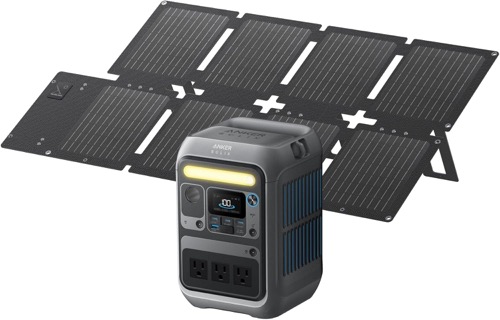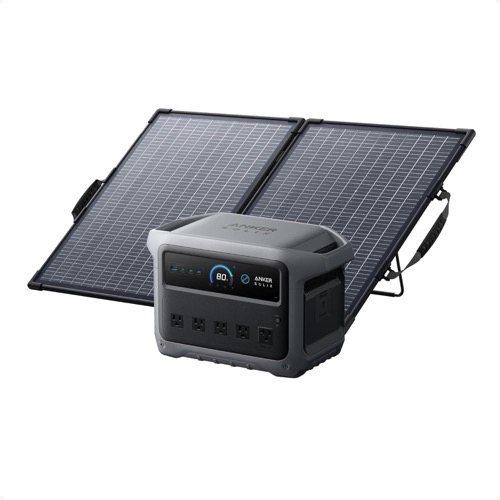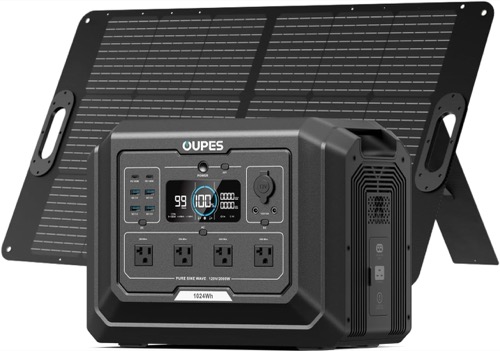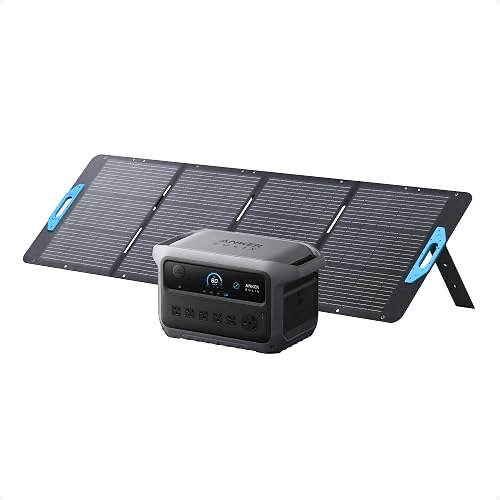
Portable does not mean small, and it does not mean easy to carry. It means the complete station, panel set, cables, and adapters can move through the trip you actually take. This shortlist spans a 288Wh hand-carry kit, two 1kWh vehicle kits, and two 2kWh systems. The right answer changes when a staircase, campsite walk, apartment storage shelf, or deployed panel footprint enters the plan.
Measure the Complete Carry, Not the Station Handle
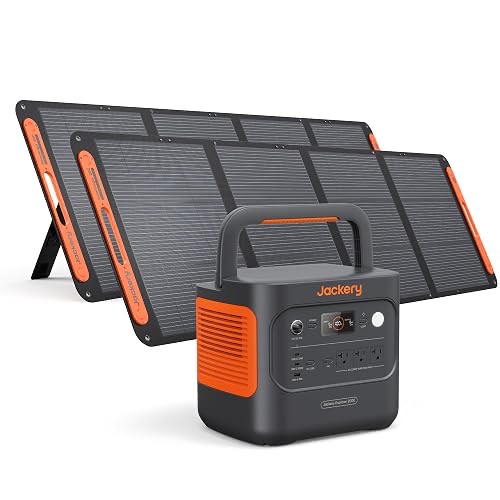
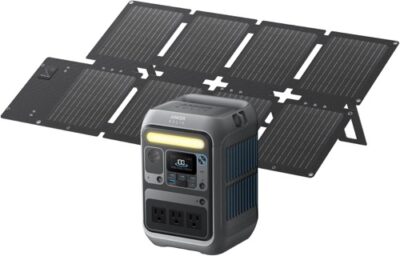
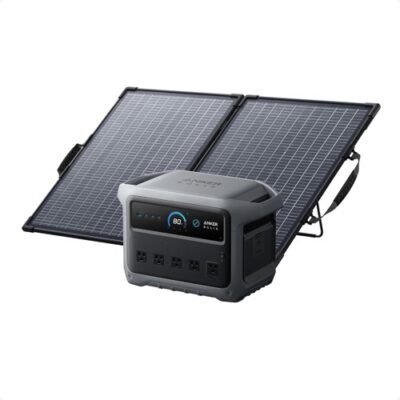
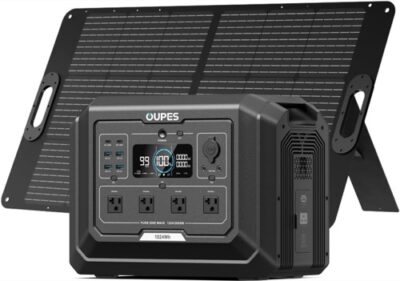
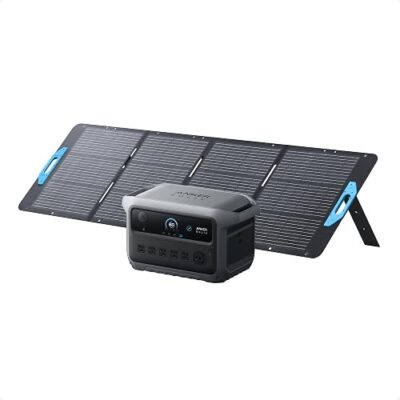
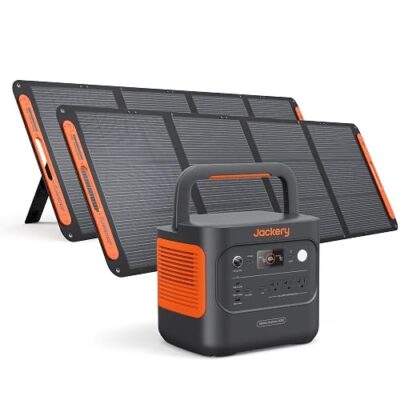
The Anker C300 occupies the true hand-carry end of the list. The C1000 Gen 2 and OUPES Mega 1 are better treated as vehicle-to-site systems: each remains movable, but station, panel, and cables may require two hands or separate trips. Anker’s C2000 Gen 2 and the Jackery 2000 v2 move into the 2kWh class. Jackery keeps its station to 39.5 pounds, yet its matched array adds two large panels. The Anker adds a direct TT-30R outlet, but its size still calls for planned lifting.
| Movement class | Best fit | Planning mistake |
|---|---|---|
| Frequent hand carry | Anker C300 + 60W | Expecting 288Wh and 300W to cover appliance-heavy travel |
| Vehicle-to-site | Anker C1000 or OUPES Mega 1 | Counting the station while ignoring panel and cable bulk |
| Two-piece or cart-assisted | Anker C2000 Gen 2 | Treating a direct RV outlet as proof of sufficient daily energy |
| Three-piece 2kWh system | Jackery 2000 v2 + two panels | Assuming two panels will fit every campsite or balcony |
Draw the Deployed Footprint Before Comparing Watt-Hours
A folded panel fits in storage; an operating panel needs clear sky, stable support, drainage, and a protected cable route. The Jackery package is especially revealing: two 200W modules make the electrical match attractive, but both must be positioned well to approach the station’s 400W receiver. A smaller one-panel kit sacrifices charging speed but may harvest more consistently when space is constrained.
Choose the Recovery Network Before the Battery Size
Capacity only delays the next charge. The C300 supports compact solar, wall, vehicle, and high-power USB-C routes. The C1000 adds fast AC and a larger future PV ceiling. OUPES offers battery and solar expansion plus an optional alternator path. The C2000 combines fast shore-power recovery with an RV-oriented outlet. Jackery’s two included panels create the most coherent solar match in this group, but there is no expansion-battery port.
- List every charging stop. Mark wall, vehicle, alternator, and solar opportunities separately.
- Record the weakest route. A long cloudy stay cannot be planned around a fast wall charger that is unavailable.
- Check connector topology. Panel wattage alone cannot establish voltage, current, polarity, or cable compatibility.
- Keep a fallback reserve. Do not schedule the last usable watt-hour before the next uncertain charge.
Match Output to the Largest Mobile Load
The C300 belongs to electronics and selected sub-300W loads. C1000 and OUPES bring 2,000W continuous output to the 1kWh class. Jackery supplies 2,200W, while C2000 reaches 2,400W and adds a direct TT-30R. Higher output expands compatibility but does not expand stored energy: a high-watt appliance can empty a portable battery surprisingly quickly.
Planning runtime: rated battery Wh × conservative usable fraction ÷ average load W. For cycling loads, use measured watt-hours over a representative interval rather than the compressor or heater nameplate.
Separate Expansion Potential From Day-One Portability
OUPES is the expansion choice, but extra batteries and panels progressively turn a portable kit into a modular installation. C1000 and Jackery are fixed-capacity systems. C2000 can grow through its documented ecosystem, but the value of that path depends on the price and storage burden of every added component. Buy the smallest day-one system that completes the trip, then treat expansion as a funded plan rather than a promise.
Pack the Cable Kit as a Controlled Inventory
Label the cables, photograph the packed set, and test each charging route before travel. A missing proprietary adapter can make a large battery less useful than a smaller complete kit.
Run One Full Movement-and-Recovery Rehearsal
Load the complete kit into the actual vehicle, move it to the intended operating position, deploy the array, run a representative load, and recover the energy by the slowest expected route. Record lift difficulty, cable reach, shade changes, panel stability, fan behavior, and net watt-hours restored. This is acceptance testing of your equipment—not a population-wide performance claim.
Set the Portability Cutoff in Advance
Choose C300 when frequent carrying matters more than appliance capability. Choose C1000 for high output in the 1kWh class. Choose OUPES when a vehicle-based system may expand. Choose C2000 when a direct RV outlet and 2kWh reserve justify the larger carry. Choose Jackery 2000 v2 when a matched two-panel array matters more than one-piece simplicity.