Anker SOLIX C2000 Gen 2 + PS200 Solar Generator Review
At a Glance
KEY FEATURES
- RV connection: TT-30R plus five conventional 120V outlets
- Battery: 2,048Wh LFP with 2,400W continuous output
- Solar boundary: 800W receiver paired with one 200W PS200
- Portability: 41.7 lb station in a compact two-piece kit
- Best fit: RV trips and home essentials with AC or alternator recovery
PROS
- TT-30R makes 30A RV connection straightforward.
- 2,400W output handles many scheduled appliances.
- 41.7 lb is manageable for the 2kWh class.
- Fast AC and app control support mixed-source travel.
CONS
- One PS200 uses only one quarter of the solar ceiling.
- No native 240V output for split-phase loads.
- RV appliance stacking can exceed power or energy limits.
- The exact new-model owner sample is still limited.
Best New 30A RV Kit
Based on exact manufacturer limits and 18 usable exact-bundle owner records; no first-party testing performed.
Price and availability subject to change
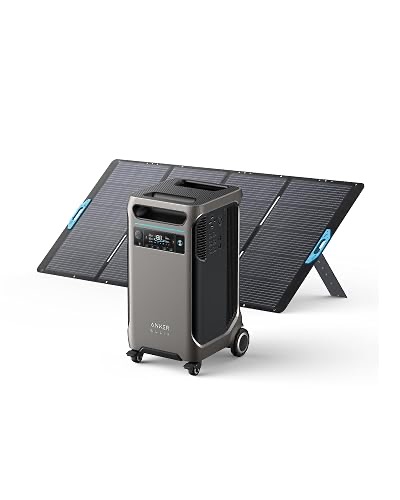
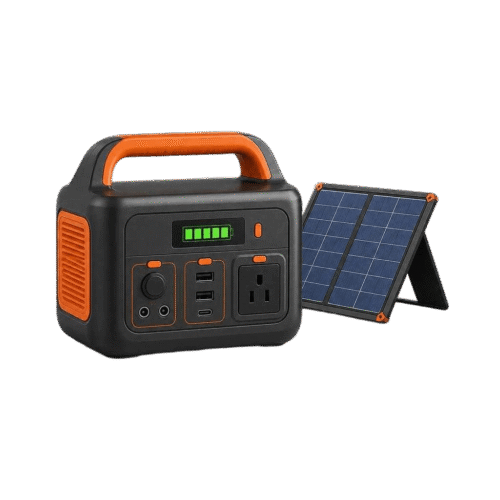
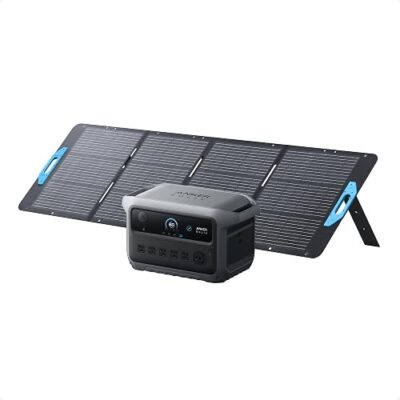
The Anker SOLIX C2000 Gen 2 and one PS200 panel make most sense as an RV-ready 2kWh power station with a starter solar module. The station supplies a dedicated TT-30R, five conventional AC receptacles, 2,400W continuous output, and a comparatively light 41.7-pound chassis. The 200W panel is useful for daytime offset, but it occupies only one quarter of the station’s published 800W solar receiver.
The supplied exact-bundle sample contains 18 usable owner accounts. They cover refrigeration, camping, photography, emergency use, app setup, UPS behavior, separate package arrival, and early customer-service experiences. That is enough to expose practical setup questions, but not enough to calculate failure frequency. The load, charging, and electrical limits below come from Anker’s exact C2000 Gen 2 and PS200 documentation.
Start With the TT-30 Load Ladder
A TT-30R does not give an RV unlimited energy. It gives the coach a familiar 120V connection while the C2000 Gen 2 remains bounded by 2,400W continuous output, battery state, and startup behavior. The safe first test is a load ladder: converter and refrigeration first, then outlets, then one comfort appliance at a time. Do not begin with the air conditioner, microwave, water heater, and battery charger all enabled.
Record both running watts and the highest observed startup. An air conditioner that settles below the inverter limit can still trip during compressor start. An electric water heater can quietly consume most of the station’s output and energy reserve. Propane modes, thermostat duty cycles, soft starts, and the coach converter materially change results.
| Load tier | Examples | Acceptance rule |
|---|---|---|
| Tier 1: preserve | Refrigerator controls, lights, phones, communications | Must run with generous power and overnight-energy margin |
| Tier 2: schedule | Microwave, coffee maker, induction plate | Run one at a time and include conversion loss |
| Tier 3: prove | Air conditioner, pump, compressor tools | Capture startup and repeat after the battery is partly discharged |
| Tier 4: avoid by default | Electric water or space heating | Use only when the energy cost is intentional and measured |
Turn One Camping Day Into a 24-Hour Energy Budget
Power compatibility answers only whether a device can start. Runtime depends on watt-hours. Build one representative day from measured operating time: refrigeration cycles, lighting hours, laptop and camera charging, pump use, cooking minutes, and any overnight medical or comfort load. Add a reserve rather than planning to zero.
A 2,048Wh battery does not deliver 2,048Wh at every outlet. The inverter, electronics, temperature, standby behavior, and reserve consume part of the nameplate energy. A planning band around 80–90% usable AC energy is reasonable for a first worksheet, but the delivered unit should replace that assumption with a controlled discharge measurement.
Sum of device watts × hours × duty cycle, plus conversion loss and reserve, must remain below the usable battery energy.
If the coach consumes 1.4kWh overnight and the panel restores only 0.6kWh the next day, the deficit is 0.8kWh even though the display shows solar charging.
The PS200 Is a Starter Array, Not a Daily Reset Button
Anker rates the PS200 at 200W, while the C2000 Gen 2 accepts up to 800W of solar. Ideal division of 2,048Wh by 200W already produces more than ten nameplate hours. Real charging adds panel heat, imperfect angle, clouds, shade, cable loss, active loads, and end-of-charge taper. One good day may offset a modest campsite load; it is not a dependable empty-to-full promise.
Use the first sunny day as a panel acceptance test. Inspect the cells and hinges, use the documented cable path, eliminate partial shade, aim the panel directly, and record stabilized watts with time and weather. A low result is a troubleshooting prompt, not immediate proof that the panel or station is defective.
Use AC, Vehicle, and Solar as a Charging Relay
The station’s fast wall charging is the reset route when utility or generator power is available. Solar extends autonomy during the day. Vehicle charging can add energy in transit, but an ordinary accessory socket is usually the slow lane; a higher-power alternator solution requires exact vehicle and station compatibility, protection, cabling, and installation review.
Assign each source a role before travel. AC should restore the battery during short campground or grid windows. Solar should cover quiet daytime loads. Vehicle charging should be measured on the actual route rather than estimated from a product name. The recovery plan fails if all three sources are merely assumed.
- Document the starting state. Record battery percentage and load.
- Test wall recovery. Verify the configured charge rate and circuit margin.
- Measure vehicle input. Log steady watts after the engine and station stabilize.
- Test PS200 separately. Keep shade and cable variables visible.
- Run the combined travel day. Compare morning and evening reserves.
Compact Storage Is a Two-Piece Drill
At 41.7 pounds, the C2000 Gen 2 is notably easier to handle than many 2kWh stations, but it is still a deliberate lift. The PS200, cables, and protective storage occupy a second zone. Measure the RV compartment, door opening, tie-down points, ventilation clearance, and the route to the deployment site.
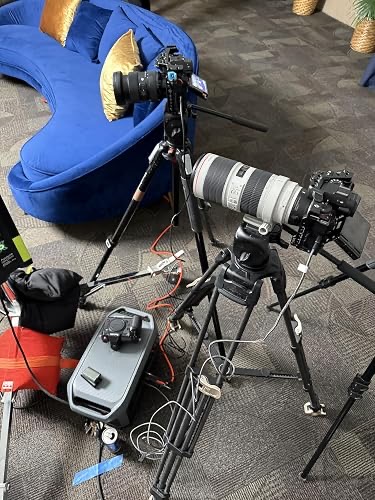
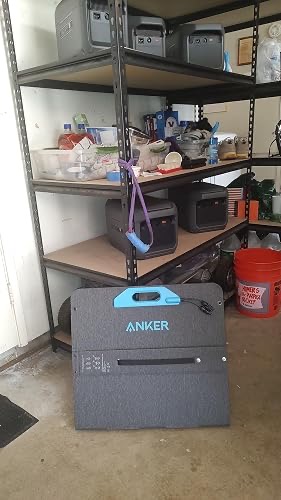
Owner photos are useful here because they show the kit in real rooms rather than an empty studio. Keep cable strain away from connectors and do not pack the panel wet or dirty. A compact station loses its mobility advantage if the panel, adapters, and extension path live in separate unlabelled bags.
Commission UPS Behavior With the Exact Protected Load
Anker documents a transfer time below 10ms, but that rating is not a universal guarantee of compatibility. A desktop computer, network device, medical device, refrigerator control board, and coach electronics can react differently. Bypass limits and restoration behavior also matter when the connected load is larger than the battery-mode plan.
For ordinary electronics, conduct a supervised loss-and-restoration test after firmware and app settings are documented. For medical, safety-critical, or data-critical equipment, follow the device maker’s power requirements and use a dedicated UPS or engineered system when interruption consequences are unacceptable.
Audit Two-Box Delivery Before the Return Clock Runs
Station-and-panel bundles may arrive separately. The supplied owner evidence includes satisfaction with the exact package and an account specifically clarifying that both parts arrived, alongside the usual marketplace uncertainty about delivery timing. Treat fulfillment as a separate inspection stage.
- Match the station and panel model labels to the order.
- Photograph each carton, serial, connector, panel surface, and included cable.
- Verify AC outlets, TT-30R, USB/DC ports, app connection, and both charging paths.
- Perform a partial discharge and recharge while returns remain simple.
- Keep case numbers and videos of repeatable faults instead of relying on verbal support alone.
Who Benefits From This C2000 Gen 2 Configuration?
This exact kit fits an RV owner, mobile professional, or homeowner who wants a manageable 2kWh station with strong 120V output and a direct TT-30 connection. It is particularly attractive when wall charging is available between trips and the panel is intended to reduce, not eliminate, dependence on another source.
It is less convincing for solar-only living, large electric-heating loads, frequent 240V needs, or a buyer who expects one 200W panel to refill the battery every day. In those cases, price a larger compatible array or a different platform before choosing the promotional bundle.
Bottom Line: Excellent RV Hardware, Conservative Solar Sizing
The C2000 Gen 2 is the strong half of this pairing: 2,048Wh, 2,400W output, a TT-30R, fast AC input, app control, UPS functionality, and relatively manageable weight. The PS200 is a credible portable panel, but its 200W rating leaves three quarters of the solar receiver unused.
Buy the bundle when that compromise matches the mission. Build the TT-30 load ladder, measure a full day, verify every charging source, and decide whether the PS200 is enough before the first long trip. The station can anchor a capable RV system; the included panel should be treated as the beginning of its energy plan.
Pros & Cons Analysis
Based on documented specifications and owner feedback
Pros
- RV hardware is unusually coherent — A direct TT-30R avoids making an adapter the centerpiece of a 30A coach plan.
- Capacity and weight balance well — Two kilowatt-hours at 41.7 pounds is easier to load and store than many peers.
- Output supports real appliances — The 2,400W inverter can serve refrigeration, electronics and scheduled cooking after startup checks.
- Recovery routes are flexible — Fast AC, solar, vehicle and optional alternator charging can be assigned different travel roles.
- App visibility aids budgeting — Input, output, reserve and charging controls help turn a camping day into measurable energy.
Cons
- Solar sizing is conservative — One 200W panel cannot rapidly refill 2,048Wh and may lose ground against active RV loads.
- TT-30 does not equal unlimited service — Coach appliances must be prioritized within the station's 2,400W continuous boundary.
- Two-piece storage still matters — The panel and cable kit need a protected bay and a shade-free deployment route.
- UPS claims need device proof — Under-10ms transfer is not a universal compatibility guarantee for every control board or medical device.
- Evidence depth is developing — Eighteen usable exact records reveal scenarios but cannot establish long-term outcome frequency.
Excellent RV Hardware, Conservative Solar
The C2000 Gen 2 earns a recommendation for RV and 120V backup buyers who value its TT-30R, manageable weight and fast mixed-source charging. Treat the PS200 as a starter module and prove the full-day energy budget before travel.
Frequently Asked Questions
Can the C2000 Gen 2 plug into a 30A RV?
It includes a TT-30R 120V outlet. The coach load still must stay within the station's power and energy limits.
Can one PS200 refill the station in one sunny day?
Not reliably from empty. Ideal nameplate division exceeds ten hours before losses, weather and active loads.
Will it run an RV air conditioner?
Possibly if startup and running demand fit, but test the exact unit—preferably with any approved soft start—and budget energy for the full cycle.
Can capacity be expanded?
Anker documents expansion to about 4,096Wh with one compatible battery.
Does it provide 240V?
No. This model is a 120V station with a TT-30R, not a native split-phase platform.
How should the kit be tested?
Build a load ladder, measure a full day, test AC/vehicle/solar separately, verify app and UPS behavior, and inspect both shipment boxes.
Technical Specifications
| Brand | Anker SOLIX |
|---|---|
| Kit model / SKU / ASIN | C2000 Gen 2 + PS200 bundle (ASIN B0FVFKMMG6; US) |
| Power-station model | Anker SOLIX C2000 Gen 2, model A1783 |
| Included solar-panel model and quantity | 1 × Anker SOLIX PS200 200W portable panel, model A2436 |
| Battery capacity | 2,048Wh |
| Battery chemistry | LiFePO4 (LFP) |
| Cycle-life rating | 4,000 cycles to at least 80% capacity |
| Expandable capacity | Up to 4,096Wh with one compatible expansion battery |
| Continuous AC output | 2,400W |
| Surge / peak output | 4,000W |
| AC voltage, frequency, and waveform | 120V, 60Hz, pure sine wave |
| AC outlets and high-current / RV / 240V outputs | 5 × 120V AC plus TT-30R 30A RV output; no 240V output |
| USB and DC outputs | High-power USB-C, USB-A and regulated 12V car-socket outputs |
| Maximum station solar input | 800W |
| PV input voltage/current range and connector | 11–60V DC / 17A maximum through the documented solar connector path |
| Included panel rated power | 200W |
| Panel Voc / Vmp / Isc / Imp | Voc 57.6V / Vmp 48V / Isc 4.35A / Imp 4.16A |
| Panel construction and cell type | Foldable monocrystalline portable panel with adjustable stand |
| Panel weather rating | IP67 panel |
| Panel dimensions and weight, folded / deployed | About 23.9 × 21.9 × 2.0 in folded and 84.1 × 23.9 × 1.2 in deployed; about 20.3 lb |
| Solar recharge estimate with included panel | Idealized minimum exceeds 10 nameplate hours; real empty-to-full charging normally takes longer |
| Maximum AC input and AC recharge time | Up to 1,800W AC input; fast-charge mode under current Anker app control |
| Car, alternator, and other charging methods | Vehicle charging plus compatible optional alternator charging |
| UPS / EPS support and transfer time | UPS support with under 10ms transfer; test the exact protected load |
| App and connectivity | Anker app over Wi-Fi and Bluetooth |
| Station dimensions, weight, operating limits, and weather rating | About 18.1 × 9.8 × 10.1 in; 41.7 lb; station has no published outdoor IP rating |
| Station and panel warranties | Station 5 years; PS200 24 months under current direct-store terms |
| Included in the box | C2000 Gen 2, AC cable, car cable and documentation; PS200, extension leads and MC4-to-XT60 charging path |