
Solar Power Picks logo with sun, solar panel, and green energy icon

  • Home
  • Reviews
  • Best
    • Best portable power stations
    • Best Solar Panels
    • Best Solar Generators
    • Best Solar Charge Controllers
    • Best Solar Batteries
  • Guides
    • Portable Power Stations Guides
    • Solar Panels Guides
    • Solar Generators Guides
    • Solar Charge Controllers Guides
    • Solar Batteries Guides
  • Comparisons
    • Portable Power Stations Comparisons
    • Solar Panels Comparisons
    • Solar Generators Comparisons
    • Solar Charge Controllers Comparisons
    • Solar Batteries Comparisons
  • Calculator

EcoFlow River 3 vs River 3 Plus Power Station: Small Backup Battery or Smarter Upgrade?

COMPARED PRODUCTS

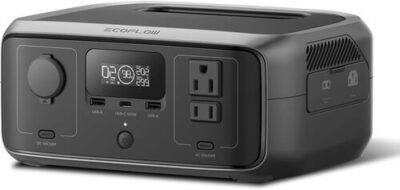
EcoFlow RIVER 3 Review: A Tiny LiFePO4 Backup for Routers, Laptops, CPAP, and Camping

Best Standard Compact Pick

EcoFlow RIVER 3 Review: A Tiny LiFePO4 Backup for Routers, Laptops, CPAP, and Camping

Check price at Amazon Jump to details
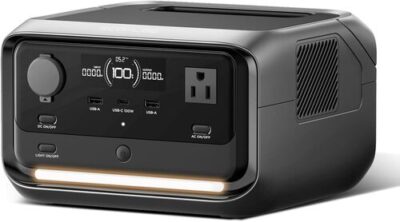
EcoFlow River 3 Plus review: Quiet UPS-style power for routers, CPAP, camping, and short outages

Best Upgraded Compact Pick

EcoFlow River 3 Plus review: Quiet UPS-style power for routers, CPAP, camping, and short outages

Check price at Amazon Jump to details

EcoFlow RIVER 3 vs RIVER 3 Plus is decided by output, solar recovery, ports, and expansion—not by the 41Wh difference in base capacity. RIVER 3 is a 245Wh, 300W station weighing 7.8 pounds. RIVER 3 Plus is a 286Wh, 600W station weighing 10.4 pounds, with up to 220W solar input, sub-10ms transfer, and expansion to 858Wh.

RIVER 3Router, laptop, phone, camera, lights, and other measured electronics below 300W.
RIVER 3 PlusLoads between 300W and 600W, faster solar recovery, more ports, or planned expansion.
Move up a classHeating, cooking, long refrigerator duty, pumps, or backup that needs far more than 858Wh.

The template’s final specification table supplies the complete side-by-side data. This article treats the two stations as small-load systems. A 600W inverter does not mean a 286Wh battery can sustain a 600W load for long, and X-Boost does not turn either product into a larger pure-sine inverter. Start with the highest simultaneous wattage, then calculate the daily watt-hours.

RIVER 3 Load Map: Where the Plus Upgrade Starts

If your loads stay small, the River 3 is the cleaner buy. However, if you want more breathing room for AC devices, router backup, or future battery expansion, the River 3 Plus is the more useful long-term pick.

Choose by the Highest Simultaneous Load

Load band Better fit Planning note
USB electronics RIVER 3 Prefer native USB-C when it avoids AC inverter overhead.
100–300W AC Either after testing RIVER 3 is lighter; Plus adds margin and ports.
300–600W AC RIVER 3 Plus Runtime can still be short because base capacity is 286Wh.
Over 600W or long duty Neither Select a larger station based on measured startup and energy.

For a router or laptop, standby overhead can matter almost as much as the device. Record state of charge across a four- or eight-hour trial using AC, then repeat through a compatible USB-C route. For a compressor or medical device, test startup, transfer, alarm, reserve, and restoration with the exact equipment.

The 41Wh Difference Is Not the Upgrade

The River 3 Plus only adds 41Wh over the River 3, so don’t expect a massive runtime jump from capacity alone. The bigger difference is how comfortably each unit handles the load while draining that battery.

Based on listed specs, the River 3 works best when your draw stays under 100W. Our EcoFlow RIVER 3 router backup review shows real-world draw limits. Think router, modem, laptop, phone charging, LED lights, and a CPAP without humidifier heat. Size CPAP loads with our CPAP power station sizing guide. Once you push close to the 300W inverter ceiling, runtime falls fast.

The River 3 Plus still has a compact 286Wh battery, but the 600W inverter gives it more room for short appliance spikes. It’s the better fit for a small cooler, a few AC devices, or a networking setup with more than one box plugged in.

These are estimates based on listed capacity, typical inverter losses, and a small battery reserve — not measured runtimes. Cooler and fridge runtime can swing a lot because compressors cycle on and off.

Three Hundred Watts Changes the Appliance List

Why output is not runtime

A 500W load on a 286Wh battery has a theoretical ceiling well under one hour before conversion loss and reserve. The Plus model can accept that load; it does not make the energy tank large.

Use X-Boost only for loads EcoFlow identifies as suitable. Voltage-reduction modes can be inappropriate for electronics, compressor motors, and devices that expect stable rated voltage. A device turning on is not sufficient proof of safe or satisfactory operation.

This is the biggest practical difference in the EcoFlow River 3 vs River 3 Plus comparison. Capacity tells you how long power lasts. Output tells you what the unit can run without shutting down.

The River 3 has a 300W continuous AC inverter. That’s enough for laptops, routers, phones, lights, a small fan, camera batteries, and many CPAP setups. It’s not built for kettles, heaters, microwaves, hair dryers, or large kitchen gear.

The River 3 Plus doubles that to 600W continuous and lists up to 1200W with X-Boost. That doesn’t make it a large appliance station, but it does help with small fridges, coolers, and mixed AC loads.

In plain English, the River 3 is a small-electronics station. The River 3 Plus is a small-backup station with extra headroom.

Output winner: EcoFlow River 3 Plus. The 600W inverter makes it harder to outgrow.

A 220W Solar Ceiling Changes Daily Recovery

Both units recharge from AC in about an hour, so neither has a major wall-charging advantage. That’s useful if you forgot to charge before a trip or want to top off quickly before bad weather.

Solar is different. The River 3 accepts up to 110W, which is fine for a 245Wh unit but not especially generous. It works for camping lights, phones, and light daily recovery.

The River 3 Plus accepts up to 220W solar input. That’s a real advantage if you plan to camp with a cooler or run networking gear during the day. You’ll still need the right panel and cable setup, so check EcoFlow connector compatibility before assuming your third-party panel works.

Car charging is useful on both, but it’s mostly a slow top-off. Use it while driving, not as your main recharge plan.

Charging winner: EcoFlow River 3 Plus because the solar ceiling is twice as high.

The Smaller RIVER Still Wins One-Hand Portability

Both are portable, but the carrying experience is different. The River 3 weighs 7.8 lb, so it fits the “grab it and go” role better. You can move it from desk to car to campsite without thinking much about it.

The River 3 Plus weighs 10.4 lb. That’s still easy for most people, but it starts to feel more like a small backup box than a pocketable camp battery.

Here’s the useful weight context:

  • Under 10 lb: easy grab-and-go power
  • 10-30 lb: realistic for car camping and room-to-room use
  • 30-50 lb: movable, but not fun to carry far
  • 50+ lb: better treated as semi-portable backup power
  • 100+ lb: wheels matter more than handles

If you carry your power station often, the River 3 is nicer. If the unit mostly sits near a router, desk, or camp table, the River 3 Plus weight penalty is easy to accept.

Portability winner: EcoFlow River 3.

Expansion Turns Plus Into a Modular Platform

Base Plus286Wh for short electronics and selected AC tasks.
Plus + EB300A larger reserve without changing the core inverter.
Plus + EB600Up to 858Wh total for longer low-load continuity.
Larger native stationOften cleaner when output, capacity, and solar all need to grow.

Expansion is valuable only if 600W output remains adequate. Add the battery, cable or docking requirements, total weight, recharge time, and price before assuming a modular RIVER system is cheaper than a native 1kWh unit.

Both models use LiFePO4 batteries, which is good news. LFP chemistry is usually the better choice for frequent charging, router backup, and long-term ownership.

The River 3 lists a 3,000+ cycle claim. The River 3 Plus lists 3,000 cycles to 80% capacity. Either one should hold up much better than older small power stations with shorter-cycle lithium-ion packs.

However, the Plus has one important ownership edge: expansion. It can support EcoFlow EB300 or EB600 extra batteries, with up to 858Wh total claimed. That means you can start small and add runtime later.

Battery winner: Tie on chemistry; River 3 Plus on upgrade path.

Commission UPS and App Behavior Before Relying on It

The River 3 gives you the basics: two AC outlets, one 100W USB-C port, two USB-A ports, a 12V car socket, screen feedback, and EcoFlow app control. For one laptop, one router, and a few USB devices, that’s enough.

The River 3 Plus adds a third AC outlet and a faster UPS-style claim under 10ms. That makes it more convincing for modems, routers, NAS boxes, cameras, and home-office gear. The spec sheet doesn’t tell the whole story, though. UPS behavior can still depend on firmware, load size, solar use, and whether the unit restores outputs after draining.

Both use the EcoFlow app. That’s helpful for charge limits, output settings, monitoring, and firmware updates. On the flip side, app login, pairing, and firmware steps may annoy buyers who want fully local control.

For bedroom use, fan noise matters. For router backup, output restore behavior matters. For camping, the extra AC outlet on the Plus may matter more than you expect.

Usability winner: EcoFlow River 3 Plus.

Do not choose on “UPS” wording alone.

The Plus model’s documented transfer figure is only one gate. Run the four-part automatic-backup compatibility check for transfer tolerance, bypass power, battery output, and restoration behavior.

Four Upgrade Triggers for RIVER 3 Plus

Buy Plus only when one trigger is real

  • Your verified load exceeds 300W but stays within 600W.
  • Your daily energy plan needs expansion beyond 286Wh.
  • A 220W solar ceiling materially improves recovery.
  • The port layout or sub-10ms transfer solves a specific requirement.

If none applies, RIVER 3 is the more disciplined purchase: lower weight, lower price, and enough output for the small electronics these batteries handle best.

The River 3 is the value play when your needs are modest. If you only want router backup, laptop charging, phone charging, and a compact camping battery, paying extra for the Plus may be unnecessary.

The River 3 Plus becomes the better value when you need the features that actually separate it: 600W AC output, 220W solar input, three AC outlets, faster UPS claim, and expansion battery support.

Current prices change too often to lock in a fair $/Wh claim here. Before publishing, divide current price by battery capacity. Then compare that number against features, not just capacity.

For sizing help, use our what size portable power station do I need guide.

Value winner: River 3 for light users; River 3 Plus for anyone near the limits.

Commission the small-load kit: list every always-on device, its power path, and the required hours. Set a reserve, disable unnecessary outputs, and observe overnight consumption. Then unplug utility power and verify transfer, alarms, shutdown, and restoration. Repeat after firmware changes or after replacing a router, computer, CPAP setting, or cable.

A travel kit needs a different drill. Charge the laptop, cameras, phones, and lights in the order they will be used while preserving an emergency communications reserve. Time one realistic solar day instead of relying on the panel’s nameplate. The smaller RIVER 3 rewards discipline; the Plus rewards buyers whose documented load crosses a real threshold.

Also test storage behavior. Charge to the manufacturer-recommended level, power the station down, and recheck it after the intended storage interval. Record self-discharge, temperature, and whether the required outputs remain configured after restart. A compact backup that sits unused for months needs a recurring inspection schedule just as much as a larger system. Keep the manual, cable inventory, firmware note, and last successful drill together so another household member can operate it without reconstructing the setup.

If Plus expansion is planned, test the base station both with and without the extra battery and note how charging, display estimates, carry method, and storage change. An expansion pack adds energy but does not raise the 600W inverter ceiling. That distinction prevents a runtime upgrade from being mistaken for an appliance upgrade.

Before publication or purchase, confirm the regional AC voltage, exact port count, manual revision, and included charging cables. Retail bundles can differ even when the family name is similar. That identity check is especially important when an expansion battery or solar adapter drives the decision.
Best Standard Compact Pick

EcoFlow RIVER 3 Review: A Tiny LiFePO4 Backup for Routers, Laptops, CPAP, and Camping

EcoFlow RIVER 3 Review: A Tiny LiFePO4 Backup for Routers, Laptops, CPAP, and Camping

Get it now:

Check latest price

What to know

  • 245Wh LiFePO4 battery suits routers, laptops, phones, lights, and CPAP use
  • 300W AC output with 600W surge for small electronics, not kitchen appliances
  • Full AC recharge takes about 1 hour for quick outage resets
  • 110W max solar input works for weekend top-ups in decent sun
  • 7.8 lb body is easier to move than the River 3 Plus

Best if

  • You want a tiny LiFePO4 power station for routers, laptops, and short blackouts
  • You're powering camping lights, phones, tablets, and a low-draw CPAP setup
  • You value the lightest EcoFlow option in this comparison

Skip if

  • You need longer fridge runtime or expandable battery capacity
  • You expect to run kettles, microwaves, pumps, or high-spike TVs
  • You'd rather have 600W output and stronger solar input

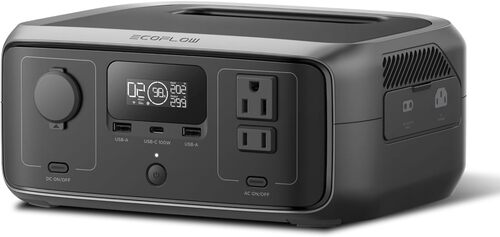
The EcoFlow RIVER 3 is the better standard pick if you want the smaller, simpler version of this matchup. It’s the one to choose when your main goal is keeping Wi-Fi alive, charging a laptop, running camp lights, or backing up a CPAP setup without carrying extra weight.


Its biggest advantage is restraint: 245Wh, 300W AC output, one-hour wall charging, and a 7.8 lb body make it easy to keep under a desk, in a car, or beside a bed. That said, the RIVER 3 is the “small jobs only” choice here. If you want expansion, higher solar input, or more appliance headroom, the Plus makes more sense.

Capacity245Wh
AC Output300W continuous, 600W surge / X-Boost (pure sine based on owner feedback)
Solar Input110W max via EcoFlow solar input cable / MC4 adapter setup
AC Charging~1 hour full, up to ~250W
Weight7.8 lb (3.5 kg)
Best EdgeLightest unit in this matchup for desk, car, and camp carry
Main TradeoffNo expansion battery support and lower AC output than the Plus
Best Upgraded Compact Pick

EcoFlow River 3 Plus review: Quiet UPS-style power for routers, CPAP, camping, and short outages

EcoFlow River 3 Plus review: Quiet UPS-style power for routers, CPAP, camping, and short outages

Get it now:

Check latest price

What to know

  • 286Wh LiFePO4 battery adds useful runtime over the standard River 3
  • 600W AC output with 1200W X-Boost handles more small appliances
  • UPS-style switchover under 10 ms fits routers, modems, and NAS boxes
  • 220W max solar input gives faster camp charging than the River 3
  • Expandable with EB300 or EB600 batteries for longer backup time

Best if

  • You want the stronger compact EcoFlow for router, NAS, CPAP, and fridge support
  • You like expandable runtime without jumping to a large Delta-class station
  • You’re using solar at camp and want the higher 220W input ceiling

Skip if

  • You only need phone, laptop, and basic router backup
  • You want the lightest possible battery for backpack-style portability
  • You need serious refrigerator backup without buying extra batteries

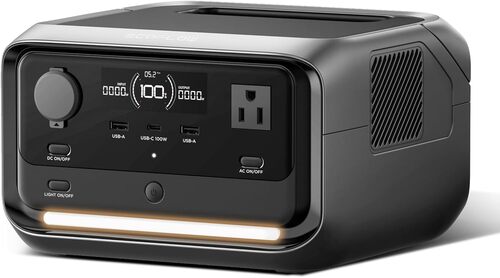
The EcoFlow RIVER 3 Plus is the upgraded compact pick because it fixes the biggest limits of the standard RIVER 3 without jumping into a bulky power station class. It gives you more AC output, faster solar potential, better UPS-style backup, and optional expansion while still staying small enough for home-office shelves, car camping, and short outages.


Compared with the RIVER 3, the Plus feels like the safer buy for routers, NAS gear, security cameras, CPAP machines, and small fridge support. The catch is that it’s not a true large-backup unit. Even with 286Wh, you’re still managing a compact battery, not replacing a 1kWh station.

Capacity286Wh (expandable with EB300 or EB600, up to 858Wh claimed)
AC Output600W continuous, 1200W X-Boost (waveform not specified in supplied data)
Solar Input220W max via EcoFlow solar input cable / MC4 adapter setup
AC Charging~1 hour full, up to ~350W
Weight10.4 lb (4.7 kg)
Best EdgeOnly expandable model here with higher output and higher solar input
Main TradeoffHeavier than the River 3 while still starting with a small base battery

Product Comparison

Feature EcoFlow RIVER 3 Review: A Tiny LiFePO4 Backup for Routers, Laptops, CPAP, and Camping EcoFlow River 3 Plus review: Quiet UPS-style power for routers, CPAP, camping, and short outages
Product Image
EcoFlow RIVER 3 Review: A Tiny LiFePO4 Backup for Routers, Laptops, CPAP, and Camping
EcoFlow River 3 Plus review: Quiet UPS-style power for routers, CPAP, camping, and short outages
Price $239 $196.32 $299.99 $279.99
Rating
4.2 / 5
4.6 / 5
Category Portable Power Stations Portable Power Stations
Brand EF ECOFLOW EF ECOFLOW
Model / SKU EcoFlow RIVER 3 / EFR705 (ASIN: B0DB1S36YP) RIVER 3 Plus / EF-RV-H02-1 (ASIN: B0DCCB657J)
Battery capacity 245 Wh 286 Wh
Battery chemistry LiFePO4 (LFP) LiFePO4 (LFP)
Cycle-life rating 3,000+ cycles 3,000 cycles to 80% capacity
Expandable capacity No Yes — supports EB300 or EB600 extra batteries, up to 858Wh total
Continuous AC output 300 W continuous 600 W continuous
Surge / peak output 600 W peak / X-Boost 1200 W with X-Boost
AC voltage, frequency, and waveform 120V AC, pure sine wave; frequency not published for this exact model 110V AC, waveform not published; frequency not published for this exact model
AC outlets 2 × 120V AC outlets 3 × 110V AC outlets (UPS-supported)
High-current, RV, or 240V output No dedicated RV, 30A, 240V, or other high-current AC outlet published for this exact model No dedicated RV, 30A, 240V, or other high-current AC outlet published for this exact model
USB-C outputs 1 × USB-C (100W PD output; no USB-C input) 1 × USB-C
USB-A outputs 2 × USB-A 2 × USB-A
12V / DC outputs 1 × 12V/10A car port 1 × 12V car port
Maximum solar input 110 W (MPPT, EcoFlow solar input cable / adapter may be needed) 220 W
Solar input range and connector Not published for this exact model in the current source set; exact PV voltage/current window and connector are unavailable Not published for this exact model in the current source set; exact PV voltage/current window and connector are unavailable
Maximum AC input Not published for this exact model in the current source set; the prior value was an editorial estimate, not an exact-model rating Not published for this exact model in the current source set; the prior value was an editorial estimate, not an exact-model rating
AC recharge time About 1 hour About 1 hour
Solar recharge estimate Planning estimate: about 2.6 hours with 110W solar input (ideal sun) As little as 1.5 hours with up to 220W solar input
UPS / EPS support and transfer time Yes — under 20ms switchover (EPS-style backup) Yes — under 10 ms switchover
App / connectivity Yes — EcoFlow app (Wi-Fi + Bluetooth) Yes — EcoFlow app via Bluetooth and Wi-Fi
Operating temperature / weather rating IP54 battery protection; exact operating-temperature range is not published in the current source set Not published for this exact model in the current source set
Dimensions Not published for this exact model in the current source set Approximately 9.2 × 9.1 × 5.8 in
Weight 7.8 lb 10.4 lb
Warranty Not published for this exact model in the current source set 5-year manufacturer warranty
Buy Now View Deal View Deal

RIVER Verdict: Buy the Plus for a Threshold, Not 41Wh

Choose EcoFlow RIVER 3 for an intentionally small kit built around routers, laptops, phones, cameras, lights, and other measured loads below 300W. It is lighter, simpler, and avoids paying for an output and expansion platform that may never be used.

Choose RIVER 3 Plus when at least one threshold matters: a verified 300–600W load, up to 220W solar recovery, additional ports, sub-10ms transfer after exact-device testing, or expansion to 858Wh. Its extra 41Wh of base capacity is not a compelling reason by itself.

Neither model is the correct answer for sustained heating, cooking, pumps, or long refrigerator backup. For those jobs, select a larger class from measured startup watts and daily watt-hours. The Plus is a better small platform; the standard RIVER 3 is a better minimalist battery.

Whichever model wins, create a small-load operating sheet with device watts, power path, priority order, reserve, and successful transfer test. For Plus, add the exact expansion-battery plan. For RIVER 3, confirm that staying below 300W remains realistic. Repeat the complete drill after firmware, cable, or equipment changes, and store the results nearby.

Frequently Asked Questions

What is the main difference between RIVER 3 and RIVER 3 Plus?

The decisive difference is 300W versus 600W continuous output, followed by solar input and expansion. Base capacity differs by only 41Wh.

Can RIVER 3 Plus run a 500W appliance?

Its 600W continuous rating makes some 500W loads plausible, but startup, voltage requirements, simultaneous loads, and short runtime must be tested. A 286Wh battery can empty quickly at that power.

Which RIVER model is better for a router?

RIVER 3 is usually enough for a router or modem if runtime and transfer are verified. Native USB-C or DC may improve efficiency when the device supports it safely.

Is RIVER 3 Plus expandable?

Yes. The retained record specifies EB300 or EB600 expansion for up to 858Wh total. Compare total system cost and weight with a native larger station.

Which model accepts more solar?

RIVER 3 Plus specifies up to 220W, while RIVER 3 specifies up to 110W. Check voltage, current, connector, polarity, and cold open-circuit voltage for the exact panels.

Can either model replace a conventional UPS?

Do not assume so. Test the exact protected equipment through utility loss, low battery, and restoration. Keep a conventional UPS where interruption cannot be tolerated.

×

About Solar Power Picks

Portable Solar Power, Backup Power, and Off-Grid Gear Guides

Your trusted source for honest, in-depth product reviews and comparisons.

Quick Links

  • Best Picks
  • Reviews
  • Guides
  • Comparisons
  • Calculator
  • Privacy policy
  • Favorites

Categories

  • Portable Power Stations
  • Solar Batteries
  • Solar Charge Controllers
  • Solar Generators
  • Solar Panels

© 2026 Solar Power Picks. All Rights Reserved.

We may earn a commission when you purchase through links on our site. Learn more