TOPENS TCS3 Review: A Gate Controller, Not a General Solar Upgrade
At a Glance
KEY FEATURES
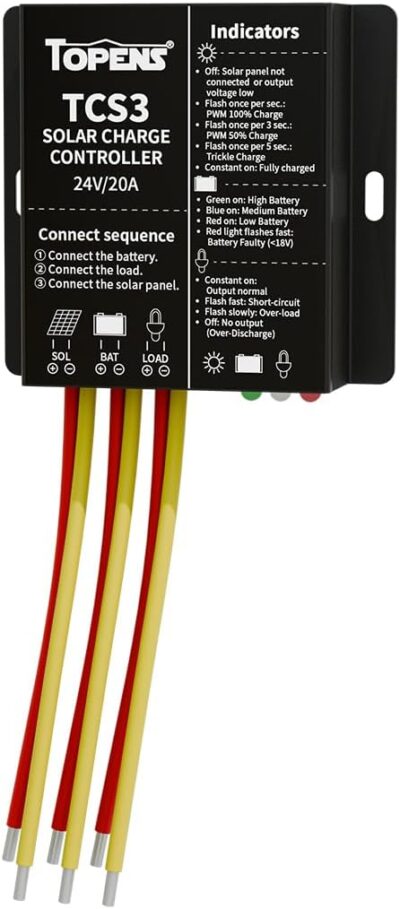
- Controller: PWM; Not published rated charge output.
- System: 24V; Sealed/AGM, gel, and flooded lead-acid; product page notes limited lithium use but exact profile must be verified.
- PV boundary: Not published maximum Voc; 240W @ 24V maximum PV power.
- Controls: Status LEDs; No app or communications port.
- Best fit: 24V gate-opener and access-control battery systems using up to 240W of solar.
PROS
- Purpose-built replacement for documented TOPENS gate systems.
- Simple indicators support quick on-site diagnosis.
- Sealed revision improves outdoor-system suitability.
CONS
- Poorly documented as a general-purpose solar controller.
- Owner reports make weather, insect, and battery checks essential.
- Exact gate-opener and battery compatibility must be confirmed.
Editor's Choice
Editorial assessment based on exact-model documentation and qualitative exact-ASIN owner evidence; no first-party bench test or population-rate claim
Will the TOPENS TCS3 Fit Your Solar Array?
Use this quick calculator to get a rough estimate before comparing products.
Solar Charge Controller Size Calculator
What size charge controller do I need?
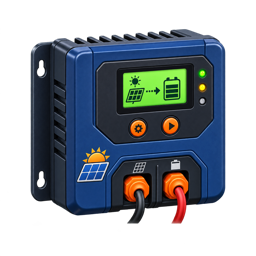
The TOPENS TCS3 is a weather-resistant PWM solar charge controller designed around 24V gate-opener battery systems. That context explains its strengths: fixed leads, simple indicators, up to 240W of published solar input at 24V, and compatibility within the TOPENS gate ecosystem. Owners describe easy replacement, support-confirmed backwards compatibility, and successful charging of two 12V deep-cycle batteries connected in series.
It also explains why the TCS3 should not be treated as a flexible general-purpose controller. Rated charge current, maximum PV Voc and Isc, a formal IP rating, temperature range, and detailed battery profiles were not available in the reviewed evidence. Two owners reported short service—about six months for one and roughly 18 months for each of two units for another.
| Best For | Main Strength | Main Limitation | Evidence Confidence |
|---|---|---|---|
| Compatible 24V TOPENS gate systems with documented panel and battery configuration | Purpose-built replacement with ecosystem support | Sparse electrical limits and mixed longevity evidence | Medium |
Treat the TCS3 as a Gate-System Replacement Part
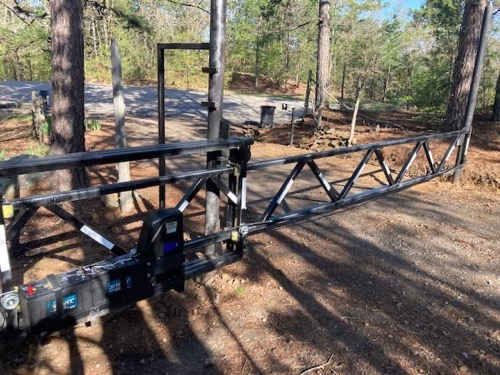
The larger owner record narrows the TCS3’s role rather than broadening it. Successful accounts mostly describe replacing an original TOPENS gate charge controller, restoring a gate, or maintaining the paired 24V battery arrangement. That is better evidence for system-specific compatibility than for using the TCS3 as a general-purpose controller in an unrelated solar project.
Owners value simple replacement, clear indicator lights, and responsive help in some cases. Other reports describe short service life, weather wear, confusing instructions, or repeated replacement. Those accounts cannot produce a reliability rate, but they justify inspecting the enclosure, cable entries, insect paths, panel wiring, and battery condition together. A failed gate system may have more than one cause.
Weather resistance should be considered at the system level. Even if the controller body is sealed, terminals, splices, cable glands, battery connections, and the control enclosure can admit moisture or insects. Use drip loops and appropriate outdoor connections, and do not assume a revised controller makes an older cabinet waterproof.
Choose the TCS3 when it is the documented replacement for the exact TOPENS gate system. For a cabin, RV, boat, or generic 24V array, choose a controller whose PV, battery, temperature, grounding, and load specifications are published for that broader purpose.
Compatibility Is the Best Reason to Choose It
One owner replacing an earlier controller contacted TOPENS and was told the TCS3 was backwards-compatible with a 24V/10A system. The buyer found the replacement easy to install and appreciated the additional status information. Another used the controller supplied with a DKC1100S package: two 12V deep-cycle batteries in series created the required 24V bank, while three 10W panels maintained the batteries.
Those examples are more persuasive than buying the TCS3 merely because it says “waterproof solar controller.” Gate openers combine a motor, control board, limits/sensors, standby electronics, batteries, and solar input. A controller approved for the exact opener family can reduce connector, logic, and charging-profile uncertainty.
| Compatibility Check | Evidence Available | Action Before Purchase |
|---|---|---|
| System voltage | 24V only | Confirm two-battery series bank and opener requirement |
| Gate model | DKC1100S example; one support-confirmed replacement | Ask TOPENS about the exact opener/control board |
| Original controller | Backwards compatibility reported for a 24V/10A setup | Record original part number and connector layout |
| Solar allowance | Up to 240W at 24V published | Verify the exact panel combination and electrical limits |
| Battery type | Lead-acid classes documented; lithium wording is uncertain | Use the battery and profile approved for the gate system |
Selection rule — Buy the TCS3 as a confirmed component of a specific 24V gate system, not as a generic substitute chosen only by panel watts or connector shape.
Connectors that fit do not prove electrical compatibility. Photograph the old wiring before removal, label every conductor, and compare polarity and function—not just wire color. If a support representative confirms compatibility, keep the model-specific response with the system documentation.
A 24V Gate Bank Is Two Systems at Once
The battery bank must deliver short, high-current motor events and also support continuous control-board standby load. Solar production must replace both over the available sun window. The controller’s 240W maximum describes an upper input allowance, not the amount of solar every gate needs.
The DKC1100S owner used three 10W panels, only 30W nominal, with two 12V deep-cycle batteries in series. That can be sensible when daily gate cycles and standby load are small. A busy, shaded, cold, or heavy gate may require a different energy budget. Battery capacity in series retains the amp-hour rating of one battery while doubling nominal voltage; it does not double both voltage and amp-hours.
| Design Input | Why It Matters for a Gate | What to Record |
|---|---|---|
| Standby watts | Consumes energy around the clock | Measured or documented controller-board draw |
| Energy per opening cycle | Motor surge is brief but repeated | Typical and worst-case daily cycles |
| Seasonal solar resource | Winter shade can dominate annual reliability | Lowest-month peak-sun estimate and obstructions |
| Battery capacity/condition | Provides reserve for nights and storms | Exact model, age, tested health, and series balance |
| Wiring loss | Long panel/gate runs waste low-voltage energy | Gauge, length, connections, and measured voltage drop |
When a gate slows or stops, do not immediately replace the solar controller. Check each 12V battery individually, the 24V series voltage, array output under load, fuses, connectors, standby draw, gate mechanics, and controller-board fault indicators. A weak battery can make a healthy charger look ineffective; mechanical resistance can make a healthy bank look undersized.
The Electrical Documentation Is Too Sparse for a Generic Design
The reviewed specification provides 24V system operation and up to 240W of solar input. It does not publish the charge-current rating, maximum PV open-circuit voltage, maximum PV short-circuit current, terminal gauge, self-consumption, or operating-temperature range. Therefore, “240W” cannot be used as a complete array-design rule.
Panel wattage alone does not tell you whether a series string stays below the controller’s cold-weather voltage ceiling or whether parallel current is acceptable. The TCS3 is PWM, so panel voltage should be appropriate for the battery architecture rather than a high-voltage string selected as though the controller were MPPT.
| Electrical Boundary | Reviewed Value | Consequence |
|---|---|---|
| Battery-system voltage | 24V | No documented 12V or 48V use |
| Maximum PV power | 240W at 24V | Useful ceiling, but not a full input specification |
| Rated charge current | Not published | Cannot infer conductor/protection sizing from model name |
| Maximum PV Voc | Not published | No independent approval for arbitrary series strings |
| Maximum PV Isc | Not published | Parallel-array current boundary unresolved |
| Topology | PWM | Array voltage must suit the 24V charging system |
Obtain the exact current manual or model-specific limits from TOPENS before changing the supplied panel arrangement. If support cannot document the boundary, keep the approved ecosystem configuration or use another controller with a complete datasheet.
Battery Chemistry Needs an Exact Answer
The profile supports sealed/AGM, gel, and flooded lead-acid classes. The supplied product material also contains limited lithium wording, but the exact profile and conditions are not clear enough to recommend lithium. Gate systems often remain outdoors in freezing weather, where charging LiFePO4 without suitable low-temperature protection can damage cells.
The reviewed evidence documents no external temperature sensor or low-temperature charge cutoff. A lithium conversion therefore requires approval for the controller, battery, BMS, voltage settings, and temperature strategy—not merely a nominal 24V match.
| Bank Type | Fit with Reviewed Evidence | Required Check |
|---|---|---|
| Two matched 12V AGM batteries in series | Strongest documented pattern | Replace/maintain as a matched pair and verify charge voltage |
| Flooded lead-acid pair | Plausible | Ventilation, water level, terminal corrosion, profile |
| Gel pair | Conditional | Confirm charge voltage does not exceed maker limit |
| 24V LiFePO4 | Unresolved | Written controller approval plus BMS/cold-charge protection |
| Mixed-age or mixed-model series pair | Poor practice | Use matched batteries with comparable health |
Battery rule — In a two-battery series bank, measure each 12V battery as well as total 24V voltage. A normal total can conceal imbalance between the pair.
Weather Resistance Does Not Equal an IP Rating
Owners mention replacement after ordinary weather wear and continued operation in inclement conditions. Another discovered that the controller/panel area had become an “apartment complex” for ants; replacing the affected component restored the gate. These accounts reflect the installation environment but do not establish a formal ingress rating.
The supplied profile calls the controller weather-resistant and does not publish an IP code. Do not relabel it IP67 or IP68. Mount it in the position and orientation required by TOPENS, preserve cable exits, avoid standing water, and keep insects from entering any surrounding enclosure without blocking required drainage or ventilation.
| Environmental Threat | Likely Effect | Inspection Response |
|---|---|---|
| Water at connector or cable exit | Corrosion, leakage, intermittent charge | Check seals, drip loops, and connector condition |
| Ants/insects | Contamination or nesting around warm electronics | Inspect enclosures and cable penetrations periodically |
| UV and temperature cycling | Brittle insulation, seal degradation | Look for cracking, discoloration, and hardening |
| Condensation | Corrosion even without direct rain | Check enclosure drainage and placement |
| Vegetation/soil movement | Shading, cable damage, connector strain | Clear route and support conductors |
The gate location may be remote enough that a gradual charging failure is noticed only when the opener stops. Weather protection and monitoring therefore work together: physical inspection catches some failures, while voltage/current trends catch others.
Longevity Evidence Is Genuinely Mixed
The repeated 18-month account deserves weight because it involves two units in one installation. It still cannot isolate whether the controller, mounting environment, array, battery bank, or another system condition contributed. Likewise, early positive reviews do not demonstrate multi-year durability.
The responsible conclusion is not a numeric predicted lifespan. It is that ecosystem compatibility may justify the controller, while an unattended owner should keep maintenance records and verify charging before the battery bank is depleted.
Reliability plan — Record baseline array current, total bank voltage, and each battery’s voltage after installation. Recheck on a schedule and after severe weather; replace-on-failure is a poor monitoring strategy for an access gate.
LEDs Are Useful for Triage, Not Diagnosis
Several owners liked the indicators and said the newer TCS3 showed more information than the original. LEDs are valuable when checking a gate at a glance. They do not quantify solar current, charge stage duration, battery balance, or historical production.
An inexpensive commissioning meter can distinguish “panel voltage is present” from “the array is charging.” For recurring problems, measure under the same sun and battery conditions or add appropriate monitoring. Never short a panel through a meter unless the meter, leads, range, and test procedure are suitable for the expected current.
Gate-System Commissioning Checklist
- Confirm opener model, controller-board model, original solar-controller part, and 24V requirement.
- Obtain written compatibility confirmation if the TCS3 is a replacement.
- Check both 12V batteries individually and as a 24V series bank.
- Verify battery chemistry and approved charging profile.
- Inventory every panel’s Voc, Vmp, Isc, Imp, and wattage.
- Confirm the combined array remains inside all documented TCS3 limits.
- Photograph and label polarity before removing the old controller.
- Follow the exact connection order and protection instructions.
- Measure charging current and voltage under useful sun.
- Cycle the gate repeatedly, then verify battery recovery and standby behavior.
- Inspect for water paths, insects, corrosion, abrasion, and shade.
- Save baseline readings and repeat them seasonally.
When a General-Purpose MPPT Makes More Sense
The TCS3 wins when it is the documented drop-in component for a TOPENS system. A general-purpose MPPT becomes more attractive when the site needs a larger or higher-voltage array, complete electrical specifications, configurable battery profiles, communications, or detailed monitoring.
That change is not simply a controller swap. The gate board may expect particular connections or charging behavior, and a third-party controller needs correct distribution and protection. Confirm with TOPENS and the battery manufacturer before leaving the ecosystem.
Pros & Cons Analysis
Based on documented specifications and owner feedback
Pros
- Purpose-built — Purpose-built 24V gate application.
- Weather-resistant — Weather-resistant enclosure.
- Up — Up to 240W solar input.
- Simple — Simple LED diagnostics.
Cons
- Check: 24V only.
- Check: PWM rather than MPPT.
- Check: No display or app.
- Check: Electrical limits beyond wattage are sparse.
Bottom Line: Strong Fit, Weak Universal Case
Verdict: The TOPENS TCS3 is easiest to recommend as a support-confirmed replacement or component in a compatible 24V TOPENS gate installation. Real owners report successful series-battery and multi-panel systems, clear indicators, and easy replacement.
Best reason to buy: Ecosystem fit reduces uncertainty for an existing TOPENS opener and preserves a familiar fixed-lead installation.
Reason to pause: Missing current/Voc/Isc limits, no formal IP rating in the supplied evidence, ambiguous lithium language, and reports of six- to 18-month service make it a weak choice for an unrelated custom solar system. Confirm compatibility, document baseline measurements, and inspect the remote site instead of trusting the LEDs alone.
Frequently Asked Questions
Is the TOPENS TCS3 Waterproof Controller MPPT or PWM?
The exact model is documented as PWM. That topology does not replace checks of PV voltage, input current, output current, and battery compatibility.
What battery voltage does the TOPENS TCS3 Waterproof Controller support?
24V. Confirm detection and selection behavior in the current exact-model manual.
What is the maximum PV voltage?
Not published. Use cold-corrected array Voc rather than the panel's warm-day value.
How much solar can it handle?
240W @ 24V. The PV voltage, PV current, and battery-side charge-current limits must all be satisfied at the same time.
Does the TOPENS TCS3 Waterproof Controller work with lithium batteries?
Sealed/AGM, gel, and flooded lead-acid; product page notes limited lithium use but exact profile must be verified. Match every charging value and low-temperature strategy to the battery documentation.
Does it include app monitoring?
No app or communications port. Verify whether any required accessory is included in the exact bundle.
Can I connect an inverter to its load terminals?
Normally no. High-current and surge loads should use a correctly fused battery-side connection unless the controller manual explicitly permits the planned load.
Who should buy the TOPENS TCS3 Waterproof Controller?
24V gate-opener and access-control battery systems using up to 240W of solar.
Technical Specifications
| Brand | TOPENS |
|---|---|
| Exact model / revision / ASIN | TCS3 Waterproof (ASIN B07ZTC6317) |
| Controller type | PWM |
| Rated battery-side charge current | Not published |
| Supported battery-system voltage | 24V |
| Battery chemistry and profile support | Sealed/AGM, gel, and flooded lead-acid; product page notes limited lithium use but exact profile must be verified |
| Maximum PV open-circuit voltage (Voc) | Not published |
| Maximum PV short-circuit/input current (Isc) | Not published |
| Maximum PV power by battery voltage | 240W @ 24V |
| Minimum PV/start voltage requirement | Not published for the reviewed revision |
| Load output and low-voltage disconnect | Designed to charge a gate battery system; no general-purpose load terminals |
| Grounding topology | Not published for the reviewed revision |
| Charging stages and custom voltage control | Automatic gate-battery charging |
| Temperature sensing and lithium low-temperature behavior | No external sensor or low-temperature cutoff documented |
| Display and local controls | Status LEDs |
| App, communications, and data history | No app or communications port |
| Maximum terminal conductor size | Fixed leads |
| Controller self-consumption | Described as exceptionally low; no numeric value published |
| Published tracking/conversion efficiency | Not published |
| Cooling method and thermal derating | Not published for the reviewed revision |
| Electrical protections | Overcharge, over-discharge, overload, short-circuit, and reverse-polarity protection |
| Enclosure, ingress rating, and operating temperature | Weather-resistant; formal IP rating and temperature range not published |
| Certifications | Not published for the reviewed revision |
| Dimensions, weight, and included accessories | Not published |
| Warranty | Not published |