SUNAPEX 20A PWM Review: Convenient SAE Wiring, Confusing Variant Evidence
At a Glance
KEY FEATURES
- Controller: PWM; 20A rated charge output.
- System: 12V; Lead-acid and lithium selections shown on the product page; verify exact profile.
- PV boundary: Not published maximum Voc; Up to 300W @ 12V maximum PV power.
- Controls: LCD and status LEDs; No app or communications port.
- Best fit: Small 12V SAE-connected systems needing an inexpensive local display.
PROS
- SAE leads can make a small 12V portable setup quick to connect.
- 20A nominal capacity covers many maintenance and trailer systems.
- Simple PWM operation avoids app dependence.
CONS
- Every SAE lead and adapter requires a polarity check.
- Maximum PV voltage and input current are not published.
- Weather-resistant styling is not a formal ingress rating.
Editor's Choice
Editorial assessment based on exact-model documentation and qualitative exact-ASIN owner evidence; no first-party bench test or population-rate claim
Will the SUNAPEX 20A PWM Fit Your Solar Array?
Estimate required charging current and check it against the documented limits for SUNAPEX 20A PWM.
Solar Charge Controller Size Calculator
What size charge controller do I need?
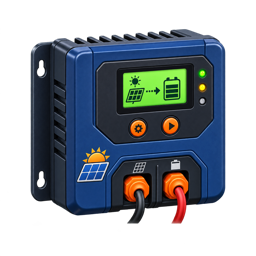
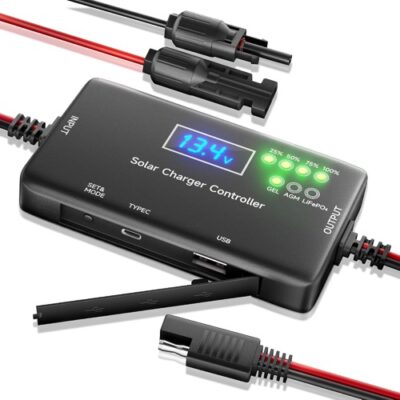
The SUNAPEX 20A is designed around convenience. Fixed SAE-style leads, an LCD, status LEDs, 12V battery profiles, and a stated allowance up to 300W can make a portable panel-to-battery setup much faster than cutting and terminating bare cable.
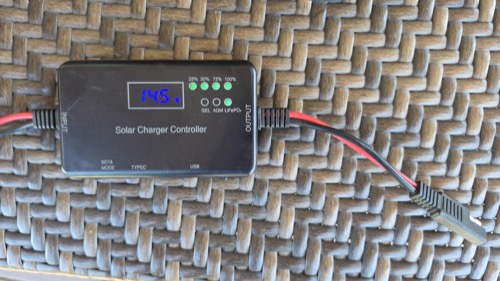
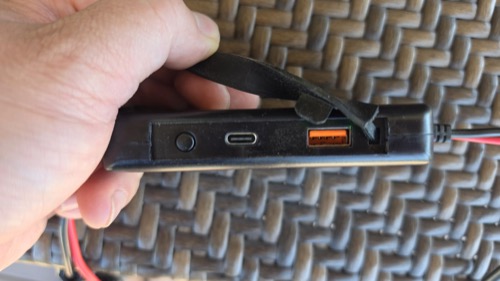
The review evidence also appears to mix product variants. Some owners discuss MC4-to-SAE cables and battery charging; another describes USB-A and USB-C ports capable of phone charging, while the normalized exact-model specification does not document those ports. Maximum PV Voc and Isc, formal ingress rating, dimensions, warranty, and temperature limits are missing. The received hardware must be matched to its own manual before connection.
| Best For | Main Advantage | Main Risk | Evidence Confidence |
|---|---|---|---|
| Small 12V portable or maintenance systems already using SAE connectors | Fast connector-based setup and local display | Variant contamination and incomplete PV limits | Medium for 100W-class use; low for the stated 300W maximum |
SAE Convenience Begins With a Polarity Test
The exact-ASIN owner record shows the SUNAPEX 20A controller being used in trailers, boats, sheds, maintainers, and portable panel setups. Buyers value quick SAE connections and basic charging. Critical accounts point to polarity surprises, cable and connector quality, battery-profile confusion, output expectations, durability, and unclear variant details. These observations make connector verification the first commissioning step; they do not quantify product-wide performance.
SAE is a mechanical connector format, not a universal polarity standard. Depending on which device is meant to supply power, manufacturers may reverse the exposed positive contact to reduce short-circuit risk. Before connecting the controller, meter the panel lead, battery lead, every extension, and every adapter. Label the verified system and never rely on wire color or mating fit alone.
The controller is documented for a 12V system and up to 300W, but maximum Voc and input current are not published in the protected specification set. That makes wattage alone an unsafe sizing shortcut. Keep the array conservative unless exact-revision documentation supplies the missing limits. Weather-resistant presentation is also not a formal IP rating; protect connectors and the controller from standing water and sustained exposure.
Choose the SUNAPEX when a simple 12V PWM route and SAE ecosystem solve a real portability problem. If the installation needs high-voltage panels, configurable charging, communications, or a formally rated outdoor enclosure, use a controller designed and documented for those requirements. Convenience is valuable only after polarity and protection are settled.
Connector Convenience Is the Real Product
One owner paired the controller with a 100W panel and standard 12V lead-acid battery. The user liked the compact build, well-made MC4/SAE connectors, voltage maintenance, and ability to make adapters for older SAE panels and battery clips. Another owner said the included cable enabled a five-minute connection without stripping wire or tightening screws.
These reports explain the appeal better than “20A.” Portable charging often involves repeated setup, and factory-style connectors can reduce exposed strands and tool work. They also introduce polarity and current-rating risks: SAE connectors can be wired with opposite exposed polarity across brands, and adapters add contact resistance.
| Connector Check | Why It Matters | Required Action |
|---|---|---|
| SAE polarity | Connector gender does not guarantee electrical polarity | Verify with markings and an appropriate meter before mating |
| MC4/adapter rating | Adapter may carry less current than controller label | Confirm voltage/current and compatible connector family |
| Battery clip protection | Clips can short or reverse easily | Use battery-adjacent fuse and insulated handling |
| Contact condition | Portable connectors collect dirt and loosen | Inspect for heat, corrosion, and retention |
| Cable length/gauge | Low-voltage drop can be significant | Calculate round-trip drop at expected current |
Polarity warning — Never assume two SAE accessories share polarity because they physically connect. Reverse polarity can damage equipment even when a listing advertises protection.
The 300W Statement Is Not a Complete Array Specification
SUNAPEX describes up to 300W for a 12V system and a 20A PWM rating. The supplied owner evidence does not publish maximum PV open-circuit voltage or short-circuit current. Without those values, the watt number cannot approve every 300W panel or combination.
PWM controllers favor panel voltage matched to the battery. A high-Vmp residential module may deliver much less useful battery current than its watt rating suggests because the controller does not perform the same down-conversion as MPPT. Parallel portable panels can raise current beyond connectors or an unpublished Isc limit.
| Array Candidate | Potential Fit | Missing Decision Data |
|---|---|---|
| One nominal 100W 12V-class panel | Supported by a detailed owner example | Exact cold Voc and connector current still required |
| Several 100W panels in parallel | Could approach stated 300W | PV Isc and SAE/lead capacity are not published |
| High-voltage 300W residential panel | Poor PWM match likely | Maximum Voc and operating behavior unknown |
| Series string | No MPPT benefit assumption | Cold Voc could exceed an unpublished ceiling |
One buyer using a 50A/12V/12A-output panel description ordered additional controllers after only a few days. The panel notation is ambiguous, duration is short, and the report cannot validate 20A continuous operation.
The PWM-versus-MPPT Comments Are Directionally Useful
The correct decision depends on panel/battery voltage, cable run, shade, available panel area, and cost. MPPT is usually more valuable when PV Vmp is significantly above charging voltage or series wiring is desirable. PWM can be reasonable for a small matched panel maintaining a battery.
| Priority | PWM SUNAPEX | MPPT Alternative |
|---|---|---|
| Lowest cost and fast SAE connection | Stronger | Usually more hardware/cost |
| Convert higher panel voltage | Weak | Stronger |
| Long series string | Poor/unknown | Possible within documented Voc window |
| Local basic display | Included | Depends on model |
| Exact PV-current documentation | Missing here | Available on better-documented models |
Topology decision — Choose PWM because the panel is electrically appropriate and simplicity has value, not because a 20A label appears close to an MPPT model’s 20A label.
Conflicting USB Evidence Signals a Listing or Variant Problem
This could be an updated housing, bundled accessory, merged Amazon variation, or review attached to a different SUNAPEX product. It would be irresponsible to promise USB-C on the controller selected for this cluster.
Before purchase, compare the current listing photographs, exact ASIN B0DGP2WDX7, package contents, port labels, and manual. After receipt, verify that the hardware matches the order. Product cards and FAQs must describe only the exact unit, not every feature mentioned in aggregated reviews.
| Conflicting Detail | Evidence | Editorial Treatment |
|---|---|---|
| USB-A/USB-C ports | One owner review | Not included in canonical specs without exact-model confirmation |
| Fixed SAE leads | Product record and multiple use descriptions | Core model feature |
| MC4 connection | Owner referenced MC4/SAE adapters | Treat as cable/bundle dependent |
| Lithium selection | Product page presents it | Verify profile values on received revision |
| Weather resistance | Marketing presentation only | No formal IP claim |
Display Accuracy Has One Encouraging Comparison
An owner with a Bluetooth lithium battery compared the controller reading with the battery data and called it “dead on.” This is a useful cross-check but lacks simultaneous screenshots, meter validation, and duration. It supports basic plausibility, not precision certification.
Another owner ran two controllers for panels facing different directions and observed similar maximum battery voltage around 13.3V. The units were attached to a wall with hook-and-loop material because no prescribed mounting system was evident. A removable mounting method can suit portable gear, but it must withstand cable pull, vibration, and heat.
Compare LCD voltage with an appropriate meter at both controller and battery. If the values differ under charge, investigate cable drop and connector resistance. An SAE contact that feels warm or shows discoloration should be removed from service.
Battery Profiles Must Be Verified, Especially Lithium
The product page shows lead-acid and lithium selections, but exact profile voltages and low-temperature behavior were not established. The clearest long-ish use report involves standard lead-acid. A lithium owner only compared live readings.
For LiFePO4, verify charge ceiling, permitted current, float behavior, and BMS low-temperature cutoff. No external sensor or controller-managed cold cutoff is documented. A generic lithium icon cannot determine safe charging for every battery.
For lead-acid, confirm flooded/AGM/gel selection and any temperature compensation. A reported maximum near 13.3V in one setup might reflect battery state, profile, light, or measurement timing; it should not be copied as a target.
Connection Order Needs the Exact Manual
Earlier product material reportedly contained unusual guidance, and connector-based products can tempt users to plug sources in whatever order is physically convenient. Many automatic-voltage controllers need the battery first; other specialized products differ.
Use only the current manual for the received revision. With sources isolated, verify polarity and voltage, connect in the stated order, confirm detected battery/profile, then add PV. Do not let an Amazon comment override the manual.
| Commissioning Step | Pass Condition | Stop Condition |
|---|---|---|
| Identify revision | Ports/leads/manual match exact ASIN | Received hardware differs from listing |
| Verify polarity | SAE, MC4, and battery adapters agree | Meter shows reversed arrangement |
| Confirm battery | 12V and correct chemistry/profile | Unknown lithium voltage table |
| Validate PV | Voc/Isc within written limits | Maximums remain unavailable for planned array |
| Inspect output | Stable display and cool connectors | Heat, reset, weak charging, or error |
No IP Rating Means Protected Portable Use
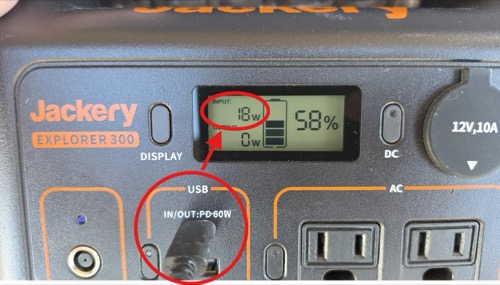
The product looks suited to outdoor panels, but no formal controller IP rating or operating range was supplied. Portable does not mean waterproof. Keep the electronics and every unsealed adapter dry, shaded, ventilated, and off wet ground.
One owner did not experience the heat warned about in their manual while using a 100W panel. That does not settle behavior at 300W. Observe temperature during initial full-sun operation and prevent cable/connector loads from pulling on the enclosure.
Portable-System Checklist
- Confirm the exact ports and included cables on the received revision.
- Verify polarity of every SAE/MC4/battery adapter with a meter.
- Obtain maximum PV Voc and Isc before exceeding a modest 100W-class setup.
- Use voltage-matched panels appropriate for PWM.
- Confirm 12V battery chemistry and profile values.
- Provide battery-adjacent overcurrent protection.
- Calculate cable/adapter current and voltage drop.
- Test LCD readings against battery data and a suitable meter.
- Keep the controller and connectors dry and ventilated.
- Disconnect any hot, loose, corroded, or discolored connector.
Alternatives
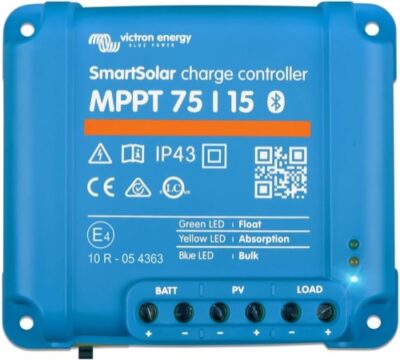
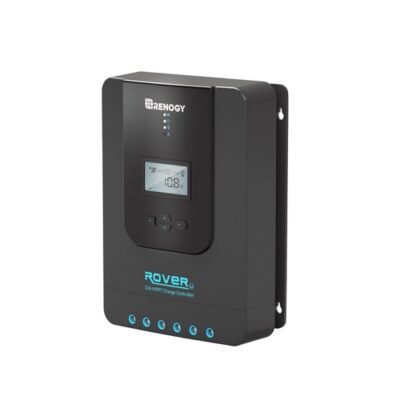
The Renogy Voyager 20A is the clearer choice for genuine outdoor exposure because it carries an IP67 rating and published 12V/24V PV limits, though it is still PWM. The Wanderer 10A sacrifices current but documents a 50V ceiling, power table, and terminals. A Victron or Renogy Rover MPPT provides higher-voltage conversion and better documentation at greater cost.
Connector ecosystems should influence the alternative. If most equipment already uses MC4 and ring terminals, adding SAE adapters creates more failure points without much benefit. If the project is genuinely portable and SAE polarity has been standardized, SUNAPEX’s fixed leads can save repeated wiring. Choose the connection system deliberately rather than letting the bundled cable decide the electrical architecture.
Store adapters labeled by polarity and purpose so they cannot be casually interchanged between unrelated battery systems.
Pros & Cons Analysis
Based on documented specifications and owner feedback
Pros
- 20A — 20A PWM rating.
- LCD — LCD and status LEDs.
- SAE — SAE connections.
- Up — Up to 300W stated for 12V systems.
Cons
- Check: 12V only.
- Check: PV Voc and Isc limits not published.
- Check: No app connection.
- Check: Connection-order documentation needs verification.
Bottom Line: Convenient at 100W, Unproven at the Headline Limit
Verdict: SUNAPEX offers a useful plug-oriented controller for a modest 12V portable or maintenance system. Specific owners report easy 100W operation, plausible readings, and quick connector-based setup.
Best reason to buy: Your existing small panel and battery use compatible SAE wiring, and speed of setup matters more than MPPT efficiency.
Reason to pause: Conflicting USB/variant evidence, missing PV Voc/Isc, no formal weather rating, and uncertain connection documentation make the stated 300W/20A boundary unsuitable without manufacturer confirmation.
Frequently Asked Questions
Is the SUNAPEX 20A PWM MPPT or PWM?
The exact model is documented as PWM. That topology does not replace checks of PV voltage, input current, output current, and battery compatibility.
What battery voltage does the SUNAPEX 20A PWM support?
12V. Confirm detection and selection behavior in the current exact-model manual.
What is the maximum PV voltage?
Not published. Use cold-corrected array Voc rather than the panel's warm-day value.
How much solar can it handle?
Up to 300W @ 12V. The PV voltage, PV current, and battery-side charge-current limits must all be satisfied at the same time.
Does the SUNAPEX 20A PWM work with lithium batteries?
Lead-acid and lithium selections shown on the product page; verify exact profile. Match every charging value and low-temperature strategy to the battery documentation.
Does it include app monitoring?
No app or communications port. Verify whether any required accessory is included in the exact bundle.
Can I connect an inverter to its load terminals?
Normally no. High-current and surge loads should use a correctly fused battery-side connection unless the controller manual explicitly permits the planned load.
Who should buy the SUNAPEX 20A PWM?
Small 12V SAE-connected systems needing an inexpensive local display.
Technical Specifications
| Brand | SUNAPEX |
|---|---|
| Exact model / revision / ASIN | 20A PWM (ASIN B0DGP2WDX7) |
| Controller type | PWM |
| Rated battery-side charge current | 20A |
| Supported battery-system voltage | 12V |
| Battery chemistry and profile support | Lead-acid and lithium selections shown on the product page; verify exact profile |
| Maximum PV open-circuit voltage (Voc) | Not published |
| Maximum PV short-circuit/input current (Isc) | Not published |
| Maximum PV power by battery voltage | Up to 300W @ 12V |
| Minimum PV/start voltage requirement | Not published for the reviewed revision |
| Load output and low-voltage disconnect | No separate programmable load terminals documented |
| Grounding topology | Not published for the reviewed revision |
| Charging stages and custom voltage control | Automatic PWM charging |
| Temperature sensing and lithium low-temperature behavior | No external sensor or low-temperature cutoff documented |
| Display and local controls | LCD and status LEDs |
| App, communications, and data history | No app or communications port |
| Maximum terminal conductor size | Fixed SAE-style leads |
| Controller self-consumption | Claimed zero battery consumption when idle |
| Published tracking/conversion efficiency | Not published |
| Cooling method and thermal derating | Not published for the reviewed revision |
| Electrical protections | Overcharge, overvoltage, reverse-current, reverse-polarity, short-circuit, and overtemperature protection |
| Enclosure, ingress rating, and operating temperature | Weather-resistant presentation; no formal IP rating or range published |
| Certifications | Not published for the reviewed revision |
| Dimensions, weight, and included accessories | Not published |
| Warranty | Not published |