SOLPERK 8A IP67 Review: When Two LEDs Are Not Enough
At a Glance
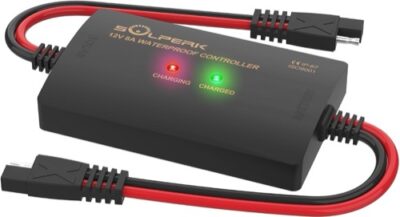
KEY FEATURES
- Controller: PWM; 8A rated charge output.
- System: 12V; Lead-acid battery compatibility; verify exact chemistry in current instructions.
- PV boundary: Not published maximum Voc; Not published maximum PV power.
- Controls: Status LEDs; No app or communications port.
- Best fit: Small 12V outdoor battery maintainers where sealed electronics matter more than detailed monitoring.
PROS
- IP67 enclosure suits small exposed maintenance applications.
- Simple two-light operation minimizes setup steps.
- 8A capacity fits many modest 12V battery maintainers.
CONS
- LEDs do not reveal actual charge current or detailed faults.
- Maximum PV voltage and power are not published in the protected record.
- No load output, app, history, or custom controls.
Editor's Choice
Editorial assessment based on exact-model documentation and qualitative exact-ASIN owner evidence; no first-party bench test or population-rate claim
Will the SOLPERK 8A IP67 Fit Your Solar Array?
Estimate required charging current and check it against the documented limits for SOLPERK 8A IP67.
Solar Charge Controller Size Calculator
What size charge controller do I need?
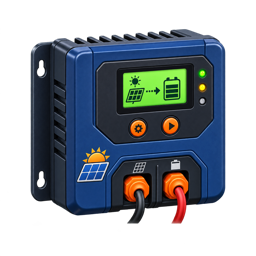
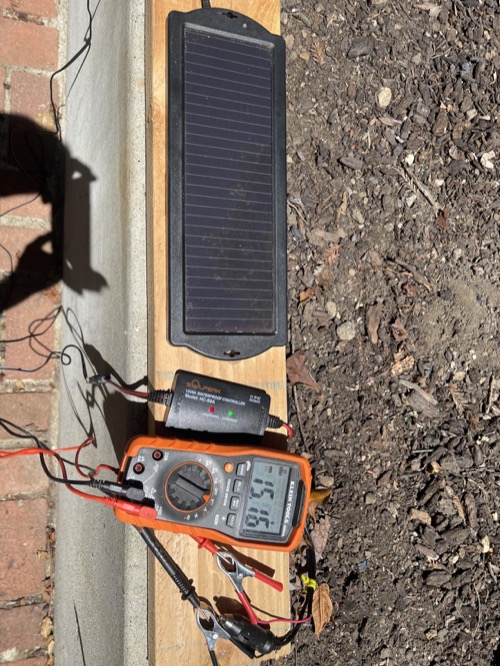
The SOLPERK 8A IP67 PWM controller is a compact 12V battery maintainer with fixed leads and a weather-resistant enclosure. It is aimed at cars, boats, trailers, sheds, and other small systems where a screen or app would be unnecessary. Multiple owners describe straightforward charging, and one watched the voltage cycle with a meter rather than trusting the indicators alone.
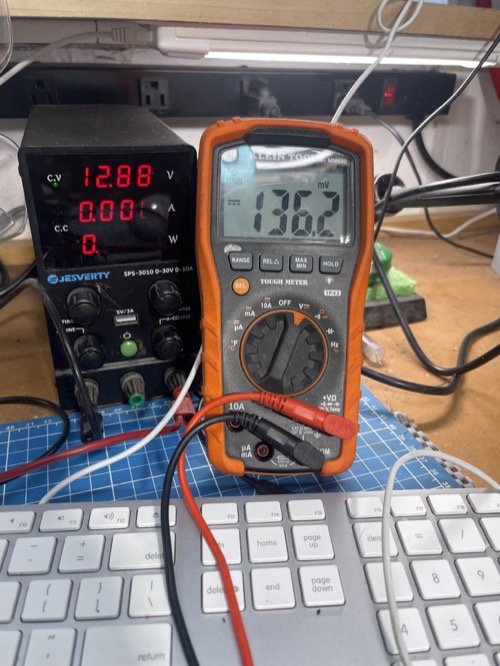
That meter-first approach is essential. The supplied owner evidence includes a sailboat expedition in which the panel failed while the controller continued flashing as if the system were healthy, a measured 136mV on the PV side at night in a reverse-leakage investigation, unclear LED behavior, and conflicting statements about battery chemistry and connection order.
| Best For | Defining Strength | Deciding Weakness | Evidence Confidence |
|---|---|---|---|
| Small 12V outdoor battery maintainers with independent verification | Compact IP67 body and simple fixed-lead installation | LEDs cannot prove that the panel is delivering useful current | Medium |
An 8A Sealed Controller Is a Maintainer, Not a System Monitor
Good conceptual fit when the panel and battery stay inside a modest 8A charge path.
Conditional on the charging profile, cable protection, and periodic voltage checks.
IP67 helps at the enclosure, but external connectors and battery hardware still need protection.
Poor fit when the owner needs numeric current, history, custom settings, or fault detail.
The expanded exact-ASIN owner record supports the SOLPERK 8A as a compact charging component for maintainers and small outdoor systems. Positive accounts describe restored or maintained batteries, simple installation, and useful sealed construction. Critical accounts mention batteries that did not charge as expected, ambiguous LED behavior, failures, connector or wiring issues, and difficulty distinguishing a controller problem from a panel or battery problem. These are diagnostic themes, not a reliability rate.
The controller’s two-light interface communicates far less than a numeric display. Before installation, record battery open-circuit voltage and panel Voc. After connection, measure voltage at the battery and controller under sunlight, then check whether the battery voltage rises appropriately over time. An LED labeled “charging” does not reveal actual current, battery acceptance, or whether cable voltage drop is limiting the system.
Eight amps is the battery-side limit, not a promise that every connected panel will produce 8A. The protected specification set does not publish a maximum PV Voc or wattage table, so exact manual limits must govern array selection. The controller has no programmable load terminals, app, or communications path; loads should connect through separate protected battery distribution.
Choose the SOLPERK when sealing, simplicity, and modest current are the priorities. Choose a controller with a numeric display or external monitor when troubleshooting access is difficult or battery condition matters operationally. A sealed black box is convenient only when the surrounding system can be measured.
The Sailboat Report Changes the Buying Decision
The most important owner account is not a cosmetic complaint. During an expedition-style sailboat race, a buyer lost navigation-light power and had to limit electronics use and recharge at checkpoints. The controller’s red and green indicators continued flashing even though the solar panel had apparently failed. Later checks reportedly showed PV open-circuit voltage fluctuating from about 7V to 17V but only a few milliamps of current.
The controller may have detected voltage while being unable to determine that the panel could not supply meaningful current. That distinction is fundamental: open-circuit voltage can appear plausible even when a module, connection, or conductor cannot deliver power under load. Two indicator lights cannot replace a current measurement.
| Observation | What It May Show | What It Does Not Prove |
|---|---|---|
| Red charging LED | Controller sees a qualifying condition | Useful charging current reaches the battery |
| Green charged LED | Internal threshold/state has been reached | Battery capacity or state of health is good |
| Plausible PV open-circuit voltage | Some voltage is present without load | Panel supplies rated current under load |
| Battery voltage after charging | A momentary electrical state | Daily energy balance or usable capacity |
| Alternating red/green lights | Product-specific state | A universal solar-controller meaning |
Diagnostic rule — For any battery supporting navigation, access control, communications, or safety equipment, verify current and battery condition independently. A status LED is an alert, not a complete monitor.
This is also a system lesson, not proof that the controller caused the panel failure. The reviewer believed the panel may have been damaged during transport. The controller’s contribution was weak diagnostics: its behavior reassured the operator when the energy source was no longer useful.
One Owner Measured the Charge Cycle
That report is valuable because it supplies actual observations and distinguishes voltage behavior from LED wording. It is not a laboratory validation: battery chemistry, temperature, meter accuracy, initial state of charge, and current were not published. Still, it shows that the unit can regulate a small system and that the instructions may not map cleanly to what an owner sees.
| Reviewed Attribute | Available Evidence | Responsible Interpretation |
|---|---|---|
| Rated charge current | 8A | Ceiling, not verified continuous performance |
| Battery system | 12V | Not a 24V controller |
| PV power limit | Not published in supplied evidence | Do not approve a panel only because another owner used that wattage |
| PV Voc / Isc limits | Not published | Series/parallel array design remains undocumented |
| Display | Red/green LEDs | Independent meter needed for commissioning |
| Load terminals | None documented | Loads need separate battery-side distribution/protection |
Another owner reported success with a 100W panel and a 100Wh lithium battery. That anecdote confirms only that one combination appeared to work for that buyer. It does not prove the exact controller revision supports the battery’s chemistry or that a 100W panel remains within every electrical limit.
The Chemistry Evidence Conflicts
The canonical evidence profile describes lead-acid compatibility and says the exact supported chemistries must be verified in the current instructions. However, one buyer posted a response attributed to SOLPERK support saying the controller would recognize lead-acid, AGM, or lithium iron phosphate. That wording is not enough to establish a safe lithium profile.
Automatic chemistry detection is a substantial technical feature and should appear consistently in the exact manual and labeling. A controller may infer system voltage, but reliably identifying chemistry from terminal voltage alone is difficult because voltage ranges overlap. The supplied evidence also documents no low-temperature LiFePO4 charge cutoff.
| Battery Type | Evidence Status | Buying Decision |
|---|---|---|
| Flooded lead-acid | Plausible supported class | Confirm voltage profile and ventilation requirements |
| AGM/sealed lead-acid | Owner specifically asked about AGM | Verify current instructions and measured charge voltage |
| Gel | Not resolved in supplied profile | Confirm before use |
| LiFePO4 | One support message says automatic recognition; core profile is not conclusive | Do not rely on it without exact manual confirmation and a cold-charge strategy |
| Other lithium chemistry | Not documented | Use chemistry-specific equipment |
Chemistry warning — An Amazon review repeating a support message is secondary evidence. For lithium, require the exact model’s current manual, suitable setpoints, battery-maker approval, and documented low-temperature protection somewhere in the system.
Connection Order Is Also Product-Specific
The same owner questioned instructions that said to connect the solar panel before the battery. A response attributed to SOLPERK said either order was acceptable because this controller is powered from the panel. Many other controllers require battery-first connection so they can identify system voltage before PV is applied.
Do not generalize either sequence. Match the model and hardware revision, isolate sources while wiring, verify polarity, and follow the current official instructions. Similar-looking SOLPERK 8A and 10A products can have different voltage, chemistry, and commissioning details.
The fixed leads simplify installation but limit cable selection. Any extension must be sized for maximum current and voltage drop, and every connector must retain appropriate weather protection. IP67 on the controller body does not rate a user-added SAE junction, fuse holder, or battery terminal.
The Nighttime-Leakage Evidence Is Specific
That is more specific than an unexplained “drains battery” review, but it still omits current. Voltage appearing across an open circuit does not tell us the magnitude of leakage or whether it alone could discharge that battery in a week. The battery, attached loads, panel, and measurement setup were not independently checked.
| Night Test | Why It Matters | Better Evidence |
|---|---|---|
| Battery voltage at sunset | Establishes starting point | Record temperature and resting conditions |
| Battery voltage before sunrise | Shows overnight change | Repeat with loads isolated |
| Current toward PV after dark | Directly quantifies reverse flow | Use an appropriate meter with correct range and polarity |
| Controller disconnected comparison | Helps isolate the device | Compare over similar temperature/time |
| Multi-night trend | Reduces one-reading noise | Log voltage/current automatically if possible |
The conclusion should therefore be “verify reverse current,” not “every unit drains batteries.” The report raises enough concern that an unattended vehicle or boat deserves an overnight check immediately after installation and periodically afterward.
IP67 Is Useful but Narrow
One owner replaced controllers that rusted during a fishing season and said these waterproof units worked better. Other buyers valued outdoor use. That supports the practical appeal of a sealed body. It does not establish the laboratory test conditions, long-term UV resistance, corrosion performance, or protection of the rest of the circuit.
The highest-risk locations often sit outside the controller: cable terminations, connectors that trap water, fuse holders, panel junction boxes, and battery posts. Position connections to shed water, provide strain relief, protect against abrasion, and use components rated for the environment. On boats, follow applicable marine electrical practice rather than assuming an IP label resolves corrosion and ignition concerns.
Energy Sizing Matters More Than “Maintainer” Marketing
A 3.5W panel may offset self-discharge in a lightly used vehicle under favorable sun. It will not recover meaningful daily consumption quickly. A 20W panel and 20Ah battery can support modest navigation lighting only if production exceeds all loads and losses. A 100W panel is a larger source, but the controller’s missing PV watt, Voc, and Isc limits prevent a blanket recommendation.
| Application | Primary Question | Why the 8A Label Is Insufficient |
|---|---|---|
| Seasonal car battery | Does daily solar exceed self-discharge and parasitic load? | Panel energy and shade dominate |
| Sailboat lights/electronics | Is there monitoring and reserve for poor weather/failure? | Critical loads require more than a current ceiling |
| Shed battery | Are connections and battery protected from weather/temperature? | IP67 covers only the controller body |
| Camper lithium pack | Is the exact chemistry/profile approved? | Owner success does not document low-temperature safety |
| 100W panel system | Are PV Voc, Isc, and watts within exact limits? | Rated output current does not define the PV input envelope |
A Commissioning Plan That Catches the Known Failure Modes
- Confirm the exact 8A model, serial/revision information, and current manual.
- Resolve battery-chemistry support before connecting the battery.
- Record panel Voc, Vmp, Isc, Imp, and the controller’s actual published limits.
- Verify polarity and the model-specific connection sequence.
- Protect the battery circuit and weatherproof every field connection.
- Measure PV current under load, not only open-circuit voltage.
- Observe the full charge transition and note actual LED behavior.
- Apply a known load and confirm the controller resumes charging appropriately.
- Check reverse current and battery voltage overnight.
- Recheck after transport, storms, storage, or any unexpected LED pattern.
Pros & Cons Analysis
Based on documented specifications and owner feedback
Pros
- IP67 — IP67 enclosure.
- Compact — Compact 8A format.
- Simple — Simple LED status.
- Low — Low price.
Cons
- Check: 12V-focused application.
- Check: No numeric display or app.
- Check: PV Voc and Isc limits not published.
- Check: Mixed sealing and charging reports.
Bottom Line: A Maintainer That Needs a Meter
Verdict: The SOLPERK 8A IP67 is a plausible compact maintainer for a small 12V outdoor system. Several owners report simple success, and one meter-observed account showed recognizable charge-and-rest behavior. The sealed enclosure is useful where exposed economy controllers corrode.
Best reason to buy: You want a low-complexity, fixed-lead maintainer and are willing to validate it with real measurements.
Reason to pause: Conflicting chemistry and connection-order evidence, missing PV limits, a measured-leakage investigation, and the sailboat's false reassurance show why the LEDs cannot be treated as proof of charging. For critical loads, add independent monitoring or choose a controller with numeric telemetry and clearer documentation.
Frequently Asked Questions
Is the SOLPERK 8A IP67 PWM MPPT or PWM?
The exact model is documented as PWM. That topology does not replace checks of PV voltage, input current, output current, and battery compatibility.
What battery voltage does the SOLPERK 8A IP67 PWM support?
12V. Confirm detection and selection behavior in the current exact-model manual.
What is the maximum PV voltage?
Not published. Use cold-corrected array Voc rather than the panel's warm-day value.
How much solar can it handle?
Not published. The PV voltage, PV current, and battery-side charge-current limits must all be satisfied at the same time.
Does the SOLPERK 8A IP67 PWM work with lithium batteries?
Lead-acid battery compatibility; verify exact chemistry in current instructions. Match every charging value and low-temperature strategy to the battery documentation.
Does it include app monitoring?
No app or communications port. Verify whether any required accessory is included in the exact bundle.
Can I connect an inverter to its load terminals?
Normally no. High-current and surge loads should use a correctly fused battery-side connection unless the controller manual explicitly permits the planned load.
Who should buy the SOLPERK 8A IP67 PWM?
Small 12V outdoor battery maintainers where sealed electronics matter more than detailed monitoring.
Technical Specifications
| Brand | SOLPERK |
|---|---|
| Exact model / revision / ASIN | 8A IP67 PWM (ASIN B0D3HR38QC) |
| Controller type | PWM |
| Rated battery-side charge current | 8A |
| Supported battery-system voltage | 12V |
| Battery chemistry and profile support | Lead-acid battery compatibility; verify exact chemistry in current instructions |
| Maximum PV open-circuit voltage (Voc) | Not published |
| Maximum PV short-circuit/input current (Isc) | Not published |
| Maximum PV power by battery voltage | Not published |
| Minimum PV/start voltage requirement | Not published for the reviewed revision |
| Load output and low-voltage disconnect | No programmable load terminals |
| Grounding topology | Not published for the reviewed revision |
| Charging stages and custom voltage control | Automatic PWM charging |
| Temperature sensing and lithium low-temperature behavior | No external sensor or low-temperature protection documented |
| Display and local controls | Status LEDs |
| App, communications, and data history | No app or communications port |
| Maximum terminal conductor size | Fixed leads |
| Controller self-consumption | Claimed zero battery consumption when no sunlight is available |
| Published tracking/conversion efficiency | Not published |
| Cooling method and thermal derating | Not published for the reviewed revision |
| Electrical protections | Reverse-current, overtemperature, short-circuit, overcharge, overvoltage, and reverse-polarity protection |
| Enclosure, ingress rating, and operating temperature | IP67; operating range not published |
| Certifications | Not published for the reviewed revision |
| Dimensions, weight, and included accessories | Not published |
| Warranty | Not published |