
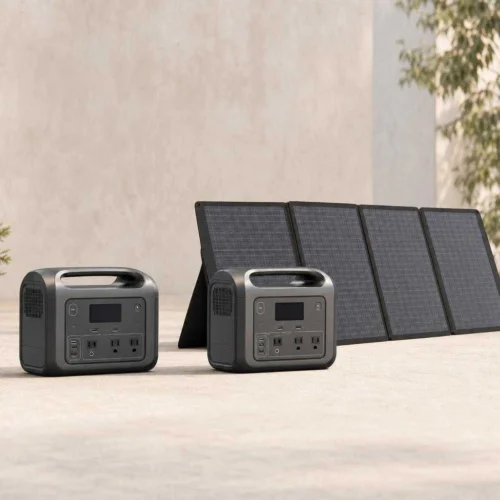
A portable power station is the battery-and-inverter box. A solar generator is usually that box sold or used with a compatible solar panel. There is no magic generator component added by changing the name. The practical difference is purchasing scope: station-only versus a functioning solar charging bundle.
Power station receipt
Station, AC cable, manuals, and sometimes a vehicle or solar adapter. A panel may be absent.
Solar generator receipt
Station plus one or more panels and a claimed connection path. Exact contents vary by bundle and seller.
The Core Device Is Usually the Same
If two listings use the same exact station model, their battery capacity, inverter, ports, expansion rules, and station solar input do not change because one title says “generator.” What changes is the panel, cable set, price, and possibly warranty or seller. That is why station specifications belong to the exact station and solar-recovery expectations belong to the complete bundle.
The distinction also protects content boundaries. Our Portable Power Stations cluster focuses on the battery box and its loads. The Solar Panels cluster examines panel construction and electrical behavior. Solar Generators evaluates whether an exact station, exact panel, and cable path work together as a useful kit.
Audit the Receipt Before the Marketing Name
- Identify the station. Record model, revision, region, capacity, output, and input range.
- Identify every panel. Record quantity, rated power, Voc, Vmp, Isc, Imp, connector, and weather rating.
- Trace the cable path. Confirm included leads, adapters, polarity, and extension limits.
- Separate warranties. Station and panel can have different terms and registration requirements.
- Price missing pieces. A “bundle” may still need an adapter, extension, stand, or vehicle cable.
Audit the Bundle Price
Compare a ready-made bundle with a station plus compatible panel and required adapters bought separately.
Planning estimate only. Verify the exact load, manual limits, wiring, connectors, weather, and operating conditions.
A negative price difference means the entered bundle is cheaper than the separate pieces; a positive number means it costs more. The panel-power gap is independent. A bargain bundle with a panel below the planned requirement can be worse value than a costlier bundle that closes the daily energy loop.
Compatibility Has Four Gates
Passing one gate never bypasses another. A 400W panel can be electrically incompatible with a 500W input because its voltage is wrong. A compatible 100W panel can be operationally inadequate for a 1kWh battery even though it is electrically safe. Use the current manual for the exact region and revision.
Buy Station-Only When Flexibility Is Real
Station-only is sensible when you already own a verified compatible array, need a panel size the bundle does not offer, expect to mount rather than fold panels, or primarily charge from AC or a vehicle. It can also avoid paying for a portable panel that will remain unused.
- You have the exact input window and connector documentation.
- You can calculate series voltage and parallel current.
- The separate panel has a suitable warranty and return path.
- Required cable and mounting costs are included in the budget.
- The final array can be stored, deployed, or installed safely.
Station-only is not flexibility when the plan is “buy any panel later.” Without electrical values and a cable map, it is an unfinished system.
Buy the Bundle When It Removes Work
A strong bundle solves identity, cable, and recovery questions. The panel is named, the adapter path is supplied, the station input accepts it, and the panel-to-battery ratio fits the intended day. A weak bundle uses a small panel mainly to earn the word solar, leaving the buyer to fund the real array later.
See the bundle principle applied in the Explorer 2000 v2 + two SolarSaga panels review: two panels fill the receiver, but they also change storage, handling, and deployment.
The Same Station Can Create Two Different Solar Generators
Imagine a 1,024Wh station sold with either 100W or 400W of compatible panel power. With four peak-sun hours and a 75% collection assumption, the smaller array yields about 300Wh per day while the larger yields about 1,200Wh. The station is identical, yet one bundle is a partial-recovery system and the other may refill roughly a battery’s worth in a favorable day.
This is why solar-generator comparisons need kit-level specifications: included panel model and quantity, panel electrical values, solar input ceiling, connector path, and a transparent recharge estimate. Station capacity alone cannot describe the system.
Use the Right Research Cluster
Research the station
Use power-station reviews for inverter behavior, runtime, ports, app, UPS, noise, and charging sources.
Research the panel
Use panel reviews for electrical data, cell construction, weather rating, stand, cable, shade response, and packability.
Research the kit
Use solar-generator reviews for exact contents, component compatibility, recovery balance, combined carry, and total ownership cost.
Inspect Seller and Return Risk
Bundle identity can fail before any electrical test. Marketplace variation selectors may combine station-only, panel-only, and several bundle sizes on one page. Reviews can describe a different variation, and a listing image can show accessories that the “included” section omits. Capture the selected variation, seller, fulfilled-by party, ASIN/SKU, exact title, and box-contents list at checkout.
Test identity as soon as delivery arrives. Photograph unopened labels, then confirm station revision, panel quantity, panel model, cable ends, adapters, and visible condition. If the bundle is wrong, keep packaging and resolve it before performing a setup that complicates the return.
Return risk is part of bundle value. A station bought from one seller and a panel from another can create two clear return channels—or two parties that blame each other. A single bundle can simplify the purchase but make a missing component dispute larger. Read seller-specific return windows, restocking rules, shipping responsibilities, and hazardous-battery procedures.
- Before purchase: save variation and contents.
- At delivery: photograph labels and condition.
- Before disposal: retain packaging through load and solar tests.
- Before deadline: resolve identity, compatibility, and performance discrepancies.
Know When Not to Buy the Panel Yet
A panel purchase should follow the load and location study. If the station will spend its first year beside a reliable wall outlet, a deeply discounted station-only purchase may be more useful than a bundle whose panel remains boxed. Delaying also gives time to determine whether the real need is a portable folding panel, a weather-rated rigid module, a vehicle charger, or a larger station.
Delay is especially sensible when the site is unknown. A shaded apartment balcony, windy campsite, tree-covered cabin, and open desert use different mounting, cable, theft, weather, and collection plans. No folding panel can fix a location with insufficient sun, and a long cable can add loss and handling risk.
| Situation | Buy bundle now | Buy station first |
|---|---|---|
| Known camp with clear sun | If panel size and cable path match the measured day | If you already own a verified array |
| Home outage preparation | If portable solar has a safe deployment area | If grid/generator charging is primary and solar site is unproven |
| Vehicle travel | If the panel will be deployed during stops | If a supported alternator/vehicle path better matches movement |
| Uncertain future use | Only if bundle discount exceeds the value of flexibility | Often safer until the energy and site study is complete |
A station-only purchase still needs a future solar compatibility record. Save the current manual and input limits because product revisions and accessory availability can change. If you delay the panel, do not delay documenting the electrical boundary.
Bottom Line: The Difference Is the Complete System
Choose station-only when you can finish the solar design deliberately. Choose a solar-generator bundle when it supplies the exact panel and cable path your operating plan needs at a sensible total price. The product name is not the decision; the receipt, electrical compatibility, and daily energy balance are.
Leave a Reply