

A solar generator is worth buying when it repeatedly solves a measured problem that cheaper or existing equipment does not. It is not automatically an investment, free electricity, or whole-house resilience. For many owners the return is quiet backup, portable energy, no combustion exhaust at the point of use, and fewer fuel errands—not a lower utility bill.
Start With the Job You Would Pay to Solve
“Emergency preparedness” is too broad for a purchase. Write a specific outcome: keep the refrigerator and router running for eight hours; power a CPAP overnight with reserve; support laptop work at six remote weekends; recharge cameras daily; avoid running an outdoor fuel generator overnight. Then calculate the watts, watt-hours, ports, and recovery required.
Backup value
Avoided food loss, hotel stay, work interruption, or unsafe improvisation—without pretending every outage occurs.
Travel value
Fewer powered campsites, rental batteries, vehicle idling, or device interruptions across actual trips.
Convenience value
Quiet local power where cords, fuel, or a running engine would be impractical.
If the outcome has no credible frequency or alternative cost, describe the purchase as discretionary equipment rather than savings. That is not a criticism; it keeps the decision honest.
Calculate Cost per Planned Use
Run the Cost-per-Use Worksheet
Treat the kit as equipment, not free electricity. Enter uses you genuinely expect rather than optimistic possibilities.
Planning estimate only. Verify the exact load, manual limits, wiring, connectors, weather, and operating conditions.
The result excludes financing, resale value, replacement, panel degradation, battery aging, repairs, and charging energy. Add them when material. “Break-even” here means matching the entered avoided cost, not creating profit or valuing resilience perfectly.
Where the Value Is Strongest
- Repeated short outages: the exact essential-load plan fits the battery and recharge window.
- Frequent camping or field use: the kit replaces a real paid or inconvenient alternative.
- Noise-sensitive operation: quiet battery power has practical value around sleep, neighbors, or work.
- No safe portable-fuel location: modest battery loads can be supported without combustion exhaust, while still following battery-station rules.
- Multiple charging sources: wall, vehicle, and compatible solar create useful flexibility.
Value improves when one system serves several genuine roles without being oversized for all of them. A 1kWh kit used for trips, work, and short outages can spread cost across many events. A 3.5kWh wheeled system bought for one speculative scenario may have a very high cost per use.
Where the Value Collapses
High-heat loads such as space heating, water heating, and many cooking devices consume stored energy quickly. Large pumps and 240V appliances can require a different class entirely. A fuel generator, installed battery, transfer system, or load reduction may be the rational alternative.
Solar Is Valuable Only When It Closes the Loop
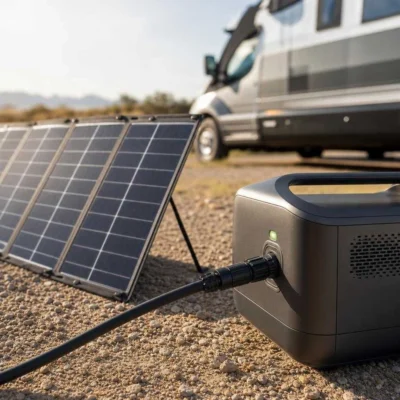
A panel gives the battery a renewable onsite source, but nameplate watts do not equal daily watt-hours. Multiply array watts by realistic peak-sun hours and a collection efficiency, then compare harvest with daily use. If the kit consumes 900Wh daily and collects 300Wh, solar extends operation but does not make it self-sustaining.
Above 1.0 suggests catch-up potential under the assumptions. Below 1.0 means the battery loses energy each day unless another source or lower load intervenes.
A bundle can be good value even when its small panel is only supplementary—if that is understood and priced. It becomes poor value when “solar” creates an expectation of indefinite operation that the panel-to-battery ratio cannot support.
Compare Complete Ownership Costs
| Cost line | Solar-generator kit | Alternative |
|---|---|---|
| Initial equipment | Station, panel, cables, adapters, case | Generator/rental/installed system/existing equipment |
| Operating | Grid charging, travel, occasional replacement accessories | Fuel, oil, maintenance, campground power, rental fees |
| Readiness | Storage, periodic charging and testing | Fuel rotation, service, safe outdoor setup and testing |
| Failure consequence | Value of loads not served when capacity or sun runs out | Value of loads not served when fuel, location, or equipment fails |
| Residual value | Remaining capacity and resale after use | Equipment condition and resale |
Do not count avoided fuel if you would not have run a generator. Do not count solar electricity at retail rates without measuring how much energy is actually collected and used. Do count the value of quiet operation or portability if you would otherwise pay or change behavior to obtain it.
For an RV-focused 2kWh value case, read the C2000 Gen 2 + 200W exact-bundle review; it weighs the direct TT-30R and fast AC recovery against a starter panel that uses only part of the receiver.
Choose the Kit Tier After the Value Test
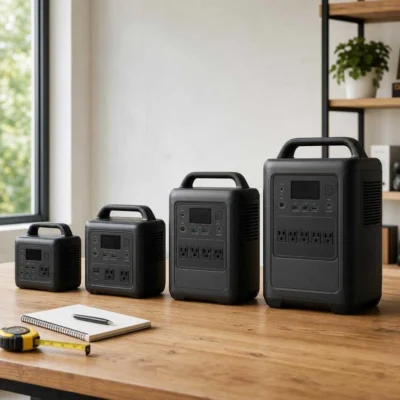
Buy the smallest tier that passes the hardest actual use with reserve. Oversizing raises cost per use and carrying burden. Under-sizing converts the whole purchase into an expensive demonstration that cannot complete the job.
Run a Return-Window Proof
- Inventory the exact station, panel, cable, and warranty registration.
- Measure the intended highest load and startup event.
- Run a representative duration test while preserving reserve.
- Collect solar data across a clear day at several panel positions.
- Test app, charging sources, error recovery, and support contact.
- Keep the system only if the evidence matches the job used to justify it.
Apply a Fit-Skip Risk Matrix
| Evidence available | Use frequency | Decision posture |
|---|---|---|
| Measured load and verified recovery | Frequent | Fit: compare exact kits and total ownership cost |
| Measured load, uncertain event frequency | Occasional | Price resilience: decide what readiness is worth without claiming savings |
| Unmeasured load, frequent trips/outages | Frequent | Pause: measurement can prevent an expensive size error |
| Unmeasured load and hypothetical use | Rare | Skip for now: rent, borrow, or define the mission first |
The matrix separates uncertainty from desire. A buyer can rationally pay for preparedness even when outages are rare, but the purchase should be described as risk reduction rather than guaranteed financial return. The value of refrigeration, medical continuity, communication, or work can be high without being predictable.
Consider a rental or borrowed trial for an uncertain mission. One weekend exposes station weight, panel setup, fan noise, cable inconvenience, actual watts, and charging habits. That information is often worth more than another week of reading headline specifications.
Some Returns Are Nonfinancial
Cost per use cannot fully price sleep, communication, medical continuity, food protection, or the ability to work. These benefits are real, but they should still be tied to a capability the exact system can deliver. A buyer may rationally accept a high dollar cost per outage because quiet overnight refrigeration and communications are valuable.
Do not double-count. If avoided food loss is already included as the alternative cost per outage, do not add it again as a separate benefit. If a camping trip would have happened without powered equipment, the full trip is not a return generated by the station.
Nonfinancial value becomes more credible after a commissioning test. Record how long the actual priority load ran, whether the panel could be deployed, how much energy returned, and whether everyone could operate the system. Preparedness value comes from proven capability—not ownership alone.
Bottom Line: Worth Is a Use Case, Not a Product Category
Solar generators are worth it for buyers who can name frequent, compatible loads and a credible recovery path, especially where quiet portable battery power avoids a real cost or constraint. They are not worth it as vague insurance, a promise of unlimited solar energy, or a substitute for a properly designed home-backup system. Put the use count and energy ledger beside the price; the answer usually becomes clear.
Leave a Reply