Solar Power Picks logo with sun, solar panel, and green energy icon

  • Home
  • Reviews
  • Best
    • Best portable power stations
    • Best Solar Panels
    • Best Solar Generators
  • Guides
    • Portable Power Stations Guides
    • Solar Panels Guides
    • Solar Generators Guides
  • Comparisons
    • Portable Power Stations Comparisons
    • Solar Panels Comparisons
    • Solar Generators Comparisons
  • Calculator

EcoFlow vs Jackery Solar Panel: Which Brand Wins?

COMPARED PRODUCTS

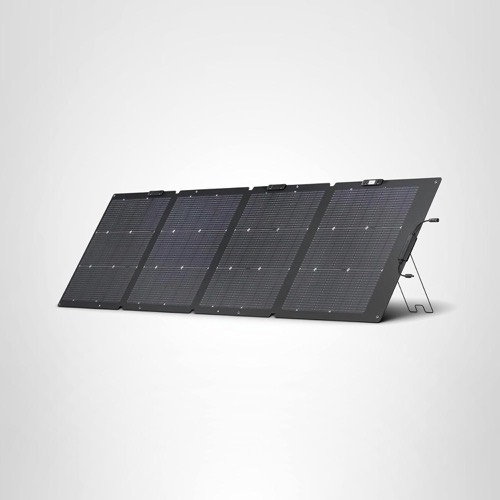
EcoFlow 220W Solar Panel Review: The Ecosystem-Native Panel Built to Plug Straight Into Your EcoFlow

Best EcoFlow Pick

EcoFlow 220W Solar Panel Review: The Ecosystem-Native Panel Built to Plug Straight Into Your EcoFlow

Check price at Amazon Jump to details
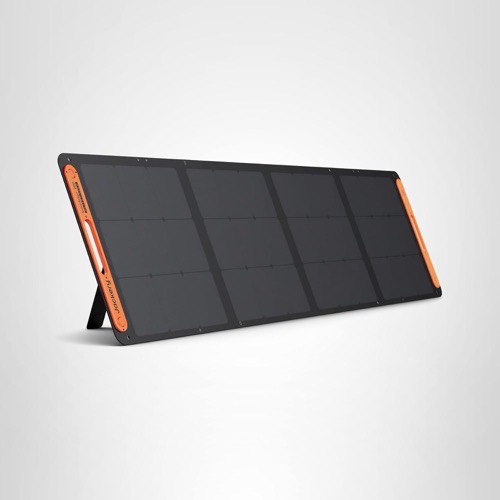
Jackery SolarSaga 200W Review: Bifacial Cells, IP68 Waterproofing, and Built for Jackery Owners

Best Jackery Pick

Jackery SolarSaga 200W Review: Bifacial Cells, IP68 Waterproofing, and Built for Jackery Owners

Check price at Amazon Jump to details

The EcoFlow vs Jackery solar panel debate is unusual because both brands landed on the same premium recipe — a foldable bifacial panel with high-efficiency cells and a genuine IP68 rating. The differences that decide it are quieter: how much raw wattage you get, how the panel connects, how much it weighs, and how long the warranty runs. Sort those out and the choice gets simple.

To keep this grounded, we are comparing two specific panels with real owner feedback behind them — the EcoFlow 220W Bifacial and the Jackery SolarSaga 200W — rather than trading marketing bullet points. That is where the honest trade-offs live.

Fast Answer: Which Panel Should You Buy?

Buy the EcoFlow 220W Bifacial if you own an EcoFlow Delta or River, want more raw watts (220W vs 200W), or want an open MC4 panel that also feeds other stations and 12V banks through the right cable — just plan to baby the glass and improvise a sturdier stand. Buy the Jackery SolarSaga 200W if you own a Jackery Explorer, want the highest cell efficiency, value built-in USB device charging, or want the longest 5-year warranty — as long as the proprietary DC8020 connector fits your plans.

The Main Difference: More Raw Watts vs Plug-and-Play Polish

Here is the cleanest way to frame EcoFlow vs Jackery. The EcoFlow 220W leans on output and openness — it is the higher-wattage panel, its bifacial N-Type cells push a strong real-world harvest, and its standard MC4 output means it is not truly locked to EcoFlow even though the included XT60i cable makes it plug-and-play there. The Jackery SolarSaga 200W leans on polish for its own ecosystem — slightly higher IBC cell efficiency, a genuine IP68 build, built-in USB-A and USB-C ports for charging phones straight off the panel, and a 5-year warranty, all wrapped around a proprietary connector.

Neither approach is wrong. An EcoFlow owner who wants maximum watts and the option to reuse the panel elsewhere leans EcoFlow. A Jackery owner who wants the tidiest same-brand setup, USB charging, and the longest backing leans Jackery. The rest of this comparison is about which of those trade-offs matters for your setup. If you are still deciding on the format itself, our roundup of the best portable solar panels puts both in wider context.

EcoFlow vs Jackery: Side-by-Side

Dimension EcoFlow 220W Bifacial Jackery SolarSaga 200W
Rated power 220 W 200 W
Cell type N-Type monocrystalline, bifacial (25%) IBC monocrystalline, bifacial (26.7%)
Real-world output 200-213W cool sun; peaks to 240W cold; 125-170W in extreme heat ~656 Wh/day at a 0.82 factor; strong in low light
Connector MC4 (MC4-to-XT60i cable for EcoFlow) — open, adapter-friendly Proprietary DC8020 + DC7909, USB-A, USB-C — Jackery-native
Weatherproofing IP68 (ETFE + tempered glass) IP68 panel body (cable not weatherproof)
Weight 15.4 lb 14.3 lb
Warranty Not published; owners report replacements and refunds 5 years
Best for EcoFlow owners; more raw watts; open MC4 reuse Jackery owners; top efficiency; USB charging; longest warranty

The Two Panels, Head to Head

Rather than crown one panel overall, it helps to match each to the buyer it fits. Here is where each earns its spot — and where the EcoFlow vs Jackery split gets practical.

EcoFlow 220W Bifacial — Best EcoFlow Pick

This is the pick for someone who already owns an EcoFlow Delta or River and wants a panel that just connects and charges. The included MC4-to-XT60i cable plugs straight in with no adapter hunting, the bifacial N-Type cells deliver a genuinely strong 200-213W in cool sun, and the IP68 build handles rain and snow. At 220W it is the higher-wattage panel here, and its open MC4 output means you can repurpose it on a Jackery, Bluetti, or 12V bank later. Plan around the fragile glass, the weak case-as-kickstand, and the 15.4 lb weight. Full details in our EcoFlow 220W Bifacial review.

Jackery SolarSaga 200W — Best Jackery Pick

This is the answer for a Jackery Explorer owner who wants premium polish and the tidiest same-brand setup. The bifacial IBC cells rate at 26.7% — the highest efficiency in this comparison — and the panel adds built-in USB-A and USB-C ports so you can top up phones and tablets without the power station. A genuine IP68 rating and a 5-year warranty back it up. The catch is the proprietary DC8020 connector that ties it to Jackery and a charging cable that is not weatherproof. See the Jackery SolarSaga 200W review for the full picture.

Real-World Output and Bifacial Gain

Rated watts and delivered watts are two different numbers, and this is where the 220W-vs-200W gap and the bifacial back sides earn their keep. Not sure how many watts you actually need for your loads? Our solar panel calculator estimates real daily output for your location before you buy.

The EcoFlow 220W is the raw-output leader. Owners in cool, clear conditions regularly report 200-213W, with peaks of 232-240W per panel on cold days, and usable charging on overcast and snowy skies — one buyer pulled 151W in a Connecticut December. Reckon on roughly 660 Wh on an average four-peak-sun day at a real-world factor around 0.75, enough to refill a smaller River or Delta 2 in 4-5 hours. The honest downside: in extreme summer heat the cells warm and output falls to 125-170W.

The Jackery SolarSaga 200W trades a little rated wattage for cell efficiency and low-light behavior. Its IBC cells at 26.7% squeeze more output per square inch than standard PERC mono, and they hold up better in diffuse, overcast light — a real advantage in the Pacific Northwest, the UK, or any cloudy climate. Figure on about 656 Wh a day at a 0.82 factor, which is why a single panel takes most of a good day to refill an Explorer 1000 Plus and two panels roughly halve it.

Both panels are bifacial, so both add free watts from reflected light — the EcoFlow’s rear side is rated for up to 28% extra, and the Jackery’s rear cells can add 10-25% over bright ground. The catch is the same for each: the boost only appears over snow, sand, white gravel, or a reflective mat, and does almost nothing on grass or dark asphalt. Put something bright behind either panel and the back side wakes up.

Build Quality and Durability

Both panels carry the same headline rating — IP68, the highest weatherproof tier in portable solar — so on paper they are evenly matched against rain, dust, and brief submersion. The differences are in the structure around the cells.

The EcoFlow feels rugged in the hand; owners describe the panels as stiff “like a truck mudflap” and the XT60i cable as thick and high quality, with one buyer reporting the panel looking new after six months of near-daily use. But it has a real weakness: the glass cracks far too easily, sometimes just from careful folding or transport, with the thin sections and the kickstand-attachment edge as the stress points. Its IP68 covers the whole package, cable included.

The Jackery answers with a more premium frame — a robust aluminum surround, tempered glass over the front, and a scratch-resistant ETFE film on the bifacial rear. It reads and holds up like a fixed-mount panel rather than a fabric budget portable, and its operating range runs a wide -4°F to 149°F. The one asterisk on its IP68: Jackery states the included multi-functional cable is not weatherproof, so in heavy rain you protect the cable connection points even though the panel body is fully sealed. For a broader look at how both stack up against the field, see our best 200W portable solar panels guide.

Connectors and Ecosystem Lock-In

This is the most consequential difference between the two, and it cuts in opposite directions. The EcoFlow 220W uses standard MC4 connectors at 21.5V. EcoFlow includes an MC4-to-XT60i cable so it is plug-and-play into a Delta or River, but because the panel itself speaks MC4, it also feeds a Jackery station, a Bluetti, or a 12V battery through the correct adapter cable — one owner ran it on a Jackery first try and pulled 193W. It is the more universal panel.

The Jackery SolarSaga 200W is the opposite. Its main DC output is the proprietary DC8020 connector, which drops straight into Explorer 1000 Plus, 2000 Pro, 2000 Plus, and 3000 Pro stations with zero research — the tidiest same-brand experience here. But that proprietary port is also the lock-in: to run it on an EcoFlow or another non-Jackery station, you need a DC8020 adapter and a voltage check. Its saving grace is the built-in USB-A and USB-C ports, which let you charge phones and tablets directly regardless of what station you own. If you are pairing either panel with a power station, our guide to choosing a portable solar panel for a power station walks through the connector and voltage details that matter.

Weight and Portability

Neither of these is a backpacking panel. The EcoFlow tips the scale at 15.4 lb and folds to 23.2 × 24.2 × 1.3 inches, while the Jackery is a touch lighter at 14.3 lb and folds a little longer at 24 × 21.7 × 1.8 inches. On the numbers the Jackery wins portability, and it compounds that edge with a molded carry grip and a genuinely quick built-in kickstand.

The EcoFlow’s handling is its weak spot. There are no built-in handle cutouts, the panel flops around when open, and — worst of all — the fabric carry case doubles as the stand. Owners describe it as cumbersome, unstable on tables, and useless in any real wind, with many building PVC or metal frames or propping the panel on chairs instead. The integrated angle guide earns praise for sun-aiming, but the stand itself is a common source of the drops that crack the glass. For car camping and RV use both are fine; for anyone hauling gear far or setting up solo in wind, the Jackery is the easier panel to live with.

Price and Value

Both panels sit at the premium end, and both carry a noticeable markup over generic third-party 200W panels — a recurring objection in owner feedback for each. The value question is whether you actually use their signature features.

The EcoFlow 220W justifies its premium two ways: if you own an EcoFlow station, the no-adapter XT60i cable removes the connector headache that catches buyers using third-party panels, and you get more raw watts than the Jackery. Because it also speaks open MC4, its value survives if you switch stations later. The Jackery SolarSaga 200W justifies its premium only when you use all three of its differentiators — the IBC efficiency, the IP68 durability, and the 5-year warranty — which realistically means a Jackery owner who camps outdoors. For a casual buyer who just needs 200W, both are more panel than the job requires, and a standard mono panel undercuts them.

Warranty and Support

Jackery takes the paper-coverage round outright. The SolarSaga 200W carries a 5-year warranty — the longest here by a wide margin — covering manufacturing defects and premature degradation, and Jackery’s support has a generally positive reputation for honoring claims without excessive friction.

EcoFlow does not publish a clear warranty length on the panel, so the practical question is what happens when something breaks — and with the cracked-glass reports, that matters. The good news is the track record: owners who received cracked panels, broken zippers, or missing cables consistently report EcoFlow issuing a replacement or a full refund, and several raised their star ratings after support resolved the issue. The frustration is the process, which can be slow to reach and often requires the broken unit back before a replacement ships. Longer, clearer coverage goes to Jackery; a strong replacement record on a more crack-prone panel goes to EcoFlow.

The Verdict: Which Panel Wins for You

There is no single winner in EcoFlow vs Jackery — there is a winner for each buyer. Here is the honest breakdown by who you are.

  • EcoFlow Delta or River owner: EcoFlow 220W, no contest. The included XT60i cable makes it plug-and-play, and the 220W rating gives you more raw watts than the Jackery.
  • Jackery Explorer owner: Jackery SolarSaga 200W. The native DC8020 connector, IBC efficiency, IP68 build, and 5-year warranty form a same-brand package the EcoFlow cannot match on a Jackery.
  • Buyer who wants one panel that works across stations: EcoFlow 220W. Its open MC4 output feeds Jackery, Bluetti, and 12V banks through the right adapter, so it survives a switch.
  • Buyer who wants the highest efficiency and USB device charging: Jackery SolarSaga 200W — the 26.7% IBC cells and built-in USB-A/USB-C ports are the top pick for both.
  • Buyer who values the longest warranty and cleanest weather rating: Jackery, for the 5-year coverage and premium aluminum-framed build — just shelter the cable in heavy rain.
  • Buyer chasing the lowest price per watt: Neither — both carry a brand premium, so a standard third-party 200W panel will save money if you do not need same-brand connectors.

Bottom line: choose the EcoFlow 220W when you own an EcoFlow station or want more raw watts and open MC4 wiring; choose the Jackery SolarSaga 200W when you own a Jackery, want the highest efficiency and USB charging, or value the 5-year warranty most. Both are honest premium picks — they are just built for buyers standing in different ecosystems.

Best EcoFlow Pick

EcoFlow 220W Solar Panel Review: The Ecosystem-Native Panel Built to Plug Straight Into Your EcoFlow

EcoFlow 220W Solar Panel Review: The Ecosystem-Native Panel Built to Plug Straight Into Your EcoFlow

Get it now:

Check latest price

What to know

  • Real 200-213W in cool clear sun — peaks to 232-240W on cold days, but drops to 125-170W in extreme summer heat
  • Plug-and-play with EcoFlow — the included MC4-to-XT60i cable connects straight to a Delta or River with no adapters
  • Open MC4 output — standard 21.5V MC4 lets it run on Jackery, Bluetti, or 12V systems through the right cable
  • Handle the glass gently — cracking from folding and drops is the most common complaint; support both ends when carrying
  • Ditch the case-as-stand — the kickstand is unstable and useless in wind; a folding stand or PVC frame is a common fix

Best if

  • You own an EcoFlow Delta or River and want a no-adapter, plug-and-play panel
  • You want more raw watts (220W) and strong cloudy-day output
  • You want an open MC4 panel you can reuse on other stations or 12V banks

Skip if

  • You handle gear roughly — the glass cracks more easily than it should
  • You need a sturdy built-in stand that holds up in wind without improvising
  • You need a light panel for backpacking or easy one-person setup
If you already own an EcoFlow Delta or River and just want a panel that connects and charges on the first try, this is the easiest recommendation in the matchup. It ships with an MC4-to-XT60i cable that plugs straight into an EcoFlow station — no adapter hunting, no "will this connector fit" guesswork — and owners pairing it with a Delta 2, Delta 3 Plus, River 2 Pro, or Delta Pro describe setup as connect-and-go. What makes it work: at 220W it is the higher-wattage panel here, its bifacial N-Type cells deliver a genuinely strong 200-213W in cool clear sun, and its open MC4 output means it is not truly locked to EcoFlow — with the right adapter it also feeds a Jackery, a Bluetti, or a 12V bank. The IP68 build shrugs off rain and snow, and the rear side adds free watts over a reflective surface. The catch: the glass cracks too easily, sometimes just from folding or transport; the fabric case-as-kickstand is cumbersome and useless in wind; and at 15.4 lb it is heavy for a "portable" panel.
Power output220 W (N-Type monocrystalline, bifacial)
Cell efficiency25% (up to 28% extra from the bifacial rear side)
Real-world output200-213W in cool sun; ~660 Wh/day at a 0.75 factor
Charge controllerNone — uses the EcoFlow station's MPPT input
ConnectorMC4 (MC4-to-XT60i cable included; ~6 ft)
WeatherproofingIP68; tempered glass with ETFE coating
Weight15.4 lb; folds to 23.2 × 24.2 × 1.3 in
WarrantyNot published; owners report replacements and refunds
Best forEcoFlow Delta / River owners; camping, RV, and emergency backup
Best Jackery Pick

Jackery SolarSaga 200W Review: Bifacial Cells, IP68 Waterproofing, and Built for Jackery Owners

Jackery SolarSaga 200W Review: Bifacial Cells, IP68 Waterproofing, and Built for Jackery Owners

Get it now:

Check latest price

What to know

  • 26.7% IBC cells — the highest efficiency in this comparison, with stronger low-light and overcast output than standard PERC mono
  • Native Jackery connector — the DC8020 plug drops straight into Explorer 1000 Plus, 2000 Pro, 2000 Plus, and 3000 Pro
  • Built-in USB-A and USB-C — charge phones and tablets directly off the panel without the power station
  • Shelter the cable in rain — the panel body is IP68, but Jackery states the included charging cable is not weatherproof
  • 5-year warranty — the longest coverage here; keep your receipt and register the product

Best if

  • You own a Jackery Explorer and want a no-adapter, same-brand panel
  • You want the highest cell efficiency and strong low-light performance
  • You value USB device charging and the longest 5-year warranty

Skip if

  • You own a non-Jackery station — the DC8020 connector needs an adapter
  • You need the lowest price per watt — a standard 200W panel costs less
  • You need a light panel for backpacking — 14.3 lb suits car camping
When you own a Jackery Explorer and want the tidiest same-brand setup with premium polish, this is the panel Jackery built for you. The included multi-functional cable drops a proprietary DC8020 plug straight into an Explorer 1000 Plus, 2000 Pro, 2000 Plus, or 3000 Pro with no adapters or compatibility research — unfold, angle the built-in kickstand, plug in, and you are charging in about a minute. What makes it work: bifacial IBC cells rated at 26.7% efficiency — the highest here — that also hold up better in diffuse, overcast light; a genuine IP68 panel body; built-in USB-A and USB-C ports for charging phones and tablets straight off the panel; and a 5-year warranty, the longest in this matchup. The aluminum frame and ETFE rear surface read like a fixed-mount panel rather than a budget portable. The catch: the proprietary DC8020 connector ties it to Jackery, so running it on a non-Jackery station needs an adapter and a voltage check. The included cable is also not weatherproof despite the IP68 panel, and at 14.3 lb it is car-camping weight, not backpacking weight.
Power output200 W (IBC monocrystalline, bifacial)
Cell efficiency26.7% (IBC — highest in this comparison)
Real-world output~656 Wh/day at a 0.82 factor; strong in low light
Charge controllerNone — pairs with the Jackery station's MPPT input
ConnectorDC8020 (Jackery), DC7909, USB-A, USB-C on one 9.8 ft cable
WeatherproofingIP68 panel body (cable not weatherproof); aluminum frame
Weight14.3 lb; folds to 24 × 21.7 × 1.8 in
Warranty5 years
Best forJackery Explorer owners; car camping and RV use in wet conditions

Product Comparison

Feature EcoFlow 220W Solar Panel Review: The Ecosystem-Native Panel Built to Plug Straight Into Your EcoFlow Jackery SolarSaga 200W Review: Bifacial Cells, IP68 Waterproofing, and Built for Jackery Owners
Product Image
EcoFlow 220W Solar Panel Review: The Ecosystem-Native Panel Built to Plug Straight Into Your EcoFlow
Jackery SolarSaga 200W Review: Bifacial Cells, IP68 Waterproofing, and Built for Jackery Owners
Price $549 $299 $379
Rating
4.6 / 5
4.4 / 5
Category Solar Panels Solar Panels
Brand EF ECOFLOW Jackery
Model / SKU 220W-Bifacial-SP (ASIN: B09TKM8PBQ) JS-200D (ASIN: B0D8377KV3)
Product type Portable foldable bifacial solar panel — for EcoFlow power stations, camping, RV, and home backup Portable foldable bifacial solar panel — Jackery ecosystem optimized
Solar cell type N-Type monocrystalline, bifacial Bifacial IBC monocrystalline silicon (Interdigitated Back Contact)
Maximum power output 220 W (rated); 200-213W typical real-world in cool clear sun, 125-170W in extreme heat, per customer testing 200 W
Open-circuit voltage (Voc) Not specified Not specified (estimated ~28-30V typical for 23.2V Vmp IBC panel)
Maximum operating voltage (Vmp) 21.5 V 23.2 V
Output voltage 21.5 V 23.2 V DC
Maximum current (Imp) Not specified 8.62 A (calculated: 200W ÷ 23.2V)
Short-circuit current (Isc) Not specified Not specified
Cell efficiency 25% (N-Type cells; up to 28% additional energy from the bifacial rear side) 26.7% (IBC — premium tier)
Charge controller included No — designed to use the MPPT input of the connected EcoFlow power station No — designed to pair with Jackery Explorer built-in MPPT management
Controller features N/A (charge regulation handled by the EcoFlow station; no standalone controller in the box) N/A (MPPT management handled by connected Jackery power station)
Connector type MC4 (MC4-to-XT60i cable included for EcoFlow input) DC8020 (Jackery), DC7909, USB-A, USB-C (all on included multi-functional cable)
Cable length Not specified (one owner measured the included EcoFlow cable at about 6 ft; longer MC4 extensions are widely available) 9.8 ft (3 m) (multi-functional cable — note: not weatherproof)
Waterproof rating IP68 (dust-tight and submersion rated; ETFE coating over the cells) IP68 (panel body — highest in this comparison; cable not weatherproof)
Operating temperature range Not specified (owners report stiff folding in cold and softening plus reduced output in extreme heat) −4°F to 149°F (−20°C to 65°C)
Dimensions (L × W × H) 23.2" × 24.2" × 1.3" (folded) 89.72" × 23.5" × 0.98" (unfolded); 24" × 21.7" × 1.8" (folded)
Weight 15.4 lb (7 kg) 14.3 lb (6.5 kg)
Frame material Not specified (no rigid outer frame; thin edge surround around foldable sections) Aluminum
Surface / glass material Tempered glass with ETFE (Ethylene Tetrafluoro Ethylene) coating Tempered glass (front); ETFE film (bifacial rear surface)
Mounting type Carry case doubles as a 30-60° adjustable kickstand with integrated solar angle guide; carabiner clips included for hanging Built-in kickstand; folds for transport
Compatible devices / batteries EcoFlow Delta and River power stations (XT60i cable included); other power stations and 12V battery systems with the correct MC4 adapter cable and a charge controller Jackery Explorer 1000Plus / 2000Pro / 2000Plus / 3000Pro (direct DC8020); smartphones, tablets via USB-A / USB-C; 12V batteries (with separate MPPT controller)
Required sunlight hours 4 peak sun hours/day delivers ~660 Wh (estimated at 0.75 real-world factor based on customer testing) 4 peak sun hours/day delivers ~660 Wh (estimated at 0.82 real-world factor)
Wind / snow load rating Not specified Not specified
Safety certifications Not specified Not specified
Special features Bifacial dual-sided cells; N-Type technology; integrated 30-60° kickstand; built-in solar angle guide; MC4-to-XT60i cable for EcoFlow; series-connectable for higher voltage Bifacial IBC cells (26.7% efficiency); IP68 waterproof; native Jackery ecosystem connector; 5-year warranty
Included in the box EcoFlow 220W Bifacial Portable Solar Panel, MC4-to-XT60i Charging Cable, Protective Bag, Quick Start Guide, Safety Instructions & Warranty Card 1× SolarSaga 200W bifacial panel, 1× 9.8ft multi-functional charging cable (DC8020/DC7909 + USB-A + USB-C)
Warranty Not specified (customers report EcoFlow issuing replacements and refunds for cracked or defective units) 5 years
Expected lifespan Not specified (one owner reported the panel and case looking new after six months of near-daily use) Not specified (IBC cell technology typically rated for 25+ year performance retention)
Unit count 1 1
Best for EcoFlow Delta and River owners wanting a same-brand plug-and-play panel; camping, RV, off-grid, and emergency backup charging Jackery Explorer power station owners; car camping and RV use requiring high-efficiency solar with genuine IP68 outdoor durability
Buy Now View Deal View Deal

Final Verdict

The EcoFlow vs Jackery solar panel choice usually starts with a simpler question: which power station is already sitting in your rig. The EcoFlow 220W Bifacial is the higher-wattage panel with N-Type bifacial cells, a real 200-213W in cool clear sun (peaks past 230W on cold days), and standard MC4 output — it ships with an MC4-to-XT60i cable for EcoFlow Delta and River stations, but the open MC4 connector also lets it feed a Jackery or a 12V bank through the right adapter. The trade-offs are honest: the glass cracks too easily, the case-as-kickstand frustrates almost everyone, and at 15.4 lb it is heavy for a "portable" panel. The Jackery SolarSaga 200W answers with premium polish for its own ecosystem — 26.7% IBC cells (the highest efficiency here), genuine IP68 weatherproofing, built-in USB-A and USB-C ports for charging phones straight off the panel, and the longest coverage in this matchup at a 5-year warranty. It is a touch lighter at 14.3 lb and plugs into a Jackery Explorer with no adapter guesswork — but the proprietary DC8020 connector locks it to Jackery, and the included cable is not weatherproof. Buy the EcoFlow 220W if you own an EcoFlow station or want more raw watts and open MC4 wiring; buy the Jackery SolarSaga 200W if you own a Jackery, want the highest efficiency and USB device charging, or value the 5-year warranty most.

Frequently Asked Questions

Are EcoFlow solar panels any good?

Yes — the EcoFlow 220W Bifacial is one of the stronger portable panels for real output. Owners in cool, clear sun regularly report 200-213W, with peaks of 232-240W on cold days, and it keeps charging on overcast and snowy days when cheaper panels stall — one owner pulled 151W in a Connecticut December. The bifacial back side adds free watts over snow or a reflective surface, and the IP68 build shrugs off rain. The honest caveats: the glass cracks easily from folding or handling, the case-as-kickstand is cumbersome and useless in wind, and at 15.4 lb it is heavy. EcoFlow does make cracked or defective units right with replacements and refunds, though the support process can test your patience.

Are Jackery solar panels any good?

Yes, especially for Jackery Explorer owners. The SolarSaga 200W uses bifacial IBC cells rated at 26.7% efficiency — the highest in this comparison — so it produces more output per square inch than standard PERC mono panels and holds up better in diffuse, overcast light. It carries a genuine IP68 waterproof rating on the panel body, adds USB-A and USB-C ports for charging devices directly, and backs it all with a 5-year warranty, the longest here. The trade-offs are the proprietary DC8020 connector that ties it to Jackery, an included cable that is not weatherproof, and a 14.3 lb weight that suits car camping more than backpacking.

What is the best brand of portable solar panels?

There is no single best brand — it depends on which power station you own and what you value. EcoFlow is the best pick if you own an EcoFlow Delta or River, want more raw wattage (220W vs 200W), or want an open MC4 panel you can also run on other stations and 12V banks with the right cable. Jackery is the best pick if you own a Jackery Explorer, want the highest cell efficiency (26.7% IBC), value built-in USB charging, or want the longest 5-year warranty. Both use bifacial cells and both are IP68, so the deciding factors are ecosystem fit, connector type, and warranty rather than raw quality.

Can you use a Jackery solar panel with an EcoFlow (and vice versa)?

Yes, but the two directions are not equally easy. The EcoFlow 220W uses standard MC4 connectors at 21.5V, so it feeds a Jackery station, a Bluetti, or a 12V battery through a matching adapter cable — one owner ran it on a Jackery on the first try and pulled 193W. The Jackery SolarSaga 200W is harder to cross over because its main DC output is the proprietary DC8020 connector, so powering an EcoFlow means sourcing a DC8020-to-MC4/XT60 adapter and confirming the voltage. In short, the EcoFlow panel is the more universal one, while the Jackery panel is more locked to its own ecosystem.

Is EcoFlow or Jackery more efficient?

On paper, Jackery. The SolarSaga 200W uses IBC cells rated at 26.7%, which moves all the electrical contacts to the rear of the cell and edges out the EcoFlow's 25% N-Type cells. But rated wattage tells a different story — the EcoFlow is a 220W panel to Jackery's 200W, so it produces more total watts in the same sun despite the slightly lower cell efficiency. Both are bifacial, so both add extra output over snow, sand, or light-colored ground. For most buyers the efficiency gap matters less than the 20W rating gap and which connector fits your station.

Which is better value, the EcoFlow 220W or the Jackery SolarSaga 200W?

Both carry a premium over generic 200W panels, so value comes down to whether you use their signature features. The EcoFlow 220W earns its price if you own an EcoFlow station and want the plug-and-play XT60i cable plus more raw watts, or if you want an open MC4 panel you can repurpose elsewhere. The Jackery SolarSaga 200W earns its price if you own a Jackery Explorer and actually use all three differentiators — the IBC efficiency, the IP68 durability, and the 5-year warranty. If you do not need same-brand connectors or premium durability, a standard third-party 200W panel undercuts both.

×

About Solar Power Picks

Portable Solar Power, Backup Power, and Off-Grid Gear Guides

Your trusted source for honest, in-depth product reviews and comparisons.

Quick Links

  • Best Picks
  • Reviews
  • Guides
  • Comparisons
  • Calculator
  • Privacy policy
  • Favorites

Categories

  • Portable Power Stations
  • Solar Generators
  • Solar Panels

© 2026 Solar Power Picks. All Rights Reserved.

We may earn a commission when you purchase through links on our site. Learn more