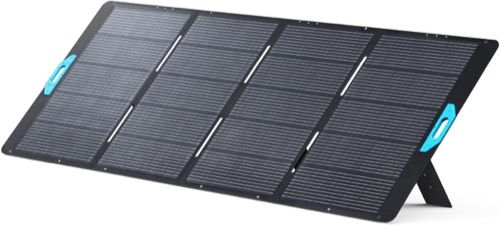
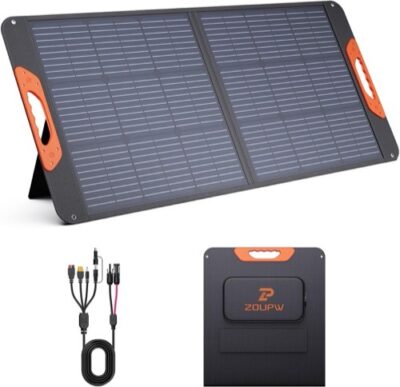
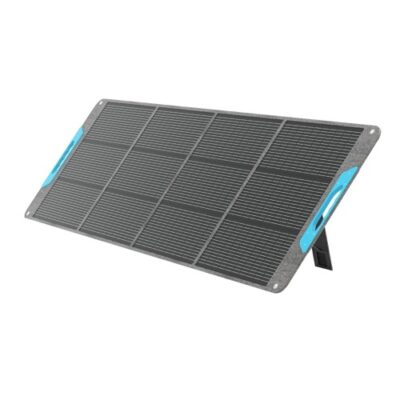
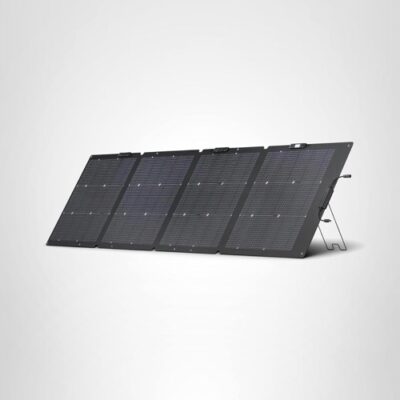
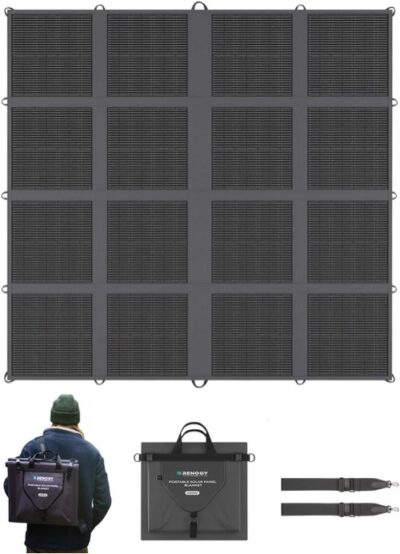
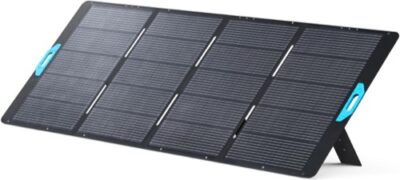
The best portable solar panels are not five versions of one object. A 100W folder, 200W briefcase, bifacial slab, 400W blanket, and high-output ecosystem panel solve different packing and energy problems. This list keeps those formats visible instead of pretending one score settles them.
Five Formats, Five Reasons
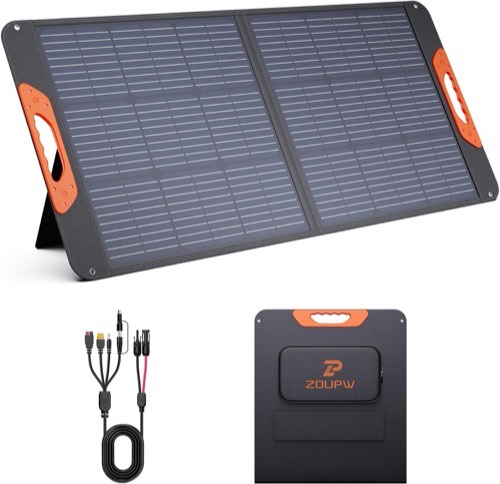
Compact 100W
For small stations, light electronics, and limited cargo.
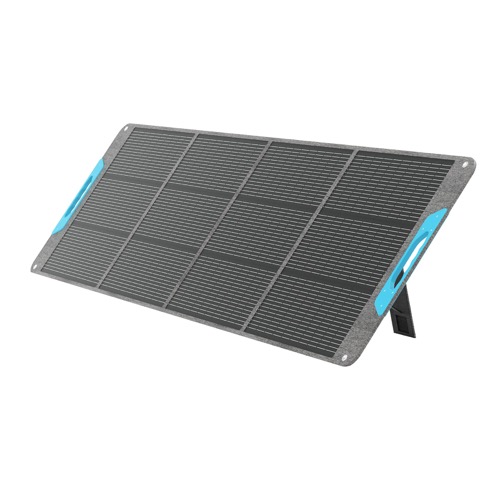
Balanced 200W
For useful daily recovery without a 400W footprint.
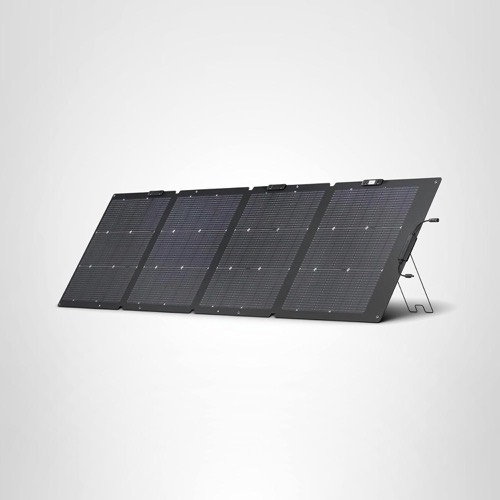
Bifacial 220W
For sites that can expose the rear to reflected light.
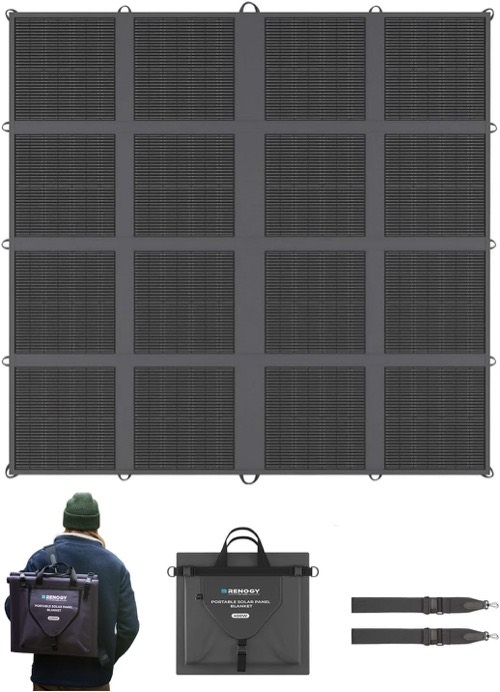
400W blanket
For high wattage in a folding textile package.
Compare the Constraint Dashboard
The Purchase Flow
Planning Output by Tier
| Tier | 4-PSH planning range | Typical reason to choose it |
|---|---|---|
| 100W | 280–340Wh | Compact and manageable |
| 200–220W | 560–748Wh | Balanced recovery |
| 400W | 1,120–1,360Wh | Large station or serious daily load |
Ranges are scenarios using a 0.70–0.85 factor, not product test results. Station limits can clip accepted power.
What Quality Looks Like Without a Lab Claim
We prioritize exact model identity, published electrical boundaries, a usable connector path, stable deployment logic, clear environmental limits, and an attributable warranty. Owner reports inform setup questions but do not become invented failure rates or controlled output rankings.
Use the Cards as a Shortlist, Not Permission
Open the receiving station manual before buying. Confirm cold Voc, operating voltage, current, watts, connector, and polarity. Then compare folded dimensions and the deployed surface at the place you intend to use it.