
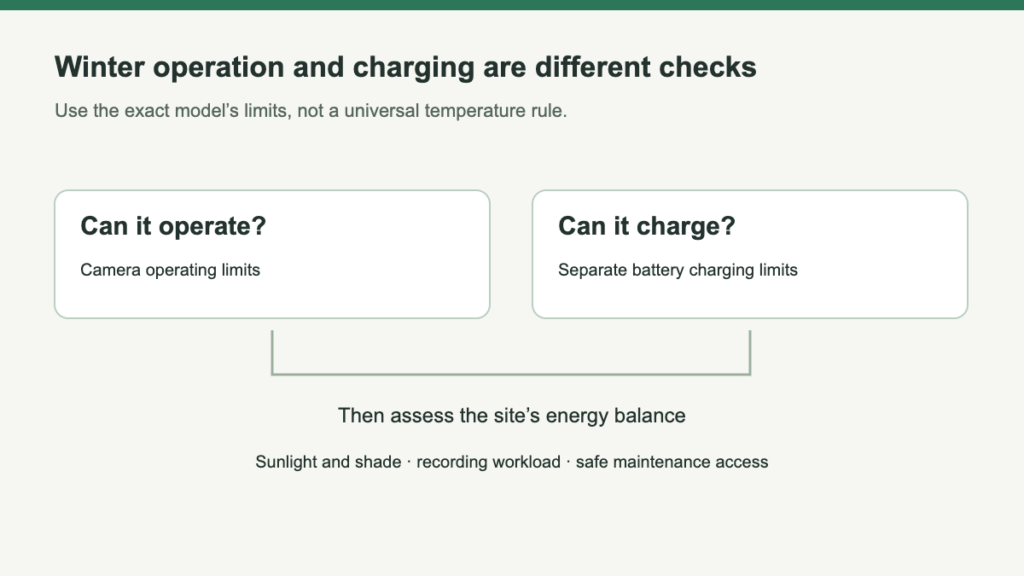
An outdoor temperature rating does not promise that a camera can recharge its battery at every temperature in that range. Before relying on a solar camera through winter, find both its operating limit and its battery-charging limit. They answer different questions and can lead to different installation decisions.
Read the second temperature specification
Tapo C425 KIT V1.20 illustrates the distinction. These published limits are specific to that revision, not universal camera limits.
Remaining online in freezing weather does not establish that the battery is being replenished.
Check the battery-charging range separately before relying on winter solar recovery.
A rain-resistance label does not settle battery behavior, sealing or available sunlight.
Revisit the panel position after the season changes
- Inspect the panel itself. A bright sky seen from indoors does not reveal shade from buildings, vegetation or accumulated material at the charging surface.
- Compare the season, not just the view. The camera may still see clearly while its panel receives less useful light.
- Keep access safe. Follow cleaning instructions and do not climb onto icy surfaces to chase a battery percentage.
Compare workload before blaming the weather alone
Ask whether viewing, lighting or recording settings changed at the same time. More activity and less charging opportunity can coexist. A battery trend therefore needs context: date, conditions, approximate use and any setting changes.
- Observe several comparable periods rather than a single reading.
- Separate actual charging indications from an old offline battery value.
- Retain the recording function you need; do not reduce it blindly just to improve the percentage.
Decide how a winter shortfall will be handled
The same battery decline can be a minor chore at a reachable doorway and a failed monitoring plan at a distant property. Choose the response before the season makes access difficult.
A manufacturer-supported manual charge may be practical. Keep the required recording behavior and a safe access route rather than chasing a battery percentage at any cost.
If ordinary recovery cannot be carried out safely, reconsider the power arrangement. A weather-resistance label does not establish cold charging or enough winter sunlight.
Record exposure and workload across comparable periods, using the exact equipment’s charging limits. If an unexplained decline persists, the charging troubleshooting sequence helps separate conditions from a problem that needs service.
Leave a Reply