Solar Power Picks logo with sun, solar panel, and green energy icon

  • Home
  • Reviews
  • Best
    • Best portable power stations
    • Best Solar Panels
    • Best Solar Generators
  • Guides
    • Portable Power Stations Guides
    • Solar Panels Guides
    • Solar Generators Guides
  • Comparisons
    • Portable Power Stations Comparisons
    • Solar Panels Comparisons
    • Solar Generators Comparisons
  • Calculator

EcoFlow Delta 3 Classic vs Anker SOLIX C1000 Gen2 at a Glance

COMPARED PRODUCTS

EcoFlow Delta 3 Classic Review: A 1024Wh Kit That Charges in Under an Hour and Backs Up in 10 Milliseconds

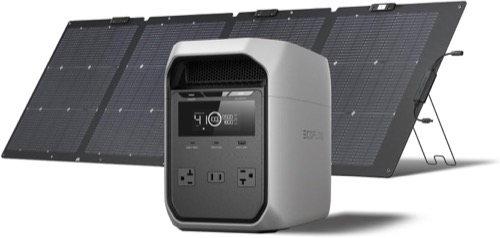
The EcoFlow Pick

EcoFlow Delta 3 Classic Review: A 1024Wh Kit That Charges in Under an Hour and Backs Up in 10 Milliseconds

Check price at Amazon Jump to details
Anker SOLIX C1000 Gen2 Review: A 1024Wh Kit That Wall-Charges in 49 Minutes and Ships With Its Own Panel

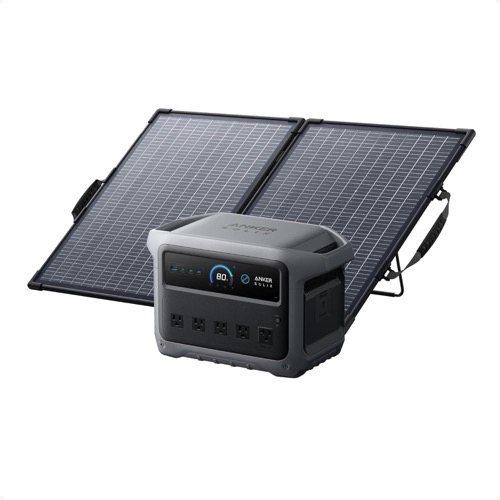
The Anker Pick

Anker SOLIX C1000 Gen2 Review: A 1024Wh Kit That Wall-Charges in 49 Minutes and Ships With Its Own Panel

Check price at Amazon Jump to details

Comparisons in the 1kWh class are usually lopsided — a premium unit against a budget one, or a big battery against a small one. This one isn’t. The EcoFlow Delta 3 Classic and the Anker SOLIX C1000 Gen2 are both 1024Wh LiFePO4 power stations sold as solar kits, and they land within about $30 of each other at $699 and roughly $670. Same chemistry, same capacity, same tier. That makes the differences unusually clean to read: they show up in inverter output, in how each unit recharges, in the panel that ships in the box, and in the app and port layout you live with day to day.

Here’s the shape of it before the details. The EcoFlow Delta 3 Classic bundles a 220W bifacial panel and publishes a sub-10ms UPS switchover, so it’s built for people who care about solar recharging and protecting sensitive electronics. The Anker SOLIX C1000 Gen2 pushes 2000W of continuous output through 10 ports, fully recharges from the wall in 49 minutes, and undercuts the EcoFlow on price — but its bundled panel is only 100W. Neither is a clear winner; each is the right answer for a different buyer. If you’re still deciding on capacity class at all, our best solar generators hub puts both in wider context.

Capacity and Runtime

This round is a genuine tie, and it’s worth saying so plainly. Both units carry a 1024Wh LiFePO4 battery, so both store the same energy and both deliver roughly the same usable runtime. At about 85 percent AC efficiency, that 1024Wh translates to somewhere near 870Wh through the outlets before reserve — enough to run a 100W fridge for most of a day, keep a CPAP going two nights, or recharge a laptop a dozen-plus times. Neither has an advantage here because the number is identical.

Chemistry is a tie too, and a good one: LiFePO4 in both means thousands of charge cycles and better heat tolerance than the older Li-ion packs still found in cheaper kits. EcoFlow rates the Delta 3 Classic’s cells for 10-plus years of daily use, and Anker’s C1000 line carries the same long-life reputation. Because capacity and chemistry cancel out, every meaningful difference in this matchup lives in what the unit does with that stored energy — how much it can push out at once, and how quickly you can put energy back in.

Worth knowing: Two units with identical 1024Wh ratings give you the same runtime. When capacity ties, the decision moves entirely to output and recharging — not to the battery on the spec sheet.

Output, Surge, and X-Boost

Here the two split. The Anker SOLIX C1000 Gen2 leads on continuous output with a 2000W inverter, versus 1800W on the EcoFlow Delta 3 Classic. That 200W gap is small on paper but real in practice: it’s the difference between comfortably running a large microwave, a 1800W hair dryer, or a space heater on its high setting without thinking about it. If you want the most appliance headroom per dollar, the Anker takes it.

The EcoFlow answers with two tricks. First, it surges higher — 3600W versus the Anker’s 3000W peak — which gives it more margin to start a compressor or a power tool that spikes hard on startup. Second, it has X-Boost, EcoFlow’s system for driving select high-draw resistive devices such as kettles, heaters, and dryers up to about 2600W by intelligently managing the voltage. X-Boost isn’t magic — it only works on certain load types, and it can be limited to one outlet at a time — but it lets a 1800W-rated inverter run a few things a 2000W inverter without the feature would trip on.

The honest read: for straightforward continuous power, the Anker’s 2000W is the simpler, stronger number. For starting surges and for stretching to run a stubborn kettle or heater, the EcoFlow’s higher surge plus X-Boost gives it flexibility the raw rating doesn’t show. Match this to the single heaviest thing you’ll actually plug in.

Recharging: Wall and Solar

Wall charging is close to a wash, and both are fast. The Anker SOLIX C1000 Gen2 reaches a full 100 percent charge in about 49 minutes using its 1600W HyperFlash mode, which you switch on in the Anker app. The EcoFlow Delta 3 Classic hits 0-80% in 45 minutes with X-Stream charging and finishes the top-off shortly after. Both are excellent for storm prep, and both spin their fans loudly at full rate — so in a bedroom or RV you’ll usually cap the speed in the app and charge quietly overnight. Call the wall round even.

Solar is where the kits genuinely diverge, and it’s the most important honest distinction in this comparison. The EcoFlow Delta 3 Classic ships with a 220W bifacial panel — more than double the Anker’s — and owners in good sun report a real 190-200W from it, enough to refill the 1024Wh battery in roughly 5.8 hours. The station accepts up to 500W of solar, so you can add a second panel later. The Anker SOLIX C1000 Gen2 kit, by contrast, bundles only a 100W bifacial panel. The station itself is capable — it accepts up to 600W of solar input and can refill in about 1.8 hours at that rate — but the panel in the box is a top-up, not a refill. Expect the better part of a sunny day to recharge from that single 100W panel.

Be honest about the bundle: Both stations can accept a lot of solar, but out of the box the EcoFlow includes 220W and the Anker only 100W. If off-grid solar recharging is the point, the Anker needs an extra panel to keep up.

App, Expandability, and Ports

Both brands run capable apps, and in both cases the app is more than decoration. The EcoFlow app is the deeper of the two: owners use it to cap the AC charge rate and cut fan noise, monitor draw per port, update firmware, and — most usefully — get a push alert the moment the grid drops when the unit is running as a UPS. Anker’s app is the gateway to HyperFlash charging and gives solid monitoring and control, with a well-regarded USB-C PD implementation behind it. Neither app is a gimmick; both turn the station into something you can tune.

On ports, the Anker spreads its power wider. It offers 10 ports for driving up to 10 devices at once, including strong USB-C Power Delivery that owners single out as best-in-class for laptops and drones. The EcoFlow Delta 3 Classic keeps a leaner set — three AC outlets plus a 100W USB-C, a 30W USB-C, and an 18W USB-A — which is plenty for a camping or backup load-out but fewer sockets overall. If you routinely fan out to many devices, the Anker’s count is the practical advantage.

On expandability, temper expectations for both kits: neither ships with an add-on battery, so plan around the 1024Wh you’re buying rather than a future stack. Treat each as a fixed 1kWh unit and size accordingly. Where the EcoFlow pulls ahead for home use is UPS behavior — its published sub-10ms switchover is fast enough to keep a PC, server, or CPAP alive through a blackout, and owners run it exactly that way on routers and modems. The Anker supports UPS pass-through and its bigger inverter backs more of the house at once, but EcoFlow’s published fast switchover is the safer bet for anything that can’t tolerate a blink.

Which Should You Buy?

Because capacity and chemistry tie, the choice is refreshingly simple — it comes down to what you value most.

Buy the EcoFlow Delta 3 Classic if solar recharging or UPS is central to your purchase. You get a 220W bifacial panel that actually refills the battery in a day, a sub-10ms switchover that protects sensitive electronics, a higher 3600W surge, X-Boost for stubborn resistive loads, and the deeper app of the two. It’s the pick for off-grid recharging and for backing up a PC, server, or medical device.

Buy the Anker SOLIX C1000 Gen2 if you want the most inverter and ports for the money. Its 2000W continuous output runs heavier appliances without a boost mode, it fully recharges in 49 minutes, it spreads power across 10 ports with excellent USB-C PD, and it costs about $30 less. Just add a bigger panel if you plan to rely on solar — the bundled 100W won’t keep pace with a 1kWh battery.

Still torn? Start from your loads and your recharge plan rather than the badge. If your day is mostly device charging and appliance runs with grid or fast wall top-ups, the Anker’s output and price win. If the sun is your outlet, or a blackout can’t be allowed to interrupt a machine, the EcoFlow’s panel and UPS earn the small premium. For a wider shortlist across every use case, jump back to our best solar generators guide.

The EcoFlow Pick

EcoFlow Delta 3 Classic Review: A 1024Wh Kit That Charges in Under an Hour and Backs Up in 10 Milliseconds

EcoFlow Delta 3 Classic Review: A 1024Wh Kit That Charges in Under an Hour and Backs Up in 10 Milliseconds

Get it now:

Check latest price

What to know

  • The bundled 220W bifacial panel refills the battery in about 5.8 hours of good sun; the station accepts up to 500W if you add a panel.
  • Sub-10ms UPS switchover keeps a PC, home server, router, or CPAP running through a grid drop — with a phone alert the moment power fails.
  • X-Boost drives select high-draw devices (kettles, heaters, dryers) up to about 2600W beyond the 1800W rating, often one outlet at a time.
  • 0-80% wall charge in 45 minutes with X-Stream; cap the rate in the app to cut fan noise for bedroom or RV use.

Best if

  • You want real off-grid solar recharging from the panel in the box
  • You need a fast sub-10ms UPS for a PC, server, or CPAP
  • You value deep app control and remote monitoring

Skip if

  • You need more than 1800W continuous without touching a boost mode
  • You want the most ports and the lowest price of the pair
  • You're backing up 240V or whole-house loads
This is the pick when solar recharging and UPS protection are the reasons you're buying, not afterthoughts. Same 1024Wh LiFePO4 class as the Anker, but the kit bundles a real 220W bifacial panel — more than double what Anker includes — that owners report pushing 190-200W in good sun. Pair that with a published sub-10ms UPS switchover and a deep app for capping charge speed and watching per-port draw, and you get a 1kWh unit built for people who want to tune their power and trust it during a blackout.
  • Capacity: 1024Wh LiFePO4 (10+ year rated life)
  • Output: 1800W continuous / 3600W surge (X-Boost to ~2600W)
  • Solar input: 220W bifacial panel included; up to 500W max input; ~5.8 hr solar recharge
  • Charging: 0-80% wall in 45 min (X-Stream); <10ms UPS switchover
  • Ports: 3x AC, 100W USB-C, 30W USB-C, 18W USB-A
  • Price: $699
The Anker Pick

Anker SOLIX C1000 Gen2 Review: A 1024Wh Kit That Wall-Charges in 49 Minutes and Ships With Its Own Panel

Anker SOLIX C1000 Gen2 Review: A 1024Wh Kit That Wall-Charges in 49 Minutes and Ships With Its Own Panel

Get it now:

Check latest price

What to know

  • 2000W continuous output runs a large microwave, hair dryer, or heater with more headroom than the 1800W EcoFlow.
  • Full wall recharge in about 49 minutes at 1600W using HyperFlash, enabled in the Anker app.
  • The bundled 100W panel is a slow top-up for a 1kWh battery; the station accepts up to 600W and refills in ~1.8 hours at that input — so add panels for real off-grid use.
  • 10 ports with strong USB-C PD; the PS100 panel is IP68-rated with a reinforced aluminum frame.

Best if

  • You want the most continuous output (2000W) for the money
  • You run many devices and lean on fast USB-C PD charging
  • You want a full wall recharge in under an hour at a lower price

Skip if

  • You want to rely on the included 100W panel for solar recharging
  • You need a published sub-10ms UPS for sensitive electronics
  • You want the deepest app control and the higher surge rating
This is the pick when you want the most inverter and the most ports for the money. It matches the EcoFlow's 1024Wh LiFePO4 battery but pushes 2000W of continuous output — 200W more — so it runs heavier appliances without leaning on a boost mode, and it spreads power across 10 ports with USB-C PD that owners rate best-in-class. Add a 49-minute full wall recharge and a price about $30 under the EcoFlow, and it's the value play of the pair. The one honest gap: the kit bundles only a 100W panel, so solar is a top-up unless you add more.
  • Capacity: 1024Wh LiFePO4
  • Output: 2000W continuous / 3000W peak
  • Solar input: 100W bifacial panel included; up to 600W max input (60V); ~1.8 hr solar recharge at full input
  • Charging: full wall charge in 49 min at 1600W (HyperFlash); UPS pass-through supported
  • Ports: 10 total, incl. high-wattage USB-C PD; IP68-rated panel
  • Price: $670 (list $1,328)

Product Comparison

Feature EcoFlow Delta 3 Classic Review: A 1024Wh Kit That Charges in Under an Hour and Backs Up in 10 Milliseconds Anker SOLIX C1000 Gen2 Review: A 1024Wh Kit That Wall-Charges in 49 Minutes and Ships With Its Own Panel
Product Image
EcoFlow Delta 3 Classic Review: A 1024Wh Kit That Charges in Under an Hour and Backs Up in 10 Milliseconds
Anker SOLIX C1000 Gen2 Review: A 1024Wh Kit That Wall-Charges in 49 Minutes and Ships With Its Own Panel
Price $699 $669.99
Rating
4.6 / 5
4.2 / 5
Category Solar Generators Solar Generators
Brand EcoFlow (EF ECOFLOW) Anker
Model / SKU DELTA 3 Classic + 220W Bifacial Solar Panel Kit (ASIN: B0FRMQPZF6) SOLIX C1000 Gen2 + 100W Bifacial Panel Kit (C1000 Gen 2; ASIN: B0GYDL6PHP)
Product type Solar generator kit — portable power station + 220W bifacial solar panel Solar generator kit — portable power station + 100W bifacial solar panel
Battery capacity 1024 Wh 1,024 Wh
Battery chemistry LiFePO4 (LFP) (EV-grade CTC cells, smart BMS; rated 10+ years of daily use) LiFePO4 (LFP) (long-life lithium iron phosphate)
Continuous AC output 1800 W (pure sine wave) N/A
Surge / peak output 3600 W 3,000 W
X-Boost output Up to 2600 W (drives high-current inductive loads — kettles, hair dryers, heated blankets; high modes may use one outlet at a time) N/A
Solar input 220 W bundled panel (station accepts up to 500W via XT60, 11-60V DC, 15A max; series wiring needed to approach 500W) N/A
Wall (AC) recharge 0-80% in ~45 min with X-Stream (owner reached near-full in ~1 hr at ~900W; rate configurable to ~1400W, or ~500W quiet mode) 0-100% in 49 minutes at 1,600 W (HyperFlash UltraFast mode, enabled in the Anker app)
Car / alternator recharge Not specified (no car-charging time listed in this kit's materials) N/A
Solar recharge ~5.8 hours from the 220W panel (owner saw 190-200W in partial shade; a desert owner pulled ~half, taking 7-10 hr) N/A
AC outlets 3 (2× 120V 3-prong 15A/20A, 1× 120V 2-prong; pure sine wave) N/A
USB-C ports 2 (1× 100W PD, 1× 30W — run at full rating simultaneously) N/A
USB-A ports 1 (18W) N/A
12V DC output Not specified (owners describe a basic DC output set; no car port confirmed in reports) N/A
UPS Yes — <10ms switchover (for PCs, servers, and sensitive electronics; app outage alerts) N/A
App control Yes — EcoFlow app (WiFi + Bluetooth; firmware, per-port monitoring, remote on/off, charge-rate control, outage alerts; free, no subscription) Yes — Anker app (enables the 49-minute HyperFlash charging mode)
Expandable No add-on battery on the Classic (X-Boost extends load handling to 2600W; solar chainable in series toward 500W) Solar-expandable to 600 W of input (add compatible panels toward the 1.8-hour recharge)
Display Bright built-in LED display (charge, load, input/output watts; brightness adjustable in the app) N/A
Weight Not specified (built-in carrying handles; durable case) N/A
Lifespan 10+ years (LiFePO4 cells rated for 10+ years of daily use) N/A
Warranty 5 years total (3-year standard + 2 years with product registration) Warranty card included in the box (coverage term not stated in the source listing)
What's in the box 1× DELTA 3 Classic station, 1× 220W bifacial solar panel with carrying bag, 1× XT60 solar adapter cable, 1× AC charging cable, user manual (station and panel ship separately) Package 1: Anker SOLIX C1000 Gen 2 station, AC charging cable, quick start guide, safety & warranty card. Package 2: PS100 bifacial solar panel, 2× 8.2 ft (2.5 m) solar charging cables, 1× 1.6 ft (0.5 m) XT60i solar charging cable, quick start guide, safety card (the two packages ship separately)
Best for Camping, travel, drive-in and group outings, off-grid top-ups, and home UPS / outage backup — quiet, fast-charging power with a solar panel already included — based on actual customer usage Camping, RV trips, work-from-home outage insurance, UPS-style backup, and fast USB-C travel charging — a station with a solar panel already included — based on actual customer usage
Buy Now View Deal View Deal
×

About Solar Power Picks

Portable Solar Power, Backup Power, and Off-Grid Gear Guides

Your trusted source for honest, in-depth product reviews and comparisons.

Quick Links

  • Best Picks
  • Reviews
  • Guides
  • Comparisons
  • Calculator
  • Privacy policy
  • Favorites

Categories

  • Portable Power Stations
  • Solar Generators
  • Solar Panels

© 2026 Solar Power Picks. All Rights Reserved.

We may earn a commission when you purchase through links on our site. Learn more