Solar Power Picks logo with sun, solar panel, and green energy icon

  • Home
  • Reviews
  • Best
    • Best portable power stations
    • Best Solar Panels
    • Best Solar Generators
  • Guides
    • Portable Power Stations Guides
    • Solar Panels Guides
    • Solar Generators Guides
  • Comparisons
    • Portable Power Stations Comparisons
    • Solar Panels Comparisons
    • Solar Generators Comparisons
  • Calculator

Renogy 200W vs BougeRV 200W: Portable Solar Face-Off

COMPARED PRODUCTS

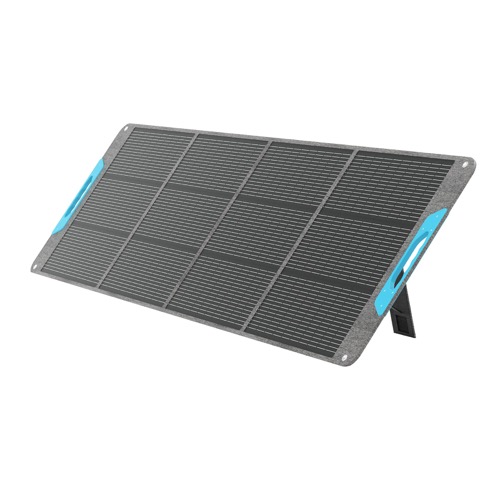
Renogy RPP200EF-SE Review: A Lightweight 200W Portable Panel for Camping, RVs, and Power Stations

Best Renogy Pick

Renogy RPP200EF-SE Review: A Lightweight 200W Portable Panel for Camping, RVs, and Power Stations

Check price at Amazon Jump to details
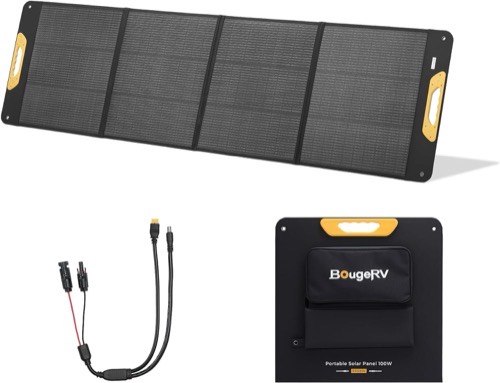
BougeRV 200W Solar Panel Review: The Rugged Camping Panel Built for People Who Use Their Gear Hard

Best BougeRV Pick

BougeRV 200W Solar Panel Review: The Rugged Camping Panel Built for People Who Use Their Gear Hard

Check price at Amazon Jump to details

The Renogy 200W vs BougeRV 200W matchup is a close one, because on paper these two foldable panels look almost like twins. Both are 200W portables built around 25% N-Type monocrystalline cells, both carry an IP65 rating, both output through MC4, and neither ships with a charge controller. Both weigh within an ounce of each other and both are aimed squarely at power stations, RVs, vans, and campsite backup. The real differences hide in the details — the connectors in the box, the build materials, the operating voltage, and how consistent the watts are day to day.

To keep this grounded, we’re comparing two specific panels with published owner feedback — the Renogy RPP200EF-SE and the BougeRV FS200W — rather than trading spec sheets. That’s where the honest split shows up.

Fast Answer: Which 200W Panel Should You Buy?

Buy the Renogy RPP200EF-SE if you want a versatile panel with built-in USB-C and USB-A charging, a higher 21.6V operating voltage for series wiring, and a clearly stated 2-year warranty — just plan to buy the adapter cable your power station needs. Buy the BougeRV FS200W if you want the tougher, fiberglass-reinforced build, slightly more consistent real-world output, and the right XT60 and DC7909 cables already in the box — accepting that it has no USB ports and no published warranty.

The Main Difference: Rugged Output vs Versatile Charging

Here’s the cleanest way to frame Renogy 200W vs BougeRV 200W. The BougeRV FS200W is the rugged, output-first camp panel — its fiberglass-reinforced face shrugs off hard handling, owners report strong and consistent watts, and it arrives ready to plug into most power stations. The Renogy RPP200EF-SE is the versatile all-rounder — it adds direct USB device charging, runs a higher operating voltage, and carries a stated warranty, but leans on you to supply the power-station adapter and shows a bit more output variance from unit to unit.

Neither approach is wrong. A hard-use camper who wants tough gear that just charges leans BougeRV. A buyer who wants to top up phones and cameras straight off the panel, or wire two panels in series, leans Renogy. The rest of this comparison is about which of those trade-offs matters for your setup.

Renogy 200W vs BougeRV 200W: Side-by-Side

Dimension Renogy RPP200EF-SE BougeRV FS200W
Cells & efficiency 25% N-Type 16BB monocrystalline 25% N-Type monocrystalline
Real-world output ~150-190W (some units 100-140W); ~608 Wh/day ~140-198W; ~656 Wh/day
Operating voltage 21.6V Vmp 18V Vmp / 21V Voc
Connectors in box MC4 + USB-C PD and USB-A (no power-station adapter) MC4 + XT60 and DC7909 adapter cable (8.2 ft)
Build Quad-fold; IP65; surface not specified; 13.9 lb Fiberglass-reinforced; IP65; aluminum frame listed; 13.8 lb
Warranty 2-year material and workmanship Not specified
Best for Direct USB charging, series wiring, stated coverage Rugged camp use, plug-and-play power stations

Real-World Output and Cell Efficiency

Rated watts and delivered watts are two different numbers, and this is where the two panels quietly separate. Not sure how many watts you actually need? Our solar panel calculator estimates real daily output for your location before you buy.

Both panels use 25% N-Type monocrystalline cells, so on cell quality they’re evenly matched. The BougeRV FS200W tends to deliver more predictable numbers: owners commonly report 140W to 198W in good sun, and one user saw 165W to 198W charging an EcoFlow Delta 2 in bright Hawaii sun. We estimate real output using a 0.82 factor — about 164W in good sun, or roughly 656 Wh on a 4 peak-sun-hour day. The Renogy RPP200EF-SE reaches similar peaks, with many owners seeing 150W to 190W, but it shows more unit-to-unit spread: a notable minority only manage 100W to 140W even after careful aiming. We use a more conservative 0.76 factor — about 152W, or roughly 608 Wh/day. Our Renogy RPP200EF-SE review digs into that spread in detail.

One structural difference matters for wiring. Renogy runs a higher 21.6V maximum operating voltage, while BougeRV sits at 18V Vmp (21V open-circuit). The higher Renogy voltage can be an advantage if you plan to wire two panels in series to reach a power station’s higher input range. Want the math behind these numbers? See our guide on how much power a solar panel produces.

The takeaway: BougeRV is the safer bet for consistent daily harvest, while Renogy matches it at the top end but asks you to accept a little more variance — and both are shade-sensitive, so angle and clear sun shape your watts more than the spec sheet does.

Build Quality and Durability

Both panels are IP65-rated — protected against dust and low-pressure water jets, but not submersion — so neither should be left flat in standing water or treated as a permanent marine panel. Beyond that shared baseline, their build stories diverge.

The BougeRV FS200W is the tougher-feeling unit. Its fiberglass-reinforced solar face is the headline design choice, and owners describe it as heavy-duty and slightly flexible rather than brittle — reassuring when a panel gets leaned against tailgates and dragged across cargo mats. BougeRV’s materials list also includes an aluminum frame and tempered glass, and our BougeRV FS200W review covers the durability feedback in full. The Renogy RPP200EF-SE feels well made too, but its surface material isn’t specified, and a few owners mention the fabric-style outer edges collecting dust or fraying, plus reports of bowing after months of use. Renogy does counter with a deeper certification list — UL 61730, CE, RoHS, FCC, PSE, CA65, and ISO 9001 — where BougeRV publishes none.

Both fold compactly for storage, but the BougeRV’s unfolded footprint is the bigger watch-point: at nearly 88 inches wide, it needs a real stretch of open, sunny ground. If a tough foldable panel for hard camp use is your priority, browse the field in our roundup of the best 200W portable solar panels.

Connectors and Compatibility

This is where BougeRV lands its most practical win. Both panels output through MC4, so both play nicely with charge controllers, extension cables, and most power stations. But the BougeRV FS200W ships with an adapter cable that adds XT60 and DC7909 connectors plus an 8.2 ft lead, so many EcoFlow-style units and BougeRV fridge batteries connect straight out of the box. The Renogy RPP200EF-SE ships with MC4 only and short built-in leads — a recurring gripe is that it does not include the MC4-to-XT60, XT60i, 8mm, or brand-specific cable most power stations need, so you’ll usually order one before your first trip.

Renogy’s answer is a different kind of versatility: built-in USB-C PD (up to 45W) and two USB-A ports (18W and 15W) let you charge phones, tablets, and cameras directly off the panel, with no power station in between — something the BougeRV simply can’t do. Just remember that USB charging pulls from the same sunlight, so it trims what reaches your battery. On the battery side both are identical: neither includes a controller, so charging a 12V AGM, gel, or LiFePO4 bank directly requires a compatible MPPT or PWM controller with the correct chemistry profile.

Weight and Portability

On the scale these two are a near dead heat — the BougeRV FS200W is 13.8 lb and the Renogy RPP200EF-SE is 13.9 lb, both light for a 200W folder but neither one backpack-friendly. Owners of both frame them the same way: vehicle-based panels for car camping, RVs, vans, and boats, not something to carry far on foot.

Folded, both slide easily into RV storage bays, truck beds, and closets. Unfolded, the difference shows: the BougeRV opens to a long 87.8-inch accordion that demands open space, while the Renogy’s quad-fold layout is more compact when deployed. Both rely on built-in kickstands, and both draw the same complaint — the legs can be fiddly and need firm, stable ground, and either panel is light enough for a gust to tip over without stakes or a tie-down. If portable camp charging is your main use, our guide to the best portable solar panels for camping covers how these stack up against the wider field.

Price and Value

Neither panel publishes a fixed price, and both shift with sales, but the value stories point in slightly different directions. Renogy owners consistently praise the RPP200EF-SE as good value against pricier power-station-branded panels from EcoFlow, Anker, Bluetti, and Goal Zero — you get comparable output and broad compatibility for less, and the USB ports add convenience a bare panel doesn’t. The catch is that some of the savings come back out in accessories, since you’ll buy the adapter cable separately.

BougeRV’s value is about what’s in the box and how long it lasts. Buyers familiar with the brand describe the FS200W’s build and output as worth the price, and because the XT60 and DC7909 cables are already included, you spend less to get charging on day one. The nuance: BougeRV doesn’t publish warranty terms, so part of Renogy’s premium buys you documented coverage that BougeRV leaves unstated. Both undercut the branded-panel field, so value comes down to whether you’d rather pay for USB versatility and a stated warranty (Renogy) or ruggedness and included cables (BougeRV).

Warranty and Support

Renogy takes the paper-coverage round, and it’s not close. The RPP200EF-SE carries a stated 2-year material and workmanship warranty, and some owners report successful replacements for defective or low-output units. The flip side is inconsistency — other buyers describe slow email support, warranty-registration friction, or disappointment when a weak panel fell just outside the coverage window. Still, a documented 2 years beats an unknown.

BougeRV’s warranty terms simply aren’t specified in the product information, which is the one area where the FS200W leaves cautious buyers guessing. Early durability feedback is very positive and no owners reported unsafe behavior, but full-time RVers who want a clear support commitment should confirm terms before buying. Longer, clearly stated coverage goes to Renogy; a tougher build that may need fewer claims goes to BougeRV.

The Verdict: Which 200W Panel Wins for You

There’s no single winner in Renogy 200W vs BougeRV 200W — there’s a winner for each buyer. Here’s the honest breakdown by who you are.

  • Power-station owner who wants plug-and-play charging: BougeRV. The included XT60 and DC7909 cable and 8.2 ft lead get most units charging with no extra buying.
  • Buyer who wants to charge phones and cameras directly off the panel: Renogy, no contest. Its built-in USB-C PD and USB-A ports do what BougeRV can’t.
  • Hard-use camper who abuses their gear: BougeRV. The fiberglass-reinforced face and heavy-duty build are made for dirt, tailgates, and rough handling.
  • Off-grid builder planning to wire two panels in series: Renogy, for its higher 21.6V operating voltage that reaches a power station’s upper input range more easily.
  • Buyer who wants documented warranty coverage: Renogy, with its stated 2-year warranty versus BougeRV’s unpublished terms.
  • Buyer chasing the most consistent real-world watts: BougeRV edges it on owner-reported output and our 0.82 factor, though both peak near 190W-plus in ideal sun.

Bottom line: choose the Renogy RPP200EF-SE when you want direct USB charging, higher voltage, and stated coverage; choose the BougeRV FS200W when you want the tougher, higher-yield camp panel with the right cables already in the box. Both are honest 200W picks — they’re just built for slightly different buyers.

Best Renogy Pick

Renogy RPP200EF-SE Review: A Lightweight 200W Portable Panel for Camping, RVs, and Power Stations

Renogy RPP200EF-SE Review: A Lightweight 200W Portable Panel for Camping, RVs, and Power Stations

Get it now:

Check latest price

What to know

  • Real output around 150-190W in strong sun (~608 Wh/day at a 0.76 factor) — some units land lower at 100-140W
  • Built-in USB charging — USB-C PD up to 45W plus USB-A at 18W and 15W for phones, tablets, and cameras
  • Higher 21.6V operating voltage — helpful for wiring two panels in series to a power station
  • Bring your own adapter — MC4 output only, so you'll usually buy an MC4-to-XT60 or similar cable
  • Stated 2-year warranty plus UL 61730, CE, RoHS, FCC, PSE, CA65, and ISO 9001 listings

Best if

  • You want to charge phones and cameras directly off the panel via USB
  • You plan to wire two panels in series and want the higher 21.6V
  • You value a documented 2-year warranty and a long certification list

Skip if

  • You want the right power-station cable already in the box
  • You need the toughest possible surface for hard, dirty camp use
  • You want guaranteed consistent output and hate unit-to-unit variance
If you want a versatile 200W folder that can charge a power station and top up your phone straight off the panel, the Renogy RPP200EF-SE is the easy recommendation. It's built for car camping, RVs, vans, boats, and blackout prep, and owners keep saying the same thing — it's light for its class, folds down neatly, and often delivers genuinely useful watts when the sun cooperates. What makes it work: 25% N-Type monocrystalline cells, a higher 21.6V operating voltage that suits series wiring, built-in USB-C PD and USB-A ports for direct device charging, and a deep certification list backed by a stated 2-year warranty. The MC4 output plugs into most controllers and, with the right adapter, most power stations. The catch: it ships without the adapter cable your power station needs, the built-in MC4 leads are short, the kickstands are fiddly, and output varies unit to unit — a minority of owners see only 100W to 140W.
Power output200 W (foldable, N-Type 16BB monocrystalline)
Cell efficiency25%
Real-world output~150-190W in good sun (~608 Wh/day at 0.76)
Operating voltage21.6V Vmp
Charge controllerNone — use a power station input or separate controller
ConnectorMC4 (short leads) plus USB-C PD and USB-A; no power-station adapter included
WeatherproofingIP65 dust and splash resistance; foldable construction
Weight13.9 lb; folds to ~23.7 x 23.0 x 2.0 in
Warranty2-year material and workmanship
Best forPower stations, RVs, vans, boats, camping, and direct device charging
Best BougeRV Pick

BougeRV 200W Solar Panel Review: The Rugged Camping Panel Built for People Who Use Their Gear Hard

BougeRV 200W Solar Panel Review: The Rugged Camping Panel Built for People Who Use Their Gear Hard

Get it now:

Check latest price

What to know

  • Real 140-198W in full sun — about 656 Wh/day at a 0.82 factor; one owner saw 165-198W into an EcoFlow Delta 2
  • Cables included — MC4 output plus an XT60 and DC7909 adapter cable and an 8.2 ft lead
  • Fiberglass-reinforced build — feels tougher than fabric-style folders; aluminum frame and tempered glass listed
  • Shade-sensitive and large — ~88-inch unfolded footprint; keep all four sections in direct sun
  • Warranty not specified — early durability feedback is positive, but terms and certifications are unpublished

Best if

  • You want a plug-and-play power-station panel with the cables already included
  • You camp hard and want a tough, fiberglass-reinforced surface
  • You get strong, consistent real-world watts in good sun

Skip if

  • You want built-in USB ports to charge phones and cameras directly
  • Your campsite is wooded or shaded — output drops sharply
  • You need documented warranty coverage and safety certifications
For the camper who uses their gear hard and just wants dependable charging, the BougeRV FS200W is the rugged, output-first pick in this matchup. It's built for RVs, van life, truck-bed camping, coolers, and power-station charging, and owners keep coming back to two things — how tough it feels and how strong the watts run in real sun. What makes it work: 25% N-Type monocrystalline cells, a fiberglass-reinforced face that shrugs off camp handling, and an included adapter cable with XT60 and DC7909 connectors plus an 8.2 ft lead, so most power stations charge straight out of the box. Owners routinely report 140W to 198W in good sun. The catch: shade hits it hard, the panel opens to nearly 88 inches wide and needs open sunny ground, there are no USB ports, and BougeRV doesn't publish warranty terms or safety certifications.
Power output200 W ±5% (foldable, N-Type monocrystalline)
Cell efficiency25%
Real-world output~140-198W in good sun (~656 Wh/day at 0.82)
Operating voltage18V Vmp / 21V Voc
Charge controllerNone — use a power station input or separate controller
ConnectorMC4 plus XT60 and DC7909 adapter cable; 8.2 ft lead
WeatherproofingIP65 dust and splash resistance; fiberglass-reinforced surface
Weight13.8 lb; folds to ~23.6 x 22.9 x 1.8 in (87.8 in unfolded)
WarrantyNot specified
Best forRV camping, van life, coolers, and rugged power-station charging

Product Comparison

Feature Renogy RPP200EF-SE Review: A Lightweight 200W Portable Panel for Camping, RVs, and Power Stations BougeRV 200W Solar Panel Review: The Rugged Camping Panel Built for People Who Use Their Gear Hard
Product Image
Renogy RPP200EF-SE Review: A Lightweight 200W Portable Panel for Camping, RVs, and Power Stations
BougeRV 200W Solar Panel Review: The Rugged Camping Panel Built for People Who Use Their Gear Hard
Price $220.49 $229.99 $189.99
Rating
4.5 / 5
4.7 / 5
Category Solar Panels Solar Panels
Brand Renogy BougeRV
Model / SKU RPP200EF-SE (ASIN: B0CNPHD4VY) FS200W (ASIN: B0G64CB1SX)
Product type Portable solar panel Portable solar panel
Solar cell type Monocrystalline silicon, 16BB N-Type cells N-type monocrystalline silicon
Maximum power output 200 W 200 W ±5%
Open-circuit voltage (Voc) Not specified (owners commonly measure around 21-23V open circuit, but official Voc is not listed in supplied specs) 21 V ±5%
Maximum operating voltage (Vmp) 21.6 V 18 V ±5%
Output voltage 21.6 V DC maximum operating voltage; USB-C and USB-A device outputs also included 18 V DC nominal operating voltage
Maximum current (Imp) 9.26 A (calculated: 200W ÷ 21.6V) 11.2 A ±5%
Short-circuit current (Isc) 11.3 A (listed as amperage capacity) 12.22 A ±5%
Cell efficiency 25% 25%
Charge controller included No (designed for power stations or a separate solar charge controller) No
Controller features N/A N/A
Connector type MC4, USB-C PD, USB-A MC4 main connection, XT60 and DC7909 adapter cable
Cable length Not specified (customers describe the built-in MC4 leads as short and often buy extensions) 8.2 ft
Waterproof rating IP65 IP65
Operating temperature range Not specified Not specified
Dimensions (L × W × H) 23.72" × 1.97" × 22.99" (folded size) Folded: 23.6" × 22.9" × 1.8"; unfolded: 87.8" × 22.9" × 1.18"
Weight 13.9 lb 13.8 lb
Frame material Not specified (portable foldable panel construction) Aluminum (listed material also includes monocrystalline silicon and tempered glass)
Surface / glass material Monocrystalline silicon; surface material not specified Fiberglass-reinforced solar surface; tempered glass listed in product details
Mounting type Built-in kickstands with 40° / 50° / 60° angle adjustment; reinforced grommets for mounting; optional ground studs not included Built-in folding kickstands with grommets for staking or hanging
Compatible devices / batteries Portable power stations, smartphones, tablets, laptops, cameras, AGM batteries, LiFePO4 batteries, and deep-cycle 12V systems when used with proper controller/adapters Portable power stations with compatible solar input, BougeRV fridge batteries, solar charge controllers, RV/van/boat power setups (verify voltage and connector compatibility)
Required sunlight hours Varies by battery capacity and load (typical owners see useful charging with 3-5 peak sun hours) Varies by battery capacity and load (4 peak sun hours can deliver roughly 600+ Wh/day under good conditions)
Wind / snow load rating Not specified Not specified
Safety certifications UL 61730, CE, RoHS, FCC, ISO 9001 facility, CA65, PSE Not specified
Special features 25% efficiency, foldable quad design, magnetic handle closure, rear accessory pouch, USB-C PD 45W max, USB-A 18W and 15W, MC4 output, IP65 rating Fiberglass-reinforced folding design, N-type cells, 25% efficiency, magnetic handle closure, cable storage pocket, IP65 rating
Included in the box 1× 200W EFLEX portable solar panel 1× foldable solar panel, 1× solar charging cable / adapter cable with XT60 and DC7909 connectors
Warranty 2-year material and workmanship warranty Not specified
Expected lifespan Not specified Not specified
Unit count 1 1
Best for Power station charging, RV and van camping, CPAP backup, sailboat battery support, LiFePO4/AGM battery charging with a controller, blackout prep, and portable off-grid use RV camping, van travel, portable power stations, off-grid cooler use, backup power during outages, and 12V solar experiments with a separate controller
Buy Now View Deal View Deal

Final Verdict

The Renogy 200W vs BougeRV 200W question comes down to what you want from a foldable panel: versatile charging or a rugged, output-first camp workhorse. Both are 200W portables with 25% N-Type monocrystalline cells, IP65 sealing, MC4 output, and no charge controller in the box. The Renogy RPP200EF-SE is the more flexible unit — it adds built-in USB-C PD and USB-A ports for charging phones and cameras directly, runs a higher 21.6V operating voltage that suits series wiring, and backs the panel with a clear 2-year warranty. The trade-off is honest: it ships without the adapter cable most power stations need, its kickstands frustrate owners, and real-world output is a bit inconsistent unit to unit. The BougeRV FS200W wins on build and consistent real-world watts. Its fiberglass-reinforced face feels tougher than fabric-style folders, owners routinely see 140W to 198W in full sun, and it ships with an XT60 and DC7909 adapter cable plus an 8.2 ft lead, so more power-station setups work straight out of the box. The catches: it has no USB ports, its warranty and safety certifications aren't published, and its 88-inch unfolded footprint is shade-sensitive and needs open sunny ground. Buy Renogy if you want direct device charging, higher voltage, and stated warranty coverage; buy BougeRV if you want the tougher, higher-yield camp panel with the right cables already included.

Frequently Asked Questions

Are BougeRV solar panels good?

Yes. The BougeRV FS200W earns strong owner feedback for both output and build. Buyers commonly report 140W to 198W in good sun — one user saw 165W to 198W charging an EcoFlow Delta 2 in Hawaii — and the fiberglass-reinforced face feels tougher than typical fabric-style folding panels. It uses 25% N-Type monocrystalline cells, carries an IP65 rating, and ships with MC4 output plus an XT60 and DC7909 adapter cable, so most power stations connect without extra parts. The honest caveats: shade cuts output hard, the 88-inch unfolded panel needs open sunny space, and BougeRV does not publish warranty or safety-certification details.

Are Renogy solar panels good quality?

Yes. The Renogy RPP200EF-SE is a well-regarded 200W portable with 25% N-Type monocrystalline cells, an IP65 rating, and a long list of certifications (UL 61730, CE, RoHS, FCC, PSE, CA65, ISO 9001). Owners often see 150W to 190W in strong sun and value the built-in USB-C PD and USB-A ports for charging devices directly. Where it stumbles is consistency and accessories: some units only manage 100W to 140W, the kickstands are fiddly, the MC4 leads are short, and no power-station adapter cable is included. The panel is a keeper — just budget for the right adapter.

How does Renogy compare to other brands?

Renogy sits in the accessible, well-supported tier — usually cheaper than power-station-branded panels like EcoFlow, Anker, or Goal Zero while offering broad compatibility and a clear 2-year warranty. Against BougeRV specifically, Renogy adds built-in USB device charging and a higher 21.6V operating voltage, but BougeRV's fiberglass-reinforced build feels tougher, its included XT60 and DC7909 cable covers more power stations out of the box, and its real-world output runs a touch more consistent. Neither wins outright; Renogy is the versatile all-rounder, BougeRV the rugged output-first pick.

Which 200W panel is better for a power station?

For most power-station owners the BougeRV FS200W is the easier match, because it ships with an XT60 and DC7909 adapter cable and an 8.2 ft lead — many EcoFlow-style units plug in with no extra buying. The Renogy RPP200EF-SE works just as well electrically and adds a higher 21.6V operating voltage for series wiring, but it ships with only MC4 output, so you'll usually need to order an MC4-to-XT60 or similar adapter first. If you also want to charge phones and cameras directly off the panel, Renogy's built-in USB-C PD and USB-A ports tip it back in its favor.

Do the Renogy RPP200EF-SE and BougeRV FS200W include a charge controller?

No, neither one does. Both are bare portable panels designed to feed a power station's built-in solar input or a separate charge controller. If you want to charge a 12V AGM, gel, flooded, or LiFePO4 battery directly, you must add a compatible controller — ideally an MPPT unit with the correct battery profile — between the panel and the battery. Connecting either panel straight to a bare battery is not safe.

Which 200W panel produces more real-world watts?

On the numbers we have, BougeRV edges it. Owners report 140W to 198W from the FS200W in good sun, and our estimate uses a 0.82 output factor (about 164W and roughly 656 Wh on a 4 peak-sun-hour day). The Renogy RPP200EF-SE commonly lands at 150W to 190W but shows more unit-to-unit spread, with some owners seeing only 100W to 140W, so we use a more conservative 0.76 factor (about 152W and roughly 608 Wh/day). Both are strong for their class — with either, angle, heat, and shade shape the real harvest far more than the badge.

×

About Solar Power Picks

Portable Solar Power, Backup Power, and Off-Grid Gear Guides

Your trusted source for honest, in-depth product reviews and comparisons.

Quick Links

  • Best Picks
  • Reviews
  • Guides
  • Comparisons
  • Calculator
  • Privacy policy
  • Favorites

Categories

  • Portable Power Stations
  • Solar Generators
  • Solar Panels

© 2026 Solar Power Picks. All Rights Reserved.

We may earn a commission when you purchase through links on our site. Learn more